Pentagon Considers Pulling Forces From Persian Gulf After Iranian Attacks
The Pentagon may decide to reduce US military presence in the Middle East, including a possible withdrawal from the Persian Gulf, after repeated Iranian attacks damaged American bases across the region, The Washington Post reported, citing eight sources.The Defense Department is assessing whether forces should remain at major installations in the Gulf and how extensively bases damaged during the war should be rebuilt, according to the report.
The Joint Staff and US Central Command (CENTCOM) are participating in the analysis, a senior Pentagon official said. CENTCOM Commander Adm. Bradley Cooper supports discussions about potentially shifting US forces westward from the Gulf, according to one source.The Defense Department has already indicated that some facilities may not be restored to their pre-conflict condition.
Defense Secretary Pete Hegseth has not ordered a formal review of the US military footprint in the region. Instead, officials have characterized the discussions as “prudent planning” that could help determine whether, and to what extent, damaged bases are rebuilt.
The Pentagon must also weigh how military resources are distributed as it considers its future posture.
“Decisions are going to have to be made on some of this stuff,” the official said.
CENTCOM ordinarily has about 40,000 troops positioned across nearly 20 sites stretching approximately 1,500 miles from Jordan to Oman.
Since early this year, however, the US has reinforced its presence with additional warships, fighter aircraft, air defense systems and other scarce military equipment. Those forces have been deployed to defend American personnel and support more than 13,000 strikes against Iran.
Some of the most permanent and largest US bases in the Middle East are located in the Persian Gulf.
Bahrain is home to the headquarters of the US Fifth Fleet, while other Gulf countries, including Kuwait, host US Army and Air Force assets.
Framework started shipping pre-built Ryzen 7040-based Framework Laptop 13 computers and compatible motherboards in 2023. In June 2026, Framework released BIOS 3.20 for the devices. The update adds mainboard support for features, including a haptic touchpad and new speakers, for the higher-end Framework Laptop 13 Pro and fixes issues, including one “where the Battery Extender status was reported incorrectly following a reboot, hibernation, or shutdown after the timer had expired,” per a post on Framework’s forum from an employee.
Some users say that they installed the update successfully.
“[T]he update process seems to have stalled,” a Framework forum user named Sven posted in July. “What I see is a black screen and a progress bar with 2 dots and then the Framework logo. The progress bar is not moving for about 3 hours now. Also, I can’t turn off the Framework using the power button, no matter how long I hold it down. Now the BIOS update is stuck, and I can not power down or reboot the machine.”
Ars Technica contacted Framework, asking how many customers are affected. In a company statement, Framework said it has “received reports of a small percentage of Framework Laptop 13 7040 Series BIOS updates resulting in non-bootable boards.” Framework is investigating the root cause of the issue, the statement said.
There are reports of users having problems with BIOS upgrades on Ryzen 7040-based Framework Laptop 13 devices going back to at least March 2025.
After the most recent BIOS update, some users reported that Framework support told them they needed a new motherboard, but Framework wouldn’t provide it for free because the customer was past warranty.
Framework’s statement to Ars says:
… in addition to replacing in-warranty Mainboards, we are making exceptions for out-of-warranty replacements where we can confirm a stable-release BIOS update caused the board to become non-bootable.
Framework is also introducing a “Crisis Recovery Mode” BIOS functionality to enable a path for failed updates to be directly recoverable.
“Our latest Framework Desktop BIOS release includes this functionality, and we are actively bringing it to Framework Laptop 12, 13, and 16 in our upcoming BIOS release cycles for each,” Framework said.
We won’t be sure of the source of the problems until Framework provides more information. Blogger Guanzhong Chen, however, wrote a detailed blog post this week about their purported experience with their motherboard breaking and suggested the problem stems from “some bug with the software that caused it to display what appears to be random memory on the screen, especially when this has happened before to other people for other BIOS versions.”
The software developer, who was ultimately able to flash the firmware onto their motherboard after a support representative reportedly told him to buy a new one, added:
“At the same time, it somehow flashes the BIOS slower in regular operation than a cheap 15 MHz programmer over pogo pins, which really makes you wonder what it’s doing under the hood.”
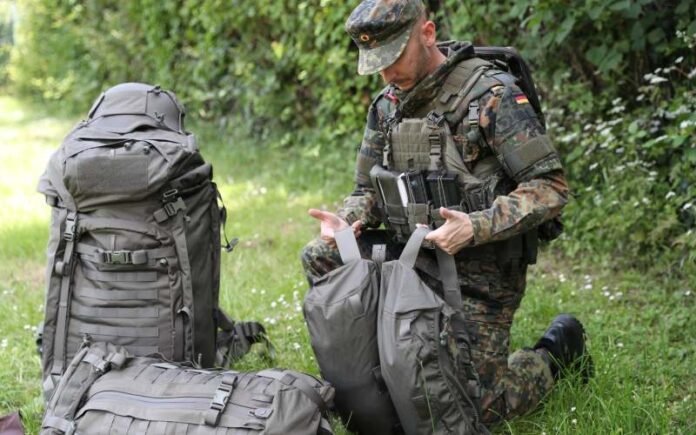
Germany’s Bundeswehr military employed roughly 186,700 soldiers as of July 31 this year, the Defense Ministry said .
The increase is a relatively rare positive headline as Germany and its military try to ramp up recruitment, procurement and defense spending — to meet new NATO targets, appease the Donald Trump administration, and respond to perceived threats from Russia and beyond — encountering a string of setbacks and bottlenecks along the way.
By the mid-2030s, Germany aims to recruit some 70,000 more full-time troops than it currently has on retainer, to reach a full-time force of around 260,000 plus around 200,000 reservists.
Some, including Defense Minister Boris Pistorius, have voiced concerns that this might be difficult to achieve without reintroducing some form of military service.
What’s the latest data on Bundeswehr troop numbers?
The Defense Ministry said the total of around 186,700 put the military inside its recruitment target window for this year with months to spare
It was aiming to reach between 186,000 and 190,000 personnel in 2026, and anticipates further increases this year
It also said it was the highest total in ‘around 13 years,’ soon after the 2011 abolition of the country’s former period of mandatory national service for many young men
The total was an increase of roughly 3,700 troops, or around 2% of the total force, since the previous July
Applications were also up 26% year-on-year, at 47,300 in total
New hires from those applications rose 12%, to 15,400
Roughly 61,500 are career soldiers on permanent contracts
The bulk of the full-time force, around 113,000 troops, are on long-term temporary contracts
Short-term contract soldiers and volunteer forces’ numbers also rose by about 6%, to around 12,100 in total
Many members of the class of 2026 took their oaths on July 20 in a ceremony in Berlin, which is held on the anniversary of the failed 1944 plot to assassinate Adolf Hitler, in a bid to remind new recruits of the German army’s modern valuesImage: Mike Schmidt/photowerkstatt/picture alliance How are the new service surveys for young people faring? The Defense Ministry also published information on the new service availability questionnaires that are trying to boost recruitment among people of school-leaving age. A survey trying to gauge a person’s availability, interest and suitability is sent to young men and women alike. Men are obliged to respond, women and people of other sexes or genders are not. At present, responding in no way commits you to any form of service, no matter how great an interest you express or aptitude you demonstrate. The figures do clearly point to the obligation to respond having a major impact on participation.
How Ukraine’s strikes on Russian warehouses became a problem in Kyrgyzstan
Ukraine’s campaign to target Russia’s e-commerce giant Wildberries has had impacts far beyond the Russian federation. For Russia, Wildberries is comparable to Amazon, accounting for about 50% of the country’s online retail market. But its market place is used by manufacturers as far afield as Central Asia.
Founded in 2004 as an online clothing retailer, it has 98,000 pick-up points and supplies a vast network connecting more than a million sellers with consumers across Russia, Belarus, Kazakhstan, Kyrgyzstan, Armenia, Georgia, Uzbekistan and Tajikistan.
In 2025, the Wildberries-Russ group recorded 6.1 trillion roubles (about £55 billion) in sales – up 49% on the previous year. Reuters estimates that Russian online marketplaces now handle goods and services worth the equivalent of 8.5% of the country’s GDP.
What makes Wildberries more than a retailer is its reach. Since 2009, it has offered equal prices for deliveries, no matter whether they are in the Russian heartland or as far as the Kamchatkan peninsula in the Russian far east, or Barentsburg in the high Arctic.
Ukraine justifies targeting Wildberries by pointing to the fact that since Russia’s full-scale invasion, the retailer has also become a military-adjacent commerce platform. It carries tactical clothing, body armour, medical kits and communications equipment. Recent investigations have also found first-person-view drones and drone components listed on the platform.
Until the company reportedly removed the relevant tags in July, searches for “everything for the SVO” (the Russian acronym for spetsialnaya voyennaya operatsiya, special military operation) produced military-related goods. This does not establish Wildberries as a military logistics provider. But it shows how wartime demand can respond through infrastructure originally built for civilian commerce.
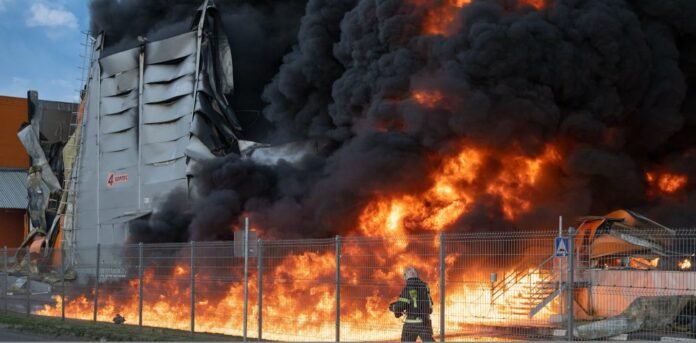
Since July 18, Ukrainian drone strikes have hit at least 20 Wildberries facilities, including three in the past week, damaging or destroying more than 1.18 million square metres of warehouse capacity as of August 7.
Wildberries is especially vulnerable as it concentrates goods in large warehouses. This makes distribution effective but also creates targets that are directly felt by thousands of businesses and millions of consumers. A successful strike travels through the retailer’s commercial network long after the strike hits.
Cross-border trade
That network also crosses Russia’s borders. In Kyrgyzstan, Wildberries has become an important export channel for small and medium-sized businesses, particularly the country’s burgeoning clothing sector. In March 2026, Wildberries and Kyrgyz Export agreed to create a “Made in Kyrgyzstan” section on the platform across all eight of its markets.
A July survey cited by Kyrgyz business media found that 55% of Kyrgyz Wildberries entrepreneurs said the platform had enabled them to enter foreign markets.
The model has changed the geography of Kyrgyz trade. For decades, the massive Dordoi Bazaar in Kyrgyzstan’s capital, Bishkek, connected sewing workshops with wholesalers, traders and transport companies serving Russia and Kazakhstan.
But digital commerce has added another route: producers can sell directly to Russian consumers while using Wildberries’ warehouses for storage and fulfilment.
That arrangement also creates a new vulnerability. Once Kyrgyz sellers transfer their inventory to a Russian Wildberries warehouse, the goods are physically outside their control. A destroyed warehouse can therefore turn a Russian military strike into a loss for a Kyrgyz business.
Kyrgyz media have already documented such cases. After the first strikes, Kyrgyz sellers reported destroyed inventories and the risk of bankruptcy. One entrepreneur that I interviewed for this article estimated that the volume of goods in his business had fallen by half. A family acquaintance, he said, had lost inventory worth about US$42,000 (£32,200). Another seller went from offering roughly 100 product types to just four.
Around 800 Kyrgyz e-commerce retailers issued an appeal to the government to support them in their compensation claims. While these accounts cannot establish the overall scale of the Kyrgyz losses, they illustrate how quickly a disruption at a distant logistics node can reach businesses in Bishkek.
Dordoi Bazaar in Bishek, Kyrgyzstan.imageBROKER/Oliver Foerstner
Tightening supply chain regulations with Russia have already created significant distress for Kyrgyz garment producers for whom Russia is the main market. The Wildberries attacks have exacerbated this stress, which the Wildberries attacks have exacerbated. In response, Kyrgyz authorities have announced financial support in terms of preferential loan agreements and a “tax holiday” for small and medium-scale garment producers from August 1 until the end of the year. Compensation, however, remains largely a promise.
Wildberries’ seller agreement treats damage caused by drones and other military activity as force majeure (an uncontrollable and unforeseeable event) which limits the company’s liability. As one seller told me, Wildberries may be more likely to compensate Russian sellers with direct ties to the company’s financial infrastructure. For Kyrgyz entrepreneurs, even those holding substantial inventories in Russian warehouses, the risk and loss are more likely to remain their own.
War comes to Kyrgyzstan
So, given the ongoing attacks on Wildberries warehouses across Russia, the question for Kyrgyz entrepreneurs is bigger than whether Wildberries can restore its Russian warehouses. It is whether concentrating inventory inside a foreign logistics network remains a viable business strategy during wartime. The people I interviewed for this article argue that alternative storage and shipment opportunities will eventually emerge, but given the sheer scale of the current cash flow gap and the lack of trust in the business, things are unlikely to return to how they were before the attacks.
One possible answer would be to keep more inventory in Kyrgyzstan, diversify fulfilment providers and expand domestic warehousing. Wildberries itself has announced testing alternative “partner hubs”, by relocating them in countries that are outside of Ukraine’s drone range. For Kyrgyzstan, this could reinforce its position as a logistics hub.
But decentralisation has limits. Cross-border friction between Kyrgyzstan and Kazakhstan tends to disrupt flows and lengthen delivery times, despite both countries being part of the same customs union. Building new warehouses also requires substantial time and investment – while a Russian company expanding its logistics infrastructure brings with it concerns about sanctions evasion.
This is not only an economic, but a wider geopolitical issue. While the e-commerce sector appeared to reduce the role of physical distance, in practice, it reorganises dependence around physical warehouses, roads, borders and political alliances. For Kyrgyzstan, the Wildberries strikes demonstrate that the logistics of war can reach Central Asia without a single missile or drone crossing the Kyrgyz border.
Hind Rajab Foundation has ‘no confidence’ in planned Israeli probe into girl’s killing
The Hind Rajab Foundation on Wednesday said it had “no confidence” in the Israeli army’s reported decision to launch a criminal probe into the killing of Hind Rajab and six of her relatives in 2024, Anadolu reports.
In a social media post, the foundation said the decision by Israel was “little more than a masquerade meant to deflect accountability and preserve its impunity.”
In 2024, five-year-old Hind Rajab was trapped in her family’s car after it came under Israeli fire in Gaza City.
She was later found dead after nearly two weeks of uncertainty regarding her fate.
Two Palestinian medics who had tried to rescue the girl were also found dead.
More than 73,000 Palestinians have been killed in the Gaza Strip, many of them children, since Israel launched its war on the coastal enclave in October 2023.
READ: Death of new commander puts spotlight back on Israeli battalion linked to killing of Hind Rajab in Gaza
On Charlie Hamilton’s regular Amtrak rides from Seattle to Portland, Oregon, and Vancouver, British Columbia, he passes some of the country’s most spectacular vistas: the Puget Sound coast and the Skagit Valley. On clear days, he can even see Mount Rainier. But perhaps the most beautiful sight is not the natural wonders of the Pacific Northwest. It’s the cars and trucks inching along the highway.
“It’s nice to be able to be going along there and going faster than what people on Interstate 5 are doing. We kind of like that bit,” said Hamilton, who leads the train advocacy organization All Aboard Washington.
Indeed, riding the train in the Pacific Northwest can take about as long as driving. The trip between Seattle and Portland takes about 3 hours and 30 minutes by either mode, even though the train makes six stops along the way.
Amtrak plans to begin rolling out 83 new trainsets, dubbed Airo, this fall, starting with eight on the Pacific Northwest’s Cascades route. The trains will eventually serve more than a dozen routes in places like New England, Pennsylvania, and much of the mid-Atlantic region. The $8-billion investment is expected to reduce trip times on multiple routes, though Amtrak did not say by how much, and the trains can reach speeds of up to 125 mph. The Cascades trains will also carry 317 passengers — significantly more than the current Cascades rolling stock — and will boost reliability and comfort, according to an Amtrak spokesperson.
Improved hardware could also help advance All Aboard Washington’s vision of more frequent rail service in the region. “Having trains once an hour would be very helpful, and the Airo trainsets would make it possible to do that,” Hamilton said.
The Airo trains also represent a significant and long overdue refresh for Amtrak, which still has trains that date to the 1970s. The carrier has said the new hardware will provide “significant environmental benefits” while making the rider experience more pleasant. The rollout follows the introduction of new NextGen Acela trains on the Northeast Corridor last summer.
Amtrak’s refresh comes after the Biden administration made a historic $66 billion investment in passenger and freight rail through the Infrastructure Investment and Jobs Act. But it arrives at a tumultuous moment. Despite Amtrak setting ridership records for two consecutive years, the Trump administration has proposed severe cuts to passenger rail funding. Still, the federal government did announce $3 billion in funding, including $2 billion to purchase trains, for Amtrak in August.
Rail carries 8 percent of the world’s passengers, yet accounts for just 2 percent of global transportation energy demand. In that sense, the Airo trains will help make a clean form of transport even cleaner.
Alex Scott, a professor of supply chain management at the University of Tennessee-Knoxville, said rail’s efficiency comes in part from carrying many people at once. “If you can get a fully well-utilized rail car, be it humans or products, those are still more efficient than everybody going in different cars, even if they’re electric cars,” he said.
The trains, built in the U.S. by Siemens, feature electric and diesel propulsion, allowing them to operate on both conventional and electrified routes. While much of the U.S. passenger rail network remains unelectrified, employing new diesel-powered trains can still reduce emissions. “The locomotives they make now, even if they’re not electric, are a heck of a lot cleaner than the old ones, and so upgrading equipment, be it electric or not, is a good answer,” Scott said.
Airo locomotives meet the Environmental Protection Agency’s Tier 4 emissions standards — the agency’s strictest rules for locomotive engines — significantly reducing particulate matter and nitrogen oxide emissions.
Riders on the Northeast Regional route will climb aboard Airo trains in 2027. The new rolling stock will especially benefit riders traveling between Virginia and the Northeast who can wait as long as an hour at Union Station in Washington, D.C. while Amtrak swaps the diesel engine it uses south of the capital to the electric one it uses northbound to Boston. The new trains can quickly transition from diesel to electric power without changing locomotives.
“It’s a win for the environment, it’s a win for the people that are sitting in traffic,” Virginia Passenger Rail Authority spokesperson Karina Romero said. “We definitely want more trains in Virginia.”
Virginia has invested $6 billion in its Transforming Rail in Virginia program. According to Romero, the combination of new trains and improved infrastructure will give riders a more reliable experience.
“You can put down fabulous infrastructure and great tracks,” she said, “but you’ve definitely got to have the equipment to roll on.”
A fantastical journey unfolds in gorgeous Wildwood trailer
In June, we highlighted a behind-the-scenes featurette on the making of Wildwood, director Travis Knight’s forthcoming stop-motion animated fantasy film. Laika Studios released an extended teaser in May, which racked up over 90 million views. And now we’ve got the gorgeous full trailer, set to a haunting cover of Avicii’s “Wake Me Up.”
The film is an adaptation of the 2011 novel by Colin Meloy—frontman of indie folk-rock band The Decemberists—and his wife, illustrator Carson Ellis. Meloy and Ellis live in Portland, Oregon, near Forest Park, where they often hike the trails. In Wildwood, they transformed that local landmark into a magical hidden world filled with talking animals and lurking threats, only accessible to people of The Wood—and select Outsider “half-breeds.”
Twelve-year-old Prue McKee discovers the forest while out walking with her baby brother, Mac. A murder of crows swoops down and carries him away, and Prue discovers the Wilderness while hunting for him. Her schoolmate, Curtis Mehlberg, follows her, and both are able to enter that magical world. Fantastical adventures ensue as the pair encounter a mysterious woman, Alexandra, who has lost her son, along with coyotes, bandits, and some pretty big secrets.
Per the official logline, “Wildwood is a sweeping, darkly magical adventure about a young girl who ventures into a dangerous hidden forest to rescue her brother—an odyssey shaped by love, power, and the courage to confront the unknown.” Knight has said Wildwood is Laika’s most ambitious project to date, featuring pitched battles and several aerial sequences. “We’ve had to build up the creative tools, the technology and our storytelling muscles to do this book justice,” he told Empire in 2024. The film required 136 sets and 231 practical puppets, augmented with some VFX.
Peyton Elizabeth Lee voices Prue, while Jacob Tremblay voices Curtis, and Carey Mulligan voices Alexandra. The cast also includes Angela Bassett as a giant golden eagle called the General, Jake Johnson and Maya Erskine as Prue’s parents, and Arthur Knight as her baby brother, Mac.
In addition, the film will feature Mahershala Ali as Brendan the Bandit King, Jemaine Clement as Roger Swindon, Awkwafina as a rat named Septima, Charlie Day as a coyote named Dmitri, Amandla Stenberg as Niamh, Tom Waits as Maxim, Tantoo Cardinal as Iphigenia, Richard E. Grant as the wise old Owl Rex, Marc Evan Jackson as Lars Svik, and Len Cariou as Richard. Rob Delaney, Ólafur Darri Ólafsson, and Blythe Danner will voice as-yet-undisclosed roles.
Rahman’s India visit stalls, Hasina issue to blame
For months, Bangladesh and India had been attempting that favorite diplomatic maneuver, the “reset,” a word suggesting that international relations, like an obstinate Wi-Fi router, can be repaired by switching everything off and starting again.
There was certainly plenty to reset. Sheikh Hasina had fallen, fled to India and left New Delhi sheltering the former ousted ruler around whom it had constructed much of its Bangladesh policy.
Then, on August 5 this year, Hasina spoke from Delhi. Her live audio appearance at a media event was only a voice down a line, but it proved remarkably effective diplomacy. It disrupted preparations for Prime Minister Tarique Rahman’s first visit to India since his February landslide without requiring Hasina to leave her undisclosed residence.
India had proposed August 21 and 22 for a state visit and invited Rahman to next month’s BRICS summit as BIMSTEC chairman. Dhaka prefers a bilateral visit in which Rahman arrives unmistakably as prime minister of Bangladesh rather than entering through the regional-organization service door.
Now that visit is on hold. Dhaka had warned India beforehand that allowing Hasina to conduct politics from Indian soil could damage efforts to improve relations. India did not stop the event. Afterward, New Delhi said it had neither organized the appearance nor endorsed Hasina’s remarks.
This is diplomatically tidy and politically useless. The Bangladeshi complaint is not that PM Narendra Modi personally connected the conference call. It is that India was warned, allowed it anyway, and provided political space to a former ruler convicted of crimes against humanity over the suppression of the 2024 uprising.
Rahman’s response has been clever because it is comparatively cheap. Bangladesh has not suspended trade, security cooperation or energy links. Officials continue talking. Dhaka has merely withheld something India wants: the symbolism of an early Modi-Rahman summit.
Domestically, the calculation is better still. Nothing travels faster through Bangladeshi politics than an allegation of excessive fondness for India. By declining to rush to Delhi after Hasina’s press appearance, Rahman can look simultaneously reasonable abroad and muscular at home: willing to talk to India, but not apparently waiting beside the telephone for India to call.
The policy also has a weakness. It is reactive. Hasina lives in India, meaning New Delhi controls how much political space she receives. Every interview or address can therefore oblige Dhaka to choose between outrage and studied indifference. Bangladesh risks allowing India — and, indirectly, Hasina — to set the tempo of its India policy.
For New Delhi, the calculation is becoming equally uncomfortable. India can maintain strategic ambiguity: neither extradite Hasina nor formally embrace her, keeping an old ally somewhere between guest, insurance policy and diplomatic bargaining chip. Or it can retain her sanctuary while quietly removing the microphone.
The latter increasingly makes sense. Hasina was valuable to India because she delivered things India wanted…action against northeastern insurgents, security cooperation, transit, connectivity and predictable relations. But an ally’s strategic value changes dramatically when the ally ceases to govern.
Hasina’s August appearance demonstrated both her remaining leverage and its limits. She briefly managed to derail the India-Bangladesh recalibration. Yet each successful disruption raises the question New Delhi would rather avoid: is sheltering Hasina worth allowing her to obstruct relations with the government that actually runs Bangladesh?
India cannot afford to confuse loyalty with strategy indefinitely. Bangladesh surrounds much of India’s northeast, shares a 4,100-kilometer border with it and matters to trade, transit, counterterrorism, power and Bay of Bengal connectivity. The Ganges water-sharing treaty expires this year. Geography, unlike politicians, cannot be sent into exile.
Nor does this mean India will abandon Hasina. It has longstanding ties with her and the Awami League, while extradition carries legal complications. The likelier compromise is sanctuary without a stage: Hasina may remain India’s guest, only to discover that hospitality does not necessarily include broadcasting facilities.
Indian High Commissioner Dinesh Trivedi appeared to hint at the need for movement on Tuesday, urging both countries to “move on” and promising Rahman an “honorable reception” when he visits India. He called the relationship a “partnership of equals” — language carefully tailored to post-2024 Bangladesh’s principal anxiety about India.
Eventually Rahman will probably have to go to Delhi. Bangladesh cannot build an India policy entirely around refusing invitations whenever Hasina speaks, any more than India can build a Bangladesh policy around a woman who no longer governs it.
For now, however, Dhaka’s gamble is sensible. It costs little, strengthens Rahman politically and tells India that the terms of engagement have changed. Hasina has shown she can still interrupt diplomacy from exile.
Her greater problem is that every interruption encourages India to calculate her cost. And foreign policy, unlike old friendships, eventually comes down to arithmetic.
Faisal Mahmud is a Dhaka-based journalist. He is the managing editor of Daily Waadaa, a national English daily in Bangladesh
Son Killed on First Day of Work After Falling from Garbage Truck Driven by His Dad
A South Carolina family is reeling from an unimaginable tragedy after a 32-year-old man died on his very first day at a new job — after falling from a garbage truck being driven by his own father.
John Derrick Dover, of Gaffney, was working with the Cherokee County Solid Waste Department on Monday, Aug. 17, when the horrifying accident unfolded.
Dover was one of two workers riding on the rear platform of a sanitation truck as crews emptied residential garbage carts, Cherokee County Coroner Dennis Fowler said.
At around 1:50 p.m., the truck was turning onto Hayes Road when Dover suddenly fell from the back of the vehicle and slammed onto the pavement.
He was rushed to Spartanburg Medical Center, but doctors were unable to save him.
Dover was pronounced dead at 3:26 p.m.
Making the tragedy even more devastating, officials revealed that it was Dover’s first day on the job — and his father was behind the wheel of the truck.
“This is a most tragic incident as it was Dover’s first day on the job,” Fowler said. “What’s even worse, the truck was being driven by his father. Our hearts and prayers are with this family.”
Officials have not yet released additional details about exactly how Dover fell or what injuries caused his death.
An autopsy is expected to be performed as the coroner continues investigating the fatal accident.
Cherokee County officials confirmed Dover’s death in a somber statement Tuesday, calling it a “heartbreaking loss” for the entire community.
“Cherokee County is deeply saddened by the loss of one of our employees, who passed away yesterday afternoon,” officials said.
The county said Dover had only just joined the Solid Waste Department and that investigators were still gathering information surrounding the accident.
Officials said they wanted to make sure any additional details released were accurate out of respect for Dover’s family and loved ones.
“We extend our heartfelt condolences to all who knew John and to those mourning his passing,” the county said.
The investigation into the tragic first-day accident remains ongoing.
UK-Ukraine drone partnership risks Putin’s wrath but will boost long-term security
When the UK allowed Ukraine to use British-supplied Storm Shadow cruise missiles against targets inside Russia in late 2024, Moscow predictably accused London of escalating the war and threatened retaliation.
Russia’s latest warnings over Kyiv’s use of British-made drones that “the deeper its involvement in the conflict… the higher the price it will pay” may therefore sound familiar. But there is an important difference: scale.
With a range of 250km, Storm Shadow has given Ukraine an extremely capable weapon for striking high-value targets behind Russian lines. But Britain and its allies possess finite inventories of the expensive cruise missile. Replenishing stocks takes time, money and industrial capacity, placing a practical ceiling on their use.
Long-range drones could loosen that constraint. They may carry smaller warheads and be considerably easier to intercept than a cruise missile but they are far cheaper and easier to manufacture. If Britain and Ukraine produce them in sufficient quantities, their significance will lie less in what any single drone can destroy than in the cumulative effect of repeated mass strikes deep inside Russia.
This does not make drones infinitely scalable. Production depends on components, manufacturing capacity and secure supply chains, while their effectiveness depends on overcoming Russian air defences and electronic warfare. But these differ from the finite inventories limiting cruise missiles.
The UK now has a substantial uncrewed-systems sector. Its drone programmes include the jet-powered Nyan, AR3, K3 Scout and Octopus, spanning long-range strike, surveillance, maritime autonomy and counter-drone warfare respectively. They are backed by the Uncrewed Systems Centre in Swindon, which the government describes as Europe’s “largest drone testing centre”.
Even so, no testing facility can replicate Ukraine’s situation: a live battlefield where designs are continuously evaluated against a capable enemy. According to aerospace manufacturer Tekever, this real-world experience has driven more than 100 upgrades to its AR3 surveillance drone.
Octopus takes this relationship further and is emerging as a model for UK drone manufacturing: take battlefield-tested Ukrainian designs, refine them with British engineering expertise, then mass-produce them in UK factories. Designed to counter the Iranian-designed Shahed drones Russia used against Ukrainian cities and infrastructure, Octopus is expected to be produced at a rate of thousands a month.
The UK government’s technology-sharing arrangements with Kyiv and co-leadership of the international Drone Capability Coalition extend this knowledge exchange to other systems.
This effectively inverts the traditional relationship between Ukraine and its western arms suppliers: no longer is Kyiv simply the customer. Ukraine increasingly contributes battlefield-tested designs and operational knowledge, while Britain can provide engineering expertise, industrial capacity, certification, capital and access to international markets.
But this is not the only arrangement Ukraine’s partners have adopted. Under the “Danish model”, European governments have financed weapons production in Ukraine itself, despite the risk of Russian attacks on these facilities.
Germany, meanwhile, has become the clearest example of Kyiv’s “Build with Ukraine” scheme, under which Ukrainian and German firms establish joint ventures to manufacture drones in Germany. Some of these are known as “resilience factories”, relying on local supply chains and workforces far away from the threat of Russian strikes and with the added deterrent of being manufactured on Nato soil.
Nevertheless, in aggregate, all these imported drones amount to just 5% of Ukraine’s drone consumption. For example, the UK’s “biggest ever drone package for Ukraine,” announced earlier this year, will amount to 150,000. This is far fewer than the 10 million drones Ukraine is seeking to domestically produce this year – even if most will be short-range battlefield systems rather than weapons capable of reaching deep into Russia.
Were the UK to increase its drone output, this would also strengthen its own military. The government’s recent defence investment plan outlined a drone-centric strategy across air, land and sea. This includes a Royal Navy “hybrid fleet” combining crewed warships with cheaper autonomous vessels.
Yet it remains unclear whether the funding matches this reliance on drones. Just £5bn has been earmarked across all three services, covering every type of uncrewed system and spread over four years. This raises doubts about whether production can reach the scale and speed the strategy requires.
The obstacles to scale
Government financing is only part of the equation though. Private investment is needed not only to keep smaller drone firms and their supply chains in business and to help them scale, but also to signal commercial credibility to prospective international customers.
Ukraine’s campaign of long-range drone strikes on warehouses and logistics centres owned by Russian e-commerce giant Wildberries has been paricularly effective in recent weeks.EPA/stringer
At the same time, drone manufacturers remain dependent to varying degrees on Chinese batteries, motors, electronics and other components. On August 9 it was reported that cameras fitted to Royal Navy K3 Scout uncrewed vessels had been found communicating with an IP address in China, although the Ministry of Defence said these were non-sensitive signals.
The incident highlights one risk from Chinese components. Another is industrial reliance. Eliminating such dependencies would make many drones more expensive and difficult to produce. Leaving them untouched, however, creates security and supply risks during a crisis.
If Kyiv brings battlefield experience of which designs work, and Britain’s contribution is to turn those designs into secure, commercially viable and scalable industrial production, then the UK must overcome these constraints to make the desired drone surge succeed.
How might Russia respond?
Seen from Moscow, British support for Ukrainian long-range drones therefore presents a somewhat different problem from the earlier Storm Shadow decision. The issue is not simply that British technology can strike targets in Russia, but that British industrial capacity could help Ukraine sustain such attacks at greater scale.
Direct Russian military retaliation against Britain remains unlikely, given the obvious escalation risks of attacking a Nato country. A more plausible response is continued activity below the threshold of open conflict. Russia has already been accused of organising sabotage and arson against facilities linked to support for Ukraine, including warehouses in east London, logistics infrastructure in Germany, as well as hostile activity directed at defence industry executives.
In the medium term, the question is whether Ukraine and its partners can withstand this pressure and innovate, manufacture and strike quickly enough to impose costs faster than Russia can defend, repair, disperse and adapt. This contest will become increasingly important as winter approaches.