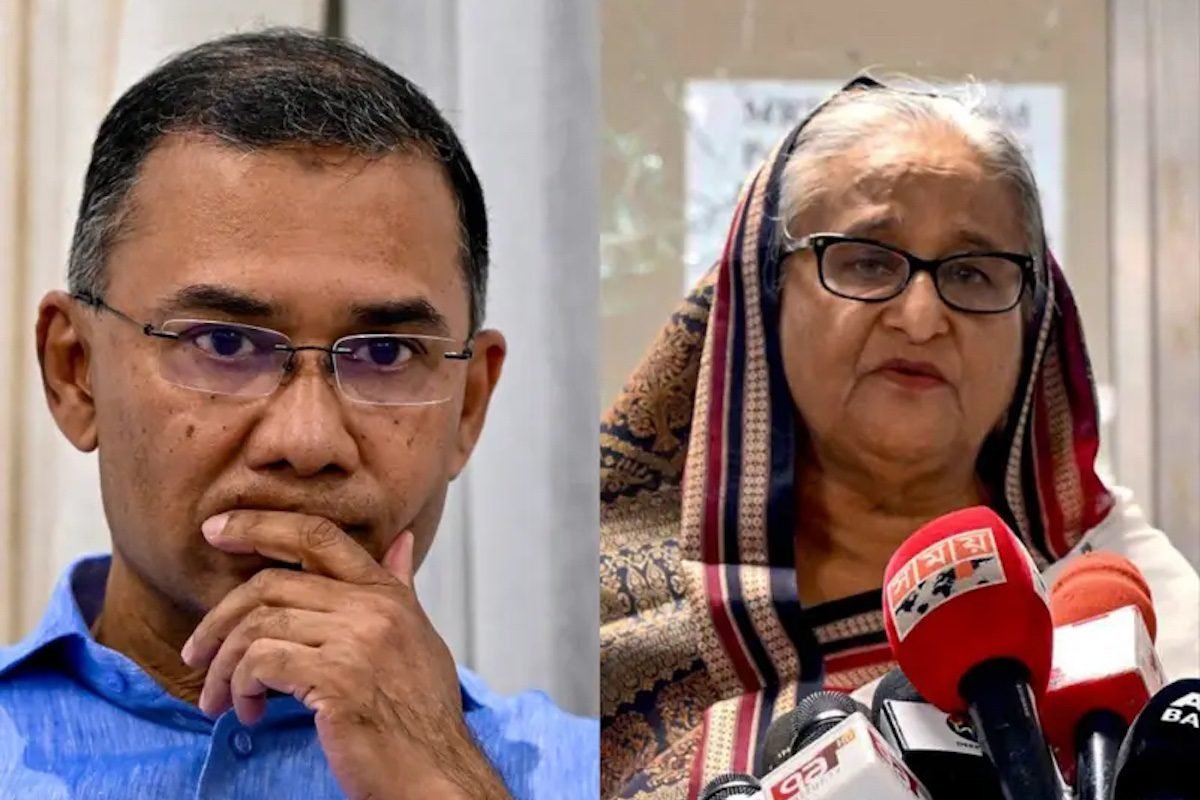
For months, Bangladesh and India had been attempting that favorite diplomatic maneuver, the “reset,” a word suggesting that international relations, like an obstinate Wi-Fi router, can be repaired by switching everything off and starting again.
There was certainly plenty to reset. Sheikh Hasina had fallen, fled to India and left New Delhi sheltering the former ousted ruler around whom it had constructed much of its Bangladesh policy.
Then, on August 5 this year, Hasina spoke from Delhi. Her live audio appearance at a media event was only a voice down a line, but it proved remarkably effective diplomacy. It disrupted preparations for Prime Minister Tarique Rahman’s first visit to India since his February landslide without requiring Hasina to leave her undisclosed residence.
India had proposed August 21 and 22 for a state visit and invited Rahman to next month’s BRICS summit as BIMSTEC chairman. Dhaka prefers a bilateral visit in which Rahman arrives unmistakably as prime minister of Bangladesh rather than entering through the regional-organization service door.
Now that visit is on hold. Dhaka had warned India beforehand that allowing Hasina to conduct politics from Indian soil could damage efforts to improve relations. India did not stop the event. Afterward, New Delhi said it had neither organized the appearance nor endorsed Hasina’s remarks.
This is diplomatically tidy and politically useless. The Bangladeshi complaint is not that PM Narendra Modi personally connected the conference call. It is that India was warned, allowed it anyway, and provided political space to a former ruler convicted of crimes against humanity over the suppression of the 2024 uprising.
Rahman’s response has been clever because it is comparatively cheap. Bangladesh has not suspended trade, security cooperation or energy links. Officials continue talking. Dhaka has merely withheld something India wants: the symbolism of an early Modi-Rahman summit.
Domestically, the calculation is better still. Nothing travels faster through Bangladeshi politics than an allegation of excessive fondness for India. By declining to rush to Delhi after Hasina’s press appearance, Rahman can look simultaneously reasonable abroad and muscular at home: willing to talk to India, but not apparently waiting beside the telephone for India to call.
The policy also has a weakness. It is reactive. Hasina lives in India, meaning New Delhi controls how much political space she receives. Every interview or address can therefore oblige Dhaka to choose between outrage and studied indifference. Bangladesh risks allowing India — and, indirectly, Hasina — to set the tempo of its India policy.
For New Delhi, the calculation is becoming equally uncomfortable. India can maintain strategic ambiguity: neither extradite Hasina nor formally embrace her, keeping an old ally somewhere between guest, insurance policy and diplomatic bargaining chip. Or it can retain her sanctuary while quietly removing the microphone.
The latter increasingly makes sense. Hasina was valuable to India because she delivered things India wanted…action against northeastern insurgents, security cooperation, transit, connectivity and predictable relations. But an ally’s strategic value changes dramatically when the ally ceases to govern.
Hasina’s August appearance demonstrated both her remaining leverage and its limits. She briefly managed to derail the India-Bangladesh recalibration. Yet each successful disruption raises the question New Delhi would rather avoid: is sheltering Hasina worth allowing her to obstruct relations with the government that actually runs Bangladesh?
India cannot afford to confuse loyalty with strategy indefinitely. Bangladesh surrounds much of India’s northeast, shares a 4,100-kilometer border with it and matters to trade, transit, counterterrorism, power and Bay of Bengal connectivity. The Ganges water-sharing treaty expires this year. Geography, unlike politicians, cannot be sent into exile.
Nor does this mean India will abandon Hasina. It has longstanding ties with her and the Awami League, while extradition carries legal complications. The likelier compromise is sanctuary without a stage: Hasina may remain India’s guest, only to discover that hospitality does not necessarily include broadcasting facilities.
Indian High Commissioner Dinesh Trivedi appeared to hint at the need for movement on Tuesday, urging both countries to “move on” and promising Rahman an “honorable reception” when he visits India. He called the relationship a “partnership of equals” — language carefully tailored to post-2024 Bangladesh’s principal anxiety about India.
Eventually Rahman will probably have to go to Delhi. Bangladesh cannot build an India policy entirely around refusing invitations whenever Hasina speaks, any more than India can build a Bangladesh policy around a woman who no longer governs it.
For now, however, Dhaka’s gamble is sensible. It costs little, strengthens Rahman politically and tells India that the terms of engagement have changed. Hasina has shown she can still interrupt diplomacy from exile.
Her greater problem is that every interruption encourages India to calculate her cost. And foreign policy, unlike old friendships, eventually comes down to arithmetic.
Faisal Mahmud is a Dhaka-based journalist. He is the managing editor of Daily Waadaa, a national English daily in Bangladesh