Renewed strikes, restored oil sanctions, and Iranian attacks on US partners have turned a temporary diplomatic framework into a fight over who controls the Strait of Hormuz
Sirens in Jordan, renewed tensions in the Strait of Hormuz, and a blunt declaration from President Donald Trump have turned a temporary US-Iran memorandum of understanding (MOU) into a battlefield dispute over who controls the region’s most sensitive waterway.
Asked during the NATO summit in Ankara, Turkey, whether the ceasefire was over and whether the MOU was dead, President Trump left little room for diplomatic polish. “It’s a very interesting question. To me, I think it’s over. I don’t want to deal with them anymore,” the US president said, according to a direct transcript of his remarks. He called Iran’s leaders “sick people” and “vicious, violent people,” warned that “if they had a nuclear weapon, they’d use it,” and concluded: “As far as I’m concerned, it’s over.”
The statement came after Washington moved to reimpose oil sanctions on Iran and launched new strikes on Iranian military targets following attacks on commercial vessels in or near the Strait of Hormuz. The Associated Press reported that the US struck about 90 targets across Iran, including air-defense systems, coastal surveillance assets, missile and drone storage sites, naval capabilities, and military logistics infrastructure. Iran’s Health Ministry said 14 people were killed and 78 wounded in the American strikes.
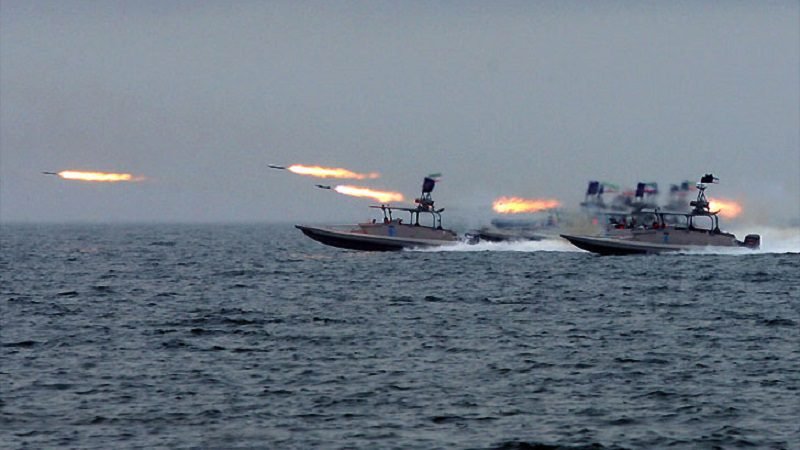
Iran responded by claiming attacks on US-linked military targets in Bahrain, Kuwait, Qatar, and Jordan. Petra, Jordan’s state news agency, citing a military source at the General Command of the Jordan Armed Forces-Arab Army, said Jordanian air defenses intercepted eight missiles launched from Iran toward Jordanian territory. The source said missile debris fell in several areas, but no casualties or property damage were reported. Kuwait also reported intercepting missiles and drones.
For Prof. Eytan Gilboa, an expert on US-Israel relations at Reichman University and Bar-Ilan University, President Trump’s words did not necessarily mean the MOU had formally disappeared. They did, however, expose what he called its basic weakness.
“Turns out that the two sides are interpreting certain clauses very differently,” Gilboa told The Media Line. The central dispute, he said, is Hormuz. President Trump believed Iran had committed to free passage through the strait, including no tolls or restrictions. Iran, according to Gilboa, reads the same issue in almost opposite terms.
The whole issue of Hormuz is a matter of control—who controls the straits—and it turns out that the MOU failed to solve that problem
“The whole issue of Hormuz is a matter of control—who controls the straits—and it turns out that the MOU failed to solve that problem,” Gilboa said. In his view, Iran’s interference with passage through the waterway amounted to a violation of the ceasefire framework, forcing the US to respond with strikes on military infrastructure linked to Iran’s control of the strait.
Washington had already moved economically before the latest exchange of fire. After the attacks on commercial shipping in or near the Strait of Hormuz, the US administration revoked a license allowing Iran to sell oil under the temporary ceasefire framework. A US official told Reuters that Washington would continue negotiating “in good faith” but said Iran’s conduct in Hormuz was “completely unacceptable” and would carry consequences.
Iran rejected that framing. Its Foreign Ministry said Tehran was carefully observing its commitments under the memorandum regarding Hormuz and called on regional states to avoid steps that contradicted the agreement. Qatar and Saudi Arabia, however, said tankers linked to them had been attacked in or near the strait, and Qatar summoned Iran’s deputy ambassador.
The dispute became more explicit when Mohammad Bagher Ghalibaf, speaker of Iran’s parliament, said the strait would not be opened on American terms. “The Strait of Hormuz will open only through Iranian arrangements, not American threats,” he said, according to Israeli reports.
Beni Sabti, an Iran researcher at the Institute for National Security Studies, said the Iranian moves in the Strait of Hormuz were not sudden. Tehran, he said, had been signaling for weeks that it would not accept commercial shipping shifting toward routes near Oman in a way that undermined its claim of control.
From their perspective, they are now the owners of the Strait of Hormuz
“They said all the time: if there is another route, if the ships pass near Oman or somewhere else, we will not allow it,” Sabti told The Media Line. “From their perspective, they are now the owners of the Strait of Hormuz.” The attacks, he said, followed the warnings Iran had already made in its own media, even if others did not take them seriously enough.
Sabti argued that President Trump appears frustrated by Iran’s threats and its effort to act as “masters of the region.” But he warned that limited US strikes may not shift the regime’s calculations if they do not hit the center of power or the launch systems used against American partners.
A limited confrontation, Sabti said, could even serve the regime. “A dictatorial regime always likes a little emergency, a little small war,” he said. At home, he argued, Iran can tell the public that the economy cannot recover because the country remains under attack. Inside the security establishment, it strengthens the generals. Externally, he said, Iran can continue playing the unpredictable actor without necessarily triggering a war aimed at the regime’s demise.
A dictatorial regime always likes a little emergency, a little small war
That is why Sabti views the sanctions issue as more important than some of the strikes. “The fact that he [President Trump] is restoring the sanctions that stop Iranian oil exports, that really hurts them,” he said. “That is more important than these attacks.”
Gilboa also sees sanctions and Hormuz as the two practical levers now available to Washington. President Trump, he said, is in “a strategic trap” after a framework that gave Iran economic relief without producing the kind of nuclear or regional concessions Washington wanted.
Commenting on possible options for President Trump, Gilboa said: “I think his most likely response would be to close the Straits of Hormuz and to reimpose the financial sanctions,” adding that these are the two things that the MOU ostensibly removed. He said the US could combine economic pressure with military activity below the threshold of a full-scale war, though he cautioned that none of the options facing President Trump are particularly good.
The Israeli angle is more complicated than simply welcoming the MOU’s breakdown. Gilboa said the US and Israel agree on broad goals: Iran should not obtain nuclear weapons, Hezbollah should disarm, and Hamas should disarm before Gaza reconstruction moves forward. The disagreement is over methods. Israel, he said, was skeptical that the MOU could deliver the dismantling or suspension of Iran’s nuclear weapons program.
Prime Minister Benjamin Netanyahu, according to Gilboa, should now argue in Washington that Israel warned the arrangement would fail. “You negotiated the MOU. You thought this would be a good way to end the war. And we said it would not,” Gilboa said, describing the argument he believes Israel should make. “So maybe we have to achieve a strategic dialogue of the kind that exists in the military area.” Military coordination between the US and Israel remains excellent, he said, but the diplomatic channel has been weaker because of policy disagreements.
Lebanon is part of that dispute. Israeli operations against Hezbollah have continued outside the US-Iran ceasefire framework, and Gilboa said linking Iran and Lebanon inside the MOU was a mistake because it strengthened Hezbollah’s standing. He argued that Iran must be “dislodged from Lebanon” if the Lebanese government is to regain authority.
Gilboa said the crisis also exposed competing instincts inside President Trump’s foreign policy team. The MOU, he said, was handled by Vice President JD Vance, whom he described as aligned with the more isolationist wing of the Republican Party, while the separate Israel-Lebanon track was being advanced by Secretary of State Marco Rubio. “It’s interesting to see who in the White House is sponsoring what,” Gilboa said.
That split, he argued, could shape the domestic Republican debate before 2028 if the Iran framework collapses. “I think Vance failed to negotiate a good deal. It was not a good deal,” Gilboa said, adding that it would be “very easy to stick failure with Iran to him” if he becomes the Republican nominee. Israel, he said, is watching that internal debate closely, not only because of Iran, but because Rubio’s Lebanon track is seen in Jerusalem as more aligned with Israeli security priorities.
I think Vance failed to negotiate a good deal. It was not a good deal.
Israel’s own posture may also explain why Iran has so far avoided direct fire at Israel during the latest exchanges. Gilboa described it as both restraint and strategic discipline. “I think there is some kind of an Israeli deterrence against Iran,” he said. Gulf states are more vulnerable than Israel because they do not have the same anti-ballistic missile systems, he added. If Iran were to attack Israel directly, he said, Israel would likely use the opportunity to strike both Iran and Hezbollah.
Sabti made a similar point in blunter terms. Iran, he said, knows Israel is looking for an opportunity to hit harder if dragged back into the conflict directly. “They are not firing at Israel because they know Israel wants to use this to finish the regime,” he said. “They know we are crazy, and we are dying for an opportunity.”
They are not firing at Israel because they know Israel wants to use this to finish the regime
For now, the conflict is being fought through a narrow but dangerous pattern: US strikes inside Iran, Iranian fire toward American positions and partners, restored oil sanctions, and renewed pressure on shipping through Hormuz. Iranian officials later said a US projectile struck the area around the Bushehr nuclear plant; the claim could not immediately be independently verified.
The MOU still exists as a document, and US officials continue to leave room for negotiations. But the working reality has changed. Its two most tangible benefits for Iran—oil sanctions relief and easier passage through Hormuz—are now either reversed or contested. Its most important promise for Washington, a controlled pause that could lead toward a final deal, is being tested by missiles flying toward US partners and by President Trump’s own public judgment that, for him, the arrangement is over.