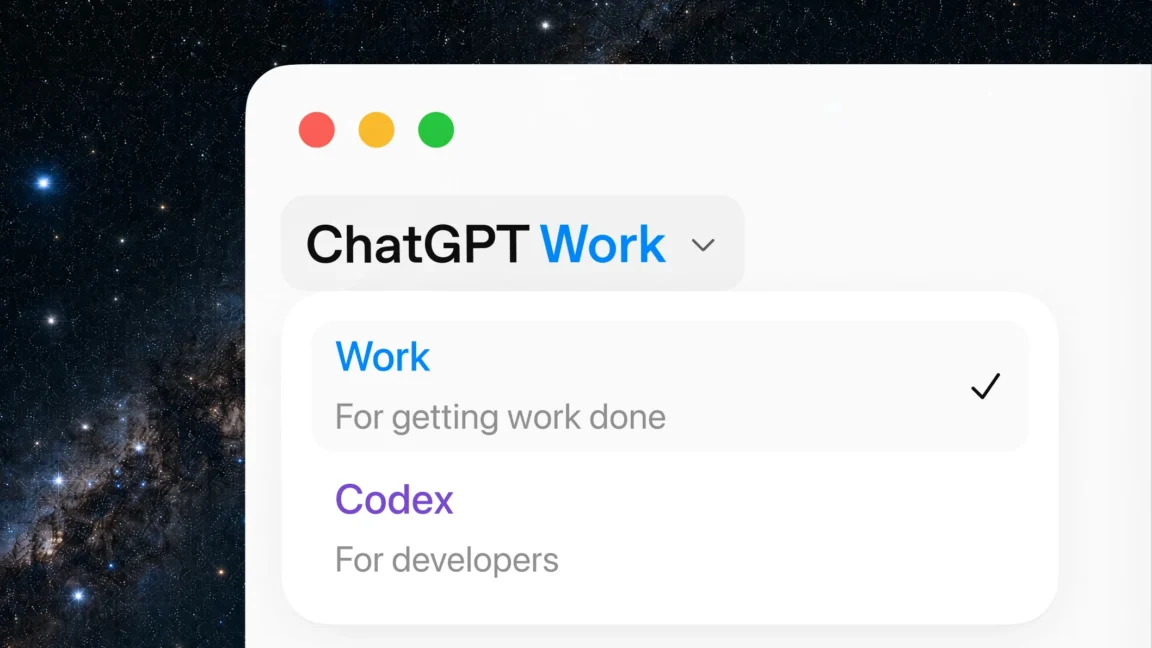
Last year, when we tested out the “Agent Mode” in OpenAI’s Atlas web browser, we complained that any automated tasks tended to stop after a few minutes, limiting its usefulness for ongoing or complex tasks. With today’s release of ChatGPT Work, OpenAI says it has solved that problem with a new tool that can “stay with a project for hours if needed, and turn a goal into finished work.”
The company is challenging users to evaluate ChatGPT Work by “giv[ing] it a task you already know well,” such as analyzing a budget or preparing a sales meeting. The company also promises that ChatGPT Work can automate entire workflows, going from customer research to a campaign brief to locally tailored marketing assets, for instance. At the same time, the company stresses that the tool will wait for you to “approve important actions.”
ChatGPT Work also integrates Scheduled Tasks, a souped-up version of cron jobs that can “take repetitive tasks off your plate” on a schedule or whenever a monitored event occurs. These tasks can keep going when you’re away from your desk and can be monitored from your phone, the company says.
ChatGPT Work can connect to common workplace management tools like Slack, Microsoft Teams, Google Drive, and SharePoint through various custom-built plugins. The desktop version of the new tool can also access and modify your desktop files or use a built-in browser to access online resources. OpenAI says an updated ChatGPT Chrome extension will also let you perform web-native tasks without switching out of the browser (OpenAI says its dedicated Atlas web browser is now being sunset, less than nine months after its launch).
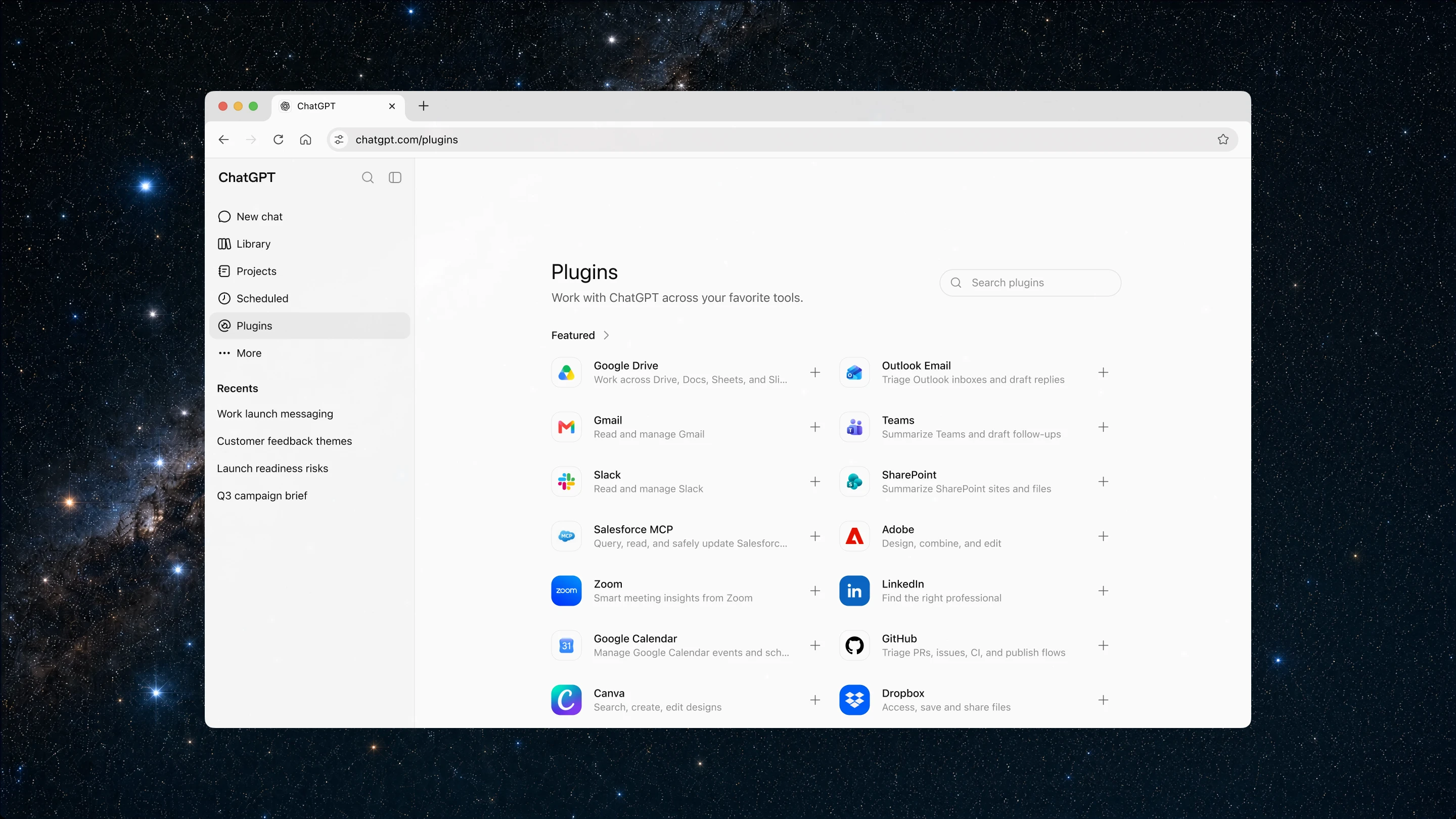
The ChatGPT Work system will access these outside resources automatically when it seems necessary to complete a prompted task, but users can also reference an outside app directly with the “@” symbol to force the use of a specific third-party tool. However, OpenAI also stresses that access to outside apps and files can be limited using its Compliance API or enterprise and admin controls.
Watch your wallet
Somewhat confusingly, OpenAI says its coding-focused Codex app is now merging with ChatGPT Work. But OpenAI also says that Codex technology is “built-in” ChatGPT Work, and Codex is still available as a separate “view” inside the new ChatGPT app (alongside the “Work” view). The existing ChatGPT desktop app is being rebranded as “ChatGPT Classic,” relegating that basic conversational use case to a deprecated version that has to be specifically requested via a “quick chat” button on Desktop (or a dropdown on mobile, where “Codex” is not available).
These distinctions between “chat” and “work” could be important, because OpenAI warns that ChatGPT Work is “designed for longer, more involved work than a typical chat request” and that those complex tasks “may use more of your plan’s included usage.” ChatGPT Work usage will be billed using the same structure as Codex, with subscription plans ranging up to $100 a month that have built-in usage limits through a credit system
OpenAI seems aware of the sticker shock that can accompany an agent’s extended use and expansive token consumption. ChatGPT Enterprise and Edu subscribers can set overall spend limits or set group- or individual-level limits to support “high-impact work” among certain employees.
The ChatGPT Work rollout comes alongside the debut of the new GPT-5.6 model, a new model that OpenAI promises provides “stronger performance per dollar” for “your hardest work.” That model can operate in three tiers, with the most expensive and high-performance costing $5 for a million input tokens and $30 for a million output tokens.