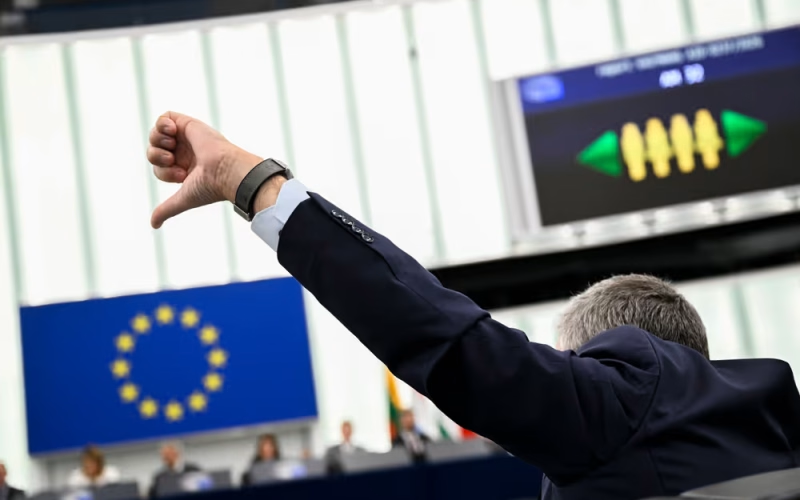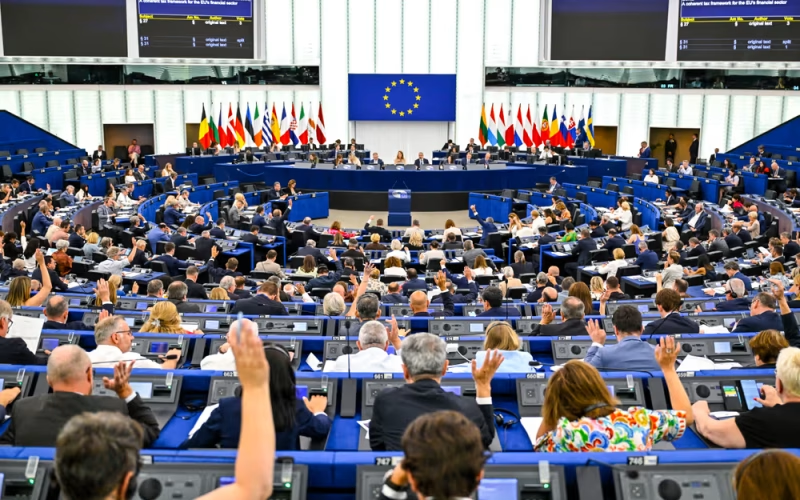
The European Parliament has reaffirmed its support for the European Union accession ambitions of Ukraine and Moldova, while warning that Serbia’s membership process remains hindered by shortcomings in democratic reforms, the rule of law and foreign policy alignment.
In three separate reports adopted on Wednesday, MEPs assessed each country’s progress towards EU membership and outlined the priorities they believe should guide the next stages of the enlargement process.
Ukraine: Continued reforms and long-term support
Parliament welcomed the opening of the first “fundamentals” cluster of Ukraine’s accession negotiations in June 2026 and expressed hope that additional negotiating clusters would be opened in the near future.
The report, adopted by 460 votes in favour, 136 against and 59 abstentions, called for a constructive approach to advancing Ukraine’s European integration while taking into account the EU’s strategic interests and the broader security of Europe.
MEPs commended Ukraine’s efforts to strengthen democratic institutions, uphold the separation of powers during wartime and advance judicial reforms and anti-corruption measures. They also stressed that continued progress in these areas would be essential for reconstruction, transparency and investor confidence.
The Parliament said future elections should only take place once martial law has been lifted and conditions exist to ensure free and fair voting. MEPs also rejected calls for elections while Russia’s war against Ukraine continues.
The report welcomed the first €3.2 billion disbursement under the Ukraine Support Loan and called for predictable multiannual EU financial assistance to help finance Ukraine’s defence and recovery.
MEPs also urged greater pressure on Russia’s wartime economy and supported continued international backing for Ukraine following the G7 leaders’ June 2026 statement.
On relations with Poland, Parliament expressed regret over Ukraine’s decision to rename an elite military unit after figures associated with the Ukrainian Insurgent Army (UPA), saying the move had affected neighbourly relations and calling for renewed reconciliation efforts.
Serbia: Reform implementation remains key obstacle
The Parliament said Serbia continues to describe EU membership as a strategic objective but warned that this commitment is not consistently reflected in government actions.
The report, approved by 468 votes in favour, 116 against and 79 abstentions, said there remains a persistent gap between Serbia’s adoption of EU-related legislation and its implementation, slowing progress towards accession.
MEPs said accession negotiations should only advance when Serbia demonstrates measurable and lasting improvements in areas including the rule of law, judicial independence, democratic institutions, media freedom, electoral standards, and the fight against corruption and organised crime.
They also called on the European Commission to reflect any significant setbacks in reforms when allocating pre-accession financial assistance.
Parliament reiterated that normalising relations with Kosovo remains a condition for support under the EU’s Reform and Growth Plan.
The report also expressed concern over Serbia’s close ties with Russia and its expanding security and defence cooperation with China, stressing that full alignment with the EU’s Common Foreign and Security Policy, including sanctions against Russia, remains a requirement for membership.
MEPs further pointed to low public support for EU membership, which they said has been influenced by longstanding anti-EU narratives in parts of the media and political leadership. Against the backdrop of ongoing protests since late 2024, Parliament said genuinely free and fair elections would provide the best way to address the country’s political crisis.
Moldova: Progress despite external pressure
Parliament also endorsed Moldova’s continued progress towards EU membership, praising the country’s reform efforts despite what it described as persistent Russian interference.
The report, adopted by 505 votes in favour, 115 against and 45 abstentions, welcomed the opening of accession negotiations on the “fundamentals” cluster and urged EU member states to open additional negotiating chapters without unnecessary delay, in line with the merit-based enlargement process.
MEPs noted the European Commission’s assessment that Moldova has made good progress in justice reform and anti-corruption efforts while highlighting the need to continue addressing the influence of oligarchs in politics, business and the media.
The report warned of ongoing Russian attempts to interfere in Moldova’s democratic processes and called on the EU to strengthen support for the country’s institutional resilience, cybersecurity, strategic communications and independent media.
Parliament also welcomed Moldova’s deeper economic integration with the EU single market and its efforts to reduce dependence on Russian energy.
On the Transnistria region, MEPs reiterated their support for Moldova’s territorial integrity and called on Russia to withdraw its military personnel, equipment and ammunition from the territory.