Japan is seeking to rally G7 nations into a united front against China’s export controls on critical minerals, pushing for a floor price mechanism to shore up the economics of producing rare earths within the alliance.
Speaking at the G7 Evian Summit in France on June 16, Prime Minister Sanae Takaichi warned that China’s measures against Japan risked disrupting partner nations’ supply chains and called on G7 members and multilateral development banks to build more resilient mineral supply chains.
Takaichi expressed grave concern that China’s measures against Japan could disrupt the supply chains of G7 members and other like-minded nations, and stressed the need to work with international organizations to strengthen the resilience of critical mineral supply chains. She also underscored the importance of channeling support to mineral-producing developing countries through multilateral development banks (MDBs).
She added that Japan and G7 partners will further promote the World Bank Group’s Resilient and Inclusive Supply Chain Enhancement (RISE) Partnership and cooperate with the Asian Development Bank (ADB) and the Inter-American Development Bank (IDB).
G7 leaders agreed to coordinate stockpiling of critical minerals and reduce dependence on any single dominant supplier outside the G7. They also agreed to launch a new coordination platform with an expanded role for the International Energy Agency (IEA) to monitor markets and flag supply risks.
The target is to reduce dependence on any single non-G7 supplier of rare earths and permanent magnets to below 60% by 2030, with lithium and nickel designated as the two pilot metals for initial stockpiling efforts.
The current standoff has escalated steadily since January this year, when China banned exports of all dual-use items to Japanese military users, citing Japan’s remilitarization drive. The curbs were partly triggered by Takaichi’s remarks that any use of force against Taiwan could constitute a survival-threatening situation for Japan, a legal threshold that could activate the country’s Self-Defense Forces. Chinese firms have since stopped supplying critical metals to Japanese companies for dual-use purposes, forcing them to pay a premium to source materials elsewhere.
The tactic echoed a move Beijing made 16 years earlier. In 2010, China halted rare earth exports to Japan following a collision between a Chinese fishing trawler and Japanese Coast Guard vessels near the disputed Senkaku Islands.
At the time Japan imported about 28,000 metric tons of rare earths a year, roughly 90% of which came from China, leaving its automobile and electronics sectors severely exposed. Japan and its Western partners filed a complaint at the World Trade Organization (WTO), which ruled against China’s export controls in August 2014.
Japan responded to the 2010 shock by investing in overseas alternatives, including a US$250 million stake in Australia’s Lynas Rare Earths, which mines ore at Mount Weld in Western Australia and refines it at a plant in Malaysia before shipping processed materials to Japan.
But from 2012, China flooded the market with cheap supply, rendering most foreign rare earth projects uneconomical. Molycorp, which owned the Mountain Pass rare earth mine in California, filed for bankruptcy in 2015. Although Japan and its Western partners won a WTO ruling against China’s export controls in August 2014, the damage was already done.
By 2020 Japan had trimmed China’s share of its rare earth imports only to around 60%, leaving Beijing’s leverage largely intact.
This time, the G7 action plan announced at Évian marks a significant departure from that earlier era of unilateral responses. Unlike in 2010, when Japan fought alone, the Évian framework enlists a far broader coalition in support of binding supply targets and coordinated stockpiling.
Nikkei reported on June 10 that Shin-Etsu Chemical, one of Japan’s largest rare earth magnet makers, plans to build a new domestic refinery, in Fukui prefecture, at a cost of more than 35 billion yen (US$218 million), with roughly half the funding coming from government subsidies.
A company spokesperson said the refinery would help Shin-Etsu ensure a stable supply of rare earth products and magnets, but declined to provide further details on the plan.
Cold water from Beijing
China officially sticks to its guns. “In accordance with laws and regulations, China has banned the export of all dual-use items to Japanese military users and for Japan’s military use,” Foreign Ministry spokesman Lin Jian said in a regular media briefing on Thursday. “The aim is to contain Japan’s remilitarization and its attempt to possess nuclear weapons. China’s position on keeping the global industrial and supply chains of critical minerals safe and stable has not changed.”
“In recent years, Japan has been in the habit of stitching together exclusive groupings against China within the G7 and on other occasions,” Lim said. “Its leader’s latest G7 remarks on China were particularly obtrusive, exposing that its attempt to rally allies and stir up confrontation wins no support and is bound to fail.”
Lim said that if the Japanese side truly wants to improve its relations with China, it needs to comply with the four political documents between China and Japan, abide also by its own commitments and take concrete actions to uphold the political foundation of China-Japan relations, rather than continuing to do things that make dialogue impossible.
As Japan actively pushes for its own rare earth supply chain, Chinese pundits pour cold water on its prospects for succeeding.
“After China cut off rare earth supplies to Japanese military-linked entities in January, domestic prices in Japan tripled,” says a Hefei-based columnist writing under the pen name “Sea Lion.” “Japan now partners with Canada’s Aclara Resources, which has mining projects in Brazil and Chile and has pledged production by 2028, but this project is doomed to fail.”
He offers four reasons:
- Chronic capacity shortfall. Even at full output, Aclara’s production would amount to only 15% of China’s 2024 annual output, not enough to cover US electric vehicle demand alone, let alone supply Japan.
- Heavy rare earths remain the fatal weakness. Japan needs dysprosium and terbium for military and high-end manufacturing, and China controls virtually all stable global supply. Aclara’s Brazil trial line produces just 150 kilograms of heavy rare earths per year, insufficient for even a single Toyota production line.
- The timeline is unrealistic. Taking a mine from approval to production requires five to eight years. Delivering within two years is widely seen as impossible.
- The cost structure is prohibitive. With US$400 million sunk into construction and equipment and untested technology built from scratch, the final product could cost more than twice the price of equivalent Chinese supply.
In fact, Japan is not relying on any single bet. Its firms and state-backed institutions have been quietly locking in overseas supply on multiple fronts:
- Last November, JX Advanced Metals Corporation took a stake in RZ Resources, an Australian miner developing the Copi Project in New South Wales, which produces mineral sands, including rutile, zircon, and monazite, used in aerospace and defense. Marubeni Corp followed with a further A$15 million (US$9.4 million) investment, giving Japan two anchor positions in the project.
- On March 9, the Japan Organization for Metals and Energy Security (JOGMEC), which aims to secure stable supplies of resources and energy for Japan, signed a memorandum of understanding (MOU) with the state government of Goiás, Brazil, on rare earth cooperation. Brazil holds an estimated 21 million metric tons of rare earth reserves, second only to China, and a major mine in Goiás began commercial production in 2024. In February, the US government announced an investment of more than US$500 million in the state, cementing Brazil as a key frontier for the US-Japan alliance.
- On March 10, Lynas Rare Earths renewed its supply agreement with Japan Australia Rare Earths (JARE), a joint venture between JOGMEC and Japan’s Sojitz Corp, extending annual deliveries of 7,200 metric tons of neodymium and praseodymium through 2038 with a price floor of US$110 per kilogram on 5,000 metric tons. The two sides also agreed on a stable supply of dysprosium and terbium.
What Tokyo is now pushing the G7 to adopt is a floor-price guarantee system for critical-mineral contracts, with each mineral carrying its own agreed-upon minimum price.
Under such a mechanism, G7 members would commit to purchasing rare earths at or above the floor price for each material, ensuring that allied miners and refiners can recover their costs regardless of how aggressively China undercuts the market. The US$ 110-per-kilogram floor agreed in the Lynas-JARE deal is seen as a reference point for neodymium and praseodymium within any broader G7 framework.
Benjamin Lin, director of the economic division at the Taipei Economic and Cultural Representative Office (TECO) in Japan, said that as the US and Japan move toward consensus on mineral-specific price floors, such guarantees could become a standard feature of international critical mineral contracts, serving as a direct counter to China’s ability to use non-market pricing as a geopolitical tool.
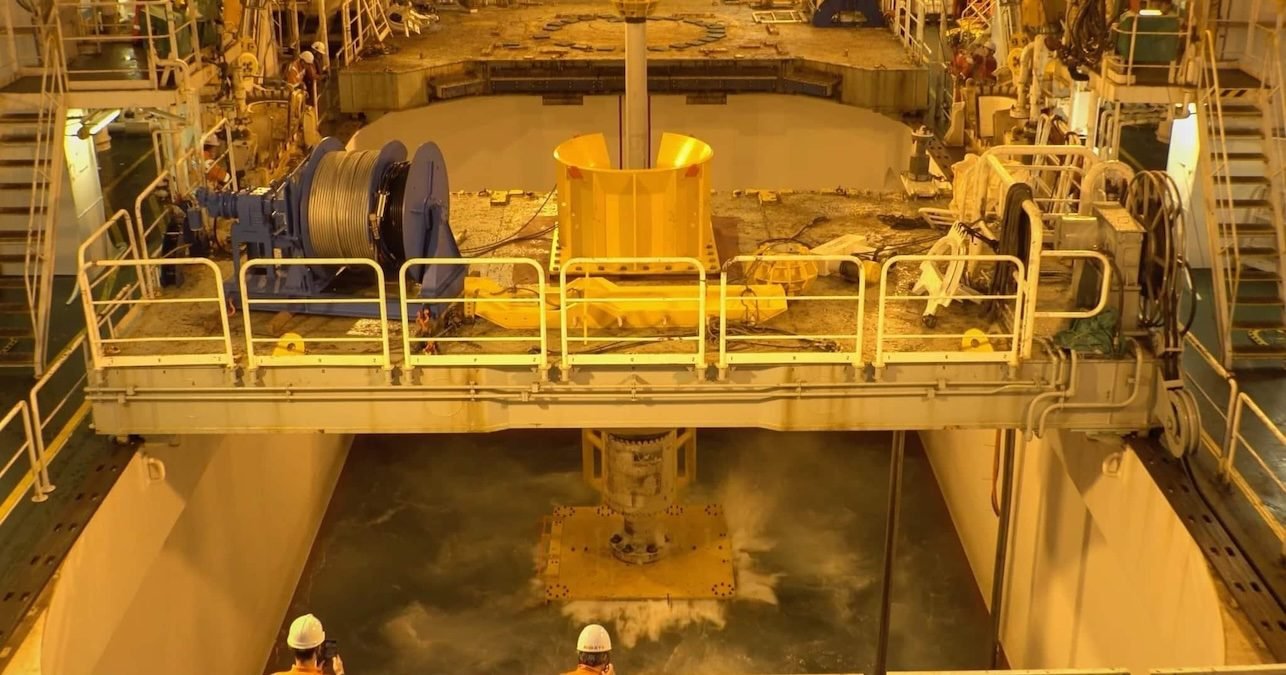
For longer-term supply security, Japan is preparing to send a delegation to Greenland this summer to evaluate opportunities for rare earth extraction, Nikkei reported. Tokyo is also looking beneath the ocean floor, announcing this month that a deep-sea Pacific mission had retrieved rare earth-bearing sediment from a record depth of 6,000 meters.
A Tianjin-based columnist says it is unlikely Japan could bring deep-sea rare earths to commercial scale within a decade. But he acknowledges that if Tokyo eventually succeeds, pricing power over critical minerals, long concentrated in China, could gradually shift toward a more distributed global market.
Read: China plays rare-earth card on Japan, but keeps it subtle
Follow Jeff Pao on X at @jeffpao3