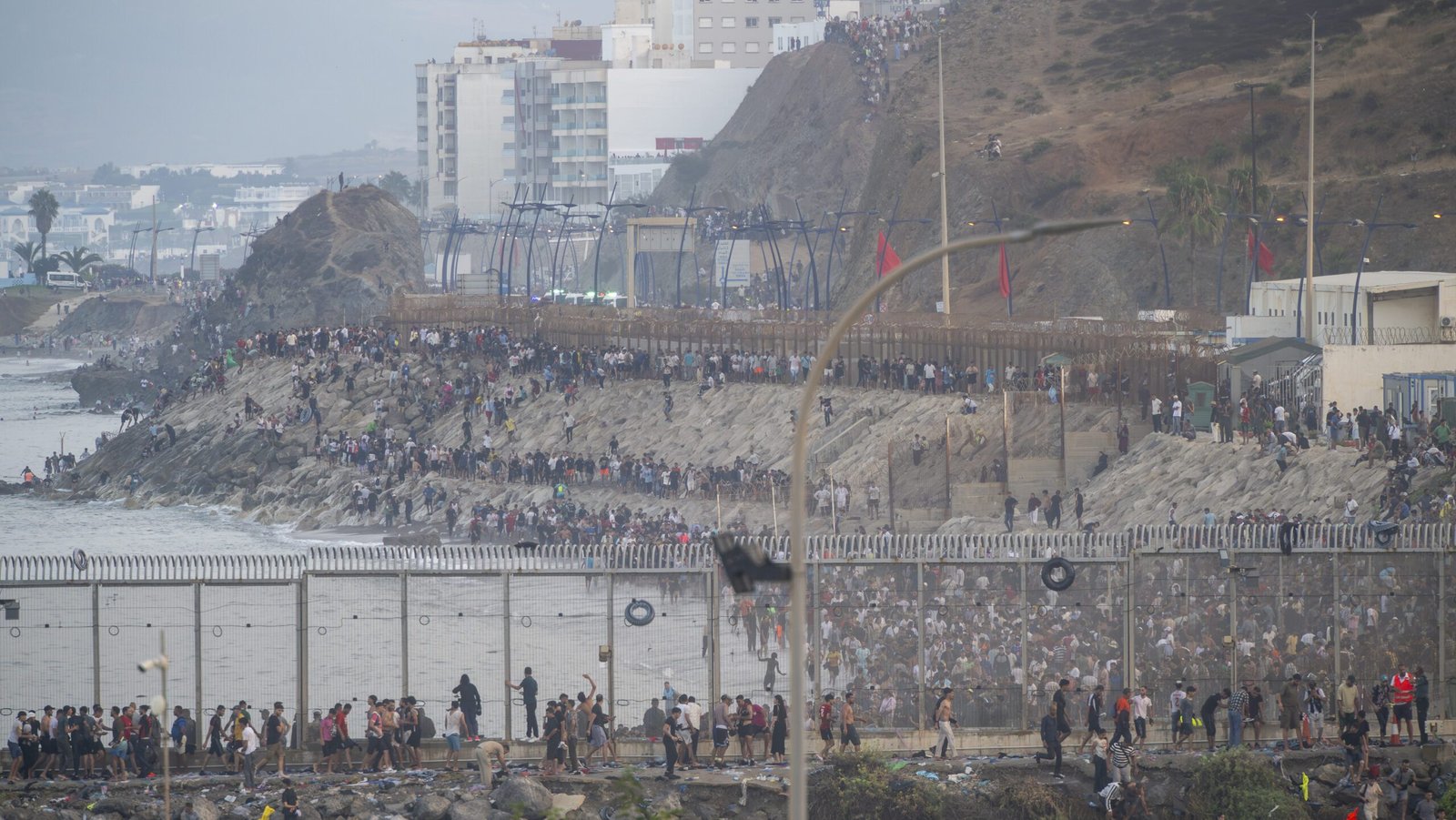
A migrant surge that overwhelmed Spain’s North African enclave of Ceuta has expanded beyond a border emergency into a diplomatic dispute involving Spain, Morocco and Israel, prompting a Spanish member of the European Parliament to publicly urge Israeli Prime Minister Benjamin Netanyahu to defend Spain’s territorial integrity.
In ‘’Speak Out in Defense of Spain’s Territorial Integrity,’ Spanish MEP Urges Netanyahu, The Media Line’s Gabriel Colodro describes a city of 84,000 residents suddenly confronted by the arrival of nearly 60,000 migrants in a matter of days, an influx that left at least 83 people dead, strained local services and fueled a political battle stretching from Madrid to Jerusalem.
“With my greatest admiration and respect for Netanyahu’s life story and courage, I ask Netanyahu to speak out in defense of Spain’s territorial integrity, because the Spanish government is not Spain,” Juan Carlos Girauta told The Media Line.
As the crisis unfolded, Israeli Ambassador to the United Nations Danny Danon criticized Spain for deploying troops to Ceuta after repeatedly condemning Israeli security measures, questioning why Madrid continued to maintain what he called colonial enclaves in Africa. Israel’s chargé d’affaires in Spain, Dana Erlich, quickly distanced the government from Danon’s remarks, saying they “does not represent the position of the State of Israel.”
For Girauta and other Spanish supporters of Israel, that clarification did little to ease concerns. He argued that Danon’s comments handed political ammunition to Prime Minister Pedro Sánchez’s allies, while unsubstantiated claims linking Israel and the United States to the border crisis quickly spread in public debate. No evidence has emerged connecting Israel to the crossings.
Questions also mounted over Morocco’s role. Girauta and Ángel Mas, president of ACOM, both characterized the mass crossing as a form of “hybrid warfare,” arguing that an influx of such magnitude was difficult to explain without at least some degree of official acquiescence. Publicly available evidence, however, has not established that Morocco organized the crossings. Reports citing officials familiar with Spain’s intelligence assessment said Rabat appeared to have relaxed border controls, while Morocco blamed human traffickers, economic hardship and false information circulating online.
As Colodro’s report reveals, Ceuta’s Jewish community, the immediate concern remained closer to home than the diplomatic fallout. Community president José Bentolila said residents endured days of uncertainty as businesses closed, reception centers filled and thousands remained in the city. Yet despite heightened anxiety, he said no antisemitic incidents had been reported, and the city’s tradition of coexistence among Jews, Christians, Muslims and Hindus had endured.