England is moving to strengthen protections for pubs while one of the country’s largest pub chains is taking action against another source of customer frustration: excessive smartphone noise.
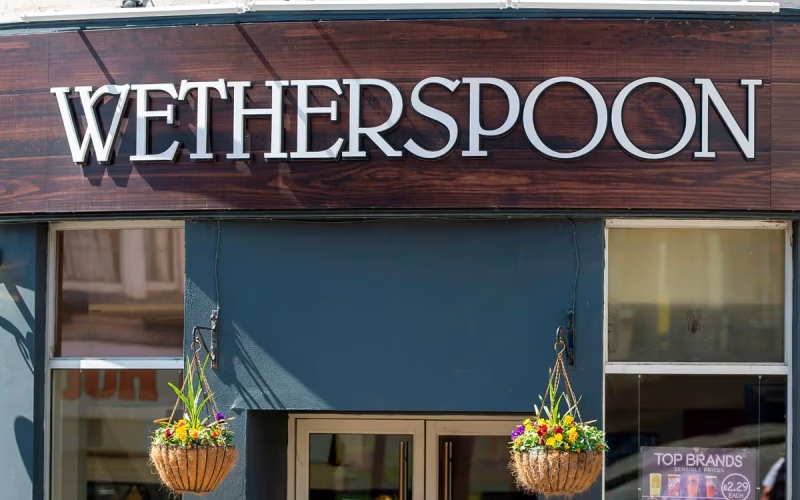
Wetherspoons has introduced a ban on customers playing music or taking calls on speaker across its 792 pubs, saying noise from smartphones and tablet computers had become an “increasing problem in recent years.”
The company said it had received complaints from customers frustrated by other people’s videos and amplified phone conversations. It is asking customers to keep their phones on silent or use earphones.
Wetherspoons chair and founder Tim Martin said the policy was intended to preserve the atmosphere of its pubs, describing them as an “oasis of tranquillity and contemplation” and asking phone users to reduce the noise.
Government plans to make it harder to convert pubs into housing or offices as Wetherspoons introduces a nationwide ban on loud phone use following customer complaints.
The move comes amid a wider debate in Britain over the use of personal devices in public spaces. The Liberal Democrats have previously called for fines of up to £1,000 for people who play music aloud on buses and trains.
A YouGov poll of 6,815 British adults last year found that 62% supported such fines, while 28% opposed them. Support was particularly strong among pensioners, while people aged 18 to 24 were more evenly divided.
London Mayor Sadiq Khan also launched a campaign last year encouraging passengers to use headphones when playing music on the city’s transport network.
Government moves to protect pubs from redevelopment
At the same time, the British government is preparing new planning rules designed to prevent pubs across England from being converted into housing or offices.
Housing Secretary Angela Rayner is due to present a new national planning policy framework aimed at further loosening planning restrictions while supporting the government’s target of building 1.5 million homes by the end of the parliament.
However, the government has decided that protections previously being considered only for the last remaining pub in an area will apply to all pubs facing the threat of conversion to another use.
The change follows concerns over the rate of pub closures in England. According to the Campaign for Real Ale, 794 pubs have closed this year, with 82 either demolished or converted.
Hospitality industry leaders have blamed rising employer national insurance costs, higher minimum wages, food price inflation and high business rates for putting pressure on pubs and restaurants.
Under the planned changes, developers seeking to convert a pub will have to demonstrate that there is no reasonable prospect of it continuing as a viable business. This will include evidence that the pub was marketed for sale for at least a year.
Councils will also have to consider whether losing a pub would deprive the local community of a place to gather.
Rayner said pubs were an important part of national and community life and argued that weak protections had allowed too many to disappear without sufficient safeguards.
The two measures highlight different pressures facing Britain’s pub industry: efforts to preserve pubs as community spaces while operators themselves seek to maintain a comfortable environment for customers.