Originally published by Pacific Forum, this article, the first of two in a series, is republished with permission.
Beyond the Arctic’s increasing relevance as a commercial corridor, the region is emerging as a strategic missile-warning and deterrence theater linked to Indo-Pacific security writ large. As Russia, China, and the United States jockey for military power and influence in the Arctic, Washington must consider the threats and opportunities of the present security environment and accordingly design its High North policy to protect American national security and extended deterrence networks.
The unique geolocation, climate, and terrain north of the Arctic Circle (66°33′ N) make the Arctic region an ideal node for missile defense, especially for early warning (EW) and interception.
The Earth’s geodesic structure makes air passage over the Arctic the shortest route between many a pair of locations in the Northern Hemisphere, enabling ballistic missiles to travel the minimum time and distance between launching point and destination. These geostrategic characteristics make the region the frontline for nuclear deterrence and early warning assets during a potential first-strike scenario.
The US-Soviet nuclear arms race of the Cold War extended into the Arctic, where both powers developed infrastructure for missile testing and early warning (EW in military jargon), as well as intelligence, surveillance, and reconnaissance (ISR). The Soviet Union established a dense network of military facilities across the region, including the Northern Fleet base at Zapadnaya Litsa and nuclear testing sites in Novaya Zemlya.
The United States, for its part, built a layered early warning and defense architecture across Alaska, Canada, and Greenland. This system included the Distant Early Warning (DEW) Line, a chain of radar stations stretching from Alaska across the Canadian Arctic to Greenland, providing a warning window of approximately three to six hours against incoming Soviet air-borne threats. Complementing this systerm were Nike Hercules surface-to-air missile installations, including Nike Site Summit 0verlooking Anchorage, as well as forward operating bases that supported Arctic surveillance and response missions.
These investments reinforced Alaska’s role as a forward defense hub and “guardian of the North.” DEW has since been incorporated into the North Warning System (NWS), the US and Canada’s joint 5,000-km radar network consisting of 13 long-range and 36 short-range radar sites. The NWS provides coverage across the Arctic from Alaska through northern Canada to Labrador.
Today, the United States maintains key early warning and missile defense facilities in the Arctic region, including Pituffik Space Base in Greenland, equipped with Upgraded Early Warning Radar (UEWR), and Clear Space Force Station in Alaska. Fort Greely hosts Ground-Based Midcourse Defense (GMD) interceptors, a vital component of the US homeland missile defense system.
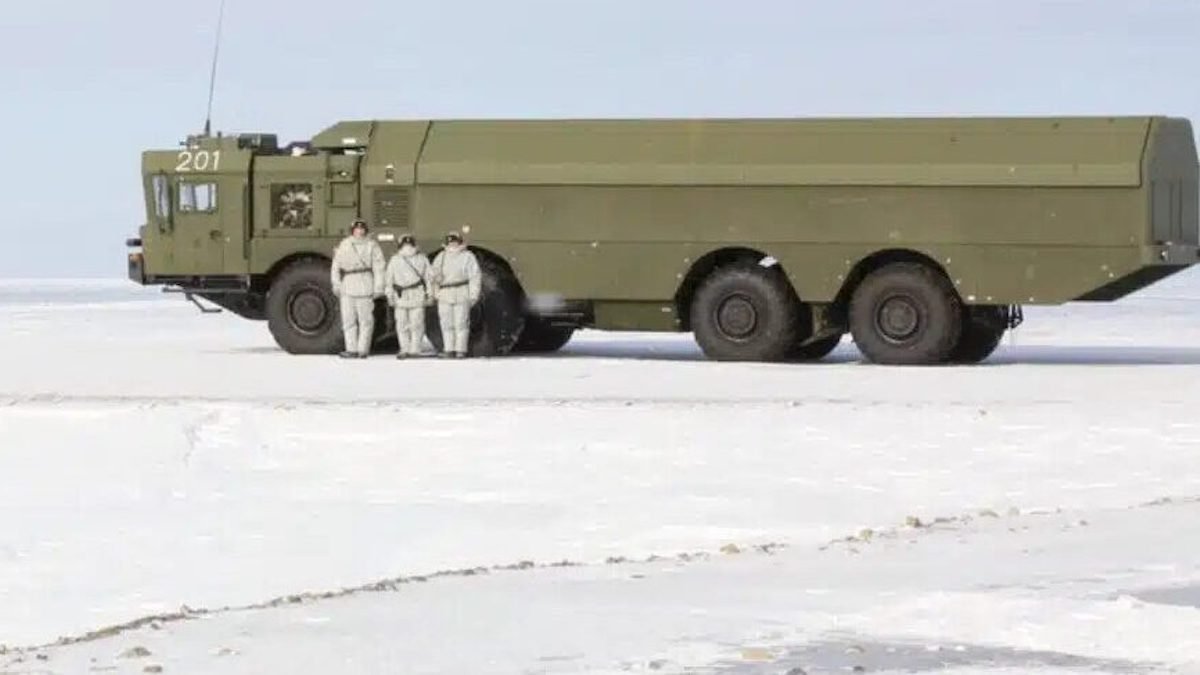
Meanwhile, Russia has revitalized its Arctic military posture, reactivating dozens of Soviet-era bases and concentrating strategic assets in the Kola Peninsula. The evolution of Russia’s presence in the Arctic demonstrates a renewed emphasis on EW, deterrence, and anti-access/area denial (A2/AD) capabilities in the High North.
Russia is also pursuing asymmetric advantages in the Arctic through the integration of critical defense assets, including the Northern Fleet and the Nudol anti-satellite system, and by using asymmetric capabilities to weaken key elements of US deterrence infrastructure. These efforts include preparations for the deployment of advanced nuclear-powered Burevestnik cruise missiles and Poseidon underwater drones, both of which have the capacity to complicate or overwhelm existing US missile defense systems.
In addition to investing in missile defenses, both Russia and the United States have invested heavily in ISR and conventional deterrence capacity in the region. In particular, the United States hosts critical service branches in Anchorage and Fairbanks including Elmendorf-Richardson), Eielson Air Force Base, and Space Force and Coast Guard bases.
Emerging strategic pressures
In recent years, China and Russia have expanded cooperation through a series of joint activities, including strategic bomber patrols near the Alaska Air Defense Identification Zone, joint coast guard operations and naval patrols in the North Pacific near Alaska. The two countries have also engaged in dual-use seabed mapping and maritime research, which support both scientific objectives and undersea military operations, including submarine navigation and ISR capabilities.
Such activities reinforce Russia’s existing military advantages in the Arctic while enabling new forms of asymmetric capability development. Russian cooperation with China in underwater and uncrewed domains complements Russia’s unilateral investments in advanced underwater systems, including nuclear-capable unmanned underwater vehicles designed to operate in Arctic conditions. These developments undermine US detection and response capabilities – particularly in the Arctic region whose environmental conditions already degrade sensor performance, thereby increasing uncertainty in early warning and crisis response.
Russia’s growing missile activities are destabilizing the regional security environment of the Arctic. Following the outbreak of the full-scale Russian invasion against Ukraine, Russia has conducted increasingly frequent missile tests across the region. These included major, publicized nuclear-delivery tests across air, land, and maritime domains.
Overall, Russia’s development of hypersonic, highly maneuverable delivery systems is challenging traditional radar-based tracking. Those systems operate at high speed between Mach 10 and Mach 20 and can be launched from an unpredictable initial launch point (e.g., an aircraft or a rocket vehicle) to defeat sectored, non-360-degree radar coverage.
The Avangard hypersonic glide vehicle (HGV) and the Kh-47M2 Kinzhal air-launched ballistic missile are examples of such initiatives. Avangard entered combat duty in December 2019, and Kinzhal has been in service since 2017. Avangard reportedly features onboard countermeasures and is nuclear-capable.
Due to the unpredictability of their flight paths and speeds, these systems further constrain pattern-recognition-based targeting and compress the conventional detection window. They degrade pattern-recognition targeting by avoiding predictable parabolic paths, varying atmospheric flight paths, creating plasma sheaths that confuse radar, and exploiting the persistent low-altitude sensor gap. Avangard can travel at Mach 20 (24,700 km/h), and Kinzhal has potential to reach speeds of up to Mach 10 (12,350 km/h).
Second, Russia’s nuclear modernization and investment in uncrewed systems are increasing and diversifying its second-strike capabilities. By adding more survivable delivery platforms, these systems increase the resilience of the Russian nuclear deterrent against a first strike, thereby strengthening its assured retaliation.
For example, the nuclear-powered, nuclear-capable Poseidon uncrewed underwater vehicle is designed for long-endurance, stealthy operations in the Arctic Ocean. Its ability to evade traditional anti-submarine warfare and survive a first strike enhances Russia’s second-strike credibility while complicating the United States’ ability to detect, track and intercept.
Beyond the air and underwater arenas, Russia’s counterspace capabilities present an additional security challenge for the United States. The Kremlin’s investment in space-based anti-satellite capabilities now threatens the satellite infrastructure on which United States’ missile warning systems and C5ISR (Command, Control, Computers, Communications, Cyber, Intelligence, Surveillance, and Reconnaissance) rely.
Additionally, the expiration of the New START Treaty in February 2026 introduces added uncertainty to the arms control architecture. In the absence of consent on the limits of delivery systems, along with mutually agreed mechanisms for investigation and management, increasing uncertainty is faced by each side regarding the other’s force posture and modernization trajectory.
Consequently, transparency has declined, while opportunities for confidence-building have become more limited. This further complicates potential collaboration on strategic stability assessment and increases the likelihood of miscalculation and escalation during a crisis.
Finally, the proliferation of dual-capable delivery systems could increase the risks of inadvertent escalation. These platforms can carry conventional or nuclear payloads, which could compromise the detector’s real-time warhead-type identification capability for incoming missiles. As a result, the prolonged identification time further compresses the decision window available to the military and political leadership. This situation, therefore, increases decision costs and the probability of miscalculation.
The ambiguity also introduces the possibility of a more effective first strike. Without fully reliable and verifiable intelligence to determine the incoming strike’s nature – particularly, whether it is conventional or nuclear – US and allied commanders may thus be confronted with a binary dilemma: Either select an option within a limited credibility and decision timeline or risk the survivability of their own nuclear arsenal and homeland security.
Together, the limit to situational awareness and the compressed decision timeline increase the likelihood of a delayed or compromised response, thereby further enhancing the operational effectiveness of Russia’s first-strike options.
Arctic environmental conditions also limit the effectiveness of Airborne Early Warning and Control (AEW&C) platforms. Such factors include extreme cold, reduced visibility, electromagnetic interference and severe weather. These operational constraints narrow the available interception window for US and allied missile defense forces by reducing sensor performance and complicating target identification.
New delivery platforms, especially maneuverable hypersonic systems, can evade traditional interception through variable trajectories and reduce predictability, thus increasing the survivability of the missiles. Such developments could reduce the efficacy of established missile defense systems, including Terminal High Altitude Area Defense (THAAD) and Patriot.
The integration of such systems into multi-domain operations that involve Northern Fleet assets, counterspace systems (e.g., Nudol), and next-generation strike platforms may further increase credible threats against US legacy systems.
As the Arctic becomes a more contested and strategically integrated domain, it is essential to examine the growing connection between developments in the High North and wider deterrence dynamics. In part two of this series, we will examine the Arctic’s impact on Indo-Pacific security and offer recommendations on how the US and its allies should respond.
Emerson Tsui (Emersonatsui@outlook.com) is a Washington, D.C.–based China and Indo-Pacific security analyst whose research focuses on Taiwan security, cross-Strait deterrence, and PRC strategic affairs. He has contributed to multiple policy publications on Indo-Pacific and Taiwan security issues and joined the Pacific Forum’s Young Leaders Program in 2023.