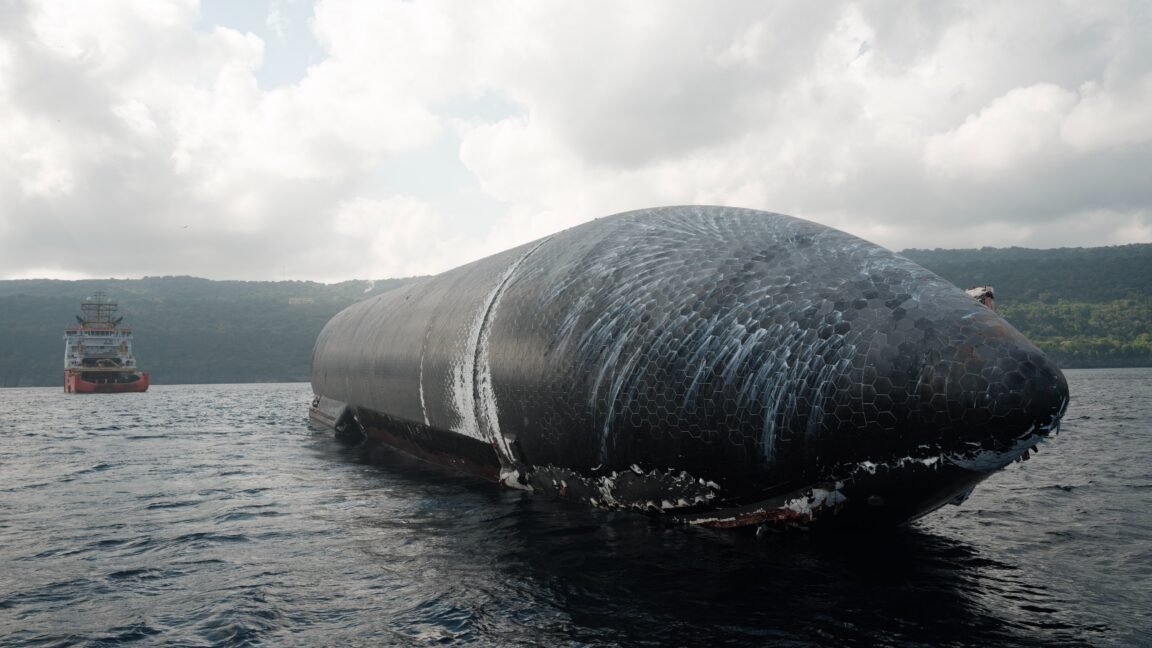
SpaceX’s most recent Starship test flight may have ended July 24, but its mission isn’t over yet.
The spacecraft splashed down in the Indian Ocean intact after flying halfway around the world from SpaceX’s launch base in South Texas. Engineers expected the ship’s life to end with a fiery disintegration after toppling over, just as past Starships have done following splashdown.
Numerous onboard sensors and cameras, along with buoys and drones in position at the splashdown zone, have provided important data for SpaceX to assess the performance of the ship’s heat shield after each test flight, so officials accepted the post-flight conflagrations. That day, Starship tipped over and remained intact, surprising just about everyone.
Engineers have reams of data from all 13 test flights of Starship and its giant booster rocket, known as the Super Heavy. But there’s no match for inspecting hardware after returning from space. SpaceX routinely recovers and reuses Falcon 9 booster stages with near-flawless performance. The handful of minor failures with the Falcon 9 have centered on the rocket’s single-use upper stage.
Hardware-rich
So, getting Starship back in one piece is a boon. A recovery ship towed the spacecraft engine-first several hundred miles across the Indian Ocean to Christmas Island, an Australian territory. SpaceX announced the ship’s arrival just off the coast of Christmas Island on Tuesday.
“A team of SpaceX engineers is on their way to conduct additional analysis on the vehicle in calmer waters before attempting to return it to Starbase,” SpaceX wrote on X.
SpaceX hasn’t said how exactly it might get the spacecraft back to Starbase, the company’s Starship development site and launch base in South Texas, more than 10,000 miles from Christmas Island. It would have to travel by sea. Starship, more than 170 feet (52 meters) long and 30 feet (9 meters) in diameter, is too large to fit into any aircraft in one piece.
The company intends to recover future Starships directly at the launch site, using mechanical arms on the launch tower to catch the vehicle during final descent. That will help SpaceX expedite reuse of the vehicle. This one won’t be reused. Splashing down in the ocean exposes the spacecraft’s engines, stainless steel structure, and sensitive electronics to the corrosive effects of salt water. The vehicle also sustained damage during the tip-over after splashdown.
Successfully bringing Starship to Christmas Island was perhaps just as unexpected as the vehicle ending its test flight intact. At one point last week, Elon Musk, SpaceX’s CEO, said that recovering the ship was “not looking good.” He said teams in the Indian Ocean were able to obtain close-up photos of the heat shield and engines “for future upgrades.” The recovery crew kept Starship afloat in rough seas by attaching air-filled Yokohama fenders around the vehicle.
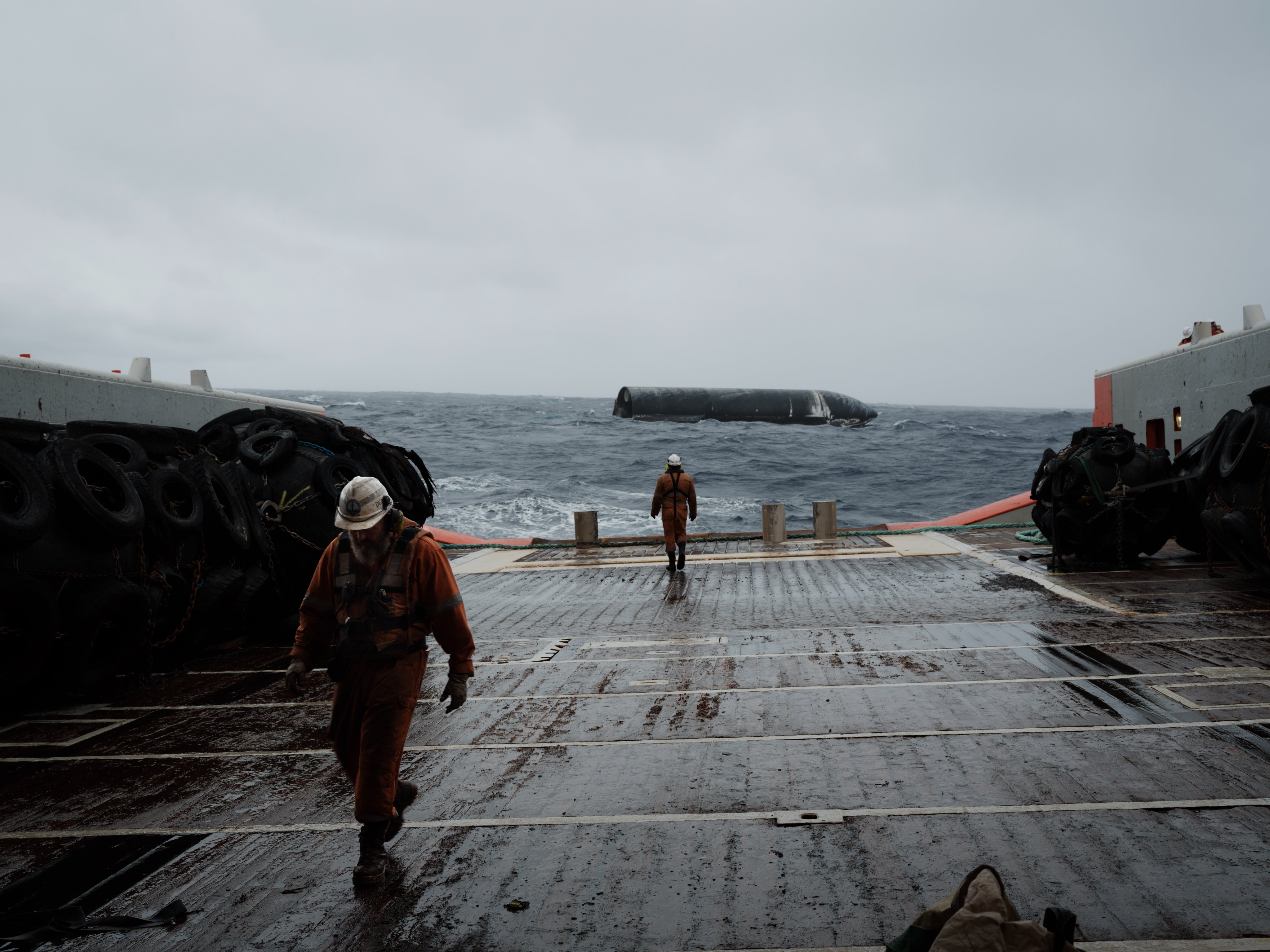
Starship’s heat shield, made of approximately 18,000 ceramic tiles, is key to SpaceX’s goal of making the vehicle fully and rapidly reusable. NASA’s Space Shuttles used similar tiles for protection during atmospheric reentry, but they required replacement and extensive touch-ups between every flight. SpaceX would like to eliminate tile replacements, and even detailed inspections, to turn around its future fleet of Starships multiple times per day.
Musk has long identified the heat shield as the company’s most pressing unsolved problem with Starship. During SpaceX’s first quarterly earnings call on August 4, Musk said he considered the heat shield problem “solved.”
Other industry experts are not so sure. It is true that the vehicle’s heat shield seemed to be in better condition after last month’s flight than it was following previous reentries. The tiles are clearly good enough to bring Starship back to Earth safely, but can they withstand the high flight rate SpaceX foresees to build and maintain bases on the Moon and Mars or large constellations of orbital data centers?
Getting Starship’s heat shield back, and then putting the recovered tiles through tests in the laboratory or even on future Starship flights, might help answer this question.