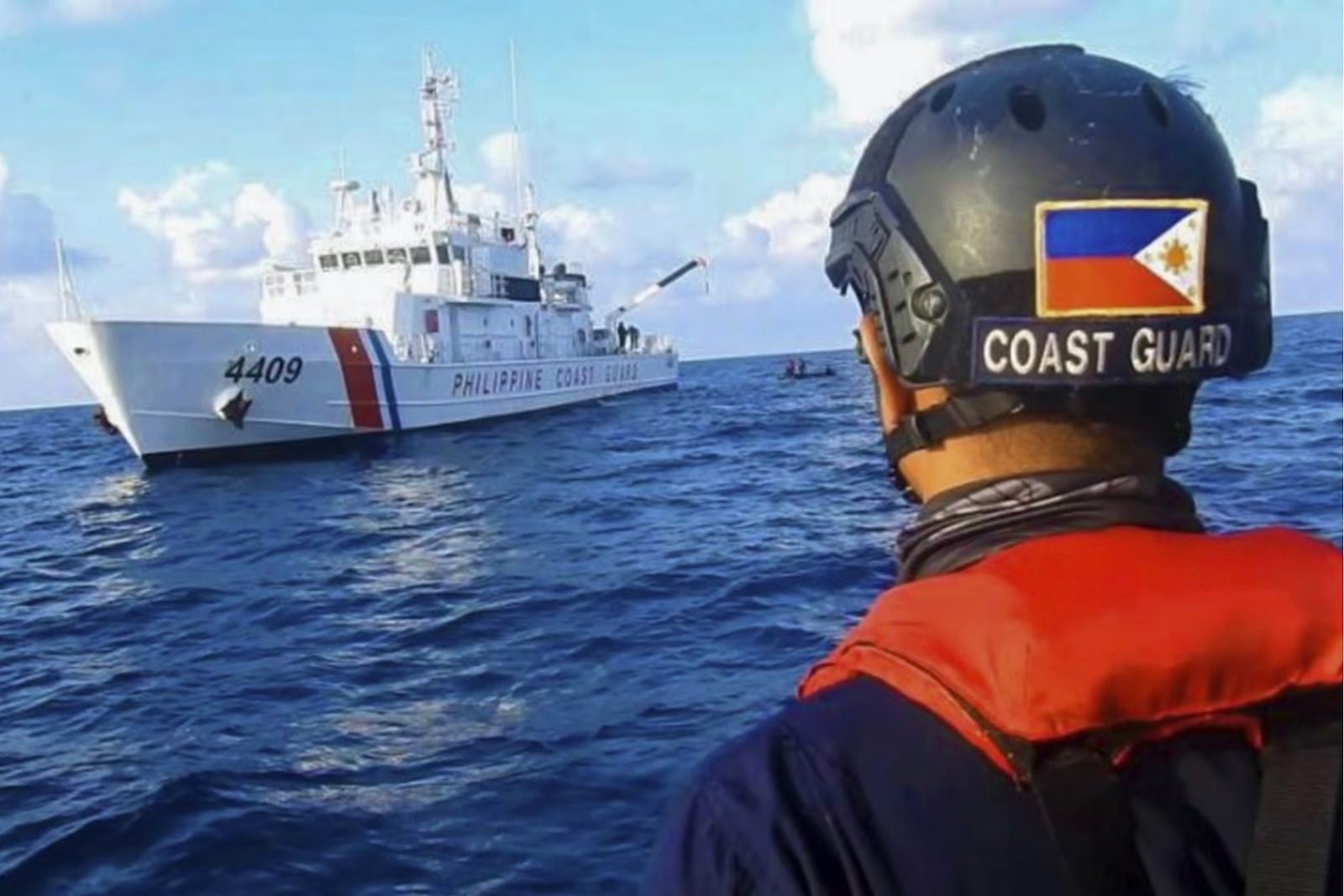

ASEAN and China achieved a provisional agreement on around 80% of the draft COC, a significant improvement from previous years. Yet the final agreement remains elusive, leaving Singapore to steer the process in 2027.
This outcome, however, should not be viewed as an utter failure of Philippine diplomacy. Rather, it reflects the inconvenient reality that the remaining issues are the most difficult ones.
According to Philippine Foreign Affairs Secretary Theresa Lazaro, unresolved questions include whether the code should be legally binding, its geographical scope and other key operative provisions. These go to the core of how the South China Sea will be governed and how competing claimants will behave in contested waters.
In fairness, the Philippines pushed hard for progress. China and ASEAN negotiators met at an unusually intensive pace, holding nine rounds of negotiations throughout 2026. Manila transformed what had often been a slow-moving diplomatic exercise into an active process with measurable gains. But the hard truth is that diplomacy cannot eliminate political differences overnight.
ASEAN itself remains divided in its priorities. While claimant states such as the Philippines and Vietnam seek stronger safeguards grounded in international law, especially under the United Nations Convention on the Law of the Sea (UNCLOS), other members focus more on preserving economic ties with China. Building ASEAN consensus has always been as challenging as negotiating with Beijing.
China’s position presents another perennial challenge. Beijing supports the COC process because it reinforces regional dialogue and stability. At the same time, it has little reason to endorse provisions that could restrict what it considers its strategic interests. As a result, negotiations continue to advance, but only gradually and incrementally.
The Philippine chairmanship also faced a practical limitation: time. One year is a short period to resolve issues that have remained contentious for more than two decades. From that perspective, moving the negotiations from roughly halfway complete to about 80% complete is a landmark achievement in itself. But the more important question is what happens next.
Singapore enters the ASEAN chairmanship with certain advantages. Unlike claimant states directly involved in territorial disputes, it is regarded as a relatively neutral actor. Its reputation for pragmatic diplomacy and consensus-building may help narrow the remaining gaps.
More importantly, Singapore has already emphasized ASEAN unity and centrality as priorities for its 2027 chairmanship. Those priorities will be critical in keeping the COC process on track amid growing geopolitical competition in the Indo-Pacific. Still, expectations should remain modest.
The final 20% of the COC may prove harder to negotiate than the first 80%. The unresolved issues involve sovereignty sensitivities, legal obligations and strategic interests. These are precisely the issues that resist political compromises.
Singapore’s challenge will therefore be less about accelerating negotiations than sustaining the current momentum. Success should not be measured solely by whether a final code is signed in 2027. Also important is preserving political commitment among ASEAN members and China to complete an effective and substantive COC.
Despite the attention given to the unfinished agreement, the Philippines’ ASEAN leadership accomplished something important. It demonstrated that the COC remains achievable and that sustained diplomacy can produce tangible progress.
While Manila did not deliver a final Code of Conduct, it delivered something nearly as important: momentum.
Singapore, as the incoming ASEAN chair in 2027, now inherits a negotiation closer to completion than at any point in its history. Whether it can convert Manila’s momentum into a final agreement will be one of ASEAN’s defining diplomatic tests in the year ahead.
Rommel C. Banlaoi, PhD, is Director of the Philippines‑China Studies Center at Diliman College and President of the Philippine Society for International Security Studies. He also served as President of the Philippine Association for Chinese Studies.
Source: Iwpost.com





 to be remembered for delivering a)