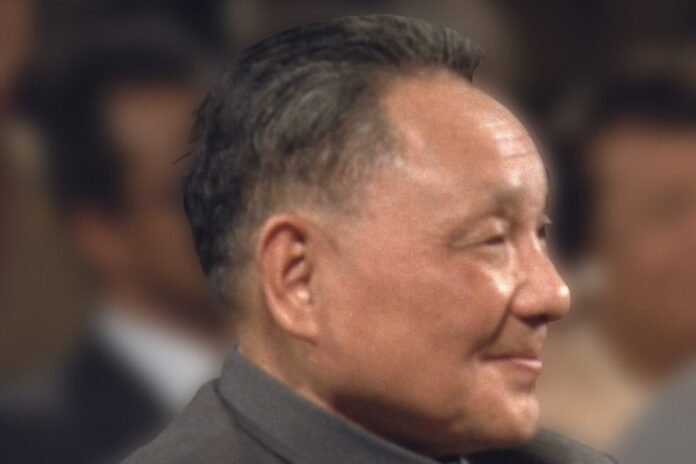
Thank Deng Xiaoping for an economic system that’s proving itself suited for the AI age. Photo: Wikimedia Commons
“Dig the Well before you are thirsty,” says an old Chinese proverb.
The world has debated China’s rise through the lens of ideology. Some believe it is communism that transformed China into the world’s second largest economy, while others think it is capitalism disguised under a red flag. But both answers overlook an important reality.
Modern China was not built completely on communist ideology nor by free market capitalism in its purest form. It was built upon a hybrid model that combines the dynamism of capitalism with the organizational capacity of communism: Call it capunism? Capunism has elements of classical free market capitalism and parts of communism, neither making up the whole.
Capunism can be defined as a combination of the innovative dynamism of capitalism and the strategic coordination of a strong state. Its development is neither an endorsement of authoritarianism nor a rejection of markets. On the contrary, it accepts the fact that neither government nor efficient markets can meet the needs and capabilities of today’s AI economy.
So, the crucial question of the 21st century is no longer whether capitalism or communism is the superior system but whether a country possesses the institutional capacity to combine strategic state leadership with competitive markets. Capunism is not an ideological compromise between capitalism and socialism. It is a strategic response to the institutional demands of the AI era.
Why capunism works in the AI age
The AI revolution is different from the industrial revolution that it builds upon. It demands more than free market or state planning in isolation. It requires an ecosystem that combines advanced semiconductor fabrication, hyperscale data centers, abundant electricity, high-speed digital infrastructure, world class universities, basic scientific research, cloud computing and millions of highly skilled engineers. No single market and equally no state can deliver these elements efficiently on its own.
The countries most likely to lead the AI era will therefore be those capable of combining state capacity with market dynamism, states that provide long-term strategic direction while allowing competitive markets, entrepreneurs and private firms to innovate. Because the AI economy requires both.
China’s growth model offers one example of this approach. Since the reform era initiated by Deng Xiaoping in the 1980s, the country has combined centralized political authority with expanding markets, private enterprise and long-term industrial planning. Whether one agrees with China’s political system or not, its experience demonstrates that strategic coordination and market competition can coexist within a single economic model. It’s becoming very effective in the AI age.
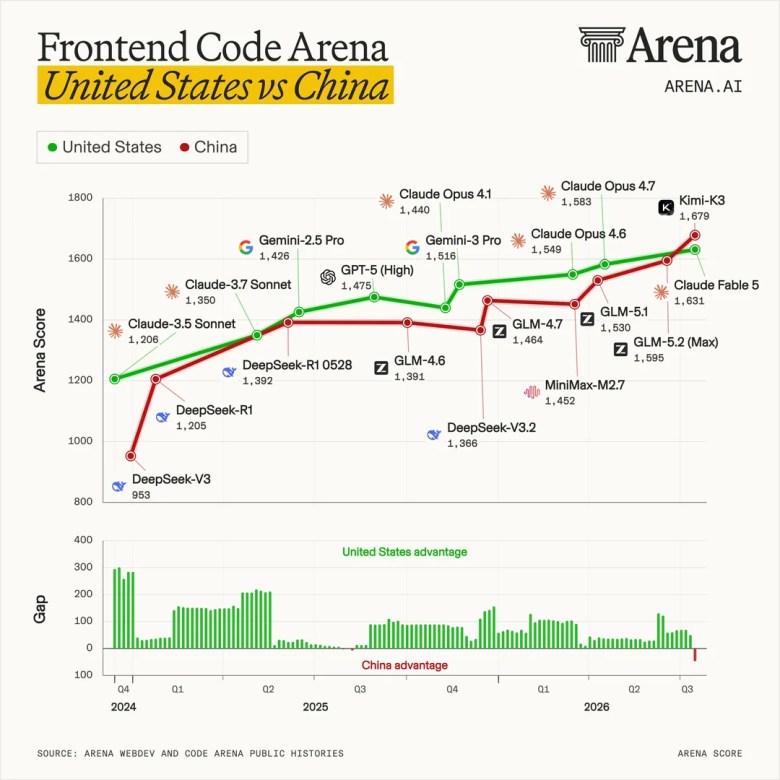
A recently example includes the launch of advanced Chinese model Moonshot AI’s Kimi K3, which outperformed the world superior AI model i.e. Anthrophic’s Fable 5 on coding benchmark. On Aug 3, Hugging Face an renowed AI Company CEO, Delangue said China is winning the artificial intelligence race with open-weight models and could catch up to U.S. Frontier model makers as soon as this year.
Along with reports that China has begun manufacturing deep-ultraviolet (DUV) lithography machines, a critical technology for advanced semiconductor production and one of the last major areas in which it relied on Western suppliers. Kimi’s feats further reinforce the fact that the combination of state-directed strategic coordination and market competition – capunism – can be a powerful state model in the AI era.
In a capitalist system, a general assumption is that competitive markets naturally allocate resources efficiently. Although it’s true for many sectors of the economy, AI exposes co-ordination problems that markets alone cannot solve. A single company can’t independently build an electric grid and semi-conductor ecosystem while training millions of engineers. These investments require decades of planning and coordination beyond the incentives of individual firms. Markets remain essential for innovation. But innovation increasingly depends upon strategic public investment.
The central theme of competition in the AI era will not be capitalism versus communism but institutional capability versus institutional weakness. Surely a nation that focuses on combining strong state capacity with dynamic markets is likely to possess a decisive strategic advantage over those that rely exclusively on either market fundamentalism (capitalism) or centralized planning (communism) until its too late.
Ravi Kant is a columnist and correspondent for Asia Times covering Asia. He mainly writes on economics, international politics and technology. He has wide experience in the financial world and some of his research and analyses have been quoted by the US Congress, Harvard University and Wikipedia ( Chinese Dream). He is also the author of the book Coronavirus: A Pandemic or Plandemic.
Pakistan’s Prime Minister arrives in Saudi Arabia for talks on regional developments
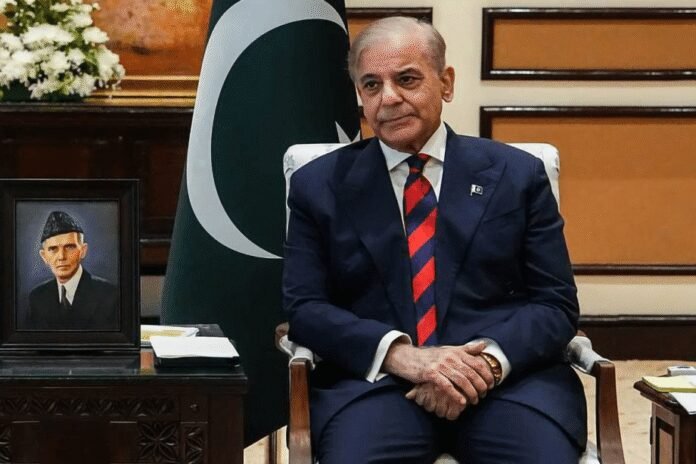
Pakistani Prime Minister Shehbaz Sharif arrived in Saudi Arabia on Thursday for a three-day visit focused on bilateral cooperation and regional developments, Anadolu reports.
Saudi Arabia’s official SPA news agency said Sharif was received at King Abdulaziz International Airport in Jeddah by Prince Saud bin Mishaal bin Abdulaziz, deputy governor of the Makkah region.
Pakistan’s state-run Associated Press of Pakistan (APP) said Sharif was accompanied by Field Marshal and Chief of Army Staff Asim Munir, Deputy Prime Minister and Foreign Minister Ishaq Dar, and other senior officials.
According to APP, Sharif is scheduled to hold talks with Saudi Crown Prince Mohammed bin Salman on ways to strengthen bilateral cooperation, as well as regional and international developments.
Saudi Arabia and Pakistan maintain close defense ties under a mutual defense agreement signed amid regional tensions.
The visit comes as Islamabad continues its mediation efforts between Washington and Tehran.
In June, Qatar joined Pakistan in mediating between the US and Iran, leading to the signing of a memorandum of understanding on June 18 and the launch of negotiations toward a final agreement.
The negotiations later stalled over disagreements related to maritime security and freedom of navigation in the Strait of Hormuz, although officials from Iran, Oman and the US have recently signaled progress toward resolving the remaining issues.
Wars Collide in the Caspian: Ukraine Strike Exposes the Iran-Russia Connection
The incident may appear to mark a new convergence between two geographically separate wars. In reality, Iran’s involvement in Russia’s military campaign began years before the Caspian strike
Iran’s claim that it prepared—but ultimately canceled—strikes against three targets in Ukraine has brought renewed attention to the increasingly interconnected nature of Russia’s war against Kyiv and the continuing confrontation between Tehran and Washington.
Mohsen Rezaee, a former commander of Iran’s Islamic Revolutionary Guard Corps and a senior military adviser to the Iranian leadership, said Tehran had been ready to attack three unspecified locations in Ukraine in retaliation for a Ukrainian strike on an Iranian vessel in the Caspian Sea. According to Rezaee, the operation was canceled after what Tehran described as an apology from Kyiv. Iran did not identify the alleged targets or provide evidence showing that the attacks had reached an operational stage.
Ukraine has not publicly confirmed that it issued a formal apology. Ukrainian Foreign Minister Andrii Sybiha instead told his Iranian counterpart, Abbas Araghchi, that the damage to the civilian vessel and its crew was unintentional. Sybiha also urged Tehran to avoid escalation and end its support for Russia’s war, while Araghchi demanded compensation for the incident.
The dispute began on July 25, when Ukrainian forces conducted strikes in the Caspian Sea. Ukrainian President Volodymyr Zelenskyy said the targets included a Russian warship and vessels used to transport military cargo connected to Iran. Iran said one of its commercial vessels was hit, killing one sailor and injuring another, and summoned Ukraine’s chargé d’affaires over what it described as a hostile and criminal act.
Tehran accused Kyiv of attempting to expand the Russia–Ukraine war, while Ukraine maintained that its actions were directed against infrastructure sustaining Russian military operations and were not intended to harm civilian vessels or crews.
The incident may appear to mark a new convergence between two geographically separate wars. In reality, Iran’s involvement in Russia’s military campaign began years before the Caspian strike.
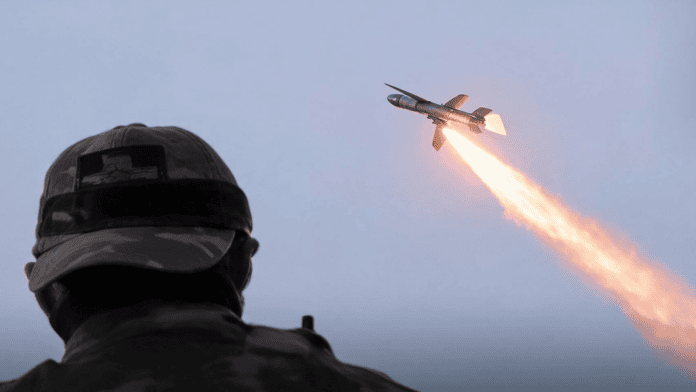
Since 2022, Russia has deployed Iranian-designed Shahed drones against Ukraine. Iran acknowledged in November 2022 that it had supplied drones to Russia, although Tehran maintained that the transfers occurred before Moscow launched its full-scale invasion. Kyiv disputed that timeline.
The European Union established a dedicated sanctions framework in July 2023, targeting Iran’s military support for Russia, and has since imposed measures on individuals and companies involved in developing, manufacturing and transferring unmanned aerial vehicles. In late January 2026, the EU imposed further sanctions targeting Iran’s state-backed drone and missile programs, describing the continued military support as a direct threat to European security.
For Jason Jay Smart, a geopolitical strategist and national security expert based between Kyiv and Washington, the current attention surrounding the Caspian Sea incident risks obscuring the duration of Iran’s role.
I think that Iran has been helping fight the war against Ukraine for four years now. That’s not new. That’s a continuation of what they were doing.
“I think that Iran has been helping fight the war against Ukraine for four years now. That’s not new. That’s a continuation of what they were doing,” Smart told The Media Line.
“Unfortunately, I think people didn’t realize that Iran was fighting a war with Ukraine. They think of it in the context of the Middle East. But no, it’s North Korea and Iran are the only two countries actively working to support Russia in its war.”
Smart framed the overlap as part of a wider security confrontation involving states that he accused of using terrorism as an instrument of foreign policy.
“I’d say that they’re intertwined. The root of the same issue, yes. Because Iran and Russia executed foreign policy of exporting terrorism globally,” he said.
From Kyiv’s perspective, a nominally commercial vessel can become part of the conflict when it is used to transport components, equipment, or ammunition that support Russia’s military campaign. Smart therefore rejected the argument that Ukraine had carried out the attack primarily to assist Washington in its confrontation with Tehran.
“Well, it’s not the first time they’ve struck an Iranian-linked target. If you’re carrying something that’s part of a war, it makes a legitimate target,” he said.
Asked whether the strike had been conducted as a favor to the United States, Smart added: “No, it’s not related. Why are they related? There’s been lots of attacks by Ukraine on Iranian targets. Why is this special?”
Mohammed Ali Ghanamizadeh Fallahi, a Middle East analyst based in Iran, offered a more cautious interpretation. He argued that the wars have not formally merged but can no longer be understood as fully separate.
“The two wars have not yet become one single war. However, they have moved beyond simple political overlap and are becoming what can be called an interconnected conflict system. The actors, military commands, and final goals are different, but their weapons networks, intelligence systems, maritime routes, energy interests, and air-defense needs are increasingly connected,” Fallahi told The Media Line.
The Caspian attack was significant, he argued, because it showed that Ukraine was no longer limiting its response to destroying Iranian-designed weapons once they reached Ukrainian territory. Kyiv had demonstrated a willingness to strike what it regarded as a direct component of the Iran–Russia logistical relationship.
Fallahi nevertheless cautioned against treating Rezaee’s statement as proof that an Iranian attack was imminent.
The claim that Iran was ready to carry out three attacks may have been partly a form of deterrence through public messaging
“The claim that Iran was ready to carry out three attacks may have been partly a form of deterrence through public messaging. Iran showed that it had the ability and intention to respond, while Ukraine provided an explanation that allowed Tehran to step back without appearing weak. Both sides were therefore able to avoid escalation without testing whether Iran’s threat was real,” he said.
The military relationship is also no longer limited to Iran supplying complete drones. Russia has modified Iranian designs and developed domestic production capacity, while technical and operational lessons from Ukraine may potentially flow back to Iran. The relationship has therefore evolved from a simple buyer-supplier model into broader industrial and technological cooperation, according to Fallahi.
Another emerging issue is intelligence. Zelenskyy has alleged that Russia conducted satellite surveillance of US and Gulf military facilities and that the resulting images subsequently became available to Iran. He said Russian observation of installations in Bahrain, Jordan and Kuwait appeared to correlate with Iranian attacks. The Ukrainian allegations have not been publicly and independently substantiated.
Fallahi said this dimension could eventually prove more consequential than the weapons transfers themselves. “This development is very important because wars can become connected without a formal military alliance. One country may discover and monitor a target, while another country attacks it. When this happens, the difference between military support and direct participation becomes less clear,” he said.
Ukraine has meanwhile attempted to reverse the direction of this military exchange by offering the United States and Gulf countries its experience in intercepting Iranian-designed drones. Kyiv has presented its operational experience against Shahed attacks as relevant to protecting military facilities, infrastructure and civilian populations in the Middle East.
The two fronts are also connected through competition for a limited supply of interceptor missiles, radar systems and air-defense platforms. Intensified Russian attacks on Ukraine and simultaneous Iranian pressure against American forces and US partners in the Middle East can force Washington to divide high-value defensive resources between the two theatres. Reuters reported in late July that interceptor missiles previously earmarked for Ukraine had been redirected to US forces and allies in the Gulf amid the Iran conflict.
“The most important connection may not be direct military cooperation. It may instead be competition over a limited number of interceptor missiles, radar systems, and American military resources,” Fallahi said.
“This is an area where Iran and Russia can produce the effects of coordination even without formal planning. Iranian pressure in the Middle East can indirectly create more operational space for Russia in Ukraine,” he added.
Despite Rezaee’s threat, both analysts questioned the strategic logic of Iran launching an acknowledged direct attack from its own territory against Ukraine.
Smart said simply: “I don’t think they have the capacity to do that.”
Fallahi argued that an Iranian strike would face obstacles involving distance, missile range, foreign airspace, and the risk of forcing Russia into a more direct role. A more plausible form of retaliation, he said, would be for Tehran to identify preferred targets and allow Russia to incorporate them into its continuing attacks against Ukraine.
This could be described as reverse proxy warfare
“This could be described as reverse proxy warfare. Instead of using a non-state armed group, Iran could use the military capacity of a partner state that was already at war,” he said, stressing that there was no evidence such an operation had taken place following the ship incident.
This would reflect a broader division of pressure rather than a unified military command. Russia could intensify attacks against Ukraine as Iran increased pressure on American bases, shipping routes and regional infrastructure. The resulting strain on Western air defense, intelligence and ammunition stocks could benefit both governments even without an openly coordinated strategy.
Smart argued that Ukraine’s immediate priority should remain Russia, rather than entering a separate confrontation with Tehran.
“I think that strategically it’s wisest for Ukraine to focus on Russia. The Iranians are busy fighting with the Americans and the Israelis. You let them to do that and they can focus on Russia. And so it’s a division of labor,” he said.
For Smart, the value of the wider Iran-Russia relationship also lies in demonstrating that Moscow and its partners can withstand or constrain Western power, regardless of whether Iran or North Korea has a direct territorial interest in Ukraine. “There’s a gain that globally it shows that the alliance that they have with Iran, with Russia, with North Korea is successful. And able to stop the European and North American powers,” he said.
The Iran–Russia relationship remains short of a conventional military alliance. Their strategic partnership does not contain an automatic mutual-defense commitment, and both governments retain separate regional priorities. Moscow benefits when Washington is distracted in the Middle East but has reasons to avoid direct war with the United States on Iran’s behalf. Tehran benefits from Russian pressure against the West but has traditionally resisted placing its military decision-making under another power.
“Both countries want cooperation, but both also want to avoid becoming trapped in the other country’s war,” Fallahi said.
Both countries want cooperation, but both also want to avoid becoming trapped in the other country’s war
The Caspian Sea strike did not create the connection between the wars; it made that connection more visible. Whether Iran’s claimed three-target operation was a genuine military plan or an exercise in deterrent messaging cannot be established from publicly available information. The more consequential development may be less dramatic. As Fallahi put it, “The main danger is therefore not necessarily a large and visible joint attack,” but the “slow and less visible integration of intelligence networks, military industries, cyber capabilities, and target-selection systems.”
Organ donation group accused of trying to take living man’s organs faces shutdown
The US health department is working to shut down a Kentucky-based organ procurement organization that made headlines over a 2021 incident in which it was accused of trying to harvest a man’s organs while he was still alive.
In an announcement Wednesday, the Department of Health and Human Services said it had begun the process to decertify the organization, Network for Hope (NFH). Losing its certification would effectively shutter the organization, which serves Kentucky as well as parts of Indiana, Ohio, and West Virginia. If decertified, another organization will be appointed to coordinate donations in the region.
In a statement, NFH said it “strongly disagrees” with the HHS’s finding and will appeal the decertification decision.
HHS said its decision stems from two federal investigations of NFH that found “persistent patient safety failures,” despite extensive oversight and opportunities to correct failures. The two investigations were carried out separately by the HHS’s Centers for Medicare & Medicaid Services and the Health Resources and Services Administration (HRSA).
The HRSA investigation, which concluded last year, examined 351 NFH cases in which organ donations had been authorized but were ultimately canceled. In 103 cases, investigators found “concerning features,” including 73 cases in which patients had neurological signs that should have made them ineligible for organ donation.
The scrutiny over NFH and other organ procurement organizations comes amid increases in donations from people who have had circulatory deaths (their heart stops), rather than those who have been declared brain-dead. Donation after circulatory death often occurs when patients are not expected to make a recovery and a family decides to withdraw life support. Organ procurement organizations cannot declare a person dead and are barred by law from being involved in care decisions. However, deciding when to remove life support is not clear-cut.
Horror story
NFH made headlines when reports surfaced about a 2021 incident in which a Kentucky man in his 30s began visibly crying, pulled his knees to his chest, and shook his head as he was wheeled into surgery to have his organs harvested. The man, Anthony Thomas Hoover II, had overdosed and had been unresponsive for two days before his family agreed to donate his organs, believing he would not recover.
But as the organ retrieval neared, he began showing signs of improvement, which allegedly went ignored by organ procurement workers while making the hospital staff deeply uncomfortable. NFH’s predecessor organization, KODA, allegedly pressured hospital staff to move forward with the organ donation. When Hoover was brought into the operating room clearly responsive, doctors involved in the organ retrieval refused to move forward and remove life support.
One worker, Natasha Miller, told NPR that a KODA supervisor was on the phone at the time, demanding that employees find another surgeon who would agree to carry out the retrieval.
The surgery was canceled, and Hoover recovered, though he has lingering neurological injuries. His sister appeared at a press briefing Wednesday announcing the US health department’s efforts to decertify NFH.
In a statement, NFH said it complies with all federal organ policies and, since the incident, implemented a “pause” process that allows anyone involved in a case—from family to health care providers—to pause donation plans if concerns arise. The state of Kentucky subsequently wrote the pause process into law.
More than 103,000 people are on the US organ transplant waiting list, and there were more than 49,000 transplants last year.
Hasina baits and jabs Dhaka from the safety of New Delhi
Nearly two years after fleeing Dhaka in disgrace, ousted Bangladesh Prime Minister Sheikh Hasina made her first live public address on Wednesday (August 5).
Speaking via audio from an event organized by the Foreign Correspondents’ Club of South Asia in New Delhi, Hasina attempted to signal the dawn of a political comeback. Yet what transpired was less a triumphant return than a masterclass in evasion and proxy politics.
For a leader attempting to rebuild a shattered legacy, the session exposed the profound fragility of her movement’s position and threatened to drag her Indian hosts into an escalating diplomatic confrontation.
The most striking aspect of the appearance was not what was said, but what remained conspicuously unaddressed. When directly asked when she intended to return to Bangladesh to face the dozens of legal cases and arrest warrants awaiting her, Hasina demurred.
Instead of providing a concrete strategy, she retreated into historical romanticism, recalling her return from exile in 1981 and asserting that neither prison nor death would deter her. When pressed on the mechanics of crossing a border as a fugitive, she delegated the issue entirely to her son and former adviser, Sajeeb Wazed Joy.
His response was remarkably blunt: there was no communication with the current authorities in Dhaka. The operational reality of a physical return was left entirely unexplained, save for Hasina’s vague assertion that she wished to return in December to coincide with Bangladesh’s Victory Day.
This pattern of delegation defined the afternoon. Hasina functioned largely as a figurehead issuing broad appeals to patriotism, while Joy assumed the role of principal political spokesman.
Nowhere was this dynamic more uncomfortable than when a reporter raised the defining question shadowing Hasina’s legacy: did she regret the violent suppression of the July 2024 uprising? Rather than allowing his mother to address personal accountability, Joy interjected with an aggressive “legalistic” defense.
Pointing to indemnity provisions enacted by post-uprising authorities, he argued that the Awami League had nothing to apologize for so long as violence against police and party members went unpunished.
It was a classic political pivot, converting a question of moral accountability into one of comparative culpability. Hasina never reclaimed the microphone to answer the original query.
In her absence from detailed debate, Joy advanced the core thesis that has sustained the Awami League for nearly two decades: the existential doctrine that without Hasina, Bangladesh inevitably collapses into Islamist militancy and state failure. Addressing the Delhi audience, Joy painted an apocalyptic picture of his homeland.
He claimed the country had become “another Pakistan,” alleging that al-Qaeda operatives address public rallies, Hezbollah flags fly openly and foreign intelligence agencies operate with impunity.
Yet these extraordinary claims lacked empirical backing. Nearly two years after Hasina’s overthrow, Bangladesh has experienced no major terrorist attacks, nor has India’s own security apparatus issued public alarms corroborating a surge in cross-border jihadist activity.
Counterterrorism cooperation and border security mechanisms remain functional. Joy’s rhetoric relied on conflating a broader social shift toward visible Islamic practice in a Muslim-majority nation with operational extremism — a tactic long used by the Awami League to tar political opponents and justify authoritarian governance to foreign observers.
Equally controversial was Joy’s assault on international documentation regarding the 2024 violence. He questioned United Nations findings that over 1,400 people died during the crackdown, dismissing the figures without offering contrary evidence.
He remained silent on the well-documented use of lethal state force, enforced disappearances and systemic human rights abuses that triggered the mass popular revolt after 15 years of uninterrupted rule.
If the internal politics of the appearance were fraught, its international fallout was immediate. The event took place on Indian soil despite explicit prior objections from Bangladesh’s Foreign Ministry.
Dhaka’s reaction was incandescent, dispensing with standard diplomatic pleasantries. In a blistering statement, officials branded Hasina a convicted mass murderer and declared that Bangladesh would “never be a client state.”
That single phrase captures the strategic dilemma now confronting New Delhi. During Hasina’s tenure, India enjoyed unprecedented security cooperation and economic connectivity along its eastern border.
Indian policymakers grew accustomed to viewing Bangladesh largely through the prism of their own national security interests, viewing Hasina as an indispensable guarantor of stability.
In sheltering the ousted leader and permitting her to use Indian territory as a launching pad for political attacks, India risks validating the widespread perception among Bangladeshis that New Delhi values its relationship with an autocrat over its relationship with the sovereign nation itself.
While Indian authorities did not host the event directly, allowing a private platform to proceed after official warnings from Dhaka rendered the distinction meaningless to the government now ruling in Bangladesh.
The post-2024 administration in Dhaka is demanding a relationship grounded in sovereign equality rather than regional hegemony. By permitting Hasina to campaign from its capital, India has brought a deep contradiction to the fore.
For Hasina and her family, the New Delhi event demonstrated that rhetoric alone cannot substitute for a coherent path to rehabilitation or an honest accounting of past violence. For India, it signaled that time is running out to make a definitive strategic choice.
New Delhi must decide whether to remain tethered to the legacy of a fallen ally or to secure its long-term national interest by engaging constructively with the geopolitical realities of a transformed Bangladesh.
Elon Musk’s X isn’t done suing advertisers, asks court to revive boycott case
Elon Musk’s X is trying to revive a lawsuit against advertisers it’s accusing of illegally boycotting the social media platform, despite previously reaching a settlement to end litigation against an ad-industry trade group.
“This case involves an unusually brazen group boycott,” X said in a filing yesterday. “That misconduct has drawn the attention of regulators and Congress. There is no valid reason that this effort by the direct victim to recover its massive economic losses from that boycott should not move forward.”
X’s lawsuit was thrown out in March when US District Judge Jane Boyle in the Northern District of Texas ruled that advertisers did not commit any antitrust violation. Last week, Musk reached a settlement with the World Federation of Advertisers, the first defendant named in the lawsuit.
But Musk’s lawsuit had other defendants: Mars, Incorporated; CVS Health; Nestle; Abbott Laboratories; Colgate-Palmolive; Lego; Pinterest; Tyson Foods; Shell; and Ørsted A/S. While X agreed to dismiss the World Federation of Advertisers from the case, it urged the US Court of Appeals for the 5th Circuit to revive the suit with respect to the other defendants.
The boycott “injured X and competition in that market, allowing other social-media platforms to charge rates above truly competitive pricing,” the company said. “Especially in light of the power defendants wield within the market, their agreement to boycott X cannot be characterized as anything other than an unreasonable restraint on trade.”
Judge: Losing to competitors is not antitrust injury
Boyle’s decision dismissing Musk’s lawsuit said the “only harm X has asserted is that its customers collectively chose X’s competitors over X.” Boyle, a George W. Bush appointee, cited a precedent that a loss from competition itself does not constitute an antitrust injury. “Therefore, although a group boycott is alleged, there is no antitrust violation here,” she wrote.
Asking the 5th Circuit to reverse Boyle, X argued that advertisers colluded to boycott X, “eliminat[ing] the independent decision-making that would otherwise force each firm to weigh the competitive benefits of continuing to advertise on the platform, suppressing competitive rivalries and insulating the boycott from market forces. The group boycott targeting X thus distorts competition in multiple markets in clear contravention of the antitrust laws.”
X’s claims relate to the Global Alliance for Responsible Media (GARM), an initiative by the World Federation of Advertisers to define violent and obscene content and help advertisers create brand-safety guidelines. The ad industry shut down Garm after Musk filed the lawsuit in 2024, though law professors described X’s legal case as a weak one.
X’s filing yesterday said that GARM “exercised collective power through its rules for membership. As a condition of joining GARM, members agree[d] to adopt GARM solutions to improve business operations.’ For GARM’s advertiser and advertising agency members, that meant agreeing to enforce the implementation of the Brand Safety Standards by the social-media platforms from which they purchased advertising.”
X’s big ad revenue drop
X, then called Twitter, suffered a large drop in advertising revenue after Musk bought the company in October 2022 and made major changes to content moderation. Advertisers stayed away, worried that ads would appear next to antisemitic posts, misinformation, and other objectionable content.
Specific numbers on X ad revenue were hard to come by the past few years because Musk took the company private when he bought Twitter. But X Corp. is now a subsidiary of SpaceX, which recently went public and must report earnings.
SpaceX’s earnings report this week said the company made $367 million in advertising revenue in Q2 2026, down from $426 million in Q2 2025. For the first six months of 2026, ad revenue was $710 million, down from $870 million in the first six months of 2025.
Twitter reported much higher ad revenue before being bought by Musk. “X’s current quarterly ad revenue has dropped even more drastically compared to the last quarter before Musk bought the popular social-media platform,” MediaPost reported. “In the second quarter of 2022, Twitter reported $1.08 billion in ad revenue, roughly $713 million more than Q2 2026.”
What we know about North Korean forces joining Russia’s war against Ukraine
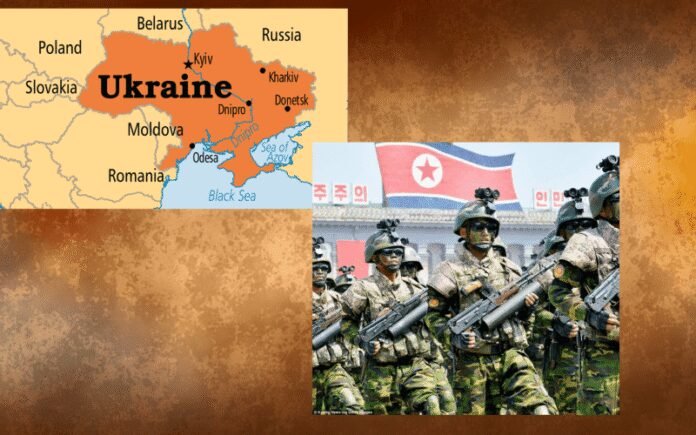
North Korea has deployed troops, weapons and now, according to a Ukrainian intelligence official, a missile unit to support Russia’s war against Ukraine, marking Pyongyang’s most significant involvement in a war since the 1950s.
Here is what is known about the growing military ties:
WHAT ARE THE LATEST REPORTS?
A North Korean missile unit has begun deploying to western Russia and could be equipped with up to 120 ballistic missiles and six launchers for attacks on Ukraine, an official at Ukraine’s GUR military intelligence agency said.
The unit comprises about 90 North Korean personnel and is expected to be based in Russia’s Voronezh region, the official said.
Ukrainian President Volodymyr Zelenskiy said in July that Russia wanted to bring in another 30,000 North Korean troops and was preparing facilities in Voronezh to receive them.
Reuters could not independently verify the claims.
HOW MANY NORTH KOREAN TROOPS HAVE BEEN SENT?
Ukrainian, U.S. and South Korean assessments initially put the deployment at 10,000 to 12,000 troops in late 2024.
In January 2025, the U.S. deputy ambassador to the United Nations said more than 12,000 North Korean soldiers were in Russia.
Later Ukrainian and South Korean estimates put the number of troops in Russia’s Kursk region at about 14,000 to 15,000.
The Ukrainian official said this month that around 9,500 North Korean troops remained in Kursk, but were not then directly involved in operations against Ukraine.
Russia and North Korea confirmed in April 2025 that North Korean troops had fought Ukrainian forces in Kursk.
Russia’s top military commander praised their role after Moscow said it had retaken Kursk territory, while Pyongyang said the deployment was ordered by leader Kim Jong Un.
WHAT OTHER PERSONNEL HAS NORTH KOREA SAID IT WILL PROVIDE?
In June 2025, Russian Security Council Secretary Sergei Shoigu said North Korea would send 1,000 sappers and 5,000 military construction workers to Kursk to clear mines and help rebuild infrastructure damaged in the fighting.
That same month, South Korean lawmakers, citing a briefing by the National Intelligence Service, said that North Korea appeared to have begun recruiting personnel for an additional deployment to Russia, while continuing to supply Russia with artillery ammunition and missiles in exchange for economic cooperation and technical assistance.
It remains unclear how many engineers, deminers or additional troops have arrived in Russia, or whether they have been used in combat roles.
WHAT WEAPONS HAS NORTH KOREA PROVIDED?
North Korea has supplied Russia with millions of artillery and mortar rounds, ballistic missiles, long-range artillery and multiple-launch rocket systems, according to Ukrainian and independent assessments.
A Reuters analysis with the UK-based Open Source Centre found four Russian-flagged cargo ships made 64 voyages to North Korea’s Rajin port between September 2023 and March 2025, transporting nearly 16,000 containers of ammunition to Russian ports.
Ukrainian officials said North Korea was supplying about half of the munitions Russia needed on the front lines.
Ukraine’s GUR military intelligence agency said that North Korea had delivered 4 million artillery shells from mid-2023, excluding mortar rounds. It said North Korea had supplied 148 KN-23 and KN-24 ballistic missiles by the start of 2025.
WHY IS NORTH KOREA HELPING RUSSIA?
Russian President Vladimir Putin and North Korean leader Kim signed a comprehensive strategic partnership treaty during Putin’s June 2024 visit to Pyongyang. The pact includes a mutual assistance provision if either country faces external aggression.
North Korea has cast its deployment as assistance to a treaty partner. Kim said in May 2025 that participation in the war was justified as an exercise of North Korea’s sovereign rights in defence of a “brother nation.”
Analysts say Pyongyang stands to gain hard currency, oil and other economic support, as well as access to Russian military technology and battlefield experience for its forces and weapons.
North Korean soldiers have gained combat exposure to drones, electronic warfare, artillery coordination and modern battlefield tactics, while its missile and ammunition makers have been able to assess their equipment in wartime conditions.
WHAT HAS THE INTERNATIONAL REACTION BEEN?
The United States and its allies have said the troop deployments and arms transfers violate U.N. Security Council resolutions on North Korea.
Pyongyang has been subject to U.N. sanctions since 2006 over its nuclear weapons and ballistic missile programmes. The sanctions prohibit countries from hosting North Korean trainers, advisers or other officials for military, paramilitary or police training.
Washington imposed additional sanctions in December 2024 on North Korean and Russian entities connected to Pyongyang’s military and financial support for Moscow. South Korea also blacklisted individuals and entities linked to illicit military cooperation between the two countries.
NATO has said Russia’s growing military and economic ties with North Korea, China and Iran pose a threat beyond Europe, extending to the Indo-Pacific and North America.
Your gas car works fine. Consider an EV anyway, scientists say.
A few years ago, environmental scientist Elliot Campbell went around asking people why they would, or would not, switch to an electric vehicle. A surprising number of them asked him a question in return: Because building an EV generates emissions, isn’t it better for the planet just to keep my gas car running for as long as possible?
Campbell, a professor at the University of California, Santa Cruz, didn’t know the answer, so he set out to find it. Turns out the old adage that the greenest car is the one in your driveway is a myth. In fact, his study, published today in the journal Science, finds that swapping even a two-year-old gas car for an EV leads to a lifetime emissions savings of roughly 50 percent.
Not everyone can afford to ditch a nearly new car, of course. It’s simply the most extreme example of the broader point his study revealed: The emissions saved by driving an EV very quickly compensate for the planet-warming gases generated by building it. Campbell said that finding consistently surprises his students, and goes against his own instincts.
“I like to repair things and keep them going,” he said. But, “we found there is a big advantage to retiring the gas vehicles early.”
Campbell designed the study to give internal combustion vehicles every possible advantage. “We really tipped the scales in favor of the gas vehicle,” he said. Most notably, it ignored the emissions that went into making the gas car, treating them instead as a sunk cost. EV still came out ahead, which suggests that climate-conscious drivers should make the switch as soon as it’s feasible.
“You’re just delaying the benefits longer and longer,” he said, noting that sidelining gas guzzlers off the road can improve air quality as well. This is especially true for cars that were built to less stringent standards, added David Reichmuth, a transportation sustainability expert at the Union of Concerned Scientists. “The magnitude of the benefits for getting an older gasoline vehicle,” he said, “can be much higher in terms of the air pollution.”
Reichmuth was not involved with Campbell’s study, but said it aligns with his own work on the issue. His analysis found that EVs reach an emissions break-even point at around 18,000 miles, which the average driver travels in about 18 months. That, however, depends on where a person lives and the source of their electricity.
The benefit is greatest where the grid is greenest. In upstate NY, which generates a lot of hydroelectric power, getting around in an EV is like driving a gas car that gets 219 mpg. But even in the Rockies, where coal and natural gas are the norm, an EV is better than anything getting less than 68 mpg.
Campbell’s study identified few exceptions to the conclusion that replacing a gas car with an electric one significantly reduces greenhouse gas emissions. Even moving away from high-efficiency vehicles and hybrids, like the Toyota Prius, is a climate win in the long-run. One case where it wouldn’t make sense, Campbell and his co-author found, is with plug-in hybrid electric vehicles, which have larger batteries and travel farther on electric power before switching to an internal combustion engine. Another is low mileage situations, such as with a second car that doesn’t get used that often.
“To me, this is the biggest factor,” said Moaz Uddin, senior electric vehicle policy specialist at the think tank Great Plains Institute, about mileage. He gave the example of a retiree who only drives their Prius a few thousand miles a year. “It’s good that the study considers that.”
The new research finds that in order to repay the carbon debt of making a new EV, it must be driven 4,400 miles if it’s a car and 6,700 miles each year if it’s a truck. That’s already well below the 12,500 miles the average driver travels in a year, and the benefits to making the switch are likely to grow.
As the United States increasingly relies on renewables, for example, charging an EV becomes even more environmentally appealing. Campbell and his co-author also point to improvements in battery recycling as a way of reducing the emissions involved with making an electric car.
One hole in this latest study is that it doesn’t consider the cost of going electric. While previous research has shown that EVs come with higher upfront costs but lower operating expenses, it’s a thread that Campbell hopes economists pull on. He would also like to see someone better account for the emissions generated while extracting oil and getting gasoline to the pump, rather than simply the burning. But, for now, he believes the study sends a clear message.
“We’re trying to show that there’s not an environmental motivation for extending the lifetime of a gas vehicle,” he said. “Electric vehicles are a very clear winner.”
The most direct policy interpretation of the study would be to give people money to scrap gas cars. There have been some efforts to do this, such as the 2009 federal Car Allowance Rebate System, also known as “cash for clunkers.” That gave people $3,500 to $4,500 if they upgraded to more efficient vehicles, and blew through its $3 billion budget in only a month. Reichmuth, though, says that the issue could be tackled earlier in the process.
“The obvious policy implication is don’t sell the gasoline car to begin with,” he said, with the corollary being that EVs need to be as attractive an alternative as possible. “Make sure there are more options, more support, for people to make that initial choice.”
Black Residents Warned of Abusive Cops for Years. Then Police Shot and Killed a Toddler.
Outside the Walmart in Senatobia, Mississippi, where police shot and killed 1-year-old Kohen Wiley, a shrine of stuffed animals sits between the garden center and the pharmacy. There are teddy bears, elephants, and kangaroos with babies in their pouches. There is a Bluey plush toy — Kohen’s favorite cartoon — along with matchbox cars, a green plastic tractor, and an array of artificial flowers.
A banner frames the display, featuring a celestial image of baby Kohen wearing gingham overalls. A handwritten sign reads, “Justice Delayed is Justice Denied.”
In the parking lot, a cop pulled a gun on a gray Ford Fusion on a Sunday afternoon and fired while Kohen’s mother held him in the passenger’s seat. A bullet struck the child on his right side, tearing through his small body and exiting his left. The driver, who was also hit, sped to a hospital, but it was too late. At 19 months old, Kohen was dead.
The killing sparked anguish and rage in Senatobia, a small city some 40 miles south of Memphis, Tennessee. At protests and press conferences, people demanded answers, while officials stayed mostly silent. It took several days for the mayor to deliver a scripted video statement that did not even include the child’s name.
The Mississippi Bureau of Investigation announced a probe into the case. Speaking before an agitated crowd, state Department of Public Safety Commissioner Sean Tindell said this could take months, refusing to say when — or even whether — his agency would provide further updates.
Until then, the official narrative would be a version of a familiar tale told by those who kill under color of law: On June 14, Senatobia police got a shoplifting call from Walmart over baby clothes and a pack of Pampers diapers. According to an MBI press release, officers tried to stop “two subjects and a juvenile child fleeing from the store.” The suspects “drove in the direction of the officers, almost striking one.” That’s when an officer fired.
Police offered nothing to back the story. A witness video captured mostly chaos as the car drove off, while a woman who asked not to be named told a local TV station she saw police chasing the car before hearing gunshots. Nevertheless, the police narrative took off. On Facebook pages like “Senatobia Happenings UNCENSORED,” commenters blamed Kohen’s mother for his death.
The accusations escalated after famed civil rights attorney Ben Crump took the family’s case, with critics accusing him of stoking racial grievances for profit. When Crump released a video of Kohen’s mother, Vel’lesiya Wiley, telling her side of the story — saying she “raised my baby up” to warn officers that Kohen was with her — a wave of racist vitriol followed. Some demanded to know why Kohen wasn’t in a car seat. Others said she’d used him as a “human shield.”
The comments were shockingly cruel. They also ignored what Black residents of Senatobia, which is about 40 percent Black, had long insisted: Police treated them with contempt and brutality.
A year earlier, at the same Walmart where Kohen was killed, a police officer forced a woman from her car in front of her children for parking in a handicapped spot — part of a string of violent incidents that made national news. In the summer of 2025, Senatobia’s board of aldermen finally voted to dismiss the police chief.
By then, the department had already hired the officer who would later be identified in the local press as involved in killing Kohen Wiley – a police sergeant who’d been previously sued for misconduct while working at two different law enforcement agencies. Just two days before Kohen was killed, a Black officer filed a complaint against him for making a racist remark.
To racial justice activist Patrick Lumumba, the decision to hire such a man was emblematic of the city’s disregard for Senatobia’s Black community. “You think they didn’t know about his past?” he asked. “But who was he gonna hurt? If he hurt anybody it wasn’t gonna be white people.”
On the last Saturday in June, as the family laid Kohen to rest, the Senatobia Walmart was relatively quiet. A police car was parked across the shopping plaza, where protesters had gathered the day before. At an empty restaurant where a TV played “Leave It to Beaver,” a young white employee said no one had come in all day, blaming the “rioters” for keeping customers away.
At the memorial site, a white woman retrieved a bouquet of dried flowers blown away by the wind. She defended the protests, adding that they had been peaceful. For all the speculation and rumor, she said, no one really knew what had happened. But nothing could justify shooting a 1-year-old boy.
“The whole thing is very, very sad,” she said. “No mother should have to bury her child.” She did not wish to share her name. “I don’t want to stir any trouble.”
“Outside Agitators”
Senatobia, the seat of Tate County, sits on the northern tip of the Mississippi Delta, a mostly rural region famous as the birthplace of the blues. Downtown, historical markers boast connections to Black musicians like pioneering country singer O.B. McClinton. “Being in the small contingent of African-American performers in country music was never a cinch,” his marker reads, “but McClinton often dealt with the subject good-naturedly in shows and songs.”
Easier to miss are the places that once saw violent attacks on the civil rights movement. Just north of town, on Highway 51, a marker commemorating the site where James Meredith was ambushed and shot during a solo march from Memphis to Jackson has been knocked from its post; it currently sits on the ground. After Dr. Martin Luther King Jr. resumed the 1966 march alongside other civil rights leaders, they passed through Senatobia, in the same spot where the Walmart now stands.
The activists were widely depicted as radical outsiders — “Hard Core Civil Rights Militants,” as one headline read. But the march included locals; many offered their homes to the visitors at great personal risk. “Most people would sleep in the backyard of people’s homes because they were scared they would bomb the home,” recalled independent publisher Gloria Zuurveen, a Senatobia native whose aunt hosted activists. “But she said, ‘No, y’all ain’t sleeping in my backyard. Come on in this house.’”
The claim that protesters were “outside agitators” was a common refrain — a persistent way to dismiss any movement. When local pastor Michael Cathey, Senatobia’s first Black alderman, led boycotts of its public schools and businesses in 1987 — part of a wave of similar actions across Mississippi — some suggested they’d been orchestrated by the NAACP. “I’d like to see local people solve local problems without outside assistance,” the mayor told reporters.
In reality, “the whole community took a stand,” Cathey recalled. “The school buses ran empty. Nobody went to the store.”
“The city government is hiding behind the Mississippi Bureau of Investigation.”
Cathey has been outspoken about the killing of Kohen Wiley. His congregation, the West Gilmore Church of Christ, hosted the viewing for the toddler in June. “The city government is hiding behind the Mississippi Bureau of Investigation,” Cathey said. Their excuse is that they must wait on the state. “But that’s not true. The city can speak to the matter. … They need to be working to make sure we have transparency. But it’s not happening.”
Cathey said that the case had attracted many activists from outside Senatobia, making the protests easier for officials to ignore. But a bigger problem, Cathey and others said, is the refusal of elected leaders to represent their constituents.
Cathey served as an alderman for over 30 years, leaving office in 2017. In the decade since Donald Trump’s rise, he said, local conservatives have increasingly modeled themselves after MAGA politicians, shedding any pretense of concern for Senatobia’s Black community. Unlike the civil rights era, in which the federal government forced states like Mississippi to expand hard-fought legal rights, Trump is doing the opposite: weaponizing his office to turn back the clock on equal rights.
“What we see Trump doing on a national level, we have that same attitude locally,” he said. “And I don’t see it just being a Mississippi problem. It’s a national problem.”
Law and Order
Not that long ago, the South seemed poised toward progress.
In Mississippi, lawmakers did what once seemed impossible: Vote to replace the state flag, eliminating its Confederate iconography. Senatobia Republican Trey Lamar pushed the effort, calling it “something I knew in my heart for a long time was the right thing to do.”
Such symbolic gestures, however, did not translate to systemic change. Before long, Mississippi politicians were disenfranchising Black residents in sweeping new ways. Lamar became the chief sponsor of legislation to create a new, state-controlled court system in the majority-Black capital city of Jackson, usurping the power of the city’s elected judges and handing it to white state lawmakers. The measure was about crime control, Lamar insisted. It had nothing to do with race.
But “law and order” has long been a code for racial politics. In Senatobia, where a “Back the Blue and Trump” parade was held in 2020, the mayor and board of aldermen started making changes of their own. The city’s Black police chief, a 26-year department veteran, was replaced with a white man who had only recently joined the force.
The new chief, Richard Chandler, was given free rein to transform the department. Some moves seemed sensible enough. Senatobia police officers were paid as little as $13.75 per hour when Chandler arrived, and he successfully argued for better wages. But other decisions raised red flags. Despite the department’s small size — some 30 officers in a town of roughly 8,500 — Chandler formed a SWAT team and assigned a dozen officers to the unit. One was a 22-year-old recent recruit who described herself as “an adrenaline junkie,” as she told reporters. “I want to kick down doors and go in there and arrest the bad guy.”
“There was no consideration to how it affected the citizenry. It was just about making money.”
The stated goal was modernization; the city built a new police station, bought a fleet of new vehicles, and hired a grant writer to seek federal funds. Chandler also pushed aldermen to pass new ordinances aimed at increasing revenue. Between 2021 to 2025, according to city meeting records, the board voted to add financial penalties to punish misdemeanor drug charges, loitering, and “nuisance level gatherings.”
The fines, ranging from $25 to $1,000, would inevitably target those who could least afford it. “There was no consideration to how it affected the citizenry,” said Cathey, who attended many of the meetings. “It was just about making money.”
It wasn’t long before a string of shocking incidents were caught on video. In February 2022, police violently arrested a man named Rodney Rucker, who was warming up his car outside a local motel before an early shift at McDonald’s. Camera footage showed police accusing him of having white powder under his nose and, when he refused to leave his vehicle, smashing his window and breaking his phone. No drugs were found in the car.
In 2023, Senatobia police followed a teenager into the home of a local barber named Mark Lesure, ostensibly because the young man matched the description of a criminal suspect. Video showed Chandler choking Lesure before being accidentally tased by his own officer.
Senatobia police made national news that same year for jailing a 10-year-old boy for public urination, a move Chandler conceded was “an error in judgement.” But he defended the violent arrest of two sisters, 13 and 14, outside a public housing complex in 2024. According to the girls and their mother, Chandler personally ordered one of the girls to “get your Black ass out of the road” before forcing her to the ground.
Finally, on Mother’s Day 2025 — in the same Walmart parking lot where Kohen Wiley would be shot dead — a female officer forced a woman named Breshari Faulkner out of her car in front of her frightened young children for sitting in a handicapped parking space.
By then many people in Senatobia were fed up — including some members of law enforcement. One retired police officer echoed what many said for years: Chandler drove out officers who lived in the community and brought in cops who would prey on the community. A number were hired after being dismissed from other departments. “They want people like that,” he said. “They can get them to do any kind of dirty work they want.”
In the summer of 2025, over angry objections by the mayor, Senatobia’s board of aldermen voted to remove Chandler. It was supposed to restore trust, one alderman said. But as Lumumba, who recently founded the Senatobia Committee for Accountability and Transparency, said, “We removed Chandler. But the culture remained.”
A History of Violence
City officials have not identified the man who shot Kohen Wiley. But it’s considered an open secret in Senatobia. A Memphis news station obtained records from the MBI that identified the officer who responded to the shoplifting call at Walmart: Senatobia Police Sgt. Hunter Foster, who has been on paid leave since mid-June.
Foster, now 33, was hired by the Senatobia Police Department in March 2025 and quickly promoted to sergeant. Two days before Kohen’s death, a fellow officer filed an internal complaint against him. According to Mississippi Today, Foster entered the booking room at the station, saw School Resource OfficerDexter Smith, and said, “‘Who is this Black motherfucker back there?’”
“The room went silent,” Smith wrote in his complaint. “I have never had any one-on-one conversation with Sergeant Foster, nor do we have any outside relationship to be on a level for him to speak to me in that manner.”
Smith quit a month after filing the complaint. In his resignation email, he cited a lack of “meaningful response or resolution,” according to Mississippi Today.
Before coming to Senatobia, Sgt. Hunter Foster had been named in two federal lawsuits.
Several red flags might have prevented Foster from being hired to begin with. Before coming to Senatobia, he’d been named in two federal lawsuits, both of which were dismissed under the doctrine of qualified immunity.
In 2022, he was accused of providing a false narrative following the arrest of two men outside a Waffle House in neighboring Southaven. In a police report, Foster accused a driver of “almost running over” another responding officer, a description unsupported by video evidence.
After moving to the DeSoto County Sheriff’s Department, Foster was sued for participating in the brutal assault of a 29-year-old Black woman during a traffic stop. According to the 2024 complaint, the deputies tased her, “pulled her hair, kicked her multiple times in her stomach and ribs, called her a prostitute, stomped on her face breaking her jaw in three places and knocked out multiple teeth.”
A use of force report cited injuries on the woman — including “abrasion, puncture, lacerations, (and) swelling” — and confirmed that she was taken to the hospital in an ambulance. In an affidavit, Foster said his “only involvement” was to pin her down in order to handcuff her, while providing no video footage to confirm his account. According to Foster, he tried to activate his body-worn camera only to later “realize it had never activated.”
Foster did not respond to messages from The Intercept.
“Y’all Gonna Kill Somebody”
On July 1, Ben Crump returned to Senatobia to release a report from D.C. Medical Examiner Roger Mitchell, who was brought onto the case to conduct an external examination of Kohen Wiley’s body and assess photos from the scene. A photo of the sedan showed the passenger’s side window shattered and a bullet hole in the windshield.
The findings undercut the claim that police had fired in self-defense. On Kohen’s right side, where the bullet entered, were small cuts known as “pseudo stippling,” an injury pattern commonly found on victims shot through glass. According to Mitchell, the markings suggested the bullet had been fired through tempered glass — like that found on a car’s passenger window — rather than through a windshield’s laminated glass.
But the only way to learn what really happened, Crump said, was to see the body camera footage and surveillance video that the MBI still had not released.
“If it was your 1-year-old baby, what would your response be?”
The following week a crowd filled a room inside Senatobia City Hall. Lumumba, the local activist, had been given time to speak at the bimonthly board of alderman meeting, along with two women from the Building Bridges Coalition. He gave the aldermen copies of Kohen’s obituary. “Kohen brought joy to everyone he met,” it read. “He loved playtime with his mom, playing with his toys, and cutting the grass with his toy lawnmower.”
Lumumba reminded the aldermen of the history of police violence in Senatobia. He and his neighbors had urged the city to act. “We told y’all, ‘Y’all gonna kill somebody,’” he said. Now, police had gone too far. “This ain’t going away.”
Shatoya House reminded the officials that protesters are not “the enemy.” Yet that’s how they’d been treated. Police had deployed tear gas on one demonstration outside Walmart. And on the day the commissioner of public safety came to town, snipers had watched from the rooftops.
House also felt compelled to respond to an accusation about the activists. Many critics seemed convinced they were bigoted against white people. “I am not racist,” House said. “If it was your 1-year-old baby, what would your response be?”
When the speakers were done, no one said anything. With a placid air, Mayor Greg Graves simply moved on to the next agenda item.
“We must not be good enough for them to talk back to us,” one woman said loudly. Only one alderman had addressed them directly — to confirm that Foster was still collecting a paycheck. “Do the rest of y’all care?”
“No, they don’t care,” another replied.
A white lieutenant interrupted with a warning. “All right, that’s it,” he snapped.
“Let the mayor run the city,” the woman snapped back. “You a police officer, bro.”
He gave her a hard stare and nodded. “Yes, ma’am, I am,” he said. “Yes, ma’am, I am.”
Neither Graves nor individual aldermen responded to emails from The Intercept. Senatobia Police Chief Harold Vanderford said any questions should go to the MBI. “I can’t say anything or do anything until they do what they’re gonna do,” he said. In an email, the MBI wrote, “This remains an open and ongoing investigation, no further comment will be made.”
Activists are still showing up at city hall. At a meeting in late July, Lumumba introduced Kohen’s mother and grandmother to the aldermen, who again had nothing to say. Outside the most recent meeting on August 4, Lumumba passed out postcards urging people to join the cause. He was joined outside by community members wearing shirts that read, “Your baby is our baby.”
Elsewhere in town, others seem anxious for it all to go away. Last month, an anonymous woman posted in the Senatobia UNCENSORED group. Her family was moving to Senatobia but, based on what she’d seen on the page, she worried it was a mistake. “I’ve never seen so much drama and hatred,” she said. “Please tell me it’s a good place.”
Several people sought to reassure her. “I have rarely experienced any racism or hate,” one white woman wrote. The original poster thanked her. “This eases my heart.”
“You are so welcome,” the white woman replied. “I promise it’s peaceful here.”
“There will be some turmoil when the MBI releases their findings,” she added. “But it will be outside agitators. And it will be temporary.”
Blue Origin narrowing in on root cause of catastrophic rocket accident
Blue Origin provided its first substantive update this week on the cause of the catastrophic loss of the New Glenn rocket and most of its launch pad infrastructure at Cape Canaveral, Florida, in May.
The space company’s chief executive, Dave Limp, said investigative work is continuing into the anomaly that happened during a hot-fire test of the rocket during the evening of May 28, 2026. He confirmed, for the first time, widespread speculation that the problem started in one of the rocket’s seven BE-4 engines that power the vehicle’s first stage.
“The anomaly originated at the main oxygen valve on one of the BE-4 engines, which was later confirmed by hardware recovery and inspections,” he said. “Extensive component-level and engine hotfire tests have been conducted to understand the failure mode better and inform mitigations.”
No root cause found yet
Limp said the company’s path forward is “clear” as it works toward returning the New Glenn rocket to flight before the end of this year.
“We’re making small modifications to the valve that can be quickly retrofitted to existing engines,” he said. “We’re manufacturing the updated hardware, which will be ready by the end of this month. In parallel, we’re working through the remaining fault tree analysis.”
This is a positive update, and the transparency is appreciated. However, it also seems clear from Limp’s statement that the company has not yet identified the root cause of the issue.
The update was published 10 weeks after the hot fire test anomaly, and in parallel Blue Origin has rapidly been working to clear debris around the sprawling Launch Complex 36-A site in Florida and starting to rebuild a launch tower. Multiple sources have said the company is operating with a sense of urgency and sparing little expense in its efforts to resume launching the heavy lift rocket.
Combining urgency and funding
Blue Origin founder Jeff Bezos has made it clear that he wants to see New Glenn flying before the end of the year. Tory Bruno, the president of national security for Blue Origin, indicated on the social media site X that the next flight of New Glenn could carry the company’s “Blue Ring” spacecraft. “She’s in final build now for a flight this year,” Bruno said Wednesday of the spacecraft.
Despite the progress in both understanding the cause of the failure and rebuilding the launch site, the end-of-the-year timeline still seems to be extremely ambitious.
However, it is clear that Blue Origin, which historically has appeared sluggish and unfocused in its various efforts across the space ecosystem, is now laser-focused on getting New Glenn back into service. This is a new era for Blue Origin and suggests that Limp’s hire to lead the company has led to a significant transformation. In other words, the long-slumbering giant in the US space industry may finally be waking up.
And just in time. New Glenn is central to the company’s future success, of course. But beyond this, it is essential to NASA’s lunar ambitions to establish a Moon base and for the broader commercial space industry that is grappling with the difficulty of finding launch alternatives to the Falcon 9 rocket, which is increasingly difficult to procure for non-SpaceX missions.