
“Dig the Well before you are thirsty,” says an old Chinese proverb.
The world has debated China’s rise through the lens of ideology. Some believe it is communism that transformed China into the world’s second largest economy, while others think it is capitalism disguised under a red flag. But both answers overlook an important reality.
Modern China was not built completely on communist ideology nor by free market capitalism in its purest form. It was built upon a hybrid model that combines the dynamism of capitalism with the organizational capacity of communism: Call it capunism? Capunism has elements of classical free market capitalism and parts of communism, neither making up the whole.
Capunism can be defined as a combination of the innovative dynamism of capitalism and the strategic coordination of a strong state. Its development is neither an endorsement of authoritarianism nor a rejection of markets. On the contrary, it accepts the fact that neither government nor efficient markets can meet the needs and capabilities of today’s AI economy.
So, the crucial question of the 21st century is no longer whether capitalism or communism is the superior system but whether a country possesses the institutional capacity to combine strategic state leadership with competitive markets. Capunism is not an ideological compromise between capitalism and socialism. It is a strategic response to the institutional demands of the AI era.
Why capunism works in the AI age
The AI revolution is different from the industrial revolution that it builds upon. It demands more than free market or state planning in isolation. It requires an ecosystem that combines advanced semiconductor fabrication, hyperscale data centers, abundant electricity, high-speed digital infrastructure, world class universities, basic scientific research, cloud computing and millions of highly skilled engineers. No single market and equally no state can deliver these elements efficiently on its own.
The countries most likely to lead the AI era will therefore be those capable of combining state capacity with market dynamism, states that provide long-term strategic direction while allowing competitive markets, entrepreneurs and private firms to innovate. Because the AI economy requires both.
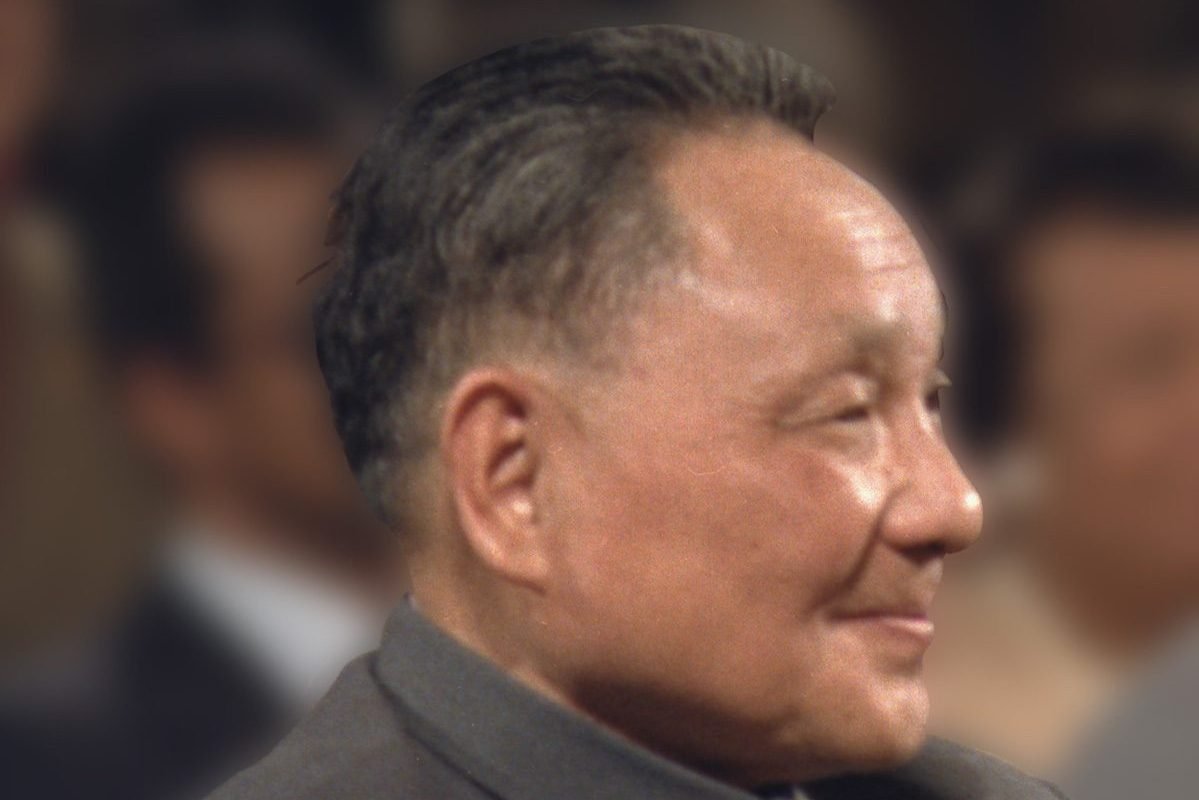
China’s growth model offers one example of this approach. Since the reform era initiated by Deng Xiaoping in the 1980s, the country has combined centralized political authority with expanding markets, private enterprise and long-term industrial planning. Whether one agrees with China’s political system or not, its experience demonstrates that strategic coordination and market competition can coexist within a single economic model. It’s becoming very effective in the AI age.
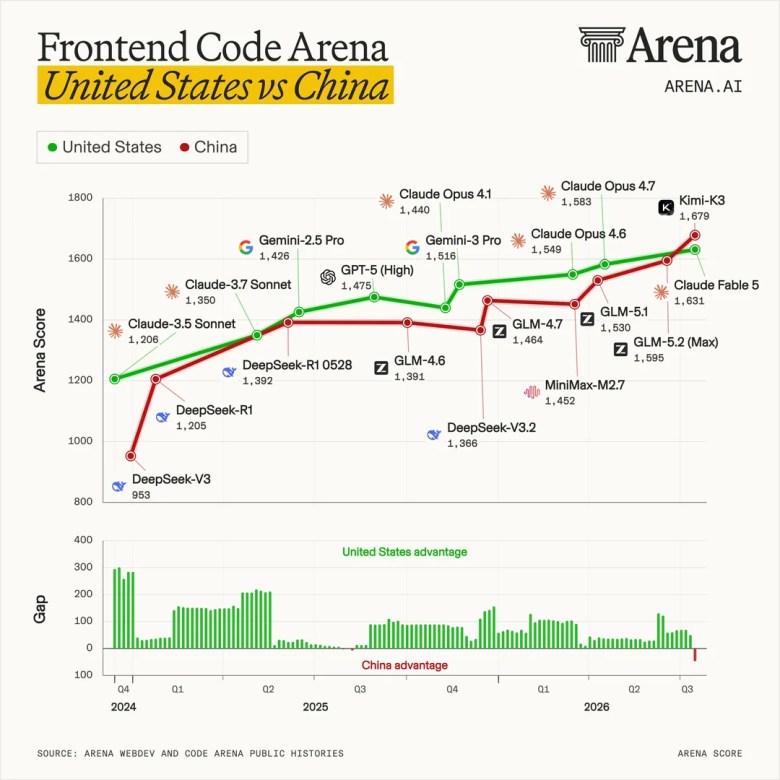
A recently example includes the launch of advanced Chinese model Moonshot AI’s Kimi K3, which outperformed the world superior AI model i.e. Anthrophic’s Fable 5 on coding benchmark. On Aug 3, Hugging Face an renowed AI Company CEO, Delangue said China is winning the artificial intelligence race with open-weight models and could catch up to U.S. Frontier model makers as soon as this year.
Along with reports that China has begun manufacturing deep-ultraviolet (DUV) lithography machines, a critical technology for advanced semiconductor production and one of the last major areas in which it relied on Western suppliers. Kimi’s feats further reinforce the fact that the combination of state-directed strategic coordination and market competition – capunism – can be a powerful state model in the AI era.
In a capitalist system, a general assumption is that competitive markets naturally allocate resources efficiently. Although it’s true for many sectors of the economy, AI exposes co-ordination problems that markets alone cannot solve. A single company can’t independently build an electric grid and semi-conductor ecosystem while training millions of engineers. These investments require decades of planning and coordination beyond the incentives of individual firms. Markets remain essential for innovation. But innovation increasingly depends upon strategic public investment.
The central theme of competition in the AI era will not be capitalism versus communism but institutional capability versus institutional weakness. Surely a nation that focuses on combining strong state capacity with dynamic markets is likely to possess a decisive strategic advantage over those that rely exclusively on either market fundamentalism (capitalism) or centralized planning (communism) until its too late.

Ravi Kant is a columnist and correspondent for Asia Times covering Asia. He mainly writes on economics, international politics and technology. He has wide experience in the financial world and some of his research and analyses have been quoted by the US Congress, Harvard University and Wikipedia ( Chinese Dream). He is also the author of the book Coronavirus: A Pandemic or Plandemic.