Environmental features and geography may be a better predictor of homicides in Latin America than the prevalence of organized crime gangs.
That’s what we found in a recent study that analyzed homicide patterns across Colombian municipalities between 2010 and 2020.
As researchers inplace-basedcriminology, we were interested in understanding whether the locations where violence occurs matter more than the prevalence of organized crime groups operating within them.
So we compared violence levels against the prevalence or proximity of certain environmental and geographical factors, including coca cultivation, gold mining and transportation corridors, such as major roads, rivers, ports, airports and border crossings.
Using statistical models, we assessed the relative predictive power of these environmental features versus the presence of armed actors, including the now defunct revolutionary group FARC and its dissident factions, the guerrilla group ELN, and various organized crime syndicates.
Our results showed that environmental and geographic features were significant predictors of the local murder rate, independent of whether organized crime groups were present.
In fact, many municipalities with a high armed actor presence in eastern Colombia had relatively low murder rates. Meanwhile, homicide hot spots clustered predominantly in the country’s western corridor, where illicit economic resources and transportation corridors overlap.
A graphic shows the correlation between homicide hot spots, gang concentration, and environmental and geographic features.Pires/Guerette/Del Rio/Spencer, CC BY-SA
Crucially, violence did not stay contained within individual municipalities. A strong spillover effect meant that homicide rates in one municipality were significantly shaped by conditions in a neighboring one – particularly coca production and mining activity in adjacent areas. Environmental features, it turns out, facilitate much of the violence in Colombia.
Why it matters
The implications of these findings cut directly against decades of anti-violence policy across Latin America and beyond. High-profile kingpin strategies – the killing of Colombian drug lord Pablo Escobar, the capture of Mexico’s El Chapo, the arrest or killings of top FARC leaders in the past – are emblematic of a deep-seated belief that cutting off the snake’s head will dismantle criminal organizations and reduce bloodshed.
Our findings, published in the peer-reviewed journal Crime Science, suggest this strategy is misplaced or, at a minimum, incomplete.
If murder rates are driven by the geographic distribution of illicit economic opportunity, then removing individual criminals from those environments does little to change the underlying conditions that make violence profitable and persistent. A new group, or a fragmented remnant of the old one in the case of FARC dissidents, will simply operate in the same place as its predecessor and carry on with that criminal activity.
Our study also reframes how Colombia’s 2016 agreement with the FARC should be understood. Although the accord succeeded in disarming one of the region’s most influential insurgent groups, violence has persisted and in some areas escalated because the broader conditions driving conflict were left largely intact. As the FARC withdrew, rival armed organizations, or fragmented successor groups, moved into the resulting power vacuums and competed for control over coca-producing areas and drug-trafficking routes.
Our findings suggest that for policymakers, reactive strategies that target offenders after violence erupts are not sufficient on their own.
Rather, methods that address the underlying conditions that attract organized crime groups may be more effective. This could include crop substitution programs in coca-growing regions, legal job opportunities for mining communities, and a strengthened security presence along trafficking corridors, as well as in areas where the national government has little to no footprint.
What still isn’t known
At the broadest level, this study looked at where homicides cluster across municipalities – the basic administrative units for which homicide data was available. Some municipalities, however, are quite large, meaning that armed groups may not operate evenly across the entire area, and homicides are not spread uniformly either. Future research could zoom in further, examining whether the same patterns hold at the neighborhood or street level.
Because annual data was not available for all variables, we relied on average homicide rates over the 10-year period, which meant we could not track changes over time. We would like to explore whether shifts in the number and presence of criminal organizations, alongside environmental factors, correspond with annual changes in violence.
Finally, we hope to apply this same framework to other conflict-affected countries in Latin America, particularly Mexico and parts of Central America, to see whether the same environmental factors predict homicide rates across different national contexts. If place-based factors consistently prove just as powerful as offender-focused ones, the argument for prevention strategies that target places and conditions, rather than just criminals, becomes much harder for policymakers to dismiss.
The Research Brief is a short take about interesting academic work.
Anti-Zionism is not anti-Semitism, UK appeal tribunal confirms in landmark ruling
The UK Employment Appeal Tribunal (EAT) has upheld a landmark ruling that anti-Zionism is not anti-Semitism and constitutes a protected philosophical belief under the Equality Act 2010. The judgment rejects the University of Bristol’s attempt to overturn the central findings in favour of its former professor, David Miller.
The ruling reinforces a distinction which pro-Palestine campaigners, Jewish anti-Zionists and civil liberties advocates have defended for years: opposition to Zionism as a political ideology is not inherently the same as hostility towards Jewish people.
In its judgment, handed down on today, the EAT upheld the findings that the university’s decision to dismiss Miller and its refusal of his internal appeal constituted unlawful direct discrimination. It also preserved the conclusions that his dismissal was unfair and wrongful.
“ANTI-ZIONISM PROTECTED BY UK LAW”, said Miller following his victory. “Anti-Zionism is now a protected philosophical belief under the Equality Act 2010. Full stop.
The Employment Appeal Tribunal finally handed down its judgment this morning. The University of Bristol’s attempt to overturn my 2024 Employment Tribunal victory has been comprehensively dismissed. We won on every single count”
ANTI-ZIONISM PROTECTED BY UK LAW
We have set a binding legal precedent!
Anti-Zionism is now a protected philosophical belief under the Equality Act 2010. Full stop.
The Employment Appeal Tribunal finally handed down its judgment this morning. The University of Bristol’s… pic.twitter.com/mRvXCfBhVW
— David Miller (@Tracking_Power) August 4, 2026
The judgment marks the latest development in a dispute going back years.
In early 2021, pro-Israel organisations and figures describing themselves as “proud Zionists” mounted a campaign demanding Miller’s dismissal over his criticism of Israel and Zionism. At the time, students at the University of Bristol defended the academic, warning that allegations of anti-Semitism were being used to silence legitimate criticism of Zionism and Israeli violations of Palestinian rights.
The university dismissed Miller summarily in October 2021, despite an independent investigation clearing him of allegations of anti-Semitism.
Despite those findings, the university proceeded with disciplinary action and dismissal. The case became a prominent example of what Palestine Legal has called the “Palestine exception to free speech”: the tendency of institutions which otherwise champion freedom of expression to restrict it when the subject is Israel or Palestinian rights.
Read: The war for Israel on British campuses
Miller challenged his dismissal before the Employment Tribunal and secured a landmark victory in February 2024. The tribunal ruled that the university had discriminated against him because of his protected anti-Zionist beliefs and had dismissed him unfairly and wrongfully.
Bristol University appealed, advancing nine lengthy grounds and multiple sub-grounds against the findings. The EAT has now rejected the university’s challenges to liability.
Read: Dr Swee Ang, founder of Medical Aid for Palestinians, deplatformed by the BMA
The principle established in his case will be seen as being relevant to other employment disputes. A former Arsenal employee has sued the club, alleging that it dismissed him for expressing anti-Zionist views and supporting Palestine. His representatives characterised the dismissal as political censorship rather than action against anti-Semitism.
An NHS doctor has also brought a High Court challenge over the use of the controversial International Holocaust Remembrance Alliance definition following his suspension for political speech.
US State Department to close consulates in Canada, Japan and Indonesia
The U.S. State Department has notified Congress that it plans to close five foreign missions in a rare downsizing of America’s global diplomatic footprint, according to people familiar with the notice.
In the notice sent to some congressional committees late last week, the State Department said it planned to close its posts in St. George’s, Grenada; Nagoya, Japan; Medan, Indonesia; Douala, Cameroon; and Winnipeg, Canada. The people familiar with the notice spoke on the condition of anonymity because the notice was not public.
The expected closures, which have not been previously reported, represent a rare example of the U.S. closing multiple foreign missions in a downsizing that is not tied to a particular geopolitical event.
Early last year, during the opening months of the Trump administration, the State Department began preparations to shut down nearly a dozen foreign missions, Reuters and other media outlets reported at the time, as part of a broader push by the Republican president to transform the U.S. bureaucracy so that it is fully aligned with his “America First” agenda.
The White House Office of Management and Budget had advocated for an even more ambitious closure program, targeting up to 30 foreign missions. Some administration officials have privately argued that some smaller foreign missions are inessential and not cost effective.
Democrats and some former foreign policy and national security officials argue that cuts to the U.S. diplomatic footprint – coupled with the dismantling of the U.S. Agency for International Development, which provided billions of dollars worth of aid globally – risks undermining American leadership, while leaving a dangerous vacuum for adversaries like China and Russia to fill.
While the State Department did undergo a broad bureaucratic overhaul last year – cutting dozens of bureaus and hundreds of staff – no foreign missions were shuttered.
Asked for comment on Sunday, the State Department issued a statement that did not confirm the closures but said it was focused on ensuring that the nation’s diplomatic footprint was efficient and effective. The department added that it was committed to following congressional notification procedures.
U.S. Secretary of State Marco Rubio has portrayed cost-cutting measures as necessary to right-size an organization many conservatives see as bloated and overly bureaucratic.
The U.S. mission in St. George’s, Grenada, is an embassy. The posts in Medan, Winnipeg and Nagoya are consulates, while the post in Douala is an “embassy branch office.” Consulates and branch offices typically represent U.S. interests in regions outside a foreign country’s capital city, where the U.S. embassy is typically located.
During the administration of former President Joe Biden, the U.S. government opened several foreign missions, all of them in the Pacific region, where the U.S. is competing for influence with China.
While China does not have a functioning foreign mission in Douala or Winnipeg, it does have a diplomatic presence in St. George’s, Nagoya and Medan.
US Undersecretary of War Elbridge Colby called South Korea (Republic of Korea, ROK) a “model ally” while visiting Seoul a few months ago. A “model ally?” Compared with what?
South Korea is still a longtime partner and an ally bound by a mutual defense treaty signed in 1953. However, all relationships change over time, and the US-ROK relationship isn’t what it once was.
Most of America’s “model” allies don’t have influential figures associated with the ruling party – in this case, the elder brother of Kim Min-Seok, until recently the prime minister and now in the running to head the ruling Democratic Party of Korea (DPK) – who have declared that Trump’s America is “the apex of Yankee imperialism.”
It’s equally difficult to find an equivalent in other US alliances of the rare circumstances that the former prime minister himself and the head of the ruling party, were both imprisoned as younger men for pro-North Korea acts against the US ambassador’s residence and a US Information Agency office in South Korea. Neither has ever apologized or even explained it away as “youthful exuberance.”
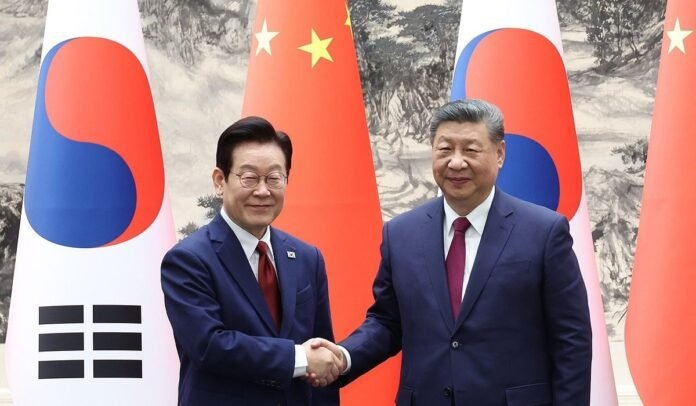
And South Korea’s President himself, Lee Jae Myung, has referred to US forces in South Korea after World War II as an “occupying force.” He was also accused of being involved in the unauthorized transfer of US$8 million to North Korea while serving as governor of Gyeonggi Province. Lee denies the charges, but his then-subordinate has been convicted.
Since taking office in mid-2025, the Lee administration’s Unification Ministry has seemed keen to provoke the United States. The South Korean government early on picked a fight over longstanding, effective bilateral procedures for managing the Demilitarized Zone between South and North Korea.
South Korean prosecutors also improperly accessed restricted areas (and reportedly, sensstive information) at Osan Air Base while pursuing an investigation into activities by the former South Korean administration directed at North Korea. On another occasion, a Lee administration official released secret information on North Korean nuclear activities provided by the US.
Other South Korean officials are pushing to assume wartime “operational control” over combined ROK and US forces more for political reasons than on the basis of meeting actual readiness requirements – and contrary to bilateral understandings on when such changes will be made.
Chafing US global policies
“Model ally” South Korea has not been helpful with the US campaign against Iran, and has complained about modest transfers of US military hardware from South Korea to the Middle East.
The Lee administration doesn’t seem interested in helping out with the defense of Taiwan either, which is the lynchpin of the US defense line in the Indo-Pacific and of great importance to South Korea’s own security. Nor is it keen to give US forces in South Korea permission to redeploy in the event of a Taiwan contingency. This perhaps isn’t surprising. While a candidate for the presidency, Lee Jae Myung said Taiwan was none of South Korea’s business, a stance that is music to Beijing’s ears.
President Lee Jae Myung’s recent social media postings include comments equating Israeli military actions with the Holocaust, provoking a formal complaint from the Israeli government. Lee offered a half-hearted, incoherent excuse.
And the South Korean administration sent $500,000 to Iran for ‘humanitarian aid’ – but how likely is this to help families of the several tens of thousands of Iranians the regime gunned down a few months ago for demanding honest, consensual government? Not likely at all, and Lee didn’t even appear to pay lip service to the idea.
A one-party ‘model ally’?
And there’s more that makes one wonder about the definition of “model ally.”
Lee Jae Myung is aggressively following up on his recent predecessor, former President Moon Jae In’s, efforts to turn Korea into a one-party state. The Moon Jae In (2017-2022) and Lee Jae Myung (2025 ~) administrations have systematically endeavored to control all levers of power in South Korea: the National Assembly, judiciary and prosecutors, police, intelligence service and the National Election Commission.
South Korea’s leftist administrations have cowed the media and are aiming to dominate the military and big business, and influence over academia is immense. The violent, pro-Pyongyang Korean Confederation of Trade Unions has worked closely with the DPRK.
Even for regular citizens, criticizing the government or even mentioning the importance of honest elections can earn a visit from the police.
Religious groups have long been in the left’s crosshairs, with the Lee administration pressuring groups and arresting pastors it regards as “enemies.” The cruel treatment and persecution of religious leaders, and of former President Yoon Suk Yeol and his wife, resembles North Korean behavior. It’s not what one would exlpect from America’s “model ally.”
And the treatment of the American company Coupang, by South Korean officialdom reveals a distasteful nastiness directed toward an American company – and has attracted US Congressional attention and criticism.
A partnership worth protecting
South Korea’s left is telling Washington what it really thinks – despite Washington’s apparent preference for ignoring warning signs in the relationship.
Even so, there’s much that’s good to be said about South Korea, as for any ally. It spends a lot of money on its own defense and has a military that can and will fight. Its defense relationship with US forces is probably the best among any alliances in the Indo-Pacific region in pure operational terms. The South Koreans have been tough with Chinese, Russian and North Korean provocations and incursions in ROK maritime territory and airspace over the years.
South Korea has a world class defense industry that provides advanced weaponry for free nations from Indonesia to Poland. It has offered to help America’s ailing shipbuilding industry recover – and has purchased the near-defunct Philly Shipyard as an initial step, along with stating a willingness to build warships and support ships for the US Navy.
South Korean companies are major investors in the United States – including leading South Korean technology firms – and several hundred billion in future investments are planned following Trump administration pressure.
Additionally, the Lee administration has made at least temporary peace with Japan and is upgrading bilateral defense cooperation with its neighbor – to Washington’s relief.
And most important of all, South Koreans – by a large majority – appear to support the US-ROK alliance, even if many South Korean leftists would prefer to end it.
An ambassador at last
The US is finally getting an ambassador in South Korea. Former Representative Michelle Steel is a good choice as she understands South Korea’s left. She should have been in Seoul a year ago. There are a couple of things she might do to begin with.
One is to examine the allegations of electoral fraud produced by South Korea’s citizens groups in multiple elections since 2020. South Korea’s left has rejected them – dismissing them as baseless conspiracy theory. That’s to be expected. Less forgivable, however, is that the United States, with its near unlimited financial, technical and investigative resources, does not appear to have examined the allegations either.
The ambassador might also review the visa status of relatives of some of South Korea’s most anti-American politicians and officials. More than a few of their relatives have green cards and sometimes US citizenship. Revoke a few.
However, the Trump administration, like its predecessors, refuses to examine the nature of South Korea’s left and its objectives.
Ignore such problems and they fester, as the US learned with its one-time solid ally Venezuela in the late 1990’s when leftist Hugo Chavez took power. The US government similarly ignored or downplayed warning signs of a turn towards authoritarianism and anti-American policies in the years following Turkish President Recep Tayyip Erodgan’s election in 2014.
Rather than declaring everything just fine, the US needs to pay serious attention to South Korea’s left and what they intend for South Korea and the alliance. That’s how you keep an alliance intact and get a real “model ally.”
Grant Newsham is a retired US Marine officer and former diplomat with many years of experience in Asia. He was also an executive with Morgan Stanley Japan and Motorola Japan/Korea. His military service included service as head of intelligence for Marine Forces Pacific and as US Marine Attache at US Embassy, Tokyo. He is the author of the 2023 book, When China Attacks: A Warning to America.
Originally published by The Korea Signal, this article is republished with permission.
OpenAI says Apple’s trade secrets lawsuit is “aggressive and oddly personal”
OpenAI has accused Apple of waging a “careless, aggressive and oddly personal lawsuit” in a blog post rebutting the iPhone maker’s claims that the AI start-up stole top-secret information.
“We do not have, nor want, any of their trade secrets,” the ChatGPT maker wrote on Monday evening, accusing Apple of “making vague accusations” and “trying to change their narrative.”
The post marks the latest escalation in a dispute that began last month when Apple filed a lawsuit claiming OpenAI had stolen hardware designs as it planned to launch its own AI-focused consumer devices.
The dispute comes as the two companies encroach on each other’s territory, with OpenAI venturing into consumer products and Apple joining forces with Google to revamp its Siri voice assistant.
OpenAI and Apple had previously partnered to integrate AI technology into Apple’s products. But the relationship began to sour after OpenAI last year acquired io, the design studio founded by former Apple design chief Sir Jony Ive, and hired a string of Apple employees.
Apple alleged in its lawsuit that more than 400 of its former employees now worked at OpenAI. It said it had received no response from OpenAI in February after contacting the start-up to warn it of an internal investigation into the potential theft of Apple’s trade secrets.
OpenAI said Apple’s lawyers had “emailed the wrong person after confusing two Asian last names” and “claimed they had a discussion with our General Counsel, which they now concede never happened.”
The start-up said Apple “never raised the specific allegations in this lawsuit at that time” and “in fact told us that they were ‘resolving any issues.’ We then heard nothing for five months until they sued.”
Apple alleged in its lawsuit that Chang Liu, a former employee who worked on some of its “most sensitive product development programs,” accessed Apple’s trade secrets after leaving the company in January.
However OpenAI said Apple employees had themselves contacted Liu “and asked for his help to locate this information,” something the iPhone maker “only now admits.”
Apple also named in its lawsuit a second former employee, OpenAI’s chief hardware officer, Tang Tan, whom it accused of seeking out proprietary information when interviewing Apple’s employees.
“Tang has always been clear with the team that we do not want, and must not use, any confidential information from other companies,” wrote OpenAI.
Apple on Monday sought a preliminary injunction in the US to prevent former employees and OpenAI from accessing, using, or disclosing its trade secrets. It also filed a second motion asking the court to expedite discovery and order several OpenAI employees, including Liu and Tan, to sit for depositions.
OpenAI said Apple’s request for a preliminary injunction was “both based on false information and completely unnecessary because we do not have, nor want, any of their trade secrets.”
“Apple is one of the greatest companies of all time, and built a reputation for obsessing over the smallest details. This careless, aggressive and oddly personal lawsuit sadly doesn’t live up to that reputation,” the ChatGPT maker wrote.
Apple did not immediately respond to a request for comment.
Ceuta Border Crisis Draws Israel Into Spain-Morocco Dispute
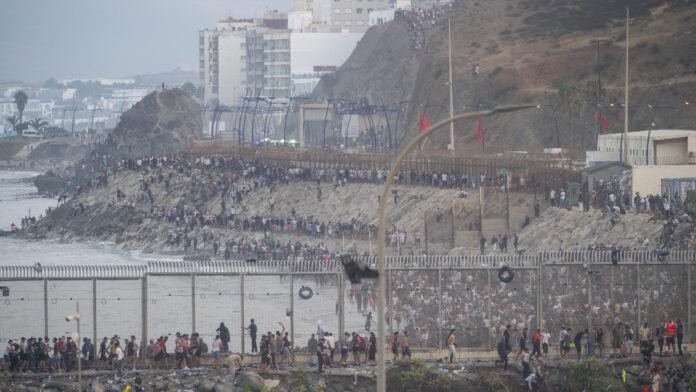
A migrant surge that overwhelmed Spain’s North African enclave of Ceuta has expanded beyond a border emergency into a diplomatic dispute involving Spain, Morocco and Israel, prompting a Spanish member of the European Parliament to publicly urge Israeli Prime Minister Benjamin Netanyahu to defend Spain’s territorial integrity.
In ‘’Speak Out in Defense of Spain’s Territorial Integrity,’ Spanish MEP Urges Netanyahu, The Media Line’s Gabriel Colodro describes a city of 84,000 residents suddenly confronted by the arrival of nearly 60,000 migrants in a matter of days, an influx that left at least 83 people dead, strained local services and fueled a political battle stretching from Madrid to Jerusalem.
“With my greatest admiration and respect for Netanyahu’s life story and courage, I ask Netanyahu to speak out in defense of Spain’s territorial integrity, because the Spanish government is not Spain,” Juan Carlos Girauta told The Media Line.
As the crisis unfolded, Israeli Ambassador to the United Nations Danny Danon criticized Spain for deploying troops to Ceuta after repeatedly condemning Israeli security measures, questioning why Madrid continued to maintain what he called colonial enclaves in Africa. Israel’s chargé d’affaires in Spain, Dana Erlich, quickly distanced the government from Danon’s remarks, saying they “does not represent the position of the State of Israel.”
For Girauta and other Spanish supporters of Israel, that clarification did little to ease concerns. He argued that Danon’s comments handed political ammunition to Prime Minister Pedro Sánchez’s allies, while unsubstantiated claims linking Israel and the United States to the border crisis quickly spread in public debate. No evidence has emerged connecting Israel to the crossings.
Questions also mounted over Morocco’s role. Girauta and Ángel Mas, president of ACOM, both characterized the mass crossing as a form of “hybrid warfare,” arguing that an influx of such magnitude was difficult to explain without at least some degree of official acquiescence. Publicly available evidence, however, has not established that Morocco organized the crossings. Reports citing officials familiar with Spain’s intelligence assessment said Rabat appeared to have relaxed border controls, while Morocco blamed human traffickers, economic hardship and false information circulating online.
As Colodro’s report reveals, Ceuta’s Jewish community, the immediate concern remained closer to home than the diplomatic fallout. Community president José Bentolila said residents endured days of uncertainty as businesses closed, reception centers filled and thousands remained in the city. Yet despite heightened anxiety, he said no antisemitic incidents had been reported, and the city’s tradition of coexistence among Jews, Christians, Muslims and Hindus had endured.
The Pentagon Found a New Way to Undercount U.S. Casualties in Iran
The Pentagon is using a new method of tallying the number of U.S. soldiers killed and wounded in the Iran war that a U.S. government official said was “designed to obscure the count.”
Since the start of the conflict, the Department of War has posted the official count of casualties on the website of the Defense Casualty Analysis System, or DCAS, which tracks “deceased, wounded, ill or injured” service members for Congress and the president. This official total of dead and wounded personnel, as documented over months of reporting by The Intercept, has been a gross undercount, stemming from what that same official previously called a “casualty cover-up.”
But after a series of Iranian strikes on U.S. facilities in the Middle East in July, the Pentagon last week rolled out a new approach. Casualties since July 7 are now counted separately on a new webpage with a generic designation: “Overseas Operations.”
Two hundred and seventy-three U.S. troops were killed or wounded since July 7, according to the Monday total on the new Overseas Operations page.
When combined with the existing DCAS page for the Iran war, the official count stands at 704, an 83 percent increase in casualties since April 8, the day the first ceasefire deal was struck between the Trump administration and Iran. When counting known casualties overlooked by the DCAS page, the total exceeds 900 personnel.
For months, the Pentagon has failed to comment on DCAS anomalies reported by The Intercept nor the reason for the change in the way it now counts casualties, which was first reported by the New York Times. Last week, the Pentagon told the newspaper that “since Operation Epic Fury has concluded, the department classifies casualties as overseas operations in the CENTCOM area of responsibility.” Central Command oversees U.S. military operations in the Middle East.
“This is certainly designed to conceal the count of the wounded,” the official said, while noting that “incompetence” has also caused confusion in the casualty count.
The change comes after a July 20 rant by Pentagon spokesperson Sean Parnell who claimed reports of a Pentagon effort to withhold news of dozens of U.S. casualties were “baseless and malicious” and a U.S. official’s disclosure to The Intercept that same day that recent attacks on U.S. bases by Iran had wounded “far more” personnel than the Pentagon had acknowledged.
The casualty spike resulted from Iranian attacks on at least nine U.S. outposts across the Middle East since July 9, according to a second U.S. official who spoke to The Intercept on the condition of anonymity because they were not authorized to speak with the press.
Iran’s military managed to overwhelm U.S. air defense systems using a mix of attack drones and advanced ballistic missiles, despite months of claims by President Donald Trump and self-styled War Secretary Pete Hegseth that Iran’s military was annihilated.
Last month, the tally of wounded personnel fluctuated by the day in the wake of increased Iranian attacks. On July 21, the casualty count on DCAS for Operation Epic Fury, the military’s official designation for the Iran war, stood at 500. Now, it has shrunk to 431.
For months, The Intercept found anomalies with the counts offered on the DCAS website. On April 21, for example, the number of wounded-in-action troops declined by 15 without public acknowledgment by the War Department. Despite repeated questions for months, the Pentagon has not commented on the disparities in its casualty count.
Prior reporting by The Intercept also found DCAS is missing hundreds of dead and wounded personnel from Epic Fury. The Pentagon list of the names of the dead is still missing Maj. Sorffly Davius, a signals and communication officer with the New York Army National Guard who was assigned to the headquarters of the 42nd Infantry Division and reportedly died of sudden illness while on duty in Camp Buehring, Kuwait, on March 6. Davius’s death was widely acknowledged even as it was excluded from the the official count: Rep. Mike Lawler, R-N.Y., spoke about him during a memorial service that month, and Gen. Dan Caine, the chair of the Joint Chiefs of Staff, recognized Davius while “honoring our fallen.”
While DCAS provides a running tally of “non-hostile” deaths — meaning those who died from accidents or by illness — it doesn’t include “non-hostile” injuries. The DCAS figures for Epic Fury show that 65 Navy personnel were wounded in action. Missing, however, are the more than 200 sailors treated for smoke inhalation or lacerations due to a March 12 fire that raged aboard the USS Gerald R. Ford. The aircraft carrier had been conducting round-the-clock flight operations to, Caine said, “project combat power” in the Middle East.
Recent reporting by the War Horse, using Pentagon records obtained via the Freedom of Information Act, found more than 400 casualties were recorded between February 28 and April 8. Seventy occurred on March 18 alone, but this huge single-day toll was never reported by the Pentagon.
The records provide more granular detail than DCAS, revealing that at least 17 troops sustained life-threatening injuries. They show that U.S. troops suffered shrapnel wounds, broken bones, smoke inhalation, and other injuries. The most common injury recorded, however, was head trauma — which affected at least 170 troops, according to the data.
President Donald Trump has long dismissed brain injuries as “headaches” and “not serious.”
Higher fuel costs and strikes push Brussels Airlines deeper into the red
Brussels Airlines reported a wider adjusted operating loss in the first six months of the year and said it would no longer add two Airbus A330 aircraft to its fleet in 2027 as it responds to weaker-than-expected financial results and an uncertain outlook.
The Belgian carrier posted an adjusted operating loss of €70 million ($81 million) for the first half of the year, up 50% from the same period a year earlier.
Brussels Airlines said the deterioration reflected a combination of external factors, including higher fuel prices, an Ebola outbreak in East Africa and strikes by external parties.
Despite the larger loss, traffic and revenue increased during the period. The airline carried 4.5 million passengers on 34,200 flights, increases of 8% and 5.5% respectively compared with the first half of last year. Revenue rose 9% to €821 million.
Fuel costs increased by €64 million from a year earlier, which the airline attributed mainly to the war in the Middle East and its effect on oil prices.
“We have weathered storms before, but the summer is now crucial if we are still to deliver positive results by the end of the year,” Chief Financial Officer Nina Öwerdieck said in a statement.
Öwerdieck said Brussels Airlines is operating more flights than last year and could achieve stronger results if operations continue without major disruption during the peak summer season.
The airline said it is taking a cautious approach because financial performance has fallen short of expectations, while repeated strikes in Belgium and geopolitical uncertainty continue to weigh on its outlook.
As a result, Brussels Airlines said it has decided not to proceed with plans to add two Airbus A330 aircraft in 2027, reversing an earlier fleet expansion proposal.
Naked Man Arrested After Surviving Jump from Iconic Bridge
A naked daredevil who stunned New Yorkers by climbing to the top of the Brooklyn Bridge and plunging into the East River has now been arrested, police said.
Galymzhan Abaildayev, 44, allegedly scaled the iconic bridge Sunday afternoon while carrying a backpack and two flags, triggering a massive police response as horrified onlookers watched from below.
After reaching the bridge’s north tower, Abaildayev reportedly displayed the flags before stripping off his clothes in full public view.
Then came the jaw-dropping finale.
Abaildayev leaped from the historic bridge tower and crashed into the East River — miraculously surviving the terrifying fall.
NYPD harbor officers rushed to the scene and pulled him from the water. He was transported to a New York City hospital in stable condition.
Police said Abaildayev was arrested and charged with reckless endangerment, public lewdness, criminal trespass, disorderly conduct and graffiti.
It was not immediately clear whether he had hired an attorney.
Officers were first called to the 143-year-old bridge after receiving reports that a man with a backpack was climbing the landmark.
The Brooklyn Bridge has approximately 135 feet of clearance above the water at its center. The massive stone towers rise roughly 272 feet, according to a company that previously worked on the bridge’s restoration.
Authorities have not revealed what was written or displayed on the two flags Abaildayev carried during the bizarre stunt.
Despite the dangerous climb, public striptease and stomach-churning plunge, Abaildayev somehow walked away alive — though he is now facing a long list of criminal charges.
Greg Abbott Blasted Corpus Christi for Its Water Crisis. A River Authority He Has Power Over Is Falling Apart.
Texas Gov. Greg Abbott responded with fury after Corpus Christi officials announced in March that this Gulf Coast region of more than 500,000 people could face unprecedented restrictions as its water supply dried up.
The state had already committed over $750 million in low-interest loans to the city’s plans for a desalination plant, a project that would add 30 million gallons a day to the region’s water supply. But the project had gone nowhere.
“You know what they did? They squandered it, and then they changed their plan and then they were indecisive about what to do,” Abbott said of city officials in a heated response to a reporter’s question at an unrelated March press conference.
“What Corpus Christi leaders have to do is make a decision,” Abbott said. “We can only give them a little time more before the state of Texas has to take over and micromanage that city and run that city to make sure that every resident who goes to the water tap and turns it on, they are going to be getting water out of their faucet, not because of what local leaders are doing but because of what the state of Texas will do.”
Even as Abbott was demanding that Corpus Christi get its act together, another agency, whose entire board Abbott appoints, was also coming undone.
In late June, board members of the Nueces River Authority learned that funding for a desalination plant the agency hopes to build, separate from the city’s, is months from running out. Additionally, the agency was spending more than it was taking in, and other contracts that had kept the authority financially afloat had been canceled.
Although the river authority’s project is a critical part of efforts to expand the region’s water supply, so far, the governor hasn’t threatened to take over the agency’s day-to-day operations. He’s consistently placed the burden of responsibility on the NRA board.
But Abbott has previously demonstrated that he can use his authority to compel other agencies to act: In March, he instructed a different river authority not to reduce Corpus Christi’s water allocation from Lake Texana. He also had the state’s environmental agency waive regulations so the city could move groundwater from Nueces County, which includes Corpus Christi, to its water treatment plant.
As far back as October 2022, while he was campaigning for reelection, Abbott said in an interview with KRIS 6 News that the state was working with the city and Nueces County on a desalination plan. If the city did not pursue the project, “then the state of Texas will do it for them,” the governor said. But the state is not currently involved in the city’s desalination project.
The governor appoints all 21 members of the NRA’s board and designates its president. With a majority vote of the river authority board, Abbott also can remove any board member for inefficiency, neglect of duty or misconduct. He has no such control over the Corpus Christi City Council.
Political scientists and water policy researchers who reviewed the situation told KRIS 6 News that Abbott’s decision to pressure Corpus Christi while leaving the NRA to address its problems largely on its own reflects a selective use of power. While recent rains have helped delay, though not prevent, an immediate water emergency for Corpus Christi, experts say the region still needs to develop new infrastructure projects to secure its long-term water supply.
Should water supplies drop below certain levels, Corpus Christi residents and businesses — including oil refineries and petrochemical plans — would be required to cut water use by 25 % under the city’s current Level 1 water emergency plan. Households would be capped at using 6,000 gallons of water per month, landscape watering would be banned and there would be surcharges imposed on those who exceed their allotments.
“The city of Corpus Christi needs a lot of help, it doesn’t need threats, and the Nueces River Authority is in way over its head,” said Cal Jillson, a political science professor at Southern Methodist University. “The water crisis in Corpus Christi and beyond in Southeast Texas is serious, and it’s not clear that anyone has the breadth of authority and resources to deal with it.”
Gov. Greg Abbott has threatened Corpus Christi’s leadership over the city’s failure to move forward with a planned desalination plant, but he has largely refrained from publicly criticizing the leadership of the Nueces River Authority, even though he appointed its board. The NRA has also faced struggles in getting its planned desalination project up and running.Brenda Bazán for ProPublica and The Texas Tribune
What Power Does Abbott Have?
The public troubles for the NRA bubbled up as far back as March, when the agency’s then-chief operating officer sent a letter to board members accusing Executive Director John Byrum of making “materially inaccurate” statements about the authority’s finances related to the planned desalination project.
KRIS 6 reached out to the governor’s office in the spring about the accusations.
“Every member of a Texas board or commission should uphold the highest standards of integrity, transparency, and accountability in service of the people of Texas,” Abbott press secretary Andrew Mahaleris wrote in a statement. “Governor Abbott expects a thorough investigation into the allegations brought forth and for the Board to act swiftly once the investigation is complete.”
The board eventually cleared Byrum of “intentional wrongdoing,” but the NRA declined to release a copy of the investigation to KRIS 6 in response to a public information request; the Texas office of the attorney general has not yet ruled on whether the report can be withheld. The news organization asked the governor’s office for his response to the investigation and the board’s decision, but he did not respond.
The river authority’s unstable finances became even more apparent at a board meeting in late June, when the agency’s chief financial officer confirmed the NRA could be out of money for the desalination project by the end of August if certain contracts didn’t materialize. Since then, three of the agency’s desalination contracts, which the authority was depending on to stay afloat, expired and have not yet been renewed. KRIS 6 News asked the governor’s office whether it was aware of the agency’s continuing problems. Mahaleris again referred the news organization back to board members.
“The NRA Board oversees the agency’s operations and finances,” Mahaleris wrote June 27. “The Governor appoints board members to the state’s water authorities but does not manage their day-to-day operations. …The Governor expects accountability from appointed boards.”
While Abbott has no direct legal authority over the NRA’s policy decisions, he can use the power of his office to publicly pressure them, Ron Beal, a retired Baylor University School of Law professor whose work on Texas administrative procedure has been routinely cited by the Texas Supreme Court, wrote in a response to KRIS 6 News.
“He can say that when each member’s term ends, if the water project is not on its way, they will absolutely NOT be re-appointed to the job!” Beal wrote. “In other words, he cannot force them legally to follow his orders, but there is no doubt he has the bully pulpit and if anyone can pressure everyone to work together NOW and get it done ASAP, it is the Governor!!!!”
Texas Gov. Greg Abbott at a press conference in JuneBrenda Bazán for The Texas Tribune
In a written statement to KRIS 6 News for this story, Abbott again placed responsibility on both the Corpus Christi City Council and the NRA board but did not address most of the specific questions asked.
“Despite the temporary reprieve granted by recent rain, the Governor’s expectations for the region have not changed. … The Corpus Christi City Council created this crisis through repeated failure to act on desalination,” Mahaleris wrote. “The Council remains responsible for securing reliable water for their citizens. The Nueces River Authority Board is responsible for the agency’s finances” and the desalination project.
The governor’s office did not answer questions about whether Abbott has taken steps to coordinate among the city, the NRA and other stakeholders, or about what “accountability from appointed boards” looks like in practice.
Even as the governor’s office has publicly distanced itself from the NRA’s operations, it has fought to keep from releasing its own communications with the river authority’s leadership.
KRIS 6 News filed a public information request on July 2 seeking emails, text messages, meeting notes and correspondence between the governor and members of his staff and Byrum, the NRA executive director, and NRA board President Eric Burnett. The request covered the river authority’s desalination project and any state funding, grants or loan guarantees related to those efforts.
The governor’s office confirmed on July 17 that it had records that met the parameters of the request. It did not release them. Instead, the office asked the attorney general’s office for permission to withhold the documents. The office argued that the records relate to a proposed water facility project for which state funding may be sought and that releasing them would “seriously disadvantage Texas,” but did not explain how. Abbott’s office also said the records reflect policy advice between the governor’s office and representatives of another state agency; this type of communication can sometimes be withheld under the state’s public information law.
The river authority has struggled to keep up with the demands of the desalination project, which is estimated to cost $6.4 billion. Design work on the pipeline that’s supposed to deliver the desalinated water stalled because the river authority hasn’t offered the company building it a new contract. Byrum, the executive director, has claimed President Donald Trump promised funding for the project, but the river authority has never actually made a formal request to the White House.
Jillson pointed to a fundamental mismatch between the NRA and the scale of the desalination project it’s trying to complete. The NRA staff is small, with an annual budget of up to about $5 million. It’s governed by unpaid, part-time board members who historically meet quarterly to provide broad direction.
He said the governor should direct someone in his office to determine whether the NRA has the personnel and expertise to execute a project of this scale and, if it doesn’t, to act on that finding. Without that kind of direct link between the governor’s office and the agency, Jillson said, “what you’re saying is, ‘We expect these guys to oversee themselves.’”
Byrum wrote in a response to KRIS 6 News that the authority “has the experience to oversee” the project and the option to hire additional staff if required.
KRIS 6 News asked if the governor, or anyone in his office, was involved in the NRA’s selection of IDE.
Byrum wrote that the “Governor’s office was not involved.” KRIS 6 News asked the governor the same question, but his spokesperson did not respond.
The Nueces River Authority has proposed constructing a desalination plant on Harbor Island, a flood tidal delta on the outskirts of Corpus Christi.Brenda Bazán for ProPublica and The Texas Tribune
The Takeover Question
Abbott has a record of curbing the power of Texas cities like Corpus Christi to govern themselves. In 2015, he signed a bill that overrode a voter-approved fracking ban in Denton in North Texas and blocked cities from banning or restricting oil and gas drilling. In 2023, he signed the so-called “Death Star” bill, which preempted city authority over eight policy areas, including labor, natural resources, insurance and property.
Republican state Rep. Denise Villalobos, who represents the Corpus Christi region, previously told KRIS 6 that Abbott directed her to draft a bill that would create a state-level water infrastructure authority, something she compared to the state’s highway department.
If adopted by the Legislature when it meets next year, such an authority would take many decisions about future water supplies away from locals.
Villalobos did not comment for this story. Abbott’s office did not answer questions about the proposed legislation.
Corpus Christi City Manager Peter Zanoni told KRIS 6 this summer that his office had looked into how a takeover would work and found no examples in Texas of the state stepping in to run a water operation or water corporation. The closest parallel, he said, is the state’s ability to take over ailing school districts.
Abbott’s threat to take over Corpus Christi’s desalination project runs into other unsettled legal territory the governor’s office has not addressed publicly, said Gabriel Collins, a lawyer and research fellow at Rice University’s Baker Institute for Public Policy who studies water and energy policy.
Under Texas law, surface water, meaning rivers and lakes, is public property, giving the state a clear line of authority. Water pumped from the ground is considered private property, belonging to the person who owns the land above it, and is regulated locally.
Desalinated seawater fits into neither category. Collins said a legal case could theoretically be made that water drawn from within 3 miles of shore falls under state jurisdiction, but he said he isn’t aware of anyone making that argument in this context.
“That would be a massive shift in water policy in the state of Texas,” Collins said.
But the legal question may be less important than a practical one, Collins said. Would a state takeover of Corpus Christi water regulators, even if it could be done, actually make a difference?
“Or would you be better off resolving those fundamental problems by having the state be a catalyst and a facilitator financially that helps the local political authorities solve a problem?” Collins said.