Home Blog

With America deranged, President Xi summons overseas Chinese

0
with-america-deranged,-president-xi-summons-overseas-chinese
With America deranged, President Xi summons overseas Chinese

就让岁月开成一朵花,

等一场春风温柔抵达,

带着知足上路,

带着晚霞回家,

爱在时光中轻轻发芽。

– 吴忧

And so it begins.

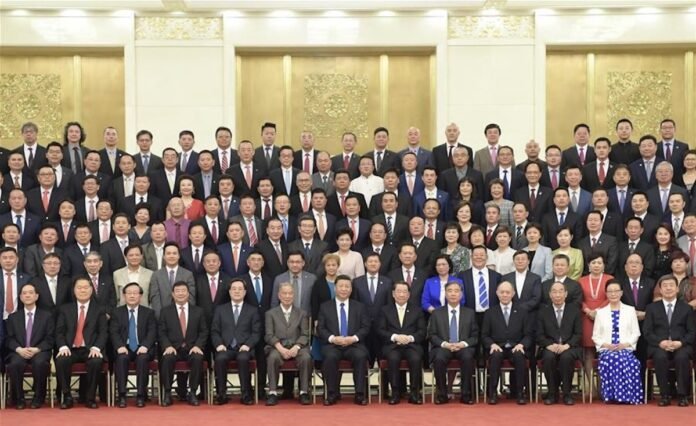
President Xi Jinping of China has summoned overseas Chinese to pool strengths and contribute to the rejuvenation of the Chinese nation. This is not new. The People’s Republic of China has frequently called on the 60 million-strong Chinese diaspora to help the motherland, with periodic pronouncements seeking cultural ties, technical expertise and commercial opportunities all couched in aiding the rejuvenation of the Chinese nation. 

Most famously, 600,000 overseas Chinese heeded the call and returned from Southeast Asia after the People’s Republic was established in 1949. The grandfather of yours truly was among them, founding schools in Fujian province.

At the National Committee of the People’s Political Consultative Conference (NCPPCC) meeting in Beijing on July 27 and 28, a session on overseas Chinese affairs was held for the first time since party and state institutions were overhauled in 2018 – a point that was specifically highlighted by the pronouncement.   

The pronouncement, released on July 29, includes one stunning element: President Xi Jinping has called on overseas Chinese “to leverage their unique strengths in support of the cause of national reunification.”

“National reunification,” said the Global Times (a nationalist newspaper). I had to reread it a couple times. Was it a typo? Surely they meant “national rejuvenation,” right? Who’s against rejuvenation?

In the official Chinese language announcement on the NCPPCC website, President Xi urged “sons and daughters of China at home and abroad to unite and strive (海内外中华儿女团结奋斗)” to achieve a “united and unified Chinese nation, the ‘root’ of Chinese people at home and abroad.”

President Xi Jinping of China has indeed requested the Chinese diaspora to lend our unique strengths towards national reunification. Overseas Chinese will do rejuvenation all day long, but, c’mon, reunification? What is President Xi asking, exactly?

National reunification with Taiwan under the People’s Republic of China is politically anathema in the West, especially the US – ignorantly so, but still. Many, if not most, long established overseas Chinese in America would just as well kick this can down the road for as many decades as possible, hoping events do not outrun their IBGYBG strategy (I’ll be gone, you’ll be gone).

These overseas Chinese have it good in America – respectable careers, spacious homes, children in elite schools, citizenship and excellent fishing. This is the American dream as promised, is it not?

Of late, however, we all sense things have gone awry. This, of course, is not a concern unique to overseas Chinese. It is a common lament in America. As public discourse is captured by deranged culture wars, politics has become gratuitously divisive and the media have become a free-for-all of disinformation and low-wattage slop.

Many overseas China wonder, often secretly, whether they (or their parents) made the right decision decades ago after jumping for joy on receiving US graduate school acceptances. They were at the top of their TPFSZUN (Tsinghua, Peking, Fudan, Shanghai Jiaotong, Zhejiang, USTC and Nanjing) class in physics, chemistry and engineering. A PhD program in America was the obvious next step, one which nobody turned down.

And now they can’t help but wonder. Many are professors or middle managers in the research departments of Fortune 500 companies. It’s fine, they tell themselves. They achieved the American dream. It’s all for the next generation, anyway, and the next generation has clocked +1550 on the SATs, plays the oboe, started a bogus charity, took up a ridiculous sport like squash and is on track to the Ivy League.

Some of them, at least. A few crashed out spectacularly after getting sucked in by some bizarro American subculture – skater, stoner, hip-hop, goth, non-binary. Of course, these are the odd cases. Much more common is the +1550 SAT, cellist, bogus charity founder and fencing medalist who had to settle for Michigan, Illinois or UW while quietly resenting the legacies and underrepresented minorities admitted despite inferior credentials to better schools. 

Our hypothetical overseas Chinese material science professor at the University of Rochester cannot help but wonder. On his recent visit to China, the good professor’s rural roommate, whom he had once lent a modest sum of money to help cover a family emergency, now put him up in a swanky hotel suite well outside the professor’s normal budget. The once impoverished classmate also had his driver chauffer the professor around in a NIO ET9 – the most blinged out car our professor had ever sat in.

A dozen classmates came to the reunion banquet, many high-speed railing from distant cities, each eager to toast the top material science graduate of their University of Science and Technology China (USTC) class. These banquets were much more tolerable fifteen years ago when an American professorship meant something. Now, a roommate ran a massive research department at BYD and party member classmates had been promoted to significant central government positions. Our professor’s two post-doc four PhD student research team suddenly felt like the minor leagues.

And these guys were not even A-players. They were most definitely the B-team. Benchwarmers in university days. The classmates not bright enough to go overseas for graduate school. China’s dramatic rise over the last three decades was carried largely on the shoulders of the B-team as the A-players took their talents abroad – where they often stagnated in the research departments of General Motors or as associate professors in middling universities.

The children of many classmates appeared to be doing exceptionally well – many were attending TPFSZUN while one even made it to the Ivy League (hey, Cornell counts). Our professor was not going to explain how scandalous it was that his salutatorian 1570 SAT son was now attending the University of Illinois (computer science, which is a very big deal for an Asian male). He definitely did bring up the even bigger scandal of his daughter, still in junior high school, who had multiple piercings and a shaved head and who insisted she was non-binary.

Where did it all go wrong? Our professor loved America. Or parts of it. In the beginning. Graduate school was everything he had imagined. Professors were collegial, patient and supportive. Lab facilities were state of the art. The research was cutting edge. Upstate New York’s air was clean and energizing. The autumn foliage was ravishing. Fishing on Lake Ontario was a revelation. Our professor loved bringing visitors from China out on his 25-foot boat to troll for summer salmon – it blew every Chinese man’s mind. In America, middle class people can do such things?

But the decades passed. The Iraq war was a fiasco. The global financial crisis was an embarrassment. Obama turned out to be a historic disappointment. How did that freak Donald Trump become president? How was Joe Biden even worse? How was anyone expected to take last-minute Kamala Harris seriously? And now America is stuck with Donald Trump again? Let’s not even get into Jeffrey Epstein, the war in Iran and the stench of corruption.

America is becoming increasingly unhinged and it is hitting our professor close to home. Scary stories had been circulating through the overseas Chinese academic grapevine. It was just stories until two FBI agents dropped by an old friend’s office unannounced and questioned him for hours about his recent trip to China – whom he met, what materials he left behind, what compensation was given and what he talked about at his Harbin Institute of Technology guest lecture.

To be on the safe side, our professor, long since an American citizen, refrained from seeking funding from the Department of Defense and the Department of Energy and refused invitations from Chinese universities. This was infuriating. Just a few years ago, academic exchanges with China were no big deal if not actively encouraged.

Less fortunate academics who ran afoul of the new rules had their careers destroyed and were bankrupted by legal fees, before being exonerated for lack of evidence. Some, like Harvard chemistry professor Charles Lieber, served jail time and house arrest for bogus charges like making false statements and failure to report foreign income. 

Our professor kept abreast of these cases through the internet, contributed to legal defense funds and worked up a steamy head of indignation at not only the injustice but the ingratitude of it all – who were these meathead FBI agents who couldn’t tell the difference between a mundane guest lecture and offering up America’s nuclear secrets to the Ministry of State Security? He also thanked his lucky stars – there but for being overlooked by overzealous rednecked FBI agents would be I.

This new Cold War was leaving a sour McCarthyish taste in our professor’s mouth. He had been a loyal American. He had believed in democracy, freedom and liberal values. And now, he had to listen to pebble-brained politicians attribute China’s economic performance to Uyghur slave labor and IP theft. Who are these imbeciles? Most of his children’s schoolmates can barely do eighth grade math.

Classmates on raucous WeChat groups who bandied about anti-American conspiracy theories suddenly began to make a lot of sense. “America has no bottom line,” they had said for years, “No act of depravity is geopolitically off limits to Americans.”

“No, no, you don’t understand,” our professor had pushed back in the past. What is there to say today? Nobody will believe any defense of America. Our professor is having a hard time convincing himself.

These days, our professor muted notifications on the WeChat groups dominated by aggressive anti-American classmates. More off-putting than nationalist classmates endlessly posting anti-America videos are MAGA Chinese and their confused defend-America-at-all-costs agenda. What is wrong with these people? Who gave these knuckleheads PhDs? Many had long ago washed out of academic research and now worked as code monkeys or in completely unrelated industries like real estate.

Our professor knew full well why they are like that. They are stuck, just as he is. Twenty-five years ago, they missed the window of opportunity after grad school to participate in China’s miraculous rise. Their scientific careers had not panned out as they had once imagined. Universities in China are not rolling out the red carpet to invite them back as exceptional overseas talent. They hung tight to their long ago decision because the possibility of it being a mistake is too painful to contemplate. Besides, their children are hopelessly American and wouldn’t survive two minutes in the gaokao curriculum. Our professor winced as he thought of his non-binary daughter in goth makeup.

Yes, MAGA Chinese are American through and through – no better and no worse than the rednecks who made Trump president (twice) and who believed every bit of media slander about China. Overseas Chinese come in all shapes and sizes. MAGA Chinese were transparently shifting resentment for their personal misfortunes onto Xi Jinping and the Communist Party as if China’s economic success were somehow responsible for their American failure.

Our professor, however, is determined to be rational. He is too smart to let pride and personal circumstances dictate his judgement. MAGA Chinese are wackos. Almost as crazy as Falun Gong cultists. Why are so many overseas Chinese so deranged? Because that’s how China gets rid of its crazies, he joked to himself. He was only half joking.

Every Chinese, from street sweeper to Politburo member, has a deeply (or not) buried ambition to be emperor. This is a vestige of Chinese history, which is replete with commoners who – through talent, charisma, cunning and ambition – overturned centuries-old orders, founded dynasties and became emperor.

The frustration of this ambition sets off dark impulses in the psychologically unstable. This can be highly destabilizing, like a penchant for triads and secret societies, or a minor nuisance, like troublemaking village idiots (e.g., Lu Xun’s Ah Q). Modern China appears to have found a solution to this millennia-old problem. These troublemakers are now shown the door and encouraged to indulge their dark impulses abroad.

In 1964, Richard Hofstadler wrote “The Paranoid Style of American politics.” Hofstadler explored the distinct emotional style of American politics characterized by suspicion, heated exaggeration and conspiratorial fantasy. America is fertile soil for China’s wackos.

Of course, none of this is healthy and all of it far from the American ideal – although, let’s not kid ourselves, it is clearly America’s current reality if not the norm. The paranoid style is in charge of American politics at the foothills of a Cold War with China and in the midst of a hot war in with Iran.

And now, China’s President Xi Jinping has called upon the diaspora to help “unite and unify the Chinese nation.” Nothing specific was asked and no timeline was given. But with Taiwan under the auspices of the PRC, America’s military position in Asia becomes untenable. With America as deranged as it is, a united and unified China could be the best thing for everyone involved – especially America itself, which is in Asia by not of Asia (see here) whose presence distorts societies on both sides of the Pacific.

America is, after all, a nation stupid enough to trap itself in another unwinnable Middle East war. The problem with hegemonic empires with forward-deployed militaries is that, over time, the temptation for mischief is irresistible. Term-limited Presidents are presented with a panoply of levers that make things go boom, each flashing “Pull me! Pull me! Pull me!”

This is everything the founding fathers from George Washington to John Qunicy Adams had hoped to avoid, warning the young nation against getting caught in foreign entanglements and searching for monsters to destroy.

Our professor understands much of this intuitively. He has observed “heritage Americans” up close and knows full well that they are constitutionally incapable of geopolitical empathy, totally lacking in theory of mind. What pea-brained halfwits manage to convince themselves that Iranians can be bombed into supporting American and Israeli hegemony?   

President Xi Jinping has long impressed our professor and not just for enraging the wackos. Xi completely changed China’s path of travel – pointing the country in directions the professor had not considered necessar – as if perfectly anticipating a deranged America out to counter China’s rise.

President Xi’s greatest accomplishment, in our professor’s view, is the transformation of public citizenship. Littering, bickering, shoving has all but disappeared along with petty crime (see here). Today, far fewer TPFSZUN grads have starry eyed dreams on grad school overseas and many more return after their studies.

The professor wondered wistfully what might have been. Over half a lifetime had passed. He’d been too young to participate in the first leg of China’s rise and, having gone overseas, he missed the second leg. China is currently on its third leg, which promises technological dominance, civilizational renaissance and social harmony, a far cry from the deranged winner-take-all state of American affairs.

President Xi Jinping has laid down his chips, making a play for the hearts and minds of overseas Chinese:

To realize the great rejuvenation of the Chinese nation, it requires the unity and struggle of Chinese people at home and abroad. The opening year of the 15th Five-Year Plan is to maximize the motivation of overseas Chinese to contribute wisdom and strength to the great cause of national rejuvenation, guide them to participate in Chinese-style modernization on a larger scale, at a higher level and to a deeper extent, share the economic and social development achievements of the ancestral (home) country, and realize their own affairs.

There will be takers. There will definitely be takers. Will it be a symbolic handful or a mass exodus? An exodus would cripple what’s left of American technological leadership. Does America have the wisdom to make a counteroffer? Or, god forbid, will America double down on its paranoia and instigate the exodus.

President Xi is smart, thought our professor. Very smart.

Gaza prepares for largest mass funeral since start of war

0
gaza-prepares-for-largest-mass-funeral-since-start-of-war
Gaza prepares for largest mass funeral since start of war

Gaza City is preparing on Tuesday for the mass funeral of 112 Palestinians from the Abu Sharia and Al-Hasayna families, in what Palestinian sources describe as one of the largest funerals held in the Gaza Strip since the war began.

According to the announced information, the bodies were recovered from a single site. The combined death toll and number of people still missing from the two families at that location stands at 308, making it one of the deadliest incidents resulting from Israeli bombardment of the territory.

The funeral is expected to draw large crowds of relatives and local residents amid deep grief across the Gaza Strip, as search efforts continue to recover missing people and bodies from beneath the rubble in heavily destroyed areas.

The funeral comes months after rescue teams were unable to reach the site because of intense military operations and widespread destruction. Civil defence and rescue crews were only recently able to recover some of the bodies for burial.

READ: Board of Peace envoy urges Netanyahu to halt attacks in Gaza: Report

Civil defence teams and other specialised crews in Gaza continue to recover bodies from the rubble of destroyed buildings despite limited resources and shortages of equipment and fuel. Local authorities say thousands of people remain missing beneath the debris across the territory.

The ongoing war has caused widespread destruction to residential neighbourhoods and infrastructure. Rescue teams continue to face major challenges in reaching many locations because of the scale of the devastation and ongoing security risks, delaying the recovery of many victims’ bodies for months.

UN agencies and humanitarian organisations have warned of a worsening humanitarian crisis in the Gaza Strip as military operations continue, large numbers of people remain displaced, and health and living conditions deteriorate. They have called for improved access for rescue teams and humanitarian aid, enabling search operations to continue and victims to be buried in accordance with humanitarian procedures.

READ: UN: Israel killed more than 150 Palestinians in Gaza during July

Bar-Ilan Research Inspires New Moovit Feature To Get Commuters Walking More 

0
bar-ilan-research-inspires-new-moovit-feature-to-get-commuters-walking-more 
Bar-Ilan Research Inspires New Moovit Feature To Get Commuters Walking More 


A study by a Bar-Ilan University researcher has led to a new feature in the Moovit app that allows public transportation users to choose routes with more walking while reaching their destinations in the same amount of time—or even faster. 

The feature grew out of research by Prof. Jonathan Rabinowitz, a wellness researcher at Bar-Ilan University’s Weisfeld School of Social Work, who studied the commuting habits of 2,200 public transportation users. The study found that passengers could increase the amount they walked during their journeys without extending travel times. 

Seeking to apply the findings beyond academia, Rabinowitz approached Moovit with a proposal to incorporate an option that would encourage users to select routes involving more walking without adding time to their trips. 

Moovit subsequently integrated the feature into its app, giving users the ability to prioritize routes that include additional walking while maintaining comparable travel times. 

The initiative is part of Rabinowitz’s broader effort to translate academic research into practical tools through partnerships with industry. 

“I study wellness, and through collaborations with various companies I’m always looking for ways to bring research to a broad audience,” Rabinowitz said. “One idea was to approach Moovit and suggest a feature that would help people incorporate more walking into their public transportation journeys. Our study of 2,200 passengers showed that it’s possible to walk more while arriving at your destination in the same amount of time–or even less. It’s a win-win: more physical activity without spending any extra time.” 

The feature is based directly on the study’s conclusion that modest changes to route selection can increase daily physical activity without requiring commuters to devote additional time to their journeys. 

Bar-Ilan University said the collaboration demonstrates how academic research can be adapted into consumer technology designed to promote healthier daily habits on a large scale, potentially reaching millions of public transportation users through the Moovit platform. 

Sicily issues red heat alerts for Palermo and Catania as wildfire risk rises

0
sicily-issues-red-heat-alerts-for-palermo-and-catania-as-wildfire-risk-rises
Sicily issues red heat alerts for Palermo and Catania as wildfire risk rises


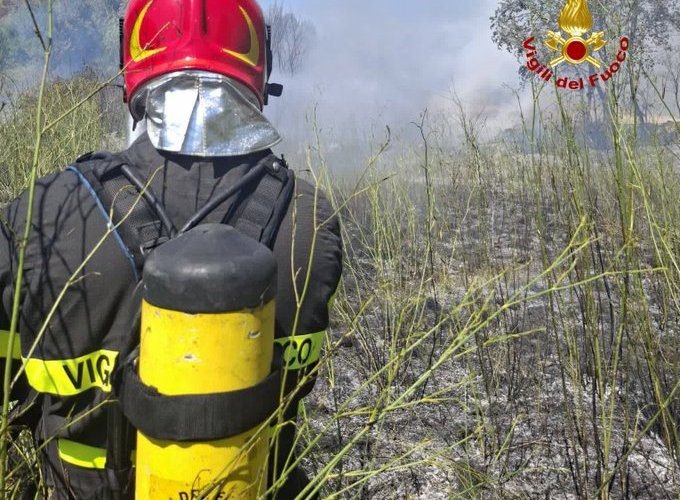
Sicily remained under intense heat and heightened wildfire risk on Tuesday as regional authorities issued a new civil protection alert covering the next 24 hours.

The Sicilian Civil Protection Department placed Palermo and Catania under its highest heat-wave warning, Level 3 (red alert), indicating emergency conditions that can pose serious health risks. In Palermo, authorities said dangerous weather conditions have persisted for three consecutive days, while in Catania the maximum perceived temperature was forecast to reach 38 degrees Celsius (100.4 degrees Fahrenheit).

Messina was placed under a Level 2 (orange alert), with officials warning that high temperatures and humid conditions could have negative effects on vulnerable people, including the elderly and those with pre-existing health conditions.

The department also declared a medium-level wildfire pre-alert for all nine Sicilian provinces, citing dry vegetation and significant moisture loss that could allow fires to ignite easily and spread rapidly across the island.

Separately, Regional Territory and Environment Councillor Giusi Savarino signed a directive aimed at strengthening oversight of areas designated for renewable-energy installations and improving coordination in the monitoring of land affected by wildfires.

Under the directive, the region’s Technical Specialist Commission may obtain cartographic and georeferenced data on burned areas from the Regional Forestry Corps when municipal fire registries are outdated, incomplete or otherwise insufficient to verify the condition of affected sites.

The Forestry Corps was also instructed to review the status of municipal registries of burned land and work with local administrations to ensure they are updated promptly, including providing technical support when necessary.

Savarino said studies and technical analyses had highlighted the risk that land damaged by fires could, in some cases, become subject to speculative pressure or subsequent land-use changes, including the installation of photovoltaic panels.

She said the regional government considered it necessary to strengthen verification tools and coordination among regional agencies so that environmental assessments are based on the most complete information available and comply with principles of prevention, transparency and impartiality.

The councillor added that the regional government was pursuing several initiatives to strengthen wildfire-prevention policies and support municipalities, noting that roughly 80% of fires originate on uncultivated private land.

Savarino said the government had previously proposed creating a revolving fund to help local authorities carry out prevention measures and intervene when property owners fail to maintain high-risk areas. The proposal was not approved in the latest regional budget legislation, but she said the government intends to reintroduce it in future parliamentary proceedings.

Woman, 23, Assassinated by Hitman During TikTok Livestream

0
woman,-23,-assassinated-by-hitman-during-tiktok-livestream
Woman, 23, Assassinated by Hitman During TikTok Livestream


Beauty influencer Valeria Marquez was brutally gunned down during a TikTok livestream — and authorities now claim the shocking murder may have been ordered after she ended a relationship with the son of a powerful cartel figure.

Marquez, 23, was killed in May 2025 while broadcasting live from her beauty salon, Blossom the Beauty Lounge, in Mexico.

The horrifying attack unfolded in front of her followers as a gunman reportedly arrived on a motorcycle, entered the business and opened fire.

Investigators are treating her death as a suspected femicide and claim the alleged hit may be connected to Ramon “El R1” Angel Alvarez Ayala, a senior figure linked to the notorious Jalisco New Generation Cartel, also known as CJNG.

Federal officials allege Marquez had previously been romantically involved with Ayala’s son, Francisco Alvarez.

According to investigators, Francisco allegedly threatened the young influencer several times after she ended the relationship.

Omar Garcia Harfuch, Mexico’s federal security secretary, said authorities believe the son may have turned to his powerful father for help carrying out the killing.

“The son of R1 had a romantic relationship with Valeria,” Harfuch said. “He had threatened her on several occasions, and everything indicates — and this will be proven — that the son asked his father, R1, to commit the femicide.”

Ayala was arrested Thursday following a dramatic high-speed chase, authorities said.

A member of his security team was reportedly killed during the operation. His son and the alleged gunman remain at large.

Marquez appeared uneasy moments before the shooting.

During the livestream, she looked toward the salon window and quietly told viewers, “They’re coming.”

Seconds later, gunfire erupted.

Marquez was struck in the head and chest. The influencer could be seen clutching a wound near her ribs before collapsing.

Her followers watched the nightmare unfold in real time.

Even more chilling, Marquez had reportedly warned that her troubled relationship could put her and her family in danger.

She previously told followers her boyfriend should be held “responsible for anything that happens to me and my family.”

The influencer had also suggested she was trying to leave a dangerous lifestyle behind.

“I’ve stopped being around thugs,” she said. “I’m a good girl.”

Investigators believe the killer may have used a delivery as a ruse to get close to Marquez.

Before the shooting, she told her audience that a masked man had attempted to deliver a mysterious gift to the salon.

“Maybe they were goin’ to kill me or something,” she said.

Authorities allege Ayala ordered the hitman to pose as a delivery worker, enter the salon and have Marquez confirm her identity before carrying out the attack.

The disturbing detail has fueled speculation that the murder was carefully planned rather than a random act of violence.

Ayala’s arrest was reportedly connected to another high-profile assassination — the killing of Uruapan Mayor Carlos Manzo.

Manzo was shot in the back during a Day of the Dead festival. The alleged teenage gunman was then killed by security officers, while the mayor later died at a hospital.

Ayala has been accused of involvement in that attack, although Harfuch stressed that the mayor’s murder and Marquez’s killing are being investigated separately.

“It is a separate investigation from that of Mayor Manzo,” Harfuch said. “But with this arrest we also have leads and evidence to locate the other person involved in the homicide, who is this subject’s son.”

Ayala’s organization, known as Los Rs, has allegedly been involved in drug trafficking and the extortion of businesses.

The United States has accused CJNG of trafficking cocaine, fentanyl and methamphetamine, and President Donald Trump’s administration designated the cartel as a foreign terrorist organization.

Meanwhile, the hunt continues for Ayala’s son and the gunman accused of carrying out Marquez’s horrifying livestream murder.

India’s environmental crisis undermines its great-power ambitions

0
india’s-environmental-crisis-undermines-its-great-power-ambitions
India’s environmental crisis undermines its great-power ambitions

India wants to become the world’s next manufacturing superpower and an indispensable leader of the Global South. It seeks to attract global supply chains relocating from China, expand high-technology manufacturing, become a hub for artificial intelligence and semiconductor industries and strengthen its influence in global climate diplomacy.

Yet one of the greatest obstacles to these ambitions may not come from external rivals but from the deteriorating condition of India’s own environment.

Environmental governance has become an increasingly important dimension of national power. In today’s economy, industrial competitiveness depends not only on labor costs and market size but also on resilient infrastructure, reliable electricity, water security, public health and climate resilience. Countries that manage these challenges effectively gain advantages in investment attraction, advanced manufacturing and technological innovation. Those that fail increasingly risk undermining their own strategic ambitions.

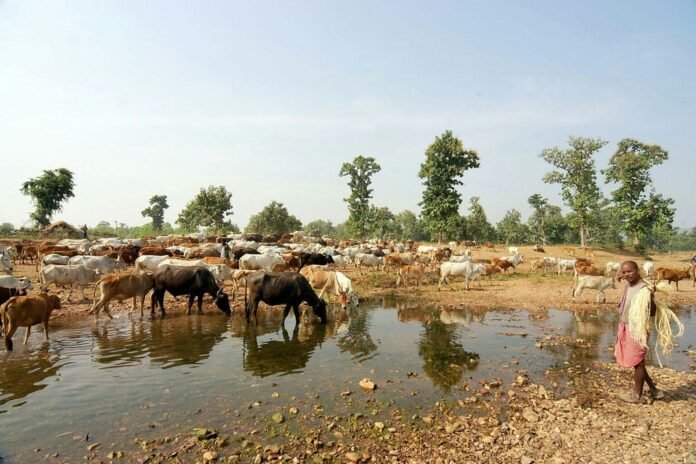
The latest 2026 Environmental Performance Index (EPI) highlights this challenge. India ranked 176th out of 177 countries, ahead of only Laos, with an overall score of 22.46 out of 100, while Estonia topped the rankings with 74.79. India also ranked last among South Asia’s eight countries.

Compiled by researchers from Yale and Columbia universities, the index assesses environmental health, ecosystem vitality and climate change mitigation. Although aspects of its methodology have been questioned, India’s repeated poor performance – including its last-place ranking in 2022 – points to persistent structural challenges rather than an isolated statistical outcome.

The significance of these rankings extends far beyond environmental policy. They raise broader questions about whether environmental governance is becoming a strategic factor shaping economic competitiveness, geopolitical influence and long-term national resilience.

Environmental governance is becoming an economic advantage

As global competition shifts from low-cost manufacturing to resilient, technology-intensive supply chains, environmental governance is becoming a competitive advantage rather than merely a regulatory obligation. Investors increasingly evaluate countries not only on tax incentives and labour availability but also on climate risk, resource security, regulatory quality and infrastructure resilience.

For India, these issues are directly linked to its development strategy.

The country’s ambition to become a global manufacturing hub depends on attracting industries that require uninterrupted electricity, secure water supplies, efficient logistics and healthy urban environments. Electronics, pharmaceutical production, semiconductor fabrication, artificial intelligence infrastructure and hyperscale data centers all depend on reliable environmental infrastructure. Semiconductor fabrication plants alone require enormous quantities of ultra-pure water and continuous power supplies.

As these industries expand, environmental resilience becomes an increasingly important determinant of investment decisions.

Collectively, India’s environmental challenges increasingly intersect across labor productivity, industrial policy, energy security and climate resilience. Persistent air pollution raises healthcare costs and reduces workforce productivity. Heatwaves disrupt manufacturing, construction and logistics while increasing electricity demand. Water stress threatens both agricultural production and industrial expansion, particularly in rapidly growing economic corridors. Climate-related disruptions also place additional pressure on transport networks, energy systems and urban infrastructure.

These pressures should not be viewed separately. Together they shape India’s economic resilience as much as its environmental future.

Asia’s green competition is intensifying

Environmental governance is also becoming part of strategic competition across Asia.

China has spent years investing in pollution control around major manufacturing regions after environmental degradation began affecting productivity, public health and social stability.

Vietnam increasingly promotes itself as a resilient manufacturing destination for companies diversifying production beyond China.

Indonesia is linking sustainable mineral processing to its ambitions in electric vehicle and battery supply chains.

Each country faces significant environmental challenges of its own. Yet they increasingly recognize that environmental performance influences competitiveness in global markets. The contest for investment is no longer determined solely by wages or tax incentives. It is also shaped by infrastructure resilience, regulatory credibility and sustainability standards.

India’s challenge is particularly significant because its economic ambitions extend well beyond traditional manufacturing. New Delhi aims to become a major destination for artificial intelligence, cloud computing, digital infrastructure and advanced electronics.

These industries consume enormous amounts of electricity, require sophisticated cooling systems and depend on secure water supplies. Reliable environmental infrastructure is therefore becoming an economic asset rather than simply an environmental objective.

From domestic policy to foreign policy

Environmental performance increasingly influences foreign policy and international economic relations.

Global investors now incorporate environmental, social and governance (ESG) considerations into investment decisions. At the same time, trade policy is increasingly being shaped by environmental and carbon-related standards. Mechanisms such as the European Union’s Carbon Border Adjustment Mechanism (CBAM) reflect a broader trend in which sustainability is becoming closely linked to export competitiveness and market access.

For India, these developments carry important strategic implications. The country seeks to position itself as a preferred destination for manufacturers relocating production, while simultaneously presenting itself as a leading voice of the Global South in international climate negotiations. Both ambitions depend not only on policy announcements but also on credible environmental outcomes.

India has made genuine progress in renewable energy and solar deployment. Initiatives such as the International Solar Alliance demonstrate meaningful diplomatic leadership, and these achievements should not be overlooked. Yet renewable energy expansion coexists with serious domestic environmental challenges. The 2026 EPI ranked India 174th in environmental health, 171st in ecosystem vitality, and 130th in climate change mitigation, suggesting uneven progress across different dimensions of environmental governance.

India is also the world’s third-largest emitter of greenhouse gases in absolute terms, although its per-capita emissions remain substantially lower than those of many developed economies. This distinction is important, but it does not diminish the need to improve environmental outcomes as economic growth accelerates.

Following the release of the 2022 EPI, the Indian government rejected the findings as based on “surmises and unscientific methods.” Some Indian scholars have likewise questioned aspects of the methodology, particularly its treatment of developing economies and historical emissions. These criticisms deserve consideration.

However, methodological debate should not obscure the broader reality. Air pollution, biodiversity loss, groundwater depletion and environmental degradation are well documented by Indian researchers and international scientific institutions alike. The appropriate response is not to dismiss uncomfortable evidence but to strengthen governance and implementation.

A strategic test for India’s rise

Throughout history, rising powers have often been constrained as much by domestic weaknesses as by external rivals. In the twenty-first century, environmental governance is emerging as one of those defining tests.

India possesses enormous advantages: a large domestic market, a young workforce, expanding technological capabilities and growing diplomatic influence. Whether these strengths translate into sustained geopolitical leadership will depend partly on how successfully the country reconciles rapid economic growth with ecological resilience.

Cleaner air, secure water resources, resilient infrastructure and healthy ecosystems are no longer simply environmental aspirations. They are strategic assets that shape productivity, investment, industrial competitiveness, technological innovation and international credibility.

The 2026 Environmental Performance Index should therefore be viewed not as the story itself but as a warning signal. Its precise methodology will continue to be debated, as all international indices are. Yet repeated weak performance across multiple editions suggests that India’s environmental challenges are structural rather than temporary.

India’s future as a leading global power will ultimately be determined by far more than its position in any international ranking. But in an era where economic competitiveness, technological leadership and geopolitical influence are increasingly linked to sustainability, environmental governance has become a central measure of strategic resilience. India’s ability to reconcile rapid development with ecological sustainability may shape not only the well-being of its citizens but also the credibility of its claim to global leadership.

Saima Afzal is a researcher specializing in South Asian security, counterterrorism, and broader geopolitical dynamics across the Middle East, Afghanistan, and the Indo-Pacific. Her work examines strategic affairs and evolving patterns of regional conflict. She is currently a research scholar at Justus Liebig University, Germany.

President Trump Calls Iran ‘Unbelievably Duplicitous’ Over Denial It Is in Talks With US 

0
president-trump-calls-iran-‘unbelievably-duplicitous’-over-denial-it-is-in-talks-with-us 
President Trump Calls Iran ‘Unbelievably Duplicitous’ Over Denial It Is in Talks With US 


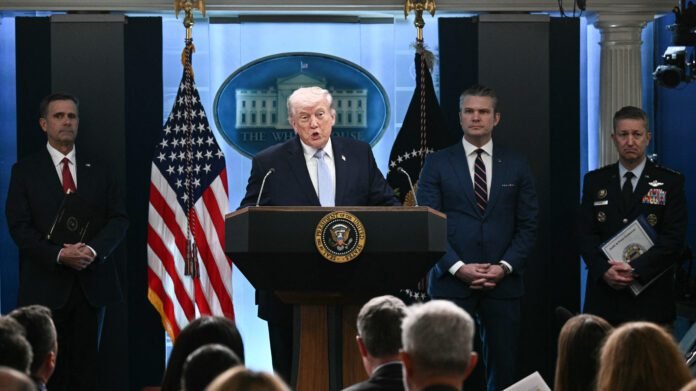
President Donald Trump accused Iran’s leadership Monday of deceiving the United States about negotiations, saying Tehran privately sought talks while publicly denying they were taking place, as he warned that time was running out for the Islamic Republic to reach an agreement. President Trump’s remarks followed Iranian statements that no negotiations with Washington were underway, contradicting his assertion that discussions were in progress over reopening the Strait of Hormuz and later addressing Iran’s nuclear program. 

Speaking on Truth Social, President Trump wrote: “Iranian Leadership is unbelievably duplicitous! They ask for a meeting, some would say ‘beg,’ talks begin, with more scheduled in the immediate future, and they say, openly and proudly, that they’re not having any discussions, that nothing is being talked about, and they’re only dealing with ‘Oman.’” 

Iran’s state media had earlier denied that talks with the United States were taking place. Tehran said it was instead discussing a temporary safe shipping route through the Strait of Hormuz with Oman. 

“We currently do not have negotiations with America,” Foreign Ministry spokesperson Esmaeil Baghaei told reporters, adding that Iran had no plans in the coming days to host foreign delegations or send negotiators abroad. 

Hours later, President Trump reiterated that contacts were continuing, telling reporters at the White House that negotiations were taking place despite Iran’s public denials. 

“They’re going on right now. It’s an amazing thing we have a little problem with Iran because we have many talks, and we’ll say we have or we don’t have. You know, we’re straight about it, but they deny it,” President Trump said. “But they’re not denying it now. They just put out a statement, not denying it.” 

President Trump also said he expected the Strait of Hormuz to reopen to maritime traffic on Tuesday, describing that as the first stage of the negotiations. 

“We’re talking about the strait, the opening of the strait, having it open literally by tomorrow, completely open, and that’s phase one,” he said, adding that a second phase would address Iran’s nuclear program. 

Calling the negotiations Iran’s “last chance,” President Trump said, “This is a last chance for them to sign a good document,” adding, “I want to give them every last chance before decapitation.” 

On Sunday, President Trump said he had canceled what he described as a massive US military operation against Iran after concluding there were the “perimeters of a deal” to restore shipping through the Strait of Hormuz. He later said the postponed attack could still be launched “anytime we want,” while also saying Iran faced no deadline to reach an agreement. 


Liberals Are Ceding Ground to the Far Right on Ceuta Border Crossings

0


Over 50,000 people last week risked their lives to cross the border between Morocco and Ceuta, the tiny Spanish enclave in north Africa, in the hope of making it to mainland Europe.

The vast majority have already been returned to Morocco; fewer than 2,000 refugees remain on Ceuta and are, according to on-the-ground reports, in urgent need of food and shelter. Over 80 people reportedly died during the crossings, most from drowning.

The crisis for those seeking to enter Europe through Ceuta last week, including those who have been sent back, has already been framed according to a putrid, far-right political fulcrum. As a wide array of responses to the situation on Ceuta make clear, a commitment to harsh border regimes is not the sole preserve of the far right.

Once again, liberals and centrists who claim to decry the right’s anti-immigrant stances are themselves treating immigrants as a threat to be secured against.

For the international far right, images of thousands of desperate young African men entering European Union territory — little matter that Ceuta is, in fact, not on mainland Europe — has been fodder for predictable racist fearmongering and calls for extremist border rule. Far-right leaders blamed the crossings of the left-wing Spanish government’s extremely reasonable plans to regularize over 1 million undocumented immigrants who have already been living and working in Spain for at least five months.

“It’s terrible. Remember that picture. That’s going to be us in three years if the wrong side gets in,” President Donald Trump told Fox News, in a groundless attempt to use the suffering on Ceuta to his advantage. A spokesperson for the White House decried Spain’s new immigration regularization proposal as “far-left, globalist policies.”

Meanwhile, conservative and right-wing leaders across Europe and the U.K. echoed similar sentiments, conjuring the old lie of an “invasion” confronting the West. Italian Prime Minister Giorgia Meloni proposed Spain be suspended from the Schengen Area. A total of 22 EU leaders, including Meloni and German Chancellor Friedrich Merz, wrote a joint letter to the European Commission expressing “serious concerns” about how Spain’s decision to grant legal status to immigrants served as a “pull factor.”

In response to these attacks and criticisms, several liberal and centrist politicians, institutions, and media organs have pushed back. Analyses in the New York Times and The Atlantic have stressed, for example, that not one of the people who crossed into Ceuta managed to make it to mainland Europe. These responses are framed as a counterpoint to Spanish Prime Minister Pedro Sánchez’s right-wing critics.

European Commission President Ursula von der Leyen also defended Sánchez against right-wing attacks, by praising the Spanish authorities’ “swift handling” in “successfully preventing illegal movement onwards to mainland Spain and Europe.”

Sanchez himself took a similar line.

“In less than 48 hours, my government has succeeded in fully restoring control over the border,” he wrote on Saturday in a response to criticism from other European leaders.

The mainstream defense against far-right fearmongering, then, was merely a regurgitation of the right’s anti-immigrant premise. Stopping immigrants who have been forced to take irregular routes, according to this logic, is a good thing. What the far right got wrong, by the lights of these centrists and liberals, was not their virulent racism, but rather that the claims of an “invasion” of Europe are not factually accurate.

“Spain and Germany’s centrist responses have been to ‘assure’ the E.U. that borders are fortified,” wrote migrant justice organizer and scholar Harsha Walia on Instagram. “This rebuttal simply buttresses the premise of border securitization.”

The reasons for the surge in crossings are not yet fully known; speculation abounds about the role of Moroccan and other state forces. A few things are, however, clear: Misinformation had spread in the preceding days on social media suggesting, falsely, that a recent Supreme Court ruling in Spain would prevent the Spanish authorities returning immigrants.

In a world of increasing and inevitable mass migration, it is a moral failure to treat the swift removal of immigrants as a victory. Such a framing is also a gift to the far right, who will continue to benefit within a political consensus that treats immigration as a bad thing.

Only a few voices on the European left have placed focus where it belongs: with supporting immigrants who remain on Ceuta.

“What is happening in Ceuta is not a natural disaster, but the result of political decisions,” said Clara Bünger, a member of Germany’s The Left Party. “Germany and the EU have a duty to help with providing for refugees and to take in those seeking protection.”

“People are fleeing war, poverty, and the climate crisis,” she noted. “Higher walls won’t stop them; they will only make the escape more deadly. The most important thing now is that no one else dies.”

China exit rules tightened to guard rare earth, battery secrets

0
china-exit-rules-tightened-to-guard-rare-earth,-battery-secrets
China exit rules tightened to guard rare earth, battery secrets

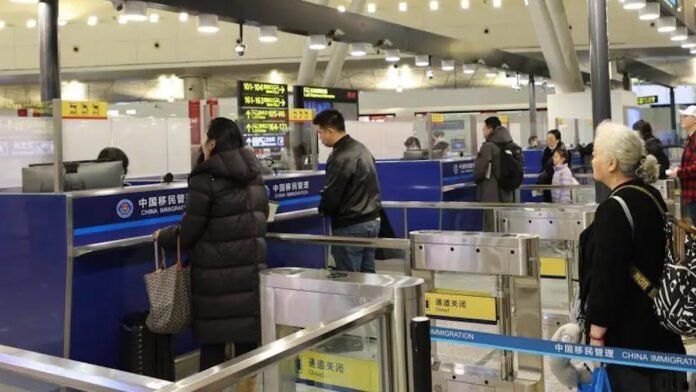
China will tighten its exit-entry rules from September 15 to stop experienced engineers from leaking knowhow in industries subject to export controls and deter tourists from visiting “high-risk” nations such as Japan.

The State Council’s new regulation, which spans 19 articles and was announced on July 31, sets up a coordinated system to warn citizens of overseas risks, verify the purpose of each exit-entry application and tighten restrictions on both citizens and foreigners.

The regulation states that:

  • immigration and visa authorities can question applicants and demand documents or data to verify identity and travel purpose, and invitation letter issuers are liable for their authenticity;
  • citizens violating export control or technology trade rules or those who may endanger national industrial or technological security will be barred from leaving by commerce departments;
  • when processing travel documents and border checks, authorities must remind citizens headed to high-risk countries to travel cautiously, and may discourage travel to destinations under the highest-level warning;
  • those committing crimes abroad that harm national security face bans of six months to three years after returning (uthorities barring someone from leaving must notify immigration agencies and inform the person in writing of the facts, reasons and appeal channels, except where it could affect national security or a criminal probe);
  • agencies providing exit-entry intermediary services must register with local immigration authorities within 15 days of setup, with staff registered by their employers, and existing agencies must register within 90 days.

The export control clause does not name specific sectors, but Chinese commentators said it targets fields where Beijing has already imposed its own restrictions, including electric vehicle (EV) batteries, solar panels and rare earths.

“There are many situations that could endanger national security and interests, and it is hard to spell out every one of them in legislation,” said Cheng Xiezhong, a legal scholar and professor at the China University of Political Science and Law. “The new regulation names one such situation, which is the violation of export control or technology trade management.” 

He says unauthorized exports of dual-use items or transferring key industrial technology abroad will fall under the provision of “causing harm to national security and interests” in Article 12 of the new exit-entry law.

“‘May endanger’ is one of the key phrasings in the regulation,” says a Shandong-based columnist writing under the pen name “Xinghe Duke.”

“It means the authorities won’t wait until harm is done, but they will take precautionary measures. The wording of ‘Decided by the commerce authority and other departments’ means there is a lawful process. ‘Barred from leaving’ does not mean arrest; it just means the targeted person cannot leave the country.”

He says that the State Council’s Regulations on Overseas Investment, which took effect July 1, bars investors from moving export control goods, technology, services or data abroad by sending staff, arranging overseas work, giving technical guidance or running cross-border training. He adds that engineers who have the know-how in core technologies such as electrolyte formulas, N-type solar cell technology and rare earth separation are the main targets.
 
“In the past, foreign companies dodged China’s export controls by poaching Chinese engineers, offering them higher pay, green cards and equity to help build identical factories in Vietnam, India or Mexico,” he says. “That path is now closed under the new regulation.”

He adds that the United States and Japanese rare earth separation projects in Australia and Texas have relied on Chinese talent to break purity bottlenecks.

When the Trump administration launched the trade war against China and the rest of the world in April 2025, China restricted exports of critical minerals, separation equipment and purification technology against the US. It also did the same to Japan after the country’s Prime Minister Sanae Takaichi made her pro-Taiwan remarks last November.

As the United States, Japan and the European Union build alternative rare earth supply chains in Australia, Brazil and parts of Africa they have leaned on experienced Chinese engineers to get the projects going, in recent months pushing Beijing to crack down harder on talent and data outflows.

Chinese state media reported in June 2025 that many senior executives at state-owned rare earth producers had recently resigned, noting that industry veterans had become prime recruitment targets for foreign forces. Since then, authorities have piloted a set of measures in parts of the country:

  • barring such personnel from working at similar overseas companies for three years after they leave their jobs;
  • embedding digital watermarks in documents sent from internal company networks, which trigger a red alert if found overseas;
  • requiring employees in key posts to report their children’s plans to study abroad to the Communist Party organization in advance;
  • requiring family members of core personnel to submit applications well in advance before traveling abroad.

On April 23 this year, the Ministry of State Security disclosed the details of a 2023 case in which a Chinese rare earth company manager surnamed Cheng was jailed for 11.5 years for leaking state secrets to a foreign nonferrous metals firm employee surnamed Ye. The two traveled abroad often, and Cheng pocketed about US$510,000 to cover overseas living costs for his wife and daughter.

Yet according to observers, all these measures fall short. Authorities can only stop someone leaving the country if a criminal investigation is underway, and retirees or people who have resigned face no obligation to explain their travel plans, as long as they are not employed by foreign firms. They say those gaps may be what pushed Beijing to tighten its exit-entry rules.

High-risk countries

Some Chinese legal experts said the new exit-entry regulation is meant to help Chinese travelers avoid either falling into traps set by foreign scam networks or entering war zones in high-risk countries.

“The regulation requires China’s foreign affairs and culture and tourism authorities to promptly issue security alerts and travel risk warnings based on conditions such as war, armed conflict, public safety, natural disasters and disease outbreaks,” said Guo Yongliang, deputy dean and a professor at the School of Foreign-Related Security at the China People’s Police University. “It also requires immigration authorities to warn citizens headed to high-risk countries to travel cautiously and stay alert when they apply for travel documents or go through border checks.”

However, the warning mechanism has sometimes been used by Beijing to apply diplomatic pressure. After Prime Minister Sanae Takaichi delivered her pro-Taiwan remarks in early November last year, China’s Ministry of Foreign Affairs and Ministry of Culture and Tourism advised citizens to avoid traveling to Japan.

In mid-2026, some Chinese travel agencies reportedly planned to resume selling Japan tour packages, but the government quickly stopped them. 

According to the Japan National Tourism Organization (JNTO), about 2.06 million mainland Chinese tourists visited Japan in the first half of 2026, down 56.4% from a year earlier. Even so, that works out to an average of 340,000 Chinese visitors a month, most of them independent travelers rather than tour group members.

Some pundits say the new exit-entry regulation will give Beijing more administrative power to discourage Chinese travel to Japan as a way to increase political pressure on Tokyo.

Read: China’s DUV lithography still lags ASML by four generations

Follow Jeff Pao on X at @jeffpao3

Visa to acquire Israeli fraud detection company BioCatch for $2.4B

0
visa-to-acquire-israeli-fraud-detection-company-biocatch-for-$2.4b
Visa to acquire Israeli fraud detection company BioCatch for $2.4B

Visa announced Monday that it has agreed to acquire Israeli fraud detection company BioCatch for $2.4 billion in cash, expanding its cybersecurity capabilities as artificial intelligence fuels increasingly sophisticated financial fraud, Anadolu reports.

The payment company will acquire BioCatch from funds advised by London-based private equity firm Permira and other shareholders, according to a joint announcement.

BioCatch uses artificial intelligence and machine learning to analyze more than 3,000 anonymized data points, including keystroke and mouse activity, touchscreen behavior, device handling and signs of compromised devices.

The platform continuously evaluates user behavior during digital banking sessions to distinguish legitimate customers from fraudsters, bots and people acting under coercion.

Visa said the technology will complement its existing cyber defense, fraud detection, identity and risk management products by helping banks identify account takeovers, scams, fraudulent applications and money mule activity before money is transferred.

READ: Comparing Israel to Nazi regime is not a criminal offense, German court rules

“BioCatch will help our clients stop fraud before it reaches the point of payment,” Andrew Torre, president of Visa’s value-added services division, said.

Visa estimates that account takeovers and scams cost the global economy more than $1 trillion each year, with AI enabling criminals to carry out attacks on an unprecedented scale.

The company said it has invested more than $13 billion in technology and infrastructure over the past five years to protect its payment network and reduce fraud.

BioCatch CEO Gadi Mazor said the company will retain its leadership team and reporting structure after the acquisition and become part of Visa’s value-added services organization.

The transaction remains subject to regulatory approvals and other customary closing conditions. Visa said it expects the deal to close by the end of its fiscal second quarter in 2027.

READ: Around 268,000 Israelis left country over past 3 years, study shows

0FansLike
0FollowersFollow
0FollowersFollow
0SubscribersSubscribe
- Advertisement -
Google search engine

Recent Posts