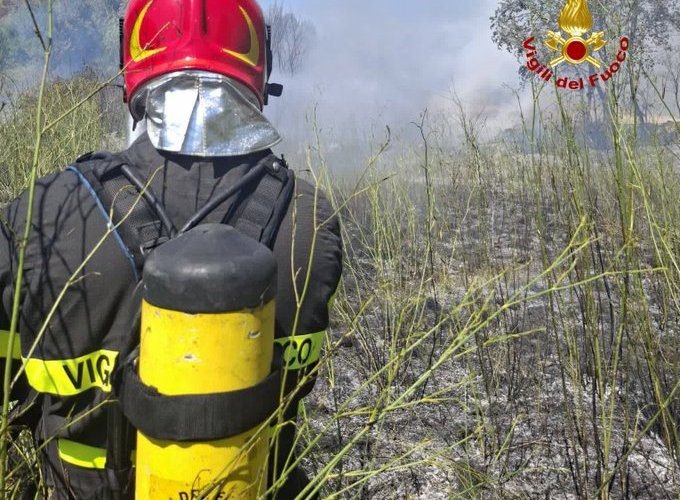
Sicily remained under intense heat and heightened wildfire risk on Tuesday as regional authorities issued a new civil protection alert covering the next 24 hours.
The Sicilian Civil Protection Department placed Palermo and Catania under its highest heat-wave warning, Level 3 (red alert), indicating emergency conditions that can pose serious health risks. In Palermo, authorities said dangerous weather conditions have persisted for three consecutive days, while in Catania the maximum perceived temperature was forecast to reach 38 degrees Celsius (100.4 degrees Fahrenheit).
Messina was placed under a Level 2 (orange alert), with officials warning that high temperatures and humid conditions could have negative effects on vulnerable people, including the elderly and those with pre-existing health conditions.
The department also declared a medium-level wildfire pre-alert for all nine Sicilian provinces, citing dry vegetation and significant moisture loss that could allow fires to ignite easily and spread rapidly across the island.
Separately, Regional Territory and Environment Councillor Giusi Savarino signed a directive aimed at strengthening oversight of areas designated for renewable-energy installations and improving coordination in the monitoring of land affected by wildfires.
Under the directive, the region’s Technical Specialist Commission may obtain cartographic and georeferenced data on burned areas from the Regional Forestry Corps when municipal fire registries are outdated, incomplete or otherwise insufficient to verify the condition of affected sites.
The Forestry Corps was also instructed to review the status of municipal registries of burned land and work with local administrations to ensure they are updated promptly, including providing technical support when necessary.
Savarino said studies and technical analyses had highlighted the risk that land damaged by fires could, in some cases, become subject to speculative pressure or subsequent land-use changes, including the installation of photovoltaic panels.
She said the regional government considered it necessary to strengthen verification tools and coordination among regional agencies so that environmental assessments are based on the most complete information available and comply with principles of prevention, transparency and impartiality.
The councillor added that the regional government was pursuing several initiatives to strengthen wildfire-prevention policies and support municipalities, noting that roughly 80% of fires originate on uncultivated private land.
Savarino said the government had previously proposed creating a revolving fund to help local authorities carry out prevention measures and intervene when property owners fail to maintain high-risk areas. The proposal was not approved in the latest regional budget legislation, but she said the government intends to reintroduce it in future parliamentary proceedings.




, indicating emergency conditions that can pose serious health risks. In Palermo, authorities…)