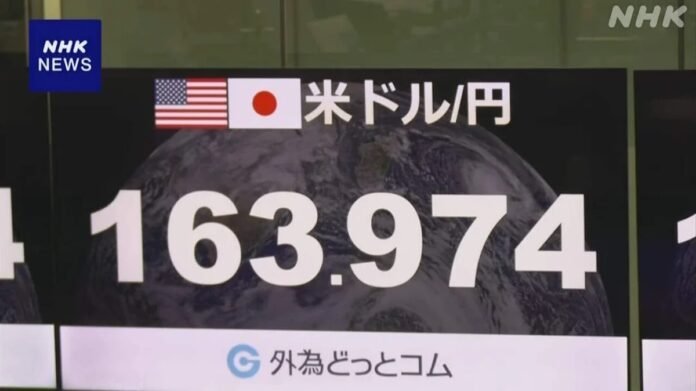
NEW YORK — A pointed question now hangs over global markets as the US Treasury links arms with Japan to confront yen bears: who actually holds the leverage — Washington or Tokyo?
Treasury Secretary Scott Bessent plainly wants his Japanese counterpart, Finance Minister Satsuki Katayama, to treat this joint intervention as a privilege — to feel humbled, even, that President Donald Trump deems Japan worthy of American support as the yen hits 40-year lows.
Trump casts the first US–Japan currency operation since 2011 as a “signal of friendship,” a gesture he claims will lift economies everywhere. And it’s true: violent yen swings can be brutally destabilizing. Few financial accelerants are more explosive than the “yen carry trade,” a strategy that has vaporized more than a few hedge funds.
Two decades of near‑zero rates turned Japan into the world’s creditor nation. Investors borrowed cheaply in yen to chase higher yields abroad — inflating Argentine bonds, South African commodities, Indian real estate, the New Zealand dollar, derivatives on New York exchanges, even cryptocurrencies. When the yen snaps, those trades unwind at warp speed. Markets zig when the yen zags. Bessent, a former hedge‑fund executive, knows this dynamic intimately.
Yet while Trump suggests he’s doing Prime Minister Sanae Takaichi a favor, Washington should remember who holds the mortgage. Japan is the largest foreign holder of US Treasuries — nearly US$1.2 trillion.
That exposure cuts both ways. It’s a massive liability to have so much national wealth tied to a currency Trump’s policies are threatening to undermine — including efforts to bend the Federal Reserve toward political control. But Tokyo also understands the influence that comes with being America’s biggest banker. Team Bessent has roughly 1.2 trillion reasons to keep yen volatility in check.
The timing could hardly be worse. A Middle East war involving US forces is pushing oil prices higher. AI‑driven equity valuations are at nosebleed levels. The so-called “bond vigilantes” are forcing Treasury yields upward. In this environment, even a hint that Japan might unload Treasuries would be costly. Traders call it “mutually assured destruction”: A sell‑off would hammer Japan’s exporters and send global rates soaring.
It’s also entirely unclear that the first US-Japan joint intervention in 15 years might work. One reason: both the Japanese and US sides of this trade seem to be acting out of optics more than out of a determination to commandeer markets. This includes the US selling euros to buy yen, not dollars.
It’s a good bet this intervention was massive and may have surpassed an already huge intervention back in April, says Robin Brooks, economist at the Brookings Institution. “On the surface, that may give the impression that this intervention will be more impactful than past efforts, but US participation raises more questions than answers, especially the very odd news that the US sold euros to buy yen,” Brooks says.
Brooks adds that “this kind of twist, in my opinion, undercuts the efficacy of US participation, because it invariably will have markets wondering why the US didn’t just fund yen buying out of dollars. Foreign exchange intervention is a confidence game. The last thing you want is to give markets any kind of reason to ask questions.”
And clearly, unless the Bank of Japan finds the courage to hike rates above the current 1%, yen bears have every reason to doubt Tokyo’s sincerity about boosting the yen. It’s one thing for the US and Japan to call the yen “substantially undervalued,” says Louise Loo, head of Asia economics at Oxford Economics. It’s another thing for central banks to do something about it.
Still, Takaichi’s patience with Trump World is thinning. Late last month, Trump slapped new tariffs — 10% to 12.5% — on 60 trading partners, including Japan, supposedly a “friend.” Tokyo was stunned.
Takaichi’s government has been working in good faith to assemble the US$550 billion “signing bonus” Trump demanded in exchange for lower tariffs. Japan has been coordinating with JPMorgan and other US banks to structure the financing. Domestic banks, though, are wary: their funding base is in yen, making it expensive to raise large pools of dollars for long‑dated infrastructure projects.
The Liberal Democratic Party has every reason to feel underappreciated by a US president who is alienating allies at speed. And Japan sits directly in the blast radius of Trump’s geopolitical gambits. The country imports 95% of its oil from the Middle East, making it acutely vulnerable to the conflict now driving global energy prices higher — and to any spike in US Treasury yields.
For all Trump’s bluster about trashing the Fed’s credibility or undermining the dollar, his White House must know that another LTCM‑style crash could be catastrophic. LTCM’s 1998 collapse was partly triggered by surging Treasury yields.

A repeat — driven by tariffs, inflation, or a clash with China — could make the 2008 Lehman crisis look tame.
James Carville captured the mood in the early 1990s when he quipped that he’d like to be reincarnated as the bond market: “You can intimidate everybody.” Back then, debt investors reacted sharply to even small shifts in Washington’s fiscal debates.
Today, with US debt approaching unthinkable levels, inflation elevated and population growth slowing, Asia has valid reasons to worry about Washington’s fiscal health. Trump’s Republican Party has abandoned any pretense of fiscal discipline. Congressional disarray is worse than in 2011, when S&P stripped the US of its AAA rating — a move that validated then‑Chinese Premier Wen Jiabao’s warnings about safeguarding China’s vast dollar holdings.
At the time, US debt was under US$12 trillion — less than half today’s level. Beijing ultimately concluded that the US had more to lose from a financial crisis than China did.
Japan has made similar calculations before. In 1997, Prime Minister Ryutaro Hashimoto admitted to a New York audience that Tokyo had “several times” been tempted to dump Treasuries to make a point — including during heated auto negotiations.
Takaichi’s Ministry of Finance is also on high alert. A mountain of Japanese state wealth equivalent to Switzerland’s annual GDP is tied up in US debt. And Trump’s policy mix — inflationary tariffs, meddling with Fed independence, neutering the Internal Revenue Service and seeking trillions in new tax cuts — assumes Asian central banks from Tokyo to New Delhi will dutifully finance Washington’s ambitions.
That assumption looks increasingly shaky. Reports suggest Asian central banks are already limiting US exposure. Watching Trump’s economic brinkmanship from 7,000 miles away is generating real anxiety in Asia’s corridors of power.
The irony is rich. A quarter century ago, Washington lectured Asia about crony capitalism, opaque institutions and reckless governance. Now Asia is watching the US torch its own financial credibility with bewildering speed.
Policymakers across the region are gaming out how Trump’s tariffs and erratic policymaking might upend their economies. For now, the damage Trump has inflicted on equities may be less severe than the blow to debt markets. Normally, recession risks would cheer bond traders. But tariff‑driven inflation has flipped that logic.
Markets worry the Trump administration has arguably shown a greater tolerance for causing a recession or extreme global turbulence than many might have thought. Bond‑market turmoil has at various points over the last year forced Team Trump to retreat.
There’s an argument, too, that part of Bessent’s urgency to tame the yen is to head off any similar move by China. This dynamic echoes the late 1990s, when the globe lived in fear China might devalue the yuan. That would’ve created a whole new race to the bottom in currency markets.
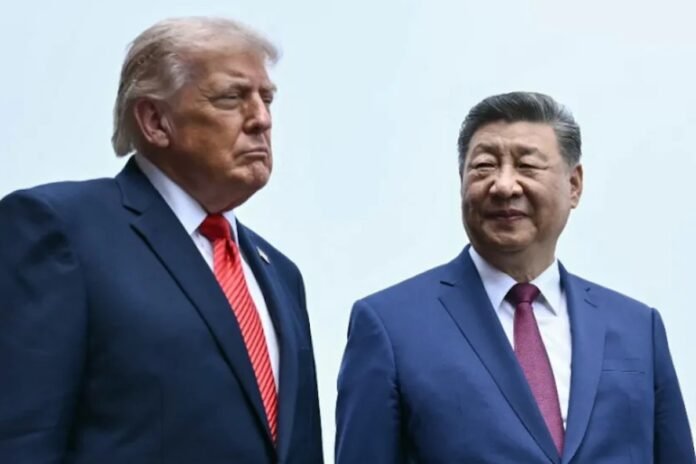
After all, if you’re Chinese President Xi Jinping and facing intensifying trade headwinds, why wouldn’t you pivot to a more advantageous exchange rate? Particularly as the beggar-thy-neighbor ways of US ally Japan afford you some political cover. That could provoke a currency war on a scale that arguably markets have never seen before.
That’s why, as Nigel Green, CEO of the financial consulting firm deVere Group, notes, “markets are treating this as a currency issue, but it’s far bigger than that. When two of the world’s largest economies step into the market together for the first time in over a decade, they’re telling investors something about stress building beneath the surface of the global financial system, not just about an exchange rate.”
The real question is when the biggest bond vigilantes — central banks — start actively selling Treasuries. Japan and China are Washington’s largest bankers, followed by the UK, Luxembourg, Cayman Islands, Belgium, Canada, France, Ireland, Switzerland, Taiwan and Hong Kong.
If markets sense any of them selling — or even pausing purchases — global credit markets could descend into chaos. If Trump understands this risk, he has yet to show it to the Asian central bankers who effectively hold the deed to the US economy. As 2026 unfolds, the ball may be more in Japan’s court than Trump World might think.