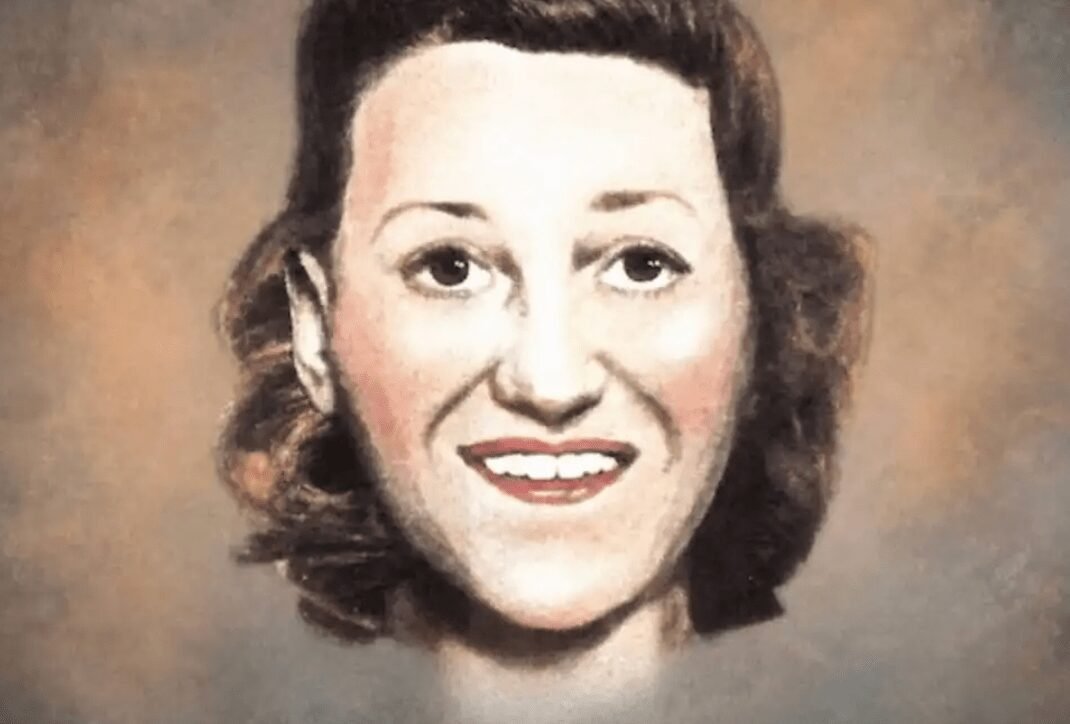
A woman who was murdered nearly 90 years ago and buried beneath a Toronto building has finally been identified, closing what police called “one of Toronto’s oldest mysteries.”
Toronto police said the woman was Mary McLeod Moffat, née Davidson, a Scottish national who moved to Canada with her family in 1913.
Her remains were discovered on May 18, 1995, when workers were demolishing a building in Toronto. Investigators later determined that she had been intentionally buried after being struck at least six times with what police described as a “hammer-like weapon.”
Authorities believe Moffat was killed around April 1936, nearly six decades before her remains were found.
For years, the case remained unsolved. The condition of the remains made it extremely difficult to collect usable DNA, and investigators were left with few answers about who the woman was or how she ended up buried beneath the building.
That changed after Toronto police reopened their review of the case in 2022 and submitted new DNA samples to a lab specializing in investigative genetic genealogy and unsolved homicide cases.
Scientists faced a major challenge. The lab said it had to work with only small amounts of severely degraded human DNA, but researchers were eventually able to create a forensic profile.
Investigative genetic genealogy uses advanced DNA testing to build a family tree that can lead detectives to relatives of an unidentified person. In this case, investigators were able to locate Moffat’s relatives, collect DNA samples from them, and compare those samples with DNA recovered from the remains.
The match finally gave the murdered woman her name back.
Detective Michael Kelly of the Toronto Police Service told CTV News Toronto that the breakthrough closed “one of Toronto’s oldest mysteries.”
Investigators also believe they now know who killed her. Police said Moffat’s husband, Andrew Lloyd Moffat, was likely responsible for her death.
After his wife’s killing, Andrew Moffat moved to Vancouver and later lived in the United States under the alias Drake Lloyd Cummings, according to police. He died in 1985.
The case is one of two long-running Toronto mysteries recently solved through investigative genetic genealogy.
Police also identified Patsy Flora Lagarde, whose badly burned remains were found in the passenger seat of a vehicle that caught fire after intentionally crashing into a tractor-trailer on April 22, 2004.
Homicide detective Stephen Smith, of the Toronto Police missing persons and cold case unit, said the cases show how powerful genetic genealogy can be in long-unsolved investigations.
“These identifications represent the significant impact that investigative genetic genealogy can have on long-term unidentified human remains investigations,” Smith said.
He added that after decades without answers, police were able to restore the identities of both Mary Davidson and Patsy Lagarde, provide information to their families, and uncover key facts about what happened to them.
For Moffat’s family, the identification ends a mystery that stretched across generations.
Nearly a century after she was killed and hidden beneath a building, Mary McLeod Moffat is no longer an unnamed victim.