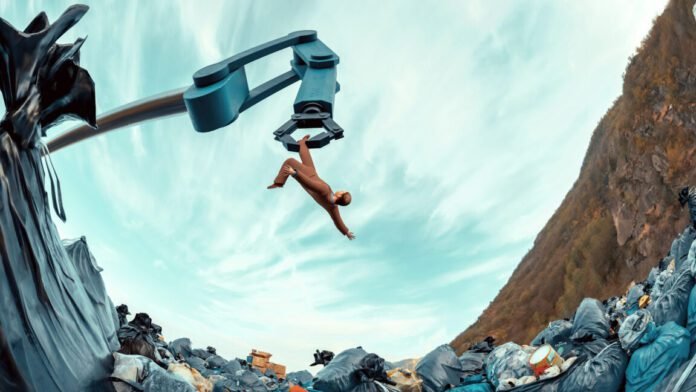
The paper, released last week, introduces the “AI & Economy ATLAS,” an Activity, Task, Landscape, and Adoption Study of 15 million anonymized AI interactions across the Gemini App, Google’s AI Mode, and the Gemini API. Their initial review of the data finds that, while AI sees some significant use across a wide variety of occupations, that use “remains shallow and overwhelmingly collaborative in nature, with end-to-end task automation limited in scope.”
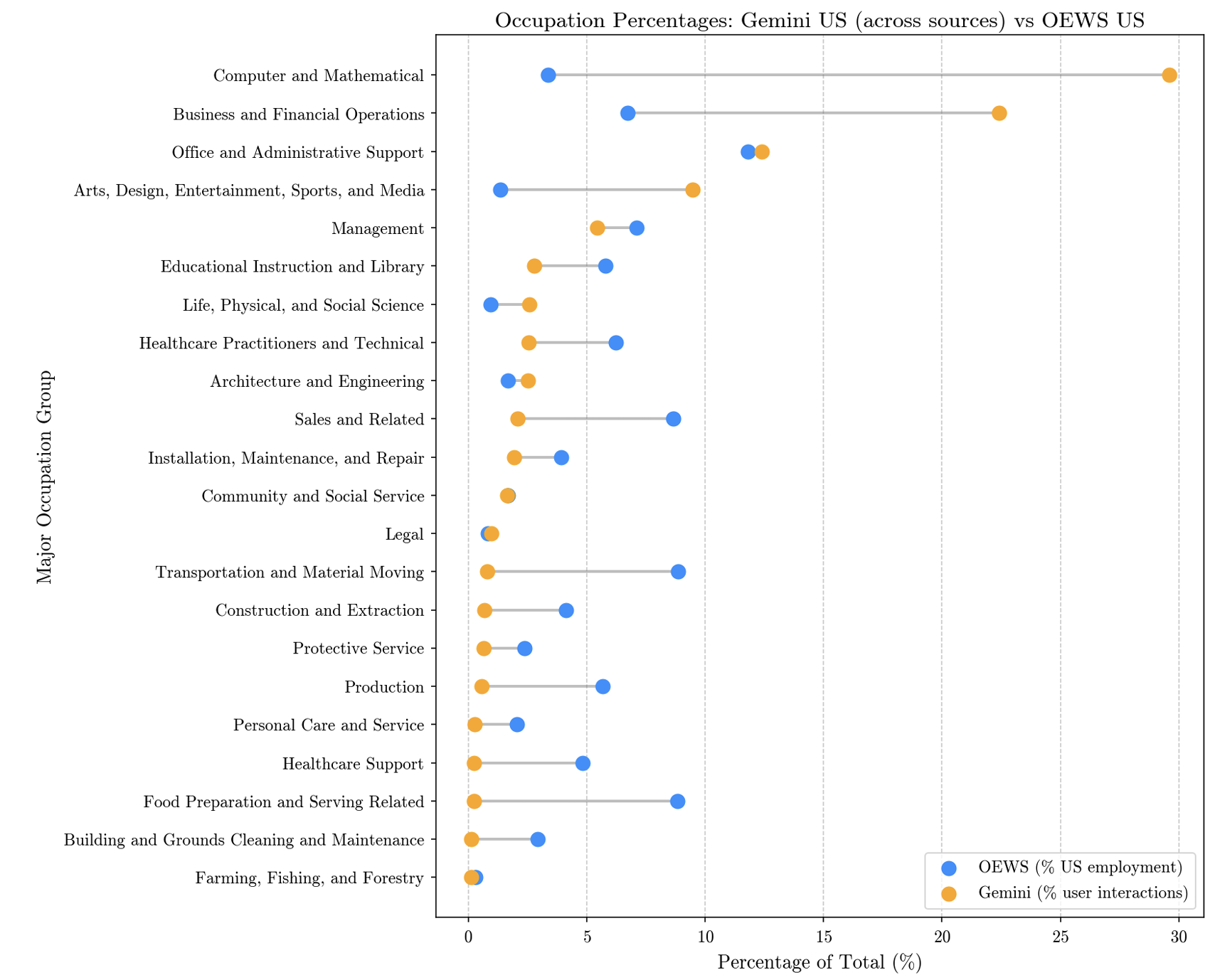
Unsurprisingly, white-collar jobs in fields like computers, finance, and arts and entertainment were some of the ones where the volume of Gemini use was overrepresented (when compared to their prevalence across the US economy). Financial/market analysts, software developers, and systems administrators were some of the relatively heaviest users of AI for job-related tasks, while salespeople, transportation workers, and food preparation/service workers were heavily underrepresented in the AI use data.
Certain white-collar jobs are heavily over-represented in the Gemini usage data.
Certain white-collar jobs are heavily over-represented in the Gemini usage data. Credit: Google Research
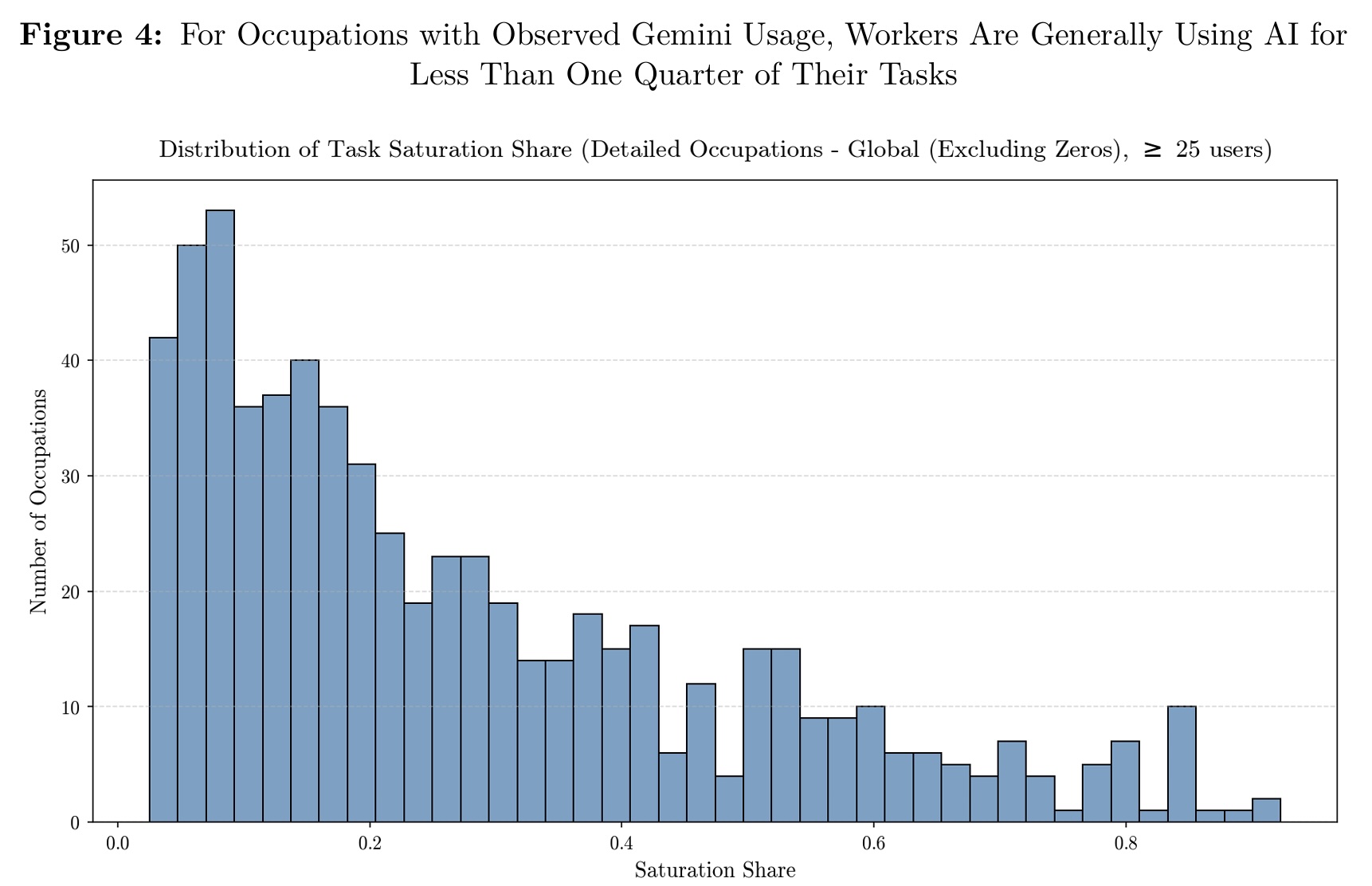
The researchers also attempted to measure how deeply AI was being integrated into various jobs, looking at how often individual, granular O*NET work tasks were attempted using Gemini. Across that entire database, the ATLAS researchers only classified 21 percent of all work-related tasks as “Gemini tasks”—those that met a minimum threshold of 25 related interactions attempted in the massive sample.
For many occupations (29%), not a single relevant work task achieved this “non-negligible” Gemini usage threshold, suggesting those jobs have been minimally impacted by the AI revolution so far. For another 30 percent of all occupations, less than one-quarter of tracked tasks saw significant related Gemini usage, suggesting humans were still the ones responsible for the vast majority of the component parts of those jobs.
In only 3 percent of occupations was Gemini being regularly consulted for at least three-quarters of that job’s relevant tasks. Jobs like software quality assurance analysts and testers, human resources specialists, and document management specialists fell into this bucket and are seemingly the most impacted by AI use in the study.
For the majority of jobs, less than 25 percent of O*NET tasks saw significant attempted assistance from Gemini.
For the majority of jobs, less than 25 percent of O*NET tasks saw significant attempted assistance from Gemini. Credit: Google Research
Altogether, the researchers write, these kinds of numbers suggest that “AI is currently serving primarily as a complement to existing work” and that “AI appears useful for a subset of tasks performed within occupations, but they do not currently appear to be comprehensively used for performing the work currently done by humans.” While the researchers say that this state of affairs may change “as new AI breakthroughs emerge,” it’s also possible that new workflows “will maintain a degree of complementarity between workers and AI systems.”
Give AI the low-expertise, non-routine work
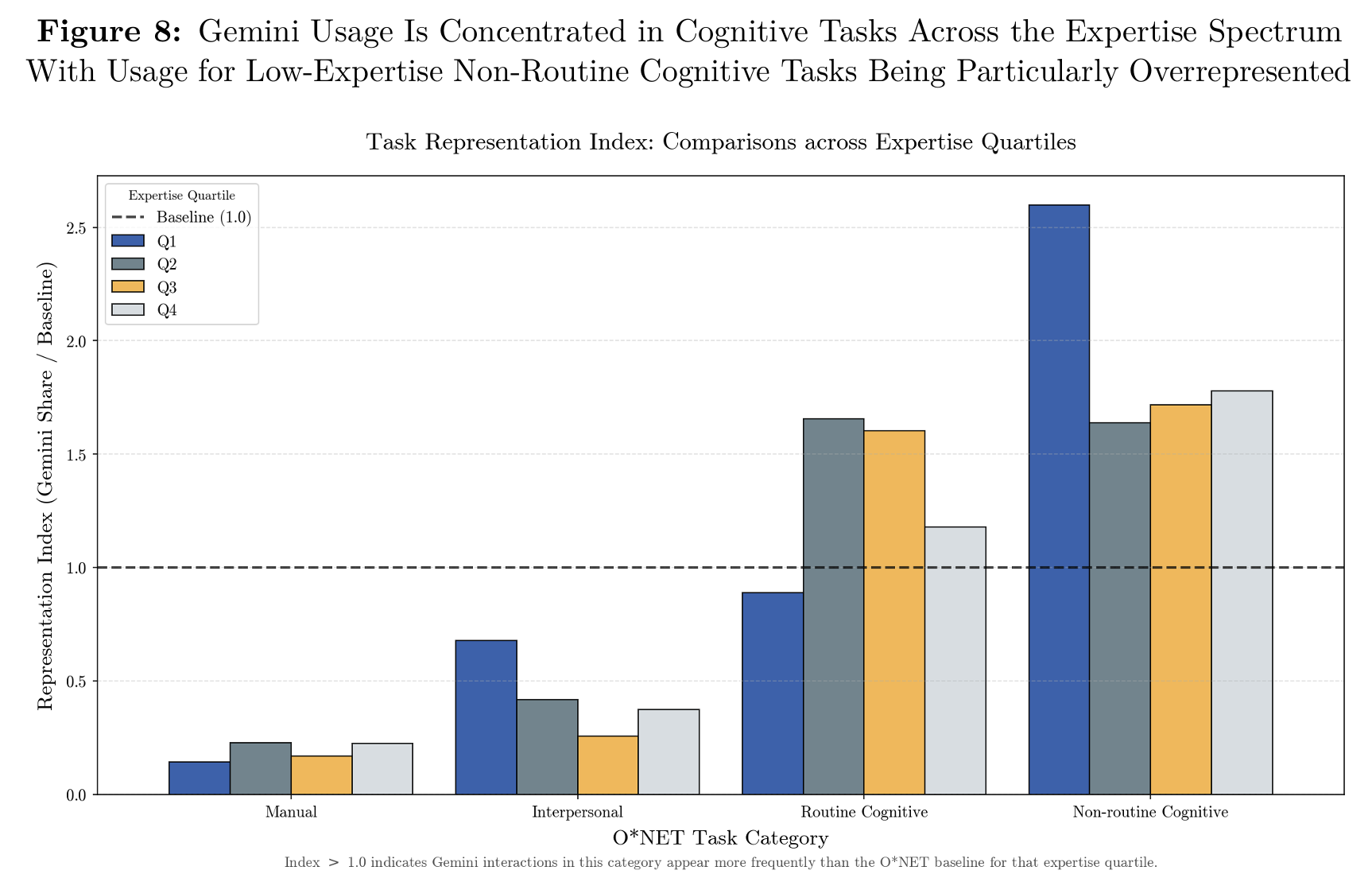
Beyond looking at high-level occupations, the Google researchers also looked at the specific kinds of work tasks that Gemini users ask the model to undertake. Cognitive tasks (i.e. those that primarily involve thinking) represented a whopping 86 percent of the Gemini interactions measured (by volume), while interpersonal and manual tasks were underrepresented in the sample compared to their workplace prevalence.
That doesn’t mean models like Gemini have been useless for more manual blue-collar jobs, though. The researchers found thousands of examples of industrial machinery mechanics using Gemini for “analyzing test results and machine error messages,” for instance, on top of tens of thousands of conversations where auto mechanics used Gemini to help with “testing vehicle components and systems, rewiring systems, and inspecting parts for wear.” These workers were much more likely than others to feed Gemini a photo for reference, rather than text.
For the most part, Gemini usage was centered on the lowest-expertise, non-routine parts of their jobs.
For the most part, Gemini usage was centered on the lowest-expertise, non-routine parts of their jobs. Credit: Google Research
When it comes to more cognitive work, the majority of significant Gemini tasks observed were related to either the “drafting and generation” of ideas or “information retrieval and learning.” A minority fell into a bucket related to automation of work tasks, even for the parts of these jobs that were judged to be “routine.”
Crucially, the kinds of cognitive tasks the researchers found workers offloading on AI were overwhelmingly ones that didn’t require a lot of expertise (as measured by the complexity and entropy of the words involved in their descriptions). Low-expertise tasks such as rewriting material in different languages and writing and reviewing product specifications were heavily over-represented in the Gemini sample, suggesting that humans are much less likely to use the model for the most complex parts of their jobs.
Taken as a whole, all this data suggests to the researchers that workers are not “automating themselves out of existence” with AI. Instead, employees seem to overwhelmingly be using AI to “augment their work by automating routine cognitive tasks and simultaneously collaborating with AI in their performance of non-routine cognitive work.” This could change if future models become more useful for high-expertise tasks or if AI-powered robots become better at performing manual tasks, the researchers note. Overall, though, the researchers write that the current usage patterns of Gemini for work-related tasks points to “greater returns to human skill in [the] non-routine dimensions” that still dominate most job descriptions.
India’s Gen Z: the generation Modi couldn’t silence
You can kill a revolutionary but never kill the revolution.
A revolutionary can be silenced, imprisoned or exiled but ideas have a remarkable ability to outlive those who champion them. Thousands of young protesters took to the streets of Delhi as part of Cockroach Janta Party (CJP), a movement demanding action over alleged exam paper leaks and calling for the resignation of India’s Education Minister Dharmendra Pradhan.
The protesters got results over the weekend and it’s worth looking back at preceding events so that we can look forward and try to predict the movement’s future trajectory.
An exam paper leak can be defined as the illegal sharing of test question before a national or state test happens. This is a form of organized crime that involves the unauthorized disclosure of, access to and distribution of question papers, often for monetary gain.
These protests are mainly driven by anger over alleged exam paper leaks and concerns about India’s education system in recent times, especially around NEET.
National Eligibility cum Entrance Test is an entrance examination conducted annually for admission to undergraduate medical courses. The most recent examination May 3 faced major controversy due to a widespread question paper leak, thus forcing the National Testing Agency ( NTA ) to set a new substitute exam date.
Pre-circulated question banks and guess papers matched up to 140 questions on the actual paper out of 200, raising serious doubts of manipulation. Some 20 students died by suicide due to related distress.
Students in millions across the country prepare for the highly competitive exams, often spending years and a substantial amount of their family’s income. The issue of paper leaks has triggered widespread disappointment and anger among students and families. In the last 10 years, a total of 152 exam papers have been leaked, according to the opposition – an average of more than one paper leak every month. Yet, not a single person has been punished.
Supreme Court chief justice Surya Kant on May 15 notoriously compared unemployed youth to “cockroaches,” saying they fail to find jobs and turn to social media, journalism and “attack the system” with what Indians call RTI activism – the use of the Right to Information Act 2005 to demand government transparency, expose corruption, and hold public officials accountable. He called such individuals “parasites of society.”
Content strategist Abhijeet Dipke launched the satirical Cockroach Janta Party as a viral online response on social media. The party gained more than 5 million adherents in just four days following its launch on May 16. It was started as a meme page but soon it becomes an online phenomenon.
The cockroach was an apt symbol of the restiveness of young people, and the immediate context of the NEET paper leak ensured the CJP resonated even more with them.
Starting as just an online revolution, the movement became an on-the-ground revolution. The CJP demanded a complete overhaul of the education system, better accountability over exam leaks and the resignation of Education Minister Dharmendra Pradhan.
For nearly a month, supporters of the viral “cockroach” movement occupied New Delhi’s Jantar Mantar area, India’s most popular protest site a couple of kilometers from Parliament; it became one of the biggest youth-led challenges to the government in recent years. Opposition leaders supported the protesters, criticiszd the police response and called for dialogue.
Gen Z is the new hope of India.
For almost a decade, Prime Minister Narendra Modi has dominated India’s political conversation. But the Gen-Z generation is changing that. Modi’s political success rested on a simple promise: a stronger more confident India whose young people would inherit unprecedented opportunity with projects like Digital India, Start-Up India and Skill India.
The situation has changed; the very same young Indians are on the Delhi streets demanding accountability from the government that once promised to empower them.
The movement was galvanized after the support of educator & activist Sonam Wangchuk, who began a hunger strike on June 28, but was forcibly moved by the Modi government to a hospital by police after 21 days, on July 18.
The protest got global media attention after Indian security forces used tear gas and batons to suppress largely peaceful student and youth protests in New Delhi on July 20 during a planned march toward Parliament on the opening day of that body’s monsoon session, demanding the resignation of Pradhan. Around 150 protesters were hospitalized and roughly 70 were detained.
On July 22, the state of Bihar became the catalyst for the student’s protest movement. What was supposed to be a peaceful protest turn violent with a police jeep overturned by student protesters in Patna, followed by heavy stone pelting of the police, overwhelming law enforcement and intensifying pressure on the government.
The unrest, amplified by widespread support for Bihar’s Gen Z action from across the country on social media. It transformed the protests into a national political crisis. Later that night, Modi released a selfie-style Instagram video pledging to set up fast-tracks courts to punish those involved in the leaks. For many student protesters, however, the message fell short because it didn’t satisfy the students’ resignation demand.
On July 25, student activists of Bihar called for a statewide shutdown in response to the prime minister’s weak response to their demands. But the protest turned violent as three protesters were injured after the police in Bihar’s Siwan district opened fire on student demonstrators. The situation was getting out of hand.
The same afternoon, bowing to mounting pressure, Dharmendra Pradhan announced his resignation. Following his resignation, the Cockroach Janta Party called off its protest with immediate effect as government had agreed to the party’s demands.
But this protest has changed the perception about Gen Z. Before the protest, Gen Z were treated by social media as a politically non-serious or distracted generation. They were sen as lacking the capabilities to built a mass movement. But the perception has changed.
Modi, over a decade, may have galvanized and united millions behind him. But today Indian youth have turned against his style of governance and demanded accountability.
This has become the defining political story of this generation as Modi’s strong image of invincibility has been challenged. Toay’s India greatest hope is no longer its leader but the young citizens demanding that their democracy work again.
France turn to ‘legend’ Zinedine Zidane as head coach
Zinedine Zidane has been appointed as France’s new head coach, replacing Didier Deschamps after more than a decade at the helm of Les Bleus. The French Football Federation confirmed that Zidane has signed a four-year contract, marking his return to football management after leaving Real Madrid in 2021.
One of France’s greatest ever players, Zidane captained the national team to victory at the 1998 World Cup and Euro 2000, before later enjoying a highly successful managerial spell at Real Madrid, where he won three consecutive Champions League titles between 2016 and 2018.
Zidane said taking charge of France was a long-held ambition, describing the opportunity as a “dream” and the only role he truly wanted after turning down several club offers. He takes over a team that reached the World Cup final in 2022 and the semi-finals of the recent tournament, following Deschamps’ successful 14-year tenure, which included France’s 2018 World Cup triumph.
Paying tribute to his predecessor, Zidane praised Deschamps’ achievements and said his goal is to build on that legacy while leading France towards more international success.
Inside the ‘America First’ makeover of a global hunger program
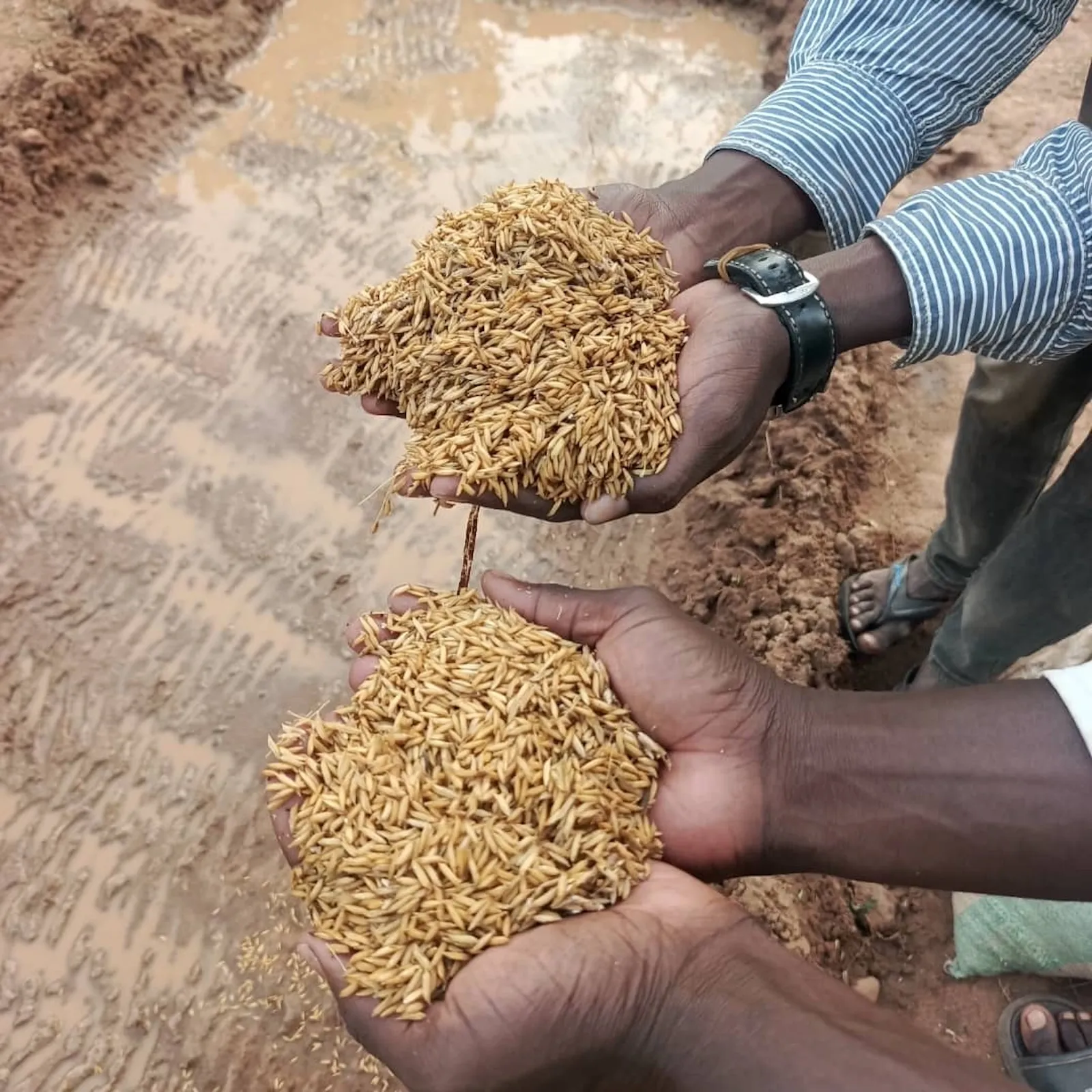
Bassirou Sani Boubacar Gaoh has spent the last decade trying to figure out how the plants feeding millions across Niger can better withstand the unpredictability of a warming planet. Extreme heat waves and severe droughts that alternate with heavy rainfall and flash floods are imperiling the many millet, rice, and sorghum farms throughout the Sahel region, where temperatures have risen much faster than the global average.
Yet the biggest threat to those farms is neither heat, droughts, nor floods, but the infestations unleashed with their arrival. The millet head miner is one of the most notorious of these hordes. The destructive moth lays eggs directly onto the flowering heads of the pearl millet crop, which hatch into larvae that feed voraciously from within the plant’s florets. Drought, sandy soils, and certain farming practices, such as sowing fields too early, only worsen infestations.
“In a bad year, it can wipe out a large part of a family harvest,” said Boubacar Gaoh. Domestic agriculture, he noted, is both the West African nation’s economic backbone and the foundation of most families’ access to food. Roughly 2.4 million people throughout Niger face acute food insecurity and 1.6 million children suffer from acute malnutrition. “When you’re talking about a crop that feeds the household, that isn’t just lost income. It’s less food on the table,” he said.
PlantVillage, an AI-powered mobile platform for pest and disease forecasting, but how to confront infestations. Solutions for containing infestations vary, but farmers first must spot the bugs behind them — a tricky feat, especially in the case of the millet head miner, which can do some real damage undetected. That’s where monitoring tools, said Boubacar Gaoh, can make all the difference. “Timing is everything. … It only strikes during a short window as the grain forms,” he said. “The real reduction in crop loss comes from acting on that warning at the right moment.”
Last January, they were preparing to roll out the use of natural predators to eradicate the millet head miner, along with a multitude of other agricultural menaces. They’d even just met with officials at Niger’s Ministry of Agriculture to negotiate use of their data to inform the government’s understanding of crop health and national surveillance systems.
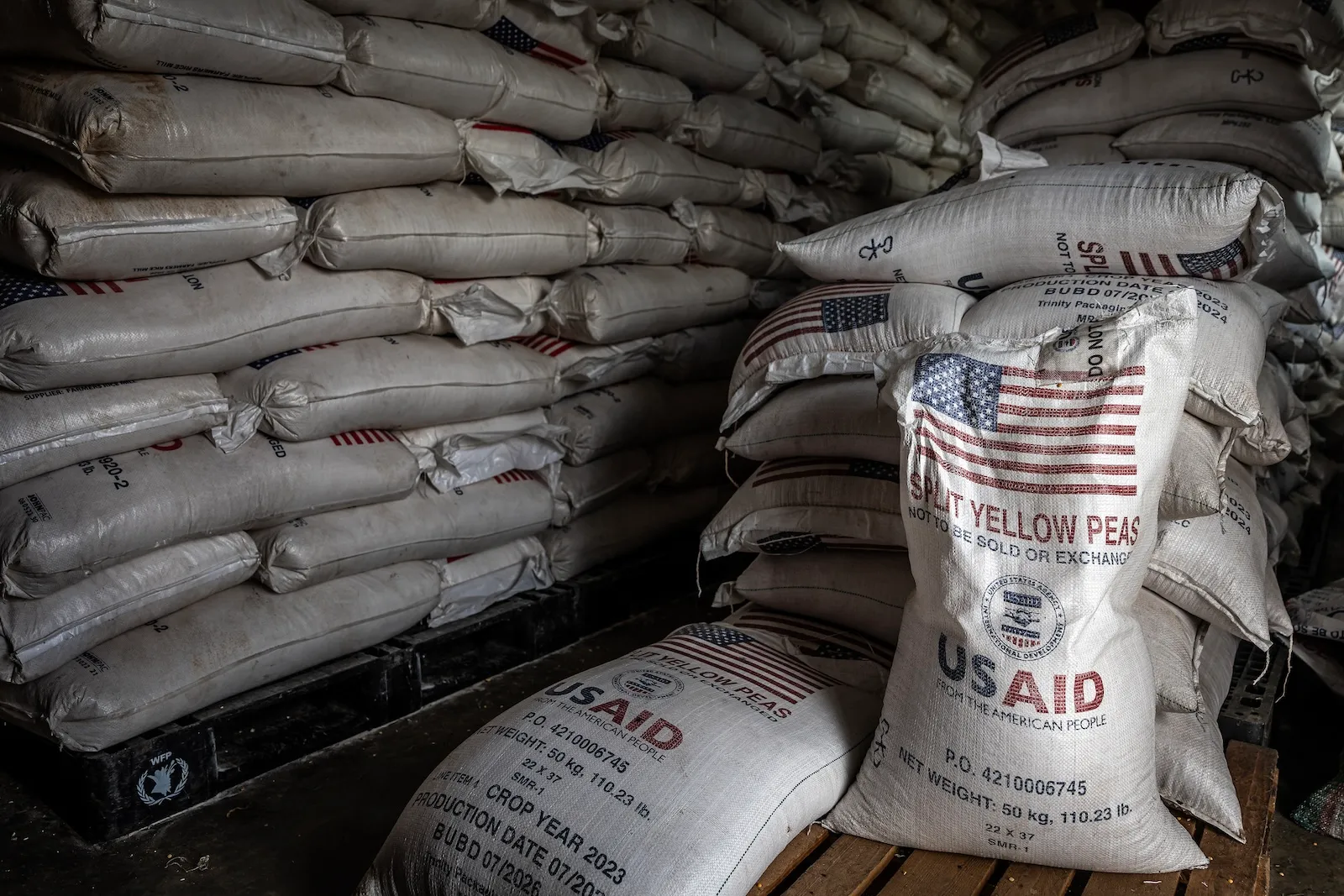
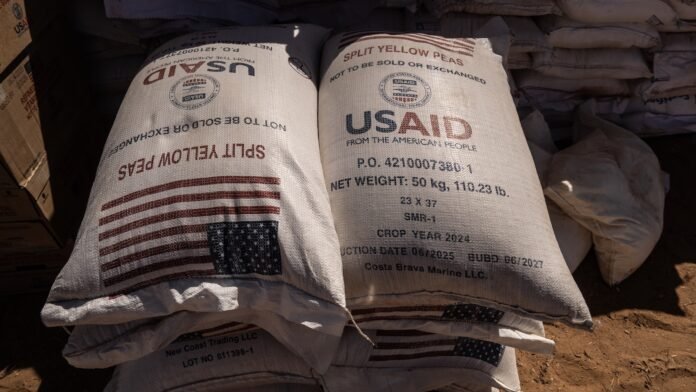
Then, without warning, it was all over. On January 24, 2025, days after his inauguration, President Donald Trump issued a stop-work order that suspended nearly all of USAID’s overseas programs, before dismantling the agency entirely. In the months that followed, nearly all of the 17 core Innovation Labs, anchored in American universities with a network of international partners, received funding termination notices.
Boubacar Gaoh stayed on part time, drawing on a small stipend provided by a donor to the Penn State lab, but the rest of his team in Niger was let go. In the year and a half since, he has pivoted to chasing funding sources in an increasingly fraught and competitive philanthropic landscape. He’s had little luck.
“I was surprised when it was stopped — because, why? Everyone knows that with climate change, pests are moving around. The conditions are so that these pests can grow and develop in the region where previously they couldn’t develop and affect food supply,” said Boubacar Gaoh.
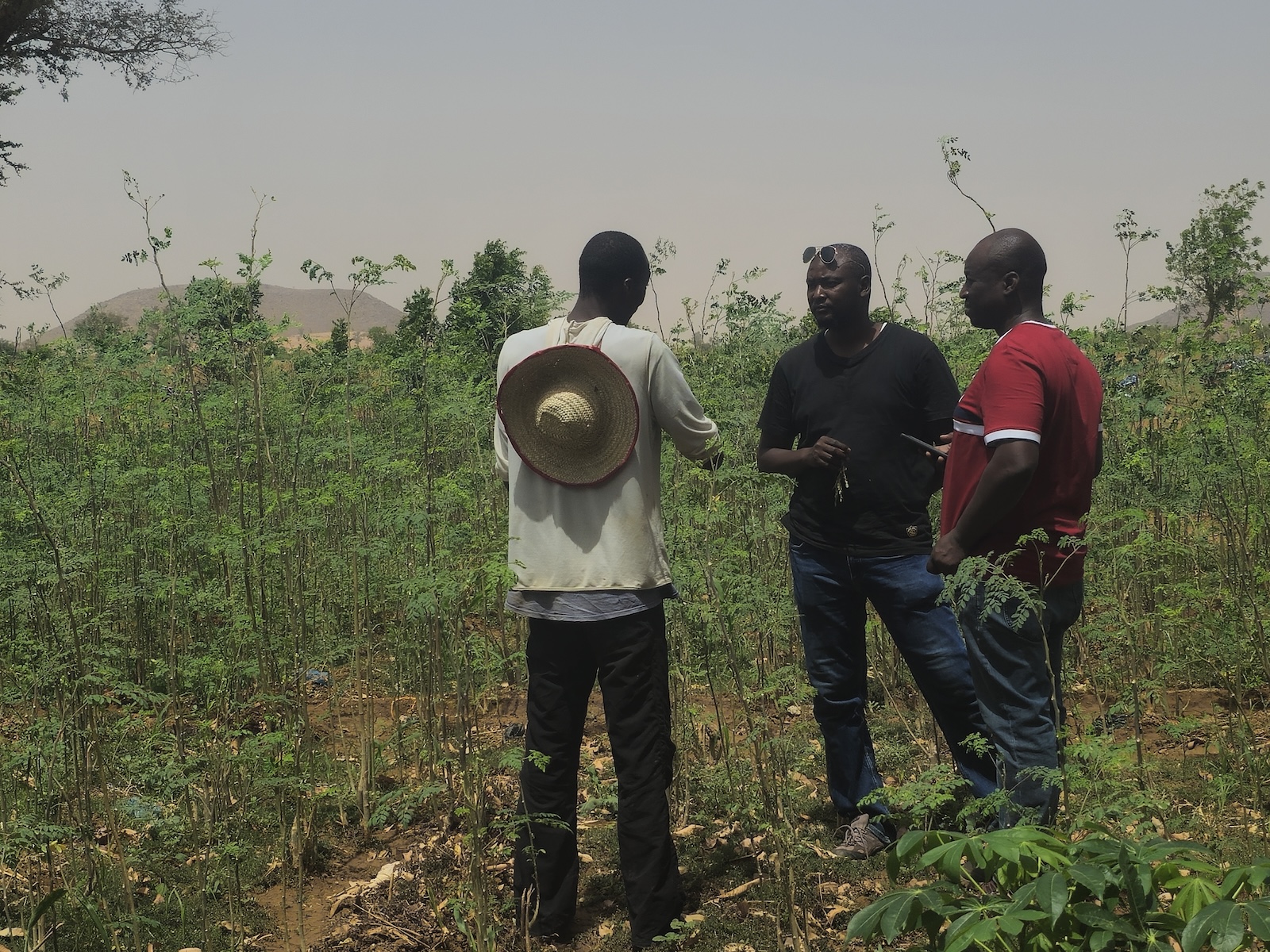
Boubacar Gaoh’s team conducted diagnostic visits all over Niger, including at a watermelon plot (left) and a vegetable farm (right). Then, without warning, it was all over. Courtesy of Bassirou Sani Boubacar Gaoh
A statement by the White House on the funding cuts issued last fall, when it formally cancelled the $72 million funding the program, described USAID’s spending as “woke, weaponized, and wasteful.” By then, the administration had gutted all but one lab. The Climate-Resilient Cereals Innovation Lab at Kansas State University was given the go-ahead to continue its research. (The lab has since rebranded itself as the “Innovation Lab for Cereals.”) Because Congress appropriated the funds, questions surfaced on the legality of Trump’s power to withhold the funding, but then the Supreme Court ruled that the president had the discretion to do so.
“Why were all the other labs terminated?” Timothy Dalton, then-interim director of the Kansas lab, asked at the time. “When they’re doing such critically important work as we are doing, in order to combat global food insecurity and to generate scientific advances that can be harnessed by the U.S. agricultural community?” A university spokesperson for the cereals lab declined Grist’s request for an interview.
This March, the State Department issued a new call for proposals for Feed the Future Innovation Labs, inviting any U.S.-based university to submit a statement of interest in an open competition for the resurrected program. The call for applications described the labs as mechanisms “to advance global food security in alignment with U.S. policy through targeted research.” Approximately five to seven awards were anticipated, the listing noted, ranging from $20 million to $40 million. To the scientists watching their labs get dismantled a year earlier, the announcement raised an obvious question: resurrected for whom, and to do what?
Although the labs’ stated goals on hunger and food security haven’t changed much, where the work happens could look very different under the Trump administration’s redesigned version of the program. Former USAID officials and innovation lab directors told Grist that they are concerned that lower-income African regions, which had always been the focus of the program, have now been deprioritized in favor of countries in the Western Hemisphere.
“A 27-page document of criteria, and Africa gets three paragraphs on the last page,” said Jim Gaffney, a former general development officer at USAID’s Bureau for Food Security. “It never says you should not work in African countries. But it’s obvious it’s not terribly important to them.”
According to one American researcher, “We were learning from African colleagues about genetic sources of disease resistance that we could bring over. … It was a two-way street.” Courtesy of Bassirou Sani Boubacar Gaoh
Africa just surpassed Asia as the continent with the largest number of people facing hunger, according to the annual State of Food Security and Nutrition in the World report released last week by a cohort of United Nations agencies. Swaths of the continent are seeing temperature rises up to 1.5 times the global mean, which imperils food security, ecosystems, and economies, and has fueled mass displacement and migration. Floods, heat waves, and droughts forced 700,000 people out of their homes in 2024, according to the U.N. World Meteorological Organization. A growing body of research has found food insecurity, climate change, and migration to be closely interlinked with geopolitical instability.
Gaffney said the State Department’s implicit deprioritization of Africa is likely to have created a chilling effect on the number of agricultural research and development proposals focusing on the continent, which could have serious knock-on implications for the global food system. “People say, ‘Well, it’s good, it’s great that we’re doing these things for these low-income countries,’ but it’s also great for U.S. research,” said Gaffney. “We solve problems in Africa, and those same problems might hit our shores someday here in the U.S., and we’ll be ready for them.” The other major change in the call for applications was the erasure of climate-related research priorities.
David Hughes, the former director of the Feed the Future Innovation Lab for Current and Emerging Threats to Crops at Penn State, which had supported Boubacar Gaoh’s work in Niger, said his team swapped out terms like “climate change stress” for “drought” in their application. The State Department didn’t respond to a question about their decision-making process, but, referring to the practices of Elon Musk’s Department of Government Efficiency, Hughes says that the Penn State team had in mind that the government had been “running these proposals through word search or AI.”
The Penn State lab also expanded its geographic range. Their application, shared with Grist, listed Honduras, Guatemala, El Salvador, Colombia, Peru, Ghana, Côte d’Ivoire, Kenya, and Nepal as proposed target countries. It did not mention supporting Boubacar Gaoh’s efforts in Niger. “We did, of course, maybe do a little more in this hemisphere. Although I point out that this hemisphere includes West Africa as well. I don’t think they know their geography,” said Hughes. Ultimately, the lab’s application was denied.
In a Senate Appropriations Committee hearing last June, Republican Senator Cindy Hyde-Smith, who represents Mississippi, asked Russell Vought, director of the White House Office of Management and Budget, for assurances that specific innovation labs, including a Mississippi State University lab focused on fisheries, would be protected from budget cuts.
“The lab’s work illustrates the proverb, ‘Give a man a fish, and you feed him for a day. Teach a man to fish, and you feed him for a lifetime.’ This is exactly what the MSU Fish Innovation Lab is doing,” said Hyde-Smith at the hearing. “Rather than giving other countries food, we are teaching them how to feed themselves through modern aquaculture practices.”
The next iteration of innovation labs is starting to take shape. A preliminary list obtained by Grist reveals that approximately seven new project proposals have advanced to the next and final stage of the application round. The labs advancing are from institutions almost exclusively in Republican-majority states. Kansas State University, Mississippi State University, the University of Florida, two labs at Alabama’s Auburn University, South Carolina’s Clemson University, and the University of Georgia were all asked to submit a full proposal, according to multiple sources familiar with the State Department’s new program. The work led by Clemson features a collaboration with the University of Hawaiʻi, making it the only lab with blue-state representation.
Sources told Grist that the team behind the Mississippi State proposal is from the very same fisheries lab that Hyde-Smith had publicly lobbied Vought for. The lab declined Grist’s request for an interview.
“It doesn’t feel like, by chance, it would just be red states receiving these awards,” said a former USAID official involved with the program who asked to remain anonymous.
Others are questioning whether the administration’s newfound version of the innovation labs will actually look all that different to the version that was culled. Carrie Seay-Fleming, an assistant professor specializing in food security and the environment at the University of Minnesota Duluth who has studied the impact of Feed the Future, found a surprisingly similar emphasis on “increasing productivity” and “market-based solutions” in the State Department’s language. “Which of course makes you wonder what the cancellation of the old programs achieved,” said Seay-Fleming.
A spokesperson at the State Department told Grist in an email that “applications are evaluated against the published criteria in the funding opportunity, without regard to the political characteristics of an applicant’s home state.” The spokesperson declined to clarify when grant awards would be finalized or announced, nor did they comment on changes to funding criteria. However, the spokesperson did note that the agency plans to obligate funds into awards by the end of the federal fiscal year on September 30.
The spokesperson said the Feed the Future Innovation Labs funding opportunity is evaluated to ensure it makes the country stronger, safer, and more prosperous. In order to align with national interests, foreign assistance and research investments must “directly benefit American farmers, researchers, and taxpayers, rather than being shaped by the priorities of the prior administration,” the spokesperson added.
Among those invited to advance was the Innovation Lab for Peanut at the University of Georgia, which worked with peanut farmers in roughly 13 countries but focused on Senegal, Ghana, Uganda, Malawi, and Zambia, and had been a participant in the earlier version of the USAID program. After the collapse of USAID, the lab was forced to close. When the administration resurrected the funds, former lab leadership decided to apply for the funds and see if they could rebuild much of the work they had been doing beforehand. Jamie Rhoads, former assistant director at the peanut lab, wasn’t optimistic about their chances.
“We tried to globalize it a little bit, and shifted the language a little bit toward the more safer, stronger, more ‘America First’ kind of language,” said Rhoads, who contributed to the new proposal. “We kind of made a pitch for the sake of the U.S. industry, and also the potential domestic demand happening in Africa, [that] this is a valuable investment to make in Africa.”
Read Next
So it was a welcome surprise when, in June, the UGA lab advanced to the next, and final, stage of the State Department’s process. “It was kind of frustrating because we had to put all this ‘America First’ language into it, but a lot of what we were doing was already, in the best sense of things, using American goodwill and technology,” said Rhoads. “We were learning from African colleagues about genetic sources of disease resistance that we could bring over that are useful for our varieties potentially, or globally. It was a two-way street.”
Indeed, American farmers would also benefit from this type of research based in Africa. That includes farmers like Josh Johnson, who runs the Old Tyme Bean Company in Elloree, South Carolina. In recent years, as rising temperatures have made it increasingly difficult to grow varieties of heat-sensitive Southern crops, Johnson has pivoted toward growing cowpeas, a drought-tolerant crop that’s regionally popular and has long been a major food commodity throughout western and central Africa. But that introduced Johnson to a whole new threat: the cowpea curculio, a destructive weevil whose larvae feed on the seeds inside the legume’s pod. Within the last two years, the curculio has taken almost half of Johnson’s acreage of the bean plant.
Josh Johnson (right) and his sons grow crops like cowpea, a major food commodity in western and central Africa, on their family farm in Elloree, South Carolina. Courtesy of Josh Johnson
“You’ll start shelling those peas, and you’ll end up with maggots and larva coming out the shells,” said Johnson. “You can imagine how selling something like that would be terrible. … It is a booger-bear to control.”
To fight the wily bug, Johnson sprays the perimeter of his fields with pesticides. But it only does so much. When the small weevil senses a tractor’s movement, it balls up, drops to ground, and plays dead to protect itself, also making it nearly impossible to spot. Johnson said he desperately needs a new tool or technique that would allow him to better track and stave off outbreaks well before they spread.
A solution not unlike the on-farm pest surveillance Boubacar Gaoh had been working to develop half a world away.
Climate change is only making crop infestations like these worse, forcing farmers and scientists from South Carolina to Niger to contend with new pathogens, as warming temperatures reshuffle the geographic range of pests worldwide.“Some pests that you find now in Africa, in a few years maybe you will find it in America. So I think it’s really relevant to deal with them at the source,” said Boubacar Gaoh. “Pests, they don’t need visas to travel.”
Judge blocks first state law that would have banned prediction markets
Minnesota, the first US state to prohibit prediction markets, was prevented from enforcing the law by a federal court ruling just days before the ban was scheduled to take effect. But while Minnesota was stopped from enforcing a total ban, the state may ultimately be allowed to prohibit some types of prediction-market wagers.
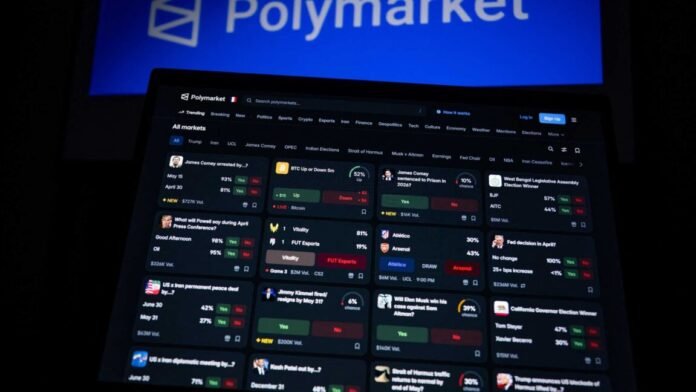
The Trump administration and the two largest prediction markets—Kalshi and Polymarket—sued Minnesota after the state enacted the law in May. The cases were consolidated, and a ruling issued yesterday imposed a preliminary injunction blocking the law that was scheduled to take effect on August 1.
Minnesota lawmakers saw prediction markets as indistinguishable from gambling, but the US Commodity Futures Trading Commission (CFTC) argues it has exclusive authority to regulate the platforms under federal law. One of the primary legal questions is whether event contracts are “swaps,” which are regulated by the CFTC.
Swaps are defined broadly in US law to include contracts in which payment “is dependent on the occurrence, nonoccurrence, or the extent of the occurrence of an event or contingency associated with a potential financial, economic, or commercial consequence.” US District Judge Katherine Menendez in the District of Minnesota, a Biden appointee, said Minnesota’s total ban on prediction markets is likely to violate US law because many trades on Kalshi and Polymarket are swaps. Menendez wrote:
Specifically, it appears that whether the Minnesota statute is expressly preempted turns on whether the state law attempts to regulate trades in event contracts that qualify as “swaps” within the meaning of the CEA [Commodity Exchange Act]. And there are several examples of event contracts hosted by Kalshi and Polymarket US that fit that definition because they concern the occurrence of events with clear potential economic, financial, or commercial consequences that are neither remote or unattenuated. Kalshi and Polymarket US are designated contract markets, so the CFTC has exclusive jurisdiction to regulate transactions involving those “swaps.”
State AG: “Prediction markets are gambling”
Menendez said the CFTC, Kalshi, and Polymarket met their burden of showing they are likely to succeed on the merits, so she issued “a preliminary injunction barring enforcement of Minnesota’s prediction market statute until a final decision on the merits is reached.” But she said Minnesota may be able to prohibit some types of event contracts offered on Kalshi and Polymarket because not all of them appear to meet the definition of swaps. For example, Menendez doesn’t think prediction-market bets on the outcome of Love Island USA meet the legal definition of swaps.
Minnesota could continue litigating the case in district court or ask a federal appeals court to overturn the preliminary injunction. When asked if the state will appeal yesterday’s ruling, Minnesota Attorney General Keith Ellison said he will keep defending the law and did not make any mention of an appeal.
“We respectfully disagree with the Court’s determination that the proper ‘status quo’ to maintain is one that allows predatory gambling apps to proliferate,” Ellison said in a statement provided to Ars today. “However, we also acknowledge that the Court has been presented with complex legal issues that are difficult to decide quickly and without a fully developed record. We look forward to continuing to litigate this case and defend the State’s duly passed law.”
Ellison also said, “Prediction markets are gambling, plain and simple, and Minnesota has every right to keep predatory gambling out of our communities.”
Minnesota may get partial victory
While Minnesota was the first state to enact a full ban, other states have tried to impose limits on prediction markets by regulating them under gambling laws. Courts have reached different conclusions on whether states can regulate prediction markets, raising the odds that the Supreme Court will take up a case to decide the matter.
Menendez’s ruling said that when she rules on the merits, district court may allow Minnesota to prohibit certain types of event contracts, but not all of them. “Plaintiffs have not shown that every event contract listed on Kalshi and Polymarket US fits the statutory definition of a ‘swap.’ If they don’t fit, Plaintiffs have much weaker claims that the CFTC is the only authority that can regulate them,” Menendez wrote.
After the sides present their cases in more detail, Menendez could issue a permanent injunction that blocks only parts of the law. She wrote:
After all, as relevant here, the exclusive jurisdiction Congress gave to the CFTC extends to transactions involving swaps that are conducted on DCMs [designated contract markets], not to every conceivable event contract that Kalshi, Polymarket US, or any other DCM might host. If, as appears to be the case, Kalshi and Polymarket US are listing at least some event contracts that don’t meet the CEA’s definition of swaps, any permanent injunctive relief may be much narrower. But given the unique nature of Minnesota’s prediction market statute, the posture of these cases, and the imminent effective date of Minnesota’s statute, a preliminary injunction maintaining the status quo until the merits of this case can be fully resolved is appropriate.
Menendez also stressed that “this is not a final determination of the merits, and there may be strong arguments that ultimately weigh against a conclusion that the CEA expressly preempts the statute.”
Minnesota argued that “swaps should only be understood to include event contracts that are tied to some commodity,” rather than to the outcome of some future event, Menendez wrote. But the US law defining swap “has no such limiting language,” and several other courts already “found that event contracts involving the outcomes of sporting events fall within the definition’s scope,” she wrote.
Love Island USA bets aren’t swaps, judge says
Menendez said some prediction-market bets clearly meet the federal definition of swaps because they are closely associated with potential financial, economic, or commercial consequences. That includes contracts that pay out based on who will win a US Senate seat, which NBA team would sign LeBron James, which team would win the World Cup, and when traffic in the Strait of Hormuz would return to normal, she wrote.
But Menendez said other prediction-market transactions don’t appear to fit the definition of swaps. This includes trades predicting which couple will win season eight of Love Island USA and trades regarding what announcers would say during World Cup game broadcasts.
Menendez wrote that “one is hard pressed to imagine the financial, economic, or commercial consequence of the occurrence or outcome of these events unless the words of limitation in [the federal definition] are stretched so broadly that they impose no limit on the CFTC’s jurisdiction at all.”
Menendez also said that plaintiffs and defendants regrettably “treated the issues before the Court as all-or-nothing propositions,” which “provides little guidance on how the Court ought to navigate the reality that Kalshi and Polymarket US list many event contracts likely falling within the CFTC’s exclusive jurisdiction to regulate swaps on DCMs, and many falling outside of it.”
Vietnam’s smart-port push opens another door to Washington
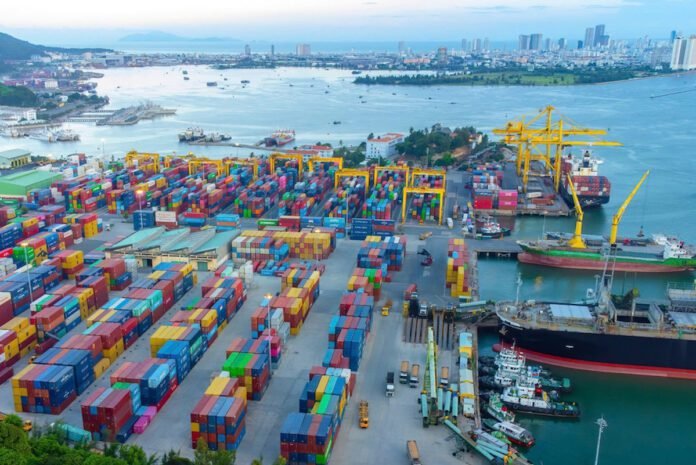
Vietnam’s effort to modernize Da Nang’s maritime infrastructure may look at first like another Asian port-development project, but it is considerably more important than that.
The transformation underway along Vietnam’s central coast brings together three priorities that increasingly define Hanoi’s foreign policy: economic modernization, technological self-reliance and stronger maritime awareness in the South China Sea. It also creates another practical opening for US-Vietnam cooperation.
That convergence will be on display with the arrival of the USS George Washington (CVN-73), a Nimitz-class nuclear-powered aircraft carrier, serving as the US Navy’s premier forward-deployed carrier in the Indo-Pacific in Da Nang on July 30-August 3.
The event will serve as another reminder that the central Vietnamese city has become an important point of contact between the two former battlefield foes and now strategic comprehensive partners.
Previous high-profile port calls to Danang include the aircraft carrier USS Ronald Reagan (CVN-76) in June 2023 and an amphibious group visit by the USS Tripoli (LHA-7) and USS Robert Smalls (CG-62) in December 2025.
The naval symbolism matters, but the more consequential story is taking place ashore. Vietnam is expanding the Lien Chieu port complex as part of its plan to turn Da Nang into a major logistics gateway, linking central Vietnam with regional and international markets.
The city envisions a modern container port with highly automated cargo-handling technology and eventual capacity measured in millions of containers annually. Da Nang also wants stronger road and rail links connecting the port with industrial centers and the East-West Economic Corridor stretching toward Laos and Thailand.
Da Nang Port is already experimenting with digital tools. In April, it introduced an electronic mapping system that combines real-time container-yard information with GPS navigation, allowing truck drivers to locate containers and navigate the terminal more efficiently. It is a modest example of a larger transformation toward data-driven port management.
Satellites are part of that transformation. Vietnamese researchers are increasingly using remote sensing to monitor coastal waters, shoreline changes and port development.
A recent study using European Sentinel-2 satellite imagery examined changes at Lien Chieu between 2022 and 2025, demonstrating how satellite data can track shoreline movement, land reclamation and environmental impacts associated with major port construction.
Vietnam has also started combining satellite observations with artificial intelligence to monitor seawater quality. Researchers have used Sentinel-2 data, machine-learning algorithms and cloud computing to assess coastal conditions, illustrating how remote sensing can become a routine tool of environmental governance.
For port managers, these technologies have obvious commercial value. Satellite imagery can reveal sedimentation near navigation channels, monitor coastal erosion and help planners understand how construction is changing shorelines. Automatic Identification System data can track vessel movements.
Digital port platforms can reduce congestion, improve cargo flows and lower logistics costs. But information gathered for commercial purposes does not stop being useful at the harbor entrance.
The same combination of satellites, vessel tracking, geospatial analysis and environmental sensors can improve maritime domain awareness — essentially giving authorities a clearer picture of what is happening at sea.
That is where the Da Nang story has geopolitical significance. Vietnam faces the South China Sea while managing a difficult relationship with China, its largest neighbor and an important trading partner but also rival claimant to contested maritime territories.
Hanoi has no interest in turning Da Nang into an anti-China outpost, nor is Vietnam likely to abandon its longstanding reluctance to enter formal military alliances. Instead, Vietnam is building resilience.
Better ports strengthen supply chains. Better satellite information improves environmental management. Better vessel tracking improves navigation and maritime safety.
Collectively, however, those same capabilities make it easier for Vietnam to understand activity along its coastline and in nearby waters. Civilian technology and national security are increasingly difficult to separate at sea.
Washington has good reason to pay attention. Since elevating relations to a Comprehensive Strategic Partnership in 2023, the US and Vietnam have broadened cooperation in science and technology, the digital economy, semiconductors, defense and maritime security.
Washington has also provided equipment and programs aimed at improving Vietnam’s maritime domain awareness, port security and ability to combat illegal fishing. Da Nang therefore offers a logical laboratory for the next stage of the relationship.
American universities, technology companies and government agencies possess considerable expertise in satellite analysis, geospatial information systems, environmental monitoring, artificial intelligence and smart-port management.
Cooperation in these fields would be less politically sensitive than a dramatic expansion of military access while still strengthening Vietnam’s capacity to manage its maritime space. It would also meet Hanoi on its own terms.
Vietnam’s strategic approach is not built around choosing Washington over Beijing. It is about acquiring enough diplomatic, economic and technological options to avoid excessive dependence on either. Smart maritime infrastructure fits that strategy particularly well because it delivers immediate economic benefits while quietly strengthening national capacity.
Da Nang’s geography only magnifies its importance. The city sits on Vietnam’s central coast facing the South China Sea and has long served as a maritime gateway. Today, planners see Lien Chieu as a key link between the sea, Vietnam’s industrial economy and overland trade routes reaching into mainland Southeast Asia.
That makes the port relevant not only to ships entering Vietnam but to the broader contest over resilient Asian supply chains.
The expanding US-Vietnam maritime relationship is not measured solely by warships, joint exercises or defense agreements. Increasingly, it also involves satellites monitoring coastlines, digital systems tracking ships and cargo, and sensors giving Vietnamese authorities a clearer picture of activity in their coastal waters.
US port calls at Da Nang provide the visible face of that relationship, while quieter cooperation in technology, maritime awareness and infrastructure may prove more consequential over the long term. The quieter transformation ashore may prove more consequential.
Vietnam is building a port for commerce. In doing so, it is also building the information infrastructure needed by a modern maritime state. For the US, helping Vietnam make that transition offers something increasingly valuable in the South China Sea: deeper cooperation without a full-blown alliance.
James Borton is a senior fellow at Johns Hopkins SAIS Foreign Policy Institute and the author of “Harvesting the Waves: How Blue Parks Shape Policy, Politics, and Peacebuilding in the South China Sea.”
Oman Pushes Regional Plan for Shared Control of the Strait of Hormuz
Oman has put forward a proposal that would replace Iran’s sole control of the Strait of Hormuz with a joint regional mechanism, opening negotiations over one of the world’s most strategically important shipping lanes, Reuters reported, citing a Gulf source.
At the heart of the proposal is a shared framework for managing the Strait, which carries 20% of the world’s oil and gas. Rather than leaving oversight solely in Iran’s hands, the plan would establish a regional system responsible for maritime security, search-and-rescue operations and other functions needed to keep the waterway operating.
The proposal also introduces a voluntary transit fee modeled on the Strait of Malacca, where shipping companies contribute to navigation, environmental protection and emergency response without mandatory tolls.
For now, the talks are limited in scope. The Wall Street Journal reported that negotiators are concentrating on shipping arrangements rather than trying to resolve the broader conflict. Mediators hope a temporary understanding over maritime operations could create momentum for wider negotiations later.
That goal remains elusive. According to the Wall Street Journal, Iran and Oman continue to disagree on several aspects of the proposal, including whether ships passing through the Strait should contribute transit fees. Mediators and one US official told the newspaper that no agreement has been reached on that issue.
The diplomatic effort accelerated Friday, when Oman reportedly sent a delegation to Tehran. The visit took place the same night President Donald Trump ordered a halt to US attacks on Iran after nearly two weeks of nightly strikes targeting Iranian military capabilities.
While significant differences remain, the negotiations represent an effort to reshape how the Strait of Hormuz is managed, replacing unilateral control with a regional arrangement that supporters believe could improve maritime security while creating an opening for broader diplomatic engagement.
Federal Judges Chastise Trump’s Justice Department for “Unlawful,” “Unethical” and “Unseemly” Conduct
Across the country, federal judges are calling out Department of Justice lawyers, questioning in unprecedented ways whether they can be trusted to tell the truth or uphold centuries-old legal norms.
From Washington, D.C., to Rhode Island to Oregon, federal judges nominated by presidents from both parties, including Donald Trump, have zeroed in on what’s called “the presumption of regularity.” It essentially means that judges must presume that the government — whether it be federal prosecutors, an IRS auditor or an FBI agent — did their jobs according to the rules and in good faith.
Until Trump’s second term, which has seen an exodus of veteran DOJ lawyers and a transformative shift in priorities from issues like enforcing civil rights to instead defending a mass deportation agenda, this foundational tenet had rarely been discussed in federal courtrooms, former judges, lawyers and scholars say. But as Trump’s DOJ exhibits behavior that judges have called “unlawful,” “unethical,” “unseemly” or otherwise dishonest, adherence to that bedrock standard is now being questioned.
ProPublica reviewed hundreds of cases since Trump retook the White House in which judges criticized the actions of DOJ lawyers and found more than 40 in which they explicitly referenced the presumption of regularity. In many cases, judges have expressed frustration that they can no longer take the government at its word.
“Judges simply don’t believe the representations that are being made by United States attorneys, assistant United States attorneys and the like,” said John E. Jones, a former federal judge for the District of Pennsylvania, appointed by President George W. Bush.
“I don’t think in the annals of the Department of Justice, in the history of jurisprudence in the United States, we’ve ever seen anything close to this.”
In Rhode Island in May, Trump-appointed federal Judge Mary McElroy rebuked federal prosecutors’ conduct — saying they withheld information and misrepresented facts — as she quashed their requests for a subpoena in their investigation into a hospital’s care of transgender children. The judge alleged the DOJ had inappropriately claimed its investigation was operating out of Texas to secure subpoenas targeting sensitive medical records of patients in another state and that it falsely claimed the Rhode Island hospital hadn’t communicated with the department.
“The discrepancy between the honorable conduct expected of federal prosecutors and DOJ’s tactics in this case is unsettling,” McElroy wrote. “The Court cannot help but share the sentiment that ‘[t]he presumption of regularity that has previously been extended to [DOJ] that it could be taken at its word — with little doubt about its intentions and stated purposes — no longer holds.’”
Judges have emitted a chorus of condemnations against the legal basis for some of Trump’s political agenda, including the mass firings of federal workers, an immigration dragnet that has imprisoned hundreds of U.S. citizens and retribution campaigns against the president’s political enemies.
In doing so, federal judges are imbuing forceful language into their orders in a way that scholars say signals to the Trump administration that the third branch of government is losing trust in the Justice Department.
“I don’t think in the annals of the Department of Justice, in the history of jurisprudence in the United States, we’ve ever seen anything close to this.”
Former federal Judge John E. Jones, a George W. Bush appointee
Federal judges rarely grant interviews, and none of the judges who criticized the Justice Departmentin their orders granted interviews to ProPublica.
In a statement, a spokesperson for the DOJ said its attorneys are “dedicated public servants who represent the United States with integrity, in accordance with their ethical obligations and the law.”
“The Department stands firmly behind the professionalism and good faith of its attorneys,” said spokesperson Kiersten Pels. The White House did not respond to a request for comment.
Federal judges have found that the government filed statements generated by artificial intelligence that referenced nonexistent case law, wrote briefs that ignored facts and filed declarations with inaccurate dates, the ProPublica review shows.
In one case, the government included documentation claiming a detainee had been convicted of marijuana possession in 2009. That detainee, the judge noted, citing what she called the government’s persistent “sloppiness,” would have been 4 years old.
“This Court will no longer blindly accept statements of fact from [the U.S. government] unless they are made under oath by an individual with personal knowledge,” Judge Christine O’Hearn, a President Joe Biden appointee, wrote in New Jersey while reviewing a writ of habeas corpus petition filed by a man who claimed he was unlawfully imprisoned by immigration officers. O’Hearn accused the government of defying her orders when, instead of releasing the man, Immigration and Customs Enforcement transferred him to a different facility in New York.
In Minnesota, the state’s top political leaders had publicly clashed with the administration following the violent ICE raids that led to the deaths of two U.S. citizens. Then the administration filed a flurry of subpoenas against them.
Last month, Judge Patrick J. Schiltz, who was appointed by George W. Bush and clerked for Supreme Court Justice Antonin Scalia, slammed the government’s actions and “spurious claims,” saying the presumption of regularity was being abused.
“Initiating a criminal investigation in order to harass political opponents or to coerce them into taking official action — particularly official action that the federal government cannot directly require those political opponents to take — is a blatantly unlawful and unethical use [of] the grand-jury process,” the judge wrote.
“Breakdown” of a Presumption
The presumption of regularity creates a high bar for those suing the government or defending themselves against it in criminal cases. They often must provide evidence that the government willfully violated a policy or otherwise deviated from its charge — that is, did something irregular — to overcome the standard.
It’s a shield the government wields often, with little notice, and one that is almost always successful. But overcoming that presumption has become increasingly common under Trump’s second term, according to court watchers.
About half of the cases ProPublica identified as questioning the presumption come from districts, including D.C., Maryland and Virginia, where by proximity and jurisdiction many of Trump’s actions are challenged and often heard by Democratic-nominated judges. The Southern District of New York, which has issued repeated rebukes of Trump administration actions, and the Northern District of California, another Democratic stronghold, are other hotbeds of judicial scrutiny.
Last September, D.C. District Magistrate Judge Zia M. Faruqui accused the administration of working around the federal grand jury process, getting an indictment from a state court after prosecutors had failed to get one in his court, which he called “unseemly,” if not “unlawful.” He fired off one of the earliest signs that the presumption itself could come into question.
“This only deepens the growing mistrust of the actions of prosecutors,” the judge wrote. “That is a sentiment that was once unthinkable, but the irregular is now the regular.” While the case was largely managed by assistant U.S. attorney Caelainn Carney, according to court transcripts, Faruqui was aiming his frustration at her bosses, including senior prosecutor Jonathan R. Hornok, and the leadership at DOJ. Neither attorney responded to requests for comment.
Pels, the DOJ spokesperson, told ProPublica that Faruqui “was wrong on the law” and noted that after the government appealed to the district’s chief judge, his order was overruled. “Judge Faruqui has a long-standing documented pattern of editorializing from the bench beyond the scope of the cases before him,” Pels added.
But in recent months, skepticism about the presumption has also come from judges appointed by Republicans, such as McElroy, or in GOP strongholds.
In Indiana, Trump-appointed federal Judge James Patrick Hanlon ordered the release of Salah Sarsour, president of the Islamic Society of Milwaukee and a lawful U.S. resident, from ICE custody in March. Sarsour’s lawyers argued the government had targeted him to suppress his First Amendment right to free speech. The DOJ invoked the presumption of regularity and argued his arrest was part of an anti-terrorism dragnet, which the judge threw out.
In the Southern District of Ohio, Judge Michael R. Barrett, appointed by George W. Bush, ordered ICE to release a detainee after concluding the presumption had been overcome because the government hadn’t presented a reasonable argument that the man was a flight risk.
News outlets, including CNN, have documented federal judges’ ire with Trump’s DOJ, and some of the cases under question have been well-publicized, such as the government’s illegal deportation of Maryland resident Kilmar Abrego Garcia to El Salvador. In that case, Judge Paula Xinis, a President Barack Obama appointee, criticized the government, saying, “You have taken the presumption of regularity, and you’ve destroyed it.”
Many of the rulings challenged one of Trump’s hallmark efforts: immigration enforcement and deportations.
“The presumption of regularity and integrity previously and routinely afforded to the Executive branch and the United States Attorney’s Office has been undeniably eroded in this jurisdiction and across the country,” O’Hearn wrote in February, noting that the federal government had repeatedly violated court orders in her district and others related to immigration operations.
In another immigration detention case, this one in Washington state, Biden-appointed Judge Lauren King said, “[t]he ‘presumption of regularity’ is dislodged here by the numerous factual errors in Respondents’ filings and by their conflicting representations.”
Jeremy Fogel, executive director of the Berkeley Judicial Institute and a former federal judge from California, said what’s happening in the courts feels more like a “political conflict” than the normal ebb and flow of the justice system.
“It’s really one branch that is really sort of questioning the legitimacy of the other one,” Fogel said. “I think the judges are trying to stand up for the legitimacy of their branch.”
Just Security, an online law and policy journal, has been tracking cases in which federal judges have admonished Trump’s prosecutors, including those involving the presumption.
“We’re witnessing a breakdown in the ways in which any administration ordinarily carries out its responsibilities, through the Justice Department in particular,” said Ryan Goodman, Just Security’s co-editor-in-chief.
Erosion of Trust, Ethics Inquiries
The erosion of trust from the federal bench comes as Trump has profoundly shifted priorities at the DOJ to align with his political platform: ending civil rights and diversity programs, deporting immigrants and stripping away environmental protections.
Those who deal with DOJ lawyers have noticed the difference in court.
Mitch Bernard, chief counsel at the nonprofit Natural Resources Defense Council, has faced off on environmental issues with the DOJ many times. Although they may disagree, he said, he always expected his opponents to be “fair and above board.”
That dynamic is gone, he said.
“I would call it a transformation of the role of the Justice Department,” he said. “There are many different judges in different jurisdictions not only ruling against the government but calling the government out for dishonesty and dissembling, and that’s an extraordinary thing.”
The result, Bernard said, is that “the government will lose more cases as a result of the way the Justice Department is behaving.”
“There are many different judges in different jurisdictions not only ruling against the government but calling the government out for dishonesty and dissembling, and that’s an extraordinary thing.”
Mitch Bernard, chief counsel at the Natural Resources Defense Council
Meanwhile, groups such as his are benefitting from the government brain drain. “We hired 10 litigating attorneys last year,” he said. Of those, eight came from the DOJ.
Judges aren’t just losing faith in the DOJ. Some are pushing to sanction Justice Department lawyers.
This month, Miami federal Judge Kathleen M. Williams ruled that Trump’s lawsuit against the IRS was an improper exercise in self-enrichment, citing the president’s lawyers for a series of misstatements in the case.
The Obama appointee referred the lawyer who brought the president’s case against the IRS, Alejandro Brito, to the Florida Bar for potential disciplinary proceedings. She also forwarded her ruling to disciplinary officials in New York, who had earlier received an ethics complaint about acting Attorney General Todd Blanche.
A DOJ spokesperson called the Blanche case “nothing more than a politically motivated bar complaint, filed by partisan activists who disagree with this Administration’s policies.” Brito did not respond to a request for comment.
In Rhode Island, McElroy referred DOJ lawyers to a review board for possible discipline for their handling of the hospital investigation.
“As citizens, we trust that federal prosecutors, when wielding this awesome power against a state, a company, or certainly against vulnerable children, will play fair and be honest with its counterparts and the judiciary,” McElroy wrote. “DOJ has proven unworthy of this trust at every point in this case.”
US, UAE to establish military artificial intelligence task force
The US Central Command (CENTCOM) announced an agreement with the United Arab Emirates (UAE) on Tuesday to create the first bilateral task force dedicated to accelerating the development of military artificial intelligence (AI).
“The US-UAE task force, named Task Force Talon Synapse, is scheduled to formally launch in the coming weeks,” CENTCOM said in a statement.
Based in Abu Dhabi, the team will comprise approximately 20 experts in AI, cybersecurity, and data from both nations.
The initiative aims to integrate applications for intelligence support, the protection of critical infrastructure and monitoring the regional security environment.
CENTCOM Commander Adm. Brad Cooper characterized the agreement as a “historic milestone,” noting that it will rapidly deliver AI advancements to warfighters. He emphasized that the partnership with the UAE will “foster innovation at speed and scale.”
Report: Trump mad RFK Jr. hasn’t cut more vaccines or proven autism link
Ardent anti-vaccine activist and current US Health Secretary Robert F. Kennedy Jr. is reportedly on thin ice with Trump for not being anti-vaccine enough for the president’s liking, according to a report late Monday from the Wall Street Journal.
Trump has become fixated on the completely false, thoroughly debunked claim that vaccines cause autism, the Journal reported. People familiar with the president’s scattered thinking say Trump wants an autism remedy to be part of his legacy and thinks scaling back childhood vaccinations is a way to secure that achievement. As such, he has grown frustrated and disappointed that Kennedy hasn’t done more to cut back federal childhood vaccine recommendations or confirm a link to the neurodevelopmental disorder.
In May, the president reportedly aired his disappointment, calling out Kennedy for having “the yips” that were preventing him from acting on his zealous anti-vaccine agenda while holding the highest health position in the country. In June, Trump reportedly vented in the Oval Office to Kennedy that wasn’t doing enough.
Kennedy has reportedly been taken aback by the criticism—and it’s likely that outside public health and medical experts would have been, too, if they were present. To experts, Kennedy has been diligently working to undermine life-saving vaccines, endangering public health in the process.
Some notable examples include Kennedy’s overhaul of a key vaccine advisory committee, which he stacked with like-minded anti-vaccine allies. Those allies then arbitrarily ditched evidence-based recommendations for the birth dose of the hepatitis B vaccine and a combination shot against measles, mumps, rubella, and varicella (chickenpox) called MMRV. Kennedy also single-handedly trimmed the US childhood vaccine schedule to resemble that of Denmark’s, a small country with universal healthcare. He directed the Centers for Disease Control and Prevention to stop promoting seasonal flu vaccines with prepaid advertisements during a particularly deadly flu season. And he edited a CDC website to falsely link vaccines to autism.
Political risks
Some of Kennedy’s efforts to trash vaccines have been blocked in court—namely, the changes to the advisory committee and the childhood vaccine schedule. But Kennedy is now laying the regulatory groundwork to sabotage vaccination rates in ways that can’t be undone so easily.
Kennedy’s anti-vaccine meddling in federal policy has been so apparent that polling in December found that Kennedy’s efforts to cut vaccines were broadly unpopular and “politically risky.” As such, White House political advisors have urged Trump and Kennedy to tone down the anti-vaccine rhetoric, which Kennedy appeared to be doing—publicly at least. In recent public appearances, Kennedy has avoided the topic of vaccines.
But it seems Trump has not aligned with his advisors and still wants Kennedy to demolish vaccination policy with wild abandon, despite the health and political dangers. With Kennedy apparently not working fast enough, the Journal reported speculation that Kennedy could be sidelined or replaced. Already, Kennedy’s Medicare chief, Chris Klomp, has been “empowered to run every corner” of the Department of Health and Human Services on behalf of the Secretary, the paper reported. There are also rumors that Mehmet Oz, the Centers for Medicare and Medicaid Services administrator, could become health secretary after the midterm elections.


 PlantVillage, an AI-powered mobile platform for pest and disease forecasting, but how to confront infestations. Solutions for containing infestations vary, but farmers first must spot the bugs behind them — a tricky feat, especially in the case of the millet head miner, which can do some real damage undetected. That’s where monitoring tools, said Boubacar Gaoh, can make all the difference. “Timing is everything. … It only strikes during a short window as the grain forms,” he said. “The real reduction in crop loss comes from acting on that warning at the right moment.”