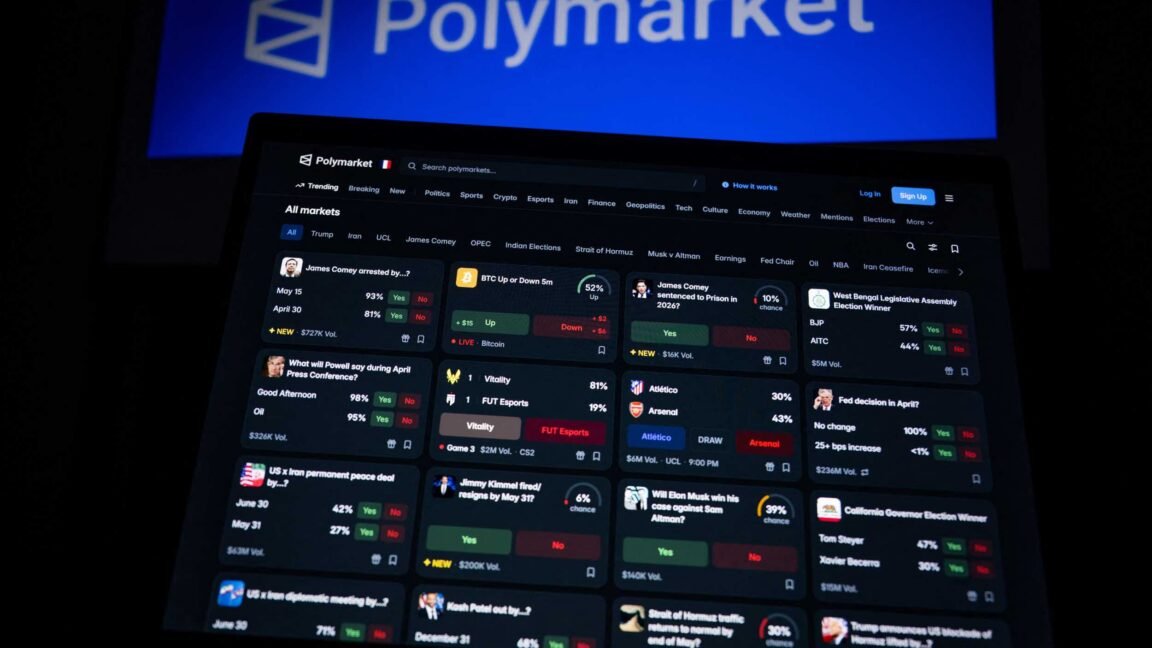
Minnesota, the first US state to prohibit prediction markets, was prevented from enforcing the law by a federal court ruling just days before the ban was scheduled to take effect. But while Minnesota was stopped from enforcing a total ban, the state may ultimately be allowed to prohibit some types of prediction-market wagers.
The Trump administration and the two largest prediction markets—Kalshi and Polymarket—sued Minnesota after the state enacted the law in May. The cases were consolidated, and a ruling issued yesterday imposed a preliminary injunction blocking the law that was scheduled to take effect on August 1.
Minnesota lawmakers saw prediction markets as indistinguishable from gambling, but the US Commodity Futures Trading Commission (CFTC) argues it has exclusive authority to regulate the platforms under federal law. One of the primary legal questions is whether event contracts are “swaps,” which are regulated by the CFTC.
Swaps are defined broadly in US law to include contracts in which payment “is dependent on the occurrence, nonoccurrence, or the extent of the occurrence of an event or contingency associated with a potential financial, economic, or commercial consequence.” US District Judge Katherine Menendez in the District of Minnesota, a Biden appointee, said Minnesota’s total ban on prediction markets is likely to violate US law because many trades on Kalshi and Polymarket are swaps. Menendez wrote:
Specifically, it appears that whether the Minnesota statute is expressly preempted turns on whether the state law attempts to regulate trades in event contracts that qualify as “swaps” within the meaning of the CEA [Commodity Exchange Act]. And there are several examples of event contracts hosted by Kalshi and Polymarket US that fit that definition because they concern the occurrence of events with clear potential economic, financial, or commercial consequences that are neither remote or unattenuated. Kalshi and Polymarket US are designated contract markets, so the CFTC has exclusive jurisdiction to regulate transactions involving those “swaps.”
State AG: “Prediction markets are gambling”
Menendez said the CFTC, Kalshi, and Polymarket met their burden of showing they are likely to succeed on the merits, so she issued “a preliminary injunction barring enforcement of Minnesota’s prediction market statute until a final decision on the merits is reached.” But she said Minnesota may be able to prohibit some types of event contracts offered on Kalshi and Polymarket because not all of them appear to meet the definition of swaps. For example, Menendez doesn’t think prediction-market bets on the outcome of Love Island USA meet the legal definition of swaps.
Minnesota could continue litigating the case in district court or ask a federal appeals court to overturn the preliminary injunction. When asked if the state will appeal yesterday’s ruling, Minnesota Attorney General Keith Ellison said he will keep defending the law and did not make any mention of an appeal.
“We respectfully disagree with the Court’s determination that the proper ‘status quo’ to maintain is one that allows predatory gambling apps to proliferate,” Ellison said in a statement provided to Ars today. “However, we also acknowledge that the Court has been presented with complex legal issues that are difficult to decide quickly and without a fully developed record. We look forward to continuing to litigate this case and defend the State’s duly passed law.”
Ellison also said, “Prediction markets are gambling, plain and simple, and Minnesota has every right to keep predatory gambling out of our communities.”
Minnesota may get partial victory
While Minnesota was the first state to enact a full ban, other states have tried to impose limits on prediction markets by regulating them under gambling laws. Courts have reached different conclusions on whether states can regulate prediction markets, raising the odds that the Supreme Court will take up a case to decide the matter.
Menendez’s ruling said that when she rules on the merits, district court may allow Minnesota to prohibit certain types of event contracts, but not all of them. “Plaintiffs have not shown that every event contract listed on Kalshi and Polymarket US fits the statutory definition of a ‘swap.’ If they don’t fit, Plaintiffs have much weaker claims that the CFTC is the only authority that can regulate them,” Menendez wrote.
After the sides present their cases in more detail, Menendez could issue a permanent injunction that blocks only parts of the law. She wrote:
After all, as relevant here, the exclusive jurisdiction Congress gave to the CFTC extends to transactions involving swaps that are conducted on DCMs [designated contract markets], not to every conceivable event contract that Kalshi, Polymarket US, or any other DCM might host. If, as appears to be the case, Kalshi and Polymarket US are listing at least some event contracts that don’t meet the CEA’s definition of swaps, any permanent injunctive relief may be much narrower. But given the unique nature of Minnesota’s prediction market statute, the posture of these cases, and the imminent effective date of Minnesota’s statute, a preliminary injunction maintaining the status quo until the merits of this case can be fully resolved is appropriate.
Menendez also stressed that “this is not a final determination of the merits, and there may be strong arguments that ultimately weigh against a conclusion that the CEA expressly preempts the statute.”
Minnesota argued that “swaps should only be understood to include event contracts that are tied to some commodity,” rather than to the outcome of some future event, Menendez wrote. But the US law defining swap “has no such limiting language,” and several other courts already “found that event contracts involving the outcomes of sporting events fall within the definition’s scope,” she wrote.
Love Island USA bets aren’t swaps, judge says
Menendez said some prediction-market bets clearly meet the federal definition of swaps because they are closely associated with potential financial, economic, or commercial consequences. That includes contracts that pay out based on who will win a US Senate seat, which NBA team would sign LeBron James, which team would win the World Cup, and when traffic in the Strait of Hormuz would return to normal, she wrote.
But Menendez said other prediction-market transactions don’t appear to fit the definition of swaps. This includes trades predicting which couple will win season eight of Love Island USA and trades regarding what announcers would say during World Cup game broadcasts.
Menendez wrote that “one is hard pressed to imagine the financial, economic, or commercial consequence of the occurrence or outcome of these events unless the words of limitation in [the federal definition] are stretched so broadly that they impose no limit on the CFTC’s jurisdiction at all.”
Menendez also said that plaintiffs and defendants regrettably “treated the issues before the Court as all-or-nothing propositions,” which “provides little guidance on how the Court ought to navigate the reality that Kalshi and Polymarket US list many event contracts likely falling within the CFTC’s exclusive jurisdiction to regulate swaps on DCMs, and many falling outside of it.”