18.2 C
London
Thursday, July 16, 2026
Home Blog

Aid against the odds: running an NGO in North Korea

0
aid-against-the-odds:-running-an-ngo-in-north-korea
Aid against the odds: running an NGO in North Korea

The forthcoming Miss Kathi: Saving Lives in North Korea is a book-length account in English by an aid worker operating on the ground amid the tensions and threat of conflict perpetually looming over the Korean peninsula. For many North Koreans, Zellweger was the first foreigner they had ever met or even seen. Playing a central role in the early years of international relief efforts in North Korea was a lonely job, as she addressed the humanitarian needs of a suffering people largely ignored by the world because of their citizenship. She befriended local doctors, nurses, and caregivers; negotiated with suspicious government officials; and overcame international doubts about the diversion of relief supplies to the military. This excerpt looks at Kathi Zellweger’s experiences running a small NGO that she created that provided help to people with disabilities and support for children in institutions.


The South Pyongyan Provincial Hospital was a faded four-story building with grimy concrete steps leading to an entrance over which was draped a large propaganda banner. The white letters on a bright red backdrop read, “Let us health workers become the defenders of human life.” The hospital was in Pyongsong, the capital of South Pyongyan Province. Located thirty-two kilometers northeast of Pyongyang, the city was, in better days, known for its automobile industry, as a center of science and technology, and as the home of several universities. On this day in December 2019, I was visiting the ophthalmology unit. There, I met a retired teacher who had just had a cataract operation. With a patch on one eye and tears in his other, he gripped my hand and thanked me over and over, in Korean and in halting English, for helping to restore his eyesight.

It was a moment that brought home to me the value of KorAid, an NGO I had established in Hong Kong in 2015. Among its projects was assistance for cataract operations in the DPRK (Democratic People’s Republic of Korea – North Korea.) North Korean doctors knew how to do the relatively simple procedure but lacked the lenses and special eye medicine needed to carry it out. Once KorAid acquired these items abroad and shipped them, tens of thousands of North Koreans underwent the operation and got their sight back. To meet these patients was incredibly gratifying. It made worthwhile all the challenges and obstacles in setting up and operating a charity in the DPRK.

But it was still North Korea. When the grateful patient at the South Pyongyan Provincial Hospital announced that he wanted to invite me to his home for dinner to thank me, the officials in the room froze. I knew, as they did, that such a gesture, which would be unremarkable in so many other countries, would not be allowed in the DPRK. They got out of the potentially awkward situation when one of the doctors told the patient he would need to remain in the hospital for a few more days to reduce the risk of infection, and that I was visiting only on that day. All of us – including, I suspect, the patient – knew what was actually going on. But that was the way the system worked. Upon hearing this news, the patient gripped my arm even harder and kept saying, “Thank you.” He was eager to pose for a photo.

I had been interested in the plight of people with disabilities since my first trip to North Korea in 1995. I had long thought about trying to establish my own NGO to allow me to continue some kind of humanitarian work in the country. I felt I had the experience, the contacts, and the fundraising background to make it possible. I brainstormed with the people of the Korean Federation for the Protection of the Disabled, with whom I had long maintained a cordial relationship. I had found over the years that the KFPD, which I would call a semigovernmental organization, seemed to operate  with slightly more freedom and flexibility than other institutions, and my exchanges with officials there often were more open than I had experienced elsewhere. It became clear that making cataract surgery available to the many people who needed it would be a meaningful endeavor.

My vision for KorAid initially had three main elements: to formalize and expand the cataract operation program by providing the lenses and special medicine to conduct at least three thousand surgeries a year; to support training programs for the staff, parents, and children at the Korean Rehabilitation Center for Children with Disabilities (KRCCD), a care center in Pyongyang for children with multiple disabilities, and to fund the building of a greenhouse at the Mirim orphanage on the outskirts of the capital so better nutrition for the approximately five hundred children institutionalized there could be provided – and hopefully serve as a model for other educational institutions to follow.

It was clear that the North Koreans needed not just inputs but above all training, and my hope was to be able to provide this in a coherent, professional way. I asked friends and colleagues for suggestions about what to call my new organization. In the end, I decided on KorAid. It was short, snappy, and easy to remember.

At the Mirim Orphanage, all the kids were assembled to greet me. They looked generally healthy, but sadly, many were extremely stunted – a legacy of the famine years and the food deprivation that continued long after. In talking about the future of these children, I was told that a very few would go to university, about a dozen would join the army, and the rest were to be assigned jobs in factories or on farms.

Kathi Zellweger with North Korean kids at an orphanage shortly after the famine. Photo: Courtesy of Kathi Zellweger

The kids slept up to ten to a room. The electricity supply was not bad by North Korean standards, with power cuts lasting just two or three hours most days. The dining room was small, and meals were taken in shifts. I felt that the overall food situation now appeared stable, but the kids clearly needed a more diversified diet than one based largely on rice and maize. Moreover, vegetables were still in short supply, especially in winter. That’s where the greenhouse that KorAid was proposing to support would come in. Not only would it help to provide better nutrition and act as a kind of insurance policy in case the food situation were to worsen again, but the children would learn how to grow vegetables, beginning with cucumbers, tomatoes, leeks, spring onions, eggplant, spinach, watermelons, and others — a valuable skill. More broadly, the greenhouse would serve as a model for other schools in the country, encouraging more educational institutions to be self-reliant.

The biggest event for the staff and the children at Mirim had been a visit from their leader, Kim Jong Un, in July 2016. The staff told that me Kim, impressed by what he saw, said that the school was like a paradise.

Screenshot

It was no surprise that a big slogan hanging from the main building read, “Let us become real sons and daughters of Marshal Kim Jong Un.” My hope was that Kim’s visit to an institution where KorAid was active would further legitimize our work in the eyes of the authorities, thus helping to overcome the bureaucratic difficulties that, given the nature of the North Korean system,even the most positive of projects periodically encountered.

Over time, Koraid began to expand its efforts, including supporting a project at the Hamhung Physical Rehabilitation Center in the far northeast, with the funds going to help produce approximately one thousand orthopedic devices annually. Constrained by a lack of cash and the pressure of international sanctions, the center was unable to acquire the devices on its own.

It was heartbreaking for me to see people, especially young people, who had lost one or both limbs in some freak industrial or car accident. But I was deeply moved by how determined the patients I met were to walk again and to resume as normal a life as possible. One twenty-two-year-old had lost both legs in a railway accident in January 2018. Just admitted to the Hamhung Physical Rehabilitation Center, he was very optimistic that with some practice using his new prostheses, he would be able to walk again. “My new legs are comfortable; I feel fine,” he told me. “I can go to a factory and work there. I feel like flying when I stand up from the wheelchair. The prostheses are my wings.”

It was always heartening to visit a place like this. Not only were thousands of disabled people receiving treatment that would transform their lives, but the treatment – and the degree of independence it would afford the patients – would have an incalculable impact on their family members and friends as well.

At the same time, however, North Korea continued its nuclear and missile tests, reflecting both the steady technical progress of North Korea’s nuclear capabilities and Kim Jong Un’s frustration with American policies that sought to isolate and sanction his country. The military moves completely overshadowed any efforts at humanitarian work. Moreover, they made the job of raising funds, purchasing materials, and shipping goods to North Korea much more difficult. Donors were becoming more reluctant to provide funds for projects in North Korea, making fundraising even more time-consuming and challenging. People frequently asked me if I had seen the list of all the items that the sanctions had mandated denying to North Korea.

Nonetheless, I remained convinced that despite the heightened tensions, the work of KorAid should continue. We were helping people in desperate need of assistance — powerless people who, I believed, didn’t deserve to be deprived of care because of the actions of their government. Moreover, despite the bellicose behavior, my sense was that the North Korean regime was not completely pulling back from international engagement. I felt it was more important than ever to sustain humanitarian and people-to-people contact, however fragile, so long as even in a small way it had the potential to improve understanding and contribute to a lessening of tensions. And so I persevered.

But in the spring of 2023, I received a strange letter from the Hong Kong branch of ICBC, the Industrial and Commercial Bank of China, where I had done my personal banking for years, and which also held the KorAid account. The letter said that both my personal and the KorAid account were being closed. No reason was given. I was shocked, and disappointed. Given China’s own extensive dealings with – and political support for – the DPRK, it didn’t seem to make sense that a Chinese bank would be so afraid of being sanctioned that it would act against a small organization KorAid.

Eventually, a plausible explanation emerged. It had nothing to do with North Korea; instead, according to a number of people familiar with the banking industry in Hong Kong and China, the likely reason was linked to the crackdown on NGOs and civil society that Chinese leader Xi Jinping had initiated. With NGOs a key target of repression in the Chinese mainland, and Hong Kong under a draconian new National Security Law Beijing imposed in June, 2020, major institutions in the territory – especially Chinese banks – would want nothing to do with any NGO, regardless of what it was involved in. This helped explain why an organization providing humanitarian assistance to people in a country with close ties to Beijing would become a target. How ironic it was that it should be the shadow of the Chinese Communist Party and its fear of any independent organization that would lead to the dissolution of KorAid.

The above excerpt from Miss Kathi: Saving Lives in North Korea, to be published September 1 by Post Hill Press, is © 2026 by Kathi Zellweger and Mike Chinoy. It is used with permission.                                                           

Kathi Zellweger, a native of Switzerland, is a veteran aid worker who has made 75 trips to North Korea. She played a key role in pioneering the involvement in North Korea of the Catholic humanitarian and development agency Caritas. She was also based in Pyongyang for five years as the country director for the Swiss Agency for Development and Cooperation. She later ran her own NGO, KorAid, a nonprofit serving children in institutions and people with disabilities in North Korea.  

Mike Chinoy is a nonresident scholar at the at the University of California, San Diego’s 21st Century China Center. He spent 24 years as a foreign correspondent for CNN, serving as the network’s bureau chief in Beijing and in Hong Kong, and then as senior Asia correspondent. He has visited North Korea 17 times.
Buzz Aldrin sells famous felt-tip pen that helped launch Apollo from the Moon

0
buzz-aldrin-sells-famous-felt-tip-pen-that-helped-launch-apollo-from-the-moon
Buzz Aldrin sells famous felt-tip pen that helped launch Apollo from the Moon

A dried-out felt-tip marker and a snapped-off piece of molded black plastic sold for $857,600 at a Sotheby’s auction on Wednesday.

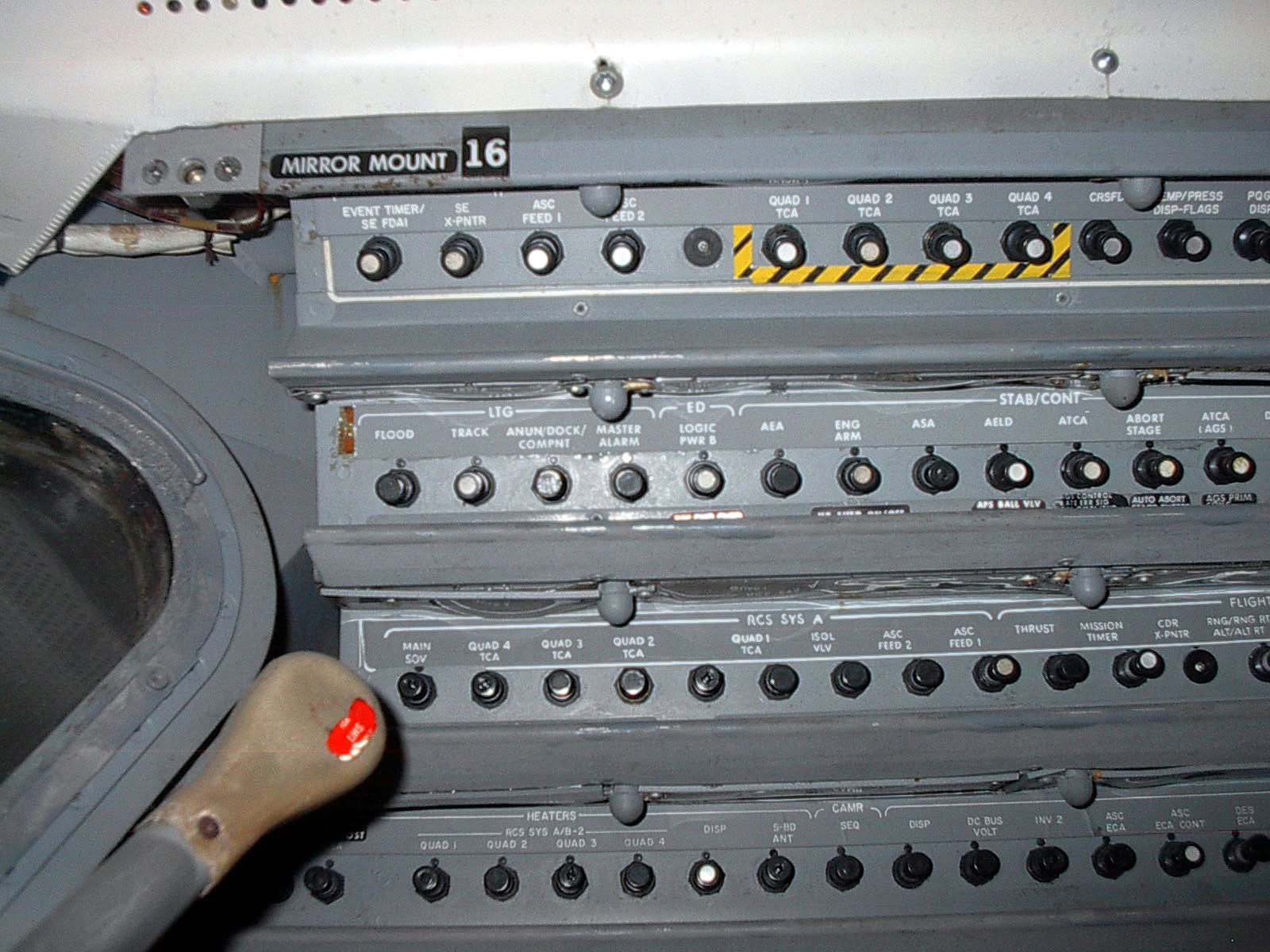
What otherwise might have been worthless bits of trash commanded the highest bids due to where the two items were 57 years ago—lifting off aboard NASA’s Apollo 11 spacecraft on humanity’s first mission to land astronauts on the Moon. More than flown odds and ends, one was the problem that almost stranded Neil Armstrong and Buzz Aldrin on the lunar surface, and the other was the simple solution to saving the mission.

“Houston, Tranquility. Do you have a way of showing the configuration of the engine arm circuit breaker?” radioed Aldrin to Mission Control after realizing he or Armstrong had inadvertently broken off the top of the circuit breaker switch that would enable their ascent engine to ignite, beginning their trip back to Earth. “The reason I’m asking is because the end of it appears to be broken off. I think we can push it back in again. I’m not sure we could pull it out if we pushed it in, though.”

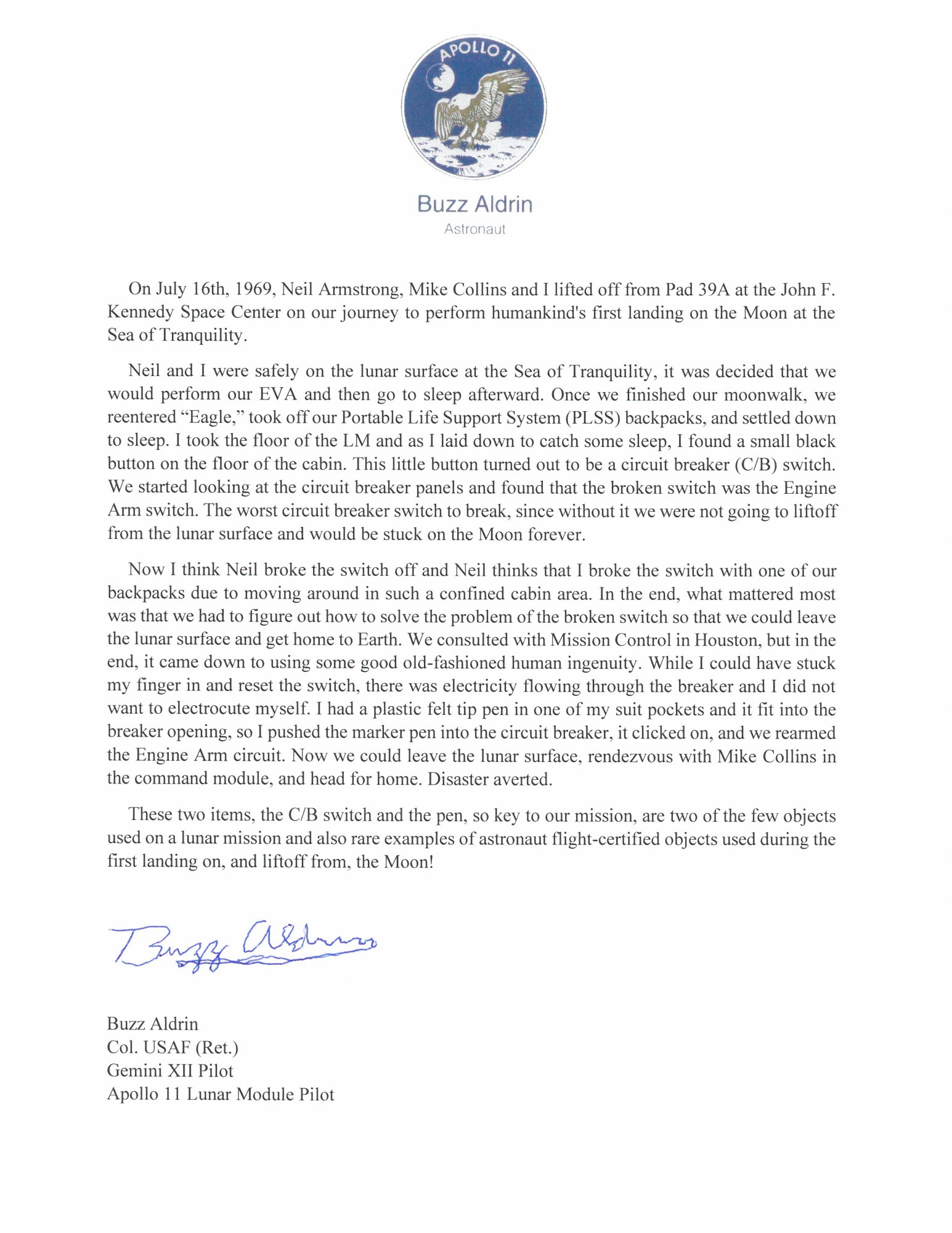
As engineers on the ground worked to devise a workaround, Aldrin came up with a straightforward idea, as he described decades later in the letter accompanying the artifacts’ sale.

Apollo 11 astronaut Buzz Aldrin’s letter describing the broken circuit breaker switch and felt-tip pin from his Moon mission.

Apollo 11 astronaut Buzz Aldrin’s letter describing the broken circuit breaker switch and felt-tip pin from his Moon mission. Credit: Sotheby’s

“While I could have stuck my finger in and reset the switch, there was electricity flowing through the breaker and I did not want to electrocute myself. I had a plastic felt tip pen in one of my suit pockets and it fit into the breaker opening, so I pushed the marker pen into the circuit breaker, it clicked on, and we rearmed the Engine Arm circuit,” he wrote.

“Now we could leave the lunar surface,” Aldrin said, “rendezvous with Mike Collins in the command module, and head for home. Disaster averted.”

Storied switch

The tale of the pen and circuit breaker is well known, having been recounted by Aldrin in his books and talks, as well as for years having been included on the pamphlet packaged with every Fisher Space Pen sold until Aldrin pointed out that as an engineer, he would never insert a metal-tipped writing instrument into a live electrical socket. The pen he used, which was sold on Wednesday, was a Duro-brand Rocket felt-tip marker.

Aldrin also loaned the pen and broken-off circuit breaker switch to the Smithsonian for its “Destination Moon” traveling exhibit featuring the Apollo 11 command module “Columbia.” The tour visited five US cities over the course of two years, spanning the 50th anniversary of the first Moon landing in 2019.

The location of the engine arm circuit breaker switch in the Apollo lunar module that was broken off on Apollo 11.

The location of the engine arm circuit breaker switch in the Apollo lunar module that was broken off on Apollo 11. Credit: NASA

A law enacted in 2012 reaffirmed that Aldrin and his fellow Apollo-era astronauts legally had title to the spacecraft hardware and other crew equipment they kept as mementos from their missions. The pieces are theirs to own, sell, trade, or donate as they desire.

This was at least the second time that the pen and switch had been offered for sale. In 2022, Sotheby’s listed the same set as part of its “Buzz Aldrin: American Icon” sale. Despite eliciting bids up to $650,000, the lot failed to reach its reserve and was passed.

This time, the bids reached $670,000, and it was sold on behalf of the Buzz Aldrin Family Trust. The $857,600 total includes the buyer’s premium assessed by Sotheby’s. The winning bidder was not identified other than as a participant by phone.

Not a record-setter

While the sale price was impressive, the pen and switch did not break into the top 10 list of the highest prices at a public sale for space artifacts and memorabilia. That ranking begins at $1.625 million, the amount paid in 2015 for a Bulova watch worn outside on the surface of the Moon during the 1971 Apollo 15 mission and tops out at the $2,882,500 spent for the former Soviet Union’s Vostok 3KA-2 space capsule as auctioned by Sotheby’s in 2011.

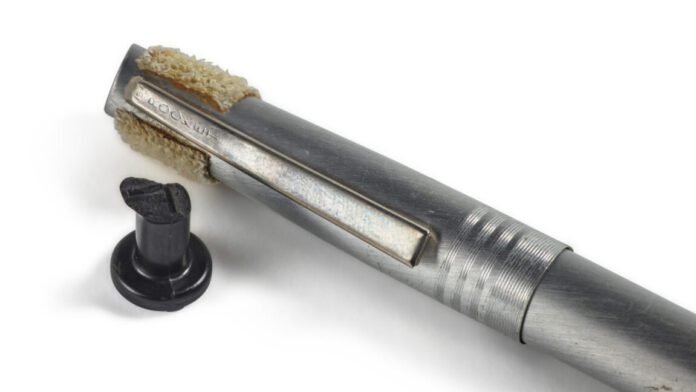
A felt-tip black ink pen with its cap removed and a small broken-off cap from a circuit breaker switch

The broken circuit breaker switch that nearly ended Apollo 11, and the pen that Buzz Aldrin used to save himself and Neil Armstrong.

The broken circuit breaker switch that nearly ended Apollo 11, and the pen that Buzz Aldrin used to save himself and Neil Armstrong. Credit: Sotheby’s

As a point of comparison, the second-highest price for a space-flown artifact was the $2,772,500 commanded by Aldrin’s Apollo 11 in-flight jacket, which Sotheby’s sold in 2022.

Wednesday’s “Space Exploration” sale was part of Sotheby’s annual Geek Week of science and technology-themed auctions. The sale offered 134 lots, including more than 40 items from Aldrin’s collection. In total, it brought in $2,862,336.

A modern Moonshine gold Omega Speedmaster chronograph, one of 24 watches consigned by the Aldrin Family Trust, sold for $70,400. The same 2026 model is still for sale from Omega for $53,500 retail.

Another sale highlight, and the only item other than the pen and switch set to sell for six figures, was the pressure hatch from the Skylab III command module, flown to and from the United States’ first space station in 1974. It sold for $192,000.

Knesset Passes Law Splitting Attorney General’s Role, Expanding Government Powers  

0
knesset-passes-law-splitting-attorney-general’s-role,-expanding-government-powers  
Knesset Passes Law Splitting Attorney General’s Role, Expanding Government Powers  


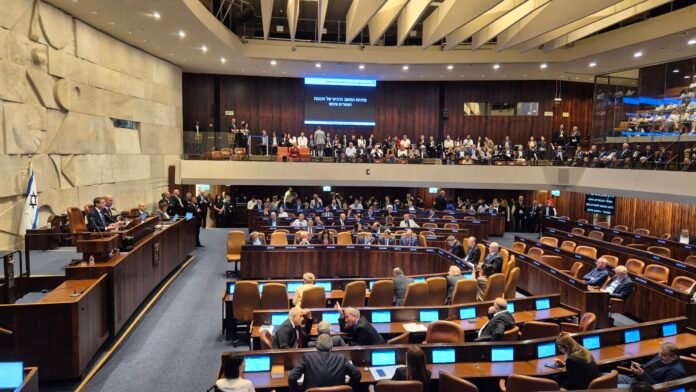
Israel’s government will gain broad new powers over its chief legal adviser under a law approved by the Knesset on Wednesday, including the ability to replace the attorney general and reject the office’s interpretation of the law.  

Lawmakers passed the legislation in its second and third readings by a 65-51 vote. Prime Minister Benjamin Netanyahu did not participate in the vote, N12 reported.  

This legislation will break the attorney general’s responsibilities into two jobs. A government legal adviser will provide legal guidance and handle civil cases, while a newly established prosecutor general will oversee criminal prosecutions. The justice minister will decide disputes over which office has authority in a particular matter.  

With the passage of this law, the government will gain greater control over who serves as attorney general and how long the officeholder remains in office. The government will make the appointment following recommendations from the prime minister and justice minister, and the attorney general’s tenure will end with the term of the government that selected them.  

The government could remove the attorney general earlier if it determines that disagreements are preventing effective cooperation. Dismissal would also be permitted for inappropriate conduct, failure to carry out a duty or the opening of a criminal investigation against the officeholder.  

Although the attorney general’s written opinions will formally be treated as reflecting the law, ministers will be allowed to reject that interpretation in individual cases.  

The government can also choose its own legal position in court and hire an outside lawyer if the attorney general cannot defend that position or ministers believe the government is not being properly represented. If outside counsel takes the case, the attorney general generally cannot appear before the court without government approval, except in criminal proceedings.  

Opponents immediately turned to the High Court of Justice. The Movement for Quality Government in Israel, the Association for Civil Rights in Israel, the Israel Democracy Guard movement, the Israel Bar Association and MK Gilad Kariv with the Zulat Institute filed petitions challenging the law.  

Yashar Chairman Gadi Eisenkot described the legislation as “a blatant attempt to neutralize the gatekeepers of the State of Israel and crush the rule of law” and pledged to reverse legislation harming democratic institutions in the next government.  


The Arctic: Indo-Pacific deterrence challenge

0
the-arctic:-indo-pacific-deterrence-challenge
The Arctic: Indo-Pacific deterrence challenge

In Part I of this series the author explored how the Arctic has re-emerged as a key missile-warning and defense corridor, defined by its geostrategic characteristics and the changing military postures of the United States and Russia. He further observed mounting strategic pressures, including Russian modernization and the growing Sino-Russian partnership, that challenge existing early warning and response architectures. This second installment, also originally published by Pacific Forum and republished with permission, builds on that foundation by exploring the growing interconnection between developments in the Arctic and the security environment of the Indo-Pacific.


Russia’s increasingly frequent missile activities in the Arctic erode US national security – not only in terms of expanding capabilities, but also in terms of the performance of existing early warning and response architectures. New systems, such as hypersonic delivery platforms, reduce detection time and make incoming threats harder to predict, challenging legacy radar and interception systems.

Concurrently, Russia’s broader modernization efforts, ranging from undersea delivery systems to counterspace capabilities to dual-use platforms, increase the range and ambiguity of potential avenues of attack.

These developments threaten the reliability of present missile detection and interception systems, especially in the Arctic, where geographic and climatic conditions already degrade monitoring and response. This creates a more constrained and uncertain decision space with implications for US homeland defense and extended deterrence in the Indo-Pacific.

Commercial jets flying over the Arctic on polar routes can cross over missile launches, hampering Alaska’s ability to conduct missile warning and interception operations. Alaska is a vital node in the United States’ homeland missile warning architecture and allows for reinforcement of Indo-Pacific operations. Degraded Arctic detection and interception capacity may slow and diminish confidence in strategic warning across both theaters.

In a major contingency, an adversary could launch coordinated saturation attacks to deplete homeland-level and regional-level missile-defense resources simultaneously, compelling the United States to deploy limited interception assets across multiple theaters of operations.

Meanwhile, the accelerating Sino-Russian partnership is increasingly tying the Arctic to Indo-Pacific security and deepening Russia’s military footprint. International sanctions on Russia and China’s growing economic investment and dual-use logistical activities in the High North have moved bilateral cooperation from episodic coordination to a more sustained strategic partnership. With Chinese capital and infrastructure and Russia’s advantages in Arctic access and sea control, especially along the Northern Sea Route, a more sustained pattern of joint activity has emerged.

The increased Sino-Russian coordination enhances ISR (intelligence, surveillance and reconnaissance), regional access and operational flexibility in the Arctic. Combined, these developments improve Russia’s ability to apply military pressure on North America from polar directions and enable China to conduct operations in the High North. The resulting improved cross-theater coordination complicates US defense planning and improves bilateral deterrence.

This cooperation is modifying the Arctic security structure in three ways.

First, it expands the operational footprint of a non-Arctic state – China – into the Arctic theater, adding opportunities for geopolitical influence beyond China’s immediate focus on the Pacific theater.

Second, the joint air and naval patrols, ISR cooperation and dual-use scientific activities are augmenting the two countries’ interoperability and domain awareness, serving as force multipliers of their joint capacity to monitor and contest cross-domain adversarial activities.

Third, these developments are strongly correlated to deterrence enhancement as a result. The Sino-Russo coordination improves the sensing, regional access capacity in the Arctic theater, which further strengthens their capacity in homeland-directed operations across polar routes and complementary pressures on US and allied forces in the Indo-Pacific.

As a result, Arctic security has become increasingly connected to Indo-Pacific competition, requiring U.S. planners to consider both theaters as strategically interconnected rather than separate operational environments.

Indo-Pacific linkage and interconnected risks

Though geographically distant from the Arctic, China, a self-proclaimed “near-Arctic state” (近北极国家), has increasingly linked the region to broader strategic dynamics in the Indo-Pacific. China’s investments in dual-use scientific research, infrastructure, Arctic scientific expeditions, icebreaker deployments and dual-use logistical activities have expanded its footprint in the High North, in line with broader geoeconomic and strategic goals.

The growing engagement of non-Arctic actors suggests that the Arctic is moving from a perception as a region primarily associated with North Atlantic security to one increasingly associated with global strategic competition.

China’s growing Arctic footprint is a concern not only for the High North but also because the United States’ missile warning architecture, strategic force posture and allied defense planning increasingly converge across the Arctic and the Indo-Pacific. Developments in one theater are increasingly affecting deterrence calculations in the other.

Thus, the Arctic’s security and Indo-Pacific deterrence should no longer be viewed as separate strategic theaters.

Additionally, the expiration of the New START Treaty and China’s rapid nuclear buildup are increasing strategic uncertainty in the Arctic. With fewer restrictions on the size and makeup of the nuclear arsenals of the United States and Russia and with China’s nuclear forces continuing to grow, the importance of the region for missile defense, strategic warning and electronic warfare is likely to increase.

These developments could lead to further militarization of the Arctic and increase the need for confidence-building measures and devoted crisis management frameworks.

A multilateral Arctic governance framework

The spread of multinational military infrastructure, dual-use technologies, and missile-related activities in the Arctic makes a multilateral governance framework designed to promote communication, transparency and crisis management ever more important.

The US and allies should seek to expand coordinated early warning interoperability based on intelligence sharing and rapid crisis response. These capabilities are all aimed at improving Arctic domain awareness and the effectiveness of crisis communication.

In particular, mechanisms of crisis communication at the leadership level (for example, from military to military) are critical to avoid uncontrolled escalation from militarization. Additionally, stakeholders should continue efforts to improve detection capacity for target identification, prioritize categories, and ensure accurate interception of incoming threats.

As missile warning timelines compress and Arctic military activity intensifies, the region is becoming increasingly relevant to crisis stability and nuclear deterrence management in the Indo-Pacific. The United States and its allies should therefore treat Arctic missile-warning infrastructure and Indo-Pacific deterrence planning as linked rather than geographically isolated theaters.

First, the United States and Canada should continue to modernize the North American Aerospace Defense Command (NORAD)’s early warning architecture and expand opportunities for trusted partners to contribute to Arctic domain awareness through intelligence sharing, data integration, and technical cooperation.

Second, Indo-Pacific allies, including Japan and South Korea, can improve early warning resilience without permanent forward deployment in the Arctic. Both are well-positioned to contribute advanced ISR capabilities, sensor integration, and data-processing technologies, particularly in space-based monitoring and missile tracking.

Third, a multilateral framework, which centers real-time intelligence sharing and coordination, is critical for de-escalation and collective security during a crisis. Such an initiative remains politically feasible and executable, given the existing partnership structure among the United States, Canada, and allies in the Indo-Pacific.

Fourth, stakeholders should develop direct and secure crisis communication channels to reduce the risks associated with dual-capable systems and compressed decision timelines. Together, these measures would strengthen Arctic domain awareness and reinforce deterrence stability in both the Arctic and Indo-Pacific theaters.

Emerson Tsui (Emersonatsui@outlook.com) is a Washington, D.C.–based China and Indo-Pacific security analyst whose research focuses on Taiwan security, cross-Strait deterrence and PRC strategic affairs.

Hundreds rally at Bethesda HQ to protest Xbox layoffs, and Ars was there

0
hundreds-rally-at-bethesda-hq-to-protest-xbox-layoffs,-and-ars-was-there
Hundreds rally at Bethesda HQ to protest Xbox layoffs, and Ars was there

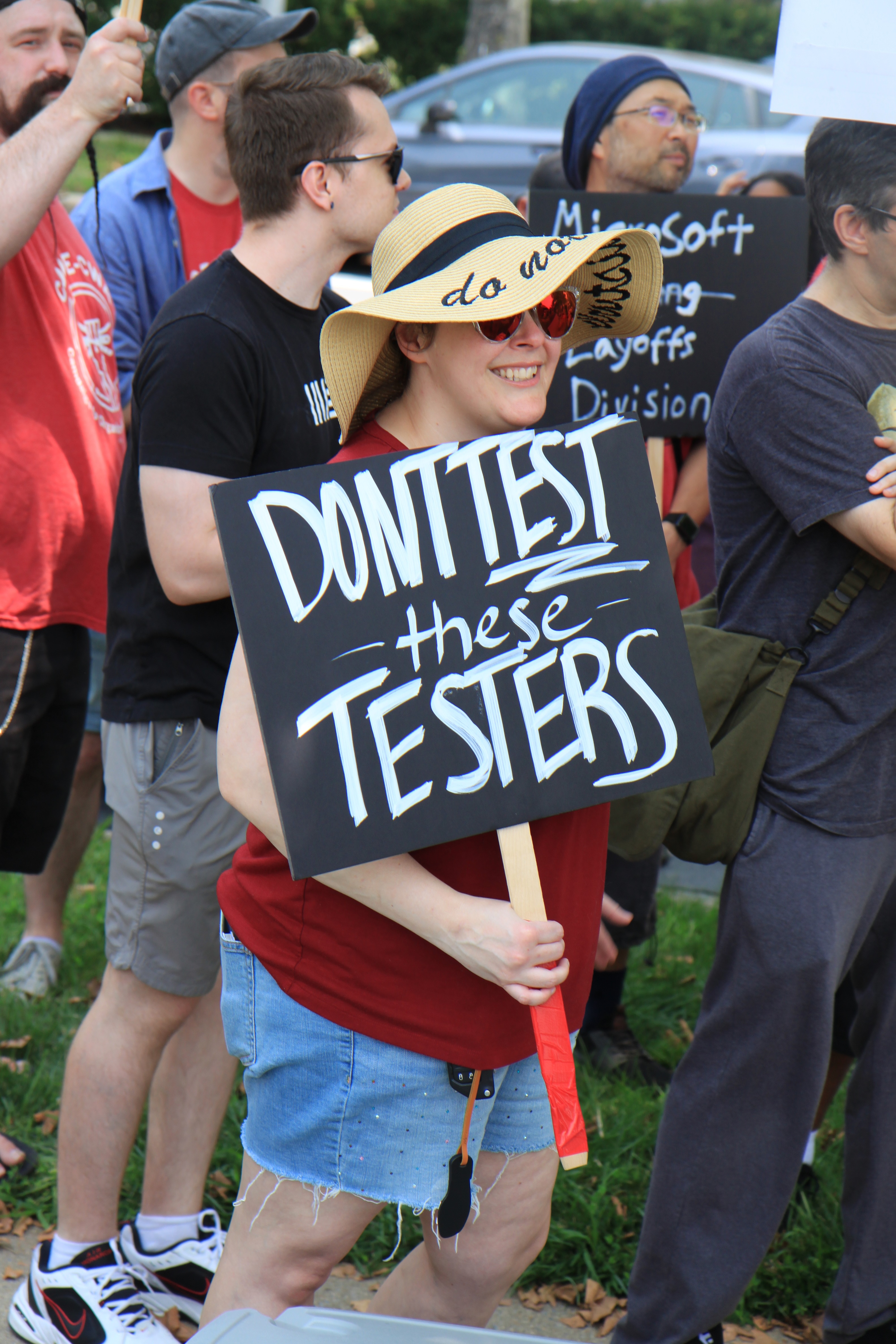
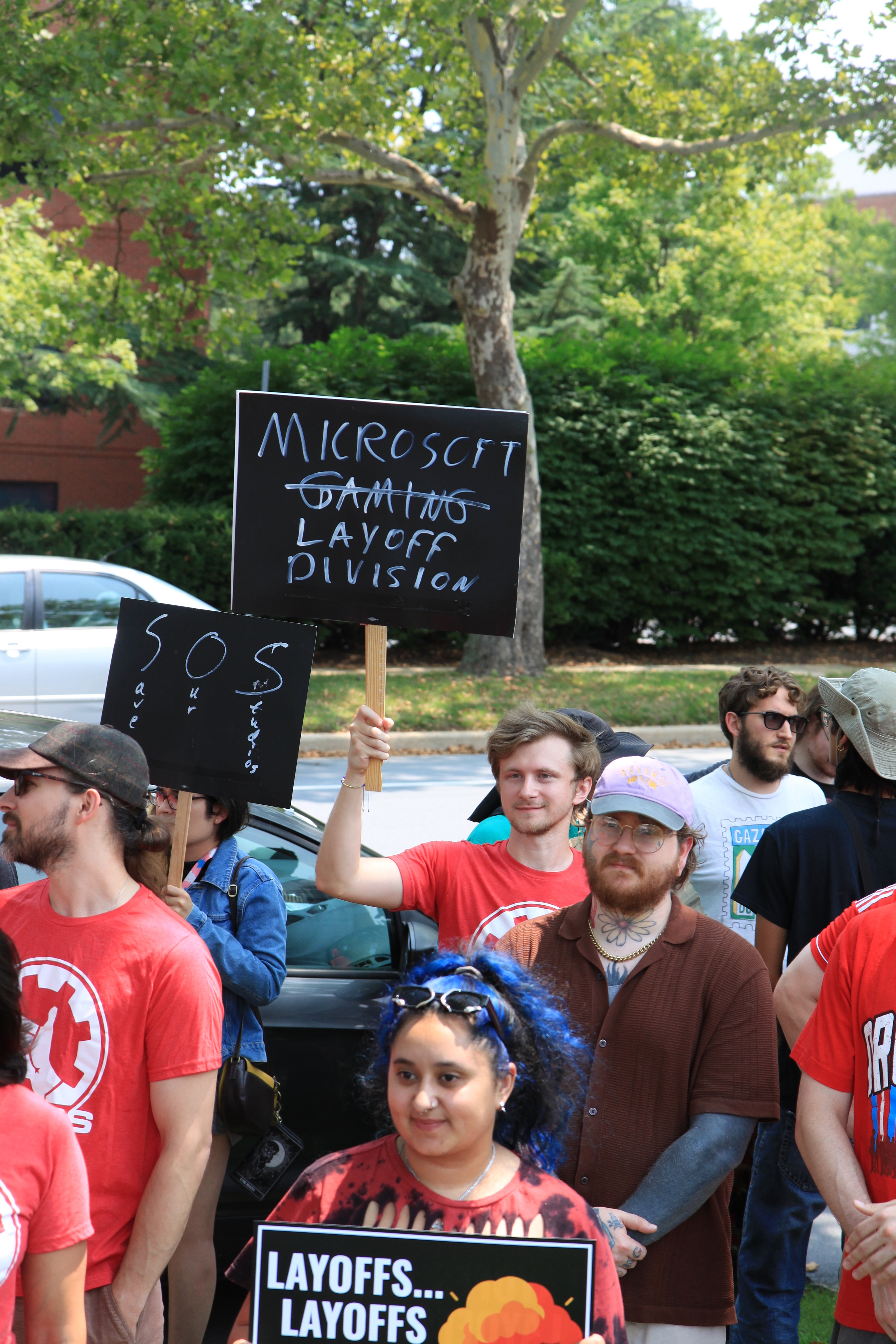
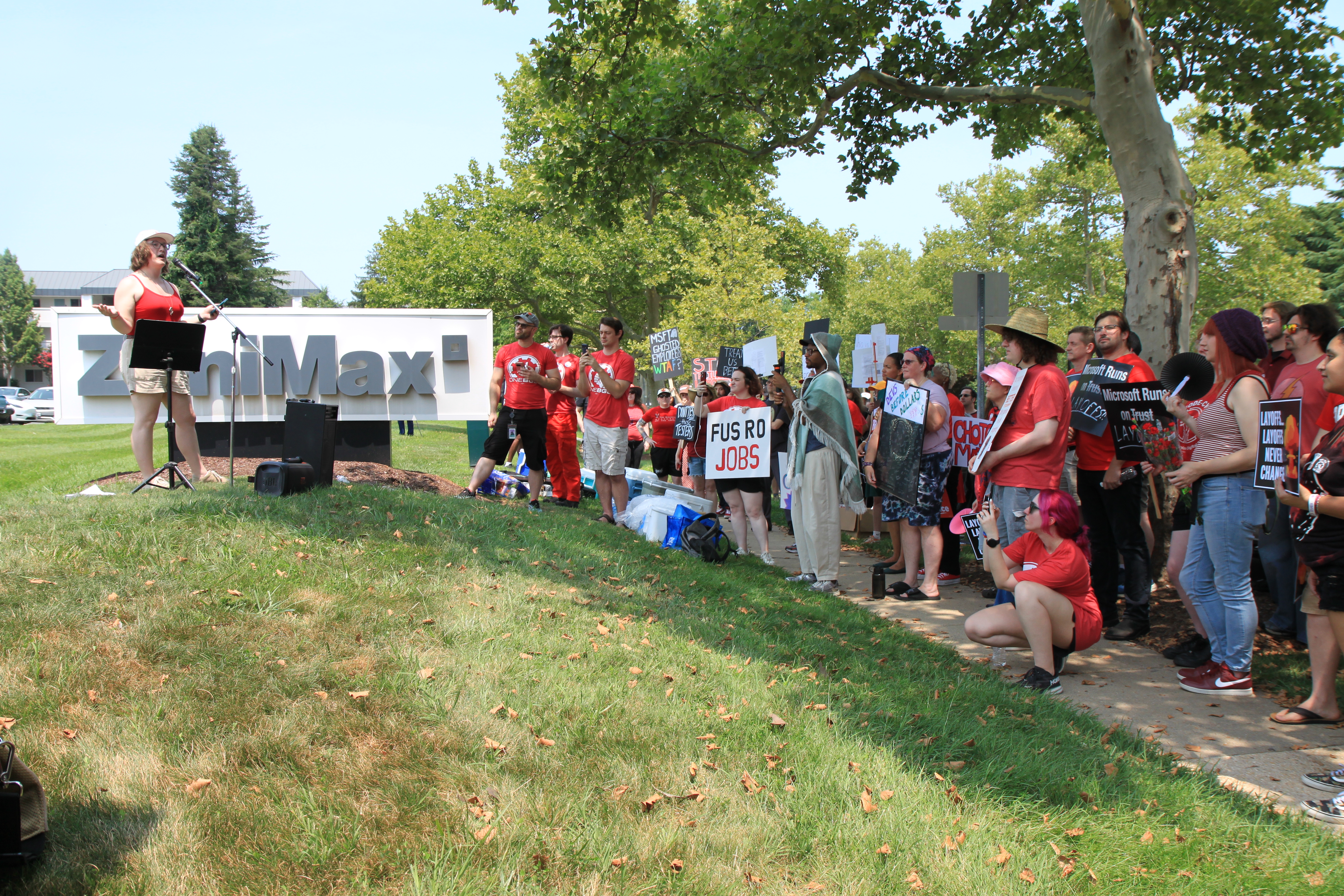
ROCKVILLE, Maryland—Hundreds of Bethesda Game Studios and Zenimax Online Studios employees and their supporters braved nearly 100°F temperatures to protest sweeping layoffs across Xbox during a lunchtime rally in front of parent company Zenimax’s headquarters today. The rally was one of five organized today by Zenimax Workers United and its parent union, the Communication Workers of America, at offices across Texas, California, and Montreal.

Attendees held up signs with messages like “Layoffs… layoffs never change” and “Our players deserve better” as union organizers and employees rallied the crowd with speeches and songs. The overwhelming message was one of solidarity and a willingness to push back against job cuts they say have decimated their development and quality assurance teams.

“It’s about us building our movement and making sure that we get seen and we’re visible,” Bethesda technical producer and union volunteer organizer Nathan Hahn told Ars. “Because we want to make sure that we’re not okay with these layoffs and that Xbox knows.”

Coming to the table

Chief among the union’s demands is that Microsoft return to the bargaining table and resume contract negotiations with the remaining uncontracted members of Bethesda Game Studios (after reaching a separate agreement with QA testers last year that included guaranteed severance for laid-off employees). “We had … a reduction in force proposal on the table for months, and they ignored it,” Hahn said. “They never got back to us. So instead, they’ve chosen to do layoffs … without bargaining with us, and that’s something we’re fighting back against.”

“They can either come meet at the table [or] they can meet us in the street,” CWA District 213 vice president Mike Davis told the crowd. “They can meet us anywhere they want, but they’re gonna fight with us.”

What happens if I test these testers?

I don’t remember that line from Skyrim

In response to a request for comment, a Microsoft spokesperson said, “We respect our employees’ right to make their voices heard, and we recognize that this is a difficult time for many. We reached out to the union on July 6 to begin effects bargaining and are committed to that process. We remain focused on supporting impacted employees through this transition while positioning the organization for long-term strength.”

Jay Woodward, who was let go last week after nearly 20 years of AI programming at Bethesda dating back to Fallout 3, said he hoped union action could help break what seems like a “perpetual cycle” of layoffs at Xbox. “Obviously, in the business world, we understand that this is the sort of thing that happens,” he said. “[But] it’s absolutely not inevitable. That’s a complete nonsense concept, especially when the studio, when the overall company is doing fantastically well, there’s no need to say that this has to happen.”

In announcing the layoffs last week, Microsoft CEO Asha Sharma said the move was necessary to restructure a business that is “not healthy” and is operating at margins well below the competition. “These changes are about a bigger future for Xbox, not a smaller one, Sharma said. “This year, we’ll invest as much in Xbox as we ever have, but we’ll invest with greater focus, greater discipline, and greater clarity, all in service of making Xbox where the world plays and creates.”

Rockville Mayor Monique Ashton addresses the crowd and offers her support for the laid-off workers.

Rockville Mayor Monique Ashton addresses the crowd and offers her support for the laid-off workers. Credit: Kyle Orland

Rockville Mayor Monique Ashton appeared at the rally to offer her support for a group of employees she said are a key part of the local community and economy. “We have seen job losses related to issues in the federal government… [but] to see the gaming industry that has been blossoming, so this, it’s something that I’m concerned about,” Ashton said. “I know that there are jobs going overseas, and jobs going to AI. It’s going to touch every industry, and we, as consumers, have to say, we value people.”

Ashton told Ars she would speak with the County Council and the Maryland Department of Labor to advocate for fairness in how employees are treated.

“Trying to sing with half a choir”

Following a round of layoffs last year, Bethesda employees said they were still shocked at the depth and breadth of the job losses in this latest round, which affected hundreds of Maryland employees. Juniper Dowell, whose five-year tenure as a quality assurance tester ended with last week’s layoffs, told Ars that the reduced workforce continuing work on franchises like Fallout and The Elder Scrolls would be akin to “trying to sing with half a choir or a band with a drummer missing.”

“[Last year] we lost about 100 folks, and that was impossible to deal with,” Dowell said. “And this time we lost even more. … This is skilled labor. You can’t pull someone off the street and ask them to start developing games or to start testing games. These are skills that are learned and honed over time. And the people who do this matter. And to treat it like they don’t is absurd, frankly.”

Bethesda technical producer and union volunteer organizer Nathan Hahn leads the crowd in a bespoke song with the refrain: “It’s time to change the game.”

Organizer Juniper Dowell addresses the crowd after losing her QA position of five years to layoffs.

Hahn added that continuing to develop the big Bethesda franchises that Xbox says is a priority will be difficult after “they laid off folks with decades of experience working on the types of games that we make. We had received some signals from Xbox that Fallout and Elder Scrolls were gonna be pivotal titles for them. And then to hear that our teams, who work on those games got cut, was a real deep cut for us. … Who do you ask that question to if they’re no longer here?”

Between the last round of layoffs and the promise of 1,600 more planned across Xbox for the coming fiscal year, the mood among the remaining employees at Bethesda is “bleak,” Dowell said. After surviving last year’s layoffs, Dowell said she remembers what it was like “to come to work the day after layoffs and try to keep going and be told, ‘Here are tasks that people that you know had relationships with were doing, and now you have to do them today.’”

System Designer Mandy Parker, whose position was not affected by the latest round of layoffs, told Ars that “it’s hard to be creative, it’s hard to be able to tell stories when we’re worried about people next to us and ourselves.” Parker also pushed back against the Microsoft narrative that these latest layoffs were focused heavily on reducing redundant layers of middle management, saying she wasn’t aware of any middle managers let go in her office. “These folks [being laid off in quality assurance], they don’t make a lot of money,” Parker said. “They’re taking home pizzas from our cafeteria, for their kids to eat, to help them. We don’t get the big Microsoft money.”

“If you weren’t caught this time, you’ll be caught next time,” Parker told the crowd during the rally. “I study systems, and [when] I see a broken system, I say it when it’s broken. This is a fucking broken system!”

Union organizers said fans should go to the Xbox Player Voice forums to express their support for the developers of the games they love. “They’re the people that pay their salaries in there,” CWA’s Davis said of the players. “You know, those managers can’t have jobs without those people.”

Intel Pick Jay Clayton Won’t Tell Congress Whether Trump Ordered Subpoenas of NYT Journalists

0
intel-pick-jay-clayton-won’t-tell-congress-whether-trump-ordered-subpoenas-of-nyt-journalists
Intel Pick Jay Clayton Won’t Tell Congress Whether Trump Ordered Subpoenas of NYT Journalists


At his confirmation hearing to serve as the nation’s top intelligence officer, Jay Clayton dodged questions about whether the White House ordered him to send subpoenas to New York Times journalists as part of an FBI investigation into alleged leaks of classified information.

Under questioning from Democratic senators, Clayton, who currently serves as the top federal prosecutor in the Southern District of New York, defended the process that resulted in FBI agents showing up to the reporters’ homes to hand-deliver subpoenas seeking the source of disclosures about security flaws in the Qatari-donated new Air Force One jet.

“I’m not going to get into the details. But what I can tell you is that we followed the procedures.”

Clayton declined to answer questions, however, on whether the White House or top officials at the Justice Department ordered him to send the subpoenas.

“I’m not going to get into the details,” Clayton said under questioning from Sen. Michael Bennet, D-Colo. “But what I can tell you is that we followed the procedures, and those procedures, for the reasons that I believe firmly and you believe — protecting the freedom of the press, being the least intrusive possible — require consultation.”

Clayton’s role in sending the subpoenas, which went out under his signature Friday shortly after FBI Director Kash Patel met with Trump, has emerged as a flashpoint in his nomination to replace Tulsi Gabbard as director of national intelligence.

A press freedom advocate said he found Clayton’s testimony about the subpoenas to be “totally disingenuous” because Trump’s own subpoena guidelines say the government must exhaust other means of getting evidence before going to journalists.

“Yet these subpoenas were issued less than two days after the story came out, and just hours after Patel’s reported White House meeting with Trump,” Trevor Timm, executive director of the Freedom of the Press Foundation, said in an email. “All evidence points to Trump ordering this action for retribution because he’s embarrassed about the plane debacle, not because of anything to do with ‘national security.’”

Housing czar and Trump loyalist Bill Pulte is currently serving as the intelligence chief on a temporary basis, and some centrist Democrats have argued that Clayton should be swiftly confirmed to shut off Pulte’s access to classified information.

For Democrats on the intelligence committee, however, Clayton’s role in the subpoena to New York Times journalists suggested that he may be just as eager as Gabbard and Pulte to use the powers of public office to appease the president.

Those concerns about the subpoenas dovetailed with worries about Clayton’s views on election fraud. Democratic senators repeatedly questioned Clayton on whether former President Joe Biden won the 2020 election, which has emerged as an important litmus test in light of Gabbard’s role in an ongoing administration effort to relitigate the president’s loss.

Clayton repeatedly confirmed the fact that Biden’s election was certified by Congress but declined to say whether he thought Biden actually won the race.

“Isn’t it humiliating to be unable to answer this question? To have to indulge the president’s delusions?” Sen. Jon Ossoff, D-Ga., said at one point. “Why can you not give it?”

On the subpoena issue, Clayton’s answers offered little new light on why the subpoenas were swiftly delivered to journalists. He repeatedly said that the subpoenas were the “least intrusive” means possible to discover the source of the New York Times’s reporting on the new Air Force One.

The reporting revealed that Trump was forced to use an older version of the presidential airplane on his return from a recent trip to Turkey because the new one lacked missile defense systems despite a pricey retrofit.

Administration officials reportedly asked the newspaper not to publish its report on the jet’s security flaws, but it went ahead. The Times and other outlets have reported that the White House ordered Patel, the FBI director, to oversee a probe into the leaks about the jets. Patel reportedly spent eight hours Friday at the White House overseeing the investigation.

Under Justice Department policies, investigators seeking to subpoena journalists must receive approval from the attorney general, in this case Acting Attorney General Todd Blanche, who had his own, separate confirmation hearing on Wednesday. The government must first have made “all reasonable attempts” to obtain the information from alternative sources.

Press freedom groups have questioned whether the Justice Department really did try to discover the source of the Air Force One leaks. They also raised alarm bells about the FBI sending agents to deliver the subpoenas by hand, rather than going through the newspaper’s lawyers.

“The subpoenas were issued so closely after a very long meeting at the White House. There seemed to be an unnecessary urgency.”

“The subpoenas were issued so closely after a very long meeting at the White House. There seemed to be an unnecessary urgency behind it,” said Sen. Kirsten Gillibrand, D-N.Y. “Delivering it to a private home seems quite aggressive.”

Clayton, in his response, seemed to suggest that the White House was worried that following a more typical, slow-moving process would have resulted in the destruction of evidence.

“How quickly you would do something following the process depends on those facts and circumstances of the investigation including the potential spoliation of information, and the timeliness of the threat. I think I’m going to leave it at that,” Clayton said. “But this was a judgment, and it should always be a judgment, that is made collectively, that’s the way I look at these things.”

The White House declined to answer a question from The Intercept about whether Trump ordered the subpoenas in a statement sent Tuesday.

“Jay Clayton is a highly qualified legal expert who also possesses a significant degree of national security experience,” said Davis Ingle, a White House spokesperson. “He will undoubtedly do an excellent job in leading the Office of the Director of National Intelligence under President Trump, and the White House looks forward to his swift confirmation.”

Update: July 15, 2026, 2:00 p.m. ET
The article was updated with a statement from the Freedom of the Press Foundation.

FBI Has Looked at Using Questionable AI Tech to Review Signatures on Seized Mail-In Ballots

0
fbi-has-looked-at-using-questionable-ai-tech-to-review-signatures-on-seized-mail-in-ballots
FBI Has Looked at Using Questionable AI Tech to Review Signatures on Seized Mail-In Ballots

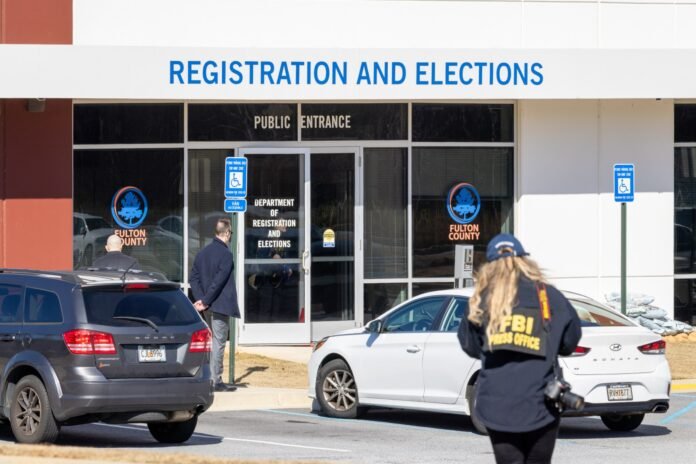
The FBI has explored using artificial intelligence to assess the validity of signatures on tens of thousands of mail-in ballot envelopes seized from Fulton County, Georgia, the latest push in the Trump administration’s unprecedented reinvestigation of the 2020 vote.

The effort, according to internal communications reviewed by ProPublica and an agency tech specialist familiar with the work, focuses on comparing signatures on ballot envelopes with signatures on other election documents, such as registration forms. President Donald Trump has long claimed, without evidence, that the 2020 election was stolen from him.

In particular, he has repeatedly claimed that there was voter fraud in Georgia, where he lost to Joe Biden by just 11,779 votes. In January, the FBI raided Fulton County, a Democratic stronghold, collecting about 700 boxes of election materials, including about 150,000 mail-in ballots, of which roughly 116,000 went for Biden. Trump is set to deliver a speech Thursday about national election security and voting machine vulnerabilities, but it is unclear whether he will address the Fulton County investigation.

The signature-matching initiative was under discussion as recently as late June, but its current status is uncertain. A White House spokesperson declined to answer questions from ProPublica, referring them to the FBI. The FBI did not respond to a request for comment.

The effort comes at the same time as the FBI has mandated that 260 analysts be redirected from field offices nationwide to focus on the Fulton County probe, according to an agency memo reviewed by ProPublica. The New York Times and MS Now previously reported the memo. MS Now has reported that some FBI analysts have been fired rather than work on the effort. Their work also includes comparing a spreadsheet of 175,000 voters with a commercial database to see, among other things, if they are still alive.

Whether done by people or technology, the accuracy of signature matching remains controversial. 

Experts have raised serious concerns in legal cases and after analyzing recent election results about how accurately signature matching can identify voter fraud through practices like examining the size and slant of letters made in different circumstances. 

The FBI technology specialist told ProPublica that the bureau has technology to compare images and that if it starts with a large enough dataset, then a signature-matching analysis could be “somewhat accurate.” 

Ultimately, the tech specialist said, its results would turn on the threshold set for evidence of fraud: “It’s up to the builder of the system to define the guidelines.”

Some FBI staffers developing that strategy are trying to mitigate the political pressure to prove fraud in Fulton County by highlighting the limitations of broad signature analysis, arguing that though signature comparisons have been used in individual voter fraud investigations, they haven’t been done on this scale, according to the source. But agency leaders have continued to push forward. 

There are grave concerns within the FBI that the results of the examination will reflect political influence, building on previous efforts by the administration to break longstanding guardrails meant to keep the federal government from interfering with elections. “Everyone is of the opinion that, whether they find anything or not, they are going to continue” to pursue proof of fraud, the source said. 

Signature matching attracted controversy during and after the 2020 election and COVID-19 pandemic when more Democrats than Republicans used mail-in ballots. Trump promoted false claims that Georgia officials’ failure to match signatures on mail-in ballots had led to his loss by allowing fraud. “Must have signature check on envelopes now,” he wrote in late November 2020 on the social media platform Twitter, now X. “Far more votes than needed for flip” of the election to him. 

Conservative lawmakers then pushed strict signature-matching laws across America, including Georgia’s Election Integrity Act of 2021, which they justified by pointing to “many electors concerned about allegations of rampant voter fraud,” including “subjective signature-matching requirements.” The bill replaced signature matching with stricter forms of verification, such as requiring mail-in voters to provide their driver’s license number or copies of licenses

While signature-matching procedures vary by jurisdiction, officials typically have only seconds to make a determination about whether a signature on a mail-in ballot envelope is the same as in other government records, sometimes relying on nothing more than comparing the shape or proportions of letters. Research shows that signatures can change over time, as people age or experience health events such as a stroke, and signatures made in differing circumstances can vary, such as one performed carefully in a government office versus one dispatched quickly on a mail-in ballot envelope at home. 

Investigations by journalism organizations and research have shown that signature matching leads to disproportionately high levels of rejected ballots for voters of color, as well as those who are new, young, old, politically unaffiliated or disabled, for varied reasons. Signature-matching efforts sometimes disqualify more legitimate than illegitimate ballots. A political scientist testifying as an expert witness in 2020 for a lawsuit challenging an Ohio signature-matching law said his analysis suggested that 32 legitimate ballots were blocked for every illegitimate one. 

“Signatures are one of the most difficult forensic sciences, and I don’t think AI is going to be able to do this,” said Linton Mohammed, a former president of the American Society of Questioned Document Examiners, a professional association for forensic document examiners. “Signatures vary — unlike DNA or fingerprints.” 

A 2009 report by the National Academy of Sciences examining the state of forensic sciences found, “The scientific basis for handwriting comparisons needs to be strengthened.” 

Defenders of signature matching say that computer analysis has become increasingly accurate and provides a practical and necessary check against fraud. However, even they caution that the technique is only as good as the people using it.

Signature-matching technology is now good enough to “make your head explode,” said David Gerber, the senior vice president at ParaScript, a company that sells such technology to banks and numerous entities conducting elections. But he still suggests that trained human specialists should be prepared to review about 10% of the cases as a check on the machines. He said signature matching in elections needs “the right technology with the right people managing the process. Both of those pieces are equally important. If you have bad people running a bad process, I don’t care how good the technology is.” 

Using AI to examine signatures on ballot envelopes is a relatively new frontier, according to most experts consulted by ProPublica and the FBI tech specialist. The tech specialist said the bureau had discussed how to employ it with experts across the government and weighed whether to use commercial products such as those sold by OpenAI or Anthropic. “This is a new and novel approach” for the bureau, the source said, one reason “they are shopping it around.” 

Gerber, Mohammed and other experts on signature-matching technology said nonspecialized AI software was unlikely to be able to perform accurately enough to do such work. 

Experts said that while an AI system could conceivably offer some advantages over humans, its accuracy would ultimately depend on the quality and quantity of signatures available for comparison. Internal communications reviewed by ProPublica suggest the FBI analysis would compare only the signature on a voter’s registration form with the one on the ballot envelope — a limited sample that experts said would significantly increase the likelihood of discrepancies. The source said, however, the analysis could also incorporate additional records, such as driver’s license signatures. Certified specialists and high-confidence computer systems for industries like banking typically compare numerous signatures. 

“There’s a high degree of noise” in the materials the FBI has, said Max Palmer, a professor at Boston University who has studied mail-in ballot signature matching. “I’m not sure there’s enough information, enough signal, to do better.”  

Conservative activists have long lobbied for a closer examination of 2020 mail-in ballots from Fulton County, claiming in a report that local election officials “willfully” ignored signature verification procedures. Their claims were instrumental in leading to the FBI’s ballot seizure in January, ProPublica has reported

Reports by an independent monitor and the States United Democracy Center, a nonprofit organization working to protect the integrity of elections, concluded the activists’ claims about signature matching and other irregularities were false.

Britain and EU formally sign Gibraltar treaty, easing border crossings

0
britain-and-eu-formally-sign-gibraltar-treaty,-easing-border-crossings
Britain and EU formally sign Gibraltar treaty, easing border crossings


Britain and the European Union formally signed a treaty on the status of Gibraltar on Tuesday, following an agreement struck last year aimed at easing border crossings and ending ​years of political uncertainty over the British overseas territory.

The treaty was signed in ​Brussels by European Trade Commissioner Maros Sefcovic, British Minister of State for ⁠Europe Stephen Doughty, Spanish Foreign Minister Jose Manuel Albares and Gibraltar’s Chief Minister Fabian Picardo.

Gibraltar ​residents can cross over to Spain using residence cards without needing to have their passports ​stamped, while Spanish citizens can cross using a government ID card. The deal is designed to facilitate the movement of people and goods and avoid lengthy delays for the roughly 15,000 workers who cross the ​border each day.

Albares said the deal opened a new chapter for Gibraltar, Spain, Britain ​and the European Union. He said it would benefit the 300,000 residents of the Campo de Gibraltar ‌region ⁠by improving connectivity, encouraging investment and strengthening cross-border cooperation, while replacing centuries of mistrust with a shared future built on coexistence and prosperity.

Britain won Gibraltar — a strategically important enclave at the southern tip of Spain — in the 1713 Treaty of Utrecht, which ended the War ​of Spanish Succession.

Those arriving ​at Gibraltar airport ⁠will show their passports to both Gibraltar and Spanish border officers, and Britain wants a system similar to French police operating at ​London’s St Pancras railway station for the Eurostar service.

Residents welcomed the ​dismantling of border ⁠controls.

“It is good for Spaniards and good for us. It’s fantastic,” Gibraltar resident Elisabeth Tanino told Reuters.

Gibraltarian Lidia Mifsud added that Gibraltar and the nearby Spanish town of La Linea ⁠had ​long enjoyed close ties and that the removal of ​border checks would make daily life easier for workers and residents on both sides.

Via Reuters

Hegseth mocked for plan to inject US soldiers with testosterone

0
hegseth-mocked-for-plan-to-inject-us-soldiers-with-testosterone
Hegseth mocked for plan to inject US soldiers with testosterone

‘Secretary of War’ Pete Hegseth displays his tattoos. Photo: Facebook

US Defense Secretary Pete Hegseth on Wednesday elicited instant ridicule after he unveiled a new plan to offer military personnel testosterone injections.

In a video announcement, Hegseth said he was authorizing a screening program to ensure US soldiers “have the right testosterone levels” to perform at their “absolute best.”

“It’s well established science that, as we age, testosterone levels often drop,” the US defense secretary explained. “Under the supervision of our world-class medical professionals, warfighters aged 30 and older are going to be tested annually as part of their periodic health assessment.”

Personnel who are found lacking in testosterone, Hegseth continued, would get recommendations for hormone injections, though he emphasized that this would be entirely optional.

“This initiative, it’s not about artificial enhancement,” Hegseth emphasized. “It’s about restoring and optimizing your natural capabilities.”

Critics on social media responded to Hegseth’s new testosterone injection plan with mockery.

Journalist Amanda Katz joked that Hegseth’s plan was “literally gender-affirming care” of the kind that Hegseth halted for transgender service members last year.

Rep. Summer Lee (D-Pa.) similarly asked Hegseth if the new program means that “now y’all support gender-affirming care?”

Rep. Pramila Jayapal (D-Wash.) said that the Hegseth initiative “is gender affirming care and it completely debunks all of Republicans’ attacks on trans people.”

Fred Wellman, a Democratic candidate for Congress in Missouri and a veteran of the US Army, called Hegseth’s initiative “the absolute dumbest thing imaginable for the secretary of defense to be focused on.”

“We are literally at war and this idiot is in his office doing two camera make up videos on testosterone,” Wellman added. “What a complete clown show. I’m so sorry for our poor service members who have to deal with this ridiculous man.”

Attorney Bradley Moss likened the Hegseth plan to the plot of Soldier, a 1998 movie starring Kurt Russell that bombed with both critics and audiences.

Moss added, however, that Hegseth’s idea appeared even “stupider” than the movie.

Attorney Will Stancil wondered if Hegseth’s testosterone program might finally push some military personnel over the edge.

“Without a hint of sarcasm I think he might get himself fragged eventually,” Stancil wrote.

-Common Dreams

Judge: Trump can’t deport researchers just for working in content moderation

0
judge:-trump-can’t-deport-researchers-just-for-working-in-content-moderation
Judge: Trump can’t deport researchers just for working in content moderation

This week, the Coalition for Independent Technology Research (CITR) won a key battle in its fight to reverse a visa-restriction policy that the Trump administration had used to attempt to revoke green cards and deport non-US citizens who work on misinformation, disinformation, fact-checking, content moderation, compliance, and trust and safety.

In an opinion published Tuesday, US District Judge James Boasberg granted a preliminary injunction blocking the State Department from enforcing the policy until the CITR’s lawsuit is resolved.

On its face, the policy does not require visa denials or deportations. Instead, it authorizes immigration investigations into individuals suspected of helping foreign adversaries attempt to manipulate public opinion by suppressing US speech.

Over the course of the litigation, the State Department so far has failed to prove that any of the five researchers explicitly targeted under the policy had any connection to a foreign power attempting to censor Americans or manipulate US public debate. Left unchecked, the State Department’s authority seemingly had “no clear stopping point short of the [content moderation] field itself,” Boasberg said.

The attacks on trust and safety workers just doing their jobs are particularly concerning, since Secretary of State Marco Rubio threatened that his department “stands ready and willing to expand” the list of targeted researchers, Boasberg said. That’s why Boasberg paused the policy’s enforcement broadly, rather than limiting the injunction to only CITR members, as the State Department had requested. As the judge explained:

“A lawful permanent resident working on a platform’s trust-and-safety team, a noncitizen researcher urging stronger disinformation labels, a compliance employee helping apply moderation rules, or an advocacy leader pressing advertisers away from sites that spread falsehoods could reasonably understand the policy to place their immigration status at risk—not because they wield foreign sovereign power or facilitate its censorship, but simply because they work in content moderation.”

According to Boasberg, the State Department was putting “its enforcement thumb against one side of the scale” in an ongoing, heated public debate over how much content moderation is permissible before platforms cross a line into censorship. In line with President Trump’s views, any noncitizen researcher who favors more moderation would seemingly be more likely to be penalized under the policy than a researcher who favors less moderation, Boasberg suggested.

CITR argued an injunction was necessary to avoid irreparable harms, and the government didn’t even dispute that, Boasberg said, seemingly expecting to prove that the CITR had no standing and focusing its arguments there.

However, CITR presented evidence, corroborated by other researchers, that the policy chilled research, advocacy, and travel. For CITR, the policy specifically impaired its reporting, messed with events, increased its costs, and diminished its public-facing work.

Boasberg ruled that CITR showed enough evidence of harm to likely prove that the policy violated the First Amendment by improperly censoring researchers based on their viewpoints.

“Much of American political debate consists of disagreement over whether a practice is liberty or regulation, safety or suppression, accountability or censorship,” Boasberg wrote. “The First Amendment does not permit officials to resolve that dispute by attaching legal burdens to the side they condemn.”

US accused of doing Big Tech’s bidding

Among the first targets of the State Department’s policy were online safety researchers who criticized X, whose owner, Elon Musk, remains a Trump ally.

Former European Commissioner Thierry Breton was targeted partly for sending a letter to X in 2024 concerning X’s obligations under the Digital Services Act. Breton’s case is the closest that the State Department came in alleging that a targeted noncitizen was conspiring with a foreign power to censor US speech.

But Boasberg said that the State Department’s argument clashed with its own assessment of what constituted a foreign sovereign threat under the policy. The judge noted that the department had investigated whether European regulators were using the DSA to censor Americans and found “no evidence” of overreach enabling the censorship or criminalization of online speech.

Further, the State Department could not connect any of the other targeted researchers to its policy interest in barring their entry into the US.

Boasberg did not suggest the policy itself is illegal, only the seemingly unconstitutional enforcement of the policy against people working in content moderation without concerning ties to foreign governments. He warned that CITR was likely to prevail on First Amendment claims, given the “mismatch” between the department’s “asserted interest and the policy’s demonstrated operation is stark.”

Researchers targeted by the State Department celebrated the ruling, even though fears of broader retaliation remain as the lawsuit proceeds.

Imran Ahmed, the CEO and founder of the Center for Countering Digital Hate (CCDH), faced the threat of deportation with no advance notice, which was only temporarily blocked after filing a separate lawsuit that remains ongoing.

The CCDH publicly sparred with Musk in lengthy litigation over an X ad boycott that Musk ultimately lost, with a judge ruling that X’s lawsuit was about “punishing” the CCDH for its speech. The State Department didn’t mention X specifically but claimed that they targeted Ahmed due to “CCDH’s research documenting hate and disinformation” on social media platforms and “its campaigns pressing advertisers and the platforms to act on what it found,” Boasberg wrote.

In a statement provided to Ars, Ahmed suggested that Big Tech interests influenced the Trump administration’s attack on trust and safety researchers.

“I started the Center for Countering Digital Hate, or CCDH, 10 years ago to shed light on the staggering amount of hate, fraud, even self-harm and violence facilitated by social media,” Ahmed said. “Billionaire (now trillionaire) tech executives, their lobbyists, and the politicians who do their bidding call that ‘censorship.’ But seeking to increase transparency about major tech platforms is not censorship. Censorship occurs when the government tries to revoke the green cards of people whose views its biggest donors would prefer not to hear. Holding up a mirror to power is not censorship. Deporting the person holding the mirror is.”

Anna-Lena von Hodenberg and Josephine Ballon agreed with Ahmed that the State Department was moving to benefit social media companies that risk losing ad revenue when their platforms are deemed unsafe. The CEOs of HateAid, a German nonprofit that helps victims of online abuse get harmful content removed, were targeted seemingly solely for the work that they do.

In a joint statement on Boasberg’s ruling, the CEOs said that “today’s decision sends a powerful message. Independent tech researchers who are working to understand the risks posed by online platforms to children and society—including the dissemination of disinformation and antisemitism—must not be punished for doing so. This ruling makes it clear that fundamental rights in the United States must not be sacrificed for the sake of online platforms’ commercial interests.”

Finally, the co-founder of the Global Disinformation Index (GDI), Clare Melford, was similarly targeted for that group’s former work publishing “disinformation risk ratings” to help news and information sites assess platform trustworthiness. In a statement, she joined others praising the court’s decision to pause enforcement and lift travel restrictions.

“This is a victory for free speech and a defeat for those who fear it. GDI informs free market transactions in online advertising,” Melford said. “Banning me as CEO from travel to the United States was an unacceptable attempt by the government to censor me and interfere in the free market.”

0FansLike
0FollowersFollow
0FollowersFollow
0SubscribersSubscribe
- Advertisement -
Google search engine

Recent Posts