22.9 C
London
Friday, July 10, 2026
Home Blog

Speaking to Iran’s president, Pakistani premier urges US-Iranian commitment to peace pact

0
speaking-to-iran’s-president,-pakistani-premier-urges-us-iranian-commitment-to-peace-pact
Speaking to Iran’s president, Pakistani premier urges US-Iranian commitment to peace pact

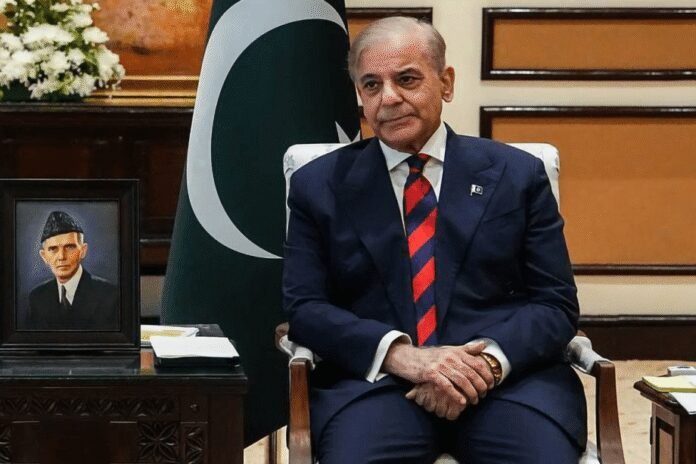
Pakistani Prime Minister Shehbaz Sharif on Friday urged the US and Iran to uphold the commitments made under their framework peace deal signed last month, known as the Islamabad Memorandum of Understanding, Anadolu reports.

In a telephone call with Iranian President Masoud Pizishkian, the Pakistani leader called on Iran and “all other parties” to exercise restraint and refrain from any action that could jeopardize the “hard-earned” peace gains achieved over the past few months, a statement from Sharif’s office said.

Describing the framework pact – reached with Pakistani mediation – as an “enduring” framework for promoting mutual understanding, respect, and shared prosperity in the region and beyond, Sharif expressed “deep” concern over the recent escalation in tensions in the region and underscored the “urgent” need to restore regional peace and stability.

Reaffirming Pakistan’s steadfast commitment to regional peace, he assured Pezeshkian of Pakistan’s readiness to continue playing an “honest and sincere” role in facilitating dialogue and supporting all efforts aimed at preserving peace and stability.

Pezeshkian, in return, thanked Pakistan’s leadership for attending the funeral ceremony of slain Iranian Supreme Leader Ayatollah Seyyed Ali Khamenei, who was killed on Feb. 28, the first day of the war.

READ: Iran security chief warns Israel ‘will not be safe from response’

He also reaffirmed Iran’s commitment to peace and praised Pakistan’s “constructive” support and sincere efforts for regional stability.

The two leaders also reviewed implementation of the decisions taken during Pezeshkian’s visit to Islamabad last month and agreed to expedite follow-up actions to further strengthen bilateral cooperation across numerous fields.

The leaders agreed to remain in close contact and continue consultations on matters of mutual interest and regional peace.

In a separate telephone call, Qatari Emir Sheikh ‎Tamim bin Hamad Al Thaniand Sharif called for “sustained” diplomatic engagement and dialogue and adherence to the commitments made by all parties ‎under the peace memorandum. ‎

While conveying ‎Pakistan’s solidarity with and support for the people of ‎Qatar on the recent attacks, Sharif ‎stressed that “all parties” should exercise restraint and ‎refrain from any actions that could undermine peace ‎in the region.‎

The Qatari leader, for his part, thanked the Pakistani leadership for playing a “‎leading” role for peace in the region and assured him ‎of Doha’s “continued” support in this regard.‎

READ: Israel seeks US green light to strike Iran

Syria Arrests Senior ISIS Leader, Exposes Group’s Criminal Financing Network 

0
syria-arrests-senior-isis-leader,-exposes-group’s-criminal-financing-network 
Syria Arrests Senior ISIS Leader, Exposes Group’s Criminal Financing Network 


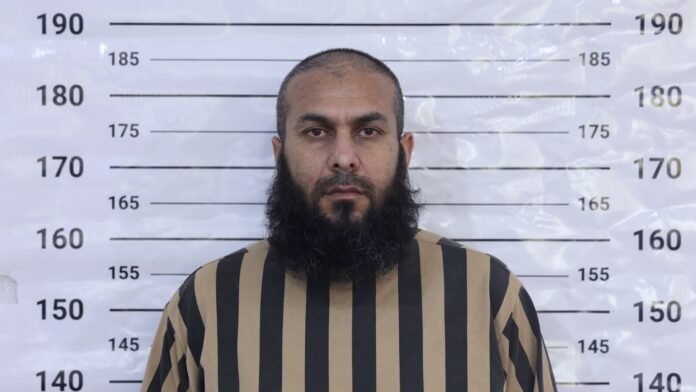
[DAMASCUS] Syrian authorities announced Wednesday that they had dismantled several Islamic State (ISIS) cells operating in southern Syria and arrested senior ISIS figure Firas al-Dagher, who officials say held several high-ranking positions within the organization, including serving as the group’s so-called “Governor of Lebanon and Palestine” and later as a personal aide to ISIS’s “Caliph.” 

The operation, carried out jointly by Syria’s Interior Ministry and the General Intelligence Service, marks one of the most significant counterterrorism operations announced by Damascus since the country’s political transition. 

Suspected ISIS members arrested by Syria’s Interior Ministry during a joint security operation with the General Intelligence Service in southern Syria. (Syrian Interior Ministry)

According to the Interior Ministry, investigations revealed that al-Dagher steadily rose through ISIS’s command structure.  

The security operation also resulted in the arrest of several ISIS operatives responsible for assassinations and financing following a series of coordinated raids across southern Syria. 

The ministry said the investigation found that the cell financed its activities through assassinations and armed robberies targeting gold merchants in Daraa province. The stolen gold was later sold to generate funds for the group’s operations. 

Suspected ISIS members arrested by Syria’s Interior Ministry during a joint security operation with the General Intelligence Service in southern Syria. (Syrian Interior Ministry)

Authorities also said the detainees confessed to killing two Interior Ministry personnel, carrying out an attempted assassination inside a barber shop that resulted in the death of a civilian, and surveilling another victim and his wife before later killing them. 

Syrian political writer and researcher Bassam Abu Adnan said the significance of the operation extends well beyond the arrest of a senior ISIS commander. 

“The investigation sheds light on how ISIS cells in southern Syria have adapted their methods, increasingly relying on assassinations, armed robberies, and criminal activity to finance their operations after losing the traditional sources of revenue they once controlled during the years they ruled large parts of Syria and Iraq,” Abu Adnan told The Media Line. 

He added that the operation also reflects growing coordination between the Interior Ministry and the General Intelligence Service as Syrian authorities continue pursuing ISIS sleeper cells despite the group’s territorial defeat several years ago. 

Although Syrian authorities have not disclosed exactly how security forces located al-Dagher and the other members of the cell, the nature of the operation suggests it followed an extended intelligence effort. 

A security source at the Interior Ministry told The Media Line that the arrests were the result of a lengthy intelligence operation conducted jointly by the Interior Ministry and the General Intelligence Service. The raids targeted multiple suspects simultaneously, suggesting they were preceded by an extended period of surveillance and intelligence gathering. 

Suspected ISIS members arrested by Syria’s Interior Ministry during a joint security operation with the General Intelligence Service in southern Syria. (Syrian Interior Ministry)

The significance of al-Dagher’s arrest lies not only in his seniority within ISIS but also in the range of positions he held during his years inside the organization. Al-Dagher began by taking responsibility for what the group referred to as the “Jaidour Sector” and the “Western Region” before being appointed to oversee the self-proclaimed “Province of Lebanon and Palestine.” 

His career trajectory suggests he was among the organization’s trusted senior cadres. Such positions typically require more than battlefield experience, reflecting close ties to the group’s leadership structure and responsibility for managing sensitive operational and organizational affairs. 

Orabi Orabi, a Syrian researcher specializing in jihadist movements, said the capture of someone who occupied such senior positions would not normally result from a routine security raid. 

“Operations of this nature are usually the outcome of extensive intelligence work involving surveillance of suspects, monitoring financial and communication networks, and, in some cases, information obtained through previous arrests or investigations into crimes linked to the cell,” Orabi told The Media Line. 

He noted that investigators had linked the group to a series of assassinations and robberies targeting gold merchants in Daraa province, adding that such findings point to growing capabilities within Syria’s security services to penetrate ISIS sleeper cells and reach senior operatives rather than merely arresting field-level militants. 

Orabi also said ISIS has fundamentally transformed the way it finances its operations since losing its territorial strongholds in Syria and Iraq and shifting from a quasi-state structure to a decentralized network of clandestine cells. 

“At the height of its territorial control, ISIS relied on oil and gas revenues, taxation, extortion, and control of border crossings and local resources,” he told The Media Line. “Today, its cells increasingly finance themselves through criminal activity such as armed robbery, gold theft, extortion, and kidnapping for ransom.” 

Suspected ISIS members arrested by Syria’s Interior Ministry during a joint security operation with the General Intelligence Service in southern Syria. (Syrian Interior Ministry)

He said the Interior Ministry’s findings—that the cell targeted gold merchants in Daraa and sold the stolen gold to finance its activities—fit this broader transformation. 

“Criminal activity has become one of ISIS’s primary funding mechanisms since the group lost its traditional sources of income,” Orabi said. “This model also allows sleeper cells to operate with greater flexibility and remain concealed, as many of these crimes initially appear to be ordinary criminal incidents before investigations reveal links to terrorist financing networks.” 

The operation therefore represents more than the arrest of a senior ISIS commander. It also provides insight into how the organization has evolved in recent years, both in its command structure and in the way it finances and sustains clandestine operations. 

As Syrian authorities continue dismantling ISIS networks, analysts say the long-term success of the campaign will depend not only on arresting individual operatives but also on disrupting the group’s leadership structure, financial networks, and intelligence infrastructure that enable sleeper cells to survive despite the organization’s territorial defeat. 


EasyJet backs $7.65 billion Apollo bid over Castlelake offer

0
easyjet-backs-$7.65-billion-apollo-bid-over-castlelake-offer
EasyJet backs $7.65 billion Apollo bid over Castlelake offer


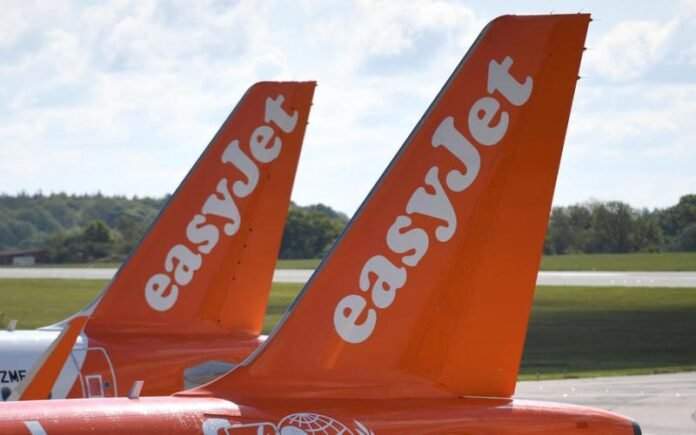
U.S. private equity giant Apollo Global Management launched a £5.7 billion ($7.65 billion) offer for budget airline easyJet on Friday, outbidding rival Castlelake and potentially opening the door to ​a full-blown takeover battle.

Following Apollo’s proposal for about £7.15 per easyJet share, the easyJet board ​said it was no longer minded to recommend Castlelake’s offer of £6.90 per share, ⁠which the two sides had agreed in principle only days earlier.

Shares in easyJet rose ​as much as 15% to £6.75 in early Friday trade to their highest since February 2022, still ​below Apollo’s bid price. Even after Castlelake’s bid on Sunday, easyJet’s shares have struggled to keep up gains over caution about regulatory hurdles.

EASYJET, APOLLO CLAIM ‘SUPERIOR OUTCOME’

Apollo said it was committed to taking “all necessary steps” to ​satisfy any merger control and EU subsidies-related clearances required to complete the deal.

“The proposed ​cash offer delivers a superior outcome for easyJet shareholders by providing a higher cash value than Castlelake’s latest ‌proposal,” ⁠easyJet and Apollo said in a joint statement.

Apollo must announce a firm offer for easyJet by August 7 or walk away. Castlelake has until August 3.

“Apollo believes in easyJet’s existing strategy of evolving and strengthening the low-cost carrier model,” Apollo said.

Apollo said it plans to keep ​the easyJet brand after ​the potential acquisition ⁠by continuing the existing brand licence agreement between easyJet and Stelios Haji-Ioannou’s easyGroup.

That could prove more attractive to Haji-Ioannou, the airline’s founder and ​largest shareholder, who owns roughly 15% of the firm with his ​family, and ⁠collects a 0.25% royalty on easyJet’s revenue for licensing the “easy” brand.

Castlelake in May went public with its interest to buy easyJet and was initially met with four rejections from the airline’s board.

In ⁠late ​June, however, the British firm opened its books to ​Castlelake in a bid to draw a higher offer, signalling its willingness to sell at the right price.

Source:  Reuters

Canada’s German sub buy dives between NATO and the Pacific

0
canada’s-german-sub-buy-dives-between-nato-and-the-pacific
Canada’s German sub buy dives between NATO and the Pacific

By choosing German-Norwegian submarines over South Korean units, Canada did not just buy submarines—it chose the alliance architecture that will shape its place between the Atlantic and Pacific security orders.

This month, multiple media outlets reported that Canada selected Germany’s ThyssenKrupp Marine Systems (TKMS) as the preferred bidder for 12 new conventionally powered submarines, the largest defense procurement in Canadian history.

TKMS’s Type 212 Common Design (Type 212CD) beat out a highly contested bid from South Korea’s Hanwha Ocean, which offered its KSS-III platform. No official price tag has been disclosed, but experts estimate the 12-boat purchase could start at US$24 billion, with total life-cycle maintenance costs over 50 years projected to exceed US$70 billion, or CA$100 billion.

Formal contract negotiations are expected to begin shortly, with Canada aiming to finalize the purchase by late 2027 and bring forward initial deliveries to 2034. The new, ice-optimized fleet will replace the Royal Canadian Navy’s aging and technically troubled Victoria-class submarines, which are set to retire in the mid-2030s.

Driven by escalating geopolitical tensions, the decision deepens Canada’s strategic alignment with European NATO allies, Germany and Norway, to bolster underwater surveillance, defend critical infrastructure, and counter Russian undersea capabilities across the increasingly contested Arctic and North Atlantic.

Canada’s selection of the Type 212CD over South Korea’s KSS-III suggests that the procurement was driven less by platform maturity or raw operational capability than by NATO interoperability, Arctic security, defense-industrial integration and broader diplomatic considerations.

On paper, both the KSS-III and Type 212CD bring formidable capabilities. In a June 2023 Proceedings article, Eric Wertheim mentions that South Korea’s indigenous KSS-III submarine features a diesel-electric propulsion system augmented by fuel-cell air-independent propulsion (AIP) technology, enabling 20-day submerged operations and top speeds of 37 kilometers per hour.

According to Wertheim, Batch 1 variants displace 3,358 metric tons surfaced, measure 83.5 meters long, accommodate a 50-person crew, and carry six vertical launch system (VLS) cells for conventionally armed Hyunmoo 4-4 ballistic missiles with a 500-kilometer range.

He adds that the lengthened, 89-meter Batch 2 platforms integrate lithium-ion batteries for enhanced endurance alongside an expanded ten-cell VLS.

In terms of armament and sensors, Wertheim says the submarines are armed with six 533-mm torpedo tubes for Tiger Shark heavyweight weapons; the class utilizes advanced bow, flank, and towed-array sonars for sophisticated underwater surveillance.

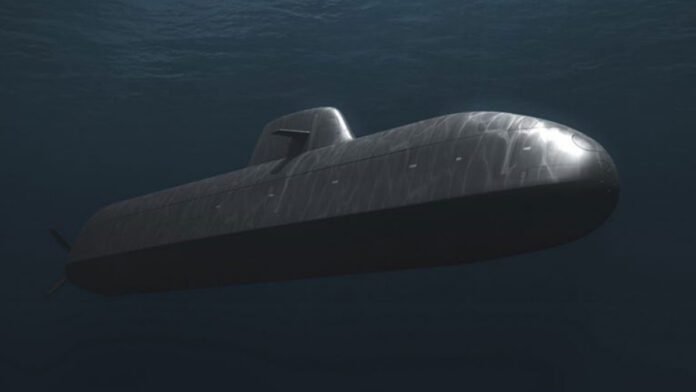
In comparison, the TKMS Type 212CD, which is still under construction, features a diamond shape, a non-magnetic steel hull, and an overall length of approximately 74 meters.

According to TKMS, it is designed for a crew of 28 and combines two diesel generator sets with an advanced fuel cell AIP system fitted with lithium-ion batteries. The manufacturer says it is designed around the ORCCA multilayer combat system architecture and features 360-degree active and passive sensors for enhanced command and surveillance.

TKMS says the submarine is designed for worldwide operations; its armament features heavyweight torpedoes and modular provisions fitted for missiles, off-board sensors, and special forces operations.

Canada’s choice ultimately turned on a trade-off between platform maturity and strategic alignment. J. James Kim notes in a June 2026 Stimson article that Canada had to weigh the reduced acquisition risk of South Korea’s proven KSS-III, which features an operational trans-Pacific track record, against the first-of-class delivery risks of the German-Norwegian Type 212CD.

That trade-off makes Canada’s preference for the Type 212CD striking: it chose an in-development design over a combat-proven submarine already in service. The Type 212CD is not in service with any country; the first two are still under construction for the German and Norwegian navies, with the first unit expected to enter service in 2029.

As an untested design, it could face the technical setbacks common to first-of-class ships and submarines as they enter service.

In contrast, Ju Hyung Kim notes in a May 2026 article for the Institute for Peace and Diplomacy that the KSS-III excels at sustained, long-range patrols across Canada’s extensive Arctic, Atlantic, and Pacific coastlines, whereas the Type 212CD is optimized for confined European littoral environments.

Kim adds that the KSS-III’s spacious, modular architecture features a versatile vertical launch system (VLS) that accommodates future upgrades like cruise missiles or unmanned underwater vehicles (UUVs), with South Korea’s high-volume, highly active naval production ecosystem eliminating first-of-class delivery risks and European supply chain bottlenecks.

However, Moon Keun-sik notes in a South China Morning Post (SCMP) article this month that technical factors may have accounted for only 20% of Canada’s submarine decision, with industrial, economic, diplomatic and political considerations making up the remaining 80%.

Seen that way, Vina Nadjibulla states in a Policy article this month that Canada’s TKMS decision demonstrates the lasting influence of NATO, specialized Arctic capabilities, and Transatlantic defense-industrial cooperation.

Furthermore, Jerome Brahy notes in an Army Recognition article this month that selecting the Type 212CD reinforces Canada’s 2024 trilateral defense cooperation framework with Germany and Norway, aligning Arctic security, crew training and North Atlantic infrastructure surveillance with trusted allies.

Brahy also says the TKMS procurement promises major domestic industrial benefits, channeling investment into Canadian defense manufacturing, autonomous technology and critical minerals while supporting more than 100,000 jobs. He adds that Germany and Norway have reallocated early production slots to help accelerate delivery of Canada’s ice-optimized submarine fleet by 2034.

Still, Nadjibulla stresses that Canada’s choice of the Type 212CD should not be read as favoring transatlantic ties over Pacific ones, especially as the Russia-Ukraine war, North Korea’s nuclear program, and China’s military modernization increasingly bind the two theaters together.

South Korea may have lost the submarine bid, but Nadjibulla argues it remains critical to Canada’s “variable geometry” foreign and defense policy, with shipbuilding and repair, drone and counter-drone systems, munitions, AI, cyber defense, Arctic-capable technologies, energy and rare earths offering future areas for cooperation.

Thus, Canada’s choice of the Type 212CD is more than a submarine procurement: it highlights the challenge of integrating two very different alliance architectures, with deeply institutionalized NATO ties pulling Canada toward Europe even as its Pacific partnerships grow increasingly strategic.

The challenge is not to choose the Atlantic over the Pacific, but to turn defense procurement, Arctic strategy and cooperation with South Korea and other Pacific partners into a coherent security architecture that bridges both without diluting either.

Check out the first images of Quest shipwreck

0
check-out-the-first-images-of-quest-shipwreck
Check out the first images of Quest shipwreck

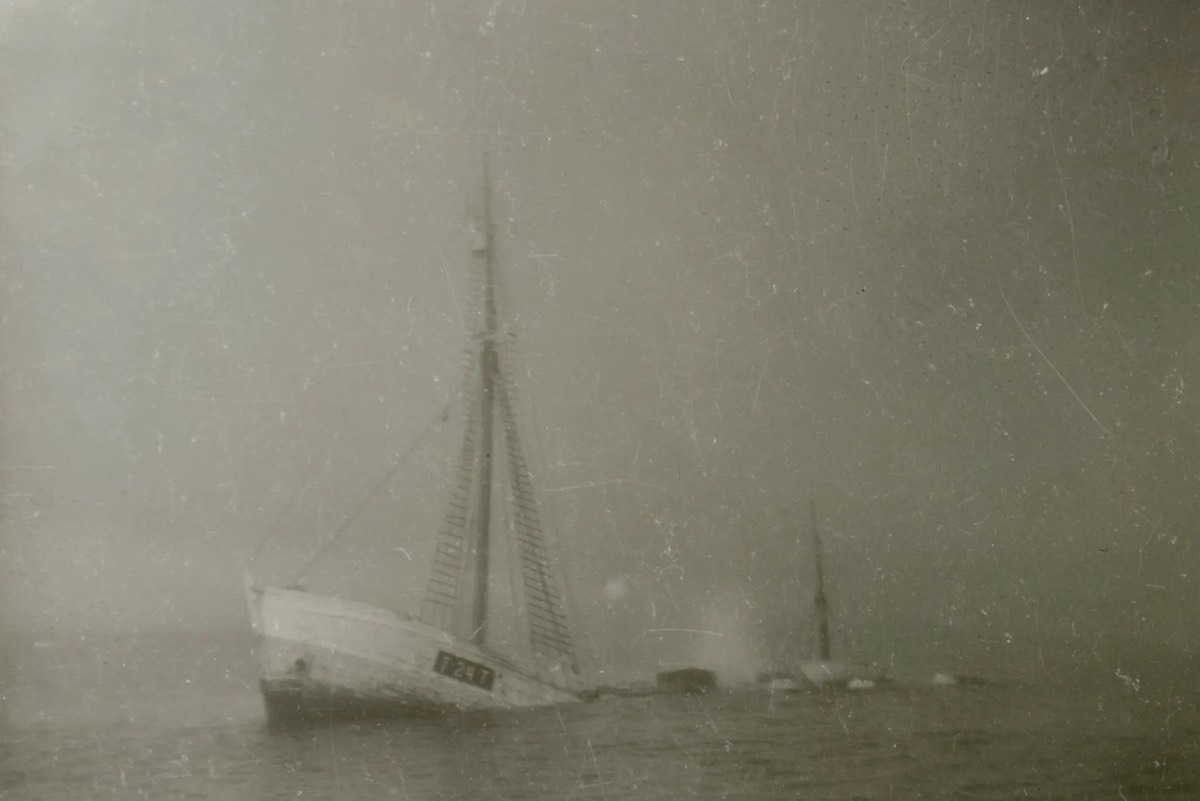
Back in 2024, we reported on the discovery of the Quest shipwreck, the polar exploration vessel that served Arctic explorer Sir Ernest Shackleton on his last voyage. Shackleton died before reaching their destination, and the ship sank in 1962. The Royal Canadian Geographic Society (RCGS) has now released the first images of the wreck more than 60 years after it sank, published in Canadian Geographic magazine.

Shackleton, of course, is most famous for his ill-fated voyage on the Endurance, which became trapped in sea ice in 1914 and sank. Shackleton and his crew defied the odds and survived. (The Endurance shipwreck was finally found in 2022.) By the time Shackleton returned to England, the country was embroiled in World War I, and many of his men enlisted. Shackleton was considered too old for active service. He was also deeply in debt from the Endurance expedition, earning a living on the lecture circuit. But he still dreamed of making another expedition to the Arctic Ocean north of Alaska to explore the Beaufort Sea. He got funding from an old school chum, John Quillier Rowett.

Shackleton purchased a wooden Norwegian whaler, Foca I, which his wife Emily renamed Quest. When the Canadian government withdrew its support, the mission shifted back to the Antarctic, and the Quest received an extensive retrofit. The improvements included a new deckhouse, a heated crow’s nest, a wireless set, and an odograph for tracing and charting the route automatically, as well as a Lucas deep-sea sounding machine, a large and pricey collection of cameras and photographic equipment, and even a small airplane.

The Quest expedition to Antarctica set sail in 1921. Shackleton never reached the planned destination, falling ill in late December just as the ship was about to leave Rio de Janeiro, Brazil. He had begun drinking heavily to “deaden the pain,” despite not usually allowing alcohol while at sea. The Quest reached south Georgia on January 4, 1922, and Shackleton made his final diary entry before retiring to bed.

Ernest Shackleton died on board the Quest in 1922. Forty years later, the ship sank off Canada's Atlantic Coast.

Ernest Shackleton died on board the Quest in 1922. Forty years later, the ship sank off Canada’s Atlantic Coast.

Sonar image showing the wreck of the Quest in the Labrador Sea.

Sonar image showing the wreck of the Quest in the Labrador Sea.

By 2 am, he was complaining of back pain and requesting painkillers. Ship physician Alexander Macklin suggested Shackleton might try leading a more normal life. Shackleton asked what Macklin thought he should give up. “Chiefly alcohol, boss, I don’t think it agrees with you,” the physician replied. Then Shackleton “had a very severe paroxysm” and died. The official recorded cause of death was coronary thrombosis. His body was buried in a Norwegian cemetery in Grytviken, the grave marked by a rough cross (later replaced by a granite column).

The expedition was cut short. There were a few scientific papers that came out of the journey and some useful geological and survey work, but on the whole, the expedition’s accomplishments were minor.

The ship was retrofitted a couple more times over its existence. It was used in several other expeditions in the 1930s and on various rescue missions. Quest served in the Royal Canadian Navy during World War II as a minesweeper and light cargo vessel and returned to commercial sealing operations after the war. It was on one such seal-hunting expedition on May 5, 1962, when the plucky little ship was pierced by ice and sank—the same damage suffered by Endurance decades before. And like the Endurance, her entire crew survived.

A thriving ecosystem

The RCGS led the effort to locate the wreckage, investing some $365,000 in the project. CEO John Geiger spearheaded the search, which initially involved scouring through the ship’s logs, navigation records, and other documents. The 23 crew members fought through dense fog and dealt with equipment issues after leaving port on June 5. But their patience was rewarded after 17 hours of scanning the ocean floor with sonar: Geiger spotted an odd shape pop onto his screen that was unmistakably the Quest.

This latest mission, with the Woods Hole Oceanographic Institute (WHOI) as a partner, relied on a Falcon remote-operated vehicle and an ALVIN deep submergence vehicle to explore the wreck site further, launching on July 2. These are just the first images; more will be forthcoming. The team ultimately plans to create a 3D digital twin of the wreck site using underwater photogrammetry technology.

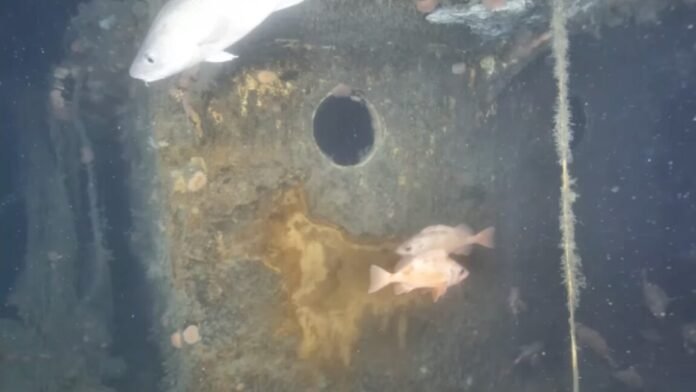
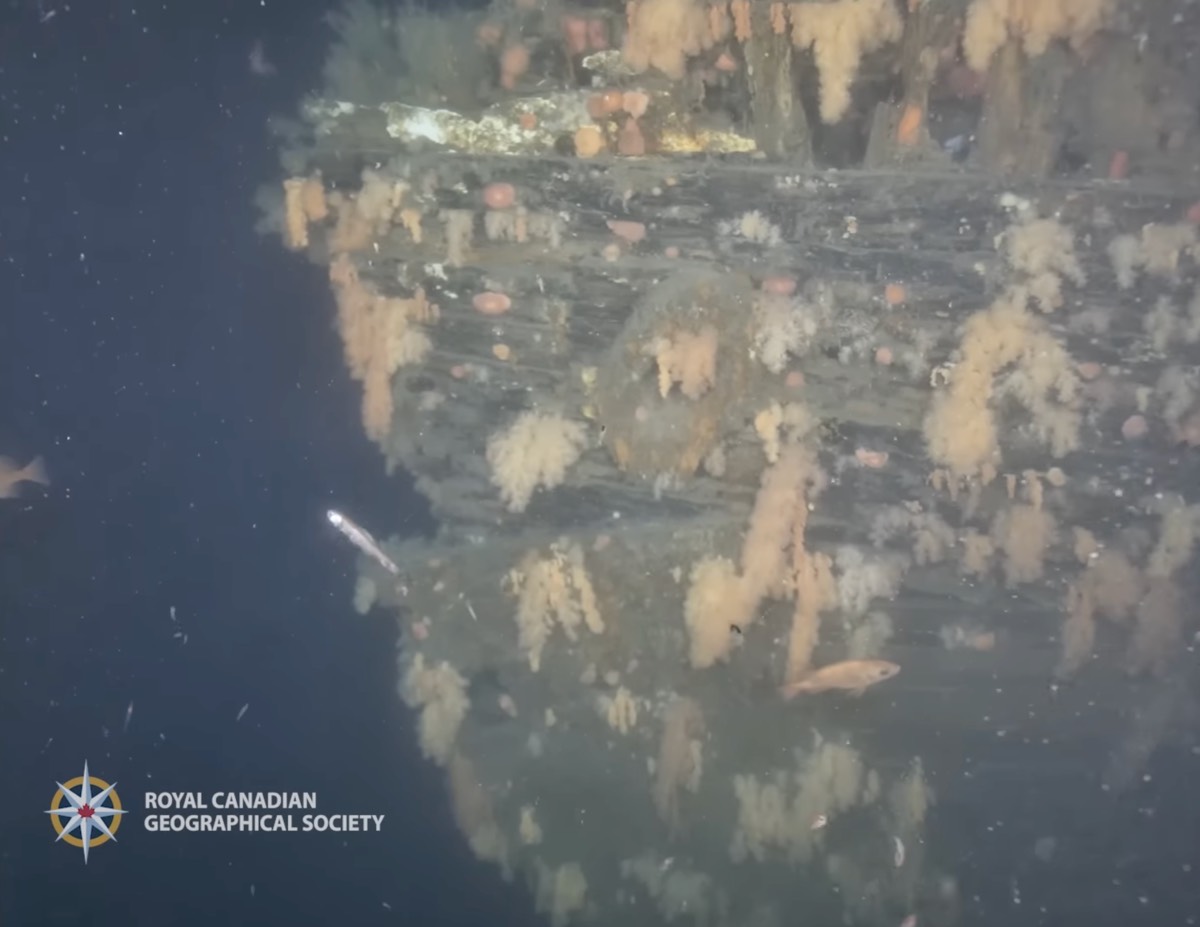
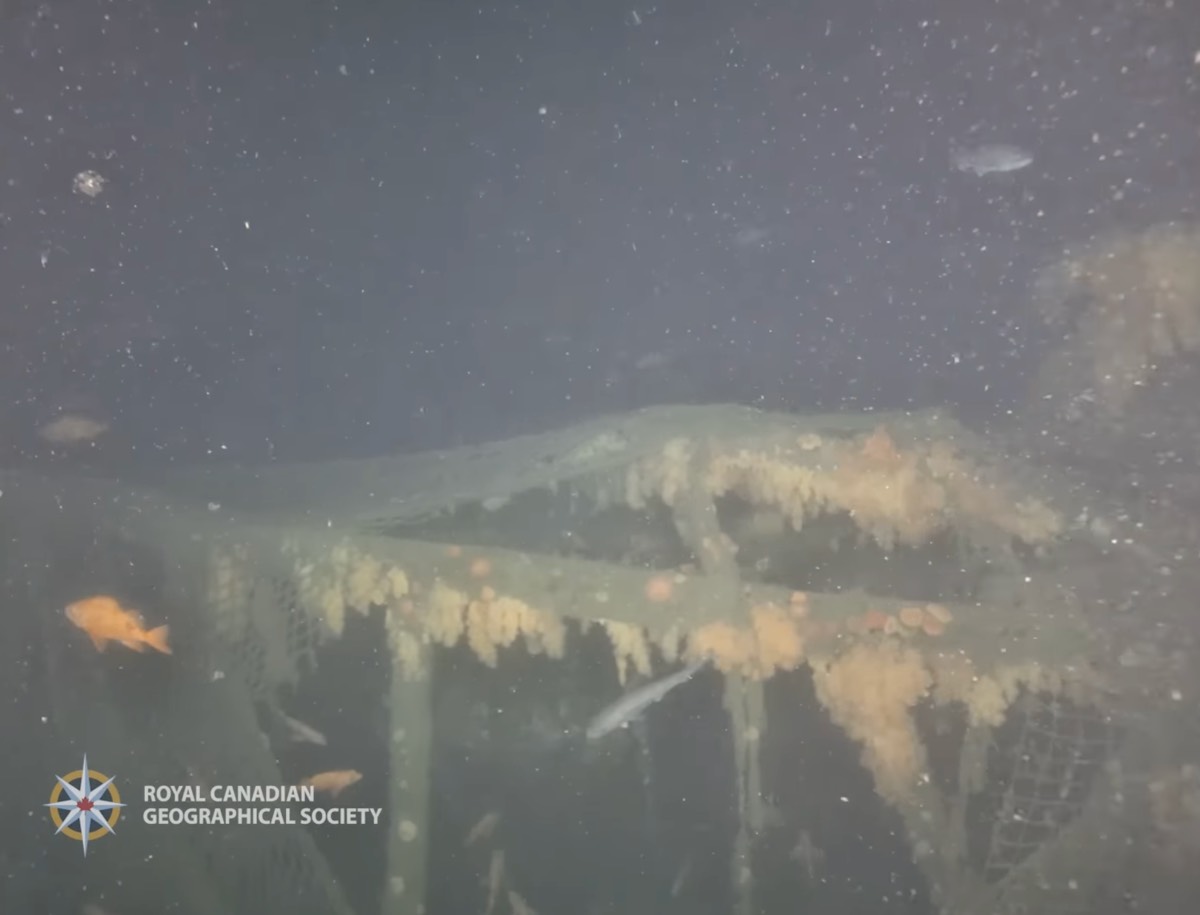
Initial sonar images in 2024 gave the team hope about the ship’s overall condition. These new images, however, revealed that Quest is in worse condition than previously thought, with fishing nets, floats, and other bottom-trawling gear snagged on the stern and much of the starboard side. The bridge superstructure is missing entirely, although the aluminum bridge is still attached. Expedition research director Antoine Normandin was disappointed at first, but then realized that “Quest itself is now becoming a science experiment,” he told Canadian Geographic.

WHOI biologist Kirstin Meyer-Kaiser told Canadian Geographic that the Quest shipwreck has been transformed into a thriving underwater ecosystem. The surviving structures and materials are now host to various marine life: soft corals clustered around the top of the bow, for example, and threatened species such as the spotted wolffish. “It’s really cool to me that the impact of human history is that we’re creating a habitat,” she said. “We’re increasing biodiversity on the local scale of the wreck, and maybe also on the regional scale because now it’s a stepping stone for some of those things to spread.”

The US can’t win with force in the Strait of Hormuz – Iran must be offered a realistic incentive to settle

0
the-us-can’t-win-with-force-in-the-strait-of-hormuz-–-iran-must-be-offered-a-realistic-incentive-to-settle
The US can’t win with force in the Strait of Hormuz – Iran must be offered a realistic incentive to settle

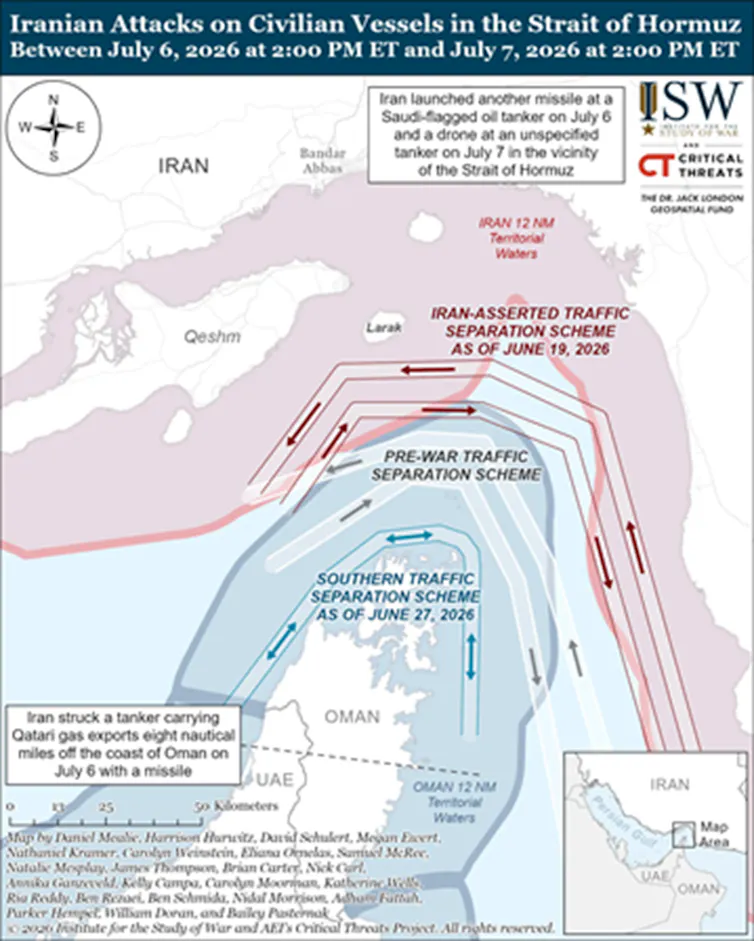
Iranian attacks on Gulf vessels trying to transit via Omani sovereign waters have once again pulled the region into a tit-for-tat spiral of escalation.

The US responded by cancelling the waiver permitting Iranian oil exports. Two nights of punitive airstrikes by the US air force against targets across southern Iran followed. Iran answered with ballistic missile and drone attacks on US installations in Bahrain and Kuwait.

The reluctance of both Iran and the Trump administration to return to full-scale war has not changed. But the boundaries of acceptable violence under this ceasefire are unacceptable for the Gulf states, who want to return to business as usual.

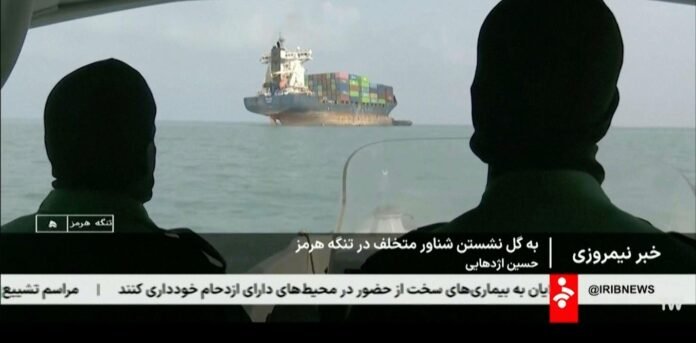
Washington is not helpful in this standoff, as its desperate attempts to force the Islamic Revolutionary Guard Corps (IRGC) off the Strait of Hormuz by coercion alone will not work. Punitive airpower will not make the IRGC surrender a prize it treats as a strategic spoil of war.

Under the memorandum of understanding now framing the crisis, Iran has 60 days to guarantee freedom of navigation. But it will only do so on its own terms. This risks creating a situation that gives it undue influence over the way Gulf states are able to do business with the world.

The way out is not more firepower, from either side. But this is a bargain the Gulf states themselves must broker, to convince Iran that restraint pays in the form of sanctions relief, unfrozen assets and a return to global markets. The Gulf’s task is to make the IRGC’s own interest point towards open passage.

For Iran, war over Hormuz is now not just about money but authority and prestige. It wants recognition as the legitimate master of the strait – a status neither Washington nor the Gulf can afford to grant.

So, the Gulf must invest in its own diplomatic and coordinating capacity, led by Qatar and Oman, to retain strategic autonomy and sovereignty – as neither Europe nor America will come to its aid.

The Iranian attacks are not random pressure. Oman has tried to open a southern corridor in its sovereign waters close to its coastline, to provide an alternative passage that would loosen Iran’s grip on the strait. The IRGC answered by attacking vessels transiting that corridor, to mark a clear red line.

An alternative route that works, even once, establishes that the Gulf can route around Iran, diluting the authority the IRGC is trying to claim.

ISW map showing competing routes for vessels transiting the Strait of Hormuz, July 2026.

Competing routes for vessels transiting the Strait of Hormuz, July 2026. Institute for the Study of War

For the IRGC, the Strait of Hormuz has become a token of victory – meaning money alone is not an answer. The temptation is to solve this with a toll. But any profits would be relatively small, as they have to be proportionate to the services actually rendered. This might be hundreds of millions of dollars a year, not billions.

Compensation on the scale of billions could only come from what a wider settlement can deliver: sanctions relief, unfrozen assets, and economic investment that Iran’s markets can actually absorb.

Rift in Islamic Republic

This exposes a rift in the Iranian regime. Its pragmatists understand the real prize is a return to global markets, which endless confrontation will prevent.

But the IRGC – actively involved in maritime aggression in the strait – sees the fee scheme as revenue it could bank for its own budget, quickly, while talks resulting in sanctions relief could drag on for years.

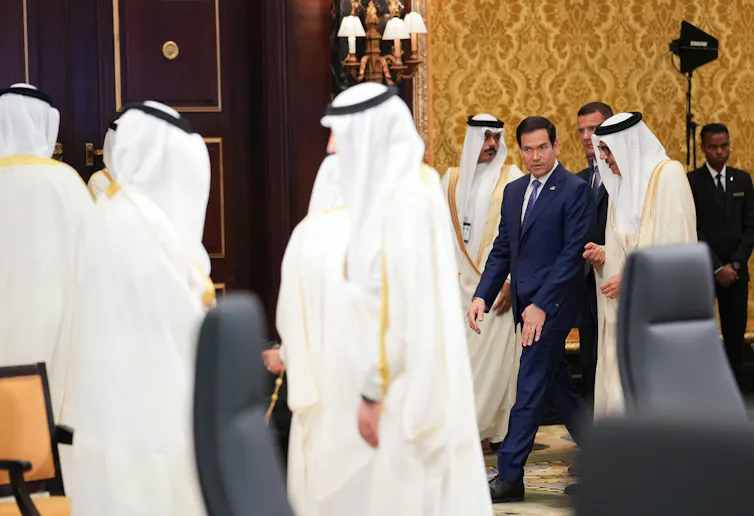
A group of men in traditional Arab robes meet with a man in a western-style business suit.

Foreign ministers of the Gulf Cooperation Council meeting with US secretary of state, Marco Rubio, on June 25. Eric Lee/Pool Photo via AP

This is why the Gulf must offer a credible pathway in which restraint today leads to relief tomorrow, so Tehran’s leadership can tell its hardliners that patience will pay more than pressure.

Some may object that Iran will simply take the relief while continuing to disrupt the strait. The credulous reading – that money buys compliance – misreads a regime for which prestige outranks revenue. The cynical reading – that Iran will never commit to a deal – misreads the pragmatists who know that continued sanctions are a dead end for Iran.

The truth sits between: Iran will negotiate indefinitely and commit to nothing, because ambiguity is cheap. So the task is to make ambiguity expensive.

The right question, then, is whether the Gulf can arrange the incentives so that keeping the strait open becomes Tehran’s own path of least resistance.

The Gulf states cannot tolerate, under any circumstances, a permanent change in the status of the strait. Limbo is as unaffordable as war. For Washington, resolving this issue would offer an exit from a bombing campaign that will never deliver its desired result.

Gulf states must take the lead

This is why the Gulf must build its own capacity now: a durable coalition of the willing, anchored by Qatar’s diplomacy and Oman’s role as a guardian of the strait. This should be multiplied by shared Gulf maritime capabilities to escort vessels and keep the waters drone- and mine-free.

On the strategic level, it requires a Saudi-led joint security framework between the Gulf and Iran, built around a non-aggression pact and deconfliction channels.

For too long, the Gulf has delegated security to Washington, which has become an unreliable and often toothless tiger in the face of Iranian resistance. Donald Trump’s impulsive and improvised statecraft has become a liability. It has dragged the Gulf into spirals of escalation in which Kuwait and Bahrain in particular have become collateral damage.

The greatest incentive the Gulf states can provide to dissuade Iran from its self-destructive trajectory of protracted resistance is a credible route to some form of financial compensation, at the end of a diplomatic process.

A Gulf acknowledgement of Iran’s status in an equitable security framework, combined with the prospect a windfall down the line, will do more than protracted remote warfare from the air against an enemy with a high threshold of pain.

Stephen Colbert Struggling and Heartbroken After Show Cancelation

0
stephen-colbert-struggling-and-heartbroken-after-show-cancelation
Stephen Colbert Struggling and Heartbroken After Show Cancelation


Stephen Colbert is reportedly having a tough time finding his footing after CBS pulled the plug on The Late Show, leaving the longtime late-night host heartbroken and unsure about what comes next.

Colbert, 62, stepped out of the spotlight after The Late Show came to an end on May 21. Before disappearing from public view, he gave fans no clear sign of his next career move, fueling speculation about whether he plans to return to television at all.

Behind the scenes, sources claim the TV veteran has been frustrated, emotional and deeply rattled by the sudden turn in his career.

An insider told Hollywood columnist Rob Shuter, who writes on Substack, “This wasn’t just a job – it was his identity. Stephen poured everything into that show. Losing it has hit him hard.”

For Colbert, The Late Show was more than a hosting gig. He took over the iconic CBS program on September 8, 2015, with George Clooney and former presidential hopeful Jeb Bush appearing as guests on his debut episode.

Before that, Colbert became a household name on Comedy Central, where he hosted The Colbert Report for nearly a decade and built a loyal following with his sharp political humor and signature deadpan style.

But now, those who know him professionally say they have not heard much from him since the CBS finale. According to the report, Colbert has been left “heartbroken” by the end of the show that defined such a major chapter of his life.

It remains unclear when, or even if, he will make a return to television.

Colbert’s somber mood was reportedly noticeable when he attended Taylor Swift and Travis Kelce’s July 3 wedding, where he was among a crowd of A-list guests.

According to attendees, the normally upbeat comic appeared “unusually subdued and miserable” at the high-profile event. Even surrounded by celebrity guests, celebration and nonstop buzz, Colbert allegedly struggled to put on a happy face.

A source said, “He’s always been the one holding everyone else together. Now he’s the one who needs time. He’s stepped away to figure out what comes next.”

Even as Colbert wrestles with the end of his CBS run, The Late Show is still getting a final moment in the spotlight.

The Late Show With Stephen Colbert earned an Emmy nomination for the 2026 awards after its final season, giving the program one last shot at industry recognition.

The show will compete for Outstanding Variety Series against The Daily Show, Jimmy Kimmel Live!, Last Week Tonight With John Oliver, and Saturday Night Live.

The category comes after the Emmys merged Outstanding Talk Series and Outstanding Scripted Variety Series into one new race. The change created a brutal lineup of some of the biggest names in television.

The Emmy Awards are scheduled to air September 14 on NBC and Peacock at 8 p.m. EST.

Meanwhile, CBS appears to have felt the impact of Colbert’s exit almost immediately.

The network faced swift backlash from the entertainment world after The Late Show ended, with several stars publicly praising Colbert and defending his place in late-night television. Even direct competitors, including Jimmy Kimmel and John Oliver, spoke up in support of the former CBS host.

The ratings told their own story.

On CBS’ first night without Colbert, the replacement program, Byron Allen’s Comics Unleashed, brought in just 628,000 total viewers, according to Nielsen data. That marked a sharp 65% drop in the time slot compared with the previous year.

With Colbert gone, many viewers seemed to turn to his late-night rivals instead.

On June 1, when Jimmy Kimmel returned to television, Jimmy Kimmel Live! drew 2.185 million total viewers, a 53% increase. That same night, The Tonight Show Starring Jimmy Fallon brought in 1.301 million viewers, a 10% boost.

For now, Colbert’s next act remains a mystery. But after nearly a decade behind The Late Show desk — and years before that shaping political comedy on The Colbert Report — insiders say walking away has been anything but easy.

For Stephen Colbert, this was not just the end of a TV show. It was the end of an era.

Iran war 2.0 slams Asia back into the blast zone

0
iran-war-2.0-slams-asia-back-into-the-blast-zone
Iran war 2.0 slams Asia back into the blast zone

TOKYO — The collapse of the US-Iran ceasefire is hitting Asia hard. Again.

The region never really left the woods. It had been bracing for second-round shocks — surging food prices chief among them — so the calm around the Strait of Hormuz felt less like a resolution than a reprieve.

And that reprieve just ended. As US President Donald Trump made clear this week, the “peace deal” between Washington and Tehran was more of a vibe than a treaty.

Few investors are shocked by the resumption of hostilities. Trump’s pattern — escalate, back down, escalate again — is well documented by now.

But there’s a gap between war continuing in theory and war continuing in practice, and Asia is living in that perilous gap. Making things worse: gold, the trade Asian central banks had been piling into, is sliding fast and hard.

“The ceasefire between the US and Iran was always fragile, and some flare-ups were inevitable, unfortunately,” says Ryan Sweet, chief global economist at Oxford Economics. “The question is whether this represents a bump in the road or whether we’re emerging from the eye of the storm.”

His warning: “If the peace deal breaks, and it’s too early to tell, it won’t just raise oil prices. It would also increase pressure on AI supply chains in Asia, force central banks to be hawkish, tighten financial conditions, and could shift the outcome of the US midterms. The cascade runs fast.”

Asia sits squarely in that cascade’s path. China’s economy is losing steam as global demand cools and supply chains snarl. Japan’s stagflation problem is getting messier, with inflation running more than five times the 0.5% growth the Bank of Japan projects this year.

South Korea, which sources roughly 70% of its oil from the Middle East, is exposed on the logistics front — the Bank of Korea sees inflation staying above 3% even with the bombing paused. India’s rupee has fallen to record lows as markets punish New Delhi’s twin deficits.

Indonesia is fighting its worst currency-speculator siege since the 1997-98 Asian financial crisis, for similar reasons. Both the Reserve Bank of India and Bank Indonesia are intervening heavily.

The Philippines is propping up the peso too, with an impeachment vote against Vice President Sara Duterte — amid her ongoing feud with President Ferdinand Marcos Jr. — adding political noise to market stress. All of these fault lines could reopen as Trump’s Gulf war grinds on.

As Eurasia Group CEO Ian Bremmer puts it, control of the Strait of Hormuz “has always been the haziest part of the ceasefire. Washington insists the waterway should be fully open, while Tehran still exerts functional control over it. Still, neither side would seem to want a return to full-scale war.”

Whether that holds is really up to one man. “In the US,” Bremmer notes, “the war is already deeply unpopular among the public. The Iranian regime, meanwhile, has already demonstrated its resilience and secured at least a pathway to a negotiated solution — it would have little to gain from a return to open-ended hostilities. That, at least, is the cold analytical take: will both sides see things so rationally in reality?”

Markets are still waiting for that answer. This week, the IMF raised its 2026 headline inflation forecast to 4.7%, based on energy prices that were roughly 25% above pre-war levels as of February 28. If the Middle East slides back into chaos, that number is already stale.

Gold’s reversal adds another wrinkle. The People’s Bank of China bought 15 tons of it in June alone — its biggest monthly purchase this year and a 20th straight month of buying. Whether that counter-cyclical bet, echoed by other Asian central banks, pays off remains to be seen.

For now, spot gold sits near $4,100 an ounce, more than 20% off January’s record of $5,594.82. Part of the retreat traces to the Fed’s hawkish turn: the FOMC came out of its June 16-17 meeting leaning toward hikes, not cuts.

In its annual Central Bank Gold Reserves survey, the World Gold Council found that a growing number of the 74 monetary authorities it polls plan to increase gold reserves over the next year amid deteriorating geopolitical conditions. Roughly nine in 10 central banks expect gold reserves to increase over the next year; 45% say their own holdings will grow.

“This underlines that institutional interest is geographically widespread and that global price dips are being used to strategically build up reserves,”says Bjorn Junker, a commodities analyst at GoldInvest.

Despite dollar strength, Junker points to an “undisputed trend towards de-dollarization. As soon as oil-producing countries start recording higher revenues again, it is expected that this capital will flow less into US government bonds and instead increasingly into the gold market.

For central banks worldwide, the precious metal thus remains an essential strategic component of their reserves, the long-term accumulation of which is consistently pursued during price declines.”

Yet there’s plenty of two-way flow in investment circles, given how stubbornly the dollar is standing its ground — and gold isn’t.

Carol Kong, economist at Commonwealth Bank of Australia, says that “if we’re right about this conflict being protracted, oil prices will just keep rising and it will push the dollar higher, at the expense of net energy importers like the Japanese yen and the euro.”

Here, the Fed’s about-face is a sharp reversal from what markets expected of new Chair Kevin Warsh, who ran his first Federal Open Market Committee (FOMC) meeting last month. Trump picked Warsh as the anti-Powell — the man who’d cut rates early and often.

Instead, May’s inflation print — 4.2% year-on-year, up from 3.8% in April and the fastest pace in three years — has left Warsh almost no room to deliver. The result: a Fed tilting hawkish just as the dollar was already running hot.

By any normal logic, the last six months should have been brutal for the dollar — tariffs, fiscal blowout, military adventurism, debt barreling toward US$40 trillion. Instead, global investors seem to be doing what they always do eventually: regressing toward the mean.

From an interest-rate-differential standpoint, there’s an argument favoring the dollar in this frenetic environment. But the de-dollarization logic making the rounds in recent years — especially since the Trump 2.0 era began in January 2025 — hasn’t fallen away.

In a May survey of family offices worldwide, UBS found interest in avoiding the dollar on the rise. “Last year, all of the family offices were super concerned about global trade tariffs tensions,” notes John Mathews, head of private wealth management at UBS.

“Today it’s really shifted to geopolitical tensions around the world, global debt, and now interest rates. And not just the short-term implications, but the longer-term implications of these as well,” Mathews said.

These forces, he adds, “point to preparation not just for near-term volatility, but for an extended period of elevated and interconnected risk. Family offices look to be focused on building resilience across a broader and more complex risk landscape, combining adjustments to their asset allocation with multishoring strategies.”

In other words, dollar skepticism remains. But the numbers keep showing that rumors of the dollar’s demise are, for now, greatly exaggerated. In fact, “the King Dollar is no longer just firming — it’s starting to behave like a wrecking ball across Asian FX, equities and gold,” notes Stephen Innes, managing partner at SPI Asset Management.

“King Dollar is back in the driver’s seat, and the ride is getting rougher for the parts of Asia that had grown accustomed to the old market assumption that the Federal Reserve would always keep one hand near the punch bowl,” Innes says. “That assumption is now the market’s most obvious Achilles’ heel.”

The reason, Innes explains, is that “markets no longer treat the Fed as a friendly bartender quietly topping up the liquidity bowl whenever risk assets wobble.” The possibility that Warsh’s Fed could deliver one or two “servicing hikes” next year, he notes, rather than a dramatic tightening cycle, is enough to keep the dollar “well bid and likely rally further.”

All this is reshuffling Asia’s calculus at bewildering speed. Currencies across the region are cracking — the yen, the rupee, the rupiah, now the peso and baht too.

The common threads are surging oil prices and a muscular dollar punishing exchange rates almost everywhere, keeping governments from Tokyo to Jakarta on daily intervention watch and forcing central banks into hikes their populations can barely sustain.

The cruelest twist: Iran-war risk is re-emerging just as AI sends Asian stock valuations to nosebleed levels. The Kospi is up 77% year-to-date; the Taiwan Stock Exchange, 56%. This week, SK Hynix is raising $26.5 billion in an American depositary receipt offering — the largest-ever US share sale by a foreign company. It’s timed to a moment of maximum market volatility. Boom and bust, it turns out, can share a currency.

But even worse for Asian governments is not knowing what they don’t know about where the Iran war the US and Israel started might be headed.

Trump answering a reporter’s question this week about just that “I don’t know” isn’t promising for Asia’s second half of 2026. À lack of fiscal space post-Covid to stimulate growth is complicated by central banks under pressure to defend sliding currencies with rate hikes.

Asia had hoped for a quieter second half of 2026 as cooler heads prevailed in Washington and Tehran. The region’s economies aren’t going to get it.

Follow William Pesek on X at @WilliamPesek
Anti-vaccine changes under RFK Jr. will hurt vulnerable toddlers, study confirms

0
anti-vaccine-changes-under-rfk-jr.-will-hurt-vulnerable-toddlers,-study-confirms
Anti-vaccine changes under RFK Jr. will hurt vulnerable toddlers, study confirms

With no new data or clear reasoning, a panel of advisors hand-selected by anti-vaccine Health Secretary Robert F. Kennedy Jr. voted last September to strip federal recommendations for a combination shot against measles, mumps, rubella, and varicella (chickenpox). An analysis published today by independent researchers does the work the advisors neglected to do before the vote and, in turn, shows how harmful the decision is to vulnerable US toddlers.

The decision last fall followed clumsy discussion by Kennedy’s dubiously qualified advisors, which make up the Advisory Committee on Immunizations Practices (ACIP) for the Centers for Disease Control and Prevention. Most noticeably, their unprompted review of the MMRV vaccine did not include a standard decision-making framework ACIP has historically used to comprehensively evaluate what the change would mean for US children in practice—including basic questions, such as which children would be affected.

Still, the decision meant that private health insurance providers would no longer be required to cover the vaccine, called MMRV. It also meant the shot would no longer be available through a federal program that provides vaccines to about half of American children, mostly from low-income families.

The study published today in JAMA Network Open set out to assess who was using MMRV before the change. It was done by researchers in Washington state, who examined use of MMRV between 2015 and 2025 in King County, which encompasses Seattle. Reviewing immunization records of over 200,000 toddlers and young children ages 12 to 47 months, they found that a little over 31,000 children got the MMRV in that time period, about 15 percent.

MMRV vs MMR+V

This matches what was already known about the vaccine’s use—about 15 percent of kids nationwide get the shot, a small percentage. Most children instead receive a measles, mumps, and rubella shot (MMR) and a separate vaccine against varicella (chickenpox). Usually, the two vaccines are given at the same time, and the co-administration is abbreviated as MMR+V.

The reason the majority of kids get MMR+V is because it’s preferred over the single shot based on past data. MMRV earned approval from the Food and Drug Administration in 2005, but after a few years, it became clear that there was a slightly increased risk of febrile seizures when it is given as a first of two doses in toddlers 12 to 15 months (there was no increased risk for the second recommended dose, given at 4 to 6 years).

That increase is slight—there were 7 to 8.5 seizure cases for every 10,000 first-dose MMRV vaccinations, compared to 3.2 to 4.2 in 10,000 first-dose MMR + V vaccinations, analyses found. That difference works out to an extra one febrile seizure per 2,300 to 2,600 children. And febrile seizures are generally harmless—however alarming they may be for a parent to observe. A febrile seizure is simply a seizure associated with fever, and they can be spurred by almost anything that can cause a fever, such as the flu or an ear infection. In almost every case, children fully recover, with no longterm effects. By age 5, about 5 percent of all children have had such a febrile seizure for one reason or another.

Still, given the comparative increase over MMR+V, in 2009 the ACIP of the time combed through the data and decided that MMR+V should be preferred over MMRV. But, MMRV was still considered safe and effective and was left as an option for parents in consultation with their doctors. No new data has changed that view among experts since then.

Vulnerable toddlers

Between 2015 and 2025, use of MMRV among children in King County held steady at 15 percent for the decade, despite the ranked recommendation. And that 15 percent had clear demographic characteristics: Children who got an MMRV as a first-dose were more likely than other vaccinated children to be in minority racial and ethnic groups. By comparison, significantly more of them were getting a “catch-up dose” after the initial window of 12 to 15 months, getting them instead between 16 and 47 months. Children getting an MMRV were also more than three times more likely than other vaccinated children to be eligible for a federal program that offers free vaccines to children in low-income families. They were nearly four times more likely to get vaccinated at a safety-net clinic.

In all, the researchers concluded, “This population might be at risk of not receiving recommended vaccines if options become limited.”

In an accompanying commentary piece, health policy experts Elizabeth Cope and Aaron Carroll of the health research nonprofit AcademyHealth blasted Kennedy’s ACIP for making their decision without accounting for analyses like this one.

The study’s findings “are not surprising,” they wrote. “Combination vaccines reduce the number of injections and visits and lower cost barriers to series completion. Those benefits matter most to families with the least slack: hourly work, no paid sick leave, and a follow-up visit that may not happen.”

The study has the limitation of only examining MMRV use in one county in one state, Cope and Carroll note. But, they said, “If similar patterns exist in less well-resourced settings, the resulting equity implications could be even more pronounced.”

The two experts stop short of suggesting Kennedy’s anti-vaccine agenda directly swayed his ACIP members to make this ill-conceived recommendation, saying it can’t be determined from the public record. But “[w]hat can be determined is that multiple structural safeguards, historically intended to preserve ACIP independence, were absent simultaneously,” they write.

The oceans are full of heat, and it’s coming ashore

0
the-oceans-are-full-of-heat,-and-it’s-coming-ashore
The oceans are full of heat, and it’s coming ashore

It’s barely the middle of summer in the northern hemisphere, and heatwaves are once again breaking temperature records. 

In the United States, dozens of cities sweltered through their hottest Fourth of July celebrations, with temperatures over 100 degrees Fahrenheit. In New Jersey alone, dozens died from the heat over the weekend. European authorities have linked thousands of deaths during the end of June to heat-related causes. And on Thursday, the European Union’s Copernicus Climate Change Service announced that Western Europe had experienced the hottest June ever recorded in the region

The seas are running a fever, too. It was also the hottest June on record for the world’s oceans, according to Copernicus. Nearly 40 percent of ocean area worldwide is undergoing a marine heatwave, with intense hot patches in the Mediterranean Sea and the Pacific Ocean more than 10 degrees Fahrenheit hotter than usual. It’s the latest in a wave of ocean warming that began in 2023, fueling devastating cyclones and damaging the majority of the planet’s coral reefs. 

As humans burn fossil fuels, the oceans absorb more than 90 percent of the excess heat trapped by the resulting greenhouse gases, causing them to warm. Waters at the surface also exchange heat and moisture with the atmosphere, helping to drive hotter temperatures and more extreme weather. A recent study found that at least a fifth of heatwaves on land begin in the ocean. 

“Heat is one of the features of climate change that has already arrived,” said Ruth Engel, a data scientist for environmental health and extreme heat with the World Resources Institute. “It’s not something we need to prepare for 25 years from now. It’s already a deadly health issue now.”

In mild climates and historically hot ones alike, extreme heat has become an expected part of summer, Engel said. Last year, more people died from extreme heat than from road crashes in Europe, she added.

Because weather, climate, and oceans are so intertwined, it can take months for scientists to pinpoint the cause of any one heat event. But there are some early clues that can help researchers connect weather events to ocean heatwaves, said Zachary Labe, a scientist at Climate Central, a research nonprofit.

For example, scientists suspect that the recent heatwaves across Europe are tied to extra-warm temperatures in the Mediterranean Sea, he said. And the high temperatures and humidity causing Floridians to crank up their air-conditioners are probably related to a marine heatwave with water temperatures near 90 degrees F off the state’s Gulf coast. Unusually warm temperatures in the Pacific Ocean may have helped set up a weather pattern driving a potentially record-breaking heatwave forecast for the central and northern U.S. in the coming week, he said.

“The current patterns that are creating these heat domes are similar to those we’ve seen before,” Labe said.  “But climate change is just acting to boost everything.” Essentially, warmer global temperatures mean worse consequences when extreme weather does hit, he said.

people under umbrellas walk through a seemingly busy area passing a busstop to their left with a thermometer screen that reads +53 degrees C

A thermometer attached to a bus stop in the city center of Madrid reads 53 degrees Celsius, or 127 degrees Fahrenheit. Luis Soto/SOPA Images via Getty Images

Hotter air also makes the atmosphere spongier and capable of holding more water. For every 1 degree Celsius of warming, the atmosphere can hold about 7 percent more moisture. It also holds onto the water for longer. That means more time between rainfalls, and heavier, more dangerous deluges when rain does fall. 

Scientists have linked climate change to heavy rainfall events such as the one that flooded Central Texas last summer. In recent days, Super Typhoon Bavi bore down on the Mariana Islands in the Western Pacific. It’s the second super typhoon with the “fingerprint of climate change” to form in the region in a handful of months.

Ocean warming is also a direct cause of sea level rise thanks to a phenomenon known as thermal expansion. As the seas warm, they expand and push further up coastlines, setting the stage for storms like Bavi to cause greater damage.

And recently, a recurring pattern of warm water known as El Niño began cycling through the Pacific, adding even more extreme weather to the equation. That’s because El Niño churns up some of the heat that the ocean absorbs, bringing it toward the surface where it interacts with the atmosphere and reshapes weather around the world. This year’s emerging event, considered a “super El Niño,” has a 81 percent chance of becoming one of the strongest in history, according to a recent forecast by the National Oceanic and Atmospheric Administration.

That means global average temperatures are likely to remain elevated well into early next year, said Matthew England, a professor of physical oceanography and climate science at the University of New South Wales in Australia. “The first year of an El Nino cycle tends to be on the warm side, but the records are generally broken in the second year,” he said.

Every El Niño is different, but each one comes with predictable effects that can help forecasters figure out what to expect, said Alex Sen Gupta, a professor at the Climate Change Research Center, also at the University of New South Wales. 

In general, El Niño years are associated with heavier rainfall in places like California and South America and drier conditions across Australia and Southeast Asia. And although El Niño tends to suppress hurricanes near the United States, other regions tend to see stronger cyclones with more rainfall.

There isn’t evidence yet that climate change is making El Niños or La Niñas (the inverse pattern of cool water that forms in intervening years) stronger. But a hotter planet means more intense effects from both of them, Sen Gupta said. And while scientists need more years of data to say for sure, some have hypothesized that the swings between strong El Niño and La Niña years are becoming more frequent.


0FansLike
0FollowersFollow
0FollowersFollow
0SubscribersSubscribe
- Advertisement -
Google search engine

Recent Posts