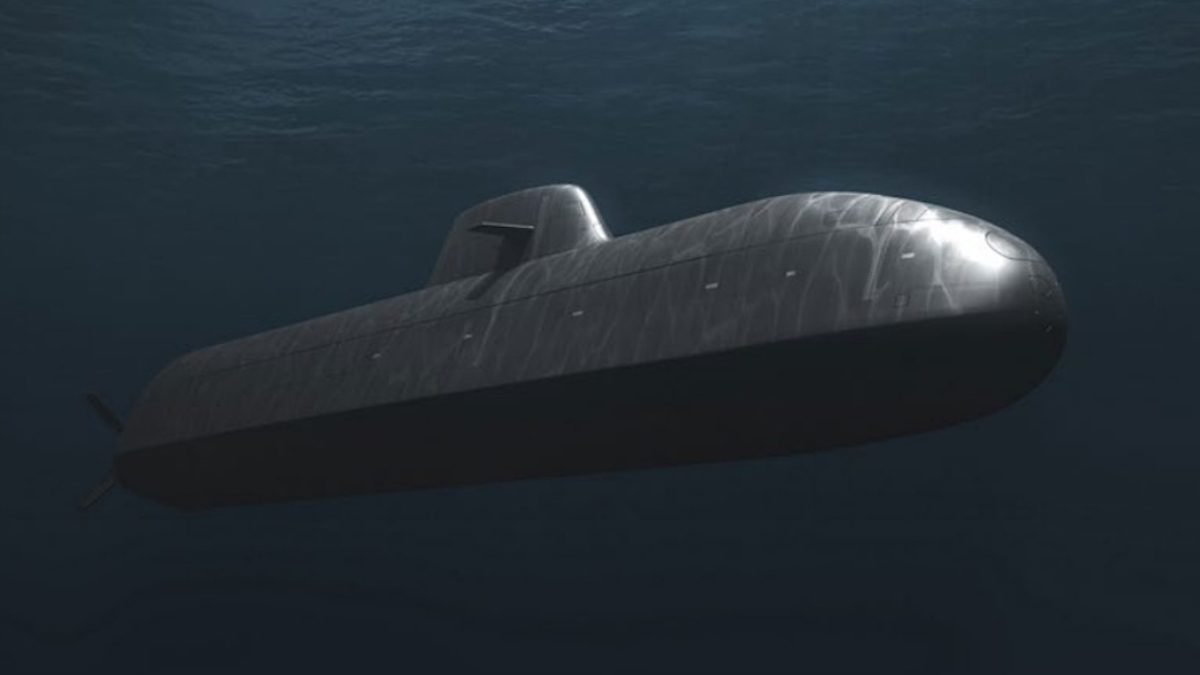
By choosing German-Norwegian submarines over South Korean units, Canada did not just buy submarines—it chose the alliance architecture that will shape its place between the Atlantic and Pacific security orders.
This month, multiple media outlets reported that Canada selected Germany’s ThyssenKrupp Marine Systems (TKMS) as the preferred bidder for 12 new conventionally powered submarines, the largest defense procurement in Canadian history.
TKMS’s Type 212 Common Design (Type 212CD) beat out a highly contested bid from South Korea’s Hanwha Ocean, which offered its KSS-III platform. No official price tag has been disclosed, but experts estimate the 12-boat purchase could start at US$24 billion, with total life-cycle maintenance costs over 50 years projected to exceed US$70 billion, or CA$100 billion.
Formal contract negotiations are expected to begin shortly, with Canada aiming to finalize the purchase by late 2027 and bring forward initial deliveries to 2034. The new, ice-optimized fleet will replace the Royal Canadian Navy’s aging and technically troubled Victoria-class submarines, which are set to retire in the mid-2030s.
Driven by escalating geopolitical tensions, the decision deepens Canada’s strategic alignment with European NATO allies, Germany and Norway, to bolster underwater surveillance, defend critical infrastructure, and counter Russian undersea capabilities across the increasingly contested Arctic and North Atlantic.
Canada’s selection of the Type 212CD over South Korea’s KSS-III suggests that the procurement was driven less by platform maturity or raw operational capability than by NATO interoperability, Arctic security, defense-industrial integration and broader diplomatic considerations.
On paper, both the KSS-III and Type 212CD bring formidable capabilities. In a June 2023 Proceedings article, Eric Wertheim mentions that South Korea’s indigenous KSS-III submarine features a diesel-electric propulsion system augmented by fuel-cell air-independent propulsion (AIP) technology, enabling 20-day submerged operations and top speeds of 37 kilometers per hour.
According to Wertheim, Batch 1 variants displace 3,358 metric tons surfaced, measure 83.5 meters long, accommodate a 50-person crew, and carry six vertical launch system (VLS) cells for conventionally armed Hyunmoo 4-4 ballistic missiles with a 500-kilometer range.
He adds that the lengthened, 89-meter Batch 2 platforms integrate lithium-ion batteries for enhanced endurance alongside an expanded ten-cell VLS.
In terms of armament and sensors, Wertheim says the submarines are armed with six 533-mm torpedo tubes for Tiger Shark heavyweight weapons; the class utilizes advanced bow, flank, and towed-array sonars for sophisticated underwater surveillance.
In comparison, the TKMS Type 212CD, which is still under construction, features a diamond shape, a non-magnetic steel hull, and an overall length of approximately 74 meters.
According to TKMS, it is designed for a crew of 28 and combines two diesel generator sets with an advanced fuel cell AIP system fitted with lithium-ion batteries. The manufacturer says it is designed around the ORCCA multilayer combat system architecture and features 360-degree active and passive sensors for enhanced command and surveillance.
TKMS says the submarine is designed for worldwide operations; its armament features heavyweight torpedoes and modular provisions fitted for missiles, off-board sensors, and special forces operations.
Canada’s choice ultimately turned on a trade-off between platform maturity and strategic alignment. J. James Kim notes in a June 2026 Stimson article that Canada had to weigh the reduced acquisition risk of South Korea’s proven KSS-III, which features an operational trans-Pacific track record, against the first-of-class delivery risks of the German-Norwegian Type 212CD.
That trade-off makes Canada’s preference for the Type 212CD striking: it chose an in-development design over a combat-proven submarine already in service. The Type 212CD is not in service with any country; the first two are still under construction for the German and Norwegian navies, with the first unit expected to enter service in 2029.
As an untested design, it could face the technical setbacks common to first-of-class ships and submarines as they enter service.
In contrast, Ju Hyung Kim notes in a May 2026 article for the Institute for Peace and Diplomacy that the KSS-III excels at sustained, long-range patrols across Canada’s extensive Arctic, Atlantic, and Pacific coastlines, whereas the Type 212CD is optimized for confined European littoral environments.
Kim adds that the KSS-III’s spacious, modular architecture features a versatile vertical launch system (VLS) that accommodates future upgrades like cruise missiles or unmanned underwater vehicles (UUVs), with South Korea’s high-volume, highly active naval production ecosystem eliminating first-of-class delivery risks and European supply chain bottlenecks.
However, Moon Keun-sik notes in a South China Morning Post (SCMP) article this month that technical factors may have accounted for only 20% of Canada’s submarine decision, with industrial, economic, diplomatic and political considerations making up the remaining 80%.
Seen that way, Vina Nadjibulla states in a Policy article this month that Canada’s TKMS decision demonstrates the lasting influence of NATO, specialized Arctic capabilities, and Transatlantic defense-industrial cooperation.
Furthermore, Jerome Brahy notes in an Army Recognition article this month that selecting the Type 212CD reinforces Canada’s 2024 trilateral defense cooperation framework with Germany and Norway, aligning Arctic security, crew training and North Atlantic infrastructure surveillance with trusted allies.
Brahy also says the TKMS procurement promises major domestic industrial benefits, channeling investment into Canadian defense manufacturing, autonomous technology and critical minerals while supporting more than 100,000 jobs. He adds that Germany and Norway have reallocated early production slots to help accelerate delivery of Canada’s ice-optimized submarine fleet by 2034.
Still, Nadjibulla stresses that Canada’s choice of the Type 212CD should not be read as favoring transatlantic ties over Pacific ones, especially as the Russia-Ukraine war, North Korea’s nuclear program, and China’s military modernization increasingly bind the two theaters together.
South Korea may have lost the submarine bid, but Nadjibulla argues it remains critical to Canada’s “variable geometry” foreign and defense policy, with shipbuilding and repair, drone and counter-drone systems, munitions, AI, cyber defense, Arctic-capable technologies, energy and rare earths offering future areas for cooperation.
Thus, Canada’s choice of the Type 212CD is more than a submarine procurement: it highlights the challenge of integrating two very different alliance architectures, with deeply institutionalized NATO ties pulling Canada toward Europe even as its Pacific partnerships grow increasingly strategic.
The challenge is not to choose the Atlantic over the Pacific, but to turn defense procurement, Arctic strategy and cooperation with South Korea and other Pacific partners into a coherent security architecture that bridges both without diluting either.