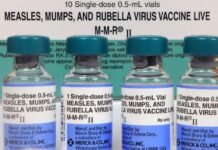
With no new data or clear reasoning, a panel of advisors hand-selected by anti-vaccine Health Secretary Robert F. Kennedy Jr. voted last September to strip federal recommendations for a combination shot against measles, mumps, rubella, and varicella (chickenpox). An analysis published today by independent researchers does the work the advisors neglected to do before the vote and, in turn, shows how harmful the decision is to vulnerable US toddlers.
The decision last fall followed clumsy discussion by Kennedy’s dubiously qualified advisors, which make up the Advisory Committee on Immunizations Practices (ACIP) for the Centers for Disease Control and Prevention. Most noticeably, their unprompted review of the MMRV vaccine did not include a standard decision-making framework ACIP has historically used to comprehensively evaluate what the change would mean for US children in practice—including basic questions, such as which children would be affected.
Still, the decision meant that private health insurance providers would no longer be required to cover the vaccine, called MMRV. It also meant the shot would no longer be available through a federal program that provides vaccines to about half of American children, mostly from low-income families.
The study published today in JAMA Network Open set out to assess who was using MMRV before the change. It was done by researchers in Washington state, who examined use of MMRV between 2015 and 2025 in King County, which encompasses Seattle. Reviewing immunization records of over 200,000 toddlers and young children ages 12 to 47 months, they found that a little over 31,000 children got the MMRV in that time period, about 15 percent.
MMRV vs MMR+V
This matches what was already known about the vaccine’s use—about 15 percent of kids nationwide get the shot, a small percentage. Most children instead receive a measles, mumps, and rubella shot (MMR) and a separate vaccine against varicella (chickenpox). Usually, the two vaccines are given at the same time, and the co-administration is abbreviated as MMR+V.
The reason the majority of kids get MMR+V is because it’s preferred over the single shot based on past data. MMRV earned approval from the Food and Drug Administration in 2005, but after a few years, it became clear that there was a slightly increased risk of febrile seizures when it is given as a first of two doses in toddlers 12 to 15 months (there was no increased risk for the second recommended dose, given at 4 to 6 years).
That increase is slight—there were 7 to 8.5 seizure cases for every 10,000 first-dose MMRV vaccinations, compared to 3.2 to 4.2 in 10,000 first-dose MMR + V vaccinations, analyses found. That difference works out to an extra one febrile seizure per 2,300 to 2,600 children. And febrile seizures are generally harmless—however alarming they may be for a parent to observe. A febrile seizure is simply a seizure associated with fever, and they can be spurred by almost anything that can cause a fever, such as the flu or an ear infection. In almost every case, children fully recover, with no longterm effects. By age 5, about 5 percent of all children have had such a febrile seizure for one reason or another.
Still, given the comparative increase over MMR+V, in 2009 the ACIP of the time combed through the data and decided that MMR+V should be preferred over MMRV. But, MMRV was still considered safe and effective and was left as an option for parents in consultation with their doctors. No new data has changed that view among experts since then.
Vulnerable toddlers
Between 2015 and 2025, use of MMRV among children in King County held steady at 15 percent for the decade, despite the ranked recommendation. And that 15 percent had clear demographic characteristics: Children who got an MMRV as a first-dose were more likely than other vaccinated children to be in minority racial and ethnic groups. By comparison, significantly more of them were getting a “catch-up dose” after the initial window of 12 to 15 months, getting them instead between 16 and 47 months. Children getting an MMRV were also more than three times more likely than other vaccinated children to be eligible for a federal program that offers free vaccines to children in low-income families. They were nearly four times more likely to get vaccinated at a safety-net clinic.
In all, the researchers concluded, “This population might be at risk of not receiving recommended vaccines if options become limited.”
In an accompanying commentary piece, health policy experts Elizabeth Cope and Aaron Carroll of the health research nonprofit AcademyHealth blasted Kennedy’s ACIP for making their decision without accounting for analyses like this one.
The study’s findings “are not surprising,” they wrote. “Combination vaccines reduce the number of injections and visits and lower cost barriers to series completion. Those benefits matter most to families with the least slack: hourly work, no paid sick leave, and a follow-up visit that may not happen.”
The study has the limitation of only examining MMRV use in one county in one state, Cope and Carroll note. But, they said, “If similar patterns exist in less well-resourced settings, the resulting equity implications could be even more pronounced.”
The two experts stop short of suggesting Kennedy’s anti-vaccine agenda directly swayed his ACIP members to make this ill-conceived recommendation, saying it can’t be determined from the public record. But “[w]hat can be determined is that multiple structural safeguards, historically intended to preserve ACIP independence, were absent simultaneously,” they write.