Privacy advocates celebrated Friday after a Republican-led effort to extend warrantless spying powers failed to advance in the US Senate in the early hours of the morning, with seven GOP lawmakers joining every Democrat except Sen. John Fetterman in opposition.
The failed vote was another stumble for supporters of renewing Section 702 of the Foreign Intelligence Surveillance Act (FISA), which lets the federal government surveil the electronic communications of noncitizens who are outside the US. The authority is set to lapse next Friday.
Privacy advocates have long demanded reforms to the law, noting that US intelligence agencies have relentlessly abused it to spy on Americans.
Sean Vitka, executive director of Demand Progress, called Friday’s vote a “resounding defeat for opponents of privacy,” arguing it “shows that there is no path forward for FISA without a warrant requirement.”
“Clear majorities of Americans across the nation, and in Congress, do not want the government bypassing the courts to hoover up our private, personal data,” said Vitka. “If the White House and congressional leadership want to renew FISA, they have to stop ignoring this obvious fact and allow votes on real privacy reforms.”
Elizabeth Goitein, co-director of the Liberty and National Security Program at the Brennan Center for Justice, called the vote “an interim victory” but warned that some senators “who would have voted to advance the bill changed their vote” due to President Donald Trump’s selection of loyalist Bill Pulte to serve as acting director of national intelligence – a choice that drew bipartisan backlash.
Sen. Mark Warner (D-Va.), who supports extending Section 702 spying powers, voted against advancing the FISA legislation on Friday after decrying Pulte as an “enormously bad choice” who is “grossly unqualified.”
Goitein noted that Pulte, who currently heads the Federal Housing Finance Agency (FHFA), is currently “under investigation by the nonpartisan Government Accountability Office for misusing his position and his access to government records to trigger dubious charges of mortgage fraud against Trump’s perceived political enemies.”
“If Pulte can do that with the limited access to Americans’ information he has as head of the [FHFA], imagine what he could do with all the authorities and capabilities of the intelligence community—including, of course, Section 702,” she added. “What wouldn’t make sense? Handing Section 702 to whomever Trump could nominate in Pulte’s place without ensuring that they can’t use it as a tool for domestic spying.”
“We pissed off a lot of people”: Giant data center plan cut 50% amid protests
One of the world’s biggest data center projects was designed to be nearly three times the size of Manhattan, stretching across multiple Utah sites. But intense local backlash in Box Elder County has now pushed the developer to cut the project plans in half before construction starts.
Residents’ top concern was the Stratos data center project draining local waters, and they were willing to pay to protect them, most especially the vulnerable Great Salt Lake. Many locals paid a $15 fee to register comments to block the transfer of 1,900 acre-feet of water from a ranch to the hyperscale data center. Other concerns include electricity bills rising and potential risks to air quality, local wildlife, and land.
Venture capitalist Kevin O’Leary, chair of O’Leary Digital and Shark Tank investor, is behind the construction of the project. He told a local ABC affiliate that he regrets not working with state officials to be more transparent about the project from the beginning.
“We really screwed it up,” O’Leary said, while confirming that he “was not expecting this kind of intense blowback from the public.” He claimed that he and state officials anticipated that “people would be excited” about the major local investment and “made huge mistakes” by not involving the public more in discussions, based on that “assumption.”
“We pissed off a lot of people, and that’s not the way I do business,” O’Leary said. “That’s not.”
As Utahns moved to defend their resources and demanded more information, Utah Senate President Stuart Adams, who is a Republican, sent a letter to O’Leary, asking him to cut the project’s scope by 75 percent.
At an AI gala in Washington, DC, O’Leary claimed that he had “no choice” but to agree, NBC News reported. Initially, he planned to build the project on 40,000 acres, but now he’s reduced that to about 20,000 acres. Of the remaining land, 10,000 acres will remain undeveloped, leaving about 25 percent of the initial acreage to develop the data center. O’Leary’s group characterized this as bending to the Senate president’s demands.
Moving forward, O’Leary wants to rebuild trust, he claimed. He told the ABC affiliate that he’s personally taking over all communications on the project because he didn’t “like being beaten up like this.” With him as spokesperson, residents will supposedly be better informed about permitting requests and environmental impacts, rather than relying on sources that O’Leary claimed are unreliable or bent on manipulating public opinion.
“All the plans are going to be transparent,” O’Leary said, while claiming that public concerns are exaggerated. “All the design is going to be transparent. Everything we do is going to be transparent because I’m not happy with where we’re at right now.”
He told the AI gala attendees that he now recognizes that “we should have answered all this stuff up front, now I got to do it after everybody’s been pissed off.”
“I hope this dialogue can serve as a model for how complex projects are best addressed—through direct, good-faith engagement between developers and elected officials rather than through public narratives that outpace the facts,” O’Leary told a local Utah news site KLS.com.
Critic slams plan as “performance art”
Before construction can begin in Utah, O’Leary’s project will need to secure more approvals and complete several environmental reviews, a local nonprofit, Alliance for a Better Utah, noted in a statement on the plan to shrink the data center.
In response to O’Leary’s letter, Adams celebrated the compromise and claimed that the project could become a roadmap for how responsible data center development should work in the US.
“With responsible water use, transparency and input from the people of Utah, we will show the nation how to build it right,” Adams said. “There must be written commitments in place, and the proposal must undergo a full permitting and environmental review process, just like any other development project in Utah.”
But some locals think there is no going back once trust is lost. After the water transfer backlash, the Salt Lake Tribune editorial board warned, “even if the data center isn’t as dreadful as feared—or if it never is actually built—the stench attached to the rushed and secret political process will take a very long time to dissipate, if it ever does.”
Unsurprisingly, some residents who oppose the data center aren’t optimistic that O’Leary’s plans will do much to mitigate the local impacts they fear. NBC’s report noted that it’s not “immediately clear if the overall nine-gigawatt capacity of the project will change.”
Brenna Williams, a community member involved in the Box Elder Accountability Referendum opposing the project, called the agreement “excellent performance art,” KLS.com reported.
“I think this was the plan all along,” Williams said, suggesting that the project never would’ve been approved if the public had been engaged at the start of discussions, because the area is simply not a good candidate for a data center due to water constraints.
“I don’t see any changes, and the truth is, Box Elder County is just too vulnerable for a hyper-scale data center of this size,” she said. “No matter what he does given the situation, there is going to be a big impact.”
Data center backlash influencing elections
Adams’ pivot toward transparency is supposedly linked to his reelection bid. He’s facing down a primary against two Republican challengers this June, the Hill noted, and O’Leary told NBC News that he thinks Adams was pressured to challenge the data center size to keep his campaign on track.
“I know he did it for political reasons,” O’Leary said.
While Donald Trump has advocated for rapid data center development across the US to keep America ahead in the AI race, the Utah case shows that not every Republican can afford to be an AI booster. A recent HeatMap poll showed “a rapid shift in public opinion since last fall,” with at least 7 in 10 Americans now opposing data centers built near their homes.
With “an absolute majority” now opposing data centers, Democrats could seize opportunities to unseat Republicans who fall in line with Trump’s agenda, simply by demanding more transparency.
Perhaps the best example of this is Illinois governor J.B. Pritzker. On Friday, NBC News reported that Pritzker plans to temporarily halt all tax breaks to data centers in his state until a legal framework can be drafted to ensure responsible development. Pritzker “is widely viewed as having 2028 White House aspirations” and may soon show he’s up to the task if he succeeds in taking control over regulating frontier AI away from Trump.
Eliminating tax breaks might push projects onto more suitable sites, critics think. In Utah, Williams suspects that tax breaks are the biggest reason why O’Leary wants to develop his project there, the ABC affiliate reported.
“There are places who really want this project, she said. “For him to be fighting so hard to put it here, seems kind of ridiculous because there are places who really want it. I’m not so sure he’d get the same tax concessions as he got in Utah, but he could try. And they would open their arms to him and be grateful for the opportunity. In Box Elder, we don’t want it.”
Debate over what is stoking data center backlash
Many locals protesting data centers don’t stop until the projects are shut down. Last month, HeatMap Pro released data showing that “at least 20 data center projects were canceled after facing significant public backlash in the first quarter of this year.”
“That is more than double the number that were canceled the previous quarter,” HeatMap reported, while noting that data centers are “slightly more unpopular” with rural voters who typically trend more conservative.
Environmental activist Erin Brockovich recently launched another resource, which tracks where data centers are pending, approved, under construction, and operational. Thousands have already contributed to her map tracking data center fights throughout the US.
Although reports indicate—and Adams said was the case in Utah—that communities have genuine concerns fueling the rise in opposition, not everyone agrees that the immense community backlash in the US is rational or proportionate.
On Bluesky, Will Stancil, a lawyer, activist, and housing policy researcher, commented on HeatMap’s poll, suggesting it seemed unusual for public opinion to shift so quickly without “some major data center disaster.” In his thread, Stancil boosted a reply suggesting that data center backlash “hit the algo,” raising a theory that social media is possibly driving anti-data center sentiment.
And while O’Leary blamed himself and Adams for making “mistakes” in Utah, he also claimed that the protests he faced in the state were due to foreign interference, NBC News reported. He accused China of supposedly funding the Alliance for a Better Utah to conduct a smear campaign to set back his project, a claim which the nonprofit has denied.
“All these people have a right to get information,” O’Leary said. “Why are they getting it from a false initiative? Who is spending all this money to put out all these falsehoods and straight-out misinformation and lies and agitate these people?”
In a statement, Elizabeth Hutchings, the communications manager for the Alliance for a Better Utah, mocked the Montreal-born O’Leary, defending the group’s 15-year history and saying, “the only foreign interest in this data center is Kevin from Canada.”
“It’s insulting to Utahns across the state to say that any opposition or protest to this data center is the work of a foreign government,” Hutchings said. “We are proud to live in a state where there are people who deeply care about transparency, their community and their kids’ futures. It is not strange to us that Utahns want to feel heard in decisions that will impact their lives for decades to come.”
Hutchings agreed with Williams that “the issues with the deeply unpopular and problematic project in Box Elder County remain.”
“This is not the first time we’ve dealt with bullies like Kevin trying to intimidate us into silence,” Hutching said. “No amount of propaganda and dramatic distractions will stop us from talking about the real issue: a lack of transparency from our government.”
IAEA chief says US-Iran talks close to nuclear framework agreement
International Atomic Energy Agency (IAEA) Director General Rafael Grossi said Friday that negotiations between the United States and Iran appear close to producing a framework agreement on Tehran’s nuclear program, Anadolu reports.
Speaking at a news conference following a meeting of the IAEA Board of Governors, Grossi said the agency remains in contact with both sides, although it is not directly involved in the talks.
“Our sense is that they seem to be pretty close to agreeing on what I would describe more with regards to the nuclear … to sort of a framework, organizational structure to give themselves time to look into the different problems,” he said.
Grossi added that the IAEA has made several efforts to restore verification activities in Iran and stressed that Tehran’s obligations under its agreements with the agency remain in force.
“The issue here is multiple, because Iran has a number of obligations in terms of informing us and giving us access for our inspection work,” he said. “It is clear that under war circumstances, this is not possible, but there has been quite a long ceasefire.”
He noted that the agency had continued some activities at facilities selected by Iran, saying there is an “element of discretion” in terms of what Tehran allows the agency to see.
Grossi said Iran’s stockpile of highly enriched uranium remains central to any future agreement.
READ: Trump says he does not need deal with Iran to get enriched uranium
Possible options include exporting the material, diluting it or keeping it in Iran under IAEA monitoring, he said, adding that any decision would ultimately be political.
Grossi, however, said the first step should be the agency going to Iran to check the amount.
‘Nuclear facilities should never be attacked’
Ahead of the meeting, Grossi also warned that nuclear facilities must not be targeted during conflicts.
“Regardless of where they are located around the world, nuclear facilities should never be attacked,” he said.
His remarks came after a visit to the Arab Gulf region, where he met regional leaders and toured the Barakah Nuclear Power Plant in the United Arab Emirates, which was struck by a drone on May 17.
“Attacks on nuclear facilities devoted to peaceful purposes are unacceptable. I solemnly reiterate my calls for the parties in this conflict and in all conflicts to respect the seven indispensable pillars for ensuring nuclear safety and security during a conflict,” Grossi said.
Calling for maximum restraint, he warned that military activities involving nuclear power plants and other nuclear facilities carry “unacceptable risks.”
Grossi stressed that the IAEA applies the same standards to all countries and situations.
“There are no double or triple standards here for the IAEA. An attack on any facility, wherever it is located, is unacceptable, a no-go, taboo,” he said.
He also warned of the potential environmental and public safety consequences of any major release of radioactivity resulting from an attack on an operating nuclear power plant.
“The only sustainable path to peace, stability and cooperation is one grounded in dialogue and diplomacy. This is what we are here for,” Grossi added.
OPINION: From nuclear threshold to nuclear deterrence: Is Iran crossing the line?
Rights Groups Warn Proposed African ‘Family Values’ Charter Threatens Women and LGBTQ Rights
A proposed African charter on family values, sovereignty and culture is facing growing criticism from human rights organizations, legal experts and advocacy groups, who say it could undermine protections for women, children and LGBTQ people across the continent.
The draft charter, discussed during an inter-parliamentary conference in Accra, Ghana, argues that African values are under threat from what it describes as foreign ideologies. It calls on African states to withdraw from agreements that do not align with its principles, including the Maputo Protocol, which promotes gender equality and protects the reproductive and health rights of women and girls.
The document rejects comprehensive sex education, states that gender is limited to male and female, and places parental authority above certain rights of children. It also characterizes sexual and reproductive health and rights as a threat to the African family.
Critics describe the proposal as regressive and dangerous, arguing that it could weaken existing commitments on reproductive rights and LGBTQ protections across Africa. They also contend that the charter’s definition of family, centered on heterosexual marriage, fails to reflect the diversity of family structures across the continent.
The charter was drafted by a group of African lawmakers led by Ugandan officials and was promoted at the African Inter-Parliamentary Conference on Family Values and Sovereignty, attended by representatives from about 20 countries. Supporters hope to secure sufficient backing for the proposal to be submitted to the African Union for consideration next year.
The debate comes amid broader disputes over LGBTQ rights in Ghana and elsewhere in Africa. Ghana’s parliament last week approved legislation that would criminalize the promotion and support of LGBTQ activities, a move that has also drawn condemnation from international rights groups.
Few would have predicted Morocco’s success at the 2022 Fifa World Cup. Heading into the tournament, they were ranked 22nd in the world and had never progressed beyond the round of 16.
Yet they beat Belgium, Spain and Portugal – countries that both then and now rank inside the world’s top ten – on their way to becoming the first African nation ever to reach the semi-final.
Morocco’s run was not only remarkable (and thoroughly deserved). It also sparked debate beyond football because 14 of the players in their 26-man squad were foreign-born, more than any other nation in the tournament.
The 2026 World Cup will feature more foreign-born players than any previous edition. Nearly a quarter of the 1,248 players selected for national teams were born in a different country from the one they will represent.
In some squads, the proportions are far higher than this – 96% of Curaçao’s players were born abroad, as were 85% of the Democratic Republic of the Congo’s and 73% of Morocco’s. Overall, foreign-born players make up the majority of footballers in eight of the tournament’s 48 squads.
Migration has been part of the World Cup story since its inception. At the tournament’s third edition in 1938, for example, 12% of players represented a country other than the one in which they were born.
This was in part because Fifa didn’t introduce regulations governing football players’ eligibility for national teams until 1962, meaning it was not uncommon for players to represent multiple countries throughout their careers.
Some players represent countries other than those in which they were born because they are eligible through a parent or grandparent. These players often emerge from diaspora communities created by earlier waves of migration.
One example is 2018 World Cup finalist Ivan Rakitić, who was born and raised in Switzerland but chose to represent Croatia. In a 2025 interview, Rakitić explained that when he had to choose between the two countries, his heart told him he should play for Croatia.
Other players qualify through residency requirements. Pepe, for example, was born in Brazil but played in four World Cups for Portugal between 2010 and 2022 after becoming a Portuguese citizen at the age of 24.
Yet foreign-born players are only part of the story. World Cup squads also contain many second-generation migrants. France’s 2018 World Cup-winning squad is perhaps the best-known example: 12 of their 23 players had African parents.
Such patterns are not random. France’s squad reflected the country’s colonial and postcolonial links with north and west Africa. Similarly, since the mid-2000s, Switzerland’s national team has increasingly been shaped by migration from the former Yugoslavia following the conflicts and displacement that accompanied its breakup in the 1990s.
England’s 2026 squad also tells a story about the country’s migration history. Alongside Marc Guéhi, who was born in Ivory Coast, at least nine players had a parent born overseas. Most have family roots in former British colonies in Africa and the Caribbean, reflecting patterns of post-second world war migration to the UK.
At the same time, 24 players born in England have been selected by other World Cup teams. This includes five representing Scotland and 19 playing for countries beyond the British Isles (including the US, New Zealand and Ghana).
Antoine Semenyo, who was born in London, will play for Ghana at the 2026 World Cup.Ronald Wittek / EPA
Does this matter on the pitch?
Relatively little research has examined whether national teams with more migrant players perform better on the pitch. But the available evidence suggests they do.
One study from 2022 analysed every World Cup between 1970 and 2018 and found that teams with more foreign-born players generally progressed further in the tournament. On average, each additional foreign-born player was associated with roughly 0.15 additional matches played.
The relationship remained even after accounting for broader differences between countries, suggesting that migration may provide advantages beyond those associated with wealth or footballing tradition alone.
Another study from 2023 examined European national teams competing in World Cups and European Championships between 1970 and 2018. Using players’ surnames to estimate their ancestral origins, it measured the diversity of backgrounds within each squad and found that more diverse teams tended to perform better on average.
Specifically, the research found that a one standard deviation increase in diversity led to an increase in goal difference (the number of goals a team scores minus the number of goals they concede) of around 1.3 per match on average.
There are at least two factors that might explain these results. First, migration can expand the pool of players available to a national team. Ghana’s squad for the 2026 tournament draws heavily on diaspora communities in western Europe. This allows it to recruit players developed in some of the world’s strongest football systems.
Second, migration may increase the diversity of skills available within a squad. Football players need specific physical traits and technical skills to succeed on the pitch. Central defenders, for example, are usually tall and physically strong. More attacking players, on the other hand, often require speed.
A more diverse population will probably provide a larger pool of potential players for each position, resulting in better complementarity at the team level.
This does not mean that migration wins World Cups. Argentina won the 2022 World Cup without a single foreign-born player in their squad. Success also depends on population size, economic wealth and coaching. Lionel Messi playing for your team helps, too.
Nonetheless, the limited evidence available indicates that migration may influence international football beyond simply changing the make-up of the teams competing.
If Morocco’s 2022 squad had been limited to players born and raised in Morocco, would they still have reached the semi-finals? We’ll never know for sure. But if Curaçao do so this time around, the role of migration in footballing success may become harder to ignore.
Trump admin tries again to revive dying coal industry
On Thursday, President Donald Trump announced his administration’s latest attempt to prop up the US coal industry during an incoherent press event that randomly oscillated between energy issues and Trump’s fixation with building and renovating monuments in DC. The energy portion of the events was also frequently disconnected from reality.
“Today we’re taking historic action to bring down the price of energy and the cost of living for all Americans with the power of clean, beautiful coal,” said Trump, apparently unaware that coal is one of the most expensive means of generating electricity in the US.
With wind and solar power getting cheaper, coal has become the second-most expensive way of producing electricity, trailing only the cost of building a new nuclear plant. As a result, no new coal plants have been completed in over a decade, and coal has gone from powering over half the electrical grid to producing only about 15 percent of the nation’s electricity. That’s before the indirect costs of coal use are considered. It produces the most greenhouse gas emissions per unit of energy, releases dangerous particulates and chemicals into the atmosphere, and leaves behind ash that has high levels of toxic metals.
That’s reality, but the White House is clearly not inhabiting it. “If you look at some of the real great failures, countries, they’re usually wind,” he proclaimed. “It keeps blowing, blowing, blowing and puts you right out of business. Very expensive. The most expensive energy there is.”
He also suggested that China, which produces roughly half the wind energy in the world, isn’t actually using it: “About the only time they build [wind turbines] is to sell them to stupid people in the United States.”
Despite the economic issues with coal, Trump claimed that his new effort to stall its decline will save $50 billion in electricity costs. The source of that figure wasn’t specified.
The $700 million would be spent under the Defense Production Act, which allows the president to protect industries deemed critical to national defense. An amendment to the act, passed in 1980, added energy to the list of industries where the president can intervene. A New York Times report indicates that much of the money for this comes from a fund Congress created to foster carbon capture development.
Much of the money will go toward updating 14 coal plants that might otherwise be shuttered. That’s in addition to the plants that the government has simply ordered utilities to keep open. In addition, funds would go toward the construction of new coal plants in Alaska and West Virginia, which would be the first new plants built in the US since 2013.
The Department of Energy funding would be coupled with private investments. But these represent a significant risk. The rapid pace of renewable energy growth is likely to continue, and the price of energy from coal will likely rise as soon as the EPA returns to enforcing existing regulations, something that may happen before construction of the new plants is even complete. So to the extent that this effort succeeds, there’s a reasonable chance it will produce stranded assets.
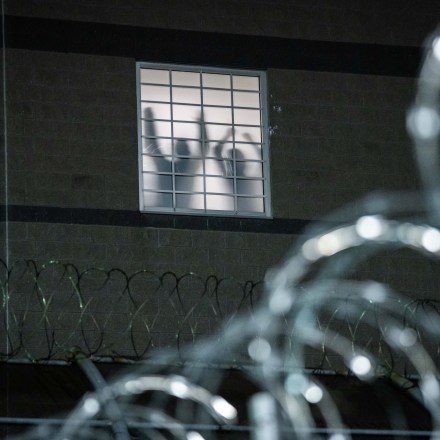
Hundreds of detained people launched a hunger and labor strike at Delaney Hall in Newark, New Jersey, over Memorial Day weekend to protest inhumane conditions at the immigration detention facility run by the for-profit company GEO Group. Protesters flocked to the scene to echo detainees’ pleas for release and better conditions — and were met with brutal tactics from federal, local, and state law enforcement officials, who beat, tear-gassed, and arrested protesters.
“Detainees are raising that they have no access to quality medical care, that they’re not getting needed medications,” Andrea Sáenz, a former federal appellate immigration judge who was fired by the Trump administration last year, tells The Intercept Briefing. “They don’t have enough food to eat. The food that they are getting is spoiled. They’re facing hostility and harassment and violence from the guards.”
This week on the podcast, host Jessica Washington speaks to Sáenz and Aaron Reichlin-Melnick, a senior policy fellow at the American Immigration Council, about the conditions at the 1,000-bed jail and other detention centers across the country. The Trump administration has restricted members of Congress and state officials from oversight of federal immigration detention centers. “ICE doesn’t want people to see the way that they’re treating human beings in these facilities,” says Sáenz.
Intercept reporter Noah Hurowitz, who covers federal law enforcement and immigration, was on the scene at Delany Hall on Monday. He describes the violence that erupted outside of the facility between protesters and law enforcement officers.
“The ICE agents on the scene were quite willing to use violence at times against protesters,” says Hurowitz. “But from everything I saw, the Newark and New Jersey police were much more indiscriminate with their violence and much more willing to attack outright and fire tear gas and really put people in danger.”
Reichlin-Melnick says that the Trump administration’s war on immigrants should concern everyone. “We’re seeing every government database being turned into a tool of the mass deportation state, and that is something that impacts all Americans,” he adds, “because you cannot carry out a mass deportation of 4 percent of the U.S. population without fundamentally transforming the United States into more of a police state.”
For more, listen to the full conversation of The Intercept Briefing on Apple Podcasts, Spotify, YouTube or wherever you listen.
Transcript
Jessica Washington: Welcome to The Intercept Briefing, I’m Jessica Washington, politics reporter at The Intercept.
Noah Hurowitz: And I’m Noah Hurowitz. I cover federal law enforcement and immigration at The Intercept.
JW: Noah, you were outside Delaney Hall in Newark, New Jersey, on Monday afternoon after dozens of protesters were arrested the night before after clashing with state and local police. Noah, what can you tell us about what went down and why protesters were out there in the first place?
NH: The current wave of protests outside Delaney Hall started around May 28, and it was called in solidarity with detainees inside the facility who were withholding labor and hunger striking, some of them, to protest really bad conditions inside the jail, including bad food, maggots in the food, inadequate medical care. There’s all sorts of complaints that we’re hearing from people inside. A wife of one of the hunger strikers called on local organizations to rally in solidarity.
Now, the way that it began was, for several days, there were protesters standing directly outside one of the entrances to Delaney Hall. And the way it would go for several nights was that basically after dark, the protesters would be standing along the entrance. And every time a car had to go in or out, the ICE agents who were standing outside — full kit, masks — would push out and try to clear the way for cars to come in or out.
That is usually when some of the more spectacular clashes that you may have seen took place. So they’d be swinging batons, they’d be hitting people with pepper sprays. It was pretty ugly, but it was this weird choreography of static, static, static — and then conflict when the ICE agents would attack, and then back to a sort of status quo.
But when state and local police arrived on the scene and tried to secure the area around Delaney Hall, that’s when things got really ugly. So on the night of Friday, May 29, and really on the evening of Saturday, May 30, there were these widespread scenes of disorder as police came in with riot shields and gas masks and started firing tear gas.
A number of people were injured, including a freelance photographer for The Associated Press who suffered a pretty severe injury to her leg. Everyone that I spoke to said that as rough as ICE could be — and as daunting as the image of these masked guys just taking swings at protesters was — it really got so much more chaotic when state and local police got involved.
Now, Mayor Ras Baraka declared a curfew, which is ironic because Mayor Baraka was previously arrested protesting conditions at ICE, and he’s, from the beginning, taken a stance of what’s happening at Delaney Hall is unacceptable but protesters need to be peaceful. The way that was enforced was very not peaceful.
On Sunday night, there was a curfew imposed for 9 p.m., and they had also set up a frozen zone on the industrial corridor that Delaney sits. So they had set up police checkpoints about a half mile in either direction so that protesters couldn’t even get in front of the detention facility anymore.
On Sunday night, according to a number of my colleagues who were covering it that night and other reporting that I’ve seen, after 9 p.m., when the curfew was imposed, police began to kettle protesters. They began to surround them and prevent them from leaving, saying that they were now in violation of the curfew.
They let media leave for the most part if they were able to show credentials, but a handful of more citizen journalists were arrested that night. They held dozens of protesters and a handful of reporters in jail. After a certain point, they needed to be released on Monday afternoon.
So when I arrived on the scene, late on Monday afternoon, people were just starting to get released. It was a pretty tame scene. No one was able to get close to the facility. The police had set up these free-speech zones with several dozen protesters there with signs and megaphones. There were many dozens of police and a lot of media.
When 9 o’clock rolled around, most of the protesters started to filter out, with the exception of a handful of protesters who played this brief game of cat and mouse with the police. As police were advancing, they were backing up to the supposed “free-speech zone” about 500 yards away.
There were no arrests that night that I saw. There was a number of Newark community leaders on the scene who were also trying to bring down the temperature, which protesters were not happy about because they felt like this was just an effort to diffuse things.
From what I saw, the ICE agents on the scene were quite willing to use violence at times against protesters in order to maintain that entrance. But from everything I saw, the Newark and New Jersey police were much more indiscriminate with their violence and much more willing to attack outright and fire tear gas and really put people in danger.
JW: You and I have both covered the aggressive and deadly tactics used by federal immigration agents in Minneapolis. Noah, how is what we’re seeing different in New Jersey than what we saw in Minneapolis or even Chicago last year? Or is this just a continuation of more of the same?
NH: I think it’s a continuation of what we saw in those other places with some notable differences. Minnesota and in Chicago, the police and the state and local officials there got a lot of flak from the Trump administration for speaking out against the ICE raids that were happening and for taking a step back.
“Law and order were their first priority, rather than the lawless and lack of order behavior of ICE agents and of this privately operated detention facility.”
Here, the rhetoric was there from the state and local officials. Both the mayor and the governor were speaking quite stridently against the alleged abuses at Delaney Hall and against the violence being used against protesters. But they also seemed a lot more willing to use their authority to diffuse the protests, which has led to a lot of criticism from protesters who were saying that they basically were trying to co-opt this protest, they were trying to prevent any problems for their own political calculations — that law and order were their first priority, rather than the lawless and lack of order behavior of ICE agents and of this privately operated detention facility.
JW: We’re going to get into all of that and much more in our next conversation. I speak withAndrea Sáenz, a senior counsel at Co-Counsel NYC, a nonprofit providing immigration legal services and training. She previously served as an appellate immigration judge with the Board of Immigration Appeals in the U.S. Department of Justice from 2021 to 2025.
Also joining us is Aaron Reichlin-Melnick, a senior policy fellow at the American Immigration Council, where he works to break down the complex reality of immigration law and policy to the media, policymakers, and the general public.
NH: Hell yeah, let’s get into it.
JW: Andrea and Aaron, welcome to The Intercept Briefing.
Aaron Reichlin-Melnick: Thank you for having us.
Andrea Sáenz: Thank you.
JW: Andrea, we just heard from my colleague Noah Hurowitz, who’s been reporting from Delaney Hall. Detainees have been holding hunger and labor strikes at the New Jersey detention center. What more can you tell us about the conditions at Delaney that sparked these strikes?
AS: What’s going on at Delaney is really a microcosm of what’s happening all over the country in terms of incredibly harsh and inhumane conditions in ICE detention, that don’t have any accountability.
At Delaney in particular, detainees are raising that they have no access to quality medical care, that they’re not getting needed medications. They don’t have enough food to eat. The food that they are getting is spoiled. They’re facing hostility and harassment and violence from the guards.
I’ve been really gratified to see elected officials and press and others paying attention to this. But unfortunately, it’s something that we’re seeing all over the country, from Adelanto to Dilley to Camp East Montana in Texas.
JW: So Aaron, your organization, the American Immigration Council published a report earlier this year about the Trump administration’s immigration detention expansion efforts this term. A section of the report reads, “A system of detention, which did not fully take off until the mid-1990s, is now on track to rival the entire federal criminal prison system by the end of President Trump’s second term in office. This expansion is fueled by an unprecedented increase in funding provided by Congress in President Trump’s One Big Beautiful Bill Act. Combined with ICE’s annual appropriations, ICE has nearly $15 billion per year to use on immigration detention through the end of fiscal year 2029.”
Aaron, what can you tell us about the scale of the Trump administration’s efforts to expand detention centers?
ARM: Since taking office, Trump expanded the scale of the detention system by 75 percent, rising from about 40,000 people in detention when he took office in 2025 to over 73,000 people in detention in January 2026. While that number has fallen somewhat in the months since “Operation Metro Surge” in Minneapolis, the Trump administration is sitting on an unprecedented pot of cash that they can use to keep expanding the system even bigger.
“The Trump administration is sitting on an unprecedented pot of cash that they can use to keep expanding the system even bigger.”
JW: Andrea, I want to bring you in. We’ve been hearing about these efforts from the Trump administration to convert warehouses to detention centers. What do we know about those plans, and what can we surmise about what those conditions could look like?
AS: What we know is that the government has spent a whole lot of money to buy large facilities without really having any plan of how they’re going to humanely keep human beings there. We know this because they haven’t even had the plans to figure out how they’re going to handle water and trash and things like that at these facilities, and that’s been the source of some lawsuits.
But I think we have reason to be incredibly worried that the government is in no position to hold a large number of human beings. Delaney is a good example because it’s the largest facility on the East Coast. It can hold up to 1,000 people. We’ve got a human rights situation going on inside, pepper-spraying a U.S. senator on the outside.
“These are preventable deaths.”
So I can only imagine if you were to try to expand the capacity of these facilities, the government just doesn’t have the infrastructure, the accountability, the oversight to care for people. As we’re seeing the numbers of deaths in ICE detention rise — I believe it’s 18 deaths just in this calendar year, which is unprecedented. What really worries me is that these are preventable deaths, and that we’re going to see more of them if the government’s permitted to keep expanding, literally warehousing human beings in this way.
JW: Aaron, obviously there’s a lot of attention on Delaney Hall, on these new makeshift warehouse detention facilities, but what do we know about what conditions are like in facilities around the country right now outside of Delaney?
ARM: ICE detention has never been great and that’s to really underplay it. At the American Immigration Council, we have filed countless complaints over the years about inadequate medical care, verbal physical abuse against people in detention, pressure on people to give up their rights rather than accept time in detention, while they’re fighting their cases. This is endemic to the system and has been something that advocates have raised attention to for decades.
The key difference now is the speed at which the Trump administration is expanding the system and the ways in which accountability has been dismantled. When Trump took office, there was the Office of Civil Rights and Civil Liberties inside the Department of Homeland Security, and the Office of the Immigration Detention Ombudsman as internal watchdogs. Within the first month, the Trump administration slashed their staff to the bones and has since dismantled the Office of Immigration Detention Ombudsman entirely, shutting it down despite a congressional mandate that the office remain in existence. With no internal accountability, that’s left only external accountability, and there they are trying to prevent members of Congress from going into detention centers.
The end result of this is that conditions are worsening, deaths are rising, and the need for reform is growing every day.
JW: That lack of transparency that you’ve mentioned is something that’s come up a lot in our reporting — the inability to monitor what’s happening inside of these facilities is incredibly concerning.
Andrea, I want to ask, from your perspective, what does access look like even for immigration attorneys that are trying to reach their clients?
AS: It’s a good question because there are lots of ways that we should be able to know what’s happening in the detention center. It’s not intended to be a secret.
I’ve been representing detained people for 18 years, and it’s always been part of the practice to drive out and physically see your client, have them sign papers, that their family members are allowed to visit them. And that when they have a court hearing, they’re either produced in person or they’re there on video, and observers can come and watch because it’s a public court hearing.
Right now, what we’re seeing is that all of those things are being obstructed. It’s incredibly hard to even find out where your client is anymore because they’re being transferred from state to state. They disappear off the public detainee locator. ICE is not responsive.
As Aaron mentioned, there aren’t oversight agencies to complain to, and the immigration court system is increasingly keeping out observers and press from even watching these hearings to know what’s happening.
And then, of course, on the oversight side, as we’ve been talking about, part of what’s happening at Delaney, the reason why this escalated with elected officials, is because they wanted to get inside the facilities and exercise their right to oversight. They’ve been denied that right and in New Jersey, you have state health officials who weren’t allowed to go inside and inspect. And so ICE doesn’t want people to see the way that they’re treating human beings in these facilities.
But at least I’m gratified that people from lawyers to family members to elected officials keep trying.
JW: Do we have a sense of whether or not conditions are deteriorating? Obviously, these are horrific conditions that we’re describing, but maggots in the food, lack of access to medical care, these are not necessarily new issues inside of detention facilities.
Aaron, are we seeing a much worsening of conditions, or is there just a lot more attention on this issue right now?
ARM: It’s a little bit of both. There are some issues that you’re seeing raised in the media and brought to people’s attention now that aren’t new. As you said, maggots in food, bad medical care. This is not a new problem.
When you look at spoiled food, there are DHS Office of Inspector General reports going back many years which document violations of standards at Essex County Jail outside of New York City, a jail that is no longer working with ICE. Inspectors went there in 2018 and found spoiled food, covered in mold in the fridge that was being served to people. So that’s not a new issue.
But what is new is the way in which the Trump administration has made getting out of detention more difficult so that more people are being detained there. Before last year, the Trump administration adopted the legal position saying that essentially any person who ever entered the United States across the southern border is permanently barred from seeking release on bond, even if they’ve been here for 20 years with no criminal record.
That means more people in detention, more overcrowding, and as they open up these new facilities or repurpose old facilities, like Delaney Hall, it’s clear that there isn’t enough staffing to keep these places operating at the capacity that they are operating. This is not a problem that’s also unique to immigration detention.
There is a shortage of corrections officers in jails and prisons nationwide and a shortage of prison healthcare providers. One of the biggest ones, Corizon, actually went bankrupt two years ago. Given that, it’s not a surprise that the administration is failing to meet the standards that it is legally required to meet.
“What is new is the way in which the Trump administration has made getting out of detention more difficult so that more people are being detained there.”
AS: I do think that conditions are deteriorating. And I think another factor is the increased enforcement itself is causing severe overcrowding, including in these facilities that were intended to be holding facilities. So one of the places that conditions have been the source of lawsuits is in places like the Baltimore Hold Room, 26 Federal Plaza in New York City.
These are facilities where people are supposed to be taken for an hour or two after they’re arrested by ICE, and instead people have been packed in like sardines, sleeping on the floor next to toilets, and judges have had to order that you can’t hold people overnight there. So that’s part of the problem.
A second aspect to the problem is because ICE enforcement is so indiscriminate at the moment, and, that’s gone back and forth with time, but I do think it is worse than I have ever seen it, that ICE is not holding back from arresting very young people, very sick people, very old people’s moms and dads. So you have medically vulnerable and sick people in ICE detention with these conditions, and you’re setting up a recipe for disaster.
JW: To your point, at The Intercept, we’ve covered the detention of pregnant women and postpartum women who previously have been exempted, generally speaking, from detention, who are now in these facilities, who are lacking access to medical care, water, all of these necessities you need to thrive in pregnancy.
“ICE enforcement is so indiscriminate at the moment … ICE is not holding back from arresting very young people, very sick people, very old people’s moms and dads.”
[Break]
JW: The Trump administration recently made some pretty significant changes to the green card process. Aaron, can you walk us through what they did and how it’s going to impact people applying to become permanent residents?
ARM: A couple weeks ago, the Trump administration put out a memo from U.S. Citizenship and Immigration Services, America’s legal immigration benefits agency. That memo said that for the first time ever, adjustment of status where someone applies for a green card from inside the United States, would no longer be treated as a normal part of the legal immigration process, but would instead be treated as an extraordinary benefit and only given in an act of administrative grace.
This was particularly strange because adjustment of status is the norm by which about half of all people get their green cards. These are people who are in the United States already, living here either on a visa or seeking to change their status. So it could be anything from a foreign student who comes here, falls in love with an American at college, and applies for a green card, to someone present on an H-1B visa for 10 years who is seeking to finally get their green card and become a lawful permanent resident.
Almost immediately, this set off a lot of backlash, and the administration has had to walk this back a little bit because their initial suggestion in this memo was that potentially as many as half a million people a year would have to leave the United States and seek an immigrant visa in their home country if they wanted to get a green card that they were legally entitled to.
Silicon Valley was not happy. A lot of people were very clear that this seemed like an unnecessary process because the vetting that someone gets inside the United States is identical to the vetting that they get if they’re outside the United States seeking a visa, which means the only difference is where the bureaucrat is deciding this.
Is it a bureaucrat at a consulate abroad deciding if you get a green card, or a bureaucrat at an office in the United States? From the government’s perspective, that should make no difference, but for the immigrant themselves, this means time away from their family and home in the United States, time away from their job, and the possibility that if there’s some error or red tape, they might not be able to come back for maybe weeks, months, or longer, which just threw a wrench in a lot of people’s plans for staying in this country and being on a path to citizenship.
However, crucially, the administration, ever since they put out that vaguely worded memo, has been trying to walk it back somewhat, and is now suggesting it may apply to a much more narrow group of people, potentially people who overstayed visas years ago and are trying to get a green card through a spouse, which would be a lot narrower a group, but still impact potentially tens of thousands of people.
JW: I’m not going to lie, this does seem like quite a mess.
“There is this level of contempt and dismissiveness even for people who have forms of status.”
Andrea, are we seeing other ways that the Trump administration is targeting people with legal status?
AS: Yes. What really the big picture here is that’s alarming to me with both the green card memo and some of the decisions coming out of the Board of Immigration Appeals that I used to sit on, is that there is this level of contempt and dismissiveness even for people who have forms of status.
So it really, I think, gives lie to that idea that the administration or Republicans are only interested in illegal immigration, they’re only interested in people who are out of status. Because you’re also seeing increased targeting and detention of Dreamers, people with DACA, young people with special immigrant juvenile status who have an approved application to stay in the U.S. and are in a line to get their green cards, people who have visas for being victims of violent crimes or trafficking.
These are all kinds of status that already exist in law that Congress has created, and you’re seeing these people additionally detained and put into proceedings. And the Board of Immigration Appeals is putting out case law day after day saying, “These classes of people are not special. They’re not worthy of particular protection. They can all be denied bond. They can all be put in removal proceedings and detained.”
JW: And we’ve also obviously seen a targeting of U.S. citizens who’ve stood up for immigrants as well. Since Trump fired Homeland Security Secretary Kristi Noem and former Border Patrol official Gregory Bovino “retired” after violent raids in Minnesota killed two American citizens, it appears the Trump administration has at least toned down publicizing these aggressive raids.
But has there actually been a shift in tactics under the new DHS secretary? Aaron, I want to start with you, and then Andrea, I want to get you in as well.
ARM: The short answer is it does appear that yes, they have pulled back from the aggressive raids that were really characteristic of the Noem term, in particular under the leadership of Gregory Bovino, a mid-level Border Patrol official who was unexpectedly elevated to the position of “commander-at-large” of DHS operations in the interior.
What we are seeing now is a return in some ways to the more traditional targeted so-called enforcement tactics, where ICE officers have lists of people that they are specifically intending to arrest, go out into the communities to arrest those specific people.
But we are seeing a major increase in so-called collateral arrests. If they arrest that one person, they also might arrest everyone else in the building who’s nearby or anyone who looks like an immigrant near there. The end result of this is that the administration is now arresting slightly fewer people than during Operation Metro Surge. Detention numbers have come down, about 10 to 20 percent from the height of that operation.
But they are building out a more robust enforcement capacity, and especially relying on state and local police who are cooperating with them through so-called 287(g) agreements, agreements that allow local law enforcement to act as ICE officers. So the Trump administration’s new plan is to gradually build up the capacity rather than rushing out to make splashy headlines, and they believe that is more sustainable in the long term, both from an enforcement perspective and also importantly from a political perspective.
AS: We are seeing not only a decrease in maybe these large-scale campaigns that have a cute nickname. We’re also seeing a decrease in courthouse arrests, partly because they were stopped by litigation. But I am continuing to see waves of street enforcement and street arrests that are often racially motivated, and I think we have to keep our eye on that.
Early on during the Los Angeles ICE surge, we saw a lot of those stories of ICE stopping people, regular people, Latino people walking down the street, going to school and work, including U.S. citizens, and that got a lot of press. I think those arrests are still happening; they’re just happening one at a time in less obvious ways.
I do a lot of habeas corpus litigation, and so I get a lot of emails and calls about who has been arrested. And, Aaron mentioned this idea of targeted arrests, which is what ICE says that they’re doing, that they’re looking for a particular person who has a criminal arrest or who has a prior deportation order.
But there are a lot of arrests in which ICE says that they’re looking for a target, and really what they have done is drive up next to a Latino person and ask them for their ID and then arrest them — when they were very obviously not the target that they were looking for. So I think we can’t let the idea of targeted enforcement cover the actual reality that people, especially people of color walking down the street, have something to fear from ICE.
I think it’s a terrible state of affairs, but I think we have to continue to be vigilant and push back on it.
JW: In that vein, how would you characterize this phase of Trump’s immigration agenda? Where is Trump in this? What is the end goal here that we can visualize at this stage?
AS: This is part of the question is, like, how much does Trump himself have to do with this as opposed to other people in the administration?
“People in the administration … are intending to decrease the amount of immigrants in the United States, both legal and undocumented.”
We’re in a transitional phase as we have new DOJ and DHS leadership. Certainly, the people in the administration like Stephen Miller, who have had an agenda all along, are intending to decrease the amount of immigrants in the United States, both legal and undocumented. And that it’s intentional to have people be scared of the kind of enforcement that I’m talking about that the administration hopes that a lot of people will get scared and frustrated and leave the United States, including through things like the green card memo, that it’s just so confusing and overwhelming and expensive to stay here that people will pick up and leave, even at incredible cost to our economy and to our fabric as a community.
What’s exactly coming next I can’t say, but I’m guessing that there is more to come. Trying to advise clients in this atmosphere, trying to advise immigrant communities is really hard. People are scared, and it’s hard to tell them not to be.
ARM: To add on to that, the administration is very clearly trying to create a climate of fear for immigrants. While they claim that they are aiming that at undocumented immigrants, fear has a splash zone. You can’t target fear on an individual level like that, and communities are frightened. But as Andrea said, this is a transition moment right now.
What we are seeing them do is attempt to take a system that was always imperfect but strived towards due process and basic principles of fairness, and turning it into an assembly line for deportations — one in which basic legal rights are tossed aside and procedures are followed potentially to the letter, but in clear violation of the spirit.
“What we are seeing them do is attempt to take a system that was always imperfect but strived towards due process and basic principles of fairness, and turning it into an assembly line for deportations.”
You see this with new policies like “mega master” calendar hearings, 100 people scheduled for a hearing with maybe 72 hours of notice, maybe sent by mail or email that they might not even know about the hearing ahead of time because they were scheduled for a hearing in 2027, and all of a sudden they’re told, “Show up two days from now in New York City. Oh, and by the way, you might not have a lawyer.”
You have no idea what’s going to happen to you. When you show up at that hearing, you’re told, “You have 20 days to get everything on file. We don’t care that you don’t have a lawyer. We’re moving forward.” If you miss that hearing, you’re ordered deported immediately.
They’re doing this even for children, and they’re firing the judges that were seen to be too liberal or too willing to grant cases, even if those cases were legally meritorious. The asylum grant rate has dropped to less than 10 percent of cases, when before it was 30 to 40 percent of cases were granted. All of this is a system that is being systematically turned against the immigrant and against the idea of a fair day in court.
However, given the scale of immigration court backlogs, there are still over 3.2 million cases pending in the system. It’s not clear whether they will actually be able to clear these backlogs by the time Trump leaves office. Crucially, all of this funding in the One Big Beautiful Bill Act and the funding that Congress has been debating, the additional $70 billion for CBP and ICE that’s being debated in the most recent reconciliation bill — that is all set to expire at the end of Trump’s term, by the end of fiscal year 2029.
So we are in a situation where they may get all of this infrastructure in place, and then who controls Congress in 2029 will determine whether that infrastructure has to be slashed back and whether we can get some handle on the system and help right the ship.
JW: I want to get into control of Congress in just a moment.
But Andrea, first I wanted to ask you, because you have personal experience with being pushed out because of the perception of your views on immigration. So I’m curious, how are you viewing this effort by the Trump administration to push anyone out who could have any sympathy for immigrants in the system?
AS: So I was an appellate immigration judge on the Board of Immigration Appeals, which is the second level of the immigration court system. I was on the BIA for three and a half years during the Biden administration. Starting last year, the administration started to fire both trial-level immigration judges, and they also fired all of the remaining Biden appointees off of the BIA, which is the body that sets case law.
It’s been honestly devastating to see this happen to an administrative court system that obviously needed improvement, but was functioning and had a lot of excellent public servants that were trying to give people due process day in and day out. The Biden administration had really tried hard to put people with a variety of professional experience on the bench, both the federal bench and the immigration bench, in terms of not only having all prosecutors on the bench there because they can be good judges too, but also putting people who had been defense attorneys and civil rights attorneys, like myself. I think that had made the court system stronger and better.
One thing I can say is that when I was a judge, I didn’t have any pressure coming from the top telling me how to rule. We had training, we had expectations, we had normal job evaluations, but I didn’t have anyone looking over my shoulder and saying, “Why did you do that?” Or “You’re not allowed to do that.”
What’s coming out now is that’s exactly what’s happened to the immigration court system such that it’s no longer independent. You have leadership of the system watching which judges grant asylum too much, which judges grant bond too much. It destroys any idea that judges are being allowed to apply the law independently as opposed to enacting a political agenda.
It’s also just exhausting and confusing for the immigrants actually appearing before the court, not knowing if they’re going to get a fair day or they’re just going to be immediately deported without a chance to present their evidence. It’s a crazy time to be an immigration lawyer and have to do hundreds of hours of work not knowing if you’re going to get a judge who’s going to give you 10 minutes to present your case.
So certainly a lot of us are gearing up to do more federal court and appeals work, but the bigger issue is that the immigration court system has ceased to function in a way that lets judges make decisions independently.
JW: Aaron, I want to get back to your point about Congress and the midterms.
So we’re obviously in the middle of an election year. What are you hoping to see from candidates on immigration, and what do you hope legislators change if they actually make it to Congress?
ARM: What we need to see is a fundamental rethinking of what interior enforcement looks like inside the United States.
Polling consistently shows that the American public believes ICE has gone too far. As much as 2 out of every 3 Americans think that the Trump administration’s mass deportation campaign has gone beyond what they want. But at the same time, people still do want some form of immigration enforcement.
“Our interior enforcement system has not been updated in 30 years. We are using laws that were crafted by Congress in the height of the tough-on-crime era of the 1990s.”
So I would love to see legislators look at revamping the system towards one that embraces principles of compliance and proportionality, accountability and safety, really focusing on actual public safety threats, not people who’ve been here for 20, 30 years who’ve never had any interaction with the criminal justice system.
At the same time, help restore a system that allows judges to decide that deportation doesn’t make sense in every case. Right now, our interior enforcement system has not been updated in 30 years. We are using laws that were crafted by Congress in the height of the tough-on-crime era of the 1990s.
We live in a very different time today. Most Americans believe there should be some form of path to legal status for people who have been living here for years without getting in trouble, working hard, raising a family, and being productive members of their community. But the law just doesn’t reflect that, and so Congress really needs to sit down and think through what kind of compromise will produce a better system that helps Americans and doesn’t take us further down this path of mass deportations, which just tear communities apart.
AS: I agree with Aaron’s frame, but I also want to say that I think we have a bigger issue that we’ve spent years now hearing this administration dehumanize immigrants and talk about people who are in our neighborhoods and communities like they are less than, that they don’t care about their families the way we do, and that asylum is a fraud on the system, that people don’t deserve asylum.
Both administrations recently, frankly, have done that. So I think going forward, it’s time for us to not be afraid to say that immigrants are an incredibly important part of our communities, and also that there is a place for the United States to welcome bona fide refugees and asylum-seekers. Both the refugee program and the asylum adjudication program have been totally decimated in recent years. And of course, we need regulations on that program. We need ways to handle the backlog.
But at its core, we have to decide that the United States is a place where people who are fleeing persecution and torture can, at least in some instances, find safety here. I think that’s part of our historical heritage that we shouldn’t turn away from. I don’t think candidates should be afraid to say that, at risk of seeing “soft on immigration.”
It’s time to stand up for people who are an incredibly important part of our communities, and acknowledge their contributions, and then figure out what’s a system going forward that allows people to work and live in safety together.
JW: Just thinking about everything we’ve discussed today, there is so much happening in the immigration space, so much horror, frankly. What should people be paying attention to right now? Aaron, I want to start with you.
ARM: I think with everything else going on in the world right now, with the war in Iran, rising gas prices, and the deconstruction of the American state by the Trump administration, it’s easy to let the immigration issue fall by the wayside now that they are trying to be a little bit more quiet.
But every single day, the administration is arresting around 1,000 people, or slightly more than 1,000 people, and many of those have been members of our communities for decades. They have family members here. The climate of fear and surveillance that is being imposed on immigrants is growing.
That is something that impacts all of us. We saw this week the Trump administration say that they wanted to try to restrict undocumented immigrants from even having bank accounts. We’re seeing every government database being turned into a tool of the mass deportation state, and that is something that impacts all Americans because you cannot carry out a mass deportation of 4 percent of the U.S. population without fundamentally transforming the United States into more of a police state.
That should concern everybody, even if it’s not something that they’re seeing on the headlines because of splashy raids in American cities.
AS: A lot of this news is really sad and hard to keep reading. I feel that myself as someone who has to for my job, continue to read immigration news. I would encourage people to continue to pay attention to stories of courage and people who are bringing the conditions of detention centers and what’s happening to their families to light.
I just spoke yesterday to a client of ours who was released from Delaney Hall on Monday because of a habeas corpus petition that we won. I was asking her what people need to know, and while she was telling me about the poor medical care and the lack of food, I was just really struck by her care for the other people who were still detained there and her spirit and the way that when she was released from that facility, the protesters outside cheered and chanted her name.
There are folks inside Delaney and hunger strikers in Adelanto, people in Camp East Montana have brought a lawsuit to complain about their own conditions. And so there are a lot of examples, from Minnesota to detention of people being courageous and having hope in these times.
So that’s what I hope people can keep watching for and participating in.
JW: That’s a really beautiful message. And we’re going to leave it there, but Aaron, Andrea, thank you both so much for joining us on the Intercept Briefing.
ARM: Thank you for having me.
AS: Thank you.
JW: That does it for this episode.
This episode was produced by Laura Flynn. Ben Muessig is our editor in chief. Maia Hibbett is our managing editor. Fei Liu is our product and design manager. Nara Shin is our copy editor. William Stanton mixed our show. Legal review by David Bralow. Slipstream provided our theme music. This show and your reporting at The Intercept doesn’t exist without you.
Your donation, no matter the amount, makes a real difference. Keep our investigations free and fearless at theintercept.com/join. And if you haven’t already, please subscribe to The Intercept Briefing wherever you listen to podcasts. Do leave us a rating or review. It helps other listeners to find us. Let us know what you think of this episode, or if you want to send us a general message, email us at podcast@theintercept.com.
Is there an immigration detention center near you that you’re concerned about or another issue? Send us an email or leave us a voicemail at 530-PODCAST. That’s 530-763-2278.
These Republican Lawmakers Challenged Abortion Bans. Then They Faced Backlash.
If Eric Murphy loses his primary election on June 9, he believes he already knows one reason why.
Last year, the North Dakota state representative, a Republican, tried to expand the window of pregnancy in which women could access abortion. The state legislature had banned it for almost everyone from the moment of conception.
Tied up in court, the ban hadn’t yet gone into effect. But Murphy wanted to lock in a less restrictive law, making abortion accessible up to 15 weeks and even later for women whose doctors deemed it a medical necessity.
To convince his fellow legislators, he read out loud from two ProPublica stories about women in Texas who died without lifesaving care. “Physicians felt compelled to follow the law,” he said in a hearing, “and both women died so that an inane law could be followed.”
A conservative colleague had warned him not to file the bill, Murphy told ProPublica, recalling the man’s words: “I can no longer protect you from who’s going to come after you.”
There was some truth to that sentiment.
At least four Republican state lawmakers who challenged severe abortion restrictions lost support from anti-abortion groups and key party allies and went on to lose primary elections, ProPublica found.
The blueprint in those races was remarkably similar. Opponents either embraced stricter abortion policies or avoided the issue altogether. Anti-abortion organizations campaigned against the incumbents, party endorsements shifted to their opponents and activists worked to turn out voters in low-participation primary elections.
In some of the races ProPublica examined, lawmakers who replaced abortion-ban reformers went on to support even stricter abortion legislation. In South Carolina, for instance, two new senators supported a bill to eliminate almost all exceptions to the state’s abortion ban. One provision of the bill would send women convicted of illegally terminating their pregnancies to jail.
Murphy is one of at least two Republican state lawmakers now facing a contested primary after trying to modify their states’ abortion restrictions. Richard Briggs, a state senator from Tennessee, is also fighting to keep his seat. In 2019, Briggs voted for the state’s so-called trigger law — a ban that would snap into place if the federal right to abortion was ever overturned.
But he had second thoughts after that actually happened. A cardiothoracic surgeon, Briggs realized the newly activated law didn’t provide adequate protections for patients having medical complications. “As a medical doctor, I drew the line,” he said in an interview. He introduced bills for a clearer medical exception and protection for doctors who intervened in cases where a fatal fetal anomaly risked the mother’s health.
The latter bill failed and now serves as ammunition for the challenger vying for his seat in the state’s Aug. 6 primary. “My opponent consistently works to weaken Tennessee’s pro life laws,” Kent Morrell says on his campaign website, noting that Tennessee Right to Life had revoked its endorsement of Briggs.
Murphy, who teaches biomedical sciences at the University of North Dakota’s medical school, ultimately did not succeed at reforming the state’s ban. His bill failed 87-6, and the state Supreme Court later reinstated the original ban, which forbids abortion from conception, with exceptions for rape and incest up to six weeks and to save the life of the mother.
Murphy discusses campaign issues with retired teacher Deb Stahlberg at her home in Grand Forks.Dan Koeck for ProPublica
The first time Murphy ran for election, his county’s Republican Party had endorsed him. Not this time. Instead, the party endorsed his two challengers, including Jill Chandler, the executive director of a “crisis pregnancy center” who believes abortion should be banned from conception.
She told ProPublica she happened to be present in the committee room when Murphy made the case for his bill. “To know that he was an endorsed Republican candidate from my district and one that I had voted for because of that endorsement was eye-opening,” she said. “I remember thinking, ‘This can never happen again.’”
It was not the first time either Briggs or Murphy had taken positions that aggravated members of their parties in legislatures that have taken sharp turns to the right. Murphy voted against book bans and private school vouchers. Briggs had urged the public to get COVID-19 shots and has said that medical expertise should trump politics in decisions that involve public health.
Briggs expressed confidence in his election chances; he feels that voters agree with the decisions he’s made and noted that his Republican colleague, Sen. Becky Duncan Massey, survived a primary challenge over her support for abortion-ban exceptions.
Murphy believes the “silent majority” supports the intent of his abortion bill, but primary races historically have low turnout. It could come down to a handful of votes, he said.
“I might lose an election over this,” Murphy said, “but would I rather win an election by not doing the right thing?”
The Fallen Reformers
As a Republican state representative in Louisiana, Mary DuBuisson sought legislation that would make sure victims of rape and incest could terminate their pregnancies, and she also sponsored a bill that would have allowed women whose pregnancies were not viable to end them. She ended up losing a primary runoff.Melinda Deslatte/AP Photo
Mary DuBuisson, a former state Republican representative in a suburb outside of New Orleans, considers herself passionately “pro-life.” Like Briggs, she voted for her state’s near-total abortion ban in 2019. Three years later, just before Louisiana’s trigger law was implemented, it came before the legislature again.
Recognizing that women would now have to live under the restriction, DuBuisson wanted to make sure victims of rape and incest could terminate their pregnancies. When her colleagues refused to include those exceptions, she became the only Republican to vote against the ban.
A year later, she caused a stir when she sponsored a bill that would have allowed women whose pregnancies were not viable to end them. “To force a woman to carry to term with zero chance of survival is heartless and cruel,” she said at the time.
She didn’t feel it would be controversial. Other Republican women in the House told her she was doing the right thing. But when it was time to vote, another female Republican state lawmaker made a motion that ultimately succeeded at killing the bill in committee. “I mean, I just couldn’t understand,” she said of all her colleagues. “What if this was you, your daughter or granddaughter?”
When she came up for reelection, her primary opponent latched onto her record. Brian Glorioso was an attorney she had handily defeated in 2018. He called her proposed legislation a leftist attempt to circumvent the state’s abortion ban and said any “pro-abortion” doctor would falsely deem a pregnancy nonviable in records just to perform the procedure.
She beat him in the Oct. 14, 2023, primary by 384 votes — not enough to avoid a runoff.
Then, he got some extra support.
On Oct. 16, Louisiana Right to Life told its followers this runoff was key. Glorioso was expected to have a 100% “pro-life” voting record, while DuBuisson’s was 77%.
On Oct. 27, the state’s new governor-elect, Republican Jeff Landry, endorsed him, citing issues other than abortion; he wouldn’t tell ProPublica whether DuBuisson’s record on it played a role. But Landry, who had defended the state’s ban as attorney general, made clear during his campaign that he was “an unwavering defender of life, especially in the face of adversity,” citing his 100% rating from a national anti-abortion group.
“I think it partially cost me my election,” DuBuisson said of her attempts to reform the ban.
History repeated itself the following year, this time in South Carolina.
Three state senators — all Republicans who consider themselves “pro-life” — worked across party lines to defeat an abortion bill that essentially banned the procedure from conception and eliminated rape and incest exceptions. At the time, the state allowed abortion up to 20 weeks.
Sens. Sandy Senn and Penry Gustafson spoke out against limitations on abortion access for victims of rape and incest. Sen. Katrina Shealy, who had the longest tenure for a woman in the state legislature, pushed for making abortion accessible up to 12 weeks and later for exceptions in cases involving rape, incest and fatal fetal anomalies. Ultimately, a six-week window with rape, incest and fatal fetal exceptions became law.
South Carolina state Sens. Sandy Senn, left, Katrina Shealy, center, and Penry Gustafson, right, show off model spines they received from Students for Life Action with a message to “get a backbone” and vote to ban abortion at six weeks. The three, nicknamed the “Sister Senators,” ended up losing their reelection bids.Jeffrey Collins/AP Photo
Amid the Statehouse showdown, they were nicknamed the “Sister Senators.” All lost their county GOP’s endorsement to their male opponents.
But the bigger repercussions came from anti-abortion groups that mobilized a multifront grassroots campaign against them. Students for Life Action announced that it generated “37,000 pieces of mail, almost 130,000 personal text messages, more than 51,000 phone calls and thousands of doors knocked” to unseat the trio.
“All three of them got voted out — every single one of them lost because of that decision,” said Dr. Matthew Clark, the executive director of Personhood South Carolina, which believes abortion shouldn’t exist at all and that women who have them should be prosecuted for murder.
Clark, an allergist and Presbyterian pastor, said his group’s desired legislation has a better chance to advance now that the Sister Senators have been replaced.
Matt Leber, who beat Senn, previously co-sponsored a bill as a member of the state House that would make abortion a crime equivalent to homicide. It failed to advance, and Leber withdrew his name as a co-sponsor amid a controversy surrounding it in 2023.
This legislative session, Leber and Carlisle Kennedy, who beat Shealy, supported a bill that carries misdemeanor criminal penalties for women seeking abortions, with jail time up to two years. Senate Bill 1095 passed with supermajority support out of a committee Leber sits on.
The bill died before the session, but watchers of abortion restrictions noticed it got further than any other similarly repressive legislation ever has.
A Fateful Disconnect
Murphy speaks to a voter in Grand Forks.Dan Koeck for ProPublica
The outcomes do not neatly match public polling. Surveys in states such as South Carolina and Louisiana have found that many Republican voters support at least some exceptions to abortion bans, including in cases of rape or threats to a woman’s health.
But primary elections often draw only a small share of eligible voters, giving outsized influence to highly engaged activists and organized interest groups.
DuBuisson’s runoff drew about one-third of registered voters. Participation in the South Carolina primaries was lower still. Some races were decided on tiny margins; Senn lost hers by 33 votes.
North Dakota is one of the few states with a multimember system, where two representatives and one senator govern together in the same district. District 43, which Murphy currently represents, is one of the only purple districts in an otherwise deeply red state. It includes part of Grand Forks, a growing college town home to the University of North Dakota.
Murphy’s fellow representative, Democrat Zac Ista, told ProPublica he hadn’t been able to make a dent in this legislature. He announced he wouldn’t be seeking reelection, opening up an opportunity for a Republican takeover of the district.
Ista said the lack of support rallying around Murphy is due to his position on abortion, as well as culture-war legislation he refused to support. “I think it’s illustrative of that schism, where at this district level, Republicans are really trying to sort of press the most extreme conservative opinions,” Ista said.
Richard Glynn, the GOP county chair in Murphy’s district, had previously supported Murphy’s abortion bill. In written testimony, Glynn shared his experience hearing about young women performing illegal abortions when he was a freshman at the University of South Dakota in 1966. Four young women who were in sororities died from using metal hangers to terminate their pregnancies, he wrote.
“These deaths were viewed as preventable if these girls could have received competent care. Unfortunately, North Dakota is going down the same path with limited access to obstetric care that negatively impacts the health of the woman,” his letter said.
When reached by phone, Glynn said delegates in the county voted and Murphy had the least amount of votes, which is why he did not receive the county’s endorsement.
Glynn declined to answer more questions before hanging up on a reporter.
One of Murphy’s opponents, Mike Holmes, has drawn a lot of excitement — and an endorsement from Gov. Kelly Armstrong — for his expertise in energy technology and industrial development. The governor said Holmes understands “what it takes to keep North Dakota’s economy strong.” Holmes has been silent on abortion and didn’t respond to ProPublica’s requests for an interview.
Chandler, who touted her “respect for life” in a campaign mailer, is favored among anti-abortion groups. “It’s a pretty stark contrast,” said Bridget Turbide, executive director of North Dakota Right to Life, who called Murphy’s proposal “the most extreme pro-choice bill we’ve ever seen.”
A flyer promoting Jill Chandler, one of Murphy’s opponents, was paid for by Citizens Alliance of North Dakota, a conservative group that opposes abortion among other causes.Photo courtesy Eric Murphy
Citizens Alliance of North Dakota, a conservative group that opposes abortion among other causes, paid for a mailer calling Chandler a “champion of family values.” The same group marked Murphy in “bad standing” in an online roster of legislators, questioning his alignment with North Dakota values.
Murphy’s third colleague who also represents District 43, Republican State Sen. Jeff Barta, campaigned alongside him in 2022 as part of a unified Republican ticket when the primary election was uncontested.
Asked about the upcoming race and the candidates, Barta pointed to Murphy’s proposal that would have expanded abortion access in North Dakota.
“Last session, he introduced House Bill 1488, which created a little divide there,” Barta said.
Barta said Murphy has also broken with the party on other issues.
“That probably opened the door for the third candidate to run,” Barta added. Had that not happened, Murphy would have made it to the general election without having to defend his spot on the ballot.
Before the Supreme Court overturned Roe v. Wade in 2022, lawmakers taking such nuanced stands on abortion bans may not have risked a career death sentence, said abortion historian and law professor Mary Ziegler.
“The kind of incrementalism that Eric Murphy seems to be doing is something from a bygone era, where people were more pragmatic in the movement and not punished for it,” she said.
US-China relations are driving South Korea’s distancing strategy
The US-China Summit of May 14, 2026 in Beijing was an attempt to mitigate great power competition and promote bilateral ties through “constructive strategic stability.” Chinese President Xi Jinping argued against the inevitability of the “Thucydides trap,” which expects an emerging power to go to war against a declining power that it is displacing. US President Donald J. Trump endorsed the need for stability, while deflecting the idea of US decline by attributing it to his predecessor.
Both the US and China are keen to talk up economic interaction, which is not described as dependence, and for the present are sidelining strategic issues. As ever, Trump bragged about his achievements, and the White House subsequently applauded the “great deals” signed with China during his visit to Beijing.
As a China watcher paying close attention to Chinese defense policy and military strategy, and writing regular articles on these subjects, I have some further remarks on the issues addressed by my May 12 Asia Times article entitled “Trump’s visit to Beijing: a great opportunity for China?”
I received some critical push-back to my arguments about the relative decline of the US as a great power, and some commentators saw my article as attributing cowardice to the US in its geopolitical competition with China.
Despite this criticism, I remain pessimistic about the murky and muddled bilateral relationship between the US and China. The allies and strategic partners of the great powers have been left in the dark about the true status of their competitive relationship.
Countries like South Korea need to know enough about what is really going on to plan for the future: their survival will depend upon rapid responses and an increasing degree of autonomous action.
The recent US-China summit was mostly concerned with diplomatic theater, and failed to deliver any concrete structural agreements. Both nations emphasized strategic risk management within a pragmatically negotiated framework that ignores their cut-throat competition on, for example, restructuring supply chains, applying AI to military capabilities and shifting energy security paradigms.
Both great powers are relying on sustained engagement to absorb geopolitical pressure and to address their respective domestic challenges. The US got politically essential victories for its agricultural and aerospace sectors, and also some movement on access to rare earths. China got a predictable trading environment to cushion the impact of declining export volumes and foster domestic technological advances.
President Trump’s back is against the wall. The upcoming midterm elections are likely to curtail his powers and may even make him a lame duck. After his failed attempt to weaponize tariffs; his picking the wrong side in, and then washing his hands, of the Ukraine War; and, most of all, his catastrophically foolish war of choice against Iran, Trump is desperate to portray himself as successful.
US stocks of rare earths, essential to all advanced technologies and effectively monopolized by China, have been seriously depleted by the Iran War.
At the summit, President Xi authorized a limited supply to the US, and also agreed to purchase 200 commercial aircraft from Boeing, as well as quantities of soybeans, beef, and pork. As a quid pro quo, Trump made some ambiguous remarks about the status of Taiwan, and the US has subsequently paused a big arms sale to the island. The Taiwanese government was deeply disappointed to hear Trump publicly describing the sale as a negotiating chip that he was discussing with China.
According to the fact sheet from the summit, the US and China have chosen to pursue a “constructive relationship of strategic stability” based on “fairness and reciprocity.” In practice, however, these sentiments are interpreted very differently in Washington and Beijing, and the underlying tensions in the relationship cannot be wished away by any such verbal formulas.
Eventually the competition will resurface, regionally and then globally, and the nations most immediately affected are Japan, South Korea, North Korea, Taiwan and the ASEAN nations, all of which must navigate a path between the two great powers to assure their survival.
Is it hyperbole, then, to characterize the current attitude of the US, at least, as a kind of cowardice? It is doubtful that President Trump has any interest in what happens in the Indo-Pacific, or even in the wider world, beyond the next few months or years. Certainly the US is refusing to acknowledge that a geo-strategic power shift is underway, and China only mentions this fact in strictly codified terms.
This author anticipates that, as a consequence, many nations around the world will now begin to distance themselves from these great powers.
Indeed, for South Korea, such distancing is already happening. The South Korean military has a long history of cooperation with US forces, starting with fighting alongside them during the Chinese invasion of the Korean Peninsula in 1950. But now they have been effectively marginalized by President Trump’s policies of “America First” and “Make America Great Again (MAGA).”
Despite verbal assurances, the US security commitment to the combined defense posture against threats from North Korea has clearly been affected. Unsurprisingly, South Korea is rapidly expanding its autonomous defense capabilities, including the project to build nuclear-powered submarines. And popular opinion would prefer to move farther, with majority support for developing an indigenous nuclear deterrent.
American hegemony has suffered a significant dilution in recent years: US forces can still look impressive against tenth-rate powers like Venezuela, but President Trump’s spectacularly ill-advised decision to attack Iran has revealed the limits to the technological edge that US forces enjoy.
It is difficult to see how this adventure can end in anything other than a humiliating defeat for the US, and many US allies are now seeking to establish more independent security strategies, less reliant on US support.
Thus, South Korea has declined requests to participate in US-led maritime security operations in the Strait of Hormuz, pragmatically preferring to pursue its direct national interests without deferring to the US or China.
Such sentiments have been criticized as presenting China with an excuse to subvert the US alliance with South Korea. These arguments would have some merit were it not for the fact that Trump’s chaotic style of governance is already undermining the alliance, without the need for any Chinese assistance.
Just nine days after Operation Epic Fury was launched on February 28 against Iran, the US Armed Forces’ inventory of the so-called Exquisite Class weapons, such as PAC-3 and THAAD systems, had been massively depleted. As a consequence, THAAD components were relocated away from South Korea to the Middle-East, weakening the US-ROK joint defense posture against North Korea, and the shortage of PAC-3 missiles has forced the US to shift from an offensive to a defensive posture against Iran.
Clearly the US is a less reliable ally than it used to be, and this reality was directly reflected in the Beijing summit.
All prudent nations should understand that the time has come to start distancing themselves from the great powers, and to avoid tilting too much toward either of them. Thus, South Korea must step up to take the leading role in the military security of the Korean Peninsula, with the US as a backstop when required. There are several reasons why this change is necessary, and indeed inevitable, as detailed in the following paragraphs.
First, the fact sheet from the recent US-China summit draws a comparison between the nuclear ambitions of Iran and North Korea, advocating denuclearization for both, but the cases differ since North Korea has already acquired nuclear weapons. A division of roles is also confirmed, with China responsible for managing the threat from the North Korean regime and the US significantly less involved than in the past.
Second, South Korea is the only US ally in the Indo-Pacific region capable of providing the conditions for division-level maneuvers to be conducted. The Rodriguez Live Fire Complex in Pocheon allows massive troop formations to conduct combined dry and live-fire drills, including Apache helicopter strikes, drone operations, and armored unit maneuvering, without running into civilian or geographical limitations.
Indeed, the combined defense posture that South Korean and US forces maintain means that field training is conducted almost daily across nearly all doctrinal areas, from combat duties to bridge construction. The great value of such experiences has become clearer during US operations against Iran, and the South Korean military is uniquely ready to shoulder more responsibility.
Third, over the past 70 years, South Korea has accumulated formidable defense industrial experience. South Korean defense contractors now have development and production capabilities that rival and sometimes surpass those of Europe and Japan. The US has acknowledged this, for example by welcoming South Korean President Lee Jae Myung’s plan for South Korean shipbuilders to rejuvenate US shipbuilding in support of US naval forces. The Pentagon has canceled the troubled Constellation-class program, and is now considering partnering with South Korean defense companies to help design and build its next-generation frigate, the FF(X).
Finally, there are lessons to be learned from Japan’s recent missteps. Japanese Prime Minister Sanae Takaichi has aligned herself with Trump in ways that have caused the US considerable embarrassment, most notably with her clumsy remarks about how Japan would react to a Chinese attack on Taiwan.
Other regional US allies, such as the Philippines, also have concerns about Japan’s hawkish stance. Susceptible though he is to flattery, it is somewhat ironic that Trump does not want allies to depend so heavily on the US that they become a liability.
Other countries are already recognizing the need to lessen their reliance on US military support, which, during Trump’s presidency, has become steadily less dependable. Thus, when he threatened to reduce the size of the US garrison in Germany, the German Chancellor, Friedrich Merz, reacted very calmly. And a similar dynamic can be recognized in remarks made by the British monarch, King Charles, during his recent state visit to the US.
As for South Korea, the transfer of wartime operational control (OPCON) is a central focus of efforts to build greater military and geopolitical autonomy. Conspicuously, a former US ambassador to South Korea, Kathleen Stephens, has recently commented that OPCON will not signal the end of the alliance with the US. That she felt it necessary to make such a statement surely confirms that Pax Americana really is disintegrating.
The gradual decline of US power and influence is getting harder to ignore, though some who read my previous article are reluctant to face up to the implications.
South Korea can and must take the lead role in defending against conventional warfare, with the US playing a supporting role when required, in an arrangement similar to the way the Israeli military operates.
There really is no alternative. Trump’s America is distancing the US from South Korea, in fact from the whole region, so what else is South Korea to do but fully and deliberately accept the responsibility for its own defense?
Sukjoon Yoon is a senior fellow of the Korea Institute for Military Affairs, a member of the Ministry of National Defense policy advisory committee, and a retired ROK Navy captain.
Rocket Report: Blue Origin explosion still making headlines; Impulse raises money
Welcome to Edition 8.44 of the Rocket Report! The news this week is decidedly weighted in favor of heavy-lift rockets, largely due to the fallout from last Thursday’s explosion of Blue Origin’s New Glenn on its launch pad in Florida. Blue Origin aims to resume launches at the badly damaged launch facility by the end of the year, but there’s good reason to be skeptical of this timeline. With New Glenn grounded, will Blue Origin founder Jeff Bezos approach Elon Musk’s SpaceX to launch his Blue Moon lander to the lunar south pole? It sure sounds like NASA is pushing for that.
As always, we welcome reader submissions. If you don’t want to miss an issue, please subscribe using the box below (the form will not appear on AMP-enabled versions of the site). Each report will include information on small-, medium-, and heavy-lift rockets, as well as a quick look ahead at the next three launches on the calendar.
Spaceport development moves forward in Canada. There’s been a lot of talk about the Canadian government’s recent commitment to invest in a sovereign launch capability. There was the announcement last year of a federal budget of 182.6 million Canadian dollars ($131 million) over three years to establish a sovereign launch program. In March, the government said it would lease a dedicated launch pad at a commercially developed spaceport in Nova Scotia for national defense purposes, committing 200 million Canadian dollars ($144 million) to the deal. The agreement is a boon for Maritime Launch Services, which is developing Spaceport Nova Scotia after years of slow progress at the coastal site, SpaceQ reports.
Keeping civil… The initial phases of development focus on civil works, with road construction, utility connections, and construction of a “central hub” that will connect key commodities to the spaceport’s launch pads. Design work on the spaceport’s first launch vehicle integration facility should be complete in July, with construction tendering to start before the end of August, according to Stephen Matier, the CEO of Maritime Launch Services.
Canada is spending serious money on developing its own access to space, with federal grants awarded to three Canadian launch startups, and now an agreement to bankroll construction at Spaceport Nova Scotia. But Canada has a long path ahead. The nation has little experience in the launch sector, and it’s hard not to wonder if there’s any significant private investment that will follow the government’s sizable financial commitment in this area. (submitted by JoeyS-IVB)
The Ars Technica Rocket Report
The easiest way to keep up with Eric Berger’s and Stephen Clark’s reporting on all things space is to sign up for our newsletter. We’ll collect their stories and deliver them straight to your inbox.
A new Chinese rocket designed for reuse. The race to field China’s first reusable launch vehicle is far less predictable than a similar competition that played out in the United States a decade ago. A new rocket entered the field Monday with the first successful launch of China’s Long March 12B rocket, Ars reports. Engineers did not attempt to recover the Long March 12B’s booster stage, but the rocket flew with grid fins and landing legs, and Chinese officials touted plans to eventually land and reuse the first stage. The Long March 12B’s debut follows China’s first two attempts to recover an orbital-class booster with the Zhuque-3 and Long March 12A rockets in December. Neither landed successfully, but both rockets reached orbit.
A new rocket (almost) every month… Another new Chinese rocket, the partially reusable Tianlong-3 developed by a company named Space Pioneer, failed on its first launch in April. Several more new rockets designed for booster reuse could fly later this year. The Long March 12B is the largest of China’s new crop of would-be reusable rockets. It was developed by China Commercial Rocket Co. Ltd., or CACL, an opaque business venture set up by China’s sprawling state-owned aerospace enterprise. According to Chinese state media reports, engineers designed and developed the Long March 12B in just 21 months. If the claim is true, it would be a remarkably fast timeline to progress from a clean sheet to an orbital flight.
Impulse Space’s wallet just got a lot heavier. On Tuesday, Impulse Space, a company dedicated to improving space mobility, announced it has raised $500 million in Series D funding, Ars reports. Since it was founded five years ago by SpaceX veteran Tom Mueller, the company has now raised more than $1 billion. “Timing is everything,” Mueller said in an interview about the new round of funding. By this, he means the company has found its way into many markets. The company has already flown three missions with a small spacecraft, Mira, which was first launched in 2023 with a novel propulsion system powered by non-toxic propellants, nitrous oxide and ethane.
Lots to do... Impulse has more customers lined up. After the company announced its much larger “Helios” kick stage, demand from commercial customers was higher than anticipated. The US Space Force has become increasingly interested in satellite mobility, and now Impulse Space also believes it can provide landing services in the “1-ton-class” to NASA for its new Moon Base initiative.
Amazon is running out of Atlas Vs. United Launch Alliance overcame adverse weather conditions to launch a batch of Amazon Leo’s broadband internet satellites on its Atlas V rocket from Cape Canaveral Space Force Station on May 29, Spaceflight Now reports. This was the seventh batch of production satellites that ULA launched on behalf of Amazon and the penultimate mission for the tech giant using an Atlas V rocket. There were 29 satellites aboard the Atlas V.
One more to go... Amazon purchased a total of 47 launches from ULA: 38 Vulcan rockets and nine Atlas V rockets. Amazon has now used eight of those Atlas Vs and none of the Vulcans, which are grounded after a solid rocket booster anomaly on a US Space Force mission in February. In all, Amazon purchased more than 100 rockets to launch more than 3,200 satellites for its first-generation constellation. The two rockets Amazon intends to use most—ULA’s Vulcan and Blue Origin’s New Glenn—are currently unavailable.
Blue Origin strives for quick comeback. The chief executive of Blue Origin, whose large New Glenn rocket exploded spectacularly less than a week ago at the company’s launch site in Florida, vowed Monday night that the company would launch again before the end of 2026, Ars reports. Writing on the social media site X, Blue Origin’s Dave Limp said the company had been able to complete a preliminary survey of the LC-36A launch site. “Now that we’ve had access to the pad and integration facility, we can share a bit of good news,” Limp said. “The propellant farm, oxygen, liquid hydrogen, and LNG tanks are all in good shape. This is good luck because these are very long lead items. The water tower is also good.”
Taking inventory... Limp also confirmed that the company would press ahead with a rebuild of the LC-36A site, which is designed for the 7×2 variant of the New Glenn rocket. One option had been to focus on building a larger pad next door, at LC-36B, capable of supporting the larger 9×4 variant of the rocket (the nine and four, respectively, refer to the number of engines in the first and second stage of the rocket). Notably, Limp also said Blue Origin had a plan to replace the massive transporter-erector that moves the New Glenn rocket from its nearby integration hangar out to the launch pad. This was damaged beyond repair during the test failure on Thursday, May 28.
Rebuilding a launch pad takes time. Fortunately, or unfortunately, there’s at least one other launch pad explosion we can use for comparison to Blue Origin’s accident at LC-36. Nearly 10 years ago, a SpaceX Falcon 9 rocket exploded on a launch pad a few miles north of where Blue Origin’s rocket went up in flames last week. The Falcon 9 explosion was somewhat less powerful, but some of the parallels between these two spectacular explosions were uncanny, Ars reports.
Been there, done that… To better understand the challenges Blue Origin now faces, Ars spoke with several SpaceX veterans who experienced the Falcon 9 failure in 2016 and worked the long days afterward to get the rocket flying and rebuild the shattered facility at Space Launch Complex-40. Blue Origin’s CEO, Dave Limp, has said the company will launch from its damaged pad by the end of the year, less than seven months from now. None of the former SpaceX employees Ars spoke with—some on the record, some off—believe this timeline is realistic. Twelve months was generally viewed as the best-case scenario. Eighteen months was seen as most likely.
Blue’s explosion key to understanding methane. Last week’s explosion of a New Glenn rocket at Cape Canaveral, Florida, was clearly a setback for Blue Origin and NASA, but it was a learning experience for safety officials looking to open up the spaceport to hundreds more launches per year, Ars reports. Most of the rockets that will be launching from Cape Canaveral in the 2030s will be fueled by methane or liquified natural gas and liquid oxygen. The US Space Force, which runs the spaceport, maintains strict rules for methane/liquid oxygen, or methalox, rockets because there is little data on how the combustible fluids might ignite in an accident. Comparatively, kerosene and hydrogen are known quantities.
A real blast… For now, military officials are treating any methalox rocket with “100 percent TNT blast equivalency” and maintaining wide keep-out zones around their launch pads when the rockets are loaded with propellant. Their intention is to ensure the safety of the public and workers at the spaceport. With more data on how methane-fueled rockets explode, officials expect the keep-out zones to get smaller over time. To that end, NASA, the Space Force, and SpaceX have conducted sub-scale ground tests to gather measurements on methane’s explosive yield. With last week’s New Glenn failure, engineers have real-world data on the blast wave and overpressure generated by the most powerful explosion in the history of Cape Canaveral.
NASA chief urges new ride for Blue Moon. Blue Origin’s New Glenn rocket was supposed to launch the company’s first lunar lander, Blue Moon Mark 1, some time this fall. The Blue Moon test mission is an important precursor for Blue Origin’s future human-rated Moon lander for the Artemis program, and NASA is eager to see it fly. The rocket’s explosion on the launch pad last week makes a launch on New Glenn this year unachievable. NASA now wants to find an alternative launcher for the first of Blue Origin’s Blue Moon demo missions, Spaceflight Now reports. In an interview with FOX Business on Thursday, NASA Administrator Jared Isaacman described a “whole of government response” to the May 28 incident with the New Glenn. “We are also de-coupling the lander from the launch vehicle and the pad itself,” he said.
Only one option... “NASA is laser focused on the lander because we’re laser focused on our mission to return astronauts to the surface of the Moon before 2028, and we’re going be able to keep that lander in development, progressing, so it’s available for our test mission in 2027, which is Artemis III, and potentially available to meet our landing objectives in 2028,” Isaacman said.
A NASA spokesperson confirmed to Spaceflight Now that NASA would like to see the launches of the Blue Moon Mark 1 cargo lander and potentially the Blue Moon Mark 2 crewed lander move to a rocket that’s not New Glenn. For Mark 1, at least, the only realistic option is SpaceX’s Falcon Heavy rocket, but there are several technical hurdles to making that happen.
Artemis III booster segments shipped to KSC. While there is some uncertainty regarding timelines and landers, the rocket for the Artemis III mission is being prepared for launch from NASA’s Kennedy Space Center in Florida. Northrop Grumman began shipping all of the remaining solid rocket booster segments for the mission’s Space Launch System (SLS) rocket from Utah on Tuesday, June 2, NASASpaceflight reports. The Union Pacific train will deliver the eight remaining booster segments to Kennedy, joining other booster components previously shipped to the Florida launch site.
Chris Cianciola, NASA’s deputy SLS program manager, said at a departure ceremony in Utah that NASA will begin stacking the boosters on the SLS mobile launch platform this summer, with an eye toward having the rocket ready for launch as soon as March 2027. The mission will launch only when at least one of NASA’s Artemis lunar landers is ready for a demonstration mission in low-Earth orbit. Officials have said that isn’t likely to occur until later in 2027, and that was before Blue Origin’s New Glenn rocket explosion last week.
A Trumped-up ride... The train carrying the booster segments to Florida is being pulled by Union Pacific locomotive 4547, built in partnership with Wabtec and GE Transportation. In response to online criticism, NASA Administrator Jared Isaacman wrote on X: “A major vendor, Union Pacific, decided to paint one of its locomotives in patriotic colors to celebrate America’s 250th birthday as it transports components of a NASA rocket. They also decided to paint “45 47″ on the train to recognize the sitting president during this important anniversary.”
This is the third locomotive in Union Pacific’s presidential series. The rail operator previously honored President Abraham Lincoln and President George H.W. Bush with specially-numbered locomotives. President Donald Trump is the first president to receive the honor while still in office.
Next three launches
June 7: Falcon 9 | Starlink 17-43 | Vandenberg Space Force Base, California | 02:00 UTC
June 8: Falcon 9 | Starlink 10-35 | Cape Canaveral Space Force Station, Florida | 10:07 UTC
June 9: Zhuque-2E | Unknown Payload | Jiuquan Satellite Launch Center, China | 08:20 UTC