13.1 C
London
Wednesday, May 20, 2026
Home Blog

US to screen for Ebola at airports as European medics deploy to region

0
us-to-screen-for-ebola-at-airports-as-european-medics-deploy-to-region
US to screen for Ebola at airports as European medics deploy to region


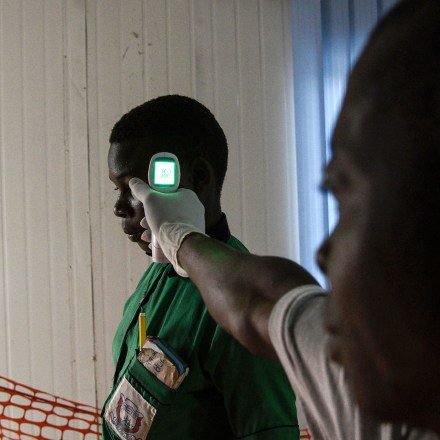
The United States has announced new measures to prevent the spread of Ebola as health authorities monitor a growing outbreak in parts of Africa. The US Centers for Disease Control and Prevention (CDC) said the immediate risk to the American public remains low, but confirmed that additional screening measures for air travellers arriving from affected regions are being introduced.

Non-US citizens who have recently travelled to Uganda, the Democratic Republic of Congo (DRC), or South Sudan within the past 21 days will face entry restrictions, while the US Embassy in Kampala has temporarily suspended visa services. The move follows the confirmation that an American citizen working in the DRC tested positive for Ebola after developing symptoms over the weekend. The individual is expected to be transferred to Germany for treatment, while six additional people are being evacuated for health monitoring.

The outbreak has intensified debate over the Trump administration’s earlier decision to cut USAID funding and formally withdraw from the World Health Organization (WHO). Critics argue the cuts weakened global disease monitoring and response mechanisms at a time when international coordination is essential.

The WHO has declared the Ebola outbreak in Uganda and the DRC a global health emergency, with at least 100 deaths and around 400 suspected cases reported so far. Meanwhile, the European Centre for Disease Prevention and Control (ECDC) said it is deploying experts to Africa to assist with surveillance, infection prevention, and outbreak management efforts.

via Euronews

Indonesia says its giant sea wall will stop flooding

0
indonesia-says-its-giant-sea-wall-will-stop-flooding
Indonesia says its giant sea wall will stop flooding

Zane Goebel, The University of Queensland; Sonia Roitman, The University of Queensland, and Udiana Dewi, University of Sydney

Indonesia plans to build a “giant sea wall”, more than 500 kilometers long, to defend Java’s north coast from rising sea levels.

The proposal includes a large lagoon behind the colossal concrete wall, raising significant questions about the feasibility and cost of such a giant project.

Indonesian civil society groups say the sea wall could prompt more sand mining, degrade mangroves and affect livelihoods of fishing communities. There are fears the project will worsen existing ecological destruction caused by industrialization. While desperate to avoid flooding, these groups don’t see a wall as the solution.

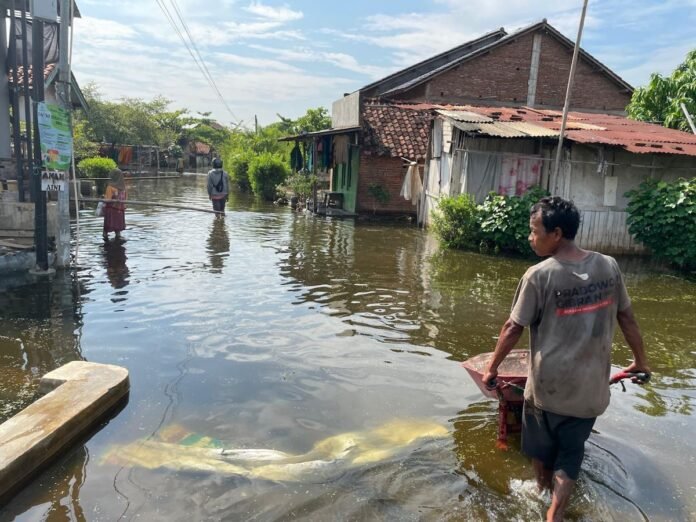
Indonesia is significantly affected by climate change, often in the form of severe and regular floods.

So, what is the best way to respond?

What is Indonesia proposing?

The sea wall plan has been framed as a flagship economic project on Java’s north coast. It will cost at least US$80 billion and take decades to build. Construction is planned to start in September 2026.

The sea wall will be overseen by several government agencies and subject to scrutiny from Indonesia’s Corruption Commission (KPK). Whether such scrutiny will be effective is an open question.

The massive cost is slated to come from provincial and national budgets, along with public-private partnerships with countries such as the United Arab Emirates. There are concerns about who will foot the large bill for long-term maintenance of the sea wall.

The rising sea

Indonesia has a long history of managing flooding by building infrastructure such as canals and dykes, reclaiming land, and deepening or straightening rivers. But such solutions often either exacerbate the problem or are only stopgap measures before sea-level rise overtakes subsiding land.

Indonesian media and academics are pressing for a different strategy. This would include consultation with affected communities, integrated coastal management, wastewater upgrades and river cleanup, so that the future lagoon does not become a low-oxygen moat behind a wall.

For Australia, Indonesia’s closest neighbour and a key strategic and economic partner, how Jakarta manages this project will shape regional security. Historically, the Department of Foreign Affairs (DFAT) has closely collaborated with its Indonesian counterpart (BAPPENAS) on infrastructure such as water projects.

Failing to consult properly with Indonesian stakeholders could lead to political fallout, while inaction might lead to food insecurity as vast tracts of rice fields become saline. Both create a less stable Indonesia, something Canberra wants to avoid.

A island under pressure

On the north coast of Java – the world’s most populous island and the economic heart of Indonesia – flood risk is driven by land subsidence and land use.

Subsidence (the gradual sinking of land), and related coastal erosion in Java are common, caused by a range of factors such as excessive and unregulated groundwater extraction, building load, mangrove deforestation, the construction of seawalls and increases in soil moisture.

In our recent research, we show the ways different levels of government communicate these problems change how people understand these messages, potentially undermining imperatives to reduce groundwater extraction.

What does the evidence show?

Recent modeling suggests that offshore structures can reduce storm surge heights in some locations, but outcomes varied by location and the local underwater environment. These types of coastal adaptation projects have historically been sites of political argument and corruption.

Our ongoing work with Indonesian researchers in three villages in Kendal, central Java, shows how flooding defenses such as seawalls, raised roads and home grants can partially address the risk but not solve it.

Grants of around A$2,000 helped some households lift floors, walls and roofs, but rarely covered the full cost. Poorer families sometimes declined once they understood the co‑financing burden.

Meanwhile, raised roads and flood walls channelled water into nearby low‑lying homes. This reshaped livelihoods, neighborhood interactions and community dynamics. We also recorded saltwater intruding onto productive land that had previously avoided regular tides.

In short, works that don’t also address the causes of subsidence can redistribute harm and entrench inequity. They can also affect one of the stated reasons for building the giant seawall: addressing Indonesia’s food security.

Can this sea wall work?

The best question is not “wall or no wall” but whether it is possible to construct a giant sea wall that works as intended.

If it is possible to regulate and enforce groundwater extraction, clean rivers and design coastal works with local communities, the unintended consequences of flood infrastructure can be minimized.

With those reforms, Java’s giant sea wall could be a useful part of a wider adaptation portfolio. Without them, it risks becoming an expensive folly.

Zane Goebel is an associate professor, Indonesian studies, The University of Queensland; Sonia Roitman, associate Pprofessor in development planning, The University of Queensland; and Udiana Dewi, research fellow, University of Sydney

This article is republished from The Conversation under a Creative Commons license. Read the original article.

“I’ll buy 10 of those”—NASA science chief yearns for mass-produced satellites

0
“i’ll-buy-10-of-those”—nasa-science-chief-yearns-for-mass-produced-satellites
“I’ll buy 10 of those”—NASA science chief yearns for mass-produced satellites

There are more opportunities to access space than ever, thanks to a bevy of commercial rockets, some with reusable boosters, led by SpaceX’s workhorse Falcon 9. So why is NASA launching fewer telescopes and planetary science missions than it did a quarter-century ago?

The answer is complex. It is not necessarily the money. The space agency’s science budget this year is $7.25 billion, roughly the same as it was in 2000, adjusted for inflation. This is despite attempts by the Trump administration to drastically reduce NASA science funding.

In the early months of his tenure, NASA Administrator Jared Isaacman’s focus has been on human spaceflight and the Moon. This isn’t terribly surprising given NASA’s wildly successful Artemis II mission carrying four astronauts around the Moon last month. Since taking office in December, Isaacman has announced an overhaul of the Artemis program, canceling a space station to be built in orbit around the Moon in favor of construction of a base on the lunar surface.

On the robotic front, Isaacman is pushing for NASA to launch a first-of-its-kind nuclear-powered spacecraft in 2028 to deliver a trio of drone rotorcraft to explore Mars. Isaacman has not said as much about concrete changes to NASA’s science program. He has defended the Trump administration’s proposed cuts to NASA’s science budget—as would be expected of him as a Trump political appointee—but the budget proposals come from the White House, not from NASA headquarters.

“Mr. Isaacman is very keen on us doing things quicker and for less,” said Nicky Fox, associate administrator for NASA’s science mission directorate. “More shots on goal is one of his favorite phrases. And I think, for us, it’s looking at the right-sized mission for the problem. Not everything has to be $1 billion or more. There are ways you can do fantastic science. His challenge is he wants 10 $100 million missions to be flying.”

How to get there?

A future with numerous robotic probes spread throughout the Solar System sounds thrilling to space scientists and space enthusiasts, but you can’t get there with flat budgets and billion-dollar missions that take a decade to get off the ground. Many of NASA’s robotic science missions use purpose-built satellites and instruments, usually manufactured by large contractors like Lockheed Martin, Northrop Grumman, university labs, or NASA itself. Unlike SpaceX’s hangars full of reusable rockets, there’s no building with cameras, spectrometers, telescopes, and spacecraft buses—the core chassis of a satellite platform—lying around waiting to launch.

“Instead of having a bespoke bus that does absolutely everything, and makes the tea and brings you toast, what can you do with an off-the-shelf bus?” Fox told Ars. “And maybe you have to change a few things. Maybe you fly fewer instruments, but maybe you fly three [spacecraft] together. How do we really pick up the pace? Because it is difficult when you have long gaps between the missions. It’s certainly not what anyone wants to see.”

One way to make this future real is with mass-produced, high-power satellites. Small CubeSats, just the size of a suitcase, are great for missions close to home, but they won’t cut it for missions to more distant destinations, such as another planet or a unique orbit far from Earth. NASA is making use of other ways to collect scientific data in space, such as placing instruments on the International Space Station or on commercial communications satellites.

But those solutions won’t work if you want to travel to another world. Sometimes it just costs a lot of money to do the near-impossible.

“For $100 million, you can’t buy a bus from somewhere and put four instruments on it and send it to flight to Enceladus to look under the ice there,” Fox said. “No, that’s a big, ambitious mission. We want to fly an interstellar-type probe. As the Voyagers are getting older, we want to study interstellar space. These things are hard, and they’re tough, and it will take a lot of effort to do that. We also talked about actually flying a mission to Uranus.”

But what about spacecraft flying on more well-trodden paths to the Moon, Mars, Venus, or the asteroid belt? “What can we do with these commercial off-the-shelf buses? I would love to walk in and say, ‘I’ll buy 10 of those,’” Fox said.

NASA is looking at “block buys” for the next series of commercial missions to the Moon. These privately owned landers and orbiters, part of the Commercial Lunar Payload Services (CLPS) program, carry NASA-owned payloads. They are precursors for future human exploration. After the Moon, Mars is the next destination that could use the CLPS model.

“Mars is sort of an obvious next one,” Fox said. “Why can’t I do that with a mission going somewhere else, and say, ‘Hey, who wants to take these instruments here?’ I’m actually really excited about the possibilities that the commercial sector open up to us.”

Blue Origin is assembling and testing its first Blue Ring spacecraft.

Blue Origin is assembling and testing its first Blue Ring spacecraft. Credit: Blue Origin

NASA’s roster of CLPS lander companies includes Firefly Aerospace, Intuitive Machines, Astrobotic, and Jeff Bezos’ Blue Origin, which is also working on a larger human-rated lunar lander for NASA, along with SpaceX. Some of the same companies, along with K2 Space, Rocket Lab, Apex Space, Blue Canyon, Millennium Space Systems, and now Vast, are working on mass-produced satellite platforms for use in Earth orbit or deep space. The manufacturers see their primary demand signals in the US military and commercial markets, but NASA could benefit from the same designs.

Blue Origin bills its Blue Ring design, now preparing for its first test flight, as an “all-in-one, high-powered hybrid solar electric and chemical propelled spacecraft” that can maneuver, host, and deploy payloads in and around Earth orbits, the Moon, Mars, other planets, and near-Earth asteroids at “dramatically lower profile costs.”

One idea supported by Steve Squyres, Blue Origin’s chief scientist, is using a Blue Ring to deploy multiple small satellites to prospect for resources around asteroids. Blue Origin was one of several companies to win NASA study contracts last year to look at novel ways of delivering scientific payloads to difficult-to-reach destinations.

“How in the hell do I get more science into space? That is my goal,” Fox said.

Launch costs aren’t everything

Although it is cheaper today to launch a kilogram of payload into orbit than it was 25 years ago, those lower prices are most apparent on rideshare missions, where numerous satellites share the same ride to space. Many NASA missions, especially those exploring the Solar System, are not suited for rideshare launches, most of which release their payloads into low-Earth orbit.

Some companies are designing tugs that could boost missions from their drop-off orbits to higher altitudes, potentially even to the Moon or beyond the Solar System. These propulsive rocket stages, when combined with a rocket like SpaceX’s massive Starship, could dispatch heavy spacecraft to faraway targets.

Today, for example, if NASA wants to launch a science probe to Mars or Venus, the agency must book a dedicated ride on a commercial rocket. SpaceX charges commercial customers $74 million for a dedicated Falcon 9 launch, although NASA typically pays more for additional oversight, schedule priority, and other government requirements. That’s still a lot of money, but it is far less than the cost of a custom spacecraft bus and a package of science instruments.

There are also questions about how NASA selects what missions to fly. The agency selects most of the science missions for flight through competitions. Research teams can propose their concepts for a new space telescope or a probe to a comet or an asteroid, for example, when NASA puts out a call for proposals. A few of NASA’s most expensive flagship-class missions, such as the James Webb Space Telescope or the Europa Clipper spacecraft, are developed from the top down through government direction.

NASA could set up future competitions to review proposals and select winners more quickly. In the past, NASA has selected a handful of concepts for study contracts, then chosen one or two proposals to proceed into development. For future competitions, NASA might go straight to a final selection. The space agency is also looking at rebalancing its science portfolio to spend less money on operating science missions, many of which have been in space for decades, to free up funding for new development.

“We spend hundreds of millions of dollars operating legacy missions, and we’ve wanted for a while to look at what could AI give us?” Fox said. “How can you combine operations for a couple of missions, and how do we do it for less? I don’t want to turn them off because they’re still doing great science, but we have to find a way to operate them for less.”

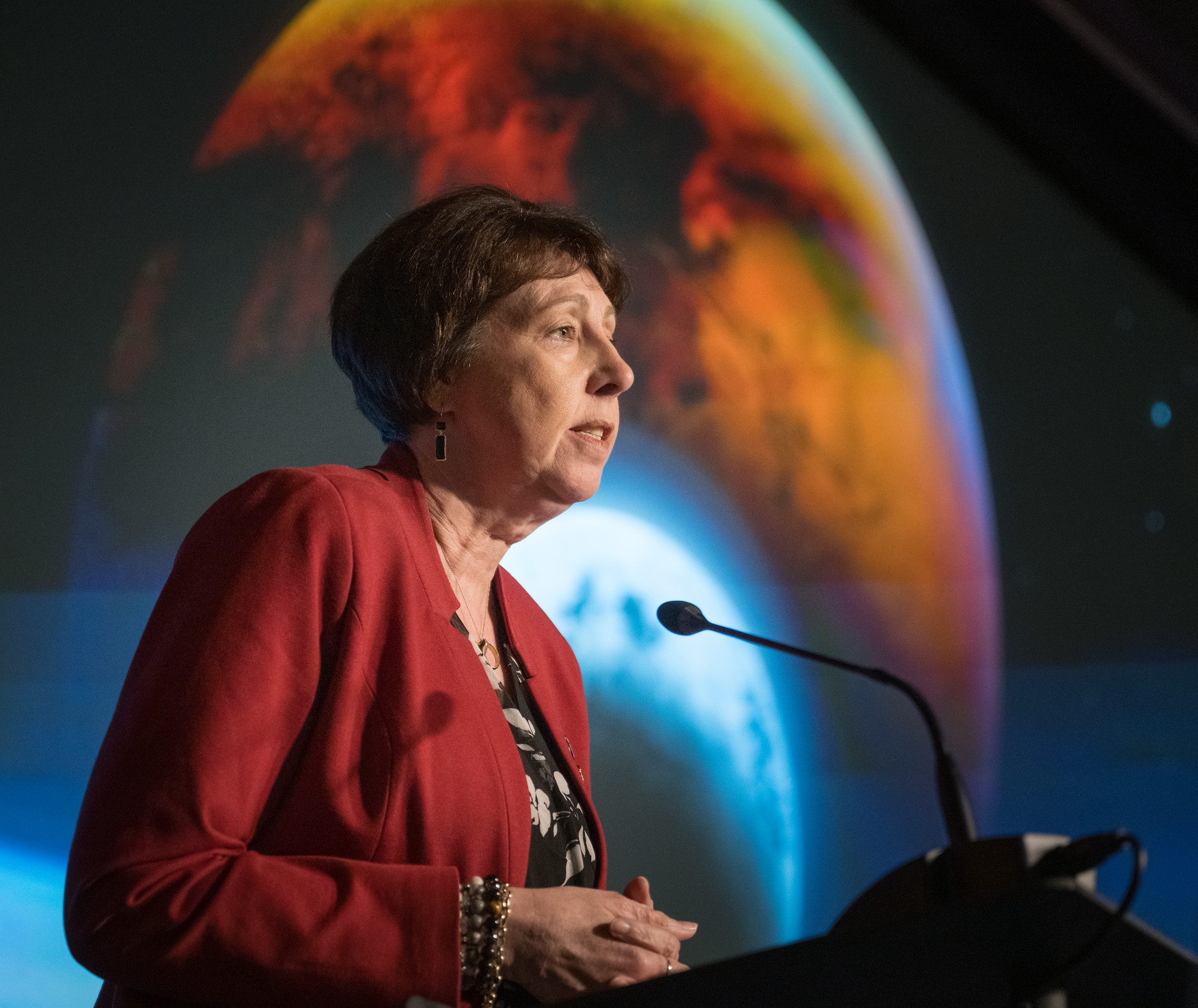
NASA’s associate administrator for science, Nicky Fox, speaks at NASA headquarters in 2024.

NASA’s associate administrator for science, Nicky Fox, speaks at NASA headquarters in 2024. Credit: NASA/Bill Ingalls

In planetary science, NASA divides its missions into small, medium, and large categories. The smallest planetary science missions, with budgets of less than $100 million, have a lousy track record.

The next step up is the Discovery program, with development budgets of about a half-billion dollars under today’s economic conditions. NASA launched 11 Discovery-class planetary science missions in the first 15 years of the program, from 1996 through 2011. NASA has launched just three Discovery missions since 2011, and the next two projects—the DAVINCI and VERITAS missions to Venus—were selected by NASA in 2021 but won’t launch until the early 2030s. DAVINCI appears to be the first priority among the two.

NASA’s larger New Frontiers missions are supposed to cost about $1 billion. The agency launched three New Frontiers missions from 2006 through 2016 to Pluto, Jupiter, and a near-Earth asteroid. The next one is Dragonfly, an ambitiously exciting but overbudget $3.35 billion mission to Saturn’s moon Titan. It is scheduled for launch in 2028, 12 years after the previous New Frontiers mission. NASA is nowhere close to selecting the next mission after Dragonfly.

“There was a decision made to select two Discovery missions together, and that does put stress on a portfolio when you have two large missions together,” Fox said. “Dragonfly still chugging along … [It’s] moving along very well towards a launch in 2028. Obviously, that had some challenges, got delayed several times, but it seems to be going at a good pace.”

Next year, NASA aims to launch NEO Surveyor, a telescope specially designed to detect and track asteroids that might threaten Earth. It is not part of NASA’s Discovery or New Frontiers programs.

“We have then DAVINCI sort of waiting, and then VERITAS, and we still have Europa Clipper [on the way to Jupiter]. That is a pretty challenging mission to operate,” Fox said. “We’ve got the two rovers down on the surface of Mars. So there are some pretty big endeavors in planetary, and I think when we can get some of these launched, it will open up the [funding] wedge that we need to open up to be able to [do more missions].

“Unpopular though it may be, it is sometimes better to wait and put out the call [for proposals] when you really know that you have secure funding,” Fox said. “It’s just we’ve got a lot of stuff in planetary that needs to be launched. So putting focus on keeping Dragonfly on track for that 2028 launch, keeping NEO Surveyor on track for the 2027 launch, that will really help. And then looking at ways to actually pull in DAVINCI and launch it earlier than we planned. The earlier we launch it, the quicker I open up a wedge for another mission.”

5 Tourists Dead and 13 Rescued After Plunging into Icy Lake

0
5-tourists-dead-and-13-rescued-after-plunging-into-icy-lake
5 Tourists Dead and 13 Rescued After Plunging into Icy Lake


Five tourists are dead after a terrifying hovercraft disaster on one of the world’s most dangerous lakes sent passengers plunging into freezing water in Siberia.

Authorities say the overloaded tourist vessel flipped just feet from shore on Lake Baikal — the world’s deepest lake — triggering a frantic rescue operation that pulled survivors, including a child, from the icy water.

The horror unfolded Tuesday, May 19, when the Sever-750 hovercraft carrying 18 people suddenly capsized about 100 feet offshore, according to Russian emergency officials.

Rescue crews rushed to the scene and recovered five bodies while managing to save 13 others. One injured woman was hospitalized with a leg injury after surviving the freezing conditions.

Russia’s Ministry of Emergency Situations confirmed the deadly toll in a statement, saying: “According to updated information, there were 18 people on board the hovercraft. Thirteen people, including a child, were rescued. Unfortunately, five people died.”

Most of the tourists were reportedly from Moscow and were taking part in an organized sightseeing trip across the massive Siberian lake. A 14-year-old boy was also among the passengers caught in the nightmare.

Early reports suggest the captain drove the hovercraft onto the ice before jumping into the freezing water — a move investigators believe may have triggered the vessel to overturn.

Even more alarming, officials say the hovercraft was carrying far more passengers than it was designed to handle.

The Sever-750 reportedly has a maximum capacity of just 10 people, but investigators say 18 passengers and heavy equipment were packed onboard when the disaster struck.

Experts are now raising serious concerns about whether the vessel should have ever been operating on Lake Baikal in the first place.

Tour guide Natalya, who reportedly owns the hovercraft, warned the boat model is notoriously unstable in rough water conditions.

“These models are very unstable and often capsize on water,” she reportedly said. “They can operate on rivers, but Lake Baikal is basically like a sea.”

She explained the hovercraft can only safely handle waves up to 1.2 meters high, while Lake Baikal is known for violent winds and dangerous swells that can quickly turn deadly.

“In weather like this, the boat could easily capsize,” she warned.

Russian investigators and transport prosecutors have launched a formal investigation into the disaster as questions grow over safety violations, overcrowding, and whether the doomed tour should have been allowed to leave shore at all.

Cuba Drone Claims Raise Risk of US Confrontation Near Florida

0
cuba-drone-claims-raise-risk-of-us-confrontation-near-florida
Cuba Drone Claims Raise Risk of US Confrontation Near Florida


Axios, citing classified US intelligence, said Cuba had over 300 military drones from Russia and Iran and discussed possible attacks on the US naval base at Guantánamo Bay, US military vessels, and Key West

Tensions between Washington and Havana appear to be rising as several pressures converge: President Donald Trump’s escalating rhetoric, Cuba’s worsening economic crisis, US pressure on Havana’s foreign ties, and new allegations—reported by Axios and not independently verified by Reuters—that Cuba acquired military drones from Russia and Iran.

The central issue is not whether Cuba could defeat, or even seriously threaten, the United States militarily. The question is whether alleged defensive preparations, US domestic politics, regional escalation, and Trump’s broader use of coercive pressure could create a pretext for a dangerous confrontation less than 100 miles from Florida.

Axios, citing classified US intelligence, said Cuba had acquired more than 300 military drones from Russia and Iran and had discussed possible attacks on the US naval base at Guantánamo Bay, US military vessels, and Key West, Florida.

Reuters said it could not independently verify the Axios report. Cuban Foreign Minister Bruno Rodríguez Parilla accused Washington of fabricating a “fraudulent case” to justify sanctions and potential military intervention, while Havana has framed any military preparation as part of its right to self-defense under international law.

Cuban President Miguel Díaz-Canel also warned that any US military action would lead to a “bloodbath” and “incalculable consequences” for regional peace and stability. At the same time, he insisted that Cuba “does not represent a threat,” directly rejecting the US narrative that Havana could pose an offensive danger to American territory.

The allegations emerged as the Trump administration intensified sanctions on Cuba, targeting 11 officials, several military figures, and the island’s main intelligence agency. Reuters reported that the designations are part of a wider campaign that includes efforts to block most Venezuelan oil shipments to Cuba, a measure that has worsened the island’s fuel shortages, power outages, and economic crisis.

President Trump has also repeatedly framed Cuba as a potential target after Iran and Venezuela. In March, he said Washington could soon reach a deal with Cuba or take other action after Iran, signaling that developments in the long-strained relationship could move quickly. Reuters also reported earlier statements in which President Trump raised the possibility of a “friendly takeover” of Cuba, while the Cuban government denied that high-level talks were taking place.

This is the context in which the drone allegations are being interpreted: not only as an intelligence question, but as part of a wider pattern of coercive pressure by Washington against adversaries in different regions. The comparison to the Middle East is less about a formal Cuba-Iran axis than about a recurring method—sanctions, threats, regime-change language, and negotiations conducted under pressure.

Still, a reported drone capability is not the same as evidence of an imminent Cuban attack. Jorge I. Domínguez, a Cuba specialist and retired Harvard government professor, cautioned against treating the allegations as established fact.

He told The Media Line that the drone allegation had not been established and noted that most of Cuba’s conventional military equipment still dates to the Soviet era, with only limited Russian updates.

He laid out three possible interpretations of the drone report: fabrication, deterrence, or a trigger for broader US military action.

Domínguez said the report could reflect three possibilities: that Cuba has no drones and the claim is being used to justify escalation akin to the “weapons of mass destruction” claim made against Iraq in 2003 which was later debunked; that Cuba has drones for deterrence; or that Washington could use such a capability as grounds for military action, which he said would be difficult to confine to a narrow ‘surgical’ strike.

His assessment points to the core danger: even if the drone allegation is true, the military implications are not straightforward. A limited drone stockpile would not necessarily give Havana the capacity to sustain a war with the United States. It could, however, reshape Washington’s risk calculus, especially if US officials argue that drones near American territory or Guantánamo Bay constitute an unacceptable threat.

Domínguez also rejected the idea that Cuba would rationally choose to attack US territory. He argued that Cuba had never attacked Guantánamo Bay or US soil and had no rational incentive to do so. “It would be madness to do so, and the Cuban leaders may be many things, but stupid is not one of them,” he said.

That distinction is important. Cuba may seek defensive deterrence, especially if it believes US intervention is possible. But a deliberate Cuban attack on American soil would invite an overwhelming US response and would likely be politically suicidal for Havana.

For this reason, the more immediate risk may not be a Cuban offensive move, but a US decision to interpret Cuban military preparations as justification for action.

Reuters also reported that the Trump administration accused Cuba of allowing the island to be used for foreign intelligence, military, and terrorism-related activities. Havana rejected that accusation and said Washington was manufacturing a case for intervention.

President Trump’s language has blurred the line between coercive diplomacy and regime-change signaling. For Domínguez, Trump’s “friendly takeover” formulation should be understood as political rhetoric but not dismissed as harmless.

No takeover of Cuba would be friendly

Domínguez said the phrase functioned as threatening political messaging, especially toward Cuban-American audiences in South Florida, while requiring no immediate action from the president. Practically, he added, “No takeover of Cuba would be friendly.”

The phrase may have been aimed at several audiences at once: Cuban-American voters in Florida, Cuban officials, regional partners, and other US adversaries. But that ambiguity can itself increase risk by preserving pressure without clearly defining the policy end state, leaving Havana to guess whether the threat is symbolic, electoral, diplomatic, or operational.

Whether this amounts to a coherent Trump doctrine is less clear. Domínguez argued that the president’s approach to Iran, Cuba, and other crises looks less like a structured strategy than a series of improvised pressure moves.

Whether there is an overall ‘Trump strategy’ is very unclear. The president’s approach to the war in Iran has changed, sometimes within a 24-hour cycle

“Whether there is an overall ‘Trump strategy’ is very unclear. The president’s approach to the war in Iran has changed, sometimes within a 24-hour cycle,” he said.

The connection between Cuba and the Middle East is therefore not necessarily ideological. Cuba and Iran do not share a deep strategic project comparable to Cold War alliances. But both are adversaries of Washington, both are under US pressure, and both may look for ways to complicate American planning. Russia adds another layer, given its long-standing relationship with Havana and its current strategic dependence on asymmetric tools, including drones, after years of war in Ukraine.

Domínguez described this as an old geopolitical pattern rather than a new anti-American bloc.

“One old pattern of behavior is that the enemy of my enemy might be my partner. The Cuban and Iranian leaderships have little in common other than their common US adversary. Collaboration between the two governments in the past has been slight, but there has been some,” he said.

He added that Russia has long been a Cuban partner, but that the relationship today is far weaker than it was in the Cold War.

This matters because overstating Cuba’s role as a Russian or Iranian platform risks misunderstanding the balance of power. Cuba is not a second front comparable to Iran. It is a fragile state under severe economic pressure, geographically close to the United States, but militarily weak.

“The Cuban government is so weak relative to the US that it would be laughable to worry about its being a platform to pressure Washington

“The Cuban government is so weak relative to the US that it would be laughable to worry about its being a platform to pressure Washington,” Domínguez said.

He added that the more plausible threat to the United States would be a Cuban state collapse, with humanitarian fallout and mass migration rather than a direct military challenge.

This is where the most serious scenario may emerge. A US pressure campaign could further weaken Havana, but the collapse of the Cuban state would not automatically produce a stable, pro-American transition. It could instead produce social disorder, mass migration, and a humanitarian emergency.

Cuba’s internal crisis is already severe. Reuters has reported that sanctions and efforts to block Venezuelan oil shipments have worsened fuel shortages and prolonged electricity outages on the island.

These shortages are not simply economic indicators; they affect food distribution, medicine, transport, public services, and the Cuban state’s capacity to preserve order.

Dr. Jorge Duany, former director of the Cuban Research Institute at Florida International University, told The Media Line that possible futures for US-Cuba relations range from a negotiated transition to collapse and even military intervention.

“Under the first scenario, the Trump administration could offer substantial economic relief in exchange for significant political and economic concessions, such as the release of political prisoners and the expansion of private enterprise on the island,” Duany said.

“This scenario would follow the playbook of the Trump administration in Venezuela, although it remains unclear who could act as an intermediary between Cuba and the United States, akin to Delcy Rodríguez’s role in Venezuela,” he added.

But Cuba is not Venezuela. Domínguez warned against assuming that a Venezuela-style political transition can simply be transferred to Havana.

“If the Cuban government were toppled, one difference with Venezuela is that there is no equivalent to Maria Corina Machado, the superbly effective opposition organizer. Is there a Cuban Maduro? No. The leadership has become collective since Raúl Castro stepped down and aged even more. Kidnapping Raúl would not topple the regime,” he said.

He also said it was unclear whether Cuba had any insider figure capable of brokering or facilitating a transition.

That lack of a clear alternative structure is one of the central uncertainties. A negotiated transition would require credible interlocutors, guarantees, and a domestic Cuban actor capable of managing change. A forced collapse would provide none of those conditions.

Duany’s second scenario is more destabilizing: the internal disintegration of the Cuban state under economic pressure.

He said a second scenario would involve the regime’s inability to provide basic subsistence needs such as food, medicine, and fuel, leading to instability, protests, and broader social disorder.

“Such circumstances could create the conditions for a new, massive wave of refugees to the United States. Several observers have recently noted that large-scale uncontrolled outmigration would likely represent the most serious security threat to the United States,” he noted.

That analysis aligns with the current humanitarian picture. If Cuba’s economy deteriorates further, the most direct consequence for Washington may not be a drone strike or military confrontation, but a disorderly migration crisis. In that sense, Cuba’s weakness could become more destabilizing than its military capacity.

The third scenario is military, though not necessarily a full-scale invasion. Duany argued that a more limited operation could become conceivable if Washington links Cuba to a legal case against Raúl Castro. Reuters reported that, according to a US Justice Department official, the Trump administration was planning to indict Castro over the 1996 shootdown of two planes operated by Brothers to the Rescue, while other reporting has described such charges as under consideration.

“The final scenario, which could coincide with the second, would involve a limited military operation following the Venezuelan experience, where former President Nicolás Maduro was extradited on drug trafficking charges,” Duany said.

“If the United States indicts former Cuban President Raúl Castro for the 1996 shootdown of four pilots of an anti-Castro exile organization, he could also be exposed to a targeted commando raid,” he added.

At the same time, Duany stressed that a full invasion remains unlikely.

“The human, economic, and political costs make a full-fledged US invasion of Cuba highly unlikely at this moment,” he noted.

This distinction is important. The most plausible escalation may not be a conventional invasion of Cuba, but a sequence of coercive steps: sanctions, indictments, intelligence warnings, interdictions, limited operations, and diplomatic pressure framed as a path toward transition. The danger is that each step could narrow the space for negotiation while increasing Havana’s incentive to demonstrate deterrence.

If verified, the drone allegations would fit that logic without making Cuba anything like a peer military threat. They could still provide Washington with a security rationale for escalation. If they remain unverified, they may still shape public perception and strengthen the political case for further pressure.

The Cuba crisis is therefore connected to the Middle East, not because Havana is another Iran, but because the same strategic language is being applied across theaters: adversaries are told to make a deal, accept pressure, or face consequences. Iran, Venezuela, and Cuba are different cases, with different military capacities and internal dynamics. Yet, in Trump’s rhetoric, they appear as linked tests of American coercive power.

For now, the most dangerous element may be uncertainty itself. Cuba is weak, but not passive. Washington is powerful, but not always predictable. Russia and Iran may offer Havana symbolic or limited military support, but neither can realistically protect Cuba from the United States. The result is a crisis in which miscalculation may matter more than planning.

As Domínguez put it, “random chance” may play as large a role as any formal scenario.

Goats win, tigers lose, but stalemate is optimal performance

0
goats-win,-tigers-lose,-but-stalemate-is-optimal-performance
Goats win, tigers lose, but stalemate is optimal performance

Somewhere in the foothills of Nepal, old men still gather around a wooden board carved into a five-by-five grid, moving carved tigers and goats across its intersections with quiet concentration. The game is called Bagh-chal — literally, ‘Tiger Move’ — and it has been played here for a thousand years. Most young Nepalis have never heard of it and that is a shame. Right now, in the deserts and mountain ranges of West Asia, Bagh-chal is being played on a very large scale.

The US-Israeli-Iran war is, for the moment, frozen. Washington rejected Tehran’s proposal. Tehran rejected Washington’s. After months of air strikes, proxy battles, and nervous watching of oil prices, the conflict has settled into something neither side wanted — a stalemate. To understand how that happened, forget the think-tank reports for a moment. Pull out a Bagh-chal board instead.

A game of asymmetric opponents

Bagh-chal is not a fair game, and that is precisely the point. This game is between two opponents, whom we call “Tiger” and “Goat.” Four tigers face twenty goats across a grid of twenty-five intersections.

The tigers are fast, aggressive, and dangerous — they can jump over goats and remove them from the board. Win the game by capturing five goats, and the tigers have done their job. The goats, slow and individually weak, have a different task entirely: surround the tigers, block every possible move and grind the game to a halt.

This is not a trivial math problem but a strategic equilibrium. As noted by researchers Lim Yew Jin and Jurg Nievergelt, Bagh-chal always ends in a draw when both players play optimally. Defeat for either side is typically associated with sub-optimal performance. The size of the game tree for Bagh-chal can reach 10⁴¹, similar to that for chess; however, the result will generally be a win, a loss or a draw. The tigers are simply too powerful to beat but they may face a defeat or a draw.

What the game knows but the modern military strategist forgets all too easily is that might does not equal victory. The tiger may eat four goats and yet not win the game. Might without position is mere bluster.

The tigers’ strike

Operation Epic Fury was initiated by the US and Israel on February 28, 2026. It was a huge undertaking that involved attacks on Iranian nuclear infrastructure, the manufacture of its missiles, its military generals, and even the residence of the supreme leader. Bases and support from the Gulf Cooperation Council nations were made available. For a few weeks, it seemed that the tigers were really enjoying their game.

Iran’s conventional navy was degraded. Its air defenses were repeatedly punched through. Senior commanders were killed. The kind of damage that would have crippled a lesser state was inflicted, and the world watched. American and Israeli planners had done their homework on hard targets. Their intelligence was good, their munitions precise, their execution disciplined.

However, there comes the point where Bagh-chal’s analogy works best: A tiger that runs ahead in the game and takes one goat at a time eventually ends up running away from its own strength; the tiger wins battles but loses the war. This was precisely how the situation played out: The US-Israeli axis continued winning battle after battle, while strategically losing ground.

Iran’s geography — the Zagros Mountains, dispersed underground facilities, a network of proxy forces stretched across four countries — made it nearly impossible to deliver a knockout blow. Every strike that degraded one node activated three others. The Strait of Hormuz was disrupted. GCC infrastructure took retaliatory hits. Global energy markets went haywire. What was intended as a swift campaign of coercion became, incrementally and then all at once, a prolonged war of attrition.

The goats hold the board

Iran’s strategy for the past two decades has been to build exactly the kind of resilience that makes conventional superiority less useful. Hezbollah in Lebanon, the Houthis in Yemen, various militia networks in Iraq and Syria — these are not simply “terrorist” proxies as American and Isarelis termed them. They are, in Bagh-chal terms, goats placed carefully across the regional board. They do not need to beat the tiger. They need to make the board ungovernable.

And that is what they did. While Iran absorbed punishing strikes — thousands of civilian casualties, millions displaced, significant damage to its conventional military — the “mosaic” of its national security architecture held together. Leadership decapitation did not produce collapse. Institutions adapted. Proxies filled gaps. The supreme irony of modern asymmetric conflict is that the side absorbing the most punishment is not necessarily the side that is losing.

The “goat” strategy is brought to life here. Suffer losses, stick together, sacrifice when required, and always block the tigers from obtaining any clear road to victory. It is far from glorious. It is certainly uncomfortable. But it gets the job done. By April 2026, when the ceasefire came, it reflected precisely this reality. Iran had not won. America had not won. Israel had not won. The board had been played to a draw — not because anyone chose it, but because optimal play on both sides, across months of brutal conflict, produced the outcome that Bagh-chal’s mathematics predicted it would.

GCC states are victims of multipolarity

Gulf Cooperation Council states merit a specific mention as well because their position within the current situation was very awkward for them. They were nominally part of the American-Israeli offensive operation but became subjects of Iranian reprisal operations that they did not want to be a part of.

As seen through the eyes of Bagh-chal, it was a herd unable to keep together. Not out of fear, but because it only takes common sense to realize it’s not safe to be sandwiched between tigers and goats fighting for the board.

Meanwhile, China and Russia offered Iran the kind of indirect support — economic lifelines, diplomatic cover, weapons components — that sustained the goat formation when it might otherwise have faltered. The multipolar world that both Moscow and Beijing have been advocating for years found a concrete expression in this conflict: The tigers’ dominance was contested not by a single rival but by a structural shift in how the board is organized.

What the game tells us

Bagh-chal was not designed as a political theory. It was designed as entertainment, as a test of wit between neighbors on a winter evening. But games that survive a thousand years tend to have encoded in them some truth about the world.

This is not going to be the first instance where the mighty state learns this lesson the hard way. West Asia, similar to Bagh-chal, requires patience and formation rather than haste and violence. The goats need not roar. It’s simply required that they stay in place.

The 2026 Iran conflict has several lessons worth sitting with:

1) Material superiority does not translate automatically into strategic victory. The US and Israel had overwhelming conventional advantages. They achieved everything their targeting lists called for. And they still could not force Iran into the outcome they wanted.

2) Endurance is a form of power. Iran’s ability to absorb punishment and keep functioning — economically, militarily, institutionally — was itself a strategic weapon. Resilience is not passive. It is the deliberate construction of a system designed to absorb shocks.

3) What constitutes a victory is an evolving concept. Ten years ago, to win the Iran problem involved regime change or total denuclearization. Now, following Epic Fury, there is a silent conversation about whether the status quo of nuclear deterrence is all that can be realistically achieved.

4) Board control matters more than body count. Iran never matched US firepower. It did not need to. It needed to control enough of the regional space — through proxies, geography, economic leverage — that no clean solution was available to its opponents.

A thousand-year-old warning

There is something quietly humbling about watching the world’s most sophisticated military apparatus arrive at the same conclusion that Nepali villagers built into a wooden board game a millennium ago.

You can be the tiger. You can be faster, stronger, and better armed. You can capture goat after goat and feel the momentum of the game in your favor. And then you look up, and the board is surrounded. Every path forward is blocked. You have not been beaten — you have been immobilized. And in this game, immobilization is tiger’s defeat.

Bagh-chal is disappearing from Nepal. The young people do not play it anymore; screens are more entertaining than carved wooden boards. That is unfortunate, because the game carries a warning that the screen is not delivering clearly enough: in geopolitics as in Bagh-chal, the side that seems to be winning early is not always the side that wins in the end.

The tigers roared. The goats held their formation. The board, for now, is contested — which is exactly how the game was always supposed to go.

Follow Bhim Bhurtel on X at @BhimBhurtel and subscribe to his Substack here.

Spider-Noir final trailer gives us a classic villain

0
spider-noir-final-trailer-gives-us-a-classic-villain
Spider-Noir final trailer gives us a classic villain

Prime Video has released one last trailer for its upcoming live action series, Spider-Noir, starring Nicolas Cage, and once again it’s been released in two formats: one in black and white (below) and another in color (above), which the showrunners are calling “True Hue.” Seriously, the more footage we see of this series, the more eager we are to find out if the series lives up to its marketing. And the final trailer—which really plays up the deadpan humor and is set to Amy Winehouse’s “Back to Black”—is very promising.

As previously reported, Marvel Comics created its “noir” line in 2009, reinterpreting familiar Marvel characters in an alternate universe, usually set during the Great Depression in the US. A version of the Spider-Noir character, voiced by Cage, briefly appeared in the animated masterpieces Spider-Man: Into the Spider-Verse (2018) and Across the Spider-Verse (2023). (He is set to reprise that role in the upcoming Beyond the Spider-Verse.)

Cage is playing Ben Reilly, a hard-boiled PI with a secret superhero identity, The Spider. Per the official premise: “Spider-Noir tells the story of Ben Reilly, a seasoned, down on his luck private investigator in 1930s New York, who is forced to grapple with his past life, following a deeply personal tragedy, as the city’s one and only superhero.”

In addition to Cage’s Ben Reilly/The Spider, the cast includes Lamorne Morris as Reilly’s friend Robbie Robertson, a freelance journalist who clings to optimism in the face of his buddy’s cynicism; Li Jun Li as nightclub singer Cat Hardy, the classic underworld femme fatale (Li based her portrayal on Anna May Wong, Rita Hayworth, and Lauren Bacall); Karen Rodriguez as Reilly’s secretary, Janet; Abraham Popoola as a World War I veteran; Jack Huston as a bodyguard named Flint Marko who becomes (as we see in the new trailer) the classic villain Sandman; Brendan Gleeson as New York mob boss Silvermane, who is being targeted for assassination; Lukas Haas as one of Silvermane’s subordinates; Richard Robichaux as the editor of the Daily Bugle; and Kai Caster.

“Have you seen it out there? The city’s a mess,” Robbie tells Reilly, reminding his friend of the hero he used to be. But the disillusioned Reilly knows that’s just not who he is now and he wants to start over—as a PI. But then Cat Hardy walks into his office and hires him to investigate a friend’s disappearance (killing an errant spider with a newspaper, which probably won’t endear her to Spidey).

That friend is Jack Huston, who has “turned into some kind of sand monster.” And others also seem to be coming down with mysterious illnesses that worsen until “their sicknesses eat them alive.” Meanwhile, Silvermane has pretty much taken over the city. Will Reilly stick to his resolve and stay out of it? Or will he resurrect his superhero alter ego one last time? I think we all know it’s gonna be the latter. “I was never a hero,” Reilly insists. But it’s not too late for him to become one.

Spider-Noir premieres on May 25, 2026, on MGM+, with all episodes becoming available on Prime Video on May 27, 2026. Viewers can choose to watch in black and white or True Hue—or both, if one wants to compare.

US lawmakers press CENTCOM chief on deadly Iran school strike

0
us-lawmakers-press-centcom-chief-on-deadly-iran-school-strike
US lawmakers press CENTCOM chief on deadly Iran school strike

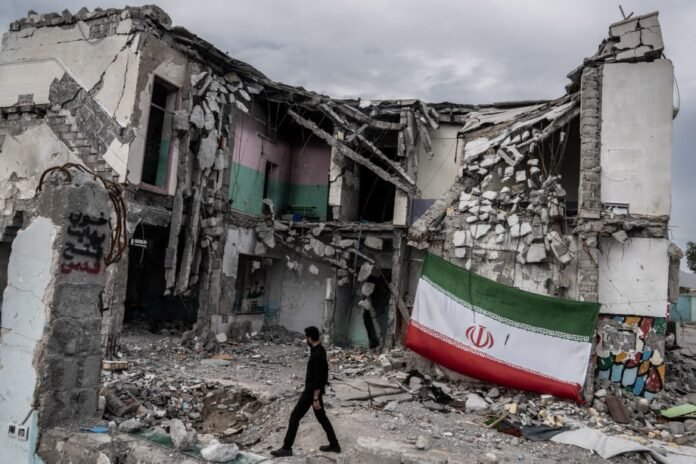
The top Democrat on the House Armed Services Committee pressed the CENTCOM chief on Tuesday for answers about a strike that killed more than 150 girls at an Iranian school on Feb. 28, Anadolu reports.

During a US House committee hearing on US posture in the “Greater Middle East and Africa” Rep. Adam Smith urged Adm. Brad Cooper to acknowledge US responsibility for the strike on the school, which Iranian officials say killed 175 people, including more than 150 schoolgirls.

“It’s really pretty clear what happened there,” Smith said, noting that in previous incidents the US military has moved quickly to acknowledge mistakes even while investigations were still ongoing.

“Can you, at this moment, acknowledge that that mistake was made, and that we were responsible for it? It’s something we didn’t want to do, and don’t want to repeat?” Smith asked.

Cooper declined to take responsibility, saying only: “The United States does not deliberately target civilians.”

“Nor are the Iranian people our enemy. The IRGC is the adversary in this case,” he added.

“Admiral, I asked you a very specific question, and I’m curious what the answer is,” Smith said.

“The investigation is ongoing,” Cooper replied.

Cooper said the school is located near an active IRGC (Iran’s Islamic Revolutionary Guard Corps) cruise missile base, making the incident “more complex than the average strike,” and pledged transparency once the investigation concludes.

READ: US likely used AI in airstrike that killed 160 schoolgirls: Report

Smith responded: “I do not trust that answer. What we’ve seen out of this Secretary of Defense (Pete Hegseth) and his callous disregard for any sort of rules of engagement or protecting civilian life may make us suspicious.”

He added that the administration’s refusal to acknowledge potential errors is “precisely the reason we are in the hole that we’re in with no way out.”

The Feb. 28 strike on Shajareh Tayyebeh Elementary School in Minab killed approximately 175 people, according to Iranian officials.

Several US media outlets have reported, citing preliminary US assessments, that the school may have been struck by an American Tomahawk missile.​​​​​​​

Preliminary findings

Rep. Sara Jacobs, another Democrat, also pressed the CENTCOM chief on the school strike, telling Cooper that she, in a letter signed by more than half the Democratic caucus members, requested more information about the Minab attack and demanded that the ongoing investigation be made public.

Asked if he could confirm whether the New York Times report, which said the preliminary inquiry concluded that the strike is the US’ fault, Cooper did not deny or confirm.

“I immediately directed a more sophisticated, comprehensive investigation that would be led by an outside organization,” said Cooper. “That is in progress. We’re coming toward the end of it.”

Cooper separately said his staff reviewed all 39 incidents outlined in a separate New York Times report on schools struck during the war, and determined only one, the Minab girls’ school, correlated with a US strike; the other 38 “did not involve US munitions.”

Democratic Rep. Seth Moulton noted President Donald Trump’s remarks demanding “unconditional surrender” from Tehran. “Is that part of the plan?” he asked.

“Congressman, we achieved all of our military objectives,” Cooper responded. “We are presently in a ceasefire, we’re executing a blockade, and we’re prepared for a broad range of contingencies.”

Moulton then asked, “It doesn’t seem to be going well, and I would like to know how many more Americans we have to ask to die for this mistake. Do you know?”

“I think it’s an entirely inappropriate statement from you, sir,” Cooper responded.

When pressed by other lawmakers on whether the war with Iran is over, Cooper responded by saying, “We have a ceasefire.”

Lawmakers also challenged Cooper on reports that Iran has already reconstituted many of its bombed-out missile sites. Cooper rejected the claims. “Those reports are inaccurate,” he said.

The hearing comes as regional tensions have escalated since the US and Israel launched strikes against Iran in late February. Tehran retaliated with strikes targeting Israel, as well as US allies in the Gulf, including the United Arab Emirates, along with the closure of the Strait of Hormuz.

A ceasefire took effect April 8 through Pakistani mediation, but talks in Islamabad failed to produce a lasting agreement. US President Donald Trump later extended the truce indefinitely.

READ: US ‘investigates’ deadly strike on Iran girls’ school; Israel denies involvement

Merkel says EU should use political influence to secure peace in Ukraine

0
merkel-says-eu-should-use-political-influence-to-secure-peace-in-ukraine
Merkel says EU should use political influence to secure peace in Ukraine


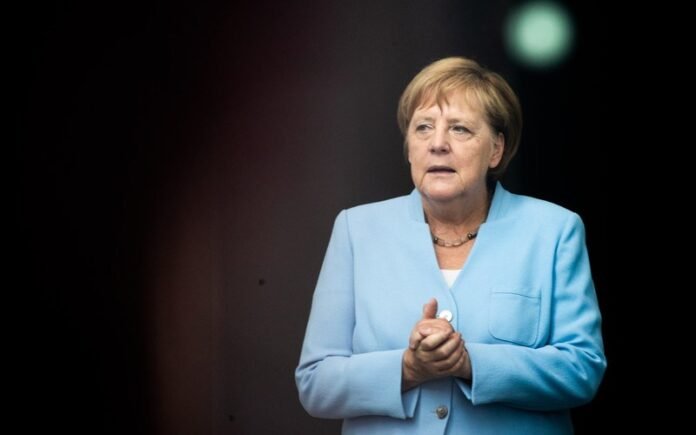
Former German Chancellor Angela Merkel has criticised the European Union for not doing enough diplomatically to help end Russia’s war in Ukraine, arguing that Europe is failing to fully use its political influence in efforts to secure peace.

Speaking during an interview with German broadcaster WDR, Merkel said military support for Ukraine remains necessary and justified, but stressed that diplomacy should play a stronger role alongside defence measures. She said it was not enough for US President Donald Trump alone to maintain contact with Russia, adding that Europe should be more actively engaged in diplomatic initiatives.

Her comments come as pressure grows on European leaders to appoint a special envoy to mediate peace talks between Russia and Ukraine. Both Moscow and Kyiv have reportedly signalled openness to such a role, particularly as US diplomatic attention shifts towards the conflict involving Iran.

Merkel revealed that during her final European Council meeting in 2021, months before Russia’s full-scale invasion, she proposed creating a diplomatic framework between the EU and Russia. However, she said the idea failed due to divisions within the bloc over how to approach Moscow.

The former chancellor also addressed speculation that she could serve as a future EU peace envoy, noting that no formal request had been made. While acknowledging her experience negotiating with Russian President Vladimir Putin and Ukrainian President Volodymyr Zelenskyy, Merkel argued that effective negotiations require leaders with direct political authority.

Her remarks also revive debate around her legacy, particularly Germany’s increased dependence on Russian gas during her years in office and the ultimately unsuccessful Minsk agreements, which sought to halt fighting in eastern Ukraine following Russia’s annexation of Crimea in 2014.

via Politico

Ebola Outbreak Rages After Trump Gutted Global Health Safeguards

0
ebola-outbreak-rages-after-trump-gutted-global-health-safeguards
Ebola Outbreak Rages After Trump Gutted Global Health Safeguards


The World Health Organization’s chief said on Tuesday that he was “deeply concerned about the scale and speed” of an Ebola outbreak in the Democratic Republic of Congo and Uganda that has resulted in a spike in deaths — to at least 130 — and more than 500 suspected cases. The outbreak is complicated by the rare strain of the disease, known as Bundibugyo, that standard field tests often miss and for which there are no vaccines or therapeutics.

Experts say Trump administration policies — like dismantling the U.S. Agency for International Development and withdrawing from WHO — have further undermined global health security and negatively impacted the response to the outbreak. WHO Director-General Tedros Adhanom Ghebreyesus warned of emerging cases in urban areas, including reports of cases in Uganda’s capital, Kampala, and Goma, a crossroads city in Congo that borders Rwanda.

The Intercept reported on the porous borders and worrying  public health responses in Goma during an Ebola outbreak in 2019. At the time Anthony Fauci — then the head of the U.S. National Institute of Allergy and Infectious Diseases — laid out the dangers of Ebola spreading in that urban center. “Since Goma is a city of millions of people, and since it has an international airport, it is a great concern,” he explained. “If Ebola could get into Goma and spread in Goma, that increases the likelihood that it could spread beyond the DRC into neighboring and distant countries.”

Experts have expressed alarm that the virus has been spreading undetected for weeks at least — and likely months — in Ituri Province, a remote area of eastern Congo that borders South Sudan and Uganda. The region, long riven by conflict, is home to many displaced persons and a haven for itinerant workers and smuggling operations. It has weak medical and public health infrastructure, making contact tracing is extremely difficult.

“The province of Ituri is highly insecure. … Conflict has intensified since late 2025, and fighting has escalated significantly over the past two months, resulting in civilian deaths. Over 100,000 people have been newly displaced, and in Ebola outbreaks, you know what displacement means,” said Tedros. “The area is also a mining zone, with high levels of population movement that increase the risk of further spread.”

Previously, USAID supported NGOs and healthcare workers in rural communities on the front lines of such outbreaks. “They’re the people standing between us and disaster,” said Margaret Harris, a former senior WHO official and a medical doctor who responded to Ebola outbreaks in West Africa in the mid-2010s and Congo in the late 2010s.

Harris praised the past work of USAID, and the U.S. in general, in responding to previous outbreaks of Ebola. This current outbreak can be managed, she said, but that it will take funding, training, equipment, and supplies — like personal protective equipment, medications, and fluids — for local healthcare workers. Harris, now a global health specialist at the United Nations Institute for Training and Research said that while some might argue that governments should pay for their own healthcare workers, she noted such front-line personnel provide a service that extends far beyond a nation’s borders. “They are protecting global health security,” she told The Intercept, adding: “And they were also simply doing good for ordinary people.”

A U.S. government official with experience working with foreign non-governmental organizations, who spoke on background because they were not authorized to talk with the press on the subject, told The Intercept on Tuesday that there was “no question” Trump administration policies have helped to undermine the global public health response. This indictment was echoed by Rep. Rosa DeLauro, D-Conn, the ranking member on the House Labor, Health and Human Services, Education, and Related Agencies subcommittee.

“Infectious diseases do not respect political borders.”

“The Trump administration has systematically dismantled much of our global health infrastructure, without giving a thought to the consequences. Now, we are seeing those consequences play out,” DeLauro told The Intercept, noting that the administration dissolved USAID, cut the United States off from the WHO, and carried out mass layoffs across the domestic global public health space.

“This will not be the last outbreak of a deadly infectious disease,” DeLauro said. “We must invest in global health infrastructure. Not only to be reliable and effective partners, but to be prepared for the next outbreak. In public health, isolation is not a strategy. Infectious diseases do not respect political borders.”

On Monday, the State Department announced that on “May 15, 2026, within 24 hours of learning of the confirmed cases, the Department leveraged its outbreak response and humanitarian assistance capabilities.” The WHO actually issued an alert of a high-mortality outbreak in Ituri, which included deaths among healthcare workers, 10 days prior. On May 14, blood samples were finally analyzed across the country, in Congo’s capital, Kinshasa. A day later, the analysis confirmed Bundibugyo virus disease, a strain of Ebola.  

“I cannot help but wonder if the administration had not taken such drastic action to dismantle so much of our global health infrastructure, that we would have been able to identify this outbreak earlier and stop it from spreading as much as it has,” DeLauro said in a separate press release.

“It is false to claim that the USAID reform has negatively impacted our ability to respond to Ebola,” a State Department spokesperson told The Intercept. “In fact, by bringing USAID global health functions under the new GHSD bureau at the State Department, our efforts are more aligned and effective. Funding and support to combat Ebola continue, working with allies and partners.”

When asked about the lag between the first notification of a disease outbreak and the U.S. response, the spokesperson did not reply to multiple requests for comment.

On his first day back in office last year, Trump began the process of withdrawing the U.S. from the WHO and cutting all funding for the U.N. health agency. “World Health ripped us off,” Trump said at the time. The withdrawal process was completed January of this year.

Tedros announced that WHO has a team on the ground supporting the national responses to the African outbreak, noting his organization had “deployed people, supplies, equipment and funds,” including millions from an emergency fund.

“The outbreaks of Ebola and hantavirus in the past two weeks show why international threats need an international response,” Tedros said on Tuesday, also referring to the recent outbreak on an expedition cruise ship of a rare virus carried by rodents. “They show why the world needs the international health regulations, and why it needs WHO.”

0FansLike
0FollowersFollow
0FollowersFollow
0SubscribersSubscribe
- Advertisement -
Google search engine

Recent Posts