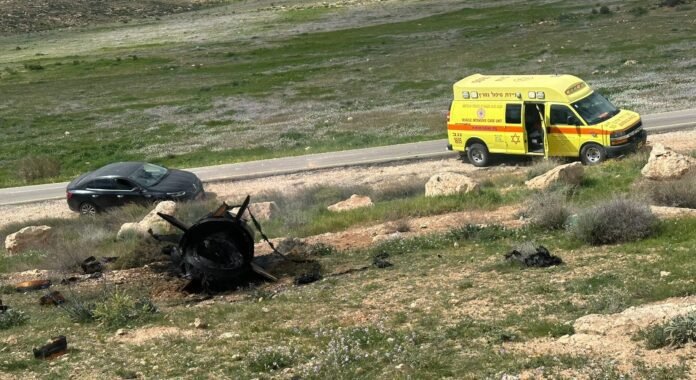
Israel Assassinates Hamas Military Chief Izz al-Din al-Haddad in Gaza City
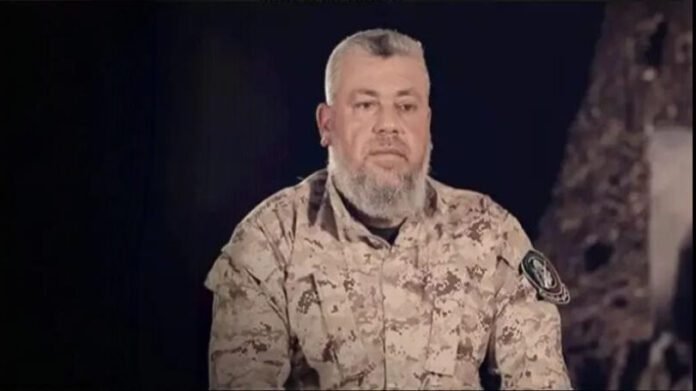
Israel’s military announced Saturday that it had killed Izz al-Din al-Haddad, identified as the chief of Hamas’ military wing, in what it described as a targeted strike in Gaza City against a senior figure involved in directing combat operations and rebuilding Hamas military capabilities. Al-Haddad was the most senior Hamas leader killed since the ceasefire was declared last October.
According to the military, the strike targeted al-Haddad in Gaza City. Reuters reported that his wife and daughter were also killed in the attack.
In a statement Saturday, the IDF said that despite ceasefire provisions calling for Hamas to disarm, al-Haddad had recently “acted to rebuild the capabilities of the terrorist organization’s military wing and to plan numerous terror attacks against Israeli civilians and IDF troops.”
AFP photographs showed mourners carrying al-Haddad’s body on a stretcher wrapped in a Hamas flag through the ruins of a damaged building.
The military said that over the past two weeks it had also two Hamas members involved in the October 7 invasion. They were identified as Iyad Muhammad Al-Matouq and Khaled Muhammad Salem Jouda.
Separately, Hamas leadership elections ended without a final result, prompting plans for another round of voting, Ynet reported. No candidate secured victory in the first round of voting between Khalil al-Hayya and Khaled Mashal, the two leading contenders for leadership of the organization.
Zelenskiy says Russia considering plan to attack NATO country from Belarus
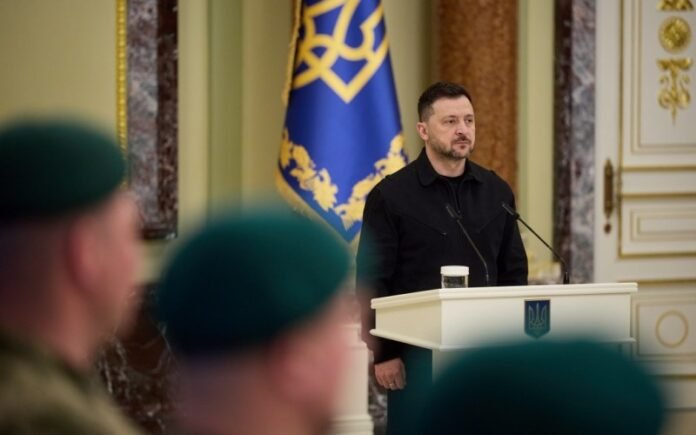
President Volodymyr Zelenskiy said that Russia was seeking to draw Belarus deeper into its war in Ukraine and was weighing plans to attack Ukraine’s north or a NATO country from Belarusian territory.
“We continue to document Russia’s attempts to draw Belarus deeper into the war against Ukraine,” Zelenskiy said on the Telegram messaging app after meeting military and intelligence officials.
He said Ukraine knew of additional contacts between Russia and Belarusian President Alexander Lukashenko to persuade him to join “new Russian aggressive operations”.
“Russia is considering plans for operations to the south and north of Belarusian territory – either against the Chernihiv-Kyiv direction in Ukraine or against one of the NATO countries directly from the territory of Belarus,” he said, without providing any further details.
Belarus borders Ukraine to the south, and NATO members Poland, Lithuania and Latvia to the north and west.
There was no immediate response to Zelenskiy’s comments from Moscow or Minsk. Moscow does not disclose its military plans in Ukraine, which are classified as state secrets.
Lukashenko, one of Russian President Vladimir Putin’s closest allies, allowed his territory to be used for part of Russia’s February 2022 invasion of its smaller neighbour, although he has not sent Belarusian troops to fight there.
Minsk has since agreed to deploy Russian tactical nuclear weapons and hypersonic Oreshnik missiles on its territory.
Zelenskiy said last month that Ukraine had intelligence that Russia was making preparations that showed it would once again try to involve Belarus in its more than four-year-old war.
“Ukraine will undoubtedly defend itself and its people if Alexander Lukashenko makes the wrong call and decides to support this Russian intention as well,” he said.
Zelenskiy said he had instructed Ukraine’s defence forces to prepare a response plan and to strengthen defences in the northern Chernihiv and Kyiv regions.
Last summer, the wild blueberry fields at Crystal Spring Farm turned red too soon.
Severe drought had gripped most of the state of Maine. At his farm near the town of Brunswick, Seth Kroeck knew the leaves were changing color prematurely because the blueberry plants were stressed. Berries shriveled before they could ripen.
The farm’s 2025 harvest was almost a total loss.
“We got about 7 percent of our expected harvest,” Kroeck, 55, said. Standing in his blueberry fields in April, he pointed out the new growth, still only a few inches high, and commented that last year’s yield was “a lot of raking with not a lot to show for it.”
This was just the latest in a series of devastating weather for Crystal Spring Farm’s 72 acres of wild blueberries.
“In the last seven years, we’ve lost the crop three times, almost completely,” he said.
As the climate changes, these losses are getting more common for wild blueberry farmers. And, experts say, the solutions are pricey.
Maine’s quintessential fruit
Wild blueberries are an iconic food in Maine, like lobster rolls or whoopie pies. But they aren’t the same as the fruits sold by the pint in a grocery store.
Wild blueberries are smaller and have a stronger flavor than their cultivated counterparts. They’re typically packed and frozen rather than sold fresh.
Wild blueberry bushes grow on sandy and gravelly soil in Maine, which can be difficult to irrigate. Sydney Cromwell / Inside Climate News
Maine’s farms contribute almost the entirety of the United States’ commercially sold wild blueberries. The industry harvested nearly 88 million pounds of fruit in 2023, bringing $361 million in revenue to the state, according to the Wild Blueberry Commission of Maine.
“It’s really something that’s a backbone industry to the state and a part of the state’s character,” Kroeck said. A father of two, Kroeck grew up in St. Louis, Missouri, and said gardening with a friend “spiraled” into an agricultural career. In college, he studied printmaking — a degree that he jokes is useful every day on the farm.
One of the few native North American fruits, wild blueberry patches have often existed in the same spot for longer than the farms that now harvest them.
“The blueberry plants have been there for millennia, and they have been cared for by generations of farmers before me, and then the Indigenous community [before that],” said Kroeck, who also grows row crops and pasturage.
An individual bush only produces fruit every other year, so farmers typically harvest about half their acreage in any given year. Also called “lowbush” blueberries, the plants grow in dense mats on sandy, gravelly, or otherwise low-nutrient soil, primarily in eastern Canada and New England.
“Blueberry soil is not nutrient-rich. Nothing else wants to grow there … but wild blueberries love it,” said Rachel Schattman, a professor of sustainable agriculture and leader of the Agroecology Lab at the University of Maine.
Wild blueberries are smaller and have a stronger flavor compared to cultivated blueberries. Courtesy of Rachel Schattman
Schattman, 43, started working on vegetable and dairy farms in high school and continued farm work through the completion of her master’s degree. She owned a commercial vegetable farm for 10 years while pursuing her interest in agricultural research and earning a doctorate at the University of Vermont.
Schattman said the financial challenges of running a small farm eventually led her to pursue research full time. She worked for the USDA on climate change’s interactions with agriculture before moving to Maine in 2020, where she met the wild blueberry for the first time.
“It holds a really special place in the culture of Maine,” she said.
Each patch has a variety of genetics rather than a monoculture. You can see — and taste — the plant’s diversity once it begins producing berries, Kroeck said.
“If you were to fly over our blueberry field while they’re fruiting, you’d see a lot of subtly different shades of blue and black,” he said.
Despite their crop’s hardy nature, wild blueberry farms are struggling to deal with recent extremes of temperature and precipitation. It’s got the entire industry worried.
“It would be a real cultural loss to have fewer wild blueberry farms and fewer berries available in the future,” said Lily Calderwood, a wild blueberry specialist at the University of Maine Cooperative Extension whose research focuses on disease and pest management.
She grew up surrounded by agriculture in Massachusetts and became fascinated with it on a trip to a Cape Cod cranberry bog as an undergraduate student. Calderwood, 39, worked at the nonprofit Earthwatch Institute, then earned her doctorate at the University of Vermont and later worked at the Cornell Cooperative Extension before coming to Maine eight years ago.
Stressed seasons
Maine’s wild blueberry populations are caught in a climate hotspot, driven partially by rapid warming in the Gulf of Maine, Schattman said. According to 2021 research, the state’s blueberry barrens are warming faster than the rest of the state, especially in locations closer to the coast.
In response, the berries are ripening sooner, and farmers can miss part of their harvest if they’re caught unaware. Calderwood said the crop was traditionally harvested in early or mid-August, but now most fruits are ready by late July. High heat also makes the harvest window shorter, she said, meaning farmers need additional labor and equipment to finish in time.
Scientists at the Wyman’s Research Center in Maine study the effect of rising heat and changing rainfall on wild blueberries, one of the state’s signature crops. Courtesy of Rachel Schattman
Kroeck said he was unprepared for the early ripening in some years, and harvesting late meant lower yields and worse fruit quality.
“As farmers, we’re very much attached to the season, and you kind of get into your ideas of when things need to be done,” he said. Now, he has to spend more time observing conditions directly in the fields.
Farmers can’t rely on traditional knowledge — some of it passed down through families of growers — to plan their schedules anymore, Calderwood said. The farmers she works with have “absolutely no doubt” that climate change is already affecting their livelihoods.
Kroeck worked on farms in California, Massachusetts, and New York before he and his wife, a Massachusetts native, decided they liked the Maine farming community and moved to Crystal Spring Farm 22 years ago. In the last decade, he said, the unpredictable weather has far exceeded the typical year-to-year variation he was used to.
“If you look at the research, it’s pretty hard to deny that we’re living in a period of changing weather,” he said.
Scientists at the Wyman’s Research Center in Maine study the effect of rising heat and changing rainfall on wild blueberries, one of the state’s signature crops. Courtesy of Rachel Schattman
Kroeck serves on the boards of the Organic Farmers Association and the Maine Organic Farmers and Gardeners Association, both organizations that address climate change’s impact on agriculture.
Maine experienced severe droughts in 2020, 2022, and 2025, plus one of its wettest years on record in 2023. Too-wet conditions encourage disease and unchecked weeds in blueberry fields. Droughts, on the other hand, reduce the number of flowers that form and shrivel the fruit.
Farms also contend with surprise frosts in late spring, which can kill flower buds right as they start to form, Kroeck said. Occasionally, warm autumns have caused the bushes to flower again just before winter, sapping energy and reducing their berry production the following year.
Wild blueberries are dependent on steady levels of moisture throughout the growing season, Calderwood said. That’s getting less and less common.
“The plant needs more water to keep the berries on the stems. And with less water and higher temperatures, they will shrivel and drop to the ground before a farmer can get to them,” Calderwood said.
And since wild blueberries only fruit every other year, Kroeck said extreme weather can have effects on multiple seasons.
“A drought year is obviously going to affect the size of our fruit, but it’s also going to affect that other half that’s still in the vegetation state,” he said. “If they’re stressed from water and from temperature, they’re not going to grow as robust as they would, and the fruit they put out is not going to be as big as it could.”
A cycle of loss
Last year, Maine saw a wet spring followed by hot, dry conditions that started in June. The drought intensified in August and lasted through the rest of the year and into 2026. Calderwood called it “a classic example of climate whiplash.” The Maine Wild Blueberry Commission estimates the industry lost $30 million in 2025.
“It was devastating for many farms in that region,” said Calderwood, who is also on her town’s conservation commission.
Many blueberry farmers reported the loss of a third to half of their yields.
“There were reports of many, many acres of blueberries going unharvested because the berries had basically dehydrated on the bush,” Schattman said.
Read Next
Kroeck’s 2025 losses were higher than most because his farm sits on exceptionally sandy soil, which doesn’t hold water well. He has crop insurance, which covers some of the loss, but that insurance is partly based on the value of previous years’ yields.
“If you have losses in close succession, then your average harvest goes down,” he said.
Kroeck said he has applied for state and federal relief, but that money would be applied to his 2023 losses from a late freeze, which have been on the farm’s books for nearly three years.
The state’s wild blueberry industry has declined in recent years, both in the number of farms and the total acreage of commercial fields, according to Wild Blueberry Commission data, and financial stress is one of the reasons for that. Even Wyman’s, one of the state’s largest producers, plans to sell nearly 800 acres of blueberry fields this year.
“There have been some pretty significant hits to wild blueberries in Maine in general,” Kroeck said.
Researchers like Schattman and Calderwood are trying to prevent climate change from being another reason that farms go under.
Modeling blueberries’ future
At the Wyman’s Research Center farm in Old Town, Schattman and the climate adaptation research team are trying to simulate potential futures for Maine’s wild blueberries.
Researchers are halfway through a four-year study of how temperature, rainfall, and irrigation affect wild blueberries’ growing conditions — from soil health to pollination — and fruit yields. They’re also testing different climate scenarios for the end of the century to see how the plants handle extremely wet, extremely dry, or variable conditions.
At Crystal Spring Farm, Seth Kroeck is adding irrigation lines to part of his blueberry fields this year to protect them from drought. Sydney Cromwell / Inside Climate News
The wild blueberries are grown under a range of conditions: Some have irrigation systems, some have mulch to slow moisture evaporation, and others have neither. Some bushes are grown in isolation, while others are clustered together to see how community and genetic diversity affect the plant’s resilience.
Schattman said open-top plexiglass structures passively trap heat around some of the blueberry plants on the farm, while others have heating coils to simulate heightened temperatures.
“We’re collecting a massive amount of data,” she said.
Irrigation and, to a lesser extent, mulching are already showing promise in reducing drought impact. Mulch barriers reduce soil temperatures, lower the risk of disease, and slow weed growth, but they aren’t enough to avert the effects of a severe drought like 2025.
“[Mulching] is a really healthy thing to do for our fields,” Calderwood said. “It can be used as a buffer for drought, but it cannot replace irrigation.”
Irrigation can be difficult with wild blueberries, since their preferred soil often isn’t great for building wells or installing pipes, Schattman said. Most small growers don’t have irrigation systems, leaving them vulnerable when droughts overlap with the growing season.
“Obviously, it’s useless to install an irrigation system if you don’t have a reliable water source,” she said.
When the climate adaptation study is complete, Schattman said she hopes to have data that can create a roadmap for farmers to keep their crops healthy in future conditions.
Calderwood’s work at the University of Maine Cooperative Extension overlaps with Schattman’s research, but much of it is hands-on in the fields of local blueberry farms.
This summer, Calderwood will be working with a large producer, Brodis Blueberries, to see how plants develop in irrigated and non-irrigated portions of their fields, and whether they show signs of stress during dry periods.
It’s key to figure out when the timing of irrigation can make the most impact, Calderwood said, especially for farms that can’t cover their entire acreage or may only be able to afford irrigation once or twice.
“Every time the pump runs, it is an expense,” she said.
‘It’s always expensive’
Affordability is the roadblock that wild blueberry farmers keep running into when it comes to climate change, both Schattman and Calderwood said. From buying equipment to drilling wells to trucking in loads of mulch, major one-time investments are difficult for small farms with thin profit margins.
“Every farm needs irrigation, but they just simply can’t afford it,” Calderwood said.
Read Next
At Crystal Spring Farm, Kroeck is trying to apply the University of Maine’s recommendations. He has brought in over 100,000 square feet of mulch, which covers less than half of his 72 acres of blueberries. The Natural Resources Conservation Service, or NRCS, which is part of the USDA, subsidized some of the costs, which range between $5,000 and $10,000 each year.
“Farmers would not do that if NRCS was not paying for it,” Calderwood said.
Kroeck also bought irrigation equipment, which arrived in December. It cost $90,000 for the equipment and the new well, which will cover about a quarter of his blueberry fields.
“It’s always expensive, and it’s always a gigantic cash flow game,” he said.
Additional state and federal investment, from funding to technical expertise, could also fast-track irrigation for small farms, Calderwood said. But in the past year, funding has trended in the opposite direction.
The NRCS has lost funding and about a quarter of its staffing — more than 2,000 people — due to USDA budget cuts since the beginning of the current Trump administration. Maine also lost $15.5 million, intended for a pilot program that would have brought water management practices to between 25 and 45 wild blueberry farms, due to federal grant clawbacks.
The state Drought Relief Fund has given grants for farmers to create water management plans, drill wells, or build storage ponds, but only two dozen of those were funded last year across all types of agriculture.
Meanwhile, profitability of wild blueberries is being squeezed by low market prices and competition from cultivated blueberry producers, Schattman said. Costs of fertilizer, labor, and equipment have risen too.
Farms are earning about 50 percent less per pound of wild blueberries than they were a few years ago, according to the Wild Blueberry Commission. Kroeck said he knows many small farms are having a hard time getting their products into large grocery store chains.
“The pricing is not very good as far as what those large chains are willing to pay,” he said. “The market for wild blueberries has been flat or has been decreasing somewhat, and that’s also very worrisome.”
Kroeck is part of a group of farmers looking into selling more berries fresh instead of frozen, a move that would open up a new, potentially more profitable customer base but would also require new equipment and additional labor.
Wild blueberry farmers need new markets or higher prices to afford expensive long-term projects, Schattman said.
“That’s much more difficult when you’re struggling to reach your sales goals,” Kroeck said.
In the absence of financial and technical support, Calderwood said it’s likely that only the largest berry producers will be able to protect themselves from a warming future.
“It’s a puzzle to figure irrigation out, and it needs federal funding,” she said.
With or without irrigation, Calderwood said she doesn’t think climate change will spell doom for a plant as resilient as the wild blueberry.
“Every year, there will be blueberries to harvest,” she said.
But whether there will be enough berries to keep farms in business is another matter.
“I hope that we’re going to be able to make the pivots that we need to make to save the crop,” Kroeck said.
Volkswagen shows its first electric GTI; there’s no chance of US sales
When Volkswagen introduced the first Golf GTI in Europe in 1976, it might not have been the first hot hatchback, but it quickly became the gold standard version. Unlike in America, where big cars were cheap and fuel even cheaper, small European streets and even smaller car-buying budgets necessitated vehicles a little more economical in both size and fuel consumption. Small, front-wheel-drive hatchbacks were the answer, but they weren’t particularly exciting. The GTI changed that perception with a more powerful engine, sharper handling, and subtle styling tweaks, creating a recipe for the next 50 years. And today, VW showed off its first electric GTI.
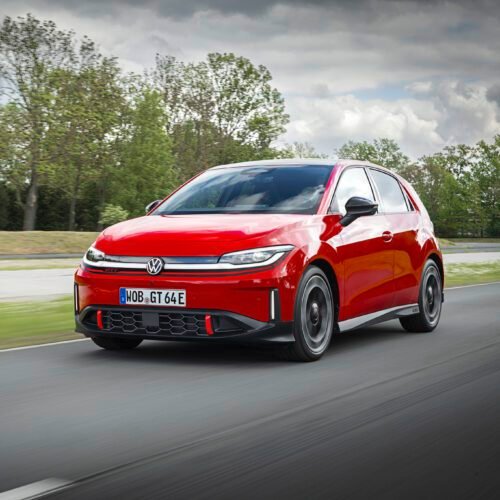
While the new EV might be inspired by the original Golf GTI, it’s one segment smaller than the current Golf—meet the VW ID. Polo GTI. VW has given some of its ID EVs GTX branding until now, but this is the first to get the GTI badge.
Like the 1976 original, the new car has front-wheel drive, but the ID. Polo GTI’s electric motor generates 222 hp (166 kW)—just over twice the output of the 1.6 L engine in the old car. There’s a 52 kWh battery pack that provides a WLTP range estimate of 236 miles (424 km), with DC fast charging up to 105 kW with a 10–80 percent charge time of 24 minutes.
VW showed an electric GTI concept last year; now it’s almost ready for production.
Credit: Volkswagen
VW showed an electric GTI concept last year; now it’s almost ready for production. Credit: Volkswagen
Zero to 62 mph (100 km) at 6.8 seconds is brisk as opposed to rapid, and it’s still quicker than a 20th century VW GTI. A curb weight of 3,395 lbs (1,540 kg) is significantly more than those 70s, 80s, and 90s hatchbacks weighed, though.
The looks have been enhanced with chunky 19-inch alloy wheels (that still make some concessions to drag reduction), honeycomb intake grilles, classic GTI details like the red stripe and badges, and a roof spoiler.
On the inside, like any good GTI, there are sports seats and a sporty steering wheel, but VW has also given the interior a nod to the classic GTI tartan seat trim. The main instrument display might be a 10.25-inch digital screen, but it now looks a lot like the view you’d get from the driver’s seat of a late-70s Golf GTI.
Peep those retro dials.
Credit: Volkswagen
Peep those retro dials. Credit: Volkswagen
When the ID. Polo GTI goes on sale in Germany, VW says it should cost “just under €39,000.” That is more than $45,000 at today’s exchange rate. Although the German price includes 19 percent VAT, even without the oft-changing Trump tariff, it’s easy to see how this little GTI is a nonstarter for American imports.
Although there’s no direct conversion between Europe’s WLTP test and the EPA’s drive cycle, a federalized ID. Polo GTI with a 52 kWh battery would be unlikely to post more than 200 miles (321 km) between charges. Low range like that is anathema to US EV buyers, particularly when you consider that a new Chevrolet Bolt offers three-quarters the price, 262 miles (422 km) of range, and a similar 0–60 mph time.
How Trump’s New Counterterrorism Strategy Puts You at Risk
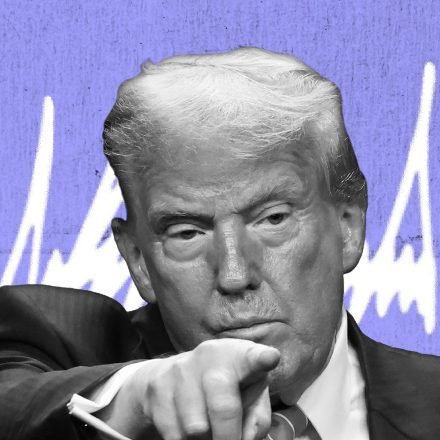
the Trump administration last week unveiled its “2026 Counterterrorism Strategy,” a 16-page collection of threats, grievances, hyperbole, and lies. The memo is a truly foundational document and a striking distillation of Trumpism as an ideology, movement, and system of governance. It also serves as a new declaration of war on the Trump administration’s enemies — foreign and domestic, real and imagined.
Under the guise of protecting America, it takes aim at wide swaths of Americans, putting targets on the backs of the most vulnerable.
The “Counterterrorism Strategy” formalizes a drastic shift in focus for counterterror efforts. Now, according to the Trump administration, the nation is battling three major types of terror groups: “Legacy Islamist Terrorists,” the long-standing focus of America’s counter-terror efforts; “Narcoterrorists and Transnational Gangs”; and “Violent Left-Wing Extremists, including Anarchists and Anti-Fascists.”
This last group is defined in the document as people the administration deems to be “anti-American, radically pro-transgender, and anarchist.” This puts antifa — a fictional foe that is actually a collection of ideas and not an organization — on par with actual terrorist groups like Al Qaeda and the Islamic State group, and drug-trafficking syndicates such as the Sinaloa Cartel and Jalisco New Generation Cartel.
The memo makes no mention of right-wing extremist groups, despite rafts of research, from the U.S. government and others, demonstrating that such groups have been responsible for the majority of violent attacks in America in recent years.
Following 9/11, the George W. Bush administration published the first official National Strategy for Combating Terrorism. The 2003 document purported to set “the course for winning the War on Terror,” with a focus on “destroying the larger al-Qaida network,” by defining the threat and laying out big-picture goals and objectives. New strategies have been issued numerous times, over multiple presidencies, since.
“The Trump administration has repurposed the ‘terrorism’ framing and applied it to new boogeymen.”
Explaining the 2026 strategy last week, Gorka leaned into the lies which permeate the Trump administration’s document. “Very simply, it’s common-sense counterterrorism based on reality not fake threats,” he explained. “In the president’s foreword and in chapter one, we make it very clear we will not permit the use of the most powerful national security tools in the world including the counterterrorism enterprise to be used as political weapons.”
Rep. Valerie Foushee, D-N.C., had a very different interpretation, calling the strategy “a plan on how they’re going to attack people on the left,” noting that antifascists are “not a real terrorism threat in the United States.” She added that the effort is “completely corrupt.”
To contextualize the U.S. government’s radical new approach to counterterrorism, The Intercept analyzed the document, highlighting revelatory passages that show how the Trump administration is bringing the war on terror home.
“We Will Kill You”
History ultimately judges presidents by their priorities, both deeds and words.
While calling out slavery as the cause of the Civil War, President Abraham Lincoln still focused his second inaugural address on reconciliation over retribution. “With malice toward none; with charity for all; with firmness in the right, as God gives us to see the right, let us strive on to finish the work we are in; to bind up the nation’s wounds; to care for him who shall have borne the battle, and for his widow, and his orphan—to do all which may achieve and cherish a just, and a lasting peace, among ourselves, and with all nations,” he pronounced.
On the eve of World War II, as the threat of fascism loomed over the world, President Franklin D. Roosevelt readied a nation for war, not with ferocious rhetoric but by envisioning a new world founded upon the freedom of speech and expression, freedom of worship, freedom from want, and freedom from fear. “That is no vision of a distant millennium,” he told Congress on January 6, 1941. “It is a definite basis for a kind of world attainable in our own time and generation. That kind of world is the very antithesis of the so-called new order of tyranny which the dictators seek to create with the crash of a bomb.”
These presidents were deeply flawed. Both committed grave injustices, were responsible for immense harm, and neither lived up to their most laudable words. But those words survived for a reason and are now part of the American canon.
For President Donald Trump, the “2026 Counterterrorism Strategy” is as good as any collection of words in defining him. Nothing better illustrates his vision of America’s role in the world than Trump’s capstone quote. He concludes the foreword with words that ring true from the streets of Minneapolis, where federal agents killed U.S. citizens Renee Good and Alex Pretti during anti-ICE resistance; to a school building in Minab, Iran, where more than 100 children were killed in a U.S. airstrike; to the Eastern Pacific Ocean and Caribbean Sea, where close to 200 civilians have been killed in attacks on alleged drug boats; and should follow him forever: “We Will Find You and We Will Kill You.”
Treating Americans as Terrorists
Under U.S. law, the government can designate “foreign terrorist organizations,” a process that typically entails a formal declaration by the secretary of state at the direction of the president, allowing the Treasury Department to impose financial penalties and the Justice Department to prosecute people for providing “material support” to such groups. Congress has not passed any law creating a domestic terrorism designation, nor is there a standalone crime of “domestic terrorism.”
This has not stopped Trump from aiming the counterterror apparatus at domestic targets in his second term. Under National Security Presidential Memorandum 7, or NSPM-7, which Trump issued last September, vaguely defined enemies are not only typified by “support for the overthrow of the United States Government,” but also advocacy of opinions clearly protected by the First Amendment including “anti-Americanism, anti-capitalism, and anti-Christianity” as well as “hostility towards those who hold traditional American views on family, religion, and morality.”
In this document, the Trump administration makes clear it considers any American who it believes has “adopted ideologies antithetical to freedom and the American way of life” to be a terror threat.
“The Trump administration has repurposed the ‘terrorism’ framing and applied it to new boogeymen, like alleged narcos as well as a caricature of their domestic political opposition,” Brian Finucane, a senior adviser for the U.S. Program at the International Crisis Group, told The Intercept.
White-Washing Right-Wing Terror
What’s notable here isn’t just the “major terror groups” included — it’s the type of groups the Trump administration omitted.
“Absurdly, the document incorrectly labels drug cartels, ‘legacy Islamist terrorists,’ and violent left-wing extremists as the top counterterrorism threats — despite years of data proving that right-wing extremism has presented the most persistent and deadly threats to Americans for decades,” said Rep. Bennie G. Thompson, D-Miss., ranking member of the House Committee on Homeland Security.
In fact, a 2025 analysis conducted by the nonpartisan Center for Strategic and International Studies found that, over the past decade, right-wing extremists carried out 152 attacks in the United States and killed 112 people, compared with 35 attacks and 13 deaths attributed to left-wing militants. Islamist jihadist-inspired attacks resulted in 82 deaths over the same span.
“Radical Ideologies”
The new “Counterterrorism Strategy” signals a jarring shift in the priorities of the national security apparatus. Instead of having the security state primarily focus on foreign actors and those domestic threats responsible for the most violence in recent years — like white supremacists and violent militias — the president is effectively siccing them on anyone who dares to disagree with him or his supporters.
“This is a very severe degradation of freedom of thought [and] freedom of speech in the country, and it should be raising alarm bells,” said Robert P. Jones, president and founder of Public Religion Research Institute.
“It does look like a very straight blueprint drawn from white evangelical Protestant Christian circles,” said Jones, the author of the forthcoming book “Backslide: Reclaiming a Faith and a Nation After the Christian Turn Against Democracy.”“What they call radical ideology is essentially anything that differs from that conservative, white evangelical Protestant worldview.”
The Narcoterrorist Boogeymen
By labeling drug-trafficking networks as terrorists, Trump is operating in a long tradition of using the rhetoric of war to refer to an issue that is rooted in public health. The terrorism framing is simply the logical next step in the decadeslong war on drugs that is, more often than not, used as a cudgel by U.S. policymakers to keep Latin American countries in line, said Alexander Aviña, a historian at Arizona State University.
“They’re using drug war counterterrorism as a cover,” Aviña said. “They’re effectively maintaining control over the region through a bunch of proxy right-wing governments, but it’s being framed as counterterrorism, as an anti-drugs operation. The innovation here is that they’re applying war on terror legislation and laws to drug trafficking organizations”
The problem with labeling drug networks as “terrorists,” however, is that the vast majority of drug traffickers differ from organizations like Al Qaeda and the Islamic State group in that they have no real membership, and they operate for profit, not to achieve an ideological objective.
Legacy Islamist Terrorists
Despite Trump’s boasts of his prowess at fighting terrorism, both Al Qaeda and ISIS were the top threats in his 2018 counterterrorism strategy. They are called out specifically in the new document as well.
In fact, Gorka’s inclusion of ISIS directly contradicts longtime claims by Trump. “We defeated ISIS in record time,” Trump said in his 2024 election-night speech. Last year, at his commencement speech at the U.S. Military Academy at West Point, he said: “I defeated ISIS in three weeks.”
“Politically Motivated” Killings of Christians
The idea that Christians, who make up two-thirds of the U.S. population, are under siege is belied by the data. Hate crimes motivated by anti-Christian bias are far rarer than attacks motivated by racism or xenophobia in the United States, and other religious groups are far more likely to report being the victim of a religiously motivated hate crime than Christians. An analysis of 2023 FBI hate crime data found that less than 10 percent of religiously motivated hate crimes were believed to be motivated by anti-Christian bias.
“There’s really no evidence-based reason why a report focused on the domestic front would disproportionately feature violence against Christians. There’s just no evidence that that is the most pressing problem facing us in the United States today,” said PRRI’s Jones.
In the wake of Charlie Kirk’s killing, right-wing influencers and media outlets rapidly spread misinformation about the shooter’s gender identity and supposed “pro-transgender” ideology based on unverified claims about the bullet casings used in the shooting. Trans people are far more likely to be victims of gun violence than perpetrators. In mass shootings carried out between 1966 and 2025, less than 1 percent of the shooters were transgender, according to the Violence Prevention Project. The overwhelming majority of shooters were cisgender men.
“In the immediate aftermath of Charlie Kirk’s murder, news outlets and people with large platforms online raced to share unconfirmed reports that wrongfully tied the LGBTQ+ community to the shooter,” Human Rights Campaign national press secretary Brandon Wolf told The Washington Blade. “Jumping to those conclusions was reckless, irresponsible, and led to a wave of threats against the trans community from right wing influencers, and a wave of terror for the community that is already living scared.”
“Neutralization” of Adversaries
While Trump has frequently threatened his political opponents in public, experts in extremism told The Intercept that “this kind of language” in a national security document should raise alarm bells. It’s one thing when the president rants about “radical gender ideology” at a rally, said Jones. “But when it gets put into a national presidential security memo, when it gets put into a report that’s led by a task force at the U.S. Department of Justice, and when it’s put into a counterterrorism document … these are laying the legal framework for prosecution.”
This language of “neutralization” in this new strategy harkens back to the FBI’s analogous and infamous COINTELPRO program, which was employed in the 1960s and 1970s to target the civil rights movement, the New Left, and anti-Vietnam War protesters, among other domestic groups and individuals and, according to a 1976 Senate Select Committee report on U.S. intelligence activities, “turn[ed] a law enforcement agency into a law violator.” The FBI, the committee found, “went beyond the collection of intelligence to secret action designed to ‘disrupt’ and ‘neutralize’ target groups and individuals,” using “wartime counterintelligence” techniques that “would be intolerable in a democratic society even if all of the targets had been involved in violent activity,” which they were not.
A 1967 FBI memo notes that purpose of this type of “counterintelligence endeavor is to expose, disrupt, misdirect, discredit, or otherwise neutralize” African American groups and leaders. Efforts included “sending anonymous poison-pen letters intended to break up marriages,” “encouraging gang warfare,” “falsely labeling members of a violent group as police informers,” and other means to “cause serious physical, emotional, or economic damage to the targets,” according to the committee. Their investigation found that civil rights leader “Martin Luther King, Jr. was, for instance, the target of an intensive campaign by the Federal Bureau of Investigation to ‘neutralize’ him” and that “the man in charge of the FBI’s ‘war’ against Dr. King” said they used the same methods employed against Soviet agents.
In 2019, during his first term, Trump floated the idea of declaring antifa “a major Organization of Terror,” likening it to the group MS-13, an international criminal gang that originated in the U.S. and that the administration added to the foreign terrorist organization list last year. “The United States of America will be designating ANTIFA as a Terrorist Organization,” Trump tweeted in 2020, during protests after the police killing of George Floyd.
Then-FBI Director Christopher Wray said, however, that antifa was “not a group or an organization” but a “movement or an ideology.” Trump lashed out, calling antifa “well funded ANARCHISTS & THUGS who are protected because the … FBI is simply unable, or unwilling, to find their funding source.” After Trump supporters stormed the U.S. Capitol on January 6, 2021, in an effort to overturn his 2020 election loss to Joe Biden, Trump blamed “antifa people” for inciting violence.
Finally, last September, Trump signed an executive order designating antifa as a “domestic terror organization.” He followed it by issuing NSPM-7, which directs the Justice Department and elements of the Intelligence Community and national security establishment to target “anti-fascism … movements” and “domestic terrorist organizations.”
On his press tour touting the new strategy, Gorka said “left-wing violent radicals like antifa and the anarchists” were the “most ascendant” terror group and — without evidence — claimed they were “the people who killed our friend Charlie Kirk.” He said these leftists are “people who think that if you don’t agree with them politically, they get to kill you.”
Locking Up Trump’s Enemies
The new document detours to discuss the wrongful detention of Americans abroad. Ironically, the Trump administration has unlawfully detained thousands of people residing in the United States, including those with legal status, targeting everyone from perceived political dissidents to racial and ethnic minorities.
Last year, the Trump administration detained Tufts University student Rümeysa Öztürk for writing an op-ed, as revealed by legal documents unsealed as a result of litigation from The Intercept and other parties. Also in 2025, the administration sent Kilmar Ábrego García, a Salvadoran national with an order preventing his deportation to his country of origin, to CECOT, a prison in El Salvador notorious for human rights abuses. He has since been released to his home in Maryland, but the administration has continued to target him, including with criminal prosecution.
The Monroe Doctrine
Issued by President James Monroe, the Monroe Doctrine is a foundational principle of U.S. foreign policy opposing any foreign interference in the Western Hemisphere — except by Washington. It’s seen by American nationalists and by modern “America First” Trump ideologues as marking a “golden age” of U.S. power in the region, according to historian Greg Grandin.
“Going back to World War I and World War II, America First nationalists have liked the Monroe Doctrine because they saw it as an alternative to liberal internationalism,” Grandin said. “They were never isolationists, even though that word is often applied to them, because they’ve long claimed the right to intervene and project power in the Western Hemisphere.”
Now, Trump is using the spectre of terror to justify extrajudicial killings of alleged drug traffickers at sea and the abduction of Venezuelan President Nicolás Maduro.
Boat Strikes and Bogus Stats
The U.S. military has conducted 58 attacks on so-called drug boats in the Caribbean Sea and Eastern Pacific Ocean since September 2025, killing more than 190 civilians.
Experts in the laws of war, as well as members of Congress from both parties, say the strikes are illegal, extrajudicial killings because the military is not permitted to deliberately target civilians — even suspected criminals — who do not pose an imminent threat of violence.
The assertion that this campaign has resulted “in a more than 90% decrease in maritime drug smuggling” into the U.S. slightly tempers similarly outlandish and false figures from Trump, who regularly claims that “drugs entering our country by sea are down 97 percent.” Experts say these claims are meant to deceive the American people. “It wouldn’t be the first time this administration just made up something out of whole cloth,” Sanho Tree, the director of the Drug Policy Project at the Washington-based Institute for Policy Studies, told The Intercept.
Even the Pentagon’s own figures refute Trump’s numbers. “He’s trying to imply that 97 percent of the cocaine that left South America by boat headed to the United States has been stopped,” said Rear Adm. William Baumgartner, the former commander of the Seventh Coast Guard District, who oversaw drug-interdiction operations in the Southeast U.S. and the Caribbean Basin. “That’s not true and is contradicted by the administration’s own statements.” Acting Assistant Secretary of War for Homeland Defense and Americas Security Affairs Joseph Humire, for example, offered completely different numbers to Congress, telling the House Armed Services Committee in March that there “has been a 20 percent reduction of movements of drug vessels in the Caribbean and an additional 25 percent reduction in the Eastern Pacific.”
The “Trump Corollary”
This isn’t the first time we’ve seen an attempt by the administration to enshrine a “Trump Corollary” to the Monroe Doctrine, with the term also appearing in the administration’s national security strategy document in December. But it’s not entirely clear what, precisely, this corollary means, said Aviña, the historian.
“It’s supposed to be an addition to the Monroe Doctrine, but we don’t get a very precise definition of what that is,” said Aviña. “It harkens back to the Roosevelt Corollary, but Teddy Roosevelt was very clear about what his addition was: international police power.” Trump makes no claim to a new power. “So Trump is working in that tradition, but in a weird and imprecise way.”
Loosened Rules and Civilian Deaths
The loosened rules of engagement during Trump’s first term had a profound effect across the Middle East and Africa. Attacks in Somalia tripled after Trump relaxed targeting principles, while U.S. military and independent estimates of civilian casualties across U.S. war zones spiked. The U.S. conducted 219 declared attacks in Somalia during Trump’s single term in the White House, a more than 329 percent increase over the eight years of the Obama presidency. Trump is already on the cusp of eclipsing those numbers in less than a year and half. Since taking office last year, Trump has overseen at least 190 attacks in Somalia.
A review of Trump-era rules by the Biden administration found that, in some countries, “operating principles,” including a “near certainty” that civilians would “not be injured or killed in the course of operations,” were reportedly enforced only for women and children, while a lower standard applied to civilian adult men. All military-age males were considered legitimate targets if they were observed with suspected al-Shabab members in the group’s territory, Donald Bolduc, who led Special Operations Command Africa at the time, told The Intercept.
A 2023 investigation by The Intercept found that Trump’s directive contributed to a particularly disastrous attack in Somalia that killed at least three — and possibly five — civilians, including 22-year-old Luul Dahir Mohamed and her 4-year-old daughter, Mariam Shilow Muse. The mother and child survived the initial strike but were killed by a double-tap attack as they fled for their lives. “They know innocent people were killed, but they’ve never told us a reason or apologized,” said Abdi Dahir Mohamed, one of Luul’s brothers. “No one has been held accountable.”
Using Europe to Promote Bigotry
The document employs its section on Europe to shamelessly promote racism, white nationalism, and Christian supremacy employing a stilted worldview that ignores the U.S. role in the immigration it rails against.
“Trump officials are clearly weaponizing anti-Muslim bigotry in their campaign to heap pressure on Europe. They are baselessly insinuating that European policies that welcomed migrants — who largely fled their home countries due to the impact of U.S. backed wars and regime changes — created an incubator for terrorism,” Erik Sperling, the executive director of Just Foreign Policy, told The Intercept. “At the same time, however, the White House continues to implement the exact kind of violent, interventionist policies that drove mass migration and generated extremism in the first place.”
“There is this kind of praising of Western culture and values, the denigration of ‘alien cultures,’” said Jones. “What’s behind those is really a sense of European superiority, and that gets translated into the U.S. in racial terms. So it really is a white Christian worldview here that’s being projected and protected.”
A Bid to “Protect Christians”
Experts on white supremacy and Christian nationalism told The Intercept that the Trump administration is spreading misinformation about a Christian genocide in Africa in order to stoke white Christian nationalist and anti-immigrant sentiments at home. “In Nigeria, it’s genocide against Christians, and in South Africa, it’s the supposed genocide against these white Afrikaners,” Christine Reyna, a professor of psychology at DePaul University, told The Intercept. “And so in absence of an actual genocide in the United States against either of these two groups, you can keep that narrative of that existential fear of extermination and genocide and oppression that is alive and well within a certain subset of white Americans.”
In addition to using the conflicts in Africa to spread propaganda domestically, experts on Christian nationalism tell The Intercept that Secretary of Defense Pete Hegseth believes in waging war to achieve Christian supremacy abroad, without respect to international laws or norms. “Hegseth believes that he is carrying out a spiritual and actual war to vanquish a Christian nation’s enemies and protect and promote a Christian nation,” Sarah Posner, an investigative journalist covering the Christian right, said on The Intercept Briefing podcast. “For Hegseth, biblical law is the only law he feels obligated to obey. The law of war, international law governing military conflicts, and human rights and civilian rights in war — he believes don’t apply to him.”
Trump’s Holy War in Nigeria
While Christians have been the victims of violence in Nigeria, they have not been the primary target, and experts overwhelmingly reject the idea that a Christian genocide is occurring in that country. Research from the Armed Conflict Location and Event Data, an independent global monitor of conflict and protest data, found that of the 1,923 attacks on civilians in Nigeria that occurred as of November of last year; 50 of those attacks targeted Christians because of their religion. According to experts, the majority of the violence has focused on land disputes.
Trump’s Christmas Day attack was another in a long string of failed and futile U.S. counterterrorism efforts in Africa documented by The Intercept over the last decade This includes blowback from U.S. operations and failed secret wars, civilians killed in drone strikes, coups by U.S. trained officers, increases in the reach of terror groups, surging fatalities from militant violence, human rights abuses by allies, massacres of civilians by partner forces, and a catalogue of other fiascos.
Doubling Down on Failures in Africa
The document casts Trump’s strategy as a departure from the failed forever war interventions of Presidents George W. Bush, Barack Obama, and Joe Biden. But Sarah Harrison — who served as an associate general counsel at the Pentagon’s Office of General Counsel, International Affairs, where she oversaw the Africa portfolio, and as counsel to the deputy assistant secretary of defense for African affairs — sees little difference. “Setting aside the bombast about protecting Christians, the fundamentals of Trump’s Africa CT policy isn’t that distinct from his predecessors: a light military footprint to facilitate intel sharing and drone strikes with an emphasis on supporting the partner nation. These policies fail because they ignore the drivers of conflict and refuse to acknowledge the need for a political solution,” she told The Intercept.
The U.S. government’s own statistics bear out this record of futility and failure. Throughout all of Africa, the State Department counted 23 deaths from terrorist violence in 2002 and 2003, as U.S. counterterrorism efforts began to ramp up on the continent in the wake of 9/11. Last year, there were 22,307 fatalities from militant Islamist violence in Africa, according to the Africa Center for Strategic Studies, a Pentagon research institution. This represents an almost 97,000 percent increase since the early 2000s, with the areas of greatest U.S. involvement — Somalia and the West African Sahel — suffering the worst outcomes.
“Reality-Based” Counterterrorism
The document ends as it began, with unserious bombast that reads like little more than AI slop fashioned from administration talking points. Evoking the administration’s 2025 National Security Strategy, which called for a restoration of “Europe’s civilizational self-confidence and Western identity,” the Trump administration appears to be making up for its own insecurities with claims that the president has restored America’s “civilizational confidence” through a baptism of fire. In reality, the document projects a heady blend of weakness and anxiety and espouses a counterterrorism strategy akin to a 12-year-old boy’s vision of foreign policy: boasts about killing one’s way to victory.
In a post-release media tour where he spoke with MAGA outlets and administration sycophants, Gorka expressed amazement at how little negative reporting there was about the new counterterrorism strategy. “Even the left, they’re so on their heels. I did a kind of press call when we released the strategy,” said Gorka. “Fifty articles were written. … Only one of them … was even slightly negative.” (The Intercept’s invite must have been lost in the mail.) He continued: “We are moving so fast, they just can’t keep up with us — which is delicious.” His interviewer, Dean Cain, best known for playing second fiddle in “Lois & Clark: The New Adventures of Superman,” responded, “That’s wonderful.”
“If the U.S. government counterterrorism enterprise hadn’t jumped the shark before, it certainly has now,” said Finucane. “The administration has repurposed the terrorism framing and applied it not only to alleged narcos but also perceived domestic political opponents — as we saw with the way the administration baselessly smeared Renee Good and Alex Pretti as ‘terrorists’ after gunning them down. The whole situation would be much funnier if the Trump administration wasn’t currently engaged in a lawless killing spree under the guise of ‘counterterrorism.’”
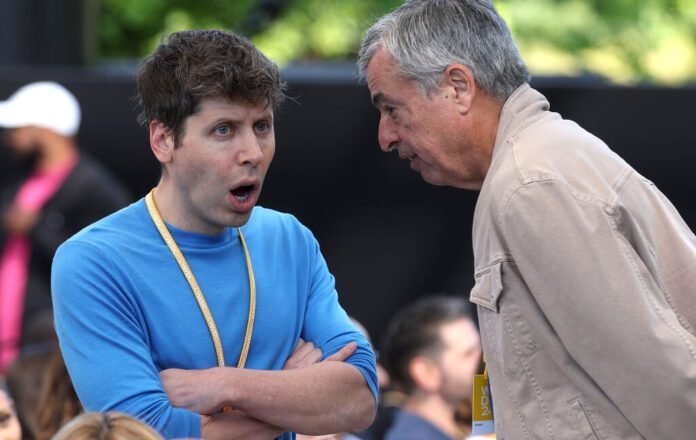
OpenAI feels “burned” by Apple’s crappy ChatGPT integration, insiders say
OpenAI is reportedly exploring legal options after Apple’s ChatGPT integration into its products didn’t live up to the AI firm’s expectations.
When the deal was announced, Apple likened features linking Siri to ChatGPT to its now-infamous deal embedding Google search in the Safari browser, insiders granted anonymity to discuss the “strained” partnership told Bloomberg. And the promise of that excited OpenAI, which expected the deal “could generate billions of dollars per year in subscriptions,” an OpenAI executive granted anonymity to discuss the partnership told Bloomberg.
Instead, OpenAI suspects Apple intentionally failed to promote the integration and fears that the deal may have damaged the ChatGPT brand, sources said.
Specifically, OpenAI hates how Apple designed the integration, sources said. Particularly bad was the choice forcing Apple users summoning Siri to also “specifically invoke the word ‘ChatGPT’ when speaking or typing a command,” sources said. That makes it harder for users to access the features, OpenAI apparently feels. And Apple’s other choices, like using small windows providing limited information when responding with ChatGPT outputs, seems to ensure that users can easily ignore the features, sources said.
As the OpenAI executive explained, Apple didn’t fully explain how the integration would work when the deal came together, so OpenAI took a “leap of faith” it now appears to regret.
“When we heard about this opportunity, it sounded amazing: being able to acquire a giant number of customers and have distribution in such a big mobile ecosystem,” the executive said, attempting to explain why OpenAI was willing to enter the arrangement blind. Since then, efforts to renegotiate the deal have “stalled,” Reuters reported. And, supposedly due to feeling “burned,” OpenAI has declined to enter other partnerships to work on Apple’s AI models, Bloomberg reported.
According to the insiders, OpenAI is so disappointed in Apple’s work that the AI firm is now “actively working with an outside legal firm on a range of options that could be formally executed in the near future.”
“We have done everything from a product perspective,” the OpenAI executive summed up OpenAI’s frustrations to Bloomberg. “They have not, and worse, they haven’t even made an honest effort.”
Supposedly, OpenAI is still hoping to resolve its issues with Apple outside of court, if possible. But one option that OpenAI may pursue could be accusing Apple of a breach of contract. Going that route wouldn’t necessarily require filing a lawsuit right away, sources suggested.
Apple and OpenAI did not respond to Ars’ request to comment.
Musk may expose how deal was done
Most likely, OpenAI will delay approaching Apple until after its court battle with Elon Musk concludes, Bloomberg reported. A decision in that litigation is potentially coming next week.
OpenAI also faces a court battle with Musk over its Apple deal. However, it may be inconvenient for Musk that tensions between OpenAI and Apple have grown since he filed a lawsuit last August. Musk alleged that the deal integrating ChatGPT into Apple products violated antitrust and unfair competition laws, supposedly propping up OpenAI to dominate the chatbot market and Apple the smartphone market.
So far, Musk’s lawsuit has survived motions to dismiss, though the judge has yet to comment on its merits. That leaves Apple and OpenAI potentially stuck defending the deal at a trial scheduled for October, even if it falls apart.
However, the partnership’s end may make it harder for Musk to uphold his claims of a conspiracy in his lawsuit.
Due to Musk’s fury that his chatbot Grok has never been featured as a “Must Have” app in Apple’s App Store, the lawsuit alleged that Apple and OpenAI struck a deal as part of a giant conspiracy to lock out rivals developing chatbots that Musk claimed Apple fears could make smartphones obsolete. As Musk’s theory goes, Apple was so afraid of Musk’s plan to turn X into an “everything app” that it partnered with OpenAI to supercharge ChatGPT as a market leader and constrain X’s innovation.
Increasingly problematic for Musk, the looming fallout between OpenAI and Apple suggests their allegiance is not that deep. Bloomberg’s sources suggested that Apple was happy to partner with OpenAI as its own AI projects failed to launch but over time became less inclined to boost ChatGPT after learning about OpenAI’s plans to make its own device that could rival the iPhone. Reuters suggested that Apple was so “rankled” by OpenAI teaming up with its former star designer Jony Ive that it lost motivation to help supercharge ChatGPT as OpenAI expected.
For Musk, it may become impossible to argue that OpenAI and Apple are colluding to keep Apple at the top of the smartphone market when OpenAI is working on its own device. And his arguments about ChatGPT’s supposed “exclusivity” are also falling apart, as Apple is now testing Siri integrations with Anthropic’s Claude and Google Gemini.
OpenAI’s executive insisted to Bloomberg that OpenAI’s potential legal action has nothing to do with Apple expanding its AI partners, emphasizing that the deal was never intended to be exclusive.
With tensions high, Apple and OpenAI would probably prefer to keep details about how the deal came together secret. However, although Musk’s lawsuit may be losing steam, it has recently succeeded in forcing Apple and OpenAI to be more transparent about the deal.
This week, magistrate judge Hal Ray Jr. denied Musk’s request to see Tim Cook’s internal messages discussing the deal but ordered Apple to share documents by mid-June from Senior Vice President of Software Engineering Craig Federighi.
Federighi “made high-level, strategic decisions about the Apple-OpenAI Agreement,” the judge noted, and “may have unique relevant evidence not already produced relating to Apple’s integration of OpenAI into Apple Intelligence.” Apple will also have to provide any “documents that refer to potential exclusivity clauses of the artificial intelligence provider for Apple products,” as Musk tries to keep his antitrust fight alive.
It’s possible that OpenAI and Apple will make up before Musk’s lawsuit heads to trial this fall. In June, Apple is expected to unveil a revamped Siri that could better promote ChatGPT in ways that resolve at least some of OpenAI’s concerns, Bloomberg reported.
OpenAI maintains that Musk is distorting antitrust law as part of a “harassment campaign” attacking OpenAI to slow down its work, so that Musk’s xAI can catch up. Apple argued that a Musk win would devastate the tech industry by setting an alarming precedent that any deal with a supplier violates antitrust law if other proposals are rejected. Perhaps most damning for Musk’s case, both OpenAI and Apple have urged the court to agree that Musk cannot show harm since none of his firms make smartphones.
Originally published by Pacific Forum, this article is republished with permission.
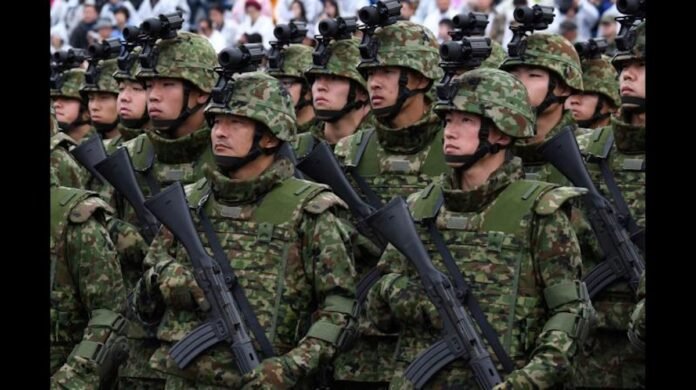
In barely half a year, Prime Minister Sanae Takaichi has pushed Japan’s defense policy into unfamiliar territory. The FY2026 main defense budget has reached 9.04 trillion yen (approximately US$58 billion), with total security-related spending at roughly 10.6 trillion yen, at about 1.9% of GDP.
The 2% threshold, long treated as sensitive, has effectively been reached ahead of schedule. At the April 2026 LDP convention, she signaled that constitutional revision is imminent, with a proposal targeted for 2027.
This is more than higher spending. It is a compressed phase of military normalization under pressure. The driver is a China-Taiwan trilemma: Japan must deter China, prepare for instability around Taiwan and hedge against uncertainty in US commitments, all without provoking escalation or exhausting its own capacity.
While a stronger military posture can enhance deterrence and reassure the United States, rapid acceleration still creates inherent trade-offs, and prioritizing one objective can weaken another in practice.
The pressing question is whether Japan can transform this accelerated buildup into enduring military capability before structural limits impose constraints.
Acceleration beyond predecessors
Japan’s trajectory did not begin with Takaichi. Under long-serving Prime Minister Shinzo Abe, the outer boundaries of postwar security policy were stretched, most notably through the 2015 legislation that reinterpreted Article 9 to permit limited collective self-defense.
Fumio Kishida, prime minister from 2021-2024, consolidated that trajectory, committing Japan to reach 2% of GDP in defense spending by FY2027 while revising core strategic documents.
Takaichi has forced execution under time pressure. Her February 2026 supermajority mandate allowed her to compress what had been a gradual process. Speed has reduced political resistance, but it has also limited the time available for institutions to absorb change.
The March 2026 reorganization of the Self-Defense Forces reflects this shift. A centralized Fleet Surface Force concentrates naval command, while a new Amphibious and Mine Warfare Group sharpens the focus on island defense. The Air Self-Defense Force has expanded into an Air and Space Self-Defense Force.
Procurement has accelerated, including Tomahawk acquisition and upgrades to indigenous systems. Restrictions on arms exports have been eased, signaling a more active role in defense industrial cooperation.
The emphasis has moved beyond preparing for contingencies and toward shaping them. That transition brings initiative, but also greater exposure to miscalculation and institutional strain.
The China-Taiwan trilemma as the central driver
The strategic logic behind this acceleration is rooted in geography and timing. China’s military modernization continues at scale, accompanied by persistent gray-zone activity around the Senkaku Islands. At the same time, a Taiwan contingency, whether through blockade or direct force, has become a planning scenario rather than a remote possibility.
Japan sits uncomfortably close to this potential flashpoint. The Nansei Islands (also called the Ryukyus) extend toward Taiwan, with some points only about 110 kilometers (68 miles) away.
Critical sea lanes passing through the Miyako Strait and the Bashi Channel carry the vast majority of Japan’s energy imports. Disruption in these corridors would register immediately as an economic shock.
Prime Minister Sanae Takaichi speaks with the press Friday about her phone call with US President Donald Trump as he flew home from his summit with Chinese leadaer Xi Jinping. Photo: Prime Minister’s Office of Japan
Tokyo increasingly treats Taiwan as strategically aligned but operationally constrained.
Political gridlock and readiness gaps raise doubts about its ability to sustain a prolonged defense.Japan cannot assume time or US availability will be on its side, particularly under an administration that frames alliances in more transactional terms.
These pressures cannot be reconciled cleanly. Strengthening deterrence risks escalation. Preparing for a Taiwan contingency demands resources that strain sustainability. Hedging against US uncertainty requires autonomy that can complicate coordination. The result is a managed tension rather than a balanced strategy.
Geographic focus and operational shift
Japan’s response is most visible along its southwestern arc. The islands of Yonaguni, Ishigaki, and Miyako are being fortified with missile deployments, surveillance systems and logistical infrastructure designed to support sustained operations.
This “southwestern wall” is a distributed network designed to complicate movement through the First Island Chain and raise operational costs. The emphasis lies on denial – slowing and constraining an adversary rather than defeating it outright.
From Beijing’s perspective, such a network complicates rapid coercive options but does not eliminate them. Saturation tactics or blockade strategies could still impose severe pressure, especially if Japan struggles to sustain operations. Denial depends as much on endurance as on initial positioning.
The core constraints: Human resources, demographics, and doctrinal legacy
The ambition of Japan’s defense buildup faces structural limits that are harder to overcome than budget ceilings.
The most immediate is manpower. As of the end of FY2024, the Self-Defense Forces stood at 89.1% of authorized strength, with recruitment shortfalls persisting despite expanded eligibility and retention measures. This gap already affects readiness.
A denial strategy built on dispersed, high-tempo operations across the southwestern islands is manpower-intensive. It requires rotation, redundancy and the ability to absorb attrition. Japan is weakest where its strategy demands the most.
Demographic trends reinforce this constraint. The pool of recruitment-age citizens continues to shrink, as it is projected to decline by another 30% or so by the mid-2040s, while competition from the civilian labor market remains strong. Expanding the force will be difficult regardless of budget growth.
Doctrine presents a different challenge. The long-standing emphasis on an exclusively defense-oriented policy under Article 9 has become increasingly detached from operational practice. Counterstrike capabilities and force restructuring point toward a more flexible doctrine. Takaichi’s push for constitutional revision seeks to reconcile this gap, but the process remains politically sensitive.
Even where funding exists, conversion into capability is uneven. Roughly 1 trillion yen in defense allocations go unspent annually due to procurement delays, industrial bottlenecks, and currency effects. The constraint is no longer willingness to spend, but the ability to sustain capability over time. These pressures concentrate risk in long-duration operations, where initial gains are hardest to maintain.
Historical echoes as cautionary restraint
Japan’s postwar identity continues to shape both domestic debate and external perception. The legacy of World War II and the normative weight of pacifism remain embedded in political culture. They no longer function as an outright barrier, but they define the boundaries of acceptable policy.
Public protests in April 2026, including a large demonstration outside the Diet and coordinated actions nationwide, reflect persistent unease. Coalition dynamics reinforce the need for caution. Younger voters appear more open to a stronger defense posture, but this openness does not translate into unconditional support.
Externally, China continues to frame Japan’s military developments through historical narratives, while other regional actors watch more quietly. Tokyo’s challenge is to signal restraint externally while expanding capability internally. Perception remains integral to deterrence.
Forward outlook: 2026–2035 inflection points
The upcoming revisions to Japan’s National Security Strategy will shape the next decade. Technology will play a larger role, particularly in unmanned systems and AI-enabled support, offering partial relief from manpower constraints. Partnerships will deepen, including with the Philippines and Australia.
Several trajectories stand out. Prolonged gray-zone pressure in the East China Sea would test operational endurance, exposing weaknesses in personnel and logistics.
Economic coercion by China, combined with fiscal constraints, could slow expansion. A successful constitutional revision could strengthen legal clarity and alliance coordination, while testing domestic cohesion.
Each path stresses a different dimension of Japan’s strategy – operational endurance, fiscal sustainability or political legitimacy. None can be managed through spending alone.
Realism must match resolve
Takaichi has supplied what Japanese defense policy long lacked: urgency backed by resources. The challenge has shifted. It is no longer about overcoming political hesitation or breaking fiscal taboos.
Japan’s rearmament now depends on whether the state can sustain what it has chosen to begin. The constraints it faces are enduring, not transitional. How they are managed will determine whether this acceleration produces lasting military capacity or a force that expands quickly but struggles to endure when it is tested most.
Tang Meng Kit (mktang87@gmail.com) is a Singaporean freelance analyst and commentator. He graduated from the S. Rajaratnam School of International Studies (RSIS), NTU, Singapore in 2025. By profession, Meng Kit works as an aerospace engineer. He has keen interest in geopolitics and cross-straits affairs.
The UK may soon have another female prime minister
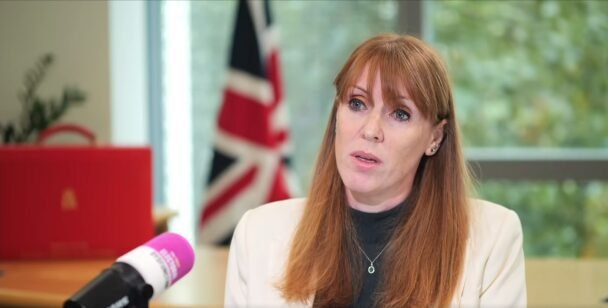
Angela Rayner has been cleared of wrongdoing in a tax investigation, removing a potential hurdle to any bid to become the next leader of the ruling Labour Party.
The former deputy prime minister told the Guardian newspaper and ITV News that the U.K. tax authority HMRC concluded she “didn’t try to avoid paying tax” or “wasn’t careless in the way in which I conducted myself” following an investigation into unpaid property tax, which was launched last fall.
It comes at a crucial time, with Keir Starmer’s leadership under threat. Health Secretary Wes Streeting is widely expected to launch a leadership challenge against the prime minister as soon as Thursday.
Rayner is seen as a standard bearer of the soft left of the Labour Party, and is popular with grassroots members. She was the party’s elected deputy leader from 2020 until she resigned over the tax investigation last fall.
Allies of the ex-Cabinet minister have made clear Rayner would be prepared to stand in a leadership contest if required.
When asked by ITV about her ambitions, she declined to rule out a tilt at the top job, saying: “I want us to pull together. I’ve said we have to do better and we all have to pay our part in that, and I will play my part in delivering on that.”
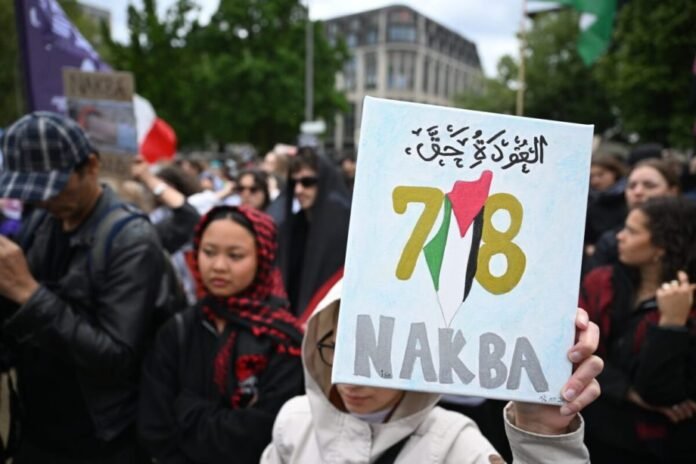
Nakba is not a memory; it is a system still in motion
Every year on 15 May, Palestinians mark the Nakba — the catastrophe of 1948. Yet to describe the Nakba as history is to misunderstand its enduring architecture. It was never a single event sealed in black-and-white photographs of frightened families clutching iron keys to homes they would never see again. It was, and remains, a political system: one of removal, replacement, legal erasure, and economic dispossession. The tragedy is not only that the world watched it begin, but that much of the world continues to watch it unfold in real time.
In 1947, Palestinians privately owned roughly 94 per cent of the land in Mandate Palestine, while Jewish settlers held around 5–6 per cent, according to British surveys. Yet the UN Partition Plan allocated 55 per cent of the territory to a Jewish state, despite Jews comprising only around one-third of the population. By 1949, after war and expulsion, Israel controlled 78 per cent of historic Palestine. Around 750,000 Palestinians — roughly 80 per cent of the Arab population within what became Israel — were expelled or fled. More than 500 villages and 11 Arab towns were depopulated or destroyed.
This was not merely the fog of war. It was state formation through demographic engineering.
The legal mechanisms that followed were as consequential as the military campaign itself. Israel’s 1950 Absentees’ Property Law transformed displacement into permanent dispossession.
A farmer forced to flee a village became, by law, an ‘absentee’ and therefore lost rights to land, home, orchards, bank accounts, and even inheritance. Many who never left the country but were displaced internally became the cruelly named “present absentees”. Their absence was bureaucratic fiction; their dispossession was entirely real.
This matters because the Nakba did not end in 1948. It adapted.
The occupied West Bank today bears the unmistakable grammar of that same project. In early 2026, Israel approved the restart of land registration in Area C of the West Bank for the first time since 1967. On paper, it sounds administrative. In practice, it is a potentially transformative annexation. Any land lacking formal registration risks being declared ‘state land’. Given incomplete Jordanian-era surveys and decades of restricted Palestinian access to legal registration, human rights groups warn this could dispossess Palestinians of up to half the West Bank.
Israeli Finance Minister Bezalel Smotrich was unusually candid, calling it part of a “settlement revolution to control all our lands”. Sometimes the language of policy is stripped bare enough to expose the ideology beneath it.
At the same time, settlement expansion has accelerated at an extraordinary speed. Peace Now reported that 2025 saw 54 new settlements or outposts approved — the highest number on record — alongside nearly 28,000 housing approvals for settlers. Roads are built to connect hilltops to Tel Aviv, while Palestinian villages remain under demolition orders.
The world still calls this a ‘peace process’. Palestinians experience it as a slow-motion disappearance.
Then there is Gaza, where the Nakba has become not only legal and political, but geological. United Nations satellite analysis estimates that roughly 80 per cent of Gaza’s buildings have been damaged or destroyed. More than 61 million tonnes of rubble now cover the strip. Around 86 per cent of farmland has been rendered unusable. This is not simply urban devastation; it is civilisational erasure. Libraries, olive groves, universities, bakeries, graveyards — the physical memory of a people is being pulverised.
For global policymakers, Gaza should force an uncomfortable reckoning. Reconstruction is not merely an aid challenge. It is a sovereignty question. Who rebuilds? Who returns? Who decides where a home once stood?
The moral failure of the current moment is amplified by the strategic recklessness of Washington.
The United States continues to frame unconditional support for Israel as a strategic necessity, even as that posture corrodes its own legitimacy across the Global South and increasingly among Western allies.
International law cannot survive as a selective instrument.
When Russia violates sovereignty, the language is clear. When Israel expands settlements deemed illegal by the International Court of Justice, ambiguity returns. When civilians are buried beneath apartment blocks in Gaza, diplomatic vocabulary suddenly becomes hesitant. This inconsistency is not merely hypocrisy; it is geopolitical self-harm.
Trust, once lost, is expensive to rebuild. Even traditional partners are shifting. Europe is fractured. Türkiye has called the West Bank registration plan unlawful annexation. Across Latin America, public anger is sharper. A 2026 global perception survey ranked Israel as the least favourably viewed country in the world, a dramatic collapse driven by Gaza and settlement expansion. This is not a public relations issue. It is the foreign policy consequence of sustained impunity.
The Global North and the Global South alike should pay close attention, because the Palestinian story is not an isolated tragedy—it is a mirror held up to the modern international order itself.
From the plantations of the Caribbean to the reservations of North America, from the mines of the Congo to the partition lines of India, from Algeria to South Africa, history has repeatedly shown how empires were built not only by conquest, but by the careful legalisation of theft.
Land was taken, names were changed, maps were redrawn, and entire peoples were told that their dispossession was either necessary or invisible. The Nakba belongs to this wider human archive of erasure. It speaks the same language of colonial logic: remove the native, rename the land, and turn memory into a problem of administration. The Global North cannot pretend distance from this history, because many of its modern institutions were financed by it. The Global South cannot ignore it, because many of its own borders and wounds were shaped by the same hand. Palestine is not an exception—it is a continuation.
History does not disappear because official narratives demand silence. It survives stubbornly in refugee camps and family keys, in broken olive trees and inherited deeds, in the trembling voice of a grandmother naming a village erased from the map but not from the bloodline. It survives in the same way memory survived among Indigenous peoples in the Americas, among Black South Africans under apartheid, among the displaced of Kashmir, Cyprus, and Sudan. Justice delayed does not become justice denied—it becomes intergenerational grief, passed like an heirloom from parent to child.
That is why Palestine unsettles the conscience of the world: it forces a confrontation with an old truth that power prefers to forget—that dispossession is never truly past while the displaced are still alive.
The question is no longer whether history will judge this silence, but whether the international community still possesses the moral courage to interrupt it.
There is no strategic stability in permanent humiliation. No regional architecture can endure while millions remain stateless, displaced, and governed by laws designed for their exclusion. Security built on denial is not security; it is deferred instability.
A genuine path forward requires more than ceasefire diplomacy. It demands political honesty. Settlement expansion must stop. Land seizures disguised as registration must be challenged. Gaza’s reconstruction must be tied to Palestinian political rights, not administered as an open-air dependency. Refugee return, restitution, or meaningful compensation must return to serious diplomatic discussion, not remain buried beneath the rubble of failed negotiations.
This is not radicalism. It is the minimum threshold of justice.
The Nakba is not an anniversary. It is an active structure shaping borders, economies, alliances, and the moral credibility of the international order itself. For strategists and policymakers, the lesson is stark: unresolved dispossession does not become history. It becomes the future. And history, when ignored, has a habit of returning — not quietly, but in ruins.
The views expressed in this article belong to the author and do not necessarily reflect the editorial policy of Middle East Monitor.
4 Wounded, One Critically, in Rosh Hanikra Drone Strike as Israel-Lebanon Talks Resume in Washington
Four Israeli civilians were wounded Thursday when an explosive drone struck a parking lot in the Rosh Hanikra area as a new round of US-mediated negotiations between Israel and Lebanon opened in Washington amid continued fighting in southern Lebanon.
Galilee Medical Center in Nahariya said it was treating one person in critical condition and another in moderate condition following the drone strike. Two additional wounded civilians were brought to the hospital in good condition. The hospital said one of those patients had already been released, and the second was expected to be discharged soon.
At the same time, Israeli and Lebanese representatives began a new round of talks at the State Department offices in Washington under US mediation. An Israeli official said negotiations had started a short time earlier and were expected to continue on Friday.
The fighting along the northern front continued as the Israel Defense Forces reported additional Hezbollah attacks targeting Israeli forces operating in southern Lebanon. The IDF Spokesperson said Hezbollah launched surface-to-air missiles earlier Thursday at Israeli Air Force aircraft operating over southern Lebanon. The military said the launches failed.
The IDF Spokesperson also said Israeli forces killed 20 Hezbollah operatives in southern Lebanon during the previous 24 hours and struck approximately 65 Hezbollah infrastructure sites through aerial and ground operations.
Targets included weapons storage facilities, observation posts, command centers, and other infrastructure that it said had been used by Hezbollah operatives to advance terror plans.