The collapse of US–Iran talks is casting doubt on the ceasefire, suggesting it may be a fragile pause rather than a path to diplomacy
The collapse of US–Iran talks after a full day of negotiations is reinforcing concerns that the current ceasefire may be less a diplomatic opening than a fragile pause shaped by competing strategic calculations.
After nearly a full day of negotiations, talks between the United States and Iran ended without an agreement, underscoring the deep divide between the two sides and raising new questions about whether diplomacy can still play a meaningful role under the current ceasefire framework.
For a lot of us who’ve been watching this, of course, this does not come as a surprise
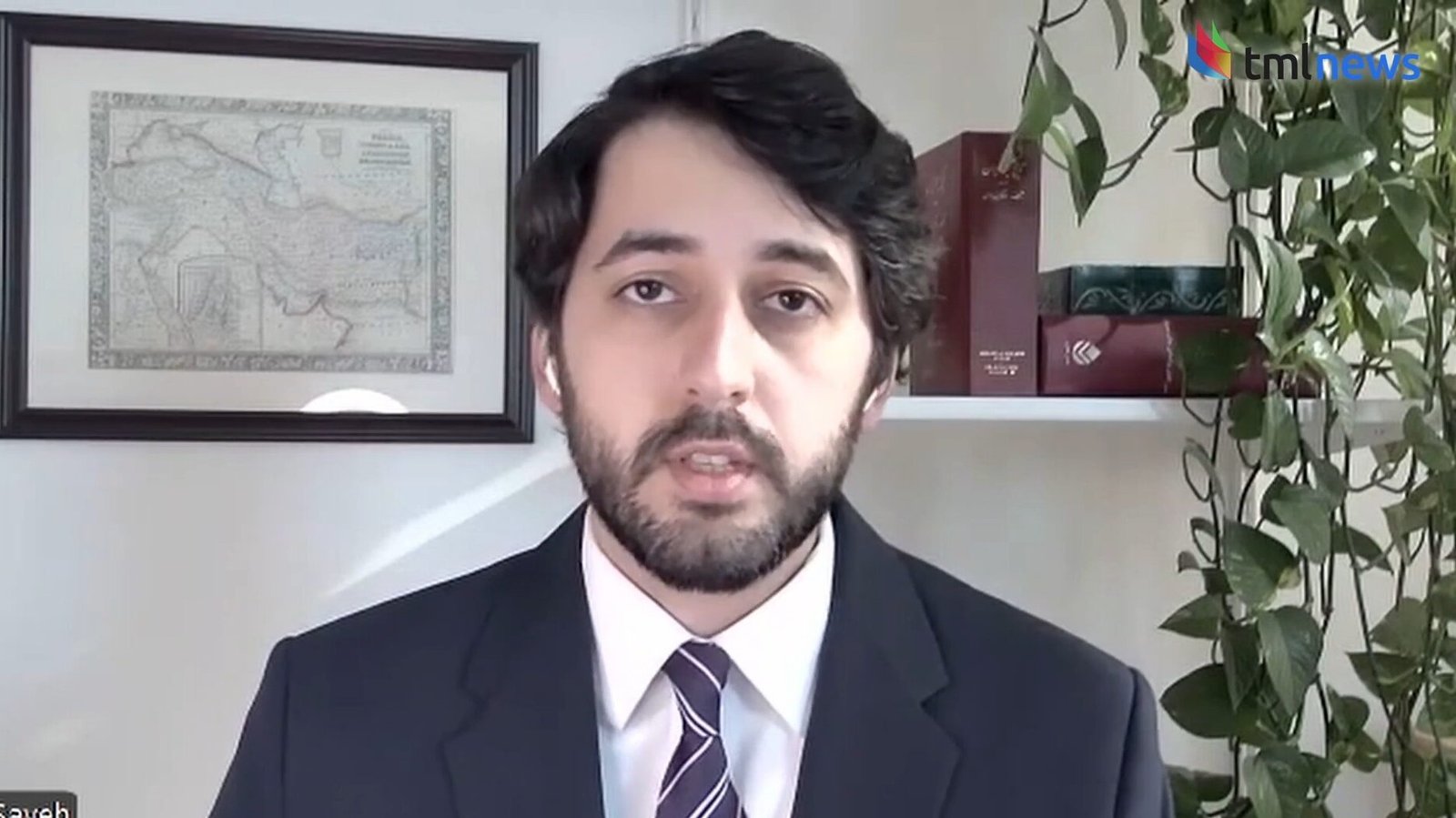
For Janatan Sayeh, an Iran analyst at the Foundation for Defense of Democracies, the outcome was not unexpected. “For a lot of us who’ve been watching this, of course, this does not come as a surprise,” he said, speaking to The Media Line. “I have never seen the two sides to be this far apart from each other.”
Sayeh pointed to a pattern that has repeated itself across recent rounds of diplomacy. “We’ve seen this happen at least twice before in the past couple of years,” he said, recalling earlier efforts in 2025 and earlier this year. In those cases, he said, Washington “opened up the field as much as they could,” even offering concessions, but “Tehran was not moving any of its red line.”
“The more the Islamic Republic feels threatened, the more it’s isolated and cornered, the less likely it is for it to provide concessions, because it sees it as a sign of weakness,” he added, describing a dynamic that continues to shape Tehran’s behavior.
Whether the latest round of talks was ever positioned to succeed remains an open question. Sayeh suggested that both sides had reasons to engage, at least in the short term. “Any negotiation really needs at least an extent of optimism for it to lead anywhere,” he said.
At the same time, he offered a more pragmatic reading of the timing. “Both sides needed a bit of time,” he said. On one hand, he noted, the American administration sought to calm markets and project control. On the other hand, Iran “needed a bit of time to regroup, re-strategize, restructure their command center” following sustained pressure.
That overlap of interests may help explain why a ceasefire was reached, but it does not necessarily point to a path forward.
“What’s really interesting about this round of negotiations … is the fact that Tehran is viewing the ceasefire as a victory,” Sayeh said.
That perception is not occurring in isolation. Messaging inside Iran has framed the ceasefire not as a pause but as a strategic success, portraying the regime as having absorbed the strikes while forcing Washington into negotiations. Against that backdrop, Sayeh’s assessment helps explain the lack of flexibility on the Iranian side. “Because of that, their ambitions are growing,” he said.
According to Sayeh, that shift in perception is already translating into more assertive positions. He pointed to rhetoric around control of the Strait of Hormuz and attempts to expand the scope of negotiations beyond the nuclear issue. “We’ve never expected them to say any ceasefire … would also have to dictate how Israel treats terror proxies such as Hezbollah,” he said, describing what he sees as an emboldened posture.
This is more a fragile truce than a ceasefire
On the ground, the situation reflects that tension. Rather than a stable arrangement, Sayeh described the current moment as inherently unstable. “This is more a fragile truce than a ceasefire,” he said.
He pointed to continued activity even after the announcement. “It’s the first time that as soon as a ceasefire was announced, 24 hours later, Iran was still bombing the Persian Gulf states,” he said. “That was a signal from Tehran that we’re not going to abide by your ceasefire rules.”
The message, in his view, is deliberate. “We want to ensure that the world knows that we can reignite escalations at the time of our choosing,” he said.
At the same time, he suggested Tehran is closely reading Washington’s intentions. “They are sensing that the Washington administration is really keen on concluding this war,” he said. “And as soon as Tehran senses any form of desperation, they’re immediately going to exploit that.”
That gap in perception extends to the negotiations themselves. “I don’t think the two sides are exactly understanding what their leverages are,” he said.
I don’t think they ever seriously engaged
Asked whether Iran was seriously engaging in talks, Sayeh was direct. “I don’t think they ever seriously engaged,” he said.
Instead, he described a dual strategy that combines military positioning with messaging. “Of course, they’re trying to buy time,” he said, but added that the process also serves a domestic purpose, showing the Iranian public that “we are still here negotiating with them on our own terms.”
That messaging is reinforced by the composition of the delegation itself. “A lot of them are actually PR professionals,” he said, suggesting the talks are being used to project control internally as much as to engage externally.
On the American side, Sayeh described a consistent pattern in how pressure is applied. “What this administration does is first signal diplomacy and genuinely exhaust all options on the diplomatic front,” he said. “But after Washington thinks it has exhausted all avenues, then it escalates.”
That approach, he said, is designed to offer a way out while maintaining leverage. “On one hand, you have an opportunity to deescalate … but should you fail to capitalize on that, there’s going to be repercussions.”
The question now is whether that next phase is approaching. Sayeh suggested that any shift would likely involve a change in the nature of the military campaign. “What I’m looking out for is if they’re going to shift … whether they’re genuinely going to bring the war within Iranian territory,” he said.
Even if diplomacy continues in some form, he cautioned that time may be working against both sides. “The more the ceasefire lasts, the more challenging it becomes to reignite,” he said, noting the growing difficulty of justifying renewed escalation after a prolonged pause.
At the same time, delaying action carries its own risks. “If you know for a fact talks have failed … time is not on your side,” he said.
Looking ahead, Sayeh warned that any renewed escalation is unlikely to be gradual. “Should there be a new military escalation, it would have to be decisive,” he said.
He also raised doubts about whether diplomacy could easily resume after another round of fighting. “The question would still linger as to who’s going to be left for Washington to negotiate with,” he said.
Ultimately, he argued that the current approach may be reaching its limits. “The idea that you can wound it and scale back and hope everything will be okay is going to be very, very counterproductive,” he said.
For now, the ceasefire remains in place, but the dynamics described by Sayeh suggest a situation defined less by de-escalation than by a temporary pause—one in which both diplomacy and military pressure continue to operate without a clear convergence point.