After four weeks of dazzling action on the pitch, it may be an off-field scandal that comes to define this summer’s World Cup. Fifa’s decision to allow America’s star striker, Folarin Balogun, to play in a last-16 match against Belgium, despite having been sent off in the previous game against Bosnia and Herzegovina, is in clear breach of the association’s own rules. The move has been greeted with outrage pretty much across the board.
Extraordinarily, Fifa, international football’s governing body, has not only so far declined to give any detailed reasoning for its decision to suspend what would be a standard one game ban following Balogun red card. The reversal appears to result from direct pressure from the White House. Media reports suggest that Donald Trump made three calls to Fifa, starting from Wednesday, to ensure that the red card was overturned. The White House has said that the call was made to understand why Balogun was sent off and the reason for the suspension.
Whether Balogun deserved to be sent off is debatable. It’s also of secondary importance when compared to the the potential reverberations of this seismic intervention from Fifa.
Naturally, the decision has been met with anger and bewilderment from the wider footballing community outside the US, not least by the Belgians, who must now prepare to face the US men’s national soccer team’s (USMNT) most dangerous player with 24 hours notice. The Belgian FA’s statement promising to explore “all potential options” in the name of “[safeguarding] the legitimate rights of all participating teams and to protect the fundamental principles of fair play in our sport”, suggests that they have no intention of taking this lying down.
Uefa, the governing body for football in Europe, has released a statement expressing “our disbelief at such an unprecedented, incomprehensible and unjustifiable decision”.
The statement said that the one-match suspension rule following a red card is “not a discretionary option”. “It is a principle embedded in regulations, which cannot be made subject to exceptions, let alone in the middle of a tournament where several other players have been in the same situation and regularly served their suspension.”
Zooming out from the immediate fallout, this episode feels like a microcosm for the health of global football more broadly. In simple terms, this appears to be a case where an apparently settled disciplinary decision has been reversed due to political lobbying. In that context, the White House’s alleged intervention has prompted familiar and uncomfortable questions about the disciplinary authority of Fifa, bringing ever more attention to the opacity of the organisation’s processes.
Scrutiny must particularly fall on Gianni Infantino. Keen observers will be aware of the Fifa chairman’s form when it comes to sucking up to the Maga regime. Despite maintaining an official stance of political neutrality, the build up to this World Cup has been defined by images of Infantino pandering to Donald Trump’s ego, by parading in Maga hats and awarding him concocted peace prizes.
But this latest act may finally prove a bridge too far. Infantino now appears to be actively undermining the sporting integrity of the very game he leads to keep in with the US president.
A question of trust
Ultimately, this story boils down to a question of trust and sporting integrity, two themes that sit at the heart of my own research into football support as a form of living heritage. Unlike monuments or historic buildings, living heritage survives because communities continually transmit specific values and experiences across generations.
Fifa president, Gianni Infantino, presents the US president, Donald Trump with the ‘Fifa Peace Prize’.EPA/Will Oliver
The World Cup is one of the clearest examples of this phenomenon. Its cultural significance does not arise solely from unforgettable matches, moments and performances. Rather, it emerges from the rituals and shared experiences that surround the tournament: supporters travelling across continents, families gathering to watch matches together, stories passed between generations. And, most importantly, the collective belief that the competition not only represents the ultimate prize of international football – but a fundamentally fair one.
That belief in fairness is particularly vital here. The World Cup matters because billions of people accept that victories and defeats are earned within a legitimate competitive framework. They celebrate triumphs because they broadly trust the competition. They accept disappointment because they trust the rules. Those shared assumptions underpin the tournament as a form of living cultural heritage.
When Fifa so flagrantly departs from established procedures and appears to willingly submit to political influence, that foundation is fundamentally damaged.
Once supporters begin to question not simply the outcome of individual refereeing decisions, but the legitimacy of the system itself, it corrodes the implicit trust and uncomplicated beauty of the game itself. Once lost, those things are exceptionally difficult to rebuild.
That is why governance can never be dismissed as a dry administrative concern. Transparent procedures, accountable institutions and genuine independence are the pillars upon which the legitimacy of the World Cup and football at large rests.
Football’s greatest tournament derives its power from the belief that every nation competes according to the same rules. If Fifa is prepared to abandon that principle in the face of political pressure it risks sacrificing something far more valuable than its own credibility. It risks undermining the very trust that has made the World Cup the most important sporting event on Earth.
Folarin Balogun’s availability against Belgium may make headlines for a day or two. The far bigger story is that Fifa has invited the world to wonder whether the rules of the World Cup are still applied equally at all.
Japanese government bonds have a three-body problem
In May, the yield on Japan’s ten-year government bond touched 2.8%, its highest level in nearly three decades. For a market that spent a generation anchored near zero, this was not a technical adjustment — it was a tremor that reverberated across the Pacific: as Japanese yields lurched higher, US Treasury yields moved with them.
This is not new. In January, when an earlier JGB selloff bled into the US Treasury market, Treasury Secretary Scott Bessent said he had been in touch with his Japanese counterpart and expected Tokyo to “begin saying the things that will calm the market down.”
The Japanese government bond market is no longer a domestic affair. It has become a load-bearing wall of the global financial system — and right now, that wall is being asked to do something it cannot: rescue the yen.
For most currencies, the exchange rate tracks short-term interest-rate differentials, and analysts watch the two-year yield gap. Japan is the exception. Once the BOJ pinned policy rates at the zero lower bound and turned to yield curve control, long-term yields became the operative channel — which is why the US–Japan ten-year differential has tracked USD/JPY more closely than the two-year spread.
Suppressed JGB yields pushed Japanese life insurers and pension funds to reach for returns abroad, and those outflows became a structural engine of yen weakness; normalization is meant to run that engine in reverse. For a while, it seemed to work.
Since the BOJ began tapering its 500 trillion yen balance sheet in the second half of 2024, the yen’s freefall gave way to a slower grind — the evidence the bilateral camp cites. But moderation is not reversal: the yen has since broken past 162 to the dollar, a four-decade low, with the Ministry of Finance intervening almost daily to little effect.
Quantitative tightening (QT) slowed the depreciation, but it did not change its destination, because the pressure does not originate in the spread at all.
Not a bilateral problem
Draw the triangle however you like — the BOJ, Tokyo’s fiscal authorities and a Washington wanting both a stronger yen and lower Treasury yields; or Japan, the United States and China. The bodies matter less than the shared point: no bilateral cut of this problem captures it.
The BOJ tightens to defend the yen. But with debt near 260% of GDP and Prime Minister Sanae Takaichi financing a 21 trillion yen stimulus package with deficit bonds, every increase in yields raises debt-servicing costs.
Japan is the largest foreign holder of US Treasuries. When BOJ tightening lifts JGB yields, that flow reverses at the margin and Japanese capital drifts home — the channel that carried the JGB selloff into the Treasury market, and the reason Bessent, whose deepest concern is the US ten-year, cannot simply cheer a hawkish BOJ.
Bessent, who visited Japan in May, has repeatedly suggested faster BOJ rate hikes are the cure for the weak yen. But push the BOJ to tighten aggressively and he courts the very thing he most wants to avoid: JGB yields escalating into the US ten-year. His real choice is not between a strong yen and a weak one, but between a weaker yen and higher American long rates.
That points to a compromise already taking shape: pause QT in fiscal 2027 while continuing to hike cautiously. The appeal is that the levers hit different ends of the curve. QT works the long end — where the BOJ’s retreat has already pushed 30-year yields toward 3.6% — so pausing it spares the fiscal arithmetic and, through the savings channel, US Treasuries.
Rate hikes work the front end, preserving the appearance of yen defense while handing Takaichi her fiscal room.
Why the compromise fails
The problem is that the compromise leans on the one lever with no travel left. With QT paused, front-end hikes become the sole instrument of yen defense — and the inflation data says they cannot be pushed far. Headline inflation was 1.5% in May and core CPI held at 1.4%, below target for a fourth straight month.
But the inflation cap is only the near-term constraint. Even if inflation returned to 3% tomorrow, giving the BOJ room to lift rates past 2%, it would not be enough. A rate differential is a flow; China’s accumulated real depreciation since 2022 is a stock, and no plausible front-end hike clears a gap that has compounded for years.
The hike lever is not merely constrained — it is the wrong instrument for the force it is being asked to offset. The compromise can steady the JGB market for a time; it cannot change where the yen is going. With intervention unable to hold the line, the path of least resistance for USD/JPY is higher still.
That force, as I argued in this column previously, is China. Years of Chinese deflation have given exporters a cumulative price advantage over Japanese competitors approaching 25–30% in overlapping industrial sectors.
Because Beijing manages the yuan against the dollar and will not let it appreciate to reflect that advantage, the adjustment is displaced onto the currencies of China’s closest competitors — and the yen absorbs the largest share.
This is China Shock 2.0: a 25-to-30-point real-price gap against which a 50-basis-point rate move is not a counterweight but a rounding error.
The missing variable
Tokyo is solving a structural external problem with domestic monetary tools; Washington is trying to strengthen the yen without destabilizing its own Treasury market. Neither can overcome the dominant force acting on Japan’s currency. The BOJ can influence the timing of the adjustment and its volatility but it can no longer determine its direction.
And the direction is set in Beijing. The yen’s trajectory now hinges on whether China’s deflationary spiral deepens or reverses, and China’s own policy choices dictate that direction. So long as Beijing leans on supply and suppresses domestic demand, deflation compounds and the yen keeps absorbing the pressure.
A genuine reflation would relieve it — but Japan’s own lost decades are the cautionary tale: once entrenched, deflation is extraordinarily hard to reverse, even with zero rates, quantitative easing and years of effort. There is little reason to expect China to escape quickly what Japan could not escape for a generation.
That is the real three-body problem of Japan’s bond market — and its resolution lies not on the BOJ’s balance sheet or in Bessent’s phone calls, but in a rebalancing of the world’s second-largest economy that is, to say the least, not imminent.
Steven Linsley is an independent macroeconomic commentator.
Israel’s occupation of Lebanese territory hinders army deployment in south, president warns
Lebanon’s President Joseph Aoun warned Monday that Israel’s ongoing occupation of territory in the south prevents the army deployment in the area, Anadolu reports.
“Israel must be pressured to withdraw from the areas it occupies in Lebanon,” Aoun said during a video call with American Task Force on Lebanon, as cited by a presidency statement.
The Lebanese army and security forces “are the cornerstone of stability and security” in southern Lebanon and “are essential to enabling residents to return to their towns and homes,” he stressed.
“There is no place for civil war in Lebanon, and its return is not on the table, despite attempts by some parties to rekindle sectarian strife,” Aoun said.
Negotiation “is the only option left after the war failed to achieve its declared objectives,” he added.
“Unless Israel withdraws from Lebanese territory, the situation will not serve the goals set by Washington and Beirut regarding the restoration of Lebanon’s sovereignty, independence, and strong institutions,” the Lebanese president warned.
“The suspension of lawsuits between Israel and Lebanon is limited to the period of negotiations and does not mean abandoning these lawsuits entirely,” Aoun said.
READ: Lebanon says direct damage from Israeli war estimated at $3-4 billion
On June 26, Lebanon and Israel signed a framework agreement under US mediation, which provides for a phased Israeli withdrawal from Lebanese territory.
The agreement, however, does not set a timetable for a full withdrawal and links further pullbacks to the Lebanese army assuming security responsibilities and the disarmament of non-state armed groups, including Hezbollah.
Lebanese officials said the agreement represented a “first step” toward restoring state sovereignty over all its territory and allowing displaced people to return to their towns.
Hezbollah, however, called the agreement “null and void,” saying that linking Israeli withdrawal to its disarmament crossed “all red lines.”
Since March 2, Israeli attacks in Lebanon have killed more than 4,300 people and injured over 12,000 others, according to official figures.
Israeli forces also continue to occupy areas in southern Lebanon, some held for decades and others seized during the 2023-2024 war, while advancing more than 10 kilometers (6.2 miles) into Lebanese territory during the latest offensive.
READ: Netanyahu denies Trump restricted Israeli strikes in Lebanon
The ‘navalization’ of economic warfare sees trade routes become zones of force rather than rules
With more than 80% of global trade by volume being transported by sea, maritime shipping lanes are indispensable to the world economy. That fact was starkly illustrated by the war in Iran, which saw Tehran effectively close the Strait of Hormuz to commercial traffic and Washington respond with a blockade of Iranian ports.
Yet such recent events are an aberration from much of the post-Cold War period, during which economic sanctions were enforced far from the sea. Governments relied on financial infrastructure – bank messaging systems, insurance markets, shipping registries and port access rules – to restrict trade without physically stopping ships.
But that system is now under strain. As the United States and its partners have relied more heavily on sanctions as a tool of geopolitical conflict, targeted countries have developed effective evasion networks. In response, the U.S. and its partners are increasingly returning to a more direct form of economic pressure: boarding ships at sea.
Since late 2024, naval forces in Europe and among NATO partners have detained or inspected numerous vessels suspected of carrying sanctioned cargo. These operations have focused on so-called shadow fleet tankers transporting Russian oil. Since the U.S. blockade of Venezuelan oil began in late 2025, interdiction has spread beyond Russian-linked tankers to Iranian and Venezuelan vessels, and now European and Indian authorities have joined in that effort. These ships often operate in legal gray zones, using opaque ownership structures, frequent flag changes and alternative insurance arrangements to avoid sanctions enforcement.
As a longtime observer of international security and geopolitical risk, I believe this trend suggests not a coordinated global policy but a broader shift in practice: Sanctions enforcement is moving from financial systems back into physical space.
Why financial sanctions are losing leverage
Modern sanctions have long relied on control over key nodes in global commerce. U.S. and European sanctions on Iran and Russia show how restrictions on dollar clearing, the SWIFT banking network and maritime insurance can severely disrupt trade without physically intercepting cargo. If banks cannot process payments, ships cannot be insured and ports cannot legally receive cargo, then trade can be effectively halted without direct enforcement.
But that leverage depends on visibility and compliance. Over time, sanctioned states have become more effective at bypassing these channels.
The tanker Boracay that allegedly belongs to Russia’s so-called shadow fleet.AP Photo/Mathieu Pattier
Russia’s shadow fleet is the clearest example. Hundreds of tankers now operate outside Western insurance and registry systems, moving oil through complex ownership chains that obscure responsibility and destination.
Iran provides a parallel case. Under sustained U.S. and European sanctions – targeting dollar clearing, SWIFT and maritime services – Tehran has developed evasive shipping networks using ship-to-ship transfers, flag-hopping and opaque intermediaries to sustain oil exports, largely to Asia and especially China.
At nearly 1,000 tankers, the global shadow fleet amounts to roughly between 17% and 18.5% of global tanker capacity, according to a 2025 S&P Global estimate.
As financial enforcement becomes less reliable, states face a familiar problem: how to enforce sanctions when financial systems no longer provide full visibility or control.
The return of maritime interdiction
Increasingly, many countries feel the answer to declining sanctions leverage is physical interdiction at sea.
While boarding ships is not new, how often it is now used as a tool of sanctions enforcement is. A number of cases since late 2024 have illustrated this broader pattern of European and U.S. interdictions targeting shadow fleet vessels across the Baltic and Mediterranean. They include Finland’s boarding of the Eagle S, Germany’s seizure of the Eventin, and Estonia’s detention of the stateless Kiwala.
Most recently, the EU expanded a naval operation launched in 2020 meant to enforce a United Nations embargo against Libya. By June 2026, the so-named Operation IRINI was conducting shadow fleet inspections and had boarded the Oneiroi, the Nelsa and the Sandhya – all EU-sanctioned tankers operating in international waters.
Other countries are using similar methods for different political purposes. In June 2025, Iran’s Islamic Revolutionary Guard Corps captured the Talara in the Gulf of Oman, citing national security concerns.
The legal language differs, but the operational logic is similar in that it involves using naval power to interrupt commercial shipping for strategic effect.
Under the U.N. Convention on the Law of the Sea, ships on the high seas fall under the jurisdiction of their flag state. This principle was intended to ensure predictability and limit interference with global shipping.
There are narrow exceptions. Warships may board vessels suspected of piracy, slave trading, statelessness or false flagging. Outside these cases, boarding is generally prohibited.
Modern sanctions enforcement is increasingly being fitted into these exceptions. Shadow fleet vessels often exploit legal ambiguity through frequent flag changes or unclear ownership structures. This allows nations to argue that a ship is effectively stateless or fraudulently flagged.
But sanctions evasion itself is not a legal basis for boarding. As a result, enforcement depends heavily on interpretation, especially around what counts as a valid flag or legitimate registration. The result is a growing gap between a legal system built on clear categories and a maritime economy built to blur them.
A fragmented enforcement environment
A striking feature of the current system is its lack of consistency.
Some vessels are detained and released. Others are fined, seized or redirected. Outcomes vary depending on domestic law, political context and enforcement priorities. Even among countries aligned on sanctions, there is no shared answer to what “successful enforcement” looks like.
A Chinese navy ship, right, and a Chinese vessel draw the attention of a Philippine maritime patrol in the disputed South China Sea on June 6, 2025.AP Photo/Joeal Calupitan
No equivalent framework exists today for shadow fleet enforcement. Nations are acting in parallel rather than through a unified system, producing uneven and sometimes contradictory outcomes.
Although current activity is concentrated in Europe and surrounding the Strait of Hormuz, the implications extend further. Once maritime interdiction becomes a normal tool of economic statecraft, it is unlikely to remain confined to one region or one political context.
In the South China Sea, China has expanded maritime law enforcement under broad domestic categories, such as fisheries protection and anti-smuggling operations. These rely on a similar logic as other interdictions: using legal classification to justify coercive presence at sea. In the Gulf, Iran has already shown how tanker seizures can be framed as responses to sanctions or national security threats.
Amid the rise in interdictions, there is no universally accepted system for sanctions enforcement at sea. There is no shared tribunal, no inspection authority and no agreed mechanism for resolving disputes over vessel status or cargo legitimacy.
This matters because enforcement is expanding faster than governance. Naval forces are operating in a legal environment that is increasingly unclear, without the institutional structures that once constrained or standardized action.
The lack of institutional clarity
Maritime interdiction does not replace financial sanctions. Banks and insurers remain central to economic pressure, but they are no longer sufficient on their own. As a result, countries are increasingly layering physical enforcement onto financial restrictions, boarding ships not because financial tools have disappeared but because they no longer fully close enforcement gaps.
The risk is that this hybrid system develops without clear rules or consistent standards, increasing the potential for miscalculation and conflict at sea. If boarding practices become routine under broad legal interpretations, other countries are likely to adopt similar methods in different contexts. The key risk lies not in policy convergence but in setting precedents that blur the boundaries between law enforcement, coercion and commerce.
Katalyst’s satellite rescue mission is now in pursuit of NASA’s Swift
High above the remote Pacific Ocean, about halfway between Hawaii and the northernmost part of Australia, an air-launched rocket fired into space on Independence Day weekend to kick off a weekslong pursuit of a NASA astronomy satellite perilously close to falling out of orbit.
The endeavor to rescue NASA’s Swift satellite is the first mission of its kind. NASA put out a call for commercial companies less than a year ago to propose how they could rapidly build and launch a small satellite to latch onto the Swift spacecraft and boost its altitude so that it doesn’t come down in a few months.
Katalyst Space Technologies responded with the best offer. NASA awarded the company a contract last September to build and launch a mission to rescue Swift. A little more than nine months later, Katalyst’s nearly half-ton Link satellite is safely in orbit. For anyone who follows the space industry, building, testing, and launching a functioning first-of-its-kind satellite of that size in less than a year is a remarkable achievement; it would usually take several years.
Getting to Swift
Technicians buttoned up the Link satellite inside the nose cone of a Northrop Grumman Pegasus XL rocket last month at NASA’s Wallops Flight Facility in Virginia. An aircrew flew the rocket and its L-1011 carrier aircraft from Virginia to the US Army’s Ronald Reagan Space and Missile Test Range on Kwajalein Atoll, a facility leased from the Marshall Islands more than 2,000 miles southwest of Honolulu.
Once there, the rocket and the L-1011 waited several days for good weather, then took off to fly to a predetermined launch zone south of Kwajalein. With everything in order and upon reaching a cruising altitude of 41,000 feet, the pilots released the 58-foot-long (18-meter) rocket at 4:36 am EDT (08:36 UTC) Friday. Five seconds later, the Pegasus XL ignited its solid-fueled first stage to begin the climb to orbit.
It took just shy of eight minutes for the Pegasus XL’s three solid-fueled motors to accelerate to orbital velocity. The rocket’s upper stage completed a preprogrammed sequence to deploy the Link satellite nearly 13 minutes after launch. NASA confirmed later Friday that ground teams from Katalyst established communications with the Link satellite, confirming the spacecraft survived the ride on Pegasus.
Katalyst selected the rarely used Pegasus rocket, which has flown just once in the last seven years, because the Swift rescue mission needed to launch into an unusually low-inclination orbit to reach its target. Swift’s orbit is inclined 20.6 degrees to the equator, and the Link satellite would have required a launch on an oversized, more expensive rocket to reach that orbit from a spaceport like Cape Canaveral, Florida. Launching from the equatorial Pacific solved that problem.
There are more trials ahead for Katalyst. The Swift rescue mission is the first time the company has flown this version of its Link satellite. In addition to the standard satellite systems required to generate power, maintain attitude control, and communicate with the ground, the Link spacecraft has cameras and sensors to guide itself toward Swift and three robotic arms to grab onto the observatory. Three plasma thrusters will propel Link and Swift to a higher orbit once Katalyst confirms a firm connection.
“Over the next several weeks, Katalyst will perform checkout procedures for Link, including assessments of its propulsion, sensor, and navigation systems,” NASA said in a statement. “Link will then approach Swift and complete a survey of the 21-year-old observatory, before capturing and lifting it over the course of several months.”
But Swift was never designed to meet up with another spacecraft in orbit. Engineers are unsure of the condition of Swift’s thermal insulation, and ground controllers will take a cautious approach to determining where and when Link’s robotic arms can capture the satellite. Officials from NASA and Katalyst acknowledge the unknowns.
Concept of operations for the Swift rescue mission.
Credit: Katalyst Space Technologies
Concept of operations for the Swift rescue mission. Credit: Katalyst Space Technologies
“All this is challenging and risky,” said Kieran Wilson, principal investigator for the Link satellite at Katalyst. “There’s a lot of spacecraft that have had far longer development cycles with far more funding behind them that have failed for mundane reasons.”
But getting Link launched successfully is an accomplishment in and of itself, NASA officials said. Managers faced a real deadline. Based on current trends, Swift will fall below an altitude of 300 kilometers (186 miles) in October, when its orbit will be too low for Link to have a decent shot at completing the rendezvous due to increasing atmospheric drag.
“One thing that we’re relying on for Swift is its ability to maintain its own pointing control,” Wilson said. “There are no features on Swift that are designed to capture. There’s a lack of documentation to even help us figure out where those features would be if they existed, but we are confident that Swift can point well.
“Once we get to within tens of meters, Swift will be performing maneuvers in tandem with us in order for us to inspect the capture locations, ensure that they are free of torn-off MLI (Multi-Layer Insulation), whatever may be there, and to essentially move through various capture locations that we have.”
NASA has a clear interest in saving the Swift mission. The $500 million observatory’s primary mission is detecting gamma-ray bursts, the most powerful explosions in the known Universe. Despite its age, astrophysicists still rely on Swift’s multi-wavelength instruments to identify and locate gamma-ray bursts for follow-up observations by other observatories.
But part of the reason for launching a rescue mission to Swift is simply to see if it can be done. NASA launched Space Shuttles to service and upgrade the Hubble Space Telescope, but those missions required hands-on work from spacewalking astronauts. A safer, cheaper robotic servicing platform would have a broader set of applications.
“This is a historic mission,” said Robert Lamontagne, vice president of strategic partnerships at Katalyst. “Some would call it the first of its kind, a robotic spacecraft that can go and capture an unprepared satellite. It’s a commercial mission, first and foremost. It’s doing an operational, real-world objective. It’s not just a demonstration. We’re doing this as a service.
“At Katalyst, we are very passionate about the idea of dynamic space operations,” Lamontagne said. “What I mean by that is, for years and years, folks have thought about space as something where you build a satellite, you launch a satellite, it does its mission, and at the end of the mission, it gets disposed of, either it re-enters, or it goes to a graveyard orbit. That’s a throwaway type of model.
“We think the spacecraft operator should no longer be constrained by the silly decisions that we made before launch,” he said. “You should be able to refuel, reposition, repurpose, repair, and even upgrade satellites, even if they were never prepared for it, and that’s where Katalyst is trying to change everyone’s mindset.”
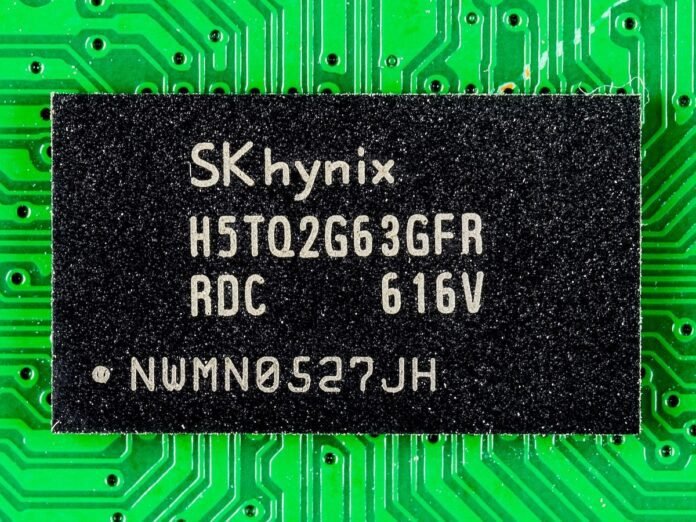
SK Hynix’s IPO is really a bet on the future of AI
Korean chipmaker SK Hynix is being priced as a proxy for the future of AI. Image: Facebook
When South Korea’s chip giant SK Hynix launches its planned US$29 billion US listing, investors will tell themselves they’re buying one of the world’s most important semiconductor companies.
But what they will really be buying is a rosy artificial intelligence forecast. Specifically, they will be buying the view that AI will become one of the largest investment and infrastructure booms in modern economic history, and that we’re still in the early innings.
This is what makes SK Hynix’s blockbuster deal so important. It’s not just another big listing. It’s a window into how Wall Street now thinks about AI.
For most of modern market history, investors valued companies based on a relatively straightforward set of questions. How quickly are revenues growing? What are the margins? How much cash can the business generate? Is management doing its job?
Of course, those questions haven’t disappeared. But in the AI market, they’ve become secondary. The primary question has become much bigger: How large will the AI economy ultimately be?
Look at what has happened to SK Hynix. On paper, it’s a memory-chip manufacturer. Historically, that meant a cyclical, capital-intensive business prone to booms and busts. Investors worried about pricing, inventories and supply gluts.
Today, investors see something else entirely. They see a company that sits at one of the most critical bottlenecks in AI.
Without advanced memory chips, there’s no generative AI boom. There are no frontier AI models. There are no hyperscale AI data centers. There’s no next-generation AI infrastructure.
This basic reality has transformed SK Hynix from a semiconductor stock into something much more powerful: a leveraged proxy for global AI spending. The same phenomenon is happening across markets.
Nvidia is no longer valued primarily as a chipmaker. Utilities serving AI data centers are no longer valued primarily as utilities. Data-center operators are no longer valued as real estate businesses. Electrical equipment manufacturers, cooling companies and even nuclear power developers have become, to varying degrees, AI trades.
Entire sectors of the market are being repriced based on a single macroeconomic assumption: that AI will require an unprecedented infrastructure buildout.
Maybe investors are right. The world’s largest tech companies are expected to spend hundreds of billions of dollars this year alone on AI-related capital expenditure. Every new generation of models requires more computing power, more electricity, more networking capacity and more memory than the last.
If AI develops the way its proponents expect, today’s spending boom may look modest in hindsight. But, as ever, there’s another way to interpret what’s happening.
What if SK Hynix isn’t really a company anymore, at least in the way investors traditionally understand companies? What if it’s become a macro trade? This shouldn’t sound radical.
Investors already treat banks as leveraged bets on interest rates, energy companies as proxies for oil prices and gold miners as leveraged positions on bullion.
Increasingly now, they’re treating AI infrastructure companies as leveraged bets on the premise that demand for AI will prove dramatically larger than almost anyone currently forecasts.
This creates extraordinary opportunities and extraordinary risks. The history of financial markets is full of examples where investors correctly identified transformational technologies while badly misjudging the economics surrounding them.
Railroads transformed economies. The internet transformed society. But both also generated periods of spectacular over-investment, because investors assumed that revolutionary technologies guaranteed extraordinary returns.
They don’t, but what they do guarantee is extraordinary capital spending.
Tech firms are spending more because they expect demand to explode. Suppliers like SK Hynix are expanding to meet customer demand for more capacity. Investors reward that expansion because it confirms the narrative that demand will remain enormous.
It’s a cycle that reinforces itself. None of this means we’re in an AI-blown bubble. AI may very well ultimately justify every dollar currently being invested, and perhaps considerably more.
But SK Hynix’s blockbuster listing reveals an important shift in market psychology. Investors are no longer asking whether AI companies can build profitable businesses. They’re asking whether AI itself will become the defining economic project of the 21st century.
That’s no longer a company-specific investment thesis. It’s a macroeconomic bet, and one which Wall Street is making with increasing conviction.
Left in the Dust: How a Billionaire-Owned Concrete Plant Took Over a Detroit Community
Reporting Highlights
Detroit’s Rebuilding: As the city recovers from the largest municipal bankruptcy in history, major construction has reshaped it. New concrete businesses have opened in response.
Neighborhood Transformation: A concrete mixing plant has opened in the Cadillac Heights neighborhood, a process aided by the decisions of city officials.
Residents Leaving: Homeowners, who say they can’t coexist with the plant, have sold their properties to the company and left. The number of private sales to one entity “had never happened before in Detroit.”
These highlights were written by the reporters and editors who worked on this story.
The abandoned house next door meant a lot to Christina Kary. For years, she tended to it, planting purple flowers, removing weeds and picking up trash. She attached locks to the doors to prevent trespassers from entering.
She had considered buying the property, located on the Cadillac Heights block where her family built the first houses in the early 1900s. Several years ago, she learned that the small home with a front porch was owned by the Detroit Land Bank Authority, which manages the city’s vacant properties. Kary, 86, said she told a land bank inspector she wanted to purchase it but didn’t follow up, thinking she would eventually hear back.
Then, one morning in 2024, she heard a commotion as heavy equipment squeezed through the alley. Kary watched from her backyard as the house was demolished, her feet vibrating beneath her. She marked the day in yellow highlighter on her paper wall calendar where she records other notable events like birthdays, doctor appointments and Bible study meetups. She would later learn that the city had sold the home to Crown Enterprises, a real estate firm owned by members of the Detroit area’s wealthy and politically connected Moroun family.
Over the last seven years, Crown has obtained dozens of parcels in Cadillac Heights and secured permits to demolish more than 20 structures. In all, the company now owns more than 160 lots in the neighborhood, most of which are barren. It also has erected a concrete-mixing plant just across the street from Kary’s home, creating clouds of dust, noise at early hours of the day and late into the night, and industrial lights that pierce through the area.
The company’s takeover of the southeast section of the neighborhood has marked the end of the community Kary and her neighbors knew — a process aided by the decisions of city officials. First, the city turned over dozens of properties to the company as part of a historic land-swap deal in 2019 and then gave it first dibs to purchase other lots, including the one next to Kary’s home, until 2034.
The city has also enabled the company in other ways, providing latitude on permitting and neighborhood maintenance. For instance, although city inspectors have repeatedly ticketed the company for violating rules limiting the spread of dust, the city also set up a system under which the company’s fines were dismissed.
Christina Kary in the backyard of her home in the Detroit neighborhood Cadillac Heights.Sarahbeth Maney/ProPublicaGoogle Street ViewNick Hagen for ProPublicaThe house next door to Kary’s was purchased by Crown Enterprises and demolished. It is now a vacant lot that Kary and her neighbor maintain.Google Street ViewNick Hagen for ProPublicaThe house next door to Kary’s was purchased by Crown Enterprises and demolished. It is now a vacant lot that Kary and her neighbor maintain.
As Detroit rebuilds from the largest municipal bankruptcy in history, major construction has reshaped the city: the first new skyscraper in 50 years, new hotels and sports complexes, repaved roads, and the renovation of Michigan Central Station, which had sat empty for decades while owned by the Moroun family and became a symbol of the city’s decline.
To meet the demand, at least three new concrete facilities have opened in the city since 2019. One is by a park, and two are in residential neighborhoods, including the plant in Cadillac Heights, called Kronos. The state also approved a permit for a new cement grinding plant that has not yet opened in an industrial area of southwest Detroit. Other proposed operations have been blocked after residents protested.
The new concrete plants are producing materials needed to help rebuild parts of the city while creating a bitter irony for residents such as Kary. She said Detroit’s decision to turn so many properties over to Crown “guarantees the death of this area.”
In written responses to questions from BridgeDetroit and ProPublica, company representative Kenneth Dobson called Kronos “a good neighbor.” He said the company complies with all permitting requirements and city ordinances, and that it properly mitigates dust.
Dobson said having a concrete supplier within the city helps support rebuilding and broadly improves the lives of Detroiters. Without concrete facilities in Detroit, “not only would there be less jobs and less City tax revenue, but the cost of both public and private infrastructure development would go up,” wrote Dobson, vice president of the Detroit International Bridge Company, another Moroun-owned business.
Dobson said Crown has invested $10 million in the neighborhood. When asked what that has funded, he cited costs related to the Kronos development: demolishing homes, obtaining permits and equipment to operate, and taking measures to control dust and monitor air quality.
Messages sent by ProPublica to email addresses linked to Matthew Moroun, who oversees the family business, didn’t receive a response. Dobson said the email was forwarded to him and he responded on Moroun’s behalf.
The city gave Crown first rights to this house in Cadillac Heights. The city demolished it last year, but ownership has not yet been transferred to the company.Brittany Greeson for ProPublica
With City Help, Crown Moves In
Cadillac Heights’ most recent transformation began in May 2019, thanks in part to a vote by Detroit City Council to approve a nearly $267 million multipronged land swap orchestrated by former Mayor Mike Duggan.
The deal delivered ownership of dozens of lots in Cadillac Heights to Crown. In exchange, Crown gave up land in another part of the city, which allowed automaker Stellantis to open the first new car plant in Detroit in three decades, with the promise of 5,000 new jobs.
Duggan declared the day the land swap was approved as the “greatest” day he had had as mayor.
“Today was historic,” Duggan, who served for 12 years and recently gave up his bid for governor, said at a press conference. “Detroit was the city that built the middle class in America, and today we started to rebuild the middle class in Detroit.”
The news that day focused on the promise of Stellantis, not on what the deal meant for Cadillac Heights. Duggan spokesperson Andrea Bitely said the mayor did not know that Crown would put a concrete plant in the neighborhood and that doing so would ultimately drive out residents.
At its prime in the 1960s, Cadillac Heights had been full of local businesses and community life. The neighborhood attracted a predominantly working-class community of Black families who lived in modest single-family houses.
Buddy’s Pizza, famous as the birthplace of Detroit-style pizza, was founded there and drew crowds from across the city. Cadillac Heights also was home to Simpson’s Records, one of the city’s longest-running record shops.
But over several decades, Detroit declined under the weight of the crack epidemic, massive population loss and disinvestment. City historian Jamon Jordan said some neighborhoods saw more problems than others, but Cadillac Heights “had all of those things.”
By the time of the 2019 deal, roughly a third of the homes that were left had been abandoned, according to census data, and the streets were lined with empty storefronts. The remaining residents, many of whom, like Kary, had lived in Cadillac Heights for decades, said they tried to keep the neighborhood clean and enjoyable.
The Moroun family, too, had owned property in Cadillac Heights since the 1960s and operated a trucking depot there, which residents also found bothersome, but less so than the concrete facility. (The family also owns the Ambassador Bridge to Canada and more than 1,000 properties throughout Detroit, and has tried to block a competing bridge to Canada.)
Crown gradually acquired more land in Cadillac Heights and had about 80 properties at the time of the land swap, records show.
Two Decades of Change in Cadillac Heights
Sources: Google Earth, AirbusChris Alcantara/ProPublica
The deal gave Crown 34 more parcels throughout the neighborhood and the first rights to purchase others if they end up in the Land Bank by repossession due to tax foreclosure or other reasons. So far, Crown has purchased seven parcels under this option and demolished three homes, including the one next to Kary’s.
Detroit officials made other decisions, some in violation of city rules, that enabled Kronos to operate by summer 2022, before the company obtained a permit. The city ordered that operations stop. It then issued the permit without fining the company, and the concrete plant was reassembled. A city spokesperson did not respond to a question about why the company wasn’t fined.
The city issued a permit even though Crown had unpaid tickets for blight violations, which should have disqualified it from getting the approval to move forward.Crystal Rogers, a manager in the city’s Buildings, Safety Engineering and Environmental Department, attributed that to “human error.”
The company also accrued tickets between when it first applied for the permit and when the city approved it; Rogers said checking whether a company has pending tickets during that time period would “slow the development process.”
The tickets also should have prevented Crown from purchasing property from the county’s tax auction, according to city law. Yet records show the company was able to purchase a four-bedroom, single-family house in Cadillac Heights in October 2022 while it had unresolved blight tickets. Crown said it had disputed some of the tickets. The city acknowledged the tickets but said they were resolved by the time the sale was recorded months later.
After the concrete plant opened, the company acquired additional property from homeowners who decided to leave, further transforming the neighborhood. Dobson said the company is buying properties to create a buffer around the plant.
How a 2019 Land-Swap Deal Accelerated the Morouns’ Foothold
The Moroun family spent decades, from 1966 to 2018, records show, gradually acquiring lots in Cadillac Heights through their various companies, eventually putting the parcels all under the ownership of Crown Enterprises. A May 2019 deal with the city of Detroit allowed Crown to acquire dozens of additional parcels during the next seven years.
Note: Sale dates for 19 parcels could not be identified, but records show Crown owned them as of June. Sources: City of Detroit, Detroit’s Office of the Assessor, Wayne County Register of Deeds, Detroit City Council.Chris Alcantara/ProPublica
Martin Murray, a University of Michigan urban planning professor, said what’s happening in Cadillac Heights follows a similar pattern to other U.S. cities undergoing redevelopment. Businesses “can promise jobs, they can promise a tax base, and the city will go along with that, because it makes them look better and they’re willing to sacrifice residents,” he said.
City Council President James Tate Jr. and member Scott Benson, who represents the Cadillac Heights neighborhood, voted in favor of the land swap. Tate said he thinks the arrangement benefited the city overall, but that officials should have questioned how Crown would use the properties before they approved the deal.
“Knowing what I know now, there are some additional protections and questions that I would ask,” he said. “I would never sacrifice one neighborhood to satisfy another, but there are times when you have to look at deals, and there may be some unintended consequences.”
Benson declined to comment on his decision to approve the deal and said he has advocated for zoning changes that would make the area less industrial.
Quinn Banks for BridgeDetroitBrittany Greeson for ProPublicaA row of houses in Cadillac Heights, photographed in 2022, has since been demolished and is now an empty lot.Quinn Banks for BridgeDetroitBrittany Greeson for ProPublicaA row of houses in Cadillac Heights, photographed in 2022, has since been demolished and is now an empty lot.
“They Could Taste the Dust”
Since the Kronos plant opened four years ago, residents have filed about 80 complaints to both city and state environmental offices, according to records obtained by BridgeDetroit and ProPublica. They have sent photos, videos and pleas for help.
In complaints filed with the state, they described “literal whiteout conditions” and “dust clouds.” They said the dust was blanketing their neighborhood and irritating their eyes. They said they had to stop doing yardwork, go inside and shut all their windows.
“They could feel grit and debris hitting their eyes, that they tried not to inhale but they could taste the dust,” according to a state inspector’s summary of one complaint. The state’s environmental division repeatedly has recommended that Crown spray the site with water to minimize dust, which the company says it does every hour the plant is operating. Inspectors also told Crown multiple times to reduce the speed of its trucks to limit the spread of dust.
Videos submitted by local residents to the state environmental department show dusty conditions in the Cadillac Heights neighborhood next to the plant.Obtained by BridgeDetroit and ProPublica
Josef Stephens, spokesperson for the Michigan Department of Environment, Great Lakes and Energy, said that while the state has noted dust at and around the Kronos site, it has not been opaque enough to warrant a violation.
City officials, too, are aware of residents’ concerns. In 2024, the City Council passed an ordinance requiring companies to control the spread of dust or face penalties. The city set up a hotline and email address so residents could submit complaints.
Nearly half of the complaints submitted to [email protected] have been about Kronos, according to city officials.
Dobson, the company representative, said readings from its air monitor have never exceeded the city’s pollution limits and that the facility is “fully compliant.”
Matthew Tomasz, who lived across the street from Kronos, filed complaints with the city and also ended up in a legal battle with Crown. The company sued him for trespassing on its vacant property next to his home. He countersued, claiming the company had violated the city’s dust ordinance when particles from the concrete facility traveled onto his property, calling it an “invasion.”
Matthew Tomasz, right, with his wife, Casey Murphy, and their children, Gus, standing, and Olórin. The family lived across the street from Kronos, and Tomasz ended up in a legal battle with the company.Sarahbeth Maney/ProPublica
“Each day that dust from Kronos or the vacant lots lands on Mr. Tomasz’s property, a new trespass occurs,” according to the complaint. The lawsuits settled in February, but the terms were not made public, records show.
“I feel like I’m staring into a wasteland every day,” Tomasz said in an interview late last year. He said dust from the plant was so thick that he couldn’t see 10 feet in front of him. “There’s no peace to be had at my house.”
The city required that Kronos develop and adhere to a plan to limit the amount of dust. But despite five violations since Kronos agreed to adopt a plan, only once has the city’s environmental department fined the company for its failure to comply. The city last month dismissed two tickets issued to Crown, totalling $2,500, for the company’s failure to keep dust from traveling into the neighborhood.
The company has been excused from the dust-related fines, as well as tickets for other reasons, because of an agreement it signed with the city in 2022 after the plant opened. That first-of-its-kind property maintenance agreement gives Crown up to 30 days to fix nonemergency building and environmental violations — and up to 10 days to address overgrown weeds and trash — before it is assessed fines. The city has since entered into similar agreements with two other concrete businesses and a developer.
The agreement with Crown came after the company racked up blight tickets across the city. At the time it was signed, the city’s law department acknowledged it didn’t know the number of outstanding tickets but agreed that the company could pay $50,000 to resolve all the past violations before the new agreement kicked in.
One ticket that was excused last year came after Detroit resident Jahdante Smith emailed a complaint to city officials in July with a video showing a cloud of dust blowing near the facility. “This is a ridiculous everyday occurrence,” Smith wrote.
Detroit resident Jahdante Smith emailed a complaint to city officials that included this video of dust blowing on the street near the Kronos facility.Courtesy of Jahdante Smith
A city inspector issued Crown a $500 ticket seven weeks later for failing to mitigate dust, but the city’s environmental department dismissed it under the agreement.
The city also waived a $1,000 ticket issued to Crown in October for exceeding state and city requirements to limit dust opacity. The company temporarily suspended operations and agreed to sweep and spray water on the streets daily to control the dust, and the ticket was dismissed, Rogers said.
City inspectors also alerted Crown to code violations at other properties in the neighborhood, including a vacant lot littered with garbage and another with overgrown weeds and broken tree limbs. An abandoned home was unsecured, leaving it open to trespassers, a city inspector found.
Because of its agreement with the city, Crown was not issued any fines after it addressed the issues with the three properties. The vacant home has been demolished, and the other lots are now barren.
However, a recent visit to the neighborhood showed that similar issues have resurfaced: Another home that Crown purchased in January had missing first-floor windows and no front door, allowing anyone to enter. The lawn was covered in tall weeds and grass, and trash littered the yard. Crown plans to demolish the home but is waiting on the utilities to be disconnected, said Dobson, the company representative.
A house that Crown purchased in January has no front door or first-floor windows, and trash litters the yard.Nick Hagen for ProPublica
Dobson said the property maintenance agreement has worked because the company responds to concerns and fixes “the potential violation.” Conrad Mallett, the city’s top attorney, who negotiated the agreement, said it is “working well from the perspective of both parties.”
A press conference in October 2025 calling for the closure of the Kronos concrete facility included speakers Smith, right, of the Detroit Hamtramck Coalition, and state Sen. Stephanie Chang, left.Sarahbeth Maney/ProPublica
The department, in response, said officials have no legal authority to interfere because the plant is properly permitted and complies with zoning regulations and city rules. And even though the city is considering rezoning some parts of Cadillac Heights to make them less industrial, the plans stop just short of the lots owned by Crown, records show.
The Moroun family continues to expand its concrete supply business, called Hercules Material Holdings, which now has seven locations in Michigan. Other facilities are expected to open in Toledo, Ohio, and Windsor, Ontario, where the Morouns have been purchasing properties for decades.
Residents Move Out
Some Cadillac Heights residents say they can’t coexist with the concrete plant.
They recently turned to the Wayne County Commission for help. At a May county committee meeting, advocate Sharon Buttry told commissioners that residents are frustrated that Crown hasn’t been ticketed more.
Commissioners voted to pass a resolution urging the state and city to further monitor the site and revoke permits if there are violations. “Our neighborhoods should never have to sacrifice their health and peace of mind for industrial operations that create ongoing public nuisance concerns,” county Commissioner Martha G. Scott said in an interview.
The county is paying a local air monitoring company, JustAir, to track and analyze air quality near Kronos. The company found the quality was “measurably worse” during the six days of the week when Kronos operates.
Separately, Mayor Mary Sheffield, who took office this year, directed the city’s environmental agency to install four monitors near the plant so residents “knew that the administration is taking their concerns seriously,” according to city spokesperson John Roach. He said the monitors have not measured pollution that exceeds moderate levels. (Sheffield voted against the land swap when she was on City Council.)
Kronos representatives, meanwhile, have worked to build public support. The company has said that it has hired Detroiters to work at the plant, donated food and backpacks to community groups, and paved a new parking lot for a neighborhood church. A few years ago, it published renderings online showing how it would improve the neighborhood with paved sidewalks, mature trees and 6-foot-tall grassy hills to create a buffer from the plant.
Those images don’t match what the neighborhood looks like. Sidewalks are missing or cracked. Barbed wire hangs from fences over debris-strewn lots. Water sprayed to control dust creeps into the streets, creating small pools of green liquid. Lots are barren and gray after being treated with herbicides to prevent weeds.
Obtained by BridgeDetroit and ProPublicaNick Hagen for ProPublicaKronos published renderings several years ago showing how it would improve the neighborhood. A June 2026 photograph shows the same location.Obtained by BridgeDetroit and ProPublicaNick Hagen for ProPublicaKronos published renderings several years ago showing how it would improve the neighborhood. A June 2026 photograph shows the same location.
Dobson said Crown hasn’t been able to carry out the improvements because the city hasn’t signed off on its plan. Roach said the city won’t grant permission until the company addresses code violations, including an unpermitted chain-link fence and inadequate screening to hide operations.
If Crown doesn’t make the improvements soon, Mitchell Gross, who lives across the street from Kronos, said he’s going to plant evergreen trees himself “to filter the dust.”
He said he keeps his windows shut and that his son and his two young grandchildren, who used to live with him, have left Detroit to protect their health. “They’re in a nice place and getting good air to breathe,” said Gross, who has lived in the neighborhood for more than 50 years.
Mitchell Gross built his house in the neighborhood more than 50 years ago. He said he keeps his windows closed so dust from the concrete plant doesn’t travel into his home.Sarahbeth Maney/ProPublica
Some of Cadillac Heights’ longtime residents aren’t sticking around to find out whether things will improve. At least 16 residents who lived in the area closest to the Kronos plant have sold their land to Crown since the land swap, according to records reviewed by BridgeDetroit and ProPublica. The sellers have received “a windfall,” with an average 2024 purchase price of $114,000 that has been “increasing,” according to Crown representative Dobson.
Bitely, the spokesperson for Duggan, said that having so many private sales to one entity “had never happened before in Detroit.”
Samantha Flowers was among the first residents to fight against the concrete operation. Last year, she texted BridgeDetroit and ProPublica a video of the plant, taken at 6:15 a.m., to demonstrate the daily noise and bright lights residents are accustomed to. “Typical morning in the neighborhood,” she wrote.
Flowers sold her home and five other parcels to Crown in January for $125,000, according to the county’s online records. Tomasz, who had filed a lawsuit against the company, gave up his hope of buying the lot next to his and instead sold his home to the company for $150,000. Dobson said the property will be used to create additional buffering from the plant.
Kary, however, plans to live out her final years in her family’s home. She pays for grass seed to maintain the Crown-owned vacant lot next to hers so she can look out her windows at something nice.
“It’s home,” she said. “I’m not leaving.”
The Kronos plant overlooks the Cadillac Heights neighborhood.Sarahbeth Maney/ProPublica
There were not one, but two asteroid encounters this weekend
As the United States of America celebrated its 250th birthday on terra firma with fireworks displays this weekend, two Asian countries made some splashes of their own farther from Earth.
On Sunday, an aging Japanese spacecraft named Hayabusa2, which completed its initial sample-return objective more than half a decade ago, found success with an extended mission that saw the vehicle fly by a peanut-shaped asteroid named Torifune.
Hours later, the Chinese space agency released images from a spacecraft, Tianwen-2, arriving at its target asteroid following a journey of 1 billion km. At this small asteroid, the Chinese spacecraft will attempt to retrieve samples and return them to Earth late next year.
Torifune flyby
The Japanese space agency’s Hayabusa2 mission launched back in December 2014 and made a rendezvous with a near-Earth asteroid named 162173 Ryugu in June 2018. After gathering samples, the spacecraft burned its ion propulsion engines to return to Earth, and during a flyby in late 2020 it released a small return capsule. Scientists recovered 5.4 grams of asteroid material from the capsule.
By this point, however, Hayabusa2’s efficient propulsion system still had nearly half of its xenon propellant remaining—approximately 30 kg of the 66 kg it began its mission with.
So Japanese engineers and scientists plotted out an operations plan that would extend over the next decade and visit two more asteroids. It flew by the first of these on Sunday, a 450-meter-long asteroid designated as 98943 Torifune. Observations began about two weeks ago and culminated in a flyby during which the spacecraft passed within about 10 km of the asteroid.
“These observations continued until immediately before the closest approach to Torifune but could not be conducted after the spacecraft had passed the asteroid,” JAXA, the Japanese space agency, said in a news release early Monday. “At present, only part of the data acquired by the scientific instruments has been transmitted to Earth. The remaining data will be transmitted to the ground during future operations.”
The successful operations set the stage for the final encounter planned by Hayabusa2, a tiny near-Earth object believed to be just 11 meters across. This flyby of 1998 KY26 would occur sometime in July 2031 if the spacecraft proceeds nominally.
Aloha Kamoʻoalewa
Also this weekend, the China National Space Administration announced that its Tianwen-2 spacecraft had reached within 20 km of another near-Earth asteroid designated 469219 Kamoʻoalewa. This is another relatively small asteroid, with a diameter of only about 20 meters. The spacecraft made its arrival on July 2.
As part of its announcement, China released a somewhat fuzzy image of the asteroid, which loosely resembles the shape of an arrowhead. The probe’s arrival marks the beginning of more detailed scientific operations, the Chinese space agency said, to better characterize the asteroid’s shape, material composition, rotational properties, and more.
469219 Kamo’oalewa as seen by Tianwen-2 from a distance of 20 km.
Credit: CNSA
469219 Kamo’oalewa as seen by Tianwen-2 from a distance of 20 km. Credit: CNSA
The asteroid is also known as a “quasi moon” because it rotates ahead of Earth in a similar orbital period of 365 days. It is leading Earth, and at its closest approach comes within about 4.6 million km (more than 10 times the Earth-Moon distance). It is not gravitationally bound to Earth, however.
After characterizing the nature of the asteroid, Tianwen-2 will attempt to gather samples. A return to Earth is tentatively scheduled for November 2027.
If all goes well, after the release of a sample capsule, Tianwen-2’s mission will also be extended. China has announced preliminary plans for the spacecraft to then travel to and orbit an intriguing asteroid named 311P/PanSTARRS. This asteroid has “tails,” and so it may be a comet.
While Ukraine and Iran will be on Nato’s agenda, the authoritarian drift of its host, Turkish president Recep Tayyip Erdoğan, will be politely overlooked. But as ever, the summit outcome will be determined by the position of the United States.
At last year’s Hague summit, the Nato-sceptical US president, Donald Trump, was placated by the allies’ commitment to spend 5% of their GDP annually on defence by 2035. The challenge this year will be to demonstrate sufficient progress towards that goal, while also addressing Trump’s vision of “Nato 3.0” – involving, according to his secretary of war, Pete Hegseth, “a balanced alliance with Europe in the lead for its own defence”.
Progress towards defence spending appears reasonably on track. In 2025 alone, the Atlantic Council notes: “European allies and Canada increased defence spending by 20% from the previous calendar year.” Six Nato allies (the three Baltic states plus Denmark, Poland and Norway) spent more on defence as a share of GDP than the US. Germany, not among that group in 2025, nonetheless has big ambitions. In absolute terms, it is now Nato’s second biggest defence spender.
The allies have also made strenuous efforts to wean themselves off American-sourced defence systems. But bumps in the road remain. Whereas in 2025, all the Nato allies (bar Iceland, which has no armed forces) met Nato’s 2024 standard of spending 2% of GDP on defence, this will not be repeated in 2026. The Czech government and Hungary are likely to dip below the target. And many spending commitments still need to translate into concrete capabilities. Europe’s defence industries are working flat out, but are at the limits of how fast they can absorb new investment.
The success of the summit may just be down to luck and the volatile mood of the US president. Trump seems unable to accept that the Nato allies have made genuine progress in defence. He claimed just days before departing for Ankara it was “ridiculous” that the US continues to support a “one-sided” Nato. That grievance appears to be one reason the meeting may withdraw its endorsement of Albania – a low-spending Nato member – as the 2027 summit venue.
Things could also prove tricky on another of Trump’s pet complaints – the lack of Nato support for the US-Israeli war with Iran. The Nato secretary general, Mark Rutte (who chairs the summit), seems determined to avoid getting too deeply into discussion of the situation.
But if it does intrude, safety will likely be found in the formulation recently agreed by the G7 – welcoming the US-Iran deal, condemning Iran’s nuclear ambitions and supporting a Franco-British led maritime operation in the Strait of Hormuz. Don’t expect a Nato coordinating role in any operation, however. On that, there is no allied consensus.
United approach on Ukraine war
There will be greater scope at the summit for dealing with Russia’s war against Ukraine and the broader threat to European security that emanates from the Kremlin. The Trump administration has grown increasingly distrusting of Putin and, in parallel, more impressed with the Ukrainian war effort.
This has translated into some positives for Ukraine: the country’s president, Volodymyr Zelensky, will be at the summit, attending the Nato-Ukraine Council and the Ukraine Defence Contact (Ramstein) Group meetings, which coordinate western support for Ukraine.
He will be hoping for more concrete commitments similar to British and German defence packages for Ukraine. Nato’s Prioritised Ukraine Requirements List (Purl) initiative, launched last summer, has also already been a big success in keeping arms and other military aid flowing to Ukraine.
Much discussion will focus on the need to help Ukraine defend itself against heacy Russian bombardments like the ones recently experienced in Kyiv and other cities.EPA/Sergey Dolzhenko
That initiative will be reaffirmed at Ankara, signalling a clear commitment to Ukraine-Europe defence links. But the allies still lack a consensus on offering Nato membership to Ukraine. The US is adamantly against it. So a pathway to accession will not be spelled out at the summit.
Where’s China?
Other items missing from the agenda at Ankara will also reflect the Trump administration’s priorities. It’s no surprise that climate change and Women Peace and Security – a UN-led initiative which recognises and fosters women’s contribution to peacekeeping – have fallen out of favour. Both issues figured in Nato communiques during the Biden period – both disappeared from last year’s Hague summit declaration. Don’t expect a mention at Ankara.
More curious, though, is the lowered priority given to China. Nato’s 2019 London declaration contained Nato’s first ever summit-level statement on China, recognising that the nation’s growing influence brought challenges as well as opportunities – a move engineered by the first Trump administration. Then, Nato’s relevance to the US was judged by how it was positioned in the emerging era of “strategic competition”.
Under Biden a similar logic applied, reinforced by the 2024 Washington summit’s description of China as the “decisive enabler of Russia’s war against Ukraine”. And yet China disappeared from the 2025 Hague declaration. It was not discussed at Nato’s recent foreign and defence ministerials. Neither is it expected to figure at Ankara.
Why not? The Trump administration’s recent efforts at accommodation with China are part of the answer. Other allies too are happy to see China sidelined from Nato’s business. France, easily perturbed by a globalist Nato, had always been a sceptic when it comes to including China in Nato’s agenda. Many east European allies, meanwhile, see a China focus as distracting Nato from Russia. And big exporters like Germany need to keep Beijing sweet, given the shrinkage of their Russian market.
The summit declaration will again be short to avoid controversy. But like an iceberg, much lies below the surface. The detailed work of moving to “Nato 3.0” was already agreed at the Nato defence ministerial in mid June. Most of the gaps in Nato’s European defence plans occasioned by recent US force announcements have already been plugged.
The summit will give rise to much noise, but Nato’s ongoing adaptation to the new reality engendered by shifting US priorities suggests a high degree of underlying resilience.
How Russia turned to medieval saints in its push for ‘traditional values’ – and more babies
One Saturday afternoon in May 2026, families gathered on Poklonnaya Gora, a hilltop war memorial park in western Moscow. They came for a procession and a “moleben,” an Orthodox prayer service, for the well-being of Russian families. Church media billed it as the first Day of the Sanctity of the Family.
May 30 is the feast of St. Evdokia of Moscow, a 14th-century princess who took monastic vows late in life after being widowed. Her husband, St. Dmitry Donskoy, a prince who led a victory over the Mongols, is commemorated on June 1. The church joined the two into a single couple’s feast in 2015, with a decree stressing that they were “parents of twelve children.”
Just over five weeks later, Russians will celebrate another “holy couple.” July 8 honors Sts. Peter and Fevronia, a 13th-century prince and princess venerated as patrons of marriage and famed for their devotion to each other. First celebrated in 2008, the day became an official national holiday in 2022, though not a day off from work.
In the first quarter of 2026, demographer Alexei Raksha estimated there were about 272,000 births, the lowest for any quarter in roughly two centuries. Since then, the government has largely stopped publishing routine birth and death figures. Independent analysts, such as the U.S.-based Institute for the Study of War, offer two reasons for the blackout: the sheer scale of the decline and a wish to hide war casualties.
President Vladimir Putin poses with a couple awarded the Order of Parental Glory and their children during a ceremony for large families on International Children’s Day in Moscow on June 1, 2026.Alexander Kazakov, Sputnik, Kremlin Pool Photo via AP
The push for “traditional values” – and babies – depends on a close alliance between the Kremlin and the Russian Orthodox Church. The summer “couples” days are no exception.
July 8, in honor of Peter and Fevronia, grew from a 2006 campaign in the city of Murom, a few hours east of Moscow. Peter once ruled the small principality, and the saints’ relics rest there. Thousands of residents petitioned for a national family day, and Svetlana Medvedeva, the wife of then-President Dmitry Medvedev, took up the cause. Medvedeva designed a chamomile emblem for the day and created a medal for couples married 25 years or more.
For the Kremlin’s purposes, though, there is a problem with July 8: “The Tale of Peter and Fevronia,” written in the mid-16th century, contains no children. In fact, their marriage ends with the couple taking monastic vows: an awkward fit for a holiday about childbearing.
I and other scholars have argued that this awkwardness likely pushed the church to create a second “family” day. While Peter and Fevronia were childless, Dmitry and Evdokia, the May honorees, raised 12 children.
Dmitry and Evdokia were venerated separately for centuries – her on May 30, him on June 1 – until the 2015 decree that combined them. As the decree noted, June 1 falls on International Children’s Day. The government often invokes that occasion in anti-abortion campaigns.
In 2026, church outlets reported that May 30 would be observed as the Day of the Sanctity of the Family, part of a church-run “family week.” Organizers launched it in 2024, during the Kremlin’s “Year of the Family,” and a tight alliance of church, state and civic groups runs it.
Wider campaign
Russia’s broader “values” program portrays the country as a bastion against Western ideas about family and gender, such as support for LGBTQ+ rights. It rests on a 2022 presidential decree that centers “traditional spiritual-moral values,” such as family and patriotism.
Church leaders have also repeatedly called for a national ban on abortions in private clinics and criminal penalties for “inducement”: pressuring a woman to end a pregnancy.
An anti-abortion protest in Moscow on Jan. 28, 2008.AP Photo
Constant message
This push for “traditional” families plays out continuously and has intensified since the invasion of Ukraine.
For example, on June 22, 2026, the anniversary of the 1941 Nazi invasion, the Orthodox channel Spas opened a week of programming about the birth rate. It was titled “Gde vse?!,” or “Where is everybody?!”
The channel’s director, Boris Korchevnikov, called it a “special demographic operation.” The phrase echoes how the Kremlin describes its war on Ukraine: a “special military operation.” He gathered demographers, health officials and clergy for televised talks.
This spring, Russia’s legislature began debating a bill that would fund fertility treatment for veterans and their wives. It would also fund treatment for war widows who have not remarried, and allow them to conceive using their late husbands’ stored sperm, with the men’s prior notarized consent.
But on May 30 and July 8, Russia celebrates families the church does approve of: holy couples whose days have been carefully built to carry a message about marriage and childbearing.