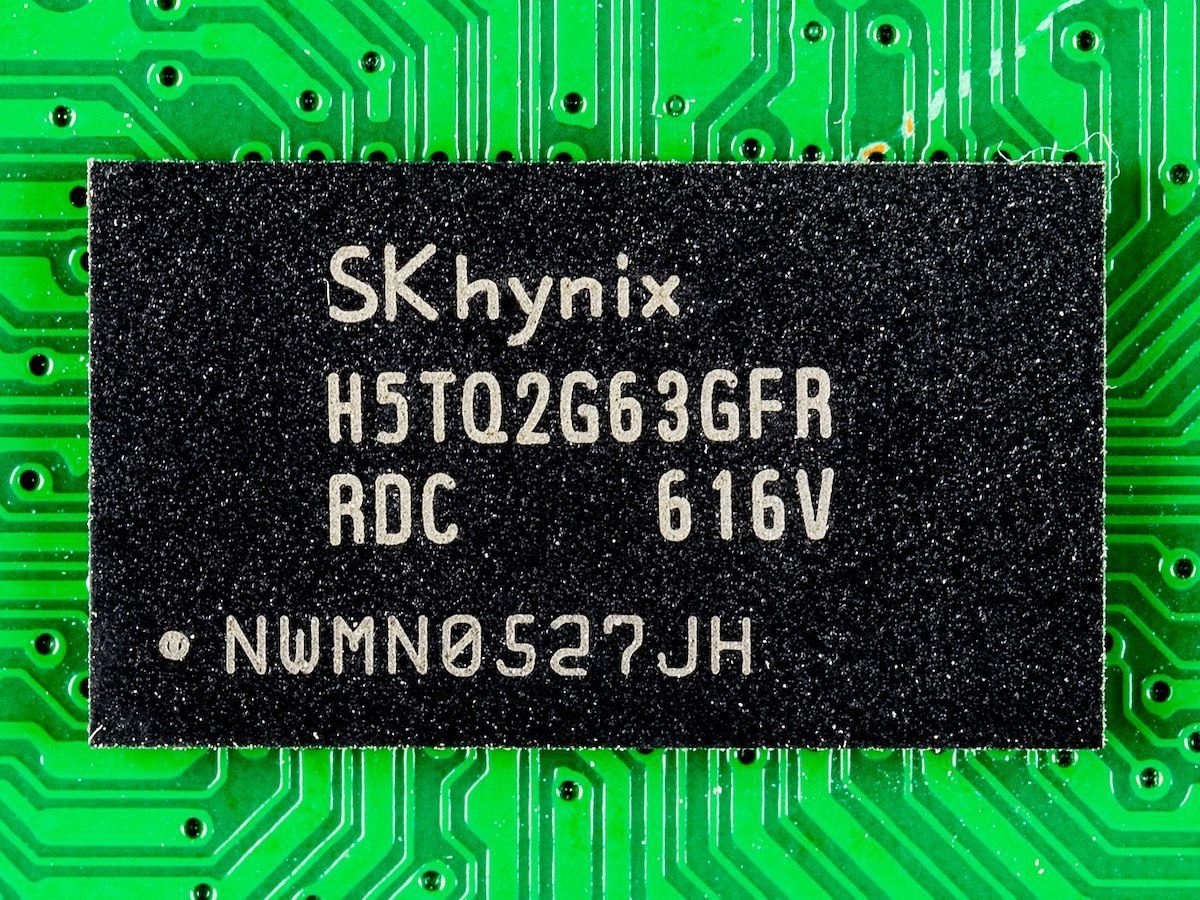

When South Korea’s chip giant SK Hynix launches its planned US$29 billion US listing, investors will tell themselves they’re buying one of the world’s most important semiconductor companies.
But what they will really be buying is a rosy artificial intelligence forecast. Specifically, they will be buying the view that AI will become one of the largest investment and infrastructure booms in modern economic history, and that we’re still in the early innings.
This is what makes SK Hynix’s blockbuster deal so important. It’s not just another big listing. It’s a window into how Wall Street now thinks about AI.
For most of modern market history, investors valued companies based on a relatively straightforward set of questions. How quickly are revenues growing? What are the margins? How much cash can the business generate? Is management doing its job?
Of course, those questions haven’t disappeared. But in the AI market, they’ve become secondary. The primary question has become much bigger: How large will the AI economy ultimately be?
Look at what has happened to SK Hynix. On paper, it’s a memory-chip manufacturer. Historically, that meant a cyclical, capital-intensive business prone to booms and busts. Investors worried about pricing, inventories and supply gluts.
Today, investors see something else entirely. They see a company that sits at one of the most critical bottlenecks in AI.
Without advanced memory chips, there’s no generative AI boom. There are no frontier AI models. There are no hyperscale AI data centers. There’s no next-generation AI infrastructure.
This basic reality has transformed SK Hynix from a semiconductor stock into something much more powerful: a leveraged proxy for global AI spending. The same phenomenon is happening across markets.
Nvidia is no longer valued primarily as a chipmaker. Utilities serving AI data centers are no longer valued primarily as utilities. Data-center operators are no longer valued as real estate businesses. Electrical equipment manufacturers, cooling companies and even nuclear power developers have become, to varying degrees, AI trades.
Entire sectors of the market are being repriced based on a single macroeconomic assumption: that AI will require an unprecedented infrastructure buildout.
Maybe investors are right. The world’s largest tech companies are expected to spend hundreds of billions of dollars this year alone on AI-related capital expenditure. Every new generation of models requires more computing power, more electricity, more networking capacity and more memory than the last.
If AI develops the way its proponents expect, today’s spending boom may look modest in hindsight. But, as ever, there’s another way to interpret what’s happening.
What if SK Hynix isn’t really a company anymore, at least in the way investors traditionally understand companies? What if it’s become a macro trade? This shouldn’t sound radical.
Investors already treat banks as leveraged bets on interest rates, energy companies as proxies for oil prices and gold miners as leveraged positions on bullion.
Increasingly now, they’re treating AI infrastructure companies as leveraged bets on the premise that demand for AI will prove dramatically larger than almost anyone currently forecasts.
This creates extraordinary opportunities and extraordinary risks. The history of financial markets is full of examples where investors correctly identified transformational technologies while badly misjudging the economics surrounding them.
Railroads transformed economies. The internet transformed society. But both also generated periods of spectacular over-investment, because investors assumed that revolutionary technologies guaranteed extraordinary returns.
They don’t, but what they do guarantee is extraordinary capital spending.
Tech firms are spending more because they expect demand to explode. Suppliers like SK Hynix are expanding to meet customer demand for more capacity. Investors reward that expansion because it confirms the narrative that demand will remain enormous.
It’s a cycle that reinforces itself. None of this means we’re in an AI-blown bubble. AI may very well ultimately justify every dollar currently being invested, and perhaps considerably more.
But SK Hynix’s blockbuster listing reveals an important shift in market psychology. Investors are no longer asking whether AI companies can build profitable businesses. They’re asking whether AI itself will become the defining economic project of the 21st century.
That’s no longer a company-specific investment thesis. It’s a macroeconomic bet, and one which Wall Street is making with increasing conviction.
Nigel Green is founder and CEO of deVere Group.