11.5 C
London
Friday, October 23, 2026
Home Blog

This summer’s heat was Europe’s deadliest on record

0
this-summer’s-heat-was-europe’s-deadliest-on-record
This summer’s heat was Europe’s deadliest on record


Extreme heat killed more than 50,000 Europeans this summer. Climate change was responsible for two-thirds of the death toll.

Those are the stark findings from two new peer-reviewed studies in the academic journal Nature Health, marking the first comprehensive assessment of fatalities during this year’s record-breaking heat waves.

The figures come from around 850 cities across Europe, meaning the full death toll, including rural areas, is higher still. The scientists also found that this summer was the deadliest so far this century, far outstripping previous records.

“I think we can be quite confident in stating that the summer of 2026 is likely to have been the worst on record for heat-related mortality across much of Europe,” said study lead author Clair Barnes, an extreme weather researcher at Imperial College London.

“These numbers are a stark reminder that our hotter, more extreme summers are having an increasingly severe impact on public health. Behind these statistics are real people whose lives were lost and real families who grieve for them,” she added.

Scientists from Imperial College and the London School of Hygiene & Tropical Medicine examined 854 cities in the European Union, the United Kingdom, Norway and Switzerland, home to about 40% of the 30 countries’ population.

The first study, published earlier this month, looked at climate-linked mortality between 2000 and 2025, while the second study, released on Friday, focused on 2026.

Both papers estimated heat-related excess deaths by analyzing temperature records and historical heat-mortality models, a method the researchers say has consistently produced results mirroring official statistics later released by governments.

To isolate the role of climate change, the scientists then compared the actual weather seen in these cities to a temperature model representing a world without global warming.

They found that more than 50,000 heat-related excess deaths occurred in those cities this summer, with around 32,000 attributable to climate change driving up temperatures.

The studies also showed how exceptionally deadly this year’s summer proved. Between 2000 and 2025, the first paper found a total of 430,000 heat-related deaths, with around half caused by climate change. The 2026 figures eclipsed the previous records of 29,000 deaths in 2022 and 28,000 in 2003.

Almost a third of this summer’s heat-related deaths occurred during Europe’s late June heat wave that smashed several temperature records.

And while the elderly were the worst-affected population group, the death toll of this summer included around 6,000 people under the age of 65.

“The burden was greater among older adults. People aged 85 and over accounted for roughly half of the estimated deaths,” said Garyfallos Konstantinoudis, study co-author and assistant professor at Imperial College.

“However, heat-related mortality was not limited to the older populations,” he added. “Even among younger adults, people aged between 20 and 44, we estimated more than 800 excess deaths.”

Via Politico

Town Leaders Said They Were Prepared for Floods. First Responders Disagree.

0
town-leaders-said-they-were-prepared-for-floods-first-responders-disagree.
Town Leaders Said They Were Prepared for Floods. First Responders Disagree.

The man was nearly to his waist in a flooded river and couldn’t get out. A firefighter and a police officer didn’t have enough rope or manpower to lift him onto the temporary flood barrier that separated them from the debris-strewn water. The man, Jere Stark, had just been carried a quarter mile by a torrential flood and was covered in mud and extremely cold.

It was around 3:30 p.m. on July 8, 2025, and a flood in Ruidoso, New Mexico, had unleashed chaos at Paradise Canyon Drive, just a couple hundred yards from the headquarters of the village fire department.

Not far from Stark, a woman huddled on the ground, shielded from the floodwaters by the temporary barrier. It was Stephanie Trotter, a tourist from El Paso, Texas, who had been washed away with her young daughter. A civilian tended to her while a second firefighter hauled in a rope he had used to rescue her. “Is somebody coming for her?” asked the civilian.

By that time, at least eight other firefighters were trying to save people upstream at the Riverview RV Park, where Trotter and Stark had been staying. But at the barrier where Stark was waiting for help, the two firefighters and one police officer were the only first responders. One of the firefighters wasn’t even wearing a personal flotation device — a basic safety measure for flood rescues.

They soon got help from civilians, including a property owner in shorts and flip-flops and a second passerby who both helped one of the firefighters haul Stark from the water with another rope.

Body-camera footage from a Ruidoso Police Department officer shows the moment that a civilian, Corey Sexton, and others pulled Jere Stark from the flood. Obtained by ProPublica

Trotter and two civilians told the police officer, Jimmy Hernandez, that her family was missing. Lost in the flood were her 4-year-old daughter, her 7-year-old son and her husband. 

Hearing this, Hernandez radioed, “We need swiftwater rescue here.” But no additional swiftwater teams arrived for at least 25 minutes. Both children died, along with an adult man. Trotter’s husband, Sebastian, survived.

The shortage of firefighters at Paradise Canyon Drive illustrates larger problems with Ruidoso’s emergency response that day. Five rescuers involved in the effort said the village’s leadership had not given them enough training or dispatched enough of them in advance of the flooding to protect the community. Because of the flood’s strength, rescuers said, the best chance to save the Trotters’ children was before the water arrived, when they could have evacuated the area where the family was camping.

But they said the fire chief, Cade Hall, had for weeks resisted calls to station additional flood experts in low-lying areas when there was a threat of storms. Doing so would have required paying firefighters overtime. “The village’s mentality is, ‘We’ll have to pay for that, and what if nothing happens?’” said one rescuer in an interview earlier this year.

ProPublica reported that village leaders knew dangerous floods were likely because two intense 2024 wildfires had scarred the hillsides above town. Even moderate rain on severe burn scars can trigger post-fire floods and debris flows. But leaders seeking to encourage tourism scolded residents who warned of the danger on social media. We also examined what went wrong with the rescue itself, consulting with seven experts outside Ruidoso who have experience in emergency response including floods.

The Village of Ruidoso did not respond to detailed written questions about its emergency response, and it has not publicly released a report on rescue efforts during the flood. Reached by phone, Hall disputed ProPublica’s reporting but declined to provide specifics. Mayor Lynn Crawford has said protecting the village includes balancing public safety with tourism, the lifeblood of its economy.

Read More

The fire department employed nine swiftwater technicians trained to perform rescues in floodwater. But when forecasters issued a flash flood warning due to heavy rain, only a handful were working, along with four New Mexico National Guard technicians in vehicles capable of navigating floods. According to a spokesperson for the Guard, its members helped rescue nine people from the flood.

Two additional swiftwater teams had recently been in Ruidoso. But when the weather forecast for the area showed a slightly decreased chance of flash flooding in late June, the state’s Department of Homeland Security and Emergency Management issued an order to send home the team from Las Cruces. One member of that team, who spoke on the condition of anonymity to protect their employment, said, “We didn’t understand why we were being sent home.” The other swiftwater team, which was from Texas, left after deadly flooding hit Kerr County and surrounding regions in its home state. 

A former incident commander for Cal Fire, California’s fire agency, said that the state shared responsibility for the inadequate emergency response on July 8 because of its decision to send home the Las Cruces team. “This should be a clarion call as to reevaluating their resource availability.”

Asked about the decision, a DHSEM spokesperson said in an email, “New Mexico was experiencing multiple flooding threats,” adding that the team needed to be available to respond elsewhere. According to the spokesperson, there are only about eight swiftwater teams in the state.

But the Las Cruces team was not deployed to another flood. Rather, it went home. “I could understand if we were sent somewhere else,” said the frustrated swiftwater technician.

This left Ruidoso’s firefighters to lead rescue operations in the village. But Hall had for weeks declined requests from off-duty swiftwater technicians who wanted to be stationed in flood-prone areas before the waters hit. One of those areas was close to the Riverview RV Park, where Stark and the Trotter family were staying.

A heavily damaged trailer surrounded by flood debris, mud and torn structural materials.
Stephanie and Sebastian Trotter’s trailer was destroyed during the flooding at the Riverview RV Park.

Forty-five minutes before the downpour started, Crawford had stated in a council meeting that whenever the village was alerted to flooding, firefighters and public works employees would be at the ready: “Everybody is in position.” 

Over the coming two hours, these words would prove false. 

At 2:12 p.m. the National Weather Service sent out a flash flood warning. About 20 minutes later, Hall summoned all off-duty swiftwater technicians. At 2:38 p.m., a weather service hydrologist wrote in a message to emergency managers, “Water is Out of the Banks in the Rio Ruidoso at the County Line.” At 2:47 p.m., the warning was upgraded to a flash flood emergency. Still, internal fire department records show that Hall didn’t call in his full department until 3:10 p.m., 45 minutes after Ruidoso dispatchers recorded the first call for rescue related to the flood. It was too late for some: Before any firefighters could access the Riverview RV Park, Stephanie Trotter and her daughter were swept downstream.

Trotter and her husband, Sebastian, said they had no idea the town was in danger and didn’t receive the automated alerts sent by the National Weather Service. (They said they had not known about, or signed up for, text-message alerts created by the village.) During the hour before the flood reached them, first responders with loudspeakers drove through other parts of the community, telling people to seek high ground. But no officials with loudspeakers went to the Riverview RV Park, even though the area was known to flood and even though it sat just down the road from the primary fire station.

The village had another warning tool it did not use that day: sirens. During the 2024 fires, Ruidoso’s emergency manager, Eric Queller, had overseen the evacuation of thousands using the siren system. Since the flood, the village has claimed that using it could have put people in harm’s way by sending them onto roads covered with water.

The village had long planned to install additional sirens, including three that could instruct people to seek high ground during flooding, allowing a more orderly evacuation. But the new sirens were not yet operational by July 8. In an interview last year, Queller said that the disasters the community faced since 2024 had delayed the project.

A man sits indoors in front of framed photographs on a white wall.
An official points toward digital displays showing maps and real-time U.S. Geological Survey river-monitoring feeds.

Eric Queller, Ruidoso’s emergency manager, helped coordinate the area’s fire and flood response.

According to firefighters, the department’s flood response was also limited by an antiquated dispatch system. Fire departments typically use computer-aided dispatch systems. Ruidoso’s department didn’t have one. Firefighters say this shortfall preceded Hall, and that he had been in favor of acquiring a computer-aided dispatch system.

Experts say that without computer-aided dispatch, chiefs often rely on memory or notes. Radio channels can become clogged, adding to confusion. According to Ruidoso firefighters, the effect was acutely felt during chaotic situations.

Following Stark’s rescue, the first responders at Paradise Canyon Drive were overwhelmed, according to two civilians who were present and Hernandez’s body-camera footage. Trotter told Hernandez that her daughter was in the water, and that they had been in an RV. According to the property owner, Corey Sexton, he saw a child float past and alerted first responders. Hernandez told crews downstream to look for a child, but he also radioed that he thought the children were in an upstream trailer. (Hernandez and the police department did not respond to emailed questions. Reached by phone, the department’s deputy chief did not answer questions about the response.)

The two firefighters, listening to their radios, hustled to the upstream bridge, prepared rope and watched the water. Minutes later, a call came on the radio: two children were trapped in a house at the upstream RV park. Swiftwater technicians at the park waded in and saved them.

The interior of a home shows severe flood damage, high mud lines on the walls, collapsed cinder blocks and a framed sign reading “Give it to God and go to sleep.”
Swiftwater technicians at the Riverview RV Park saved two children trapped in this house.

During the crucial minutes immediately after the Trotters’ children were swept downstream, no one had clear information. According to multiple firefighters, the department briefly thought it had found all the missing children. Experts told ProPublica that such chaos and misinformation is common during disaster response. But the experts also said it can be mitigated by having good dispatch systems and adequate staffing.

Records show that Ruidoso firefighters fielded 34 emergency calls on July 8 once flooding started, and the department has stated it made more than 60 rescues.

Despite the deaths, first responders say the village’s leadership has not learned needed lessons and has continued to prioritize tourism at the expense of public safety. 

By this summer the village had finally installed its voice-activated sirens and reversed its position on the standard ones: The village would now use them during floods.

Hall had planned for all firefighters to be trained as swiftwater technicians. But in February, the firefighters, many of whom worked second jobs to make ends meet, unionized. The department’s plans changed, with Hall sending firefighters to get a lower-level certification that limited their ability to perform rescues in rushing water.

In April, senior Ruidoso Fire Department officers held a meeting during which they discussed Hall’s leadership. ProPublica reviewed a recording of the gathering. An officer said Hall, who did not attend the meeting, still wouldn’t pre-position extra firefighters. “How many people are going to die?” the officer wondered aloud during the meeting.

Hall declined to respond to questions about the meeting and the allegation that he hadn’t pre-positioned enough firefighters to avoid paying overtime. 

Once monsoons arrived this year, multiple rescuers say, Hall rarely stationed off-duty firefighters in vulnerable areas. Sometimes in the afternoons, when it was most likely to rain, multiple firefighters weren’t in town. To promote tourism, Ruidoso had signed a contract with Contour Airlines to provide flights between Denver and the village. During takeoffs and landings emergency medical workers had to be present at the airport, 17 miles from where Trotter and Stark were rescued.

A close-up shot of hands touching a beaded bracelet worn on a wrist below a tattooed arm.
Stephanie Trotter holds a bracelet on her husband’s wrist displaying their children’s initials. Their 4-year-old daughter and 7-year-old son died in the flooding.

US-China AI race turning ASEAN neutrality into a liability

0
us-china-ai-race-turning-asean-neutrality-into-a-liability
US-China AI race turning ASEAN neutrality into a liability

<

article id=”post-951657″>

For decades, Southeast Asia has turned great-power rivalry to an economic advantage. By maintaining healthy ties with Washington and Beijing, ASEAN governments attracted investment, expanded trade and preserved room for diplomatic maneuver.

The great-power race for artificial-intelligence dominance, however, is changing that bargain. As the United States and China build competing technology networks, neutrality may no longer be enough to protect the region’s strategic autonomy.

The emerging divide is visible in the institutions taking shape around AI. Singapore and the Philippines have joined the US-led Pax Silica initiative, which aims to strengthen trusted supply chains for advanced technology.

Indonesia, meanwhile, became one of 29 founding members of the World Artificial Intelligence Cooperation Organization (WAICO), launched in July 2026 under China’s initiative.

Cambodia, Laos, Malaysia and Myanmar also joined as founding members. These affiliations do not mean ASEAN has split into opposing camps, but they do reveal how the region is entering different institutional networks as competition over AI intensifies.

AI is no longer merely another commercial sector. Its foundations include advanced semiconductors, cloud computing, data infrastructure, software, electricity and specialized expertise.

Control over these assets can shape access to markets, the security of critical systems and the capacity to innovate. Decisions and policy choices that appear technical today can carry strategic consequences tomorrow.

For ASEAN, the danger isn’t only that Washington or Beijing might demand political allegiance. More subtly, each power can influence the choices open to governments and businesses through export restrictions, technical standards, investment conditions and access to essential infrastructure.

A country may remain diplomatically nonaligned while becoming technologically dependent on an ecosystem it cannot easily leave.

That is the paradox of Southeast Asia’s AI moment. The region’s traditional hedging strategy rests on preserving options, yet technological dependence can gradually eliminate them. Neutrality remains valuable, but without the means to manage such dependence, it risks becoming a liability rather than a source of strength.

Technology and geopolitical leverage

The US and China are building influence through different, though not mutually exclusive, approaches. Pax Silica emphasizes trusted supply chains and cooperation across strategic technologies, while WAICO offers a framework for international AI cooperation and governance.

Neither initiative is an identical or inherently exclusive bloc, but both show that AI competition increasingly involves organizing international networks as well as developing better algorithms.

Recent export-control developments illustrate the stakes. On October 16, China proposed adding 23 AI technologies to its export-control catalog as part of a broader revision covering 40 technologies across AI, biotechnology and solar energy.

The proposal includes restrictions affecting the overseas deployment of certain AI models involving sensitive technologies. This followed years of US restrictions on advanced semiconductor exports to China. The policies are not identical, but both treat access to strategic technology as an instrument of state power.

Consider a Southeast Asian company operating a data center with American chips, foreign cloud software and services connected to Chinese technology suppliers. Such an arrangement may be commercially efficient.

But any change in export rules, licensing requirements or security restrictions could disrupt access to components or services, even if the company has no dispute with either government.

Technology systems are interconnected, and replacing one component may require changes to software, data architecture, cybersecurity arrangements and employee training. Once these systems are embedded in public administration or industrial production, switching suppliers can be expensive and disruptive.

An initial decision to adopt a technology may therefore constrain future choices long after the original investment is made. This is how economic interdependence can become geopolitical leverage: not necessarily by forcing another country to obey, but by making certain choices prohibitively costly. ASEAN’s challenge is to recognize that exposure before it hardens into dependence.

Investment without tech autonomy

Southeast Asia has good reasons to welcome the AI boom. A growing digital economy, strategic location and expanding infrastructure make it attractive to global technology companies.

Cushman & Wakefield reported in August that Asia-Pacific’s data-center development pipeline reached 26.5 gigawatts in the first half of 2026, with Southeast Asia accounting for approximately half of the region’s capacity under construction. Malaysia had 1,039 megawatts under construction, while Jakarta’s development pipeline reached 1,699 megawatts.

These figures show the region’s growing importance to the global AI economy. They do not, however, establish that Southeast Asia is gaining control over the technologies powering the expansion.

Data-center capacity is not the same as domestic technological capability; a country can host advanced computing infrastructure while relying on foreign suppliers for processors, software, intellectual property and specialized expertise.

This is especially relevant for Indonesia. Its participation in WAICO could widen opportunities for international cooperation and AI capacity-building, but it also needs a broad range of technologies, investment and expertise, including from American companies.

Its strategic interest is to ensure that cooperation with either side expands its options, not in swapping one dependency for another.

The same challenge applies across ASEAN, though national capacities differ considerably. Singapore has a sophisticated technology ecosystem, while Malaysia has become a major data-center hub.

Indonesia offers a large domestic market, but size alone cannot guarantee tech autonomy. Governments need skilled workers, research institutions, competitive domestic firms and the capacity to negotiate favorable investment terms.

Otherwise, the region could become indispensable to AI’s physical buildout without capturing a comparable share of its intellectual property and higher-value economic returns.

Foreign investment would still create jobs and infrastructure, but the most strategic capabilities could remain elsewhere. The issue is not whether foreign technology should be used, but whether its use strengthens domestic capability or entrenches dependence.

From diplomatic hedging to strategic choice

ASEAN should not respond by choosing between Washington and Beijing. Such a strategy would forfeit the benefits of competition while ignoring the region’s diverse economic and security interests.

Nor is technological self-sufficiency a realistic objective; even the most advanced economies rely on international supply chains. ASEAN should instead move from diplomatic hedging toward collective management of technological dependence.

First, governments should diversify critical suppliers wherever technically and economically feasible. That requires more than signing multiple agreements; it requires credible alternatives that can operate when access to a particular technology is restricted.

Second, regional standards for data portability, cybersecurity and interoperability should make it easier to switch between providers without compromising essential services. Third, public procurement and investment incentives should encourage knowledge transfer, workforce development and meaningful participation for domestic firms.

ASEAN’s collective market could also provide leverage. Individually, member states may struggle to negotiate favorable terms with global technology companies. Coordinated standards and procurement principles would give the region a stronger position, if governments can agree on practical rules and implement them consistently. Regional integration would then become more than a diplomatic slogan.

The most useful measure of AI sovereignty is not whether a country owns every component of its digital infrastructure. It is whether it can change suppliers, protect critical data and maintain essential services without prohibitive costs. This capacity to exit a technological relationship when necessary should become a central test of strategic autonomy.

ASEAN’s neutrality isn’t inherently a weakness. But its value depends on whether governments can turn diplomatic flexibility into technological resilience. As Washington and Beijing compete to shape the AI economy, ASEAN must preserve the ability to work with both while remaining able to refuse terms that undermine its interests.

In the AI era, neutrality will mean little if dependence dictates a country’s choices. True strategic autonomy begins when ASEAN can cooperate with the world without surrendering the freedom to choose its own technological future.

Ronny P Sasmita is a senior international affairs analyst at the Indonesia Strategic and Economic Action Institution, a Jakarta-based think tank. He holds a PhD in international political economy from the University of Tokyo.

Israeli elections and the limits of change

0
israeli-elections-and-the-limits-of-change
Israeli elections and the limits of change

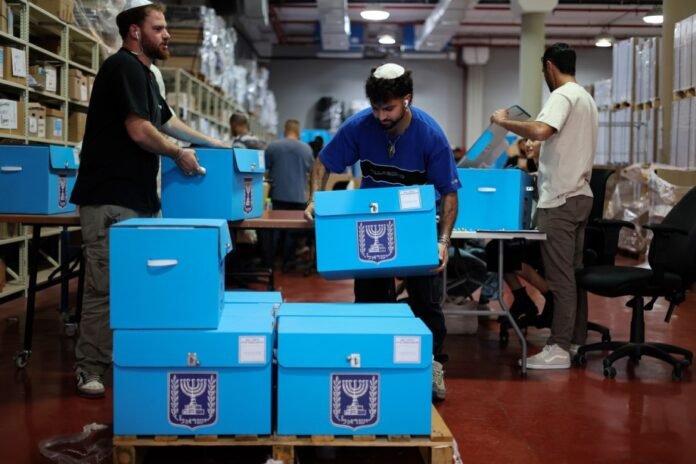
Israel’s forthcoming elections on 27th October, the first since the events of 7th October three years ago and their aftermath, are taking place amid deep polarisation and fierce competition among rival political currents. Issues dividing groups of differing orientations, successive last-minute surprises and opinion poll findings all underscore the complexity of the political landscape. Although Prime Minister Benjamin Netanyahu and his Likud party have seen their standing decline, the standing of the right wing has not declined. Depending on the projected electoral outcomes, change could bring de-escalation in the occupied Palestinian territory, but it would not guarantee a fundamental shift in Israel’s occupation policies towards the Palestinians more broadly. Palestinian votes within Israel could weaken the electoral position of Netanyahu, Likud and the governing coalition. The number of seats won by Palestinian electoral lists could also improve the prospects of Netanyahu’s rivals forming a government, although those lists would still have very limited influence over its policies and plans for now.

Just one week before Israel’s elections, Israeli opinion polls remain unable to predict with certainty which party, or even which coalition, will govern, amid fluctuating and closely contested results and the pragmatism of rival parties when it comes to forming a government. This uncertainty persists despite sharp differences among the main contenders over the political leadership’s responsibility for security failures, the conscription of ultra-Orthodox Jews, the rising cost of living and settler violence in the West Bank. US President Donald Trump’s endorsement of Israel’s prime minister in the final days before the elections represents an unusual and widely criticised departure from established US practice, suggesting foreign interference at the heart of domestic affairs.

Nevertheless, it may have little influence on undecided Israeli voters, as Trump does not command much trust among Israelis. The late withdrawal of Benny Gantz, leader of the Blue and White party, from the race also benefits the anti-Netanyahu camp by helping to consolidate its vote.

In a repeat of an earlier electoral contest, the political landscape appears to be taking shape around a competition between a camp led by Netanyahu and another seeking to bring his tenure to an end. Netanyahu’s standing as prime minister has declined in opinion polls, reflecting public dissatisfaction with his government’s policies, with Gadi Eisenkot emerging as the main beneficiary, enjoying an average lead of nine percentage points. Netanyahu’s Likud and Eisenkot’s Yashar party have alternated at the top of party rankings in opinion polls, with only narrow margins separating them. The change camp led by Eisenkot, which includes, alongside Yashar, the Together list headed by Naftali Bennett and Yair Lapid, Avigdor Lieberman’s Yisrael Beiteinu and the Democrats led by Yair Golan, is also polling very close to Netanyahu’s right-wing camp in both support and projected seats. Under the current electoral arithmetic, however, neither camp would have enough seats to form a government. Under Israel’s established procedures, the president assigns the task of forming a government to the party best placed to do so, regardless of whether it has won the largest number of seats. This could give Eisenkot’s change camp an advantage in forming a government, given the support it receives in these elections from Palestinian parties in Israel, even if those parties do not participate in the next government.

READ: Israeli opposition leaders accuse Netanyahu of clinging to power at country’s expense

Netanyahu and his Likud party bear direct responsibility for the decline in the electoral standing of his right-wing camp. Yet opinion polls reveal that this decline does not stem from a weakening of the right’s political standing in Israeli society, and may even point to its consolidation. Likud is projected to lose around ten seats compared with the previous election results, while the religious and far-right parties have largely maintained their electoral strength. This shows that the decline in the camp’s electoral standing is attributable to Likud’s losses, with the overall reduction in seats broadly corresponding to those lost by Netanyahu’s party.

Current opinion polls indicate that the Israeli right continues to retain its electoral strength. Although the ultra-Orthodox Shas party has lost a small number of seats over its position on the conscription of ultra-Orthodox Jews, some of the younger voters it is losing are shifting their support to more extreme right-wing parties that are also its coalition partners.

The ultra-Orthodox United Torah Judaism party has likewise largely maintained its electoral standing. Meanwhile, Itamar Ben-Gvir’s Jewish Power party is gaining seats, while the Religious Zionism–Zehut list led by Bezalel Smotrich has broadly maintained its position.

These indicators are consistent with a recent Reuters report highlighting growing support for Ben-Gvir among young voters. A Hebrew University poll found that around a third of supporters of Ben-Gvir’s party will be voting for the first time in the forthcoming elections. Current opinion polls also suggest that the left’s electoral standing is unlikely to improve. The Zionist left, represented by the Democrats, which brings together the Labour and Meretz parties, is projected to win around nine seats, compared with the four seats held by Labour in the current Knesset. However, this increase does not necessarily reflect a broader societal shift towards the left. Rather, it can be explained by the merger of the two parties, which helps to prevent Meretz votes from once again going unrepresented in parliament, as they did in 2022, when the party failed to cross the electoral threshold of 3.25 per cent, equivalent to approximately four seats.

Although Eisenkot’s camp is expected to emerge as the leading electoral bloc, with its principal figures united in their desire to replace Netanyahu, the challenges of maintaining political cohesion remain significant, given their differing political orientations and the difficulty of reaching agreement on a unified programme. Eisenkot leans towards the centre and has a military background, while Bennett comes from the nationalist right, with roots in the religious settler movement. Lapid, Bennett’s alliance partner, represents the secular liberal centre, whereas Lieberman represents the hardline secular nationalist right. Golan belongs to the liberal Zionist left. On the Palestinian question, Eisenkot and Bennett both lean to the right. Eisenkot combines opposition to the two-state solution following the 7th October attack with criticism of the E1 settlement project and settler violence; Bennett, for his part, explicitly rejects the establishment of a Palestinian state. While Lapid supports the two-state solution and Golan calls for curbing settler violence and pursuing a political solution to the Palestinian question, Lieberman advocates scrapping the Oslo Accords and dismantling the Palestinian Authority.

However, the success of this scenario would not, from a Palestinian perspective, mean a shift in Israel’s objectives regarding their cause, although it would probably curb the escalation against them that has persisted for years. Under Netanyahu’s current government, the West Bank, including East Jerusalem, has witnessed a sharp escalation in killings and settlement expansion. The annual average number of Palestinians killed by Israeli forces and settlers during its tenure has risen to around five times the level recorded in preceding years. The imposition of settlement facts on the ground, settler violence and the undermining of prospects for a geographically contiguous Palestinian state have also accelerated markedly. Gaza, meanwhile, has witnessed a genocidal war unparalleled since the 1948 war. Eisenkot’s camp may therefore be inclined to reduce this escalation without fundamentally altering the dynamics of the conflict with the Palestinians.

READ: Netanyahu ‘completely lacks legitimacy’ to launch new war ahead of elections: Opposition leader Golan

Eisenkot opposes the collapse of the Palestinian Authority or direct Israeli rule over millions of Palestinians, while insisting on Israel retaining overall security control in the West Bank. In Gaza, he supports the US plan, but makes the complete disarmament of Hamas a precondition for any other arrangements. He has made no commitment to a full Israeli withdrawal from Gaza, nor has he specified a timetable for one.

On settlements and annexation, he supports settlement activity that serves Israel’s security interests and does not propose withdrawing from settlements. He has criticised the decision to place the police under Ben-Gvir’s authority and to grant Smotrich powers over the administration of civil affairs, calling instead for the military establishment to regain control. Bennett explicitly rejects the establishment of a Palestinian state, proposing autonomy instead. In Gaza, his electoral list favours maintaining Israeli control up to the Yellow Line and retaining freedom of military action until Hamas is disarmed. Bennett has stated that Area C, roughly two-thirds of the West Bank, would become part of Israel, while the remaining third would be self-governing. Lieberman openly advocates preventing the establishment of a Palestinian state. In Gaza, he supports handing over its administration to a foreign authority after Hamas has been eliminated. He opposes the evacuation of settlements and insists on full Israeli control over Area C and security control over the rest of the West Bank, alongside a Jordanian role in its administration.

Nevertheless, several possible scenarios for the outcome of Israel’s elections cannot be overlooked. One involves the opposition agreeing to form a unity government bringing together Likud and Yashar, alongside additional coalition partners. Such an arrangement could offer Netanyahu a way to remain in power while allowing him to break free from his dependence on his more hardline partners. At the same time, it could give Eisenkot an opportunity to assume the premiership under a rotation agreement with Netanyahu. This would allow greater scope for de-escalation and regional understandings, without guaranteeing any fundamental shift in Israel’s approach to Palestinian rights. According to press reports, the Trump administration favours this scenario as an opportunity to advance regional understandings and normalisation with Saudi Arabia.

Under another scenario, Netanyahu’s government and its current coalition could remain in office while efforts to form a new government are stalled. Israeli law allows 28 days to form a government, with a possible extension of a further 14 days. If this period expires without a government being formed, another election becomes a serious possibility, giving Netanyahu additional time in power. This scenario could arise if neither camp emerges from the elections with a clear majority capable of forming a government, the opposition maintains its refusal to enter a coalition with Netanyahu, neither side succeeds in attracting additional partners, and Eisenkot’s camp is unable to benefit from the support of Palestinian parties.

If Netanyahu succeeds in remaining in power, he may present the outcome as a mandate to continue his policies and as encouragement to pursue more hardline measures, depending on the composition of his coalition. An opposition victory, on the other hand, would not automatically signal a shift towards recognising a Palestinian state or ending the occupation.

Nevertheless, a change of government could allow for tighter curbs on settler violence and more flexibility over arrangements for Gaza and regional understandings, opening the way for relative de-escalation compared with the current escalation.

OPINION: From Hormuz to Bab el-Mandeb: Saudi Arabia’s difficult choices

The views expressed in this article belong to the author and do not necessarily reflect the editorial policy of Middle East Monitor.

Disgraced eMudhra drops out of TLS business after using cert private key of 4

0
disgraced-emudhra-drops-out-of-tls-business-after-using-cert-private-key-of-4
Disgraced eMudhra drops out of TLS business after using cert private key of 4

eMudhra, the certificate authority that issued eight intermediate TLS credentials so weak that anyone could mint certificates for any website or mail server—one had a private encryption key of just 4—said it’s getting out of the business.

V. Srinivasan, chairman of India-based eMudhra Limited, cited increasing costs and complexities of compliance requirements—paired with the business generating just 1 percent of its revenue. He also said that the emergence of organizations providing TLS certificates free of charge further reduced returns on investment when compared to other products and services the company offers.

Don’t let the door hit you on the butt

“However, the level of social media amplification around this incident has brought scrutiny that is out of proportion to SSL/TLS’s place in our business,” the company continued in a Thursday post. “In view of this, after detailed deliberations our board has concluded that withdrawing from global SSL/TLS is the right decision for eMudhra and its shareholders.”

The announcement came two days after researchers revealed eMudhra had issued eight certificates with private keys so defective they were trivial to discover. Anyone who took the time—which was measured in milliseconds—could crack them and then use them to generate TLS certificates that would be trusted by all major browsers, as well as an untold number of email servers, IoT devices, Docker containers, forgotten Linux machines, and unmaintained CLI tools that ship their own copy of the roots.

Whereas NIST P-384 elliptic curve cryptography private keys—used in the type of certificates eMudhra issued—are supposed to contain roughly 384 bits of entropy, the eight compromised certificates had key sizes ranging from 3 to 8 bits. Stated differently, whereas there are supposed to be 2384—a number with 116 digits—different key possibilities, the strongest of the defective keys had a maximum of just 256. The private keys were 4, 56, 66, 115, 155, 156, 230, 237.

Browser makers blocked certificates that were issued with the intermediate certificates within a day or two of them being discovered. eMudhra almost certainly faced the prospect of its certificate authority status being pulled by the CA/Browser Forum, an industry-wide group that sets rules for admittance into the TLS certificate program.

What went wrong? A partial explanation.

On Wednesday, eMudhra provided a brief explanation for the debacle. The certificates were “created under eMudhra’s ECC root in a Key Generation Ceremony (KGC) held on April 30, 2025, using FIPS 140-2 Level 3 Hardware Security Modules (HSMs),” the company said. “A flaw in the KGC caused a wrap/unwrap step to produce a second set of weak keys alongside the original strong keys. The weak keys were the ones published to the browser root stores. eMudhra is working to establish the root cause.”

HSMs are dedicated devices for storing encryption keys and other highly sensitive data. They are generally segregated from most of a network to prevent leakage. Wrapping and unwrapping refers to the process that occurs when keys are being transferred from one HSM to another. Before the handover, the HSM storing the key wraps it in a separate key. Once the encrypted key is moved to a new HSM, the latter unwraps the key.

In a thread on Mozilla’s Bugzilla forum, eMudhra provided more details: Among them:

[T]here appears to be a flaw in the KGC script that was used on that specific day to create these ECC issuers. As for these ECC keys, our review of the KGC, assessment of the code and view of HSM keys so far indicate that a) a set of original ECC keys were created onboard as expected b) an approved deviation to our usual KGC to test a wrap/unwrap was introduced as these keys were meant for export for this instance c) a flaw in the code resulted in the second pair of keys being created onboard which were weaker d) these second pair of weaker keys were used by mistake to create the csr [certificate signing request] (because the key labels were similar) and signed by our root e) the CSR from these weaker keys were also sent over to [fellow certificate authority] Sectigo for cross signing (we verified the files sent over to Sectigo).

Additionally, eMudhra said:

The CRL’s were signed with the original private keys (which were supposed to be the correct keys with appropriate entropy) but given that this resulted in incorrect signatures, they were resigned with flawed keys.

There were human errors in multiple steps of the process that resulted in significant flaws in the key lifecycle integrity process for this KGC. We are now digging deeper for code flaws, process gaps, maker/checker controls specific to this issue. Over the next week, we will reverify every key ceremony we have done.

A CRL, short for certificate revocation list, is a digitally signed list published by a certificate authority identifying certificates that have been revoked before their expiration dates. The revelation that the initial signing resulted in incorrect CRL signatures raises the question: why didn’t eMudhra investigate the cause of the failure?

With the intermediate certificates blocked by browsers, much of the threat is gone. But plenty of other devices that rely on the same certificates require much longer windows to take the same action. Still other devices, such as embedded devices, may never be able to block them.

Xi’s peace principles offer little cover for China in Africa

0
xi’s-peace-principles-offer-little-cover-for-china-in-africa
Xi’s peace principles offer little cover for China in Africa

<

article id=”post-951654″>

On October 9, fighters from two jihadist groups clashed near Gonadaouri, in Burkina Faso’s Oudalan province, not far from the Malian border.

One side belonged to Jama’at Nusrat al-Islam wal-Muslimin (JNIM), al-Qaeda’s Sahel affiliate. The other belonged to the Islamic State Sahel Province (ISSP), known until 2022 as the Islamic State in the Greater Sahara. The two have been fighting along that frontier since August.

Three days later, ISSP claimed to have killed more than 400 JNIM fighters, several commanders among them. AFP, for one, could not verify the figure. Specialist sources quoted by Radio France Internationale described heavy losses on both sides, including ISSP commanders killed by JNIM. JNIM made no statement.

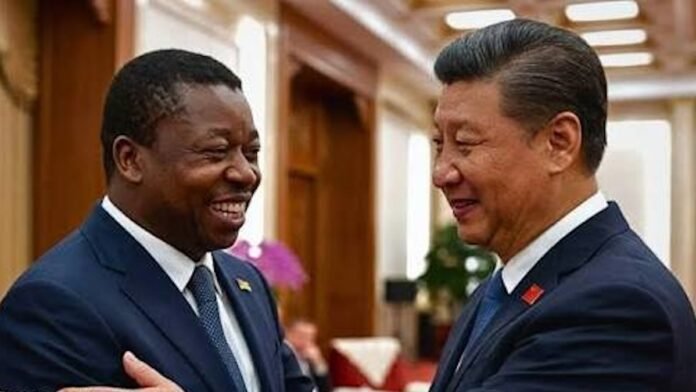
On October 13, Chinese President Xi Jinping received Togo’s President Faure Gnassingbe in Beijing. Much of the meeting dealt with trade, from zero-tariff access for Togolese goods to Togo’s wider use of the renminbi. Xi also set out four principles for how outside parties should help settle Africa’s “hotspot issues”, and Gnassingbe endorsed them in full.

Xi named no conflict, and the principles should not be read as a comment on the Sahel. But they do invite a test, and the Sahel is a hard place to pass it.

The principles themselves are straightforward. Africans, Xi said, are “the true masters of Africa” and should play the central role in regional affairs. Outsiders, he said should respect the UN Charter and the sovereignty and territorial integrity of the states concerned.

Consultation should replace hostilities, because wars and unilateral sanctions cannot fundamentally resolve conflicts between countries. Symptoms and root causes should be addressed together, Xi said.

The phrase “between countries” matters more than it first appears. At Gonadaouri, neither side was a state. JNIM and ISSP both fight the Sahel’s military governments, but they disagree on doctrine and compete for territory, and each runs areas where it imposes its own rules on residents.

The Armed Conflict Location & Event Data (ACLED) project has recorded more than 2,100 deaths in fighting between the two since 2019, and in April the rivalry reached Niger’s Tillaberi region for the first time. Xi’s call for consultation is harder to apply when neither armed group answers to a government.

The states in question also control less ground than the principle assumes. A large part of Burkina Faso is reportedly beyond effective government control, and the country hosts about 2.1 million of the region’s 2.8 million internally displaced people.

In Mali, on October 6, Malian troops and Russia’s Africa Corps re-entered Kidal without a fight, five months after losing it to a joint offensive by Tuareg separatists and JNIM. The separatists called their withdrawal temporary. Algeria, long at odds with Mali, appears to have helped arrange the handover.

China is already part of this picture. Chinese troops served with the UN mission in Mali from a base in Gao in the country’s north, and one was killed there in 2016. That mission closed at the end of 2023, and China’s presence since then has been bilateral.

Beijing posted its first defense attaché to Niger last year, and Mali has taken delivery of Chinese short-range air defense systems. China National Petroleum Corp (CNPC) built Niger’s oil export pipeline to Benin, while Chinese companies mine and build across western Mali.

That exposure has a price for China. Of the 89 foreigners reported abducted in Africa in 2025, 38 held Chinese passports, most of them working in Mali’s gold-rich south-west.

Mali’s record also raises questions about Xi’s emphasis on sovereignty. Its military government expelled the UN mission and, in January 2024, scrapped the 2015 Algiers peace agreement with northern armed groups, a decision that, by several accounts, contributed to renewed fighting in the north. As the fighting intensified, Beijing kept supplying equipment to Mali and doing business there, without public comment on how the war was being fought.

Chinese restraint has not always meant passivity, however. In 2024, when Benin blocked Niger’s crude exports during a border dispute, it was China’s ambassador in Cotonou who announced that loading would resume.

The following year, Niamey ordered Chinese oil executives out of the country in a row over local hiring. In May this year, the two sides reached an agreement in principle for Niger to acquire a 45% stake in CNPC’s pipeline subsidiary, after Niamey negotiated more favorable terms. That kind of bargaining is closer to what Xi described than any arms delivery.

Xi’s appeal for African leadership raises another question: whose voices count? In the Sahel, leadership extends beyond the military governments of the Alliance of Sahel States. Algeria evidently retains channels into northern Mali.

The African Union maintains a mission for Mali and the Sahel, and coastal West African states have watched the violence move towards their borders. China has working relations with all of them, and could route its support for humanitarian access and hostage talks through them.

The risk to Chinese citizens is more immediate. The Institute for Economics and Peace has cited a 2017 estimate placing ransoms at 40% of JNIM’s revenue. Chinese nationals at unlicensed gold sites are among the easiest targets, as the Chinese embassy in Mali acknowledged last December when it warned that security at such sites was weak.

Working with Malian authorities to license Chinese gold operators and improve local hiring and revenue-sharing in Kayes and Sikasso could help reduce their exposure. Such measures would require no Chinese troops and would not end a war largely about who governs the rural Sahel.

JNIM and ISSP will not be guided by principles announced in Beijing. The people of Oudalan and Kidal have more reason to watch whether China’s conduct in the region now follows its own words.

Goktug Caliskan is a Ph.D. candidate specializing in African geopolitics and the Sahel region, global politics and foreign policy analyst at the Ankara Center for Crisis and Policy Studies (ANKASAM).

Latest estimate for Starship launches required to support a Moon landing? 22.

0
latest-estimate-for-starship-launches-required-to-support-a-moon-landing?-22.
Latest estimate for Starship launches required to support a Moon landing? 22.

NASA does not have, nor want, nuclear weapons. But when it comes to a particular metric that is part of the Artemis Program to land people on the Moon, NASA guards a particular number like they are trying to prevent outsiders from cracking nuclear codes.

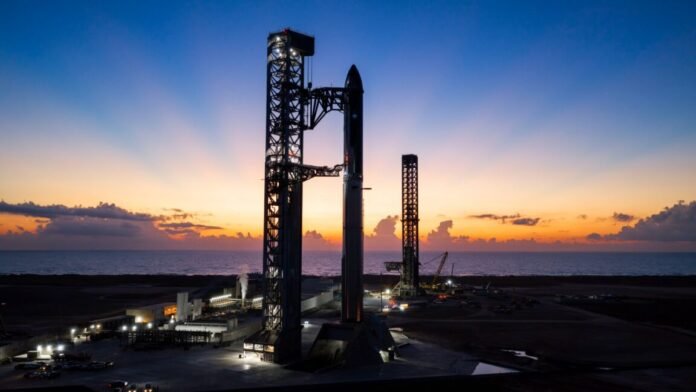
I am speaking of the number of Starship launches required to fuel a Starship-based lunar lander in low-Earth orbit such that it can fly out to the Moon, land there, and return to lunar orbit.

This number has been a moving target over the years. The general response from NASA has typically been, ‘We don’t know for sure, so we’re not going to say.’ In 2023, for example, the then-director of NASA’s Human Landing System, Lisa Watson-Morgan, told Ars, “We have a general idea, but I’m reluctant to say exactly what that is.”

Later, she said the number was in the “high single digits to the low double digits.” That suggests about a dozen launches, which is a lot. SpaceX would need to launch a “depot” Starship, and then 11 “tanker” Starships to fully load it with liquid oxygen and methane propellant for a lunar voyage. Other officials have said “high teens.” The hope has always been that SpaceX would dramatically improve the lift capacity of Starship to bring down the number of tanker flights.

But now there are concerns among some NASA officials that this might not be happening, or at least not happening soon enough to allow SpaceX’s Starship rocket to play a meaningful role in returning humans to the Moon for NASA as part of Artemis this decade.

A new estimate emerges

On Thursday, the NASA Aerospace Safety Advisory Panel held its quarterly meeting, during which panel member Charlie Precourt (a former NASA astronaut) spoke about risks associated with the Artemis Program and landing humans on the Moon.

“With respect to Artemis IV, however, we’ve got a large number of firsts that reduce the likelihood of mission success,” Precourt said. “We need to keep our eyes on numerous required fuelings for the lander. I think the last estimate is around 22 flights.”

Precourt did not name Starship, but he could only be referring to the SpaceX vehicle. NASA’s other lunar lander for human missions, Blue Origin’s Blue Moon, will not be using orbital refueling as part of its initial mission design. The safety panel almost certainly would have obtained this estimated number of refuelings, 22, from discussions with NASA officials as part of its deliberations during quarterly meetings.

After I posted Precourt’s estimate on the social media site X, SpaceX founder Elon Musk replied that NASA’s safety panel estimate was not accurate. “That’s way too high,” Musk said. “Actual number will be more like 6 to 8.”

Seeking to bring down barriers

To be fair to NASA and SpaceX, there remains a lot of uncertainty in how much cryogenic methane and liquid oxygen will boil off in orbit and how efficient the process of transferring propellants from one ship to another will be. But NASA can take the current performance of the lift capacity of Starship and determine the mass of propellant needed to support a lunar landing. For now, the space agency’s answer to the Starship question appears to be something on the order of two dozen Starship launches.

SpaceX, of course, is working hard to increase the flight rate of Starship. But even if SpaceX achieves “twice weekly” launches by the end of 2027, the company would still need about three months to fuel a depot for a Starship landing.

Precourt said the problem is a challenging one for NASA, and he praised the space agency chief, Jared Isaacman, and his team for trying to find ways to help SpaceX and Blue Origin be successful in their development of landers. NASA is still working toward a human lunar landing in 2028.

“With respect to schedule, I personally really appreciate the focus the administrator and the leadership team is putting on how to press schedule by bringing in resources to enable it to look for places where there are barriers,” he said.

Starlink Slowed, Ukraine’s Drones Stalled: The Private Power Behind a Modern War

0
starlink-slowed,-ukraine’s-drones-stalled:-the-private-power-behind-a-modern-war
Starlink Slowed, Ukraine’s Drones Stalled: The Private Power Behind a Modern War


Restrictions on satellite connectivity disrupted Ukrainian operations, exposing the military risks of relying on commercial technology that governments and armed forces cannot fully control

The sudden disruption of satellite communications used by Ukrainian forces on October 14 has exposed a growing vulnerability in modern warfare: Military operations increasingly depend on privately operated technology whose availability can be restricted without warning.

The limitations imposed on services provided by Elon Musk’s SpaceX interrupted Ukrainian drone missions, including operations intended to counter Russian attacks. The incident has triggered a dispute over who authorized the restrictions and renewed questions about the influence commercial satellite providers can exert over military operations.

The implications extend beyond Ukraine to the Middle East, where Starlink technology has played a role in US military operations against Iran while also providing civilians with a way to circumvent government-imposed internet restrictions.

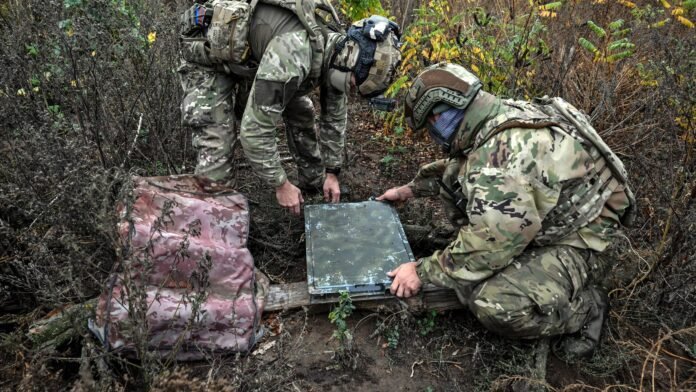
Ukrainian officials reported that satellite terminals had stopped maintaining reliable connections when mounted on equipment traveling faster than approximately 160 kilometers per hour (100 mph). Some military units experienced disruptions at lower speeds, forcing them to cancel or interrupt drone missions.

Ukrainian President Volodymyr Zelenskyy warned that the restrictions had impaired Ukraine’s ability to intercept faster Russian drones. Although some services were subsequently restored, limitations on high-speed operations remained in place as Kyiv sought a resolution.

On October 22, The Wall Street Journal reported that President Donald Trump had called Musk a day earlier and asked him to lift the restrictions. US and Ukrainian officials said the system was operating more normally on Thursday, although some Ukrainian officials reported that full functionality had not been restored.

The disruption came during heightened tensions between Washington and Kyiv over Ukrainian strikes against Russian oil facilities. However, whether those disagreements influenced the restrictions has not been established.

The question of responsibility has produced conflicting accounts.

On October 15, Reuters reported, citing two American officials and a Western official familiar with the matter, that the order to slow the military satellite service originated inside the White House.

On October 20, The Wall Street Journal reported that Musk had personally ordered the slowdown, citing US officials and people familiar with the decision.

President Trump denied involvement in the original restrictions. Secretary of State Marco Rubio subsequently said that decisions about the speed and permitted use of SpaceX services were governed by commercial arrangements rather than White House directives.

Rubio also said Ukraine did not have access to Starshield, SpaceX’s military-oriented satellite service, contradicting Ukrainian officials and US senators who said the service had been restricted.

The conflicting explanations have drawn scrutiny from Congress. On October 15, a bipartisan group of senators called for a Pentagon inspector general investigation into the disruptions. Four Democratic senators followed on October 19 with a letter demanding that SpaceX clarify its role in restricting Ukraine’s access to satellite services.

Beyond the immediate political dispute, the episode has exposed the risks of building military capabilities around infrastructure controlled by an outside provider.

Patrick Bolder, a strategic adviser at the Hague Centre for Strategic Studies who specializes in European defense, NATO, and military space operations, told The Media Line that Ukraine’s reliance on Starlink has grown far beyond what its developers originally envisioned.

Starlink wasn’t designed for military operations because it was designed for civil use

“Starlink wasn’t designed for military operations because it was designed for civil use,” Bolder said.

Nevertheless, the network has become integral to Ukrainian military operations since Russia launched its full-scale invasion in February 2022.

John King, founder of Q Advisory, described the technology’s appeal to military planners.

“Starlink has become a major source of military advantage because it connects people, sensors and commanders when conventional communications are damaged or unavailable. Its low Earth orbit network provides broadband with relatively little delay. The strategic value is the speed with which information can move between those who observe a threat and those responsible for responding.”

For Ukrainian forces, satellite internet has become part of an interconnected command system rather than simply a backup means of communication. King illustrated what that means during a military operation.

“Losing a connection can interrupt several activities at once: receiving video, sharing a warning, coordinating units or controlling a connected platform.”

The October incident also brought attention to the distinction between two SpaceX services whose names have sometimes been used interchangeably.

Starlink is SpaceX’s commercial satellite broadband service, originally developed for civilian and business customers. Starshield, which builds on Starlink technology, is designed for government and national security applications, including secure communications, Earth observation, and specialized satellite payloads.

Although the systems share technological foundations, they do not necessarily provide identical capabilities or operate under the same contractual arrangements.

King said the distinction is important when interpreting claims about what Ukrainian forces have lost.

“Ukraine’s communications service should therefore not be confused with every intelligence capability associated with the Starshield name. Carrying intelligence over a network is different from collecting that intelligence.”

Musk has argued that Starshield systems fall under US government control, while Rubio has described decisions about commercial service restrictions as matters for SpaceX. Ukrainian officials, meanwhile, have reported disruptions affecting services they identify as Starshield.

The precise division of technical, contractual, and operational authority remains disputed.

For Bolder, the situation raises broader concerns about Washington’s approach to Ukraine. He argued that restricting military assistance and communications capabilities could increase pressure on Kyiv to accept unfavorable terms in negotiations with Russia.

King was more cautious about drawing broader strategic conclusions from the disruption.

A restriction on Ukrainian connectivity can benefit Moscow by weakening Ukraine’s ability to coordinate operations and defend against attacks

“A restriction on Ukrainian connectivity can benefit Moscow by weakening Ukraine’s ability to coordinate operations and defend against attacks. The scale of that benefit depends on the affected services, duration, and availability of backups. It does not follow that losing one network automatically determines the outcome of the war. The sound conclusion is that dependence creates leverage and additional vulnerability, even when disruption is temporary.”

Similar questions have emerged in the Middle East, where Starlink technology has served both military and civilian purposes during the war involving the United States, Israel, and Iran.

In May, Reuters reported that American LUCAS one-way attack drones operating against Iran had used Starlink-related connectivity, prompting disagreements between SpaceX and the Pentagon over service pricing.

According to the report, SpaceX sought to increase the monthly connectivity fee from approximately $5,000 to $25,000 per terminal, arguing that the drones were using a service comparable to its more expensive aviation tier. Pentagon officials objected to the proposed pricing but ultimately agreed to the higher fees, Reuters reported.

Musk disputed the Reuters report, saying that civilian Starlink services had been improperly used for military purposes. The Pentagon also challenged the report, although neither provided detailed evidence contradicting its central findings.

The disagreement highlighted the complications that can arise when military capabilities depend on commercial technologies governed by contractual terms and pricing arrangements.

In Iran itself, Starlink has played a different role.

Iranian authorities have repeatedly restricted internet access during periods of political unrest, leaving satellite connections among the limited means available to some residents seeking to communicate with the outside world.

The authorities have responded by confiscating unauthorized terminals and attempting to disrupt satellite connections.

In October, a senior Iranian official claimed that the government had successfully disabled Starlink terminals during protests earlier in the year. The extent of those efforts has not been independently established.

King cautioned against drawing conclusions about the military uses of Starlink from evidence of its availability to Iranian civilians.

“Separately, satellite internet has helped some Iranians communicate during state-imposed blackouts, while authorities have confiscated terminals and used jamming. Civilian access and military connectivity must be assessed separately; evidence of one does not establish a particular targeting or intelligence mission.”

Bolder also discussed proposals to supply Starlink terminals to Iranian opposition groups. Such initiatives, he suggested, could extend a commercial provider’s influence well beyond the communications industry.

“Should they be responsible for such a thing? Shouldn’t there be some rules on this? I wonder.”

For European countries, Ukraine’s experience has added urgency to a longstanding debate about dependence on American military and technological capabilities.

Other satellite communications providers are developing services for government and defense customers, but there is no straightforward way to substitute one network for another in the middle of an armed conflict.

King said the problem is more specific than a lack of competition.

“I would describe SpaceX’s position as an acute concentration of operational dependence, rather than a proven monopoly over all military satellite communications. Other providers exist. The difficulty is replacing the particular combination of network capacity, suitable terminals and integration into existing operations.”

Bolder focused on the political consequences of Europe’s relationship with the United States.

… the trust is gone but the dependency is still there …

“We trusted the US, and we did a lot of business with the US, and we depended on the US, and now you see that the trust is gone but the dependency is still there and we’ve maneuvered ourselves in a position where we can be blackmailed,” he warned.

European governments have begun pursuing greater independence through programs such as IRIS², the European Union’s planned secure satellite communications constellation.

Under an agreement announced in August, the project will expand to 348 satellites, with initial launches planned for 2029 and services introduced progressively thereafter.

The constellation is intended to provide secure communications for European governments, defense forces, and emergency services. However, its development cannot immediately replace the capabilities Ukraine currently needs.

Bolder argued that Europe must diversify its strategic dependencies, even if doing so requires substantial investment.

King placed greater emphasis on building resilience into existing arrangements. Governments, he said, should establish clear rules determining who may authorize changes to services, how emergency restrictions are handled, and what obligations providers have to maintain connectivity during military operations.

Independent communications systems should also be available and regularly tested so that military operations can continue if a primary network becomes unavailable.

The debate reflects a broader shift in military planning. NATO recognized space as an operational domain in 2019, acknowledging the importance of satellite systems for communications, intelligence, surveillance, and military coordination.

Ukraine’s experience has demonstrated that possessing advanced military technology is not enough when the communications infrastructure supporting it can be restricted by another party.

King said the disputes surrounding Starlink should prompt governments to reconsider how they measure military readiness.

Starlink has shown the extraordinary value of commercial innovation. Governments now need to match that innovation with dependable agreements, practical alternatives, and accountable public decisions.

“For future conflicts, the measure of strength will be whether a force can keep making decisions when its preferred network becomes unavailable. Starlink has shown the extraordinary value of commercial innovation. Governments now need to match that innovation with dependable agreements, practical alternatives, and accountable public decisions.”


European Parliament honours International Criminal Court, Italy-Albania migration probe

0
european-parliament-honours-international-criminal-court,-italy-albania-migration-probe
European Parliament honours International Criminal Court, Italy-Albania migration probe


The European Parliament on Thursday awarded its 2026 Sakharov Prize for Freedom of Thought collectively to the International Criminal Court (ICC) and its officials, a day after giving its journalism prize to an investigation into Italy’s migration centres in Albania.

Announcing the laureate in the hemicycle, Parliament President Roberta Metsola said: “The European Union is built on respect for multilateralism and international institutions. With the award of the Sakharov prize to the International Criminal Court and its officials, the European Parliament recognises the Court’s important work in upholding international law and justice.”

The ICC investigates and, where warranted, tries individuals charged with the gravest crimes of concern to the international community: genocide, war crimes, crimes against humanity and the crime of aggression. Governed by an international treaty called the Rome Statute, it is the world’s first permanent international criminal court. As a court of last resort, it seeks to complement national courts. Through international criminal justice, it aims to hold those responsible for such crimes accountable and to help prevent them from happening again.

The award highlights the Court’s work, including investigations, prosecutions, trials and the issuance or authorisation of arrest warrants.

In Parliament’s 2025 annual reports on the implementation of the common Foreign and Security Policy and on human rights and democracy in the world, MEPs expressed deep concern at the growing threats and the various waves of sanctions imposed on the ICC since 2025, notably by the United States. The sanctions also targeted its prosecutors, judges, staff and partners. MEPs considered them serious attacks on the international justice system.

MEPs have repeatedly called on the European Commission to activate the EU’s so-called “blocking statute” to protect ICC officials from extraterritorial attacks and allow the Court to continue its activities in complete independence. The statute protects European operators, regardless of size or sector, by nullifying within the EU the effect of any foreign judicial decision based on foreign laws. It also lets them seek compensation in court for damages caused by the extraterritorial application of foreign laws.

The reports also welcomed the continuation of EU financial support for the ICC at what they described as a particularly difficult time for international justice. All EU member states are parties to the Rome Statute and are therefore obliged to implement the ICC’s decisions. MEPs emphasised that the growing disregard for international law and the politicisation of debates about international justice institutions constituted, in their view, an existential threat to the rules-based international order.

The ICC’s president and several of its judges visited Parliament committees in 2025 and 2026 to explain the consequences of US sanctions on their professional duties and personal lives.

The Sakharov Prize, named after Soviet physicist and political dissident Andrei Sakharov, was established in 1988. Parliament awards it annually to individuals or organisations for work in areas including the defence of human and fundamental rights, particularly freedom of expression, the safeguarding of minority rights, respect for international law, the development of democracy and the defence of the rule of law. This year’s ceremony will take place in December in Strasbourg, during Parliament’s plenary session.

Journalism prize for report on Italy-Albania deal

On Wednesday, Parliament awarded its Daphne Caruana Galizia Prize for journalism to an investigation highlighting human rights violations at the migrant centres Italy established in Albania. The report was published in January 2026 by the Dutch outlet De Correspondent.

Titled “Cuffed, caged, cast away: this is Europe’s ‘innovative solution’ for unwanted migrants”, it explored two centres, in Shëngjin and Gjadër, built to accommodate asylum seekers rescued at sea while Italian authorities reviewed their applications. The report questions the legality of the centres, which opened in 2024 and have become a model for European migration policy as several countries seek to set up return hubs for migrants outside the EU.

After repeated legal setbacks, Prime Minister Giorgia Meloni’s government repurposed the centres in March 2025 to detain irregular migrants already in Italy ahead of deportation to their countries of origin. The report documented violations of fundamental rights and European law in the treatment of migrants and their transfer to the centres, and warned about the new EU migration policy.

Five EU countries are seeking to establish similar return hubs in Africa by 2027, following adoption of a controversial EU law providing a legal framework for such arrangements, including the transfer of irregular migrants to countries with which they have no connection.

“The deal is a blueprint for how to erode human rights, undermine the European rule of law, and normalize far-right views on migration,” the report says.

Its authors, Maite Vermeulen and Giacomo Zandonini, estimate that around €259 million was spent on the facilities over their first two years of operation, during which 256 people were detained, equivalent to approximately €1 million per person.

“It is a big PR operation, more than a policy that would actually expedite returns [of migrants],” Vermeulen told Euronews. She said the Italian approach is neither cheaper nor more effective and does not deter irregular arrivals. She argued that other EU countries could not follow the Italian model without breaching human rights. “That is a story we tell ourselves to make [return hubs] acceptable or palatable,” she said.

The investigation also denounces a “smokescreen” put in place by Italian authorities to hide details of the deal. Journalists were denied access, freedom of information requests often went unanswered, staff at the centres signed strict non-disclosure agreements and contracts were not made public.

The prize jury is composed of journalists from all EU member states.

Moderna and Merck say their mRNA cancer vaccine cut death, recurrence by 42%

0
moderna-and-merck-say-their-mrna-cancer-vaccine-cut-death,-recurrence-by-42%
Moderna and Merck say their mRNA cancer vaccine cut death, recurrence by 42%

Personalized mRNA vaccines against melanoma—the deadliest form of skin cancer—reduced the risk of death or recurrence by 42 percent compared to standard treatment in a late-stage trial, pharmaceutical partners Merck and Moderna announced Thursday.

The results are a significant advance in melanoma treatment; Merck and Moderna are already engaging with regulatory authorities to get the vaccine approved. More broadly, the vaccine’s success bolsters hope that mRNA vaccines and individualized cancer-targeting medicines offer a new paradigm for cancer therapies.

“From the beginning, we believed mRNA technology could make it possible to develop cancer treatments uniquely matched to each patient’s tumor,” Moderna CEO Stéphane Bancel said in a statement. The trial results “mark a defining moment for that vision and show what’s possible when we rethink how medicines are made.” They also “reinforce our conviction that mRNA has the potential to fundamentally change how we treat cancer,” he said.

In August, Moderna and Merck reported that the vaccine has succeeded in the trial, but held off reporting details until the data could be presented at an upcoming scientific conference. That conference is the European Society of Medical Oncology, starting now in Madrid, Spain. The data was scheduled for presentation on Saturday, but after an oncology news site reported the results early, breaking the embargo, the companies released the top-line results. The full data has been accepted for publication in the New England Journal of Medicine.

As Ars reported earlier, the Phase 3 trial included 1,137 patients who had stage IIB–IV melanoma that had been surgically removed prior to entering the trial. Patients were randomized 2-1 to receive either a combination treatment including the personalized mRNA vaccine with a standard treatment, or the standard treatment alone. The standard treatment was Merck’s established monoclonal antibody cancer treatment Keytruda.

New data

The tailored mRNA vaccine is intismeran (or mRNA-4157), which uses a synthetic mRNA that holds the unique genetic coding for up to 34 mutations in a patient’s own cancer cells. To produce the personalized vaccines, researchers compare the genetic sequences of a patient’s cancer cells with those of healthy cells and pick out cancer-specific mutations that could help the immune response selectively target just the cancer cells.

In the trial, researchers assessed “recurrence-free survival” or RFS, which is the amount of time a patient has without the cancer returning, and “distant metastasis-free survival” or DMFS, which is the amount of time a patient has without the cancer returning and occurring in a different part of the body than where it began.

According to the rushed-out press release, after two years, participants in the trial who received the intismeran-Keytruda treatment had 42 percent reduction in their risk of recurrence or death compared to the participants who just got Keytruda and a placebo. What that looked like after two years was that 82 percent of the intismeran-Keytruda treatment group were still alive without recurrence, while only 70 percent of the Keytruda-placebo group were alive without recurrence.

For distant metastasis-free survival, intismeran-Keytruda treatment reduced the risk of distant metastasis or death by 38 percent compared with the Keytruda-placebo group. At the end of the trial, 88.5 percent of the intismeran-Keytruda treatment group were alive without distant metastasis, while 80 percent of the Keytruda-placebo group were alive without distant metastasis.

The treatment effect was not as strong as seen in a five-year Phase 2 trial, which showed a 49 percent reduction in the risk of recurrence or death and a 59 percent reduction in the risk of distant metastasis or death.

Still, the findings are an exciting advance for melanoma patients. The trial “is the first Phase 3 study to demonstrate a clinically meaningful improvement in RFS and DMFS over standard-of-care KEYTRUDA in patients with resected melanoma, setting a new benchmark in the adjuvant setting and representing one of the most significant advances in melanoma treatment since the advent of immunotherapy,” Dean Li, president of Merck Research Laboratories, said in an announcement.

0FansLike
0FollowersFollow
0FollowersFollow
0SubscribersSubscribe
- Advertisement -
Google search engine

Recent Posts