US homeowners have embraced home batteries in record-breaking numbers in early 2026, spurred on by state incentives while seeking to offset rising residential electricity costs. The trend could even unlock a more flexible energy supply for power grid operators and even AI data centers.
New home battery installations reached a record 673 megawatts of energy storage in the first quarter of 2026, according to the US Energy Information Administration. That trend was driven by states with high electricity prices that have implemented policies to incentivize home battery installation, Bloomberg News reported.
This residential battery trend stands out as a natural next step for states that have already successfully boosted rooftop solar adoption among homeowners, given how batteries enable homeowners to use stored solar energy at night. California and Hawaii accounted for the majority of new residential battery storage, while Texas and Arizona also saw significantly higher numbers of installations.
California incentivizes homeowners with solar panels to also install batteries by offering better pricing for residential electricity exported to the grid after sunset, Bloomberg reported. Hawaii offers a one-time payment of $400 for every kilowatt of battery storage that homeowners install.
However, the record-breaking home battery installations coincided with a slowdown in residential installations of solar panels—the result of the Trump administration and Republican-driven One Big Beautiful Bill having eliminated a 30 percent federal solar tax credit for homeowners. Nonetheless, US electricity generation from solar power continues to rise and even surpassed coal-fired generation back in April.
The battery installation spree also coincides with rising electricity costs for US residential customers. The Energy Information Administration’s latest data shows that the nationwide average for residential electricity costs increased by more than 7 percent in April 2026 when compared to electricity costs in April 2025. So homeowners with smart home battery-management systems could benefit from storing energy when electricity prices are lowest and draining them during peak demand periods.
Such increases in home battery capacity also provide more options for power grid operators in managing rising electricity demand—especially through virtual power plant schemes that network together and coordinate the energy storage and discharge of thousands of home batteries while compensating homeowners.
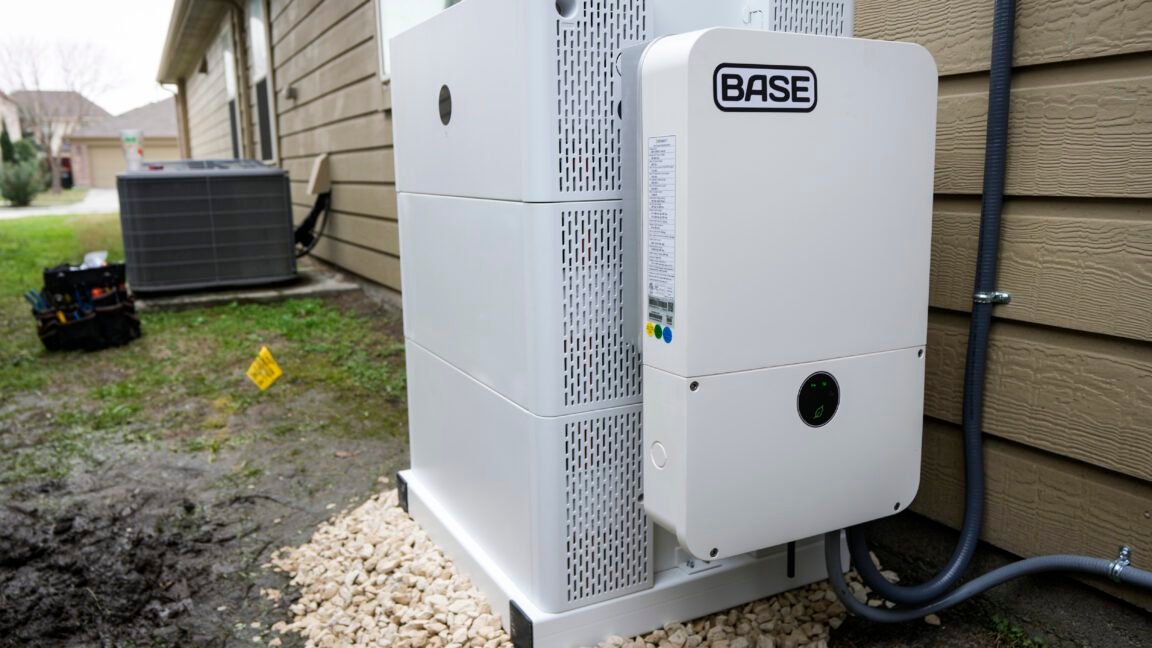
Some home battery providers have built this into their business models. For example, the Austin-based startup Base Power offers heavily discounted home batteries and discounted electricity rates in exchange for managing the overall battery fleet as a virtual power plant.
The amount of US home battery capacity incorporated by virtual power plants soared by 153 percent in 2025, according to Yale E360. It also highlighted a demonstration in July 2025 that showed how 100,000 home batteries could provide more power than a large gas peaker plant.
Some companies even see opportunities to tap home battery capacity for energy-hungry AI data centers, which are also contributing significantly to fast-rising electricity demand across the United States. On June 24, the companies Sunrun, Renew Home and Tesla announced an agreement to combine “hundreds of thousands of home battery systems operated by Sunrun and Tesla” into “the largest distributed power plant in the country.” The companies claimed they could deliver more than 16 gW of power to both hyperscaler data centers and utility companies.
The San Francisco startup SPAN is taking an even more unorthodox approach by installing data center servers at suburban homes—a proposal that incorporates residential batteries and possibly solar panels for backup power.