Designed to hurt Asia, Trump’s tariffs did the opposite
When the Trump administration announced sweeping tariffs on Asian economies on April 2, 2025, the political framing was simple.
The tariffs would punish Asian exporters, shrink the US trade deficit and force capital home. Asia was cast as the vulnerable party in a contest the US expected to dominate. The 2025 trade data, however, tells a very different story.
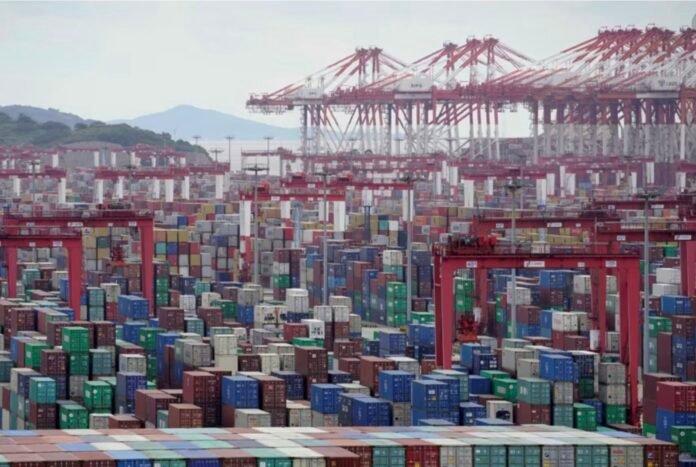
According to the US Bureau of Economic Analysis, the US goods and services trade deficit with Vietnam reached US$178.2 billion in 2025, an increase of $54.7 billion compared to 2024.
The deficit with Taiwan rose by $73 billion to $146.8 billion. The deficit with Thailand was $71.9 billion, a record high. The deficit with Malaysia was $30.8 billion. With Indonesia, it was $23.7 billion.
These are not the numbers of an Asia bowing to economic pressure. They are the numbers of a region absorbing higher costs while continuing to ship more goods to the US than ever before.
The tariff regime itself has been on a turbulent legal journey. The original “Liberation Day” reciprocal tariffs imposed under the International Economic Emergency Powers Act (IEEPA) were struck down by the US Court of International Trade in May 2025.
The administration’s response was immediate. Within hours, President Trump announced new tariffs under Section 122 of the Trade Act of 1974. A 10% global tariff went into effect on February 24, 2026.
On March 12, 2026, the US Trade Representative began Section 301 investigations on China, the European Union, and several Southeast Asian economies. The legal vehicle changed. The strategic intent did not.
What is striking is what this sustained pressure actually produced.
A region that did not break
Vietnam, the country most exposed to US tariffs, recorded GDP growth of 8.02% in 2025, with total trade volume exceeding $930 billion, an 18.2% year-on-year increase. Vietnam’s exports to the US reached $153.2 billion, generating a trade surplus of $134 billion.
Indonesia’s nickel sector expanded its production by 13.9% in 2025 to reach 2.6 million tonnes. The country now controls more than 60% of global mined nickel supply and processes close to 45% of primary nickel output. Indonesian nickel derivative exports rose from $11.9 billion in 2020 to $38 to $40 billion in 2024, with continued growth into 2025.
January 2026 exports to the US grew 33.9%. The country’s electrical and electronic product exports surged 25.3% in December 2025 alone.
The economies that were supposed to be punished by the tariffs have ended up being repositioned by them. Western multinationals seeking to derisk China exposure faced two options.
Bring production home, where capital, labor and energy costs were significantly higher or shift further into ASEAN, where infrastructure had quietly been built up over the previous decade. The vast majority chose the second path.
This was not the outcome that Trump’s tariff policy was designed to produce. But it is the outcome that the underlying economics made inevitable.
Mapping China’s counter-moves
While Western analysts focused on whether the tariffs were working as intended, Chinese companies executed one of the largest cross-border expansion campaigns in modern Asian business history.
CATL, the world’s largest electric vehicle battery manufacturer, is scheduled to begin production at its 7.34 billion euro plant in Debrecen, Hungary, in early 2026. The facility will employ approximately 9,000 people with an annual capacity of 100 GWh. It is the largest greenfield foreign investment in Hungary’s history.
The pattern is consistent. Chinese firms are not retreating from the global system. They are repositioning inside it. Where the tariffs created a wall, they bought their way over it. Where capital flows were restricted, they redirected them through ASEAN intermediaries.
The “China plus one” supply chain framework that Western firms were chasing in 2024 has been quietly absorbed by Chinese firms themselves, executing it faster and at greater scale than their US and European competitors.
Where ASEAN governments still risk losing the windfall
The danger for Southeast Asian economies is not the tariffs. Rather, it is the assumption that the tariff windfall will continue without active positioning. Three structural risks deserve attention.
First, Vietnam’s manufacturing rise has so far been concentrated in low to mid-value assembly. Without deeper investment in semiconductor design, packaging and engineering talent, Vietnam risks being repositioned again the moment the next regulatory cycle begins.
Second, Indonesia’s nickel boom has created a single-commodity dependency that mirrors earlier resource curse patterns elsewhere in the region. Without parallel investment in downstream battery and EV manufacturing capacity, the country risks repeating Australia’s iron ore experience. It would become an indispensable supplier with limited pricing power.
Third, much of the manufacturing capital flowing into ASEAN is Chinese, not Western. ASEAN governments now face the question of whether they are partnering with Chinese capital on equal terms or simply hosting an externally managed industrial expansion.
The strategic read
The tariff regime was framed as a contest between the US and Asia. The actual outcome has been a quiet rebalancing inside Asia, with Chinese firms moving fastest, ASEAN economies absorbing capital and Western multinationals navigating an environment they no longer control.
For ASEAN governments, the strategic question is no longer whether to align with one side or the other. It is whether they are positioned to capture the manufacturing, technology and capital flows that are now actively rerouting through their economies.
For Western firms, the strategic question is whether they can move fast enough to compete with Chinese counterparts who are already operating in the region with battle-tested margins and integrated supply chains.
The tariffs did not constrain Asia. They redrew the map of who would benefit from the next decade of regional growth. The countries that read this correctly are already moving and profiting. The ones still waiting for the policy to “work as designed” will find that the windfall has already passed them by.
The most important business decisions of the next five years are being made now. They are being made quietly, by founders, operators and governments who understand that the visible policy and the actual outcome are two very different things.
Chris Chen is an angel investor and founder of Future 500, a Singapore-based operator-led accelerator working with founders to scale beyond their home country.
FDA vaccine studies censored by Trump admin after finding benefits of shots
Despite Health Secretary Robert F. Kennedy’s pledge to provide “radical transparency,” the agencies under his control continue to suppress scientific research that conflicts with his anti-vaccine agenda.
On Tuesday, The New York Times reported confirmation from the Department of Health and Human Services that the Food and Drug Administration had blocked the publication of studies showing the safety and efficacy of vaccines against COVID-19 and shingles. The revelation follows a report from The Washington Post last month that the Centers for Disease Control and Prevention scrapped a scientifically vetted study previously scheduled for publication that found COVID-19 vaccines sharply cut the risk of emergency care and hospitalization among healthy adults. The study was ultimately rejected by Kennedy’s acting CDC director, who claimed to have concerns about the study’s methodology.
Similarly at the FDA, two studies on COVID-19 vaccines by agency scientists were accepted for publication at medical journals, according to the Times. But unnamed FDA officials directed the agency scientists to withdraw the studies. While a preliminary abstract of one of the studies presented at a conference last fall remains online, the Times obtained a copy of the full manuscript, the conclusion of which reads, “Given the available evidence, FDA continues to conclude the benefits of vaccination outweigh the risks.”
In addition, the Times learned that FDA officials did not allow agency scientists to submit two abstracts for studies on Shingrix, a shingles vaccine, to a major drug safety conference. The studies reportedly bolstered known efficacy and safety data of the vaccines.
HHS spokesperson Andrew Nixon said in a statement that the axed COVID studies “were withdrawn because the authors drew broad conclusions that were not supported by the underlying data. The FDA acted to protect the integrity of its scientific process and ensure that any work associated with the agency meets its high standards.”
Of the shingles study looking at efficacy, he said, “The design of that study fell outside the agency’s purview.” Nixon did not address why the Shingrix safety study was withheld.
Severe storms batter Italy with heavy rain, hail and flood warnings
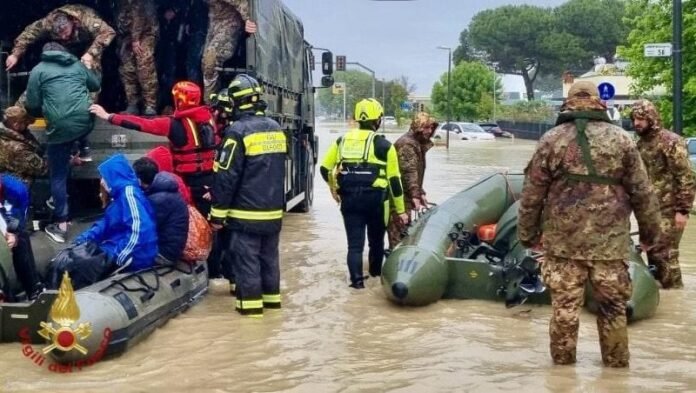
Italy remained in the grip of severe weather on Thursday as heavy rain, thunderstorms and hail swept across several northern and central regions, prompting flood warnings and civil protection alerts.
Authorities said regions including Lombardy and Tuscany were among the hardest hit as an Atlantic weather system moved across the country, bringing intense rainfall, strong winds and rapidly changing conditions.
#Maltempo#Como, dal primo pomeriggio di ieri pioggia e violente grandinate in provincia, oltre 70 gli interventi svolti dai #vigilidelfuoco per danni d’acqua e allagamenti. Condizioni meteo migliorate, in fase conclusiva il lavoro delle squadre [#7maggio 8:30] pic.twitter.com/a7ujFbEKLX
Local media reported disruptions to transport and isolated flooding in some urban areas, while emergency services monitored rivers and vulnerable zones amid concerns over rising water levels.
Italy’s Civil Protection Department issued weather alerts for multiple regions, warning residents of possible landslides, flash floods and dangerous driving conditions. Meteorologists said the unstable weather pattern was expected to continue through the day, particularly in northern areas.
Hailstorms were also reported in several provinces, causing damage to vehicles and agriculture in some communities already affected by repeated episodes of extreme weather in recent months.
Officials urged residents to limit unnecessary travel during the worst of the storms and to follow updates from local authorities.
The latest wave of bad weather comes as parts of southern Europe continue to experience increasingly volatile climate patterns, with periods of drought alternating with sudden and intense storms.
Piogge sparse sull’Italia 💦 e da domani nuova perturbazione in arrivo al Sud. 🌧️
At Least 79 Kids Have Been Harmed by Tear Gas or Pepper Spray During Trump’s Immigration Crackdown
Reporting Highlights
Harming Children: Kids were in cars, at home and walking to school when tear gas or pepper spray left them wheezing, coughing and struggling to breathe. The weapons are especially toxic to kids.
Excessive Force: Judges described the use of these “less lethal” weapons as excessive but had no power to curb them nationwide. Kids in other communities continued to get hurt.
No Uniform Standards: DHS policies on the weapons are less strict than those of some local police departments. The agency’s inspectors general found officers have historically been undertrained.
These highlights were written by the reporters and editors who worked on this story.
The children were walking to school in Broadview, Illinois, or leaving a shopping center in Columbus, Ohio. They were at home in Minneapolis, or sitting in a stroller in Chicago, or at an afternoon protest in Portland, Oregon, alongside dogs on leashes and older people pushing walkers.
They were mostly going about their days when federal immigration agents shot tear gas or fired pepper spray near their homes and schools and into their family cars.
The chemicals blew through the air, sometimes for blocks. They seeped into bedrooms, forcing an asthmatic teen to gasp for air. They stuck to the skin of a young girl, who cried, “It burns!” They caused an infant to stop breathing.
ProPublica identified 79 children across the country who have been harmed by tear gas or pepper spray as immigration officers dramatically stepped up their use during President Donald Trump’s immigration crackdown.
The Department of Homeland Security has repeatedly defended its use of the chemicals, asserting its agents aren’t to blame. The fault, a spokesperson said, lies with “agitators” in the crowds and parents who put their children in harm’s way.
But videos reveal the way agents use these weapons. One captures them releasing tear gas into a crowd with at least seven kids just before someone yells, “There’s children here.” Another shows them hurling tear gas canisters at protesters without apparent provocation; then, with the streets already flooded with white smoke, a Customs and Border Protection agent wearing a body camera shoots pepper balls before muttering, “Fuck yeah,” and shouting, “Woo!”
A CBP officer cheers after other agents threw tear gas canisters and shot pepper balls at protesters outside an Immigration and Customs Enforcement facility in Broadview, Illinois.Obtained by ProPublica
A third shows what happened after an officer fired pepper spray through the driver’s side window of a family’s car, hitting a 1-year-old girl in the back seat; a bystander filmed her in tears, and her family later said she was struggling to breathe. A DHS spokesperson called the incident “a disgusting pepper spray hoax.” But a local pastor who was at the scene rebuked the claim, testifying at an Illinois state accountability commission that “there’s literally video evidence.”
Such scenes of billowing gas and tear-stained faces have prompted some historians to liken the scope and intensity of the agents’ deployment of chemical munitions to brutal crackdowns by Southern law enforcement during the Civil Rights Movement.
And the legality of their use has been challenged. In cities across the country, judges have excoriated both Immigration and Customs Enforcement and CBP, saying their officers used excessive force. One judge said the agents showed “deliberate indifference” to the risks, including to children. They ordered officers to limit the use of these weapons in areas that were the focus of lawsuits. But they had no power to curb the practice nationwide — and kids in other communities, ProPublica found, continued to get hurt.
The controversy over the chemicals has highlighted a lack of consistency in their use: No national standard governs the use of tear gas and pepper spray by law enforcement, and agency policies differ widely. As a result, agents working for DHS could more freely use tear gas in targeted cities like Minneapolis and Portland, where local police policies are stricter.
A Portland officer said in a court declaration that he and several colleagues were tear-gassed by federal agents while observing and patrolling a protest he deemed to be mostly peaceful. At another event, in which he served as incident commander, he said the agents’ use of tear gas was “excessive and disproportionate to the threat posed” and “affected hundreds of peaceful protesters.”
These weapons are toxic, especially to children, who breathe more rapidly, pulling in more contaminated air than adults relative to their body weight. That principle is why coal miners once brought canaries underground, as one emergency medicine doctor explained in a recent court declaration. Because of the birds’ quick breaths and small size, they would stop singing or die when the chemicals started affecting them, giving the miners time to escape. Children are also vulnerable because they have narrower airways and stand closer to the ground, where tear gas tends to pool.
The Trump administration’s use of tear gas has been so extreme — with some children exposed multiple times — that the only research ProPublica found that might approximate the impact is a 2018 survey of Palestinian refugees in the West Bank subjected to the chemicals by Israeli security forces. Kids reported rashes and chronic tonsillitis, but no one knows the extent of the long-term consequences.
ProPublica’s tally of kids harmed by tear gas or pepper spray is nearly four times the number cited in a recent congressional report that relied on news stories, yet it is likely still a vast undercount. We verified incidents by interviewing more than 40 victims or witnesses and reviewing officer-worn body camera footage, social media posts and lawsuits. We included only cases in which we spoke to parents or others with direct knowledge, found at least two news accounts confirming the incident or identified an episode from sworn testimony.
In many of the cases where children were harmed, a DHS spokesperson said, the officers were justified in using tear gas or pepper spray, but the agency did not address how the weapons affected bystanders, including children. “DHS does NOT target children,” the agency said in a written statement.
The spokesperson defended the department’s training and said ICE officers are taught to use “the minimum amount of force necessary to resolve dangerous situations.” That includes “considering the totality of circumstances when deploying crowd control measures” and training in “de-escalation tactics,” according to the statement. “But if you assault an officer or attempt to obstruct law enforcement activities you can expect to be met with an appropriate response. … This is why rioters and agitators should stop obstructing law enforcement operations” and “refrain from knowingly bringing their own children into potentially volatile situations.”
The department did not respond to detailed questions asking whether it had investigated or disciplined officers over their use of tear gas or pepper spray since last year. In January, Stephen Miller, a White House deputy chief of staff, addressed ICE officers in a segment on Fox News, saying, “You have federal immunity in the conduct of your duties.”
Three former DHS leaders said that the number of children exposed to tear gas and pepper spray indicates something is seriously broken in the department. John Roth, who served as its inspector general under President Barack Obama and for part of Trump’s first term, said ProPublica’s findings are a “bright red flag.”
“This should trigger a serious review of how it is that we train people on use of force,” he said.
“I Can’t Breathe”
Tear gas, a catch-all term for various chemical irritants, exists as a fine powder that settles over every surface, triggering nerve endings to feel like they’re on fire. The chemicals sear your lungs and throat, inflaming your airways until it feels like you’re breathing through a straw, while snot and tears stream down your face. They can cause vomiting, rashes and coughs that last for weeks. Pepper spray is made from compounds found in hot peppers and causes similar effects.
Eye and facial pain, blurry vision, and strong production of snot and tears
Burning sensation in lungs and throat, difficulty breathing, and respiratory illnesses like asthma exacerbated
Nausea, vomiting and prolonged coughing
Skin rashes, pain, irritation and sometimes chemical burns
Possible long-term symptoms
Corneal scarring
Bronchitis and other respiratory illnesses
Abnormal menstrual cycles and miscarriage
In extreme cases, death
Dr. Sarita Chung, Dr. Rohini Haar, Sven Jordt and Dr. Benjamin Sanders provided scientific expertise for this graphic. Physicians for Human Rights and the American Academy of Pediatrics offer additional information on the health effects of tear gas and pepper spray.Credit: Isabel Seliger for ProPublica
Once the weapons are fired, it’s often difficult to control who gets hit. The canisters can roll along the ground, and the chemicals drift through the air. In Minneapolis, ProPublica found that tear gas traveled at least a quarter mile, entering a McDonald’s.
Families who live near an ICE facility in Broadview, Illinois, felt the effects inside their homes when officers tear-gassed the protesters who routinely gathered there.
Derrick Nash lives a block and a half east of the facility with his extended family, including four children ages 6 to 17. Each time the tear gas seeped in, the kids coughed, and their throats often burned. The eldest, a high school senior with asthma, would hide out in his second-floor bedroom. One evening, his face turned red as he coughed uncontrollably and sucked on his inhaler without relief.
“He was wigging out, saying, ‘I can’t breathe,’” Nash recalled. The family considered calling an ambulance, but the street was closed.
Nearby, two girls, ages 6 and 10, started wearing layers of surgical masks indoors, but that didn’t prevent their coughing fits.
“It was terrifying. My kids were scared,” said the girls’ mother, who asked not to be named out of fear of retaliation. “We felt it instantly. We were coughing. Our eyes were watering. Our noses felt funny.”
She worries the exposure to tear gas and pepper balls might have caused long-term damage. Since October, her youngest, now 7, has been coughing and wheezing a lot, especially at night. She’s taken the girl to urgent care about five times. “She’s been complaining about her throat,” she said. “It gets to the point she can’t breathe.”
Law enforcement officials have been dismissive of the effects of tear gas. In a lawsuit over the officers’ actions in the Chicago area, CBP supervisor Kristopher Hewson testified that the chemical irritant “doesn’t harm people” and that “after you leave it, it stops those effects within 10 seconds.”
But it’s undeniably toxic. A federal scientific panel in 2014 found that people could be harmed at even very low doses. Much of the research on health effects was conducted on men in the military; little is known about what happens to women, children, older adults and people with respiratory illnesses.
In the United States, some have been seriously hurt after a single exposure to tear gas.
In January, a Minneapolis family with six children was driving home from a youth basketball game when they encountered a protest and stopped for a while. As the situation escalated and they tried to leave, a tear gas canister rolled under their minivan, setting off the airbags and hampering their escape. Their 6-month-old son briefly stopped breathing.
“The baby is not responding. … Oh my god, come on,” a 911 caller said. The infant, who was given CPR, spent time in the hospital, along with two siblings who have severe asthma.
“Deliberate Indifference”
As Trump’s immigration crackdown moved from city to city, residents, journalists and protesters sued to stop the bombardments they said violated their constitutional rights.
Among dozens of declarations from Chicago and its suburbs, one witness in Broadview described seeing children covering their faces while walking to school; another in Brighton Park, who was 8 1/2 months pregnant, said she saw kids “coughing, wheezing, and crying” after tear gas was released.
“Tear gassing expectant mothers, children, and babies shocks the conscience,” U.S. District Court Judge Sara Ellis wrote in her ruling in November. She found that ICE and CBP officers used excessive force, deploying the weapons “without justification, often without warning” against people who didn’t pose a physical threat.
She ordered them to stop. But the injunction covered only the areas mentioned in the complaint.
In December, 15 days after Ellis’ written ruling, residents living diagonally across the street from an ICE facility in Portland filed their own suit. For months, they said, tear gas seeped into their apartments as federal officers fired it at the protesters gathered steps away. The residents filed their accounts to the court: While at home, one 12-year-old boy broke out in hives and suffered “chronic respiratory issues,” requiring an inhaler for the first time in his life. Two sisters, ages 7 and 9, slept inside a fort they made in a closet.
One neighbor, Mindan Ocon, told ProPublica that her 3-year-old daughter, Angelise, screamed and cried one night as the gas drifted in, holding her face as it burned her eyes. Over time, Ocon said, they developed a routine. Whenever Angelise coughed and rubbed her eyes, or when Ocon anticipated trouble, she took her daughter into the bathroom for a bubble bath. On certain days, she did this as many as four times. Angelise now prefers showers and says, “No bath!” when Ocon tries to put her in the tub.
Mindan Ocon with her daughter, Angelise Ocon, 3, at their home in Portland, Oregon. Ocon has relied on air purifiers and taking her daughter into the bathroom to hide from tear gas, and she’s prepared to use gas masks given to her by community members if it gets worse.Leah Nash for ProPublica
Angelise’s cough and eye irritation had subsided by the time she saw Dr. Benjamin Sanders, a pediatrician at Oregon Health and Science University, for treatment. But Sanders said he worried about the long-term effects, both physical and psychological. At this young age, Angelise was “laying down her emotional understanding of the world,” he said, which “includes some pretty dangerous stuff.”
U.S. District Court Judge Amy Baggio ruled that federal officers acted with “deliberate indifference,” a legal standard that means they knew of, but disregarded, a substantial risk of harm. She wrote that the clouds of tear gas made it difficult or impossible for residents inside the complex “to eat, sleep, or simply breathe normally while in their own homes,” and that DHS displayed a “protracted failure even to care.”
Another judge handled a lawsuit regarding what happened on Portland streets on Jan. 31, when thousands attended a Saturday afternoon rally. The event drew families — kids carrying band instruments, parents hoisting small children on their shoulders.
As the protesters marched past the ICE building, up to 50 “agitators” dressed in black tried to tie shut a vehicle gate and threw rocks and eggs at federal officers, according to DHS testimonies. Federal agents said they warned the crowd to move back and, within minutes, began launching weapons. These included Triple Chaser grenades that each separated into three tear gas canisters, dozens of pepper ball projectiles filled with chemical munitions, and “rubber ball grenades” that released stinging pellets, bright lights and loud sounds.
Federal agents fire tear gas into a crowd of protesters in Portland on Jan. 31.Courtesy of Kylie Cleveland
About a half block away, an 11-year-old boy thought those sounds were gunfire; then, the chemicals reached him. “I was coughing and hacking up phlegm and snot,” he told ProPublica. His father, who was with him and his brother, recalled their fear: “I think he really thought we were going to die, and so did I, because of the gas.” The boy’s 15-year-old brother said his eyes were sore for days. (The family asked us not to use names to protect the kids’ privacy.)
Matt Lembo, who went to the protest with his 14-year-old daughter, said the gas gave them sore throats and made their eyes water. “I saw at least a dozen kids,” he said, “getting their eyes washed out … seriously coughing, crying, spitting.”
A judge issued a temporary restraining order that forbade federal agents from using chemical munitions unless targeted at someone who posed “an imminent threat of physical harm.” CBP argued in a court filing that officers needed to be able to use the weapons in certain cases, like to break up a crowd of people blocking their vehicles.
These attempts to get relief in the courts have had limited success. Appellate courts have vacated the federal judges’ rulings in all three cases in Portland and Chicago, removing restrictions on how federal officers can use these weapons.
A mother protects her child who was exposed to tear gas deployed by federal agents in Portland on Jan. 31.Eli Imadali/Oregon Public Broadcasting
“Something Is Wrong”
The DHS policy on force says officers must use tactics that “minimize the risk of unintended injury” and should be guided by “respect for human life.” The CBP policy is more detailed; it says officers “should not use” pepper spray or “less-lethal” chemical munitions against “small children.” ICE’s policy says “the presence of other officers, subjects, or bystanders” are a factor in determining whether an officers’ use of force is reasonable.
Those policies fall short of more concrete reforms on tear gas and pepper spray use that many local police departments have been forced to adopt as a result of lawsuits or laws aimed at curbing excessive force. Portland’s police department requires officers to take into account their proximity to homes when considering tear gas use. Minneapolis forbids officers from using chemical munitions for crowd control unless authorized by the police chief — even when officers fear they will be physically harmed. Police in Akron, Ohio, were recently prohibited from using pepper spray “indiscriminately” to disperse a crowd and face other constraints on tear gas.
DHS officers also have historically been undertrained. In 2017, the department’s inspector general’s office found that agents did not appear to complete required training on weapons including tear gas and pepper spray. Four years later, another IG investigation into agents’ use of force while protecting federal buildings concluded that officers failed to complete required training. The report warned that “without the necessary policies, training, and equipment, DHS will continue to face challenges securing Federal facilities during periods of civil disturbance that could result in injury, death, and liability.”
DHS did not respond to ProPublica’s questions about whether it would examine its training or practices. “The pattern is NOT of law enforcement using force,” an agency spokesperson said in an email. “It’s a pattern of coordinated attacks and violence against our law enforcement.”
ProPublica’s findings make it clear that “something is wrong” with DHS’ use of force practices, said Edward Maguire, a professor of criminology and criminal justice at Arizona State University who advises law enforcement agencies on crowd control. “A responsible law enforcement agency … ought to be taking action to make sure these types of things don’t happen anymore.”
Requiring all law enforcement agencies to adopt uniform policies and training methods would go a long way, experts told ProPublica. These should include more extensive consideration of bystanders. When considering the use of tear gas or pepper spray in a crowd, for example, at least one officer should be assigned to conduct a collateral damage assessment to determine who may be inadvertently harmed, Maguire said. Then, the agency needs to be transparent about whether officers are following the policies.
To make that happen, various experts said, Congress would need to pass a bill mandating that federal law enforcement entities adopt such practices and incentivize local police departments to do the same.
Democratic lawmakers have repeatedly reintroduced the George Floyd Justice in Policing Act, which aims to strengthen use-of-force training and policies alongside more sweeping reforms on local policing. The latest versions, introduced in Congress last year, have not come up for a vote.
More recently, Congress members have drafted two bills narrowly tailored toward DHS and its use of these weapons. Both are with committees and have not been scheduled for hearings.
In the fall, three Democrats introduced a House bill that would strengthen DHS’ use-of-force policy, among other provisions. Notably, the bill would prohibit federal officers from carrying tear gas, pepper spray and other so-called less-lethal weapons unless they are arresting someone trying to enter the country illegally or have prior approval from their supervisor. “They don’t hold them to any standards like we would expect from local law enforcement,” said Rep. Scott Peters, a California Democrat who introduced the bill. “These are the kinds of reforms we need to make to restrain behavior.”
Rep. Delia C. Ramirez, a Democrat who represents Chicago, introduced a separate House bill in January. It would require DHS to publish a report every six months detailing each time officers used force and a summary of whether their actions complied with the department’s policy.
Ramirez said it shouldn’t fall to news outlets like ProPublica to document potential cases of excessive force. That is work “that we Congress members should be demanding from DHS.”
One of her co-sponsors on the bill, Rep. Seth Magaziner, D-R.I., called ProPublica’s tally of 79 kids harmed by tear gas and pepper spray a “horrific” finding. “I have two young children myself. I know how fragile young people can be, and not just physically but emotionally and mentally as well.”
Magaziner said Democrats in Congress may have a chance to question Markwayne Mullin, the secretary of Homeland Security, in a future budget hearing. When that happens, Magaziner said, he intends to ask, “When is there going to be accountability for the people who sprayed pepper spray into a moving vehicle that had a 1-year-old in it?”
About Our Findings
We learned that immigration officers stepped up their use of chemical munitions during President Donald Trump’s immigration crackdown through a data analysis. The University of Washington Center for Human Rights obtained nearly three years of Significant Incident Report data from the Department of Homeland Security. Immigration and Customs Enforcement officers are required to fill out such a report each time they use force, which includes deploying chemical agents. ProPublica analyzed the data and found that ICE officers reported a dramatic increase in their use of chemical munitions, comparing the year ending September 2025 with the prior two years.
The Strait of Hormuz crisis will be remembered for many things, but its most consequential legacy may be one that has barely entered the public debate. It has accelerated Asia’s geographic pivot away from the Middle East and toward a region most Asian capitals have until now treated as peripheral: the Arctic.
When the Oman-flagged tanker Voyager arrived in Imabari carrying Russian crude on May 5, the symbolism was read narrowly, as Japan grasping for emergency supply during the Gulf disruption. The geographic implication, however, was larger. The tanker did not come from the Middle East.
It did not transit through Hormuz, the South China Sea or any of the chokepoints that have defined Asian maritime security for half a century. It came from Sakhalin, in Russia’s Far North. And the route it represents is the leading edge of a structural transformation that has been building quietly for a decade and is now being rapidly accelerated.
Consider what the Hormuz crisis has actually exposed. Asian economies were importing, on average, more than 80% of their crude through a single 33-kilometer chokepoint controlled politically by an actor capable of denying transit at will, and physically by a coalition whose own conflict with that actor provided the trigger.
The structural lesson is not that Asian buyers must diversify within the Gulf. The lesson is that the entire Middle East-centered architecture of Asian energy security was built on a geopolitical foundation the region does not control and cannot defend. That foundation has now publicly cracked.
Japan internalized this earlier than most of its neighbors. Tokyo’s 2018 Third Basic Plan on Ocean Policy explicitly incorporated the Arctic into Japanese strategy, identifying the region as critical for maintaining a free and open maritime order based on the rule of law. This language entered Japanese policy three years before Indo-Pacific became fashionable diplomatic vocabulary, and eight years before Hormuz closed.
Japan’s investment in Sakhalin-1 and Sakhalin-2, major hydrocarbon projects in Russia’s Far East, was one node in a deliberate northern strategy that already includes the Northern Sea Route, sustained Arctic research programs and the Maritime Self-Defense Force’s first Arctic deployment in 2020.
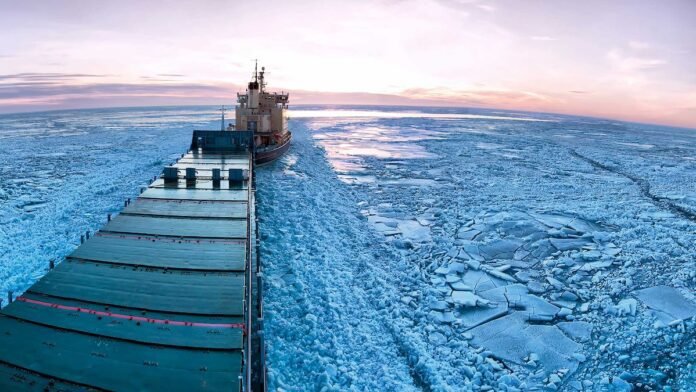
The Northern Sea Route, running along Russia’s Arctic coast, shortens shipping distances between Asia and Europe by 36% to 40%, roughly 7,200 kilometers, relative to the Suez–Hormuz corridor.
The Arctic is becoming a viable commercial corridor faster than its skeptics anticipated, partly because climate change is melting it open and partly because Hormuz has made it indispensable.
China understood this trajectory and acted on it before Japan. Beijing declared itself a near-Arctic state in 2018 despite sitting thousands of kilometers from the Arctic Circle, has built five icebreakers, runs its Polar Silk Road as a formal extension of the Belt and Road Initiative, and dispatches increasingly regular research expeditions whose dual-use profile is barely disguised.
The Hormuz crisis has now validated this entire posture. China has weathered the energy shock because its overland Russian pipelines, its northern resource investments, and its 1.4 billion barrels of strategic reserves were positioned for exactly this scenario.
What Hormuz has revealed, in other words, is that the great geographic divide in Asian energy futures is not between aligned and non-aligned states, nor between democracies and autocracies.
It is between states with operational presence in the northern energy theater and states without. Japan and China have it. Russia, the resource holder, controls it. South Korea is racing to build it. India is debating whether to want it.
Most of Southeast Asia possesses neither the capital nor the state capacity to acquire it, and it is precisely these states, the Philippines, Vietnam, Thailand and Bangladesh, that have suffered the worst of the current crisis.
The implications stretch well beyond energy. The Indo-Pacific framework, which has organized US-led strategic thinking for the past decade, was always a maritime construct centered on the chokepoints of the South China Sea, Malacca, and Hormuz.
It assumed that Asia’s economic lifelines would continue to run through these waters and that great-power competition would be a contest for control of them. The Arctic, on this map, was a peripheral future concern, a venue for scientific cooperation and gradual Russian provocation, not an immediate strategic priority.
That assumption is now obsolete. If Asian energy security increasingly runs through Sakhalin, Murmansk, Yamal, and the Bering Strait, then the strategic geography of the region has fundamentally changed.
The Indo-Pacific is not being replaced, but it is being supplemented, and possibly relativized, by what one might call an Indo-Arctic-Pacific frame in which the northern theater becomes a coequal arena of Asian strategic concern. Japan’s FOIP doctrine has already begun this expansion, even if its allies have not yet caught up.
The losers in this reorientation are not difficult to identify. Countries whose energy security depends on Middle Eastern supply through southern maritime routes will face a permanently elevated risk premium that no diversification within the Gulf can resolve.
Indonesia, despite being a hydrocarbon producer, lacks both the capital position and the geographic logic to enter the Arctic theater meaningfully. Its non-aligned tradition, designed for a world where energy choices ran north-south through the Indian Ocean, fits awkwardly with a future where the strategically significant choices run east-west across the Arctic.
The winners are those who have already invested. Russia, paradoxically, emerges as Asia’s energy linchpin not because of warming political relations but because it owns the geography that the new energy map requires.
Japan, despite being an American treaty ally, has built a position in that geography sufficient to extract waivers, sustain supply and project influence. China has built parallel infrastructure with even greater scale.
The shape of Asian energy supply routes in the 2030s is now being drawn, in coordinates no one was watching when Hormuz dominated the news. The Strait of Hormuz will reopen. Tankers will resume transit, prices will moderate and the region’s daily news cycle will move on.
The geographic reorientation that this crisis has accelerated, however, will not reverse. Asia’s energy center of gravity is moving north, and the states that recognize this and build accordingly will define the strategic order of the coming decade.
Those who continue to think in southern, Gulf-centric terms will discover that the maps they were using have already been redrawn.
Irvan Maulana is a researcher at the Centre for Economic and Social Innovation Studies (CESIS), a think tank based in Jakarta.
Hezbollah Drone in Southern Lebanon Seriously Wounds One IDF Soldier, Injures 3 Others Lightly
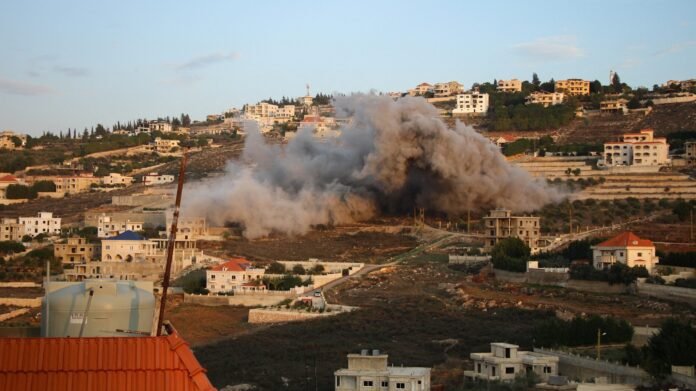
An Israel Defense Forces (IDF) soldier was seriously wounded, and three other soldiers were lightly injured after an explosive drone struck troops in southern Lebanon on Wednesday, the military said.
The wounded soldiers were evacuated for medical treatment, and their families had been notified.
Lebanese media reported strikes Thursday morning in the Haret Hreik area of Dahieh, Hezbollah’s stronghold in Beirut.
Also on Thursday, sirens warning of an aircraft infiltration sounded in Kiryat Shmona after the Israeli Air Force intercepted what the military described as a “suspicious aerial target” launched from Lebanon.
Additional sirens warning of missile and rocket fire were activated in Manara and Margaliot due to concerns over falling debris from the interception.
Fighting has continued despite a 10-day ceasefire declared on April 16, 2026. Although Israel and Lebanon agreed to negotiations, Hezbollah has continued launching drones into Israel and carrying out attacks against IDF forces.
President Trump has pushed for direct talks between Prime Minister Benjamin Netanyahu and Lebanese President Joseph Aoun, but Aoun has declined, instead favoring indirect negotiations.
Lebanese Prime Minister Nawaf Salam said Lebanon is “not heading toward normalization, but toward peace,” while describing any meeting with Netanyahu as “premature.”
Salam said Lebanon requires negotiations with Israel alongside internal talks aimed at expanding state authority. He also said Beirut would revisit plans concerning Hezbollah’s weapons following recent developments.
According to Salam, a ceasefire would serve as the basis for any future round of negotiations between Israel and Lebanon in Washington.
The animated version of the iconic “Hello, world” image reveals striking new details
The astronauts flying aboard the Artemis II mission to the Moon last month took a lot of pictures, and a few dozen of the best ones were released during and shortly afterward the flight.
But it wasn’t until last weekend that NASA released the whole trove of more than 12,000 images, dumping them onto the Gateway to Astronaut Photography. The astronauts used three different cameras on the mission: a Nikon D5, a Nikon Z9, and an iPhone 17s. There are some hits and misses in the archive, plus some new gems.
One of the early highlights during the mission was the “Hello, world” image captured by Artemis II Commander Reid Wiseman as the Orion spacecraft left Earth on its outbound journey toward the Moon.
In the newly released archive, there are dozens more images from this sequence. On Wednesday, Andy Saunders—known for processing a trove of Gemini and Apollo images into gorgeous books—shared a composite of these images that he processed and animated into a stunning new visual.
This is incredible. The new @NASA image release from #Artemis includes a sequence of ‘Hello World’ still photographs. I’ve been processing / animating them and here’s what the original didn’t show us:
Satellites, including their solar arrays, lightning storms and dancing aurora! pic.twitter.com/fiCdXIhXyt
— Andy Saunders – Apollo Remastered (@AndySaunders_1) May 6, 2026
The animation is sped up by a factor of 30, with the sequenced images covering 1 minute and 20 seconds in real time.
“There are 17 separate photos in the sequence—there were more, but at different exposures and Earth started to drift off-shot in some—so this was the best consecutive sequence,” Saunders told Ars via email. “I applied some color and contrast adjustments to each individual frame then animated them. They’re great resolution, so I could then zoom in on the most interesting parts.”
Those interesting parts include lightning storms, aurorae, and satellites. The latter present an interesting phenomenon: It appears the solar arrays on the satellites are visible. This seems unlikely, though, as the scale in the image means these arrays would have to be on the order of a kilometer wide, which is not the case. It is possible that the solar array’s appearance may be an optical effect due to Orion’s window.
In any case, the new imagery offers yet another stunning view of our world, which is active not just on the surface but in the heavens above.
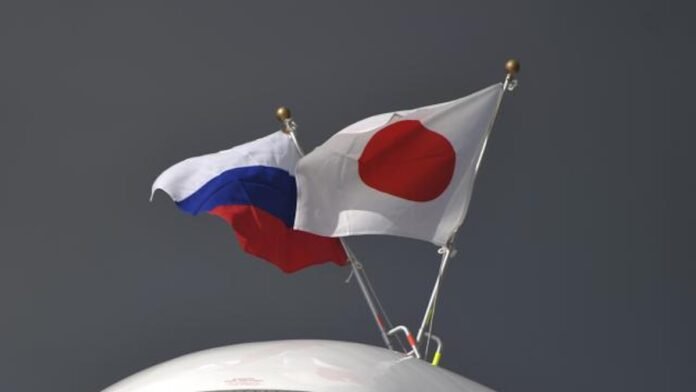
Crunch time for Japan-Russia as energy and security collide
An oil tanker from the Sakhalin-2 oil and gas extraction project arrived at Taiyo Oil’s refinery at Imabari, Ehime Prefecture, on May 5, signaling that Japan’s efforts to diversify away from the Persian Gulf have gone as far as to include some improvement in relations with Russia.
The tanker’s voyage south through the Sea of Japan, tracked in real time by Marine Traffic, was a big story on Japanese TV news and in the Japanese press.
But only a week earlier, on April 29, Japanese drone aircraft developer Terra Drone announced plans to invest in a second Ukrainian drone maker, WinnyLab. Interceptor drones made with its first partner, Amazing Drones, are already in service in Ukraine, an activity the Russian Foreign Ministry calls “openly hostile and detrimental to our country’s security interests.”
Japanese parliamentarian Muneo Suzuki was in Moscow earlier this week, attempting to arrange a meeting between Japanese Foreign Minister Toshimitsu Motegi and his Russian counterpart Sergei Lavrov. A senior Diet member from Hokkaido, from which Sakhalin is visible on a clear day, Suzuki is an expert on Japanese-Russian relations who advised former Prime Minister Shinzo Abe and who is appreciated in Moscow for his pro-Russian views.
Suzuki met with Russia’s Deputy Foreign Minister Andrey Rudenko, who told him that a meeting between the two foreign ministers could take place in conjunction with ASEAN-related events in the Philippines in July – provided the Japanese take “concrete measures” demonstrating that they are abandoning their hostile policy toward Russia.
“I very much want to restore Japan-Russia relations to the state they were in under Abe and President Putin,” Suzuki said to Grigory Karasin, head of the Russian Federation Council Committee on International Affairs.
“The current Japanese Prime Minister, Ms. Takaichi, is a follower of Mr. Abe. I spoke with her before leaving for Moscow. Ms. Takaichi said that she is very well aware of the importance of Japan-Russia ties. I have consistently taken a negative view of the fact that Japan, at the request of Biden, has adopted cold ties with Russia,” Suzuki said.
Suzuki did not say that Takaichi is ready to do that, but as a staunch supporter of Abe’s other policies, she might. She would no doubt face considerable opposition from hardliners, but after all, the threat to Japan’s oil supply did not come from Russia.
Sakhalin-2, which is 12.5% and 10% owned by Mitsui & Co. and Mitsubishi Corp., respectively, supplied about 9% of Japan’s LNG in 2025 and a small amount of its oil. 77.5% of the project is owned by Gazprom.
Due to its importance to the Japanese economy, the US exempted Sakhalin 2 from its sanctions on Russian energy. Last December, the Japanese expressed relief when the US extended this waiver until June 18, 2026. There is a “take-or-pay” clause in the contract that requires the Japanese to pay even if they don’t take their share of the LNG.
Last October, US Treasury Secretary Scott Bessent told Japanese Finance Minister Katsunobu Kato that the Trump administration expected Japan to stop importing Russian energy in coordination with the G7, but that didn’t fly.
Now the Japanese are wondering whether they will be able to import more oil from Sakhalin-1 and other Russian sources. Sakhalin-1 is 30% owned by SODECO (Sakhalin Oil and Gas Development Co.), a Japanese consortium including JAPEX, Itochu, Marubeni and Inpex. Rosneft companies own 50% of Sakhalin-1, while India’s ONGC Videsh owns 20%.
Russia supplied Japan with less than 1% of its oil last year, making it an obvious choice for Japan’s energy diversification.
But Japan is also building up its military, and drones are high on its list of defense technologies to be acquired and developed, with the Defense Ministry’s goal of achieving self-sufficient domestic production. At present, Terra Drone is the most promising venture pursuing that objective, plus an ambitious foray into global markets.
Established in 2016, Terra Drone is headquartered in Tokyo. Overseas, in addition to its activities in Ukraine, it currently has offices in Belgium, the Netherlands, Saudi Arabia, Malaysia and Indonesia, as well as sales efforts in the UAE and elsewhere.
Its original target markets were agriculture, inspection of industrial facilities, surveying for construction and engineering projects, and unmanned aircraft traffic management.
In March 2026, Terra Drone announced its “full-scale” entry into the defense equipment market, a strategic investment in Amazing Drones, and plans to establish a US subsidiary, Terra Defense, to facilitate procurement and logistics.
In April, the investment in WinnyLab was announced, and the operational deployment of the “Terra A1” interceptor drone, developed with Amazing Drones, commenced in Ukraine. The first successful interception of a “long-range unmanned aerial threat” was announced at the end of the month.
How the Japanese government will reconcile its defense build-up with its energy needs, and to what degree the issue can be fudged, should become apparent over the summer.
Elderly American Tourist Dies While Snorkeling at Cruise Line’s Private Island
What was supposed to be a relaxing tropical getaway turned tragic after an 83-year-old American cruise passenger died during a snorkeling excursion in the Bahamas.
According to the Royal Bahamas Police Force, the elderly tourist apparently drowned Sunday afternoon while snorkeling near Great Stirrup Cay, the private island destination owned by Norwegian Cruise Line.
Officials said the man had arrived on the Norwegian Getaway earlier that morning as part of a short three-day cruise itinerary.
According to reports, the ship docked at the island around 8 a.m. before departing later that afternoon.
Police say the victim had been snorkeling in the water with his son before the heartbreaking incident unfolded.
The victim’s son reportedly told investigators the two became separated while swimming.
At some point, the son realized his father was no longer moving in the water and noticed he was no longer wearing his snorkel mask.
He immediately called for help.
Emergency responders and the ship’s medical team rushed to assist the unresponsive passenger, but despite their efforts, the man could not be revived.
In a statement, Norwegian Cruise Line confirmed the tragedy and expressed condolences to the family.
“We are saddened by the passing of one of our guests who became unresponsive while snorkeling in the ocean,” the company said.
“Our medical team and local emergency responders provided immediate assistance. Unfortunately, the guest was unable to be revived. We extend our heartfelt condolences to the family during this difficult time.”
Authorities have not yet publicly released the victim’s identity as the investigation continues.
The tragedy comes amid growing concerns surrounding cruise-related snorkeling incidents involving older passengers.
Just recently, another cruise passenger reportedly died while snorkeling during an excursion off the coast of Australia.
Football is not ‘the beautiful game’ when it collaborates with genocide
FIFA President Gianni Infantino played an infantile game at the 76th FIFA congress when he encouraged the Palestinian Football Association President Jibril Rajoub and Israel’s FA Vice President Basim Sheikh Suliman to shake hands. Faed with Rajoub’s refusal, In Fantino then said, “We will work together, President Rajoub, Vice President Suliman. Let’s work together to give hope to the children. These are complex matters.”
Throughout the decades FIFA turned a blind eye to international law violations several times. One would recall the destruction of favelas in Brazil to build stadiums for the 2014 World Cup. In earlier history, FIFA’s tacit silence during Latin America’s right-wing dictatorships enabled both impunity and coverup of disappearances of thousands of detainees. One horrifying details regarding football and dictatorships was the 1978 World Cup in Argentina, where stadiums hosting the games were situated close to the dictatorship’s torture and extermination centres.
In Palestine’s regard, FIFA hasn’t fared any better. It maintains alleged neutrality in its refusal to suspend Israel even after its genocide in Gaza. Genocide is as complex as it is straightforward – a web of international complicity across diplomatic and economic sectors collaborating to aid Israel ethnically cleanse Palestinians from Gaza. The complexity lies in untangling the complicity, in which FIFA plays a considerable propaganda part. The killing part of genocide, on the other hand, is very straightforward, as Israeli officials and soldiers have attested to.
Since the killing part of genocide is straightforward, even if Infantino decided to lump colonialism into mere ‘complex matters’, why did Rajoub dilute his gesture later in remarks to the press by stating that Infantino had good intentions? The rest of Rajoub’s comments depicted the hypocrisy of the attempted handshake – he would not shake hands with an official “defending Netanyahu and his government”. If the rest of the statement stands on its own merit of truth, why apply an apologetic introduction?
Several outlets are stating that Infantino attempted to capitalise on his announcement that he would be contesting the FIFA presidency. The manipulation went awry. Complex matters? Of egotism perhaps? To bring Israel’s genocide of Palestinians in Gaza to the stage, attempt to dilute it into a symbolic handshake and claim hope on behalf of innocent children in Gaza is another low to be recorded in the history of offering the ambiguity of hope to the colonised population.
In February this year, Infantino, along with UEFA President Aleksander Ceferin were accused at the International Criminal Court of aiding and abetting war crimes by allowing the inclusion of Israeli football clubs pertaining to illegal settlements in the occupied West Bank. According to the parties filing the complaint, the FIFA and UEFA presidents collaborated with Israeli and US authorities to maintain the clubs’ inclusion.
With this level of complicity, Rajoub should not have destroyed his message with benevolence towards Infantino. The colonised are not tasked with maintaining Infantino’s career. Palestinians have seen their resistance shattered to shards of survival. It is with immense resilience that they can build resistance through survival over and over again.
Football is not ‘the beautiful game’. It reeks of corruption, of collaboration with dictatorships, and now of collaboration with genocide. Complex matters? Diplomacy can provide a veneer that sustains Infantino’s puerile rhetoric, but Rajoub has Gaza’s testimony at his disposal.
Football is an accomplice to murder, and Rajoub was asked to shake hands on that hidden clause.
The views expressed in this article belong to the author and do not necessarily reflect the editorial policy of Middle East Monitor.