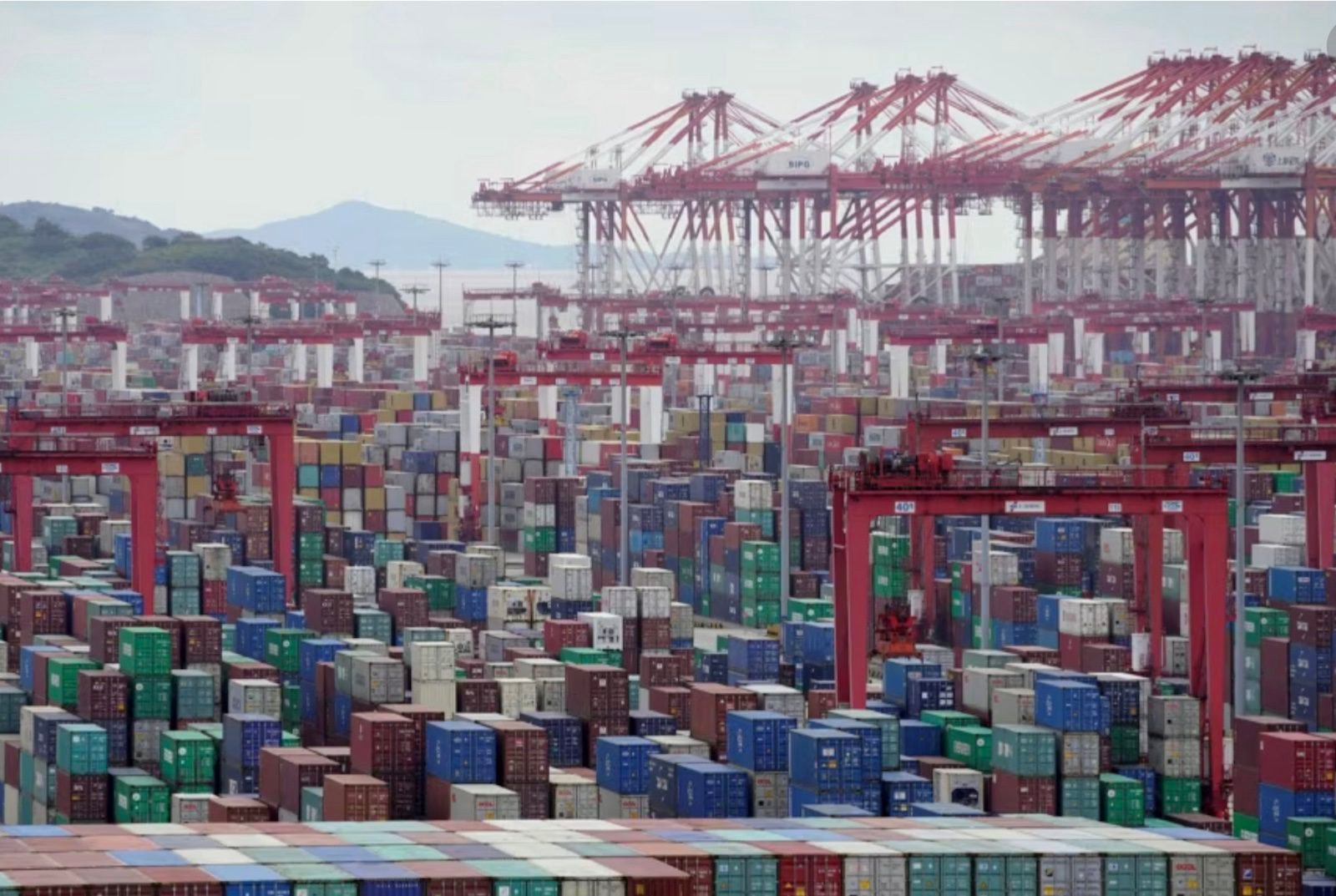
When the Trump administration announced sweeping tariffs on Asian economies on April 2, 2025, the political framing was simple.
The tariffs would punish Asian exporters, shrink the US trade deficit and force capital home. Asia was cast as the vulnerable party in a contest the US expected to dominate. The 2025 trade data, however, tells a very different story.
According to the US Bureau of Economic Analysis, the US goods and services trade deficit with Vietnam reached US$178.2 billion in 2025, an increase of $54.7 billion compared to 2024.
The deficit with Taiwan rose by $73 billion to $146.8 billion. The deficit with Thailand was $71.9 billion, a record high. The deficit with Malaysia was $30.8 billion. With Indonesia, it was $23.7 billion.
These are not the numbers of an Asia bowing to economic pressure. They are the numbers of a region absorbing higher costs while continuing to ship more goods to the US than ever before.
The tariff regime itself has been on a turbulent legal journey. The original “Liberation Day” reciprocal tariffs imposed under the International Economic Emergency Powers Act (IEEPA) were struck down by the US Court of International Trade in May 2025.
The Federal Circuit Court of Appeals affirmed that ruling in August 2025. On February 20, 2026, the Supreme Court issued its decision in Learning Resources, Inc. v. Trump, holding 6 to 3 that IEEPA does not authorize the President to impose tariffs.
The administration’s response was immediate. Within hours, President Trump announced new tariffs under Section 122 of the Trade Act of 1974. A 10% global tariff went into effect on February 24, 2026.
On March 12, 2026, the US Trade Representative began Section 301 investigations on China, the European Union, and several Southeast Asian economies. The legal vehicle changed. The strategic intent did not.
What is striking is what this sustained pressure actually produced.
A region that did not break
Vietnam, the country most exposed to US tariffs, recorded GDP growth of 8.02% in 2025, with total trade volume exceeding $930 billion, an 18.2% year-on-year increase. Vietnam’s exports to the US reached $153.2 billion, generating a trade surplus of $134 billion.
Indonesia’s nickel sector expanded its production by 13.9% in 2025 to reach 2.6 million tonnes. The country now controls more than 60% of global mined nickel supply and processes close to 45% of primary nickel output. Indonesian nickel derivative exports rose from $11.9 billion in 2020 to $38 to $40 billion in 2024, with continued growth into 2025.
Malaysia’s annual export figures tell a more nuanced story. Total exports declined 3.7% over the full year of 2025. But the second half of the year saw a sharp acceleration. December 2025 exports to the United States grew 48.8% year on year.
January 2026 exports to the US grew 33.9%. The country’s electrical and electronic product exports surged 25.3% in December 2025 alone.
The economies that were supposed to be punished by the tariffs have ended up being repositioned by them. Western multinationals seeking to derisk China exposure faced two options.
Bring production home, where capital, labor and energy costs were significantly higher or shift further into ASEAN, where infrastructure had quietly been built up over the previous decade. The vast majority chose the second path.
This was not the outcome that Trump’s tariff policy was designed to produce. But it is the outcome that the underlying economics made inevitable.
Mapping China’s counter-moves
While Western analysts focused on whether the tariffs were working as intended, Chinese companies executed one of the largest cross-border expansion campaigns in modern Asian business history.
BYD began trial production at its first European passenger vehicle plant in Szeged, Hungary, in January 2026, with mass production scheduled for the second quarter. The total investment is up to 4 billion euros, with an initial capacity of 150,000 vehicles per year and a target of 300,000.
CATL, the world’s largest electric vehicle battery manufacturer, is scheduled to begin production at its 7.34 billion euro plant in Debrecen, Hungary, in early 2026. The facility will employ approximately 9,000 people with an annual capacity of 100 GWh. It is the largest greenfield foreign investment in Hungary’s history.
Chinese entities have committed approximately $60 to $65 billion in Indonesian nickel processing infrastructure between 2010 and 2024, transforming Indonesia from a raw material exporter into a vertically integrated processing hub.
The pattern is consistent. Chinese firms are not retreating from the global system. They are repositioning inside it. Where the tariffs created a wall, they bought their way over it. Where capital flows were restricted, they redirected them through ASEAN intermediaries.
The “China plus one” supply chain framework that Western firms were chasing in 2024 has been quietly absorbed by Chinese firms themselves, executing it faster and at greater scale than their US and European competitors.
Where ASEAN governments still risk losing the windfall
The danger for Southeast Asian economies is not the tariffs. Rather, it is the assumption that the tariff windfall will continue without active positioning. Three structural risks deserve attention.
First, Vietnam’s manufacturing rise has so far been concentrated in low to mid-value assembly. Without deeper investment in semiconductor design, packaging and engineering talent, Vietnam risks being repositioned again the moment the next regulatory cycle begins.
Second, Indonesia’s nickel boom has created a single-commodity dependency that mirrors earlier resource curse patterns elsewhere in the region. Without parallel investment in downstream battery and EV manufacturing capacity, the country risks repeating Australia’s iron ore experience. It would become an indispensable supplier with limited pricing power.
Third, much of the manufacturing capital flowing into ASEAN is Chinese, not Western. ASEAN governments now face the question of whether they are partnering with Chinese capital on equal terms or simply hosting an externally managed industrial expansion.
The strategic read
The tariff regime was framed as a contest between the US and Asia. The actual outcome has been a quiet rebalancing inside Asia, with Chinese firms moving fastest, ASEAN economies absorbing capital and Western multinationals navigating an environment they no longer control.
For ASEAN governments, the strategic question is no longer whether to align with one side or the other. It is whether they are positioned to capture the manufacturing, technology and capital flows that are now actively rerouting through their economies.
For Western firms, the strategic question is whether they can move fast enough to compete with Chinese counterparts who are already operating in the region with battle-tested margins and integrated supply chains.
The tariffs did not constrain Asia. They redrew the map of who would benefit from the next decade of regional growth. The countries that read this correctly are already moving and profiting. The ones still waiting for the policy to “work as designed” will find that the windfall has already passed them by.
The most important business decisions of the next five years are being made now. They are being made quietly, by founders, operators and governments who understand that the visible policy and the actual outcome are two very different things.
Chris Chen is an angel investor and founder of Future 500, a Singapore-based operator-led accelerator working with founders to scale beyond their home country.