Waymo has sharply increased its lobbying spending as it seeks to persuade US regulators to clear a path for fully autonomous taxi services, intensifying its battle with rival Uber over the future of robotaxis.
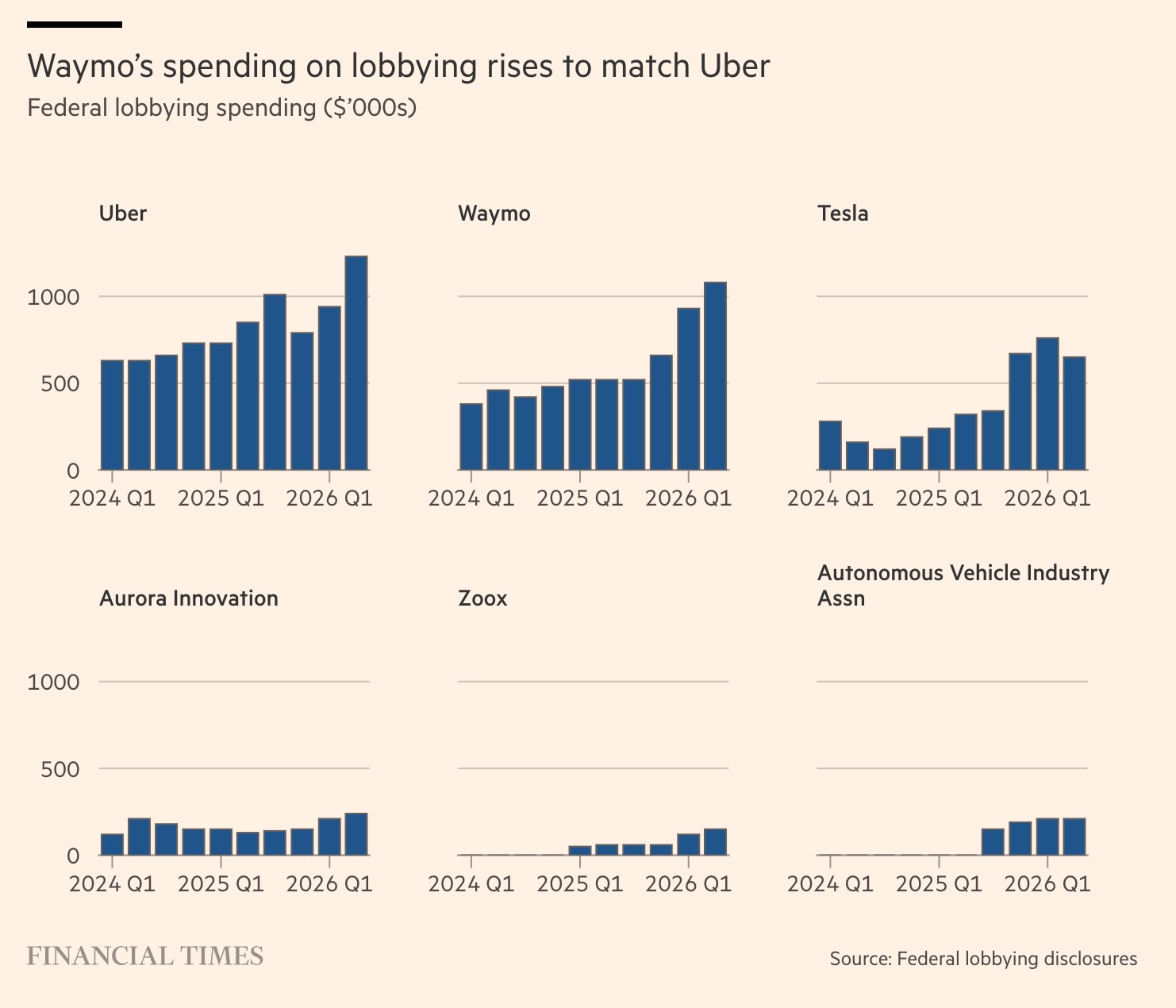
The Alphabet-owned company spent more than $1 million between April and June on lobbying the federal government, more than double its outlay a year earlier, according to filings. That put Waymo’s spending close to Uber’s and well ahead of rivals including Amazon’s Zoox and Tesla.
The rise in lobbying comes as Waymo and Uber push competing visions for the future of ride-hailing. Waymo wants a faster route to fully driverless commercial services, while Uber is advocating a staggered rollout in which robotaxis operate alongside human drivers.
Their diverging legislative strategies have contributed to their relationship souring. The FT reported last month that Waymo was exploring options to exit its Uber partnership in Austin and Atlanta, where the ride-hailing group operates its services.
“They’ve both stepped up lobbying and are pushing up against each other, which now appears to be hastening their divorce,” said Walter Piecyk, an analyst at LightShed Partners.
Both companies are lobbying aggressively in several US states and Washington, DC, after pushback stalled their expansion to markets including New York and Chicago, as politicians and labour groups warn the technology could displace drivers and undercut existing services.
In the first six months of 2026, Waymo increased its spending by 93 percent from the year before to slightly more than $2 million. It has called for a federal framework to ease the rollout of robotaxis. In May, it hired law firm Greenberg Traurig to lobby on its behalf, adding to a roster of several other Washington firms.
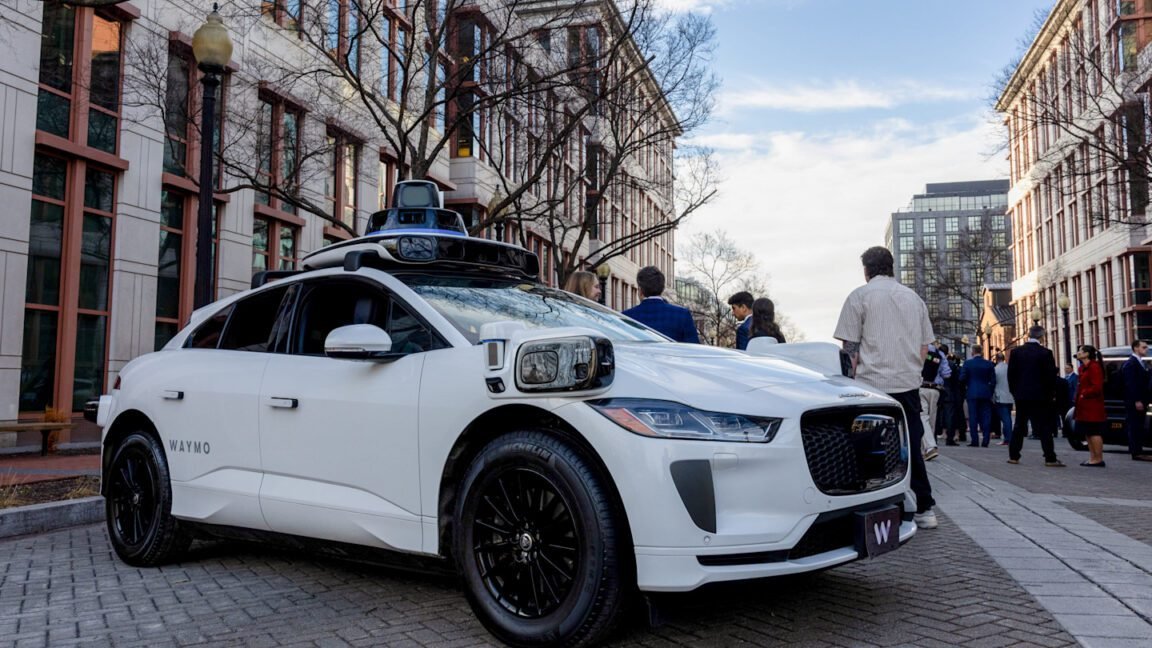
At the local level, the robotaxi operator has outspent both Uber and Zoox in lobbying legislators in the District of Columbia. It has pressed local regulators to allow robotaxi services in the nation’s capital, including by inviting residents earlier this year to write in support of its rollout.
In New York state, Waymo has spent more than half a million dollars so far this year—more than double Uber’s lobbying spend—as it seeks a foothold in one of the largest taxi markets.
Its lobbying in the state intensified after Governor Kathy Hochul earlier this year walked back proposals that would have allowed autonomous vehicle companies to run services across most of the state.
Waymo offered to set up a $20 million fund to support drivers affected by the technology’s deployment, according to people familiar with the matter.
In New Jersey, it has engaged lawmakers who are exploring a three-year pilot program to test deployments.
Waymo said in a statement that it was advocating for the rollout of autonomous vehicles and was not pursuing measures that would limit competitors or “prescribe” how the technology was deployed.
Uber, meanwhile, has been racing to make up lost ground in AVs after abandoning its in-house self-driving effort in 2020, committing more than $10 billion over the past year through equity stakes and robotaxi fleet agreements.
The ride-hailing group has warned several Democratic-led states against a carte blanche rollout and has instead lobbied for so-called hybrid networks that route rides to both human drivers and autonomous vehicles.
In New Jersey, Uber lobbyists have proposed that any platform offering robotaxi services also use human drivers for at least 85 percent of all rides during a three-year pilot program.
Critics have accused Uber of seeking regulatory capture by attempting to keep rides flowing through its platform as it grapples with rising competition.
Uber has said it is false that they were “anti-AV or seeking to slow AV deployment.” It said hybrid networks “get the technology to consumers sooner while giving policymakers a practical framework to manage the transition.”
© 2025 The Financial Times Ltd. All rights reserved. Not to be redistributed, copied, or modified in any way.