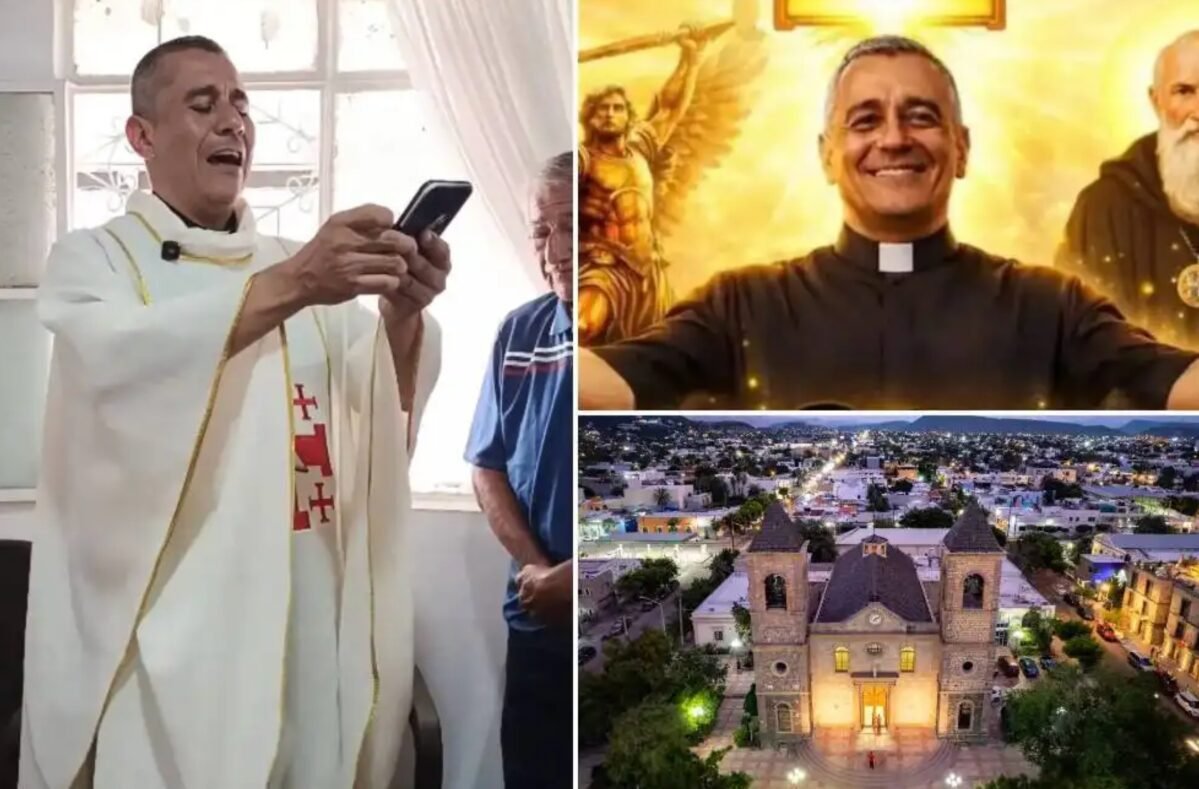
A man accused of posing as a Catholic priest has been unmasked after allegedly duping believers into fake weddings, baptisms, Masses and spiritual guidance along Mexico’s popular tourist coast.
The Diocese of La Paz in Baja California Sur issued a public warning this week about Gregorio Díaz Mora, saying he is not a priest, does not belong to the Catholic Church and has no authority to perform Catholic sacraments anywhere in the diocese.
“The Diocese of La Paz informs all the faithful and the general community that the person identified as Gregorio Díaz Mora is not a priest of the Catholic Church and does not belong to or exercise any ministry with authorization or recognition from this Diocese,” church officials said in a statement Tuesday.
According to the diocese, Díaz Mora has presented himself online as a “spiritual father” while using religious imagery and photos connected to the Sanctuary of Our Lady of Guadalupe in La Paz, a move church leaders warned could mislead Catholics into believing he was officially affiliated with the Church.
The diocese said the use of those images “can generate confusion among the faithful regarding their affiliation with the Catholic Church.”
Online, Díaz Mora appears in priestly vestments and posts videos that show him participating in Catholic-style rites, including what appear to be Masses and other ceremonies. He has promoted himself across several social media platforms, including Facebook, YouTube and TikTok, where one page reportedly has around 140,000 followers.
Church officials say he has also operated through pages that appear to resemble an official sanctuary presence while offering paid video-call consultations, spiritual services, “Catholic” weddings, baptisms and other rites.
But the diocese says none of it carries Catholic authority.
The warning has serious consequences for couples and families who may have paid Díaz Mora for ceremonies they believed were real. Under Catholic canon law, sacraments performed by someone who is not validly ordained are not recognized by the Church.
That means couples who thought they were married by Díaz Mora may need to have their marriages performed again by an actual priest if they want the Church to recognize the union. Families who believed their children were baptized may also need to contact a parish to determine what steps are required.
The Diocese of La Paz said the alert is the first official warning of its kind involving an alleged religious impostor in Baja California Sur.
Church leaders are now urging Catholics to verify anyone claiming to be a priest before handing over money, booking a ceremony or trusting them with major religious milestones.
The diocese said a simple call to a parish or diocesan office can confirm whether a priest is legitimate — and could save families from paying for fake ceremonies, invalid sacraments and the painful realization that one of the biggest days of their lives may never have counted in the eyes of the Church.