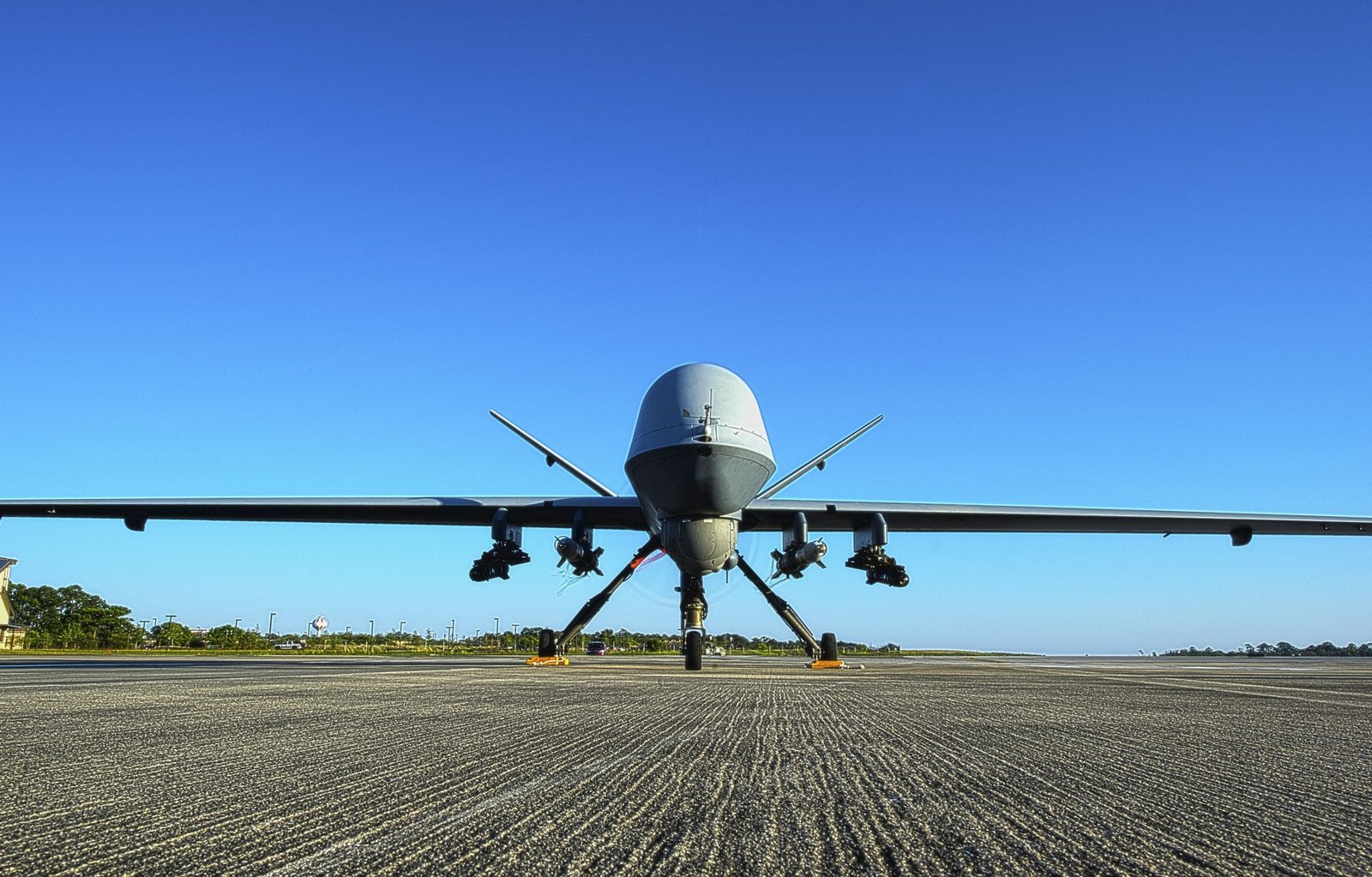
The MQ-9 Reaper defined US drone wars for two decades, but the next era may be shaped by a very different premise: not building unmanned aircraft to survive every fight, but fielding them cheaply and in enough numbers that losing some no longer breaks the force.
This month, The War Zone (TWZ) reported that General Atomics has unveiled the Wildfire Unmanned Aerial System, a next-generation medium-altitude, long-endurance drone intended to address critical shortages in the US military’s reconnaissance and strike fleet.
The announcement aligns with the US Department of Defense’s (DoD) Defense Innovation Unit (DIU) proposals for the Massed Modular Aircraft (MMA) program, which aims to replace the MQ-9 Reaper.
The US Air Force urgently requires a transition because the legacy Reaper is out of production and has sustained severe attrition—reportedly losing at least 45 aircraft, roughly a quarter of the US fleet, during the Iran war following earlier losses to Houthi forces.
To counter peer adversaries like China, the DIU mandates a cost-effective, scalable platform capable of autonomous swarming, carrying a 1,270-kilogram payload, and executing extended missions in high-risk environments.
General Atomics engineered the Wildfire to exceed these baseline requirements, projecting capabilities including an 18,520-kilometer ferry range and integration of Long Range Anti-Ship Missiles (LRASM).
Although the US DoD targets an initial operating capability for the MMA program in 2031, General Atomics asserts that the Wildfire can be fielded years earlier. Company officials frame the new aircraft not merely as a disposable Reaper replacement, but as an immediate, heavily armed combat backfill.
The core problem is that the Reaper remains operationally valuable precisely because of the capabilities that also make it expensive, difficult to replace, and increasingly ill-suited to wars where unmanned aircraft may have to be lost in large numbers.
Kyle Gunn and Nicholas Slayton write in a March 2026 Task & Purpose article that the Reaper occupies a vital operational “Goldilocks zone” as a proven, reliable intelligence, surveillance, and reconnaissance (ISR) platform offering unmatched endurance.
Rather than retire the airframe, Gunn and Slayton note that the US Air Force and Marine Corps are extending its utility through critical modernizations, including extended-range fuel pods enabling 30-hour missions, electronic warfare pods to mitigate stealth deficiencies, and advanced standoff strike munitions.
However, the Reaper has become an increasingly expensive aircraft to lose, with the US Air Force estimating that a fully equipped MQ-9 can cost up to US$50 million depending on its sensor package. This was less of an issue in low-threat environments during the Global War on Terror (GWOT) era, where enemy ground forces couldn’t effectively counter it.
But with adversaries ranging from Iran to the Houthis now capable of shooting down Reapers—and with their production line closed since 2025—such losses are becoming increasingly difficult to absorb.
These shootdowns expose fundamental design limitations. Engineered for an era of unchallenged US air superiority, the Reaper prioritizes long loiter times and payload capacity over stealth, agility, and defensive electronic countermeasures.
When descending to lower altitudes for essential ISR and battle-damage assessments, its relatively sluggish flight and significant infrared signature make it acutely susceptible to lethal pop-up strikes.
A major driver of this vulnerability is the proliferation of mobile surface-to-air threats and dispersed air-defense batteries operating under contested electronic warfare conditions. Such attrition may have forced the US to reactivate older, less-capable Predator drones.
That doesn’t mean the Reaper has failed outright—it has been dubbed the “most valuable player” in the ongoing Iran War due to the sheer number of strikes it has carried out compared with manned platforms.
Just as importantly, Reapers allow US forces to sustain strikes without putting aircrews at risk; losing equipment remains far more acceptable than losing personnel.
However, each Reaper downed represents a significant loss of ISR capability; each unit destroyed in the Middle East means less that could be deployed in other theaters, such as Eastern Europe and the Pacific.
More broadly, Javid Ahmad and Colin Clarke argue in an April 2026 Cipher Brief article that the era of relying on exquisite, multi-million-dollar platforms like the Reaper is rapidly giving way to cheap, mass-produced attritional warfare.
Ahmad and Clark note that modern conflicts in Ukraine and the Middle East are increasingly dominated by inexpensive, expendable systems that employ a deliberate strategy of economic exhaustion: by overwhelming advanced defenses, these cheap drones impose unsustainable costs on air and missile defenses.
They argue that the US, optimized for high-end precision strikes in relatively uncontested environments, finds itself structurally unprepared for this shift.
While the Reaper defined drone warfare during the GWOT era, the US Air Force may already be in the early stages of adapting to a new era of drone warfare characterized by attritable mass in denied environments.
The Reaper’s successor may therefore look less like a single exquisite platform than a fleet of smaller, cheaper and highly adaptable semi-disposable drones, Harrison Kass argues in a June 2026 article for The National Interest.
Kass writes that to operate in heavily contested airspace, including China’s advanced anti-access networks, the US military is prioritizing attritable mass over expensive invulnerability.
Crucially, Kass notes that the US Air Force demands an open software architecture, eliminating costly vendor lock-in and enabling continuous updates without relying on proprietary contractor systems.
Still, significant doubts remain about the US’s ability to quickly field a Reaper replacement at scale. A July 2026 Project on Government Oversight (POGO) article points to the military’s historically sluggish acquisition process and questions whether the US DoD can realistically demand groundbreaking innovation while giving contractors just 16 days to respond to such an ambitious uncrewed aircraft solicitation.
Paul Scharre similarly argues in a July 2026 Foreign Affairs article that the US defense-industrial base struggles to build cost-effectively, respond rapidly and scale production. Decades of defense manufacturing have pushed the US higher up the cost curve toward increasingly sophisticated, expensive and low-production-run platforms such as the Reaper.
If the Wildfire is to mark a genuine break from the Reaper era, its real test will be whether the US can resist the temptation to turn an attritable design into another exquisite platform whose growing cost, complexity, and production burden make it too scarce to lose.