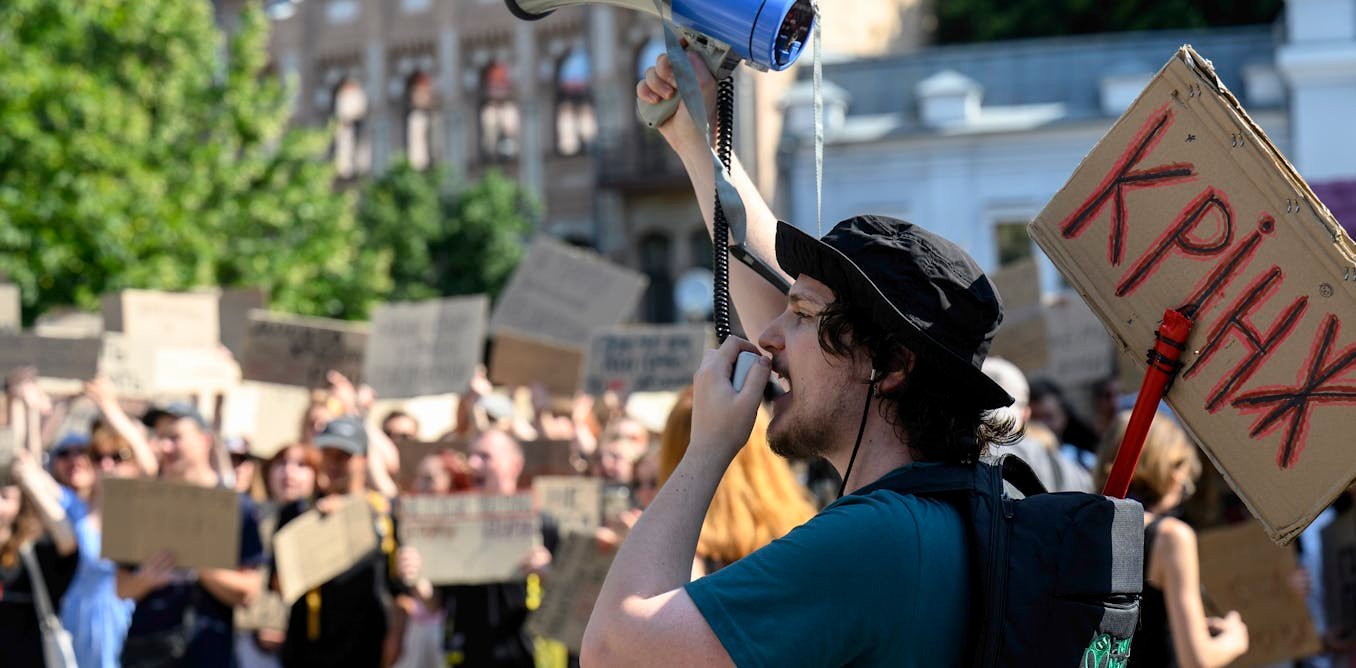
For the second time in a year, there have been public protests in Ukraine in response to a decision by the country’s president, Volodymyr Zelensky.
In July 2025, protests erupted when Zelensky tried to curb the powers of two independent corruption agencies, forcing him to backtrack. The trigger for the latest protests was the dismissal of Ukraine’s popular defence minister, Mykhailo Fedorov.
This is not the first time Zelensky has reshuffled his defence team. Oleksii Reznikov, who had been defence minister since 2021, was dismissed in 2023 following a string of high-profile corruption scandals.
He was replaced by Rustem Umerov who, after two years in office, was moved to the role of secretary of Ukraine’s National Security and Defence Council, as part of a full-scale cabinet reshuffle.
Umerov’s replacement, former prime minister Denys Shmyhal, lasted almost exactly six months before another reshuffle linked to the long fallout from the corruption scandals of summer 2025. Shmyhal was moved to the energy ministry and replaced by Fedorov.
What distinguishes Fedorov’s ousting is that this is the first time a reshuffle has been carried out for reasons of internal disagreement within Zelensky’s core team.
In a press conference on July 16, Fedorov accused the commander-in-chief of Ukraine’s armed forces, Oleksandr Syrskyi, of blocking his reform initiatives and dividing the country. Their rift had become increasingly public. Fedorov and Syrskyi had apparently each demanded that the other be dismissed, rather than finding the compromise Zelensky wanted.
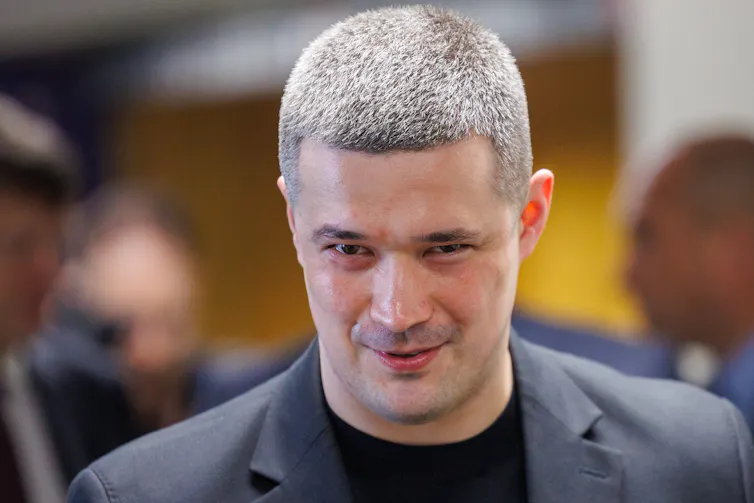
That the president sided with the commander-in-chief rather than his defence minister seemingly defies all logic. Fedorov had been an advocate of drone warfare during his earlier tenure as Ukraine’s minister for digital transformation, a role he assumed at the beginning of Zelensky’s tenure as president in 2019.
Since Fedorov was appointed minister of defence in January, Ukraine has made significant progress in stalling Russia’s momentum in the war. Key to this has been an intensified campaign of strikes against Russian oil infrastructure – one of the backbones of the country’s war economy.
Fedorov also moved to reform procurement policies in the defence ministry. In June, he stated that his team’s efforts to enforce competitive tendering for defence contracts had saved more than US$100 million (£74 million) by cutting the costs of 155mm artillery shells.
This is one probable source of Fedorov’s conflict with Syrskyi, who decides which weapons systems and military equipment should be procured. More than an issue of corruption, the rift is about control – and a clash of cultures between the moderniser, Fedorov, and the more traditional military leadership around Syrskyi.
After his dismissal, Fedorov apparently refused to continue in an advisory role for Zelensky. Two key advisors in the defence ministry, Serhii “Flash” Beskrestnov and Serhii Sternenko, as well as the deputy commander of the air force, Pavlo Yelizarov, have all now resigned.
These developments further underline the internal strategic disagreements over the direction of Ukraine’s war effort.
Fedorov’s replacement
Zelensky’s initial choice for his next defence minister was Ihor Klymenko, who apparently declined the role and is set to take up the post of secretary of Ukraine’s National Security and Defence Council instead.
As a former national police chief who had been Ukraine’s interior minister since 2023, Klymenko was seen as someone who could resolve Ukraine’s continued recruitment crisis. This is arguably the area in which Fedorov failed to make sufficient progress.
In light of sustained rumours about a new mobilisation of Russian troops for the war in the autumn, it is clear that Ukraine’s manpower problem is becoming more acute and needs an urgent resolution.
According to Fedorov’s diagnosis of the scale of the problem, 2 million Ukrainians are currently wanted for draft evasion, and 200,000 soldiers are absent without official leave.
Less clear, however, is why Klymenko was touted for the role. As interior minister, he was at least part of the problem caused by so-called “busification” – the forcible seizure of military-age Ukrainian men by recruitment officials. Klymenko has consistently maintained that these officials have acted within the boundaries of martial law.
Klymenko’s refusal to accept the position may also have been an implicit acknowledgement of how difficult a job any reform of recruitment would be. This is particularly the case given Zelensky’s highly public commitment to eradicating busification, during his press conference with the outgoing British prime minister, Keir Starmer, in Kyiv on July 16.
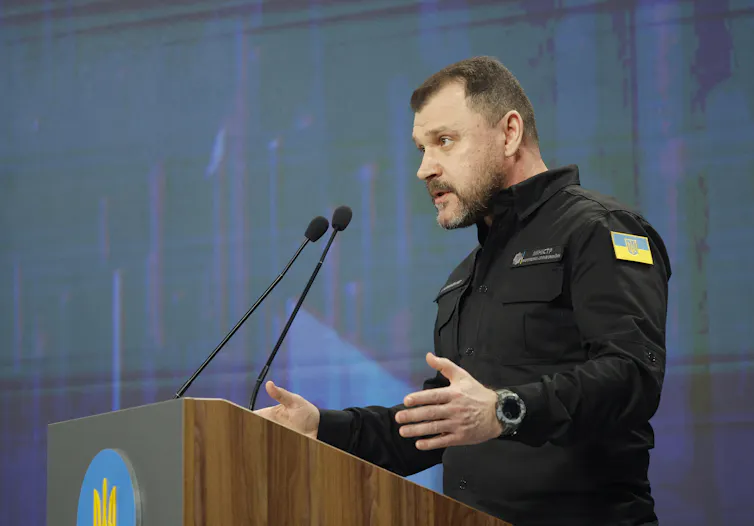
Yevhenii Khmara, a major general and acting head of the Ukrainian intelligence service SBU, has now been appointed as acting defence minister. Given Kharma’s previous role in supporting Ukraine’s intensifying air campaign against Russia, his appointment placates critics of the Fedorov dismissal. These include members of Zelensky’s own party, who saw Klymenko as insufficiently aligned with Fedorov’s strategy in the war.
But a realignment with Fedorov’s vision of how to win the war will do little to address either the recruitment issue or the underlying conflict with Syrskyi. That this will likely fester could be particularly destabilising, because the timeline towards Kharma’s parliamentary confirmation is unclear.
Under Ukrainian law, Kharma first has to resign from active military service before he can take on the civilian role of defence minister. He then has to be formally nominated by the president, after which the Ukrainian parliament must approve his appointment.
Like the summer 2025 corruption crisis, Zelensky will probably weather this storm. But the price he is likely to pay is a further erosion of his authority – and a shrinking of his inner circle of trusted advisors.
This is an unnecessary and unwelcome distraction from a defence effort that had finally seemed to put Ukraine on the front foot, for the first time since the end of 2022.