The GT3 occupies a singular place in the 911 lineup. Whereas the range-topping Turbo S piles on power, technology, luxury, and all-weather capability, the GT3 has always pursued something more elemental: a lighter weight, more focus, and a finely honed setup that puts the driver at the center of the experience.
Porsche has expanded the GT3 formula since the model’s debut in 1999, adding the more extreme GT3 RS to the lineup in 2003 and the slightly more reserved GT3 Touring in 2017, along with the GT3 S/C earlier this year. While the concept behind the drop-top S/C requires some mental gymnastics to make sense of it, the Touring’s original premise was refreshingly simple: Take the standard GT3—including its naturally aspirated 4.0 L flat-six and track-tuned chassis—and replace the fixed rear wing with the deployable spoiler from the Carrera. The result is a subtler version of the homologation car that recaptures the classic 911 silhouette without giving up the hardware that makes a GT3 a GT3.
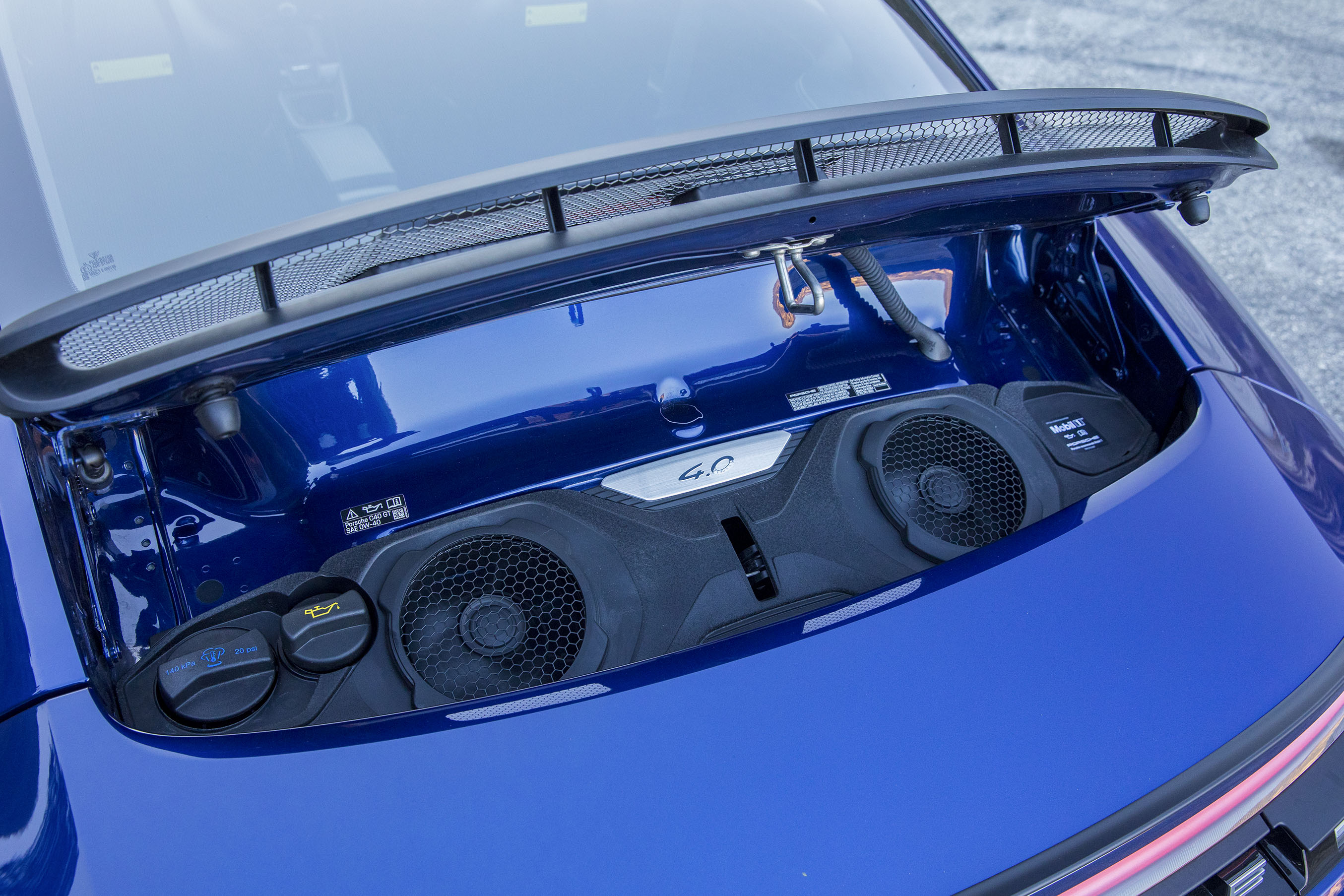
Fresh from its 992.2 mid-cycle update, the latest GT3 Touring sticks closely to that original design. Its 4.0 L flat-six still spins to 9,000 rpm and produces 502 hp (375 kW) and 331 lb-ft (449 Nm), sending its output exclusively to the rear wheels through either a seven-speed PDK dual-clutch automatic or six-speed manual gearbox. Massive brakes, rear-axle steering, a GT3-specific suspension, active sport exhaust, and plenty of other road course-oriented hardware remain standard.
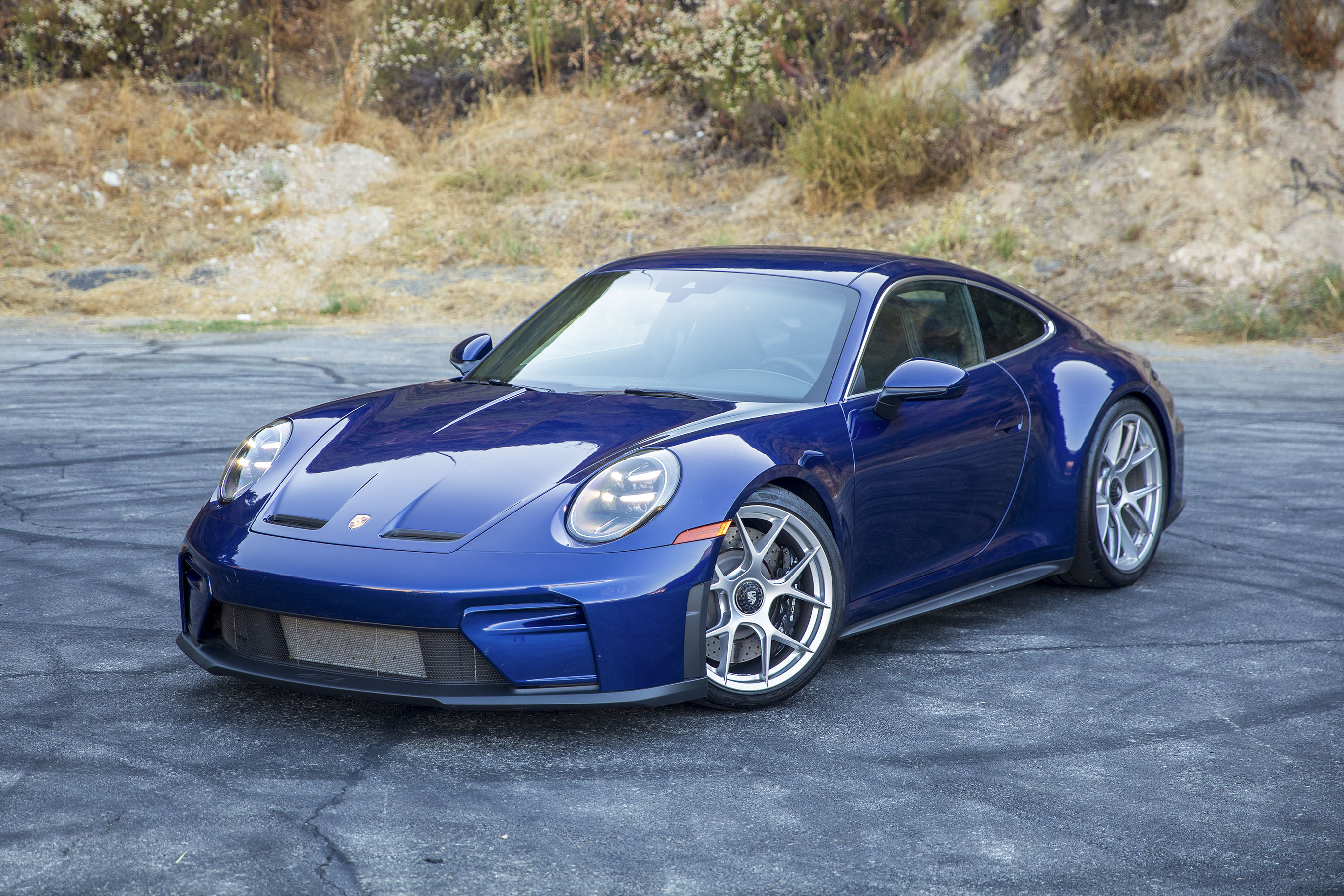
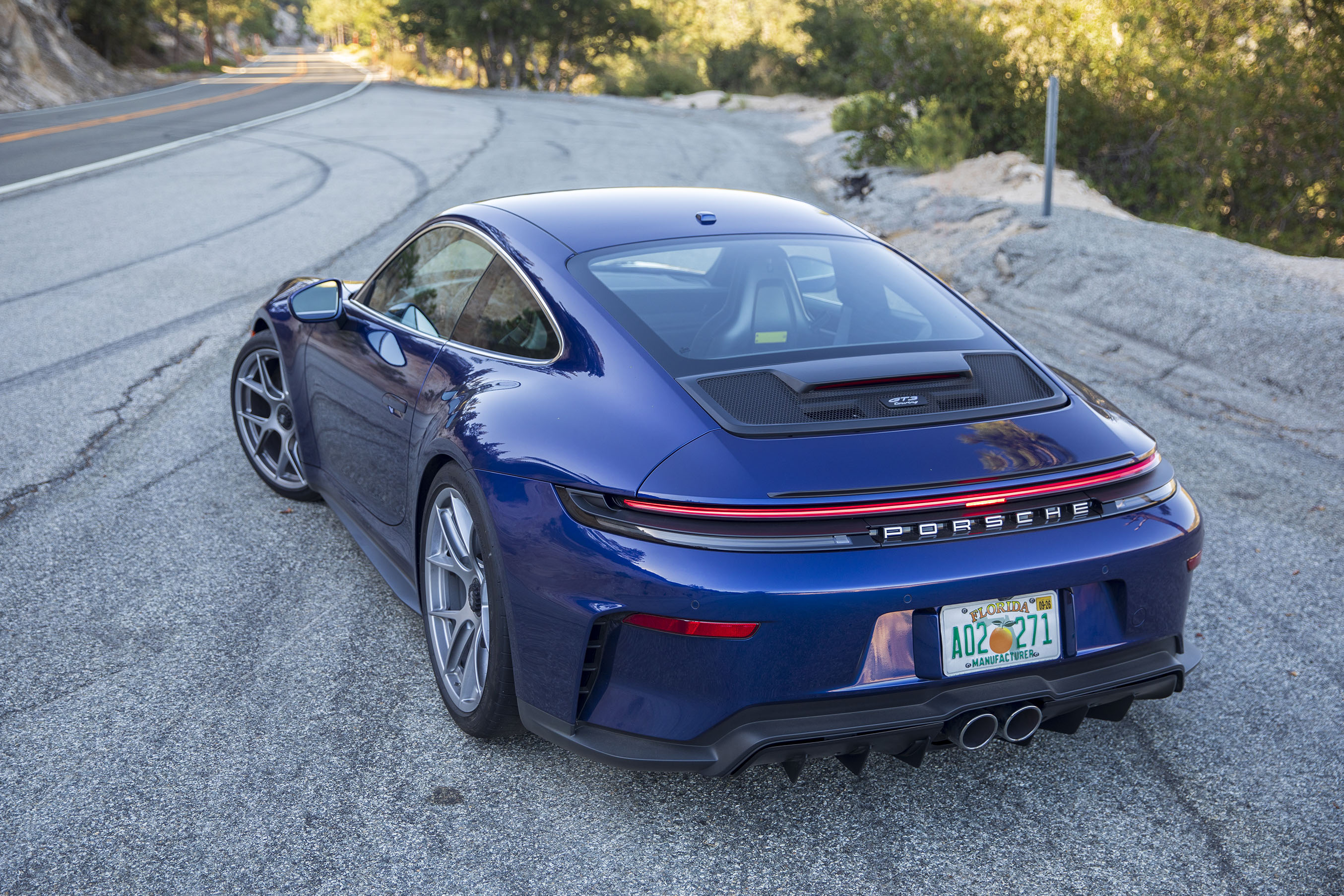
There is, however, an important wrinkle: that 331 lb-ft figure is actually 15 pound-feet lower than the outgoing model. Stricter European emissions and noise regulations forced Porsche to add two catalytic converters and two gas particulate filters to the exhaust. To offset the resulting flow restriction, engineers borrowed the cylinder heads and camshafts from the GT3 RS to reach a peak horsepower number that matched the 992.1 GT3. Porsche also shortened the final-drive ratio by 8 percent, trading a bit of top speed for harder acceleration.
The result is a car that feels just as rapid as its predecessor out in the real world. The manual GT3 Touring’s top speed falls from 199 to 194 mph (320 km/h to 312 km/h), but its 0-to-60-mph (0–100 km/h) time remains the same as the outgoing car at 3.7 seconds (when equipped with the PDK, the GT3 Touring reaches 60 mph in 3.2 seconds and tops out at 193 mph/310 km/h). If anything, the shorter gearing makes the engine’s enormous rev range easier to exploit without requiring speeds that would attract unwanted attention from law enforcement.
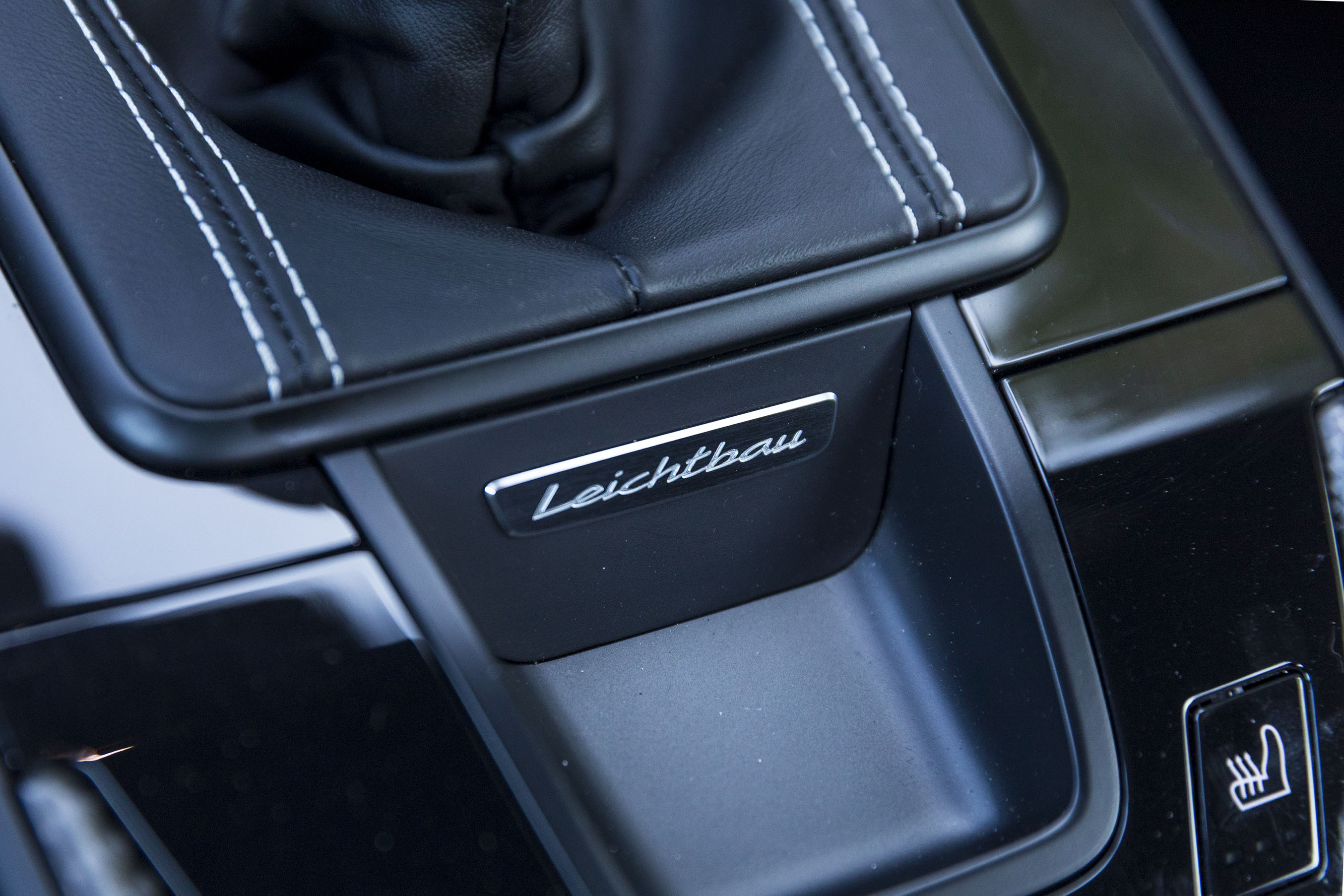
The 992.2 update also gives the Touring a little more of its own identity. Both GT3 variants get reworked fascias, aerodynamically optimized suspension trailing arms, GT3 RS-derived anti-dive suspension geometry, and revised steering calibration. But Porsche now also offers Touring-specific options, like the new $37,310 Leichtbau package fitted to this test car.
Lightness isn’t cheap
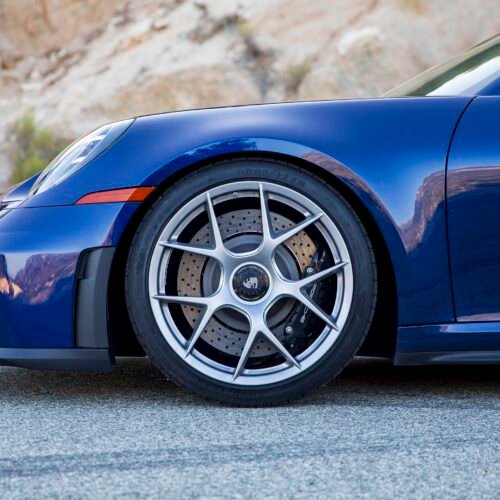
The German term means “lightweight construction,” a philosophy that is already evident in the GT3’s extensive use of weight-saving measures. In manual-equipped Touring form, the car has an official curb weight of just 3,239 pounds (1,470 kg), and the Leichtbau package takes the pursuit of lightness even further. The treatment swaps the standard roof skin, anti-roll bar, drop links, and rear-axle shear plate for carbon fiber components, trades the forged alloy wheels with forged magnesium rollers that save 19 pounds of rotating mass, replaces the standard interior door panels with lightweight units, and outfits manual-equipped examples with the shorter gear lever from the 911 S/T.
The Touring’s more road-focused mission seems to have had some influence on the 992.2 GT3’s overall tuning as well: A revised suspension strut bump-stop design allows for more spring travel than the outgoing car, thereby reducing wheel-load fluctuations and the front end’s tendency to wander over rough pavement—a change that seems largely aimed at improving the GT3’s civility on the street. The suspension remains firm, though, which is to be expected in a GT3, and badly rutted pavement can still toss you around a bit. But the latest iteration tracks straight and resists tramlining far better than you might expect from something this focused.
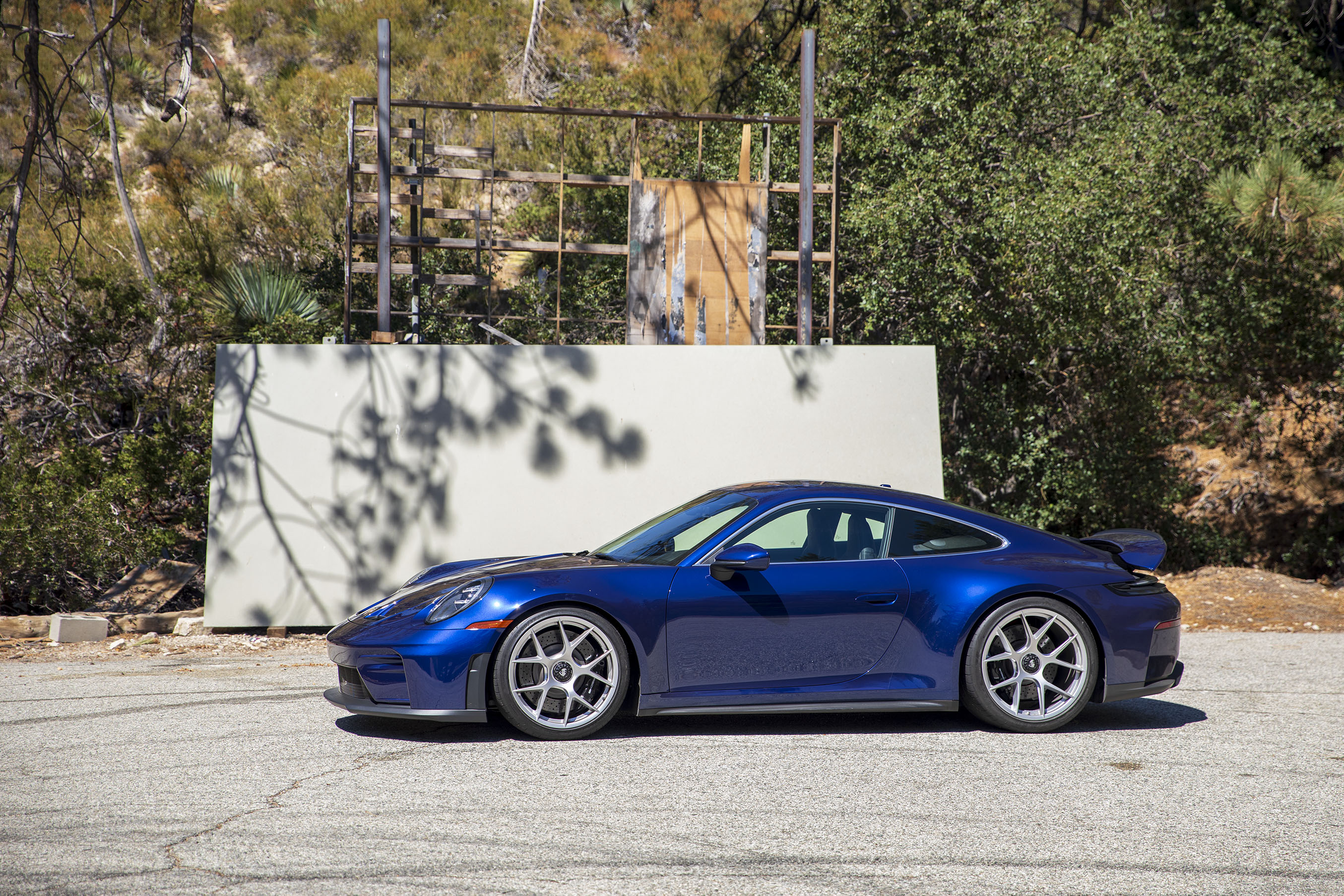
The Goodyear Eagle F1 SuperSport R tires fitted to this particular car give up a bit of dry grip as compared to the Michelin Pilot Sport Cup 2s on the last 992.1 GT3 Touring I drove, but they’re also noticeably quieter on the highway. That makes the latest GT3 Touring easier to live with day to day, but different drivers have different priorities, and Porsche seems well aware of that. As a result, there are no fewer than half a dozen different Porsche-spec summer tires available for this car, each with their own distinct balance between livability and outright performance, so would-be owners have some agency over the car’s manners both on and off the track.
The optional 18-way sport seats fitted to this test car are another reminder that the GT3 is meant to live a double life of sorts. Although I would still opt for the available and highly supportive carbon buckets due to the considerable amount of lateral grip on tap, especially since the recently redesigned bucket now features a foldable backrest, and adding back the rear seat is now a no-cost option for the GT3 Touring. But the adjustable sports seats are better suited for extended stints at the wheel.
The suspension updates give the 992.2 a bit more flexibility in everyday driving, but calling it more civilized than the car it replaces would be an overstatement. The GT3 Touring’s real trick is that it can tolerate the indignities of daily driving, yet its true intent becomes apparent the moment you point the nose down a fast canyon road.
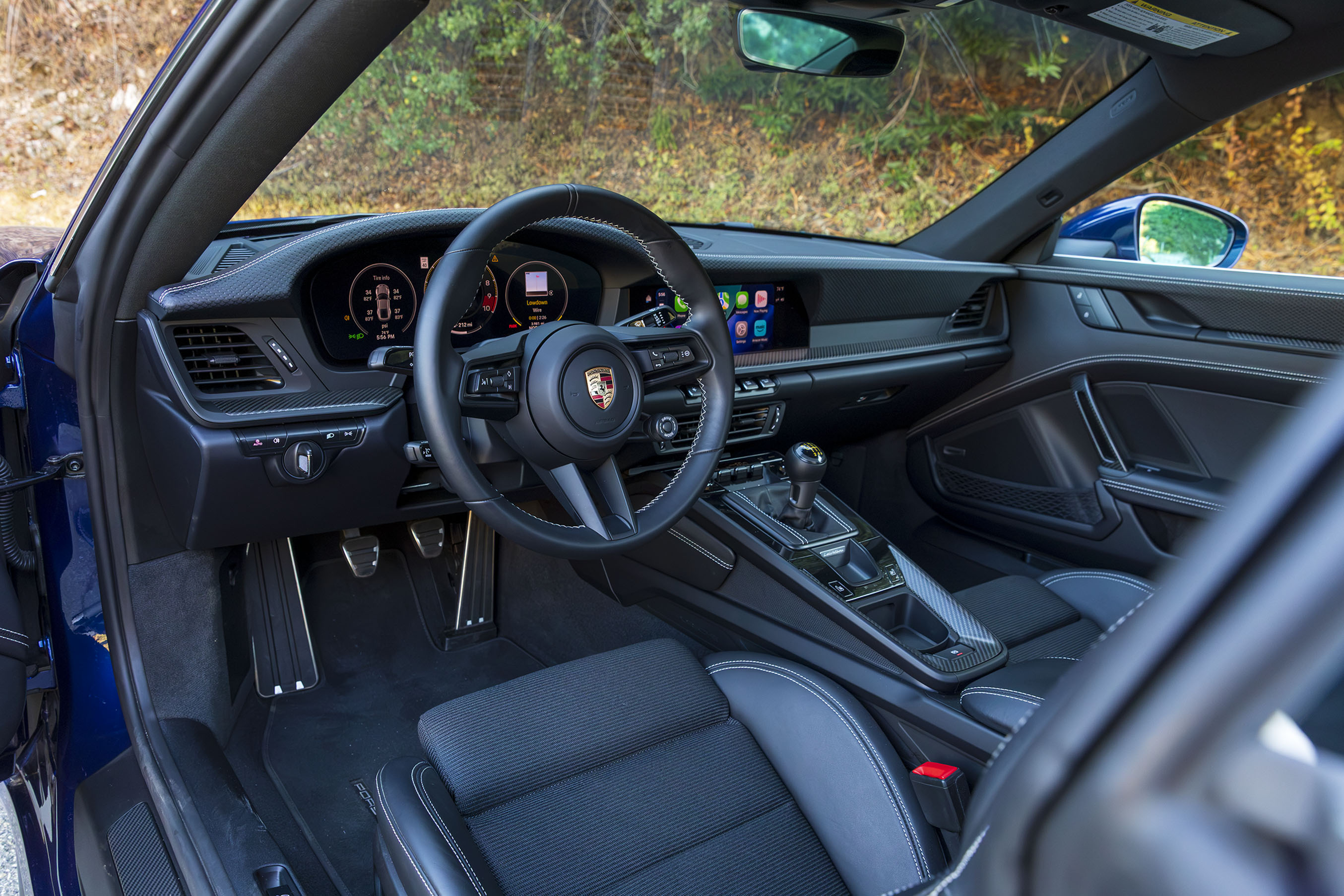
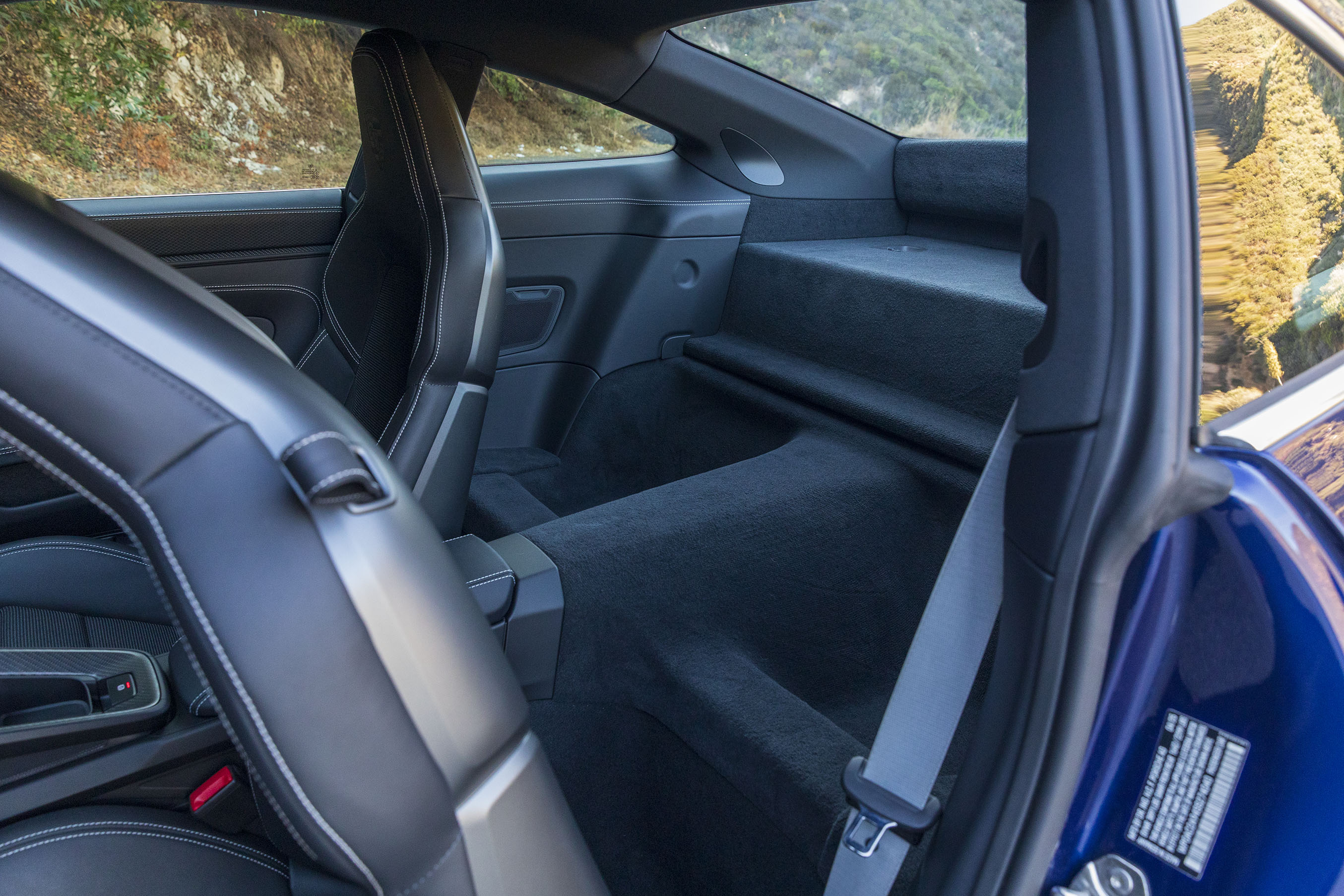
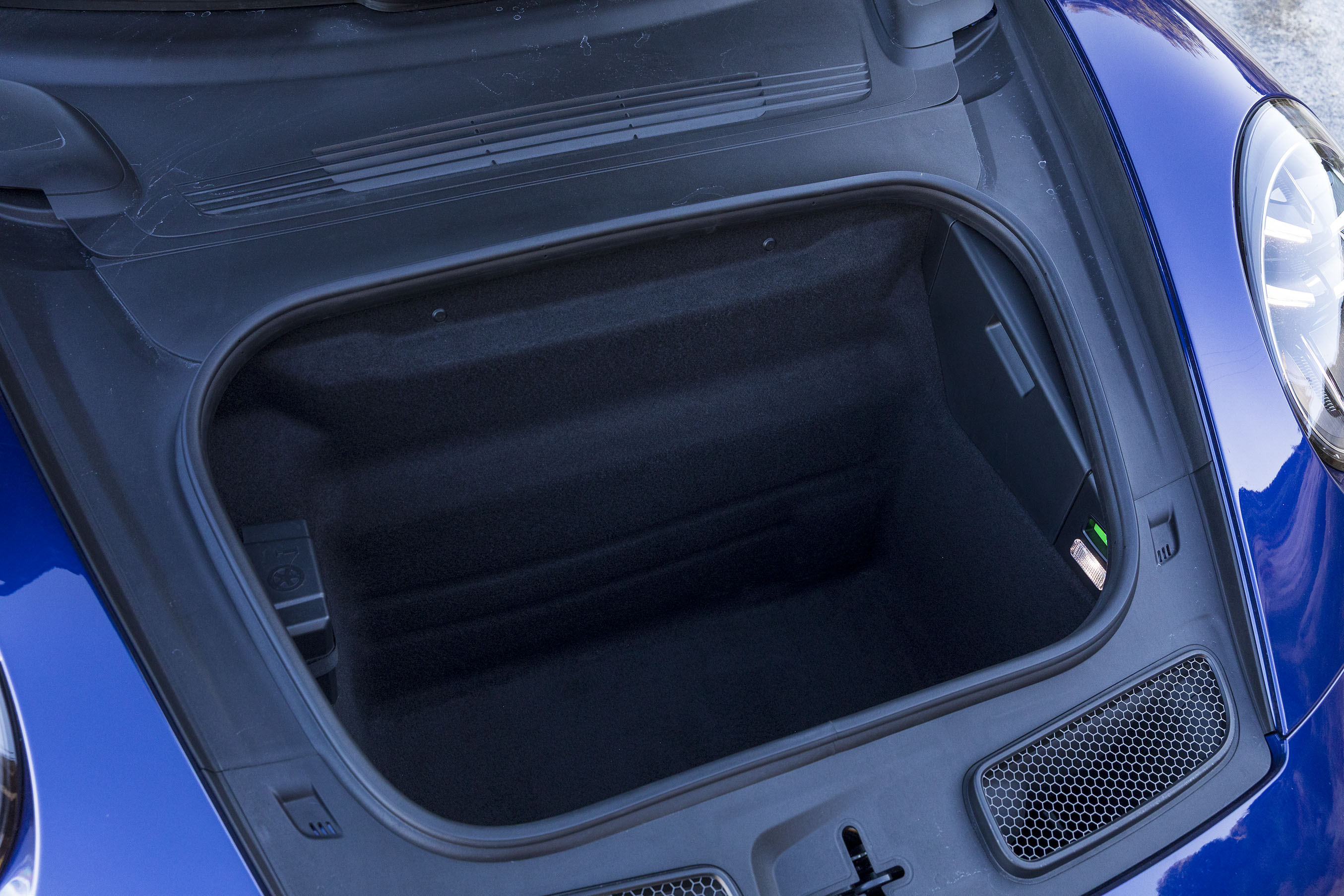
The GT3’s magic starts with the chassis. The car constantly communicates through the steering wheel and the seat of your pants, telling you what the tires are doing, how the load is moving through the car, and how much grip you have to work with. There are no surprises, only faithful responses to the driver’s inputs and an abundance of detailed feedback. The standard brakes support the GT3’s high-speed mission with aplomb: immense stopping power, a firm pedal, and progressive response that makes them easy to meter precisely. Porsche also offers a carbon-ceramic brake package for those who’d prefer to go that route, but the standard setup offers very little to complain about.
And then there’s the flat-six. Even with the additional exhaust hardware and the loss of 15 lb-ft (20 Nm), it remains one of the most captivating naturally aspirated engines in production today. In practice it feels just as urgent as the powerplant in the outgoing car, and the shorter gearing provides more opportunities to explore the upper reaches of its 9,000 rpm redline. The exhaust note may have changed slightly, but you would probably need to listen to a 992.1 and 992.2 side by side to identify the differences, and it certainly hasn’t been choked into submission. Even in Normal mode it’s pretty lively, and if you push the revs over 5,000 rpm in Sport mode, it makes the kind of noise that turns a routine drive into a full-blown event.
The problem is that events like these are becoming bracingly expensive. The outgoing US-spec 992.1 GT3 and GT3 Touring ended their run at $184,550. This 2025 model-year car starts at $230,500—nearly $46,000 more—and comes to $289,585 as tested. And for 2026, effectively a carryover year, Porsche adds another $5,300 to the base MSRP.
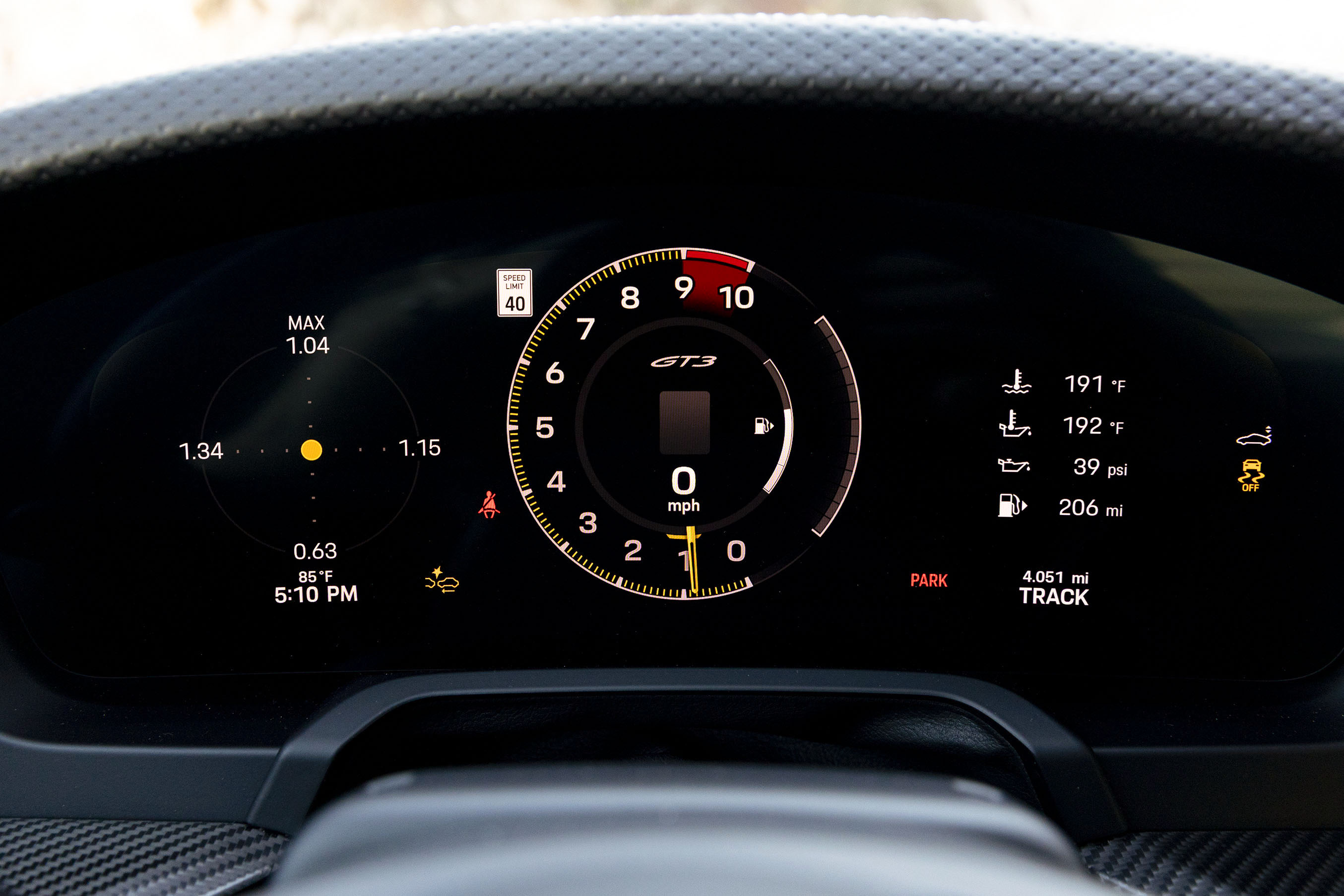
That is an eye-watering amount of money for a 500-hp sports car by contemporary standards, and roughly as much as a 911 T. But the price is also part of the GT3’s increasingly complicated story. Porsche has been candid about how regulations are making cars like this harder to build, and some of the 992.2’s updates show what that pressure looks like in engineering terms. Perhaps more importantly, the GT3’s value has never been expressly measured by the figures on the spec sheet. This car is about driver engagement above all else, and in that mission, the GT3 simply remains unparalleled.