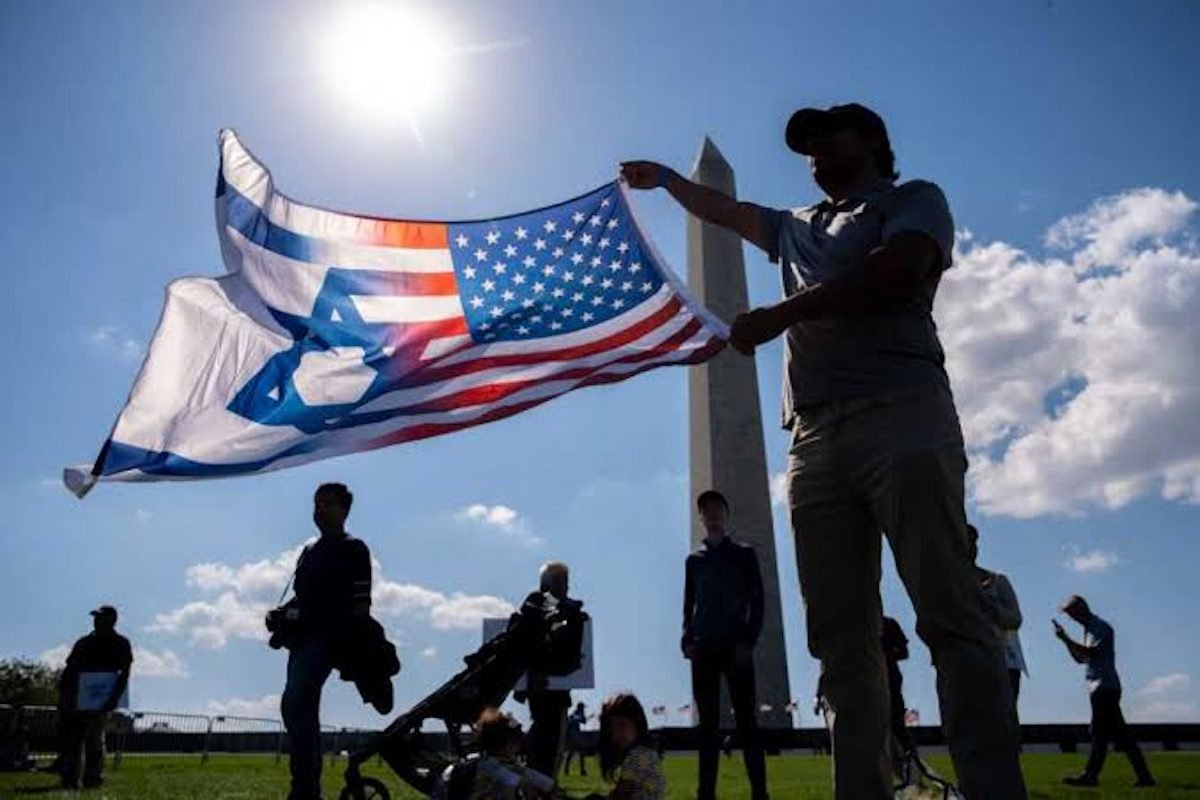

This summer, House Democrats did something they’d mostly avoided for two years: they argued about Israel out loud.
A doomed Republican amendment to strip aid to Israel forced two closed-door caucus meetings that several members described as intense. Then, leadership did what it usually does with this particular fight: it declined to resolve it and sent everyone home for recess.
Asked directly where he stood on the amendment, House Minority Leader Hakeem Jeffries only said that the party needed to “focus on actually achieving a two-state solution once and for all.”
If you multiply that non-answer across two years of caucus meetings, primary results and dueling opinion pages, you get the current Democratic position on Israel: there isn’t one.
The closest thing to an actual argument came last winter, when Ben Rhodes and Daniel Shapiro fought it out across The Times and The Atlantic. Rhodes’s charge was that reflexive deference to the Netanyahu government had cost Democrats moral standing and a generation of younger voters.
Shapiro’s rejoinder was that walking away from the relationship would embolden Iran and unravel what’s left of regional diplomacy. Both essays were partly right, but neither offered anything a member of Congress could actually vote on, which is presumably why the caucus has spent the better part of a year re-litigating the same two positions in private rather than picking one in public.
The trouble is that both sides of that debate, and both factions inside the caucus it spawned, keep arguing as though the only options are full support or none. But American security assistance has never actually worked that way, and treating it as a binary is doing most of the damage.
US law already conditions military assistance on conduct. The Leahy Law bars aid to foreign security units credibly implicated in gross human rights violations, and it applies, in principle, to allies as much as to anyone else. What’s missing here is the willingness to enforce the one that exists when the ally in question is politically costly to discipline.
Framed that way, conditionality stops being a rupture with the alliance and starts looking like ordinary foreign-policy housekeeping — the kind the US applies, unremarkably, to nearly every other security partnership it maintains.
The moral case for it is fairly simple: a government that exempts its closest allies from the standards it claims to apply universally will eventually lose the authority to invoke those standards elsewhere.
The strategic case needs more focus. Despite two years of almost unconditional support, there has been no quicker ceasefire or more restrained conflict. The region remains unstable. Saudi normalization remains delayed, and Hamas has not disarmed. The second phase of the ceasefire, long promised, is still largely hypothetical months after its announcement. The expected leverage from this support has not been achieved.
A workable framework doesn’t require Congress to choose between Rhodes and Shapiro. It requires distinctions that the current debate keeps collapsing.
Defensive assistance is not the same as offensive assistance, and funding for systems like Iron Dome protects civilians on both sides of a border without enabling the conduct critics object to. Folding the two into one line item, as both factions currently do, lets everyone avoid an argument they should be having about the systems that matter.
Washington should back multilateral accountability mechanisms rather than work against them — not by prejudging outcomes, but by declining to spend diplomatic capital discrediting a process before its findings exist, a courtesy the United States rarely extends to adversaries facing the same scrutiny.
Reconstruction funding should track governance benchmarks. Postwar plans on the table generally treat disarmament and administrative reform as automatic once a ceasefire holds, but nothing in the record supports that assumption.
Aid should instead be conditioned on verified anti-corruption and governance measures, since funding released without such measures tends to fuel the next conflict rather than prevent it.
What makes this politically difficult is that a conditionality framework satisfies neither faction’s story: it denies the moral-clarity camp a clean break and denies the alliance-first camp an unconditioned guarantee. It asks for precision in a moment that rewards conviction — and primary electorates tend to punish precision rather than reward it.
That, more than any principled humility, is probably why leadership keeps outsourcing the decision to whichever wing of the base is loudest in a given district rather than making the decision itself.
Two years of an unresolved argument show that those responsible for resolving it have chosen silence rather than risk public error. So far, that approach has persisted. The upcoming primary cycle will likely reveal how much longer this strategy remains viable.
Eric Alter is a non-resident senior fellow at the Atlantic Council’s Middle East programs and a former UN civil servant.