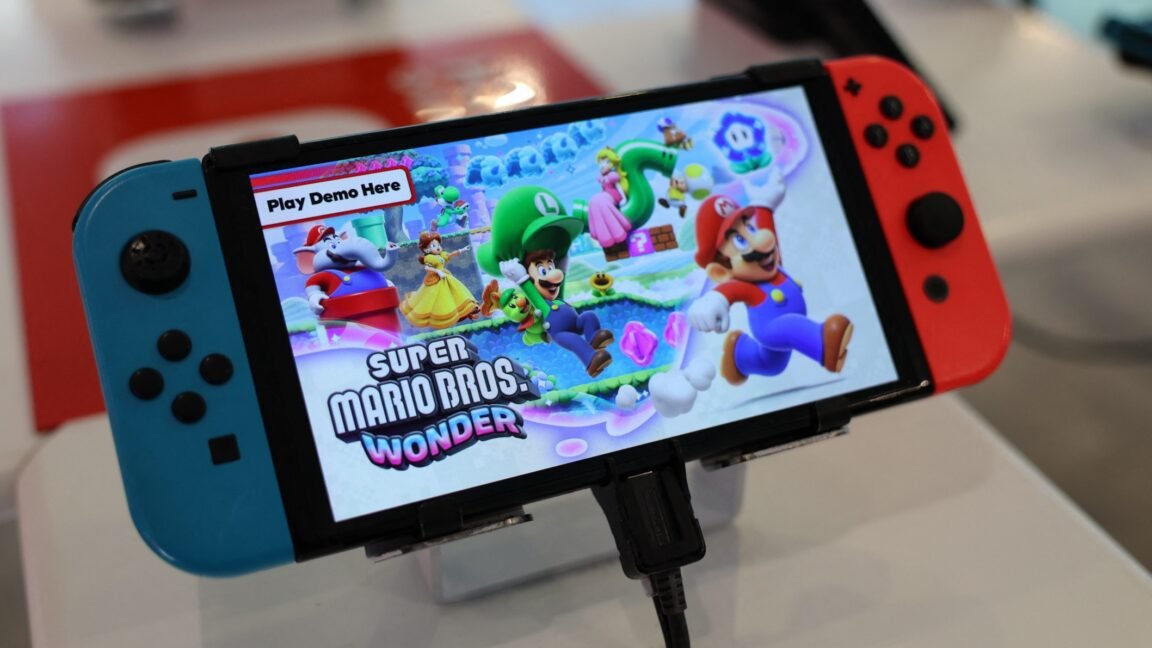
On Monday, Nintendo announced that it will stop selling the original Switch in Europe next February. That decision comes in response to European regulations that will soon require easily replaceable batteries in most consumer electronics. Rather than redesigning multiple original Switch models to comply with that regulation (as it is doing with the Switch 2), Nintendo has decided it will just stop selling the older console in the region.
Those new battery rules won’t affect the availability of the Switch outside of Europe, of course. But the move got us wondering how much longer Nintendo might keep selling the 9-year-old Switch now that the Switch 2 is drawing the focus of both the company and the market.
An Ars analysis of Nintendo’s recent history (as documented in its annual earnings releases) shows that sales for even the company’s bestselling hardware tend to decline to zero after nine years on the market. But the data also shows the Switch being a relatively resilient market force that could sustain its commercial life well into its second decade on the market.
Down but not out
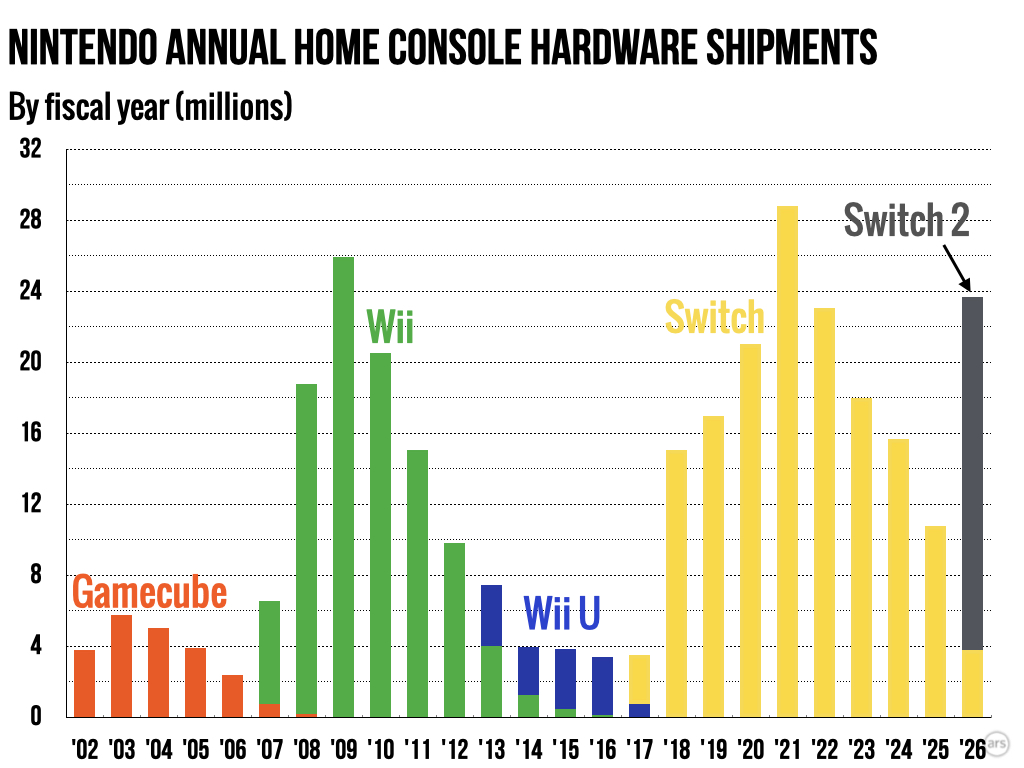
Sales of Switch hardware and software have, unsurprisingly, been falling consistently for years now, well before the arrival of the Switch 2. The older system peaked at nearly 29 million worldwide hardware shipments in the 2021 fiscal year (ending in March 2021), and Switch software sales peaked at over 235 million the next year.
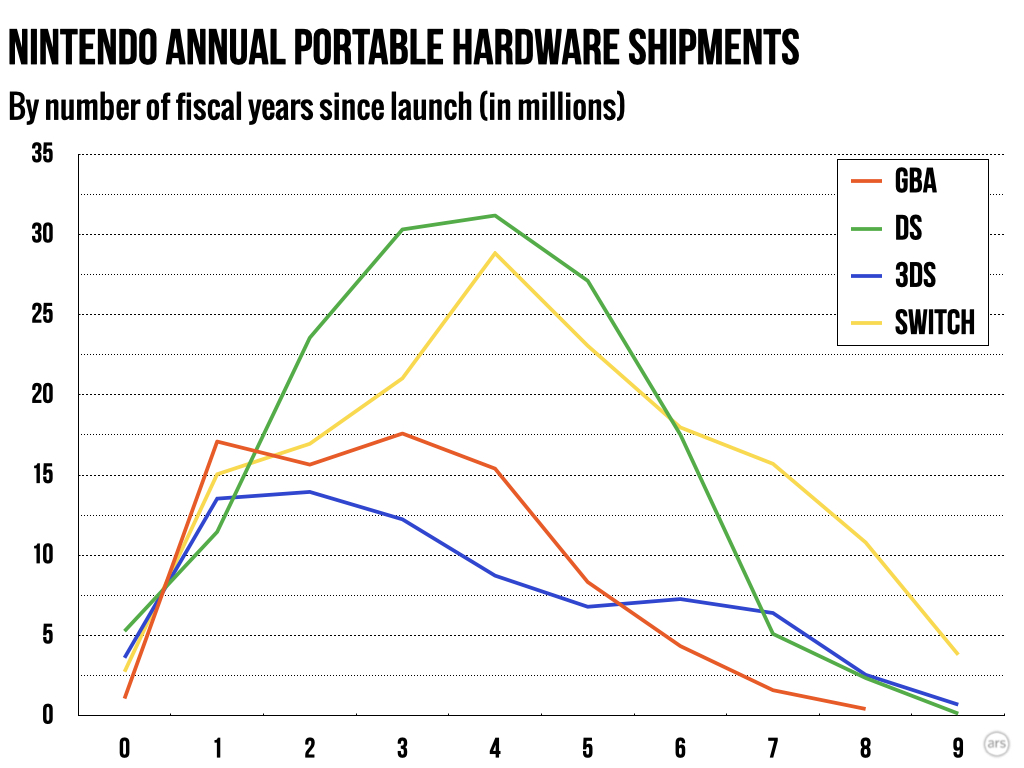
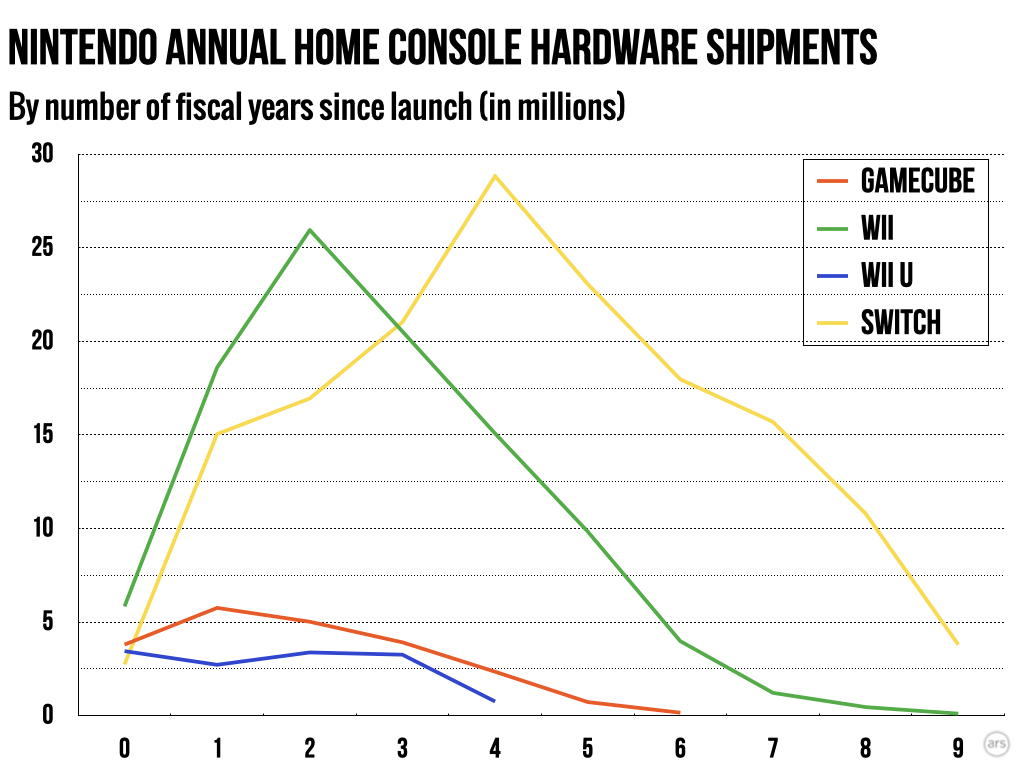
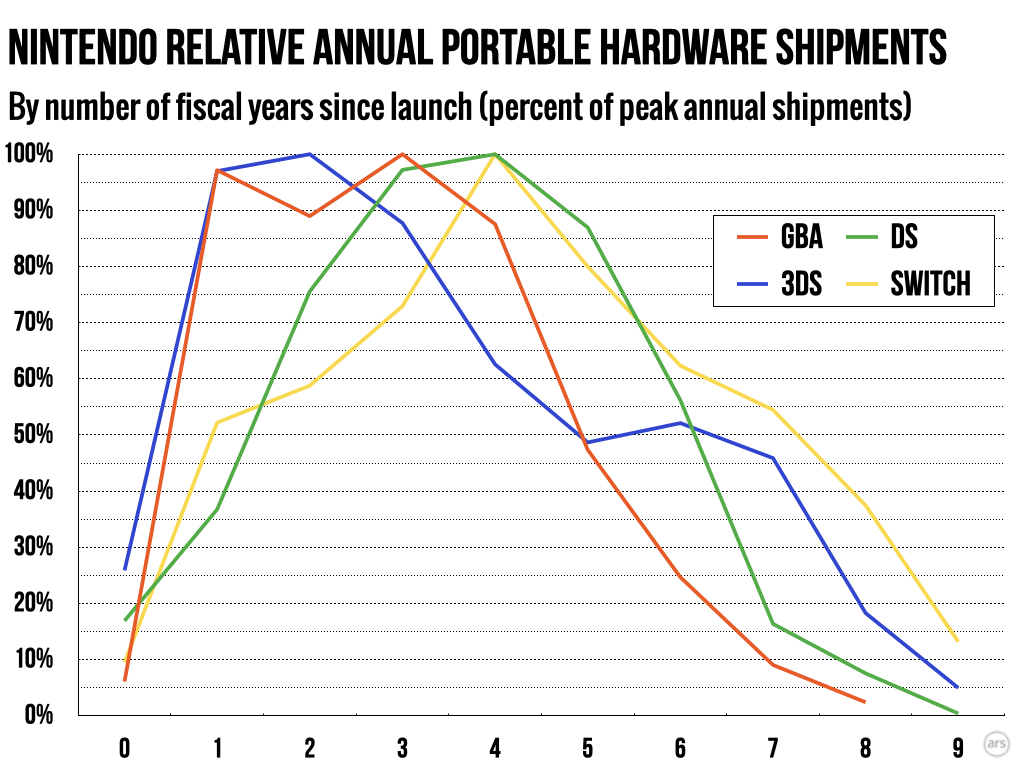
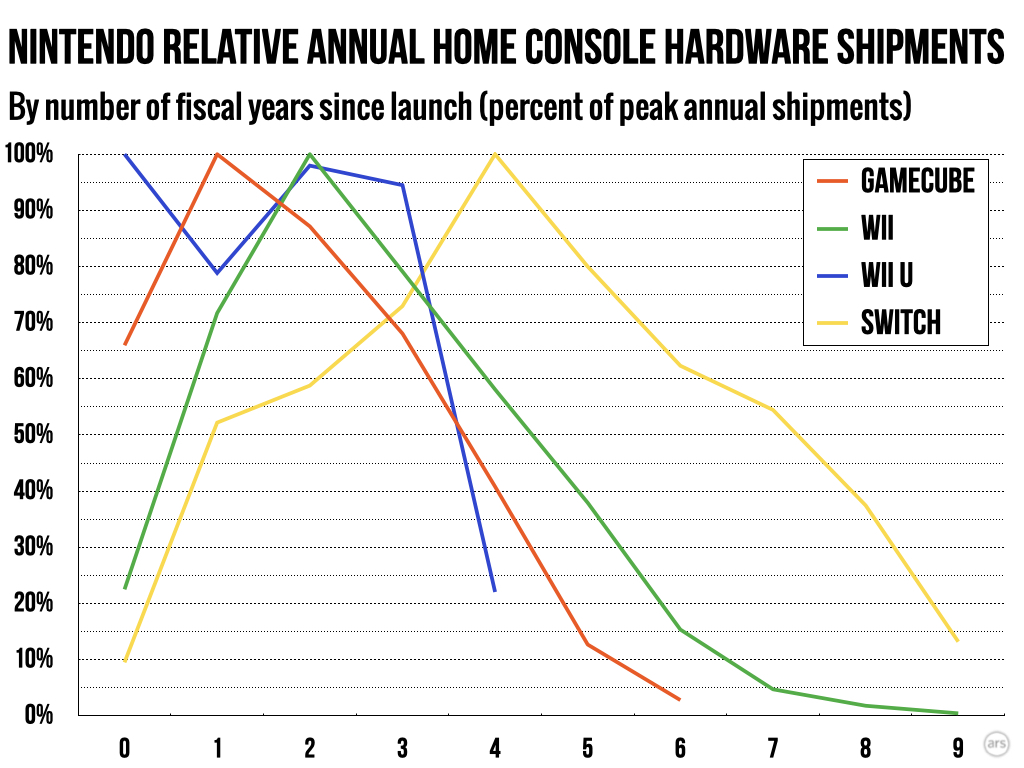
Historically, though, those peaks for Switch hardware and software sales were higher than those for every other modern Nintendo platform (save the Nintendo DS). Those peaks also came later in life for the Switch than for many other Nintendo consoles. The 3DS and Wii, for instance, saw their strongest hardware sales in their second full fiscal year on the market, while the Switch didn’t peak until its fourth fiscal year.
Following that relatively late peak, annual Switch sales fell off much more slowly than those for other Nintendo consoles. By its ninth full fiscal year (which ended in March), for instance, the Wii was barely hanging on, selling new hardware at a rate less than 1 percent of its annual peak years earlier. But the Switch was still selling at about 13 percent of its peak annual sales in its ninth full fiscal year, shipping a significant 3.8 million units.
Things look even better for the Switch when you look at software sales. Nintendo sold nearly 137 million pieces of Switch software in the last fiscal year, a number that’s still roughly 58 percent of its annual software sales peak. At a similar point in their lifespans, even bestselling systems like the Nintendo DS, 3DS, and Wii were all selling software at less than 5 percent of their peak rate.
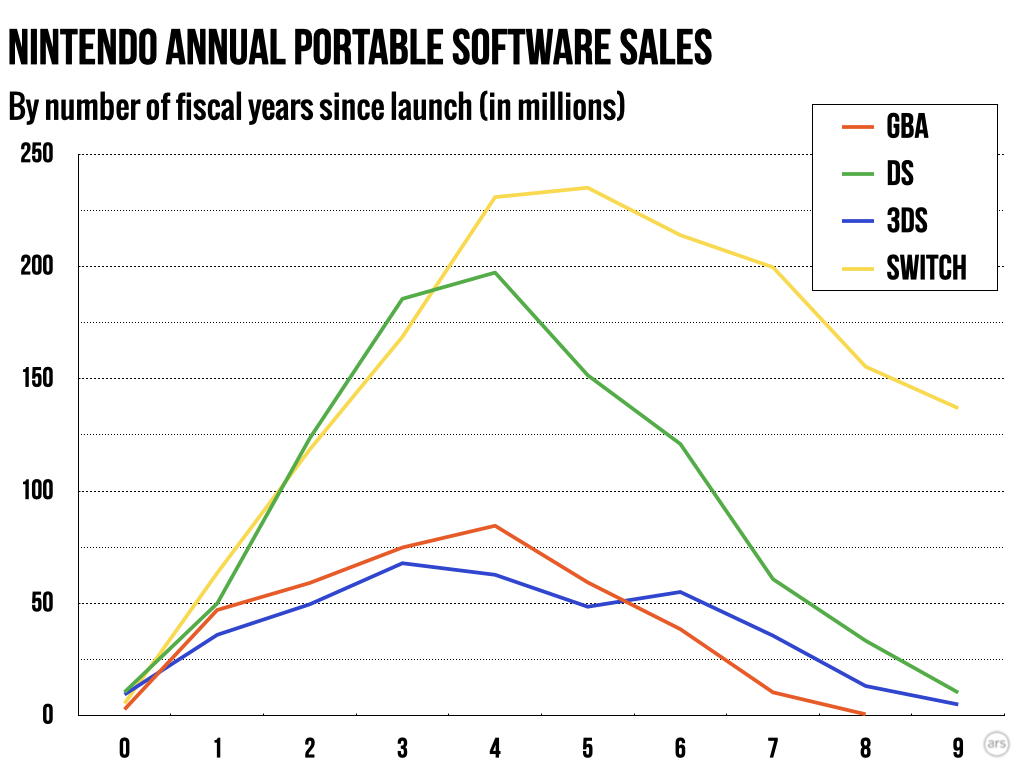
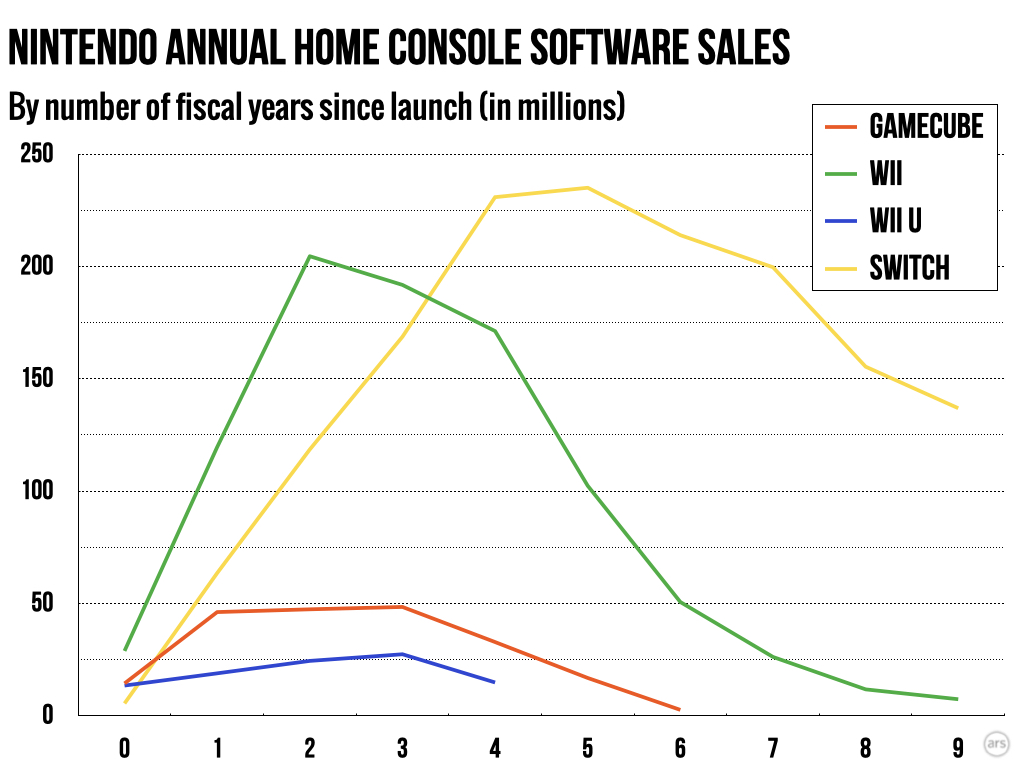
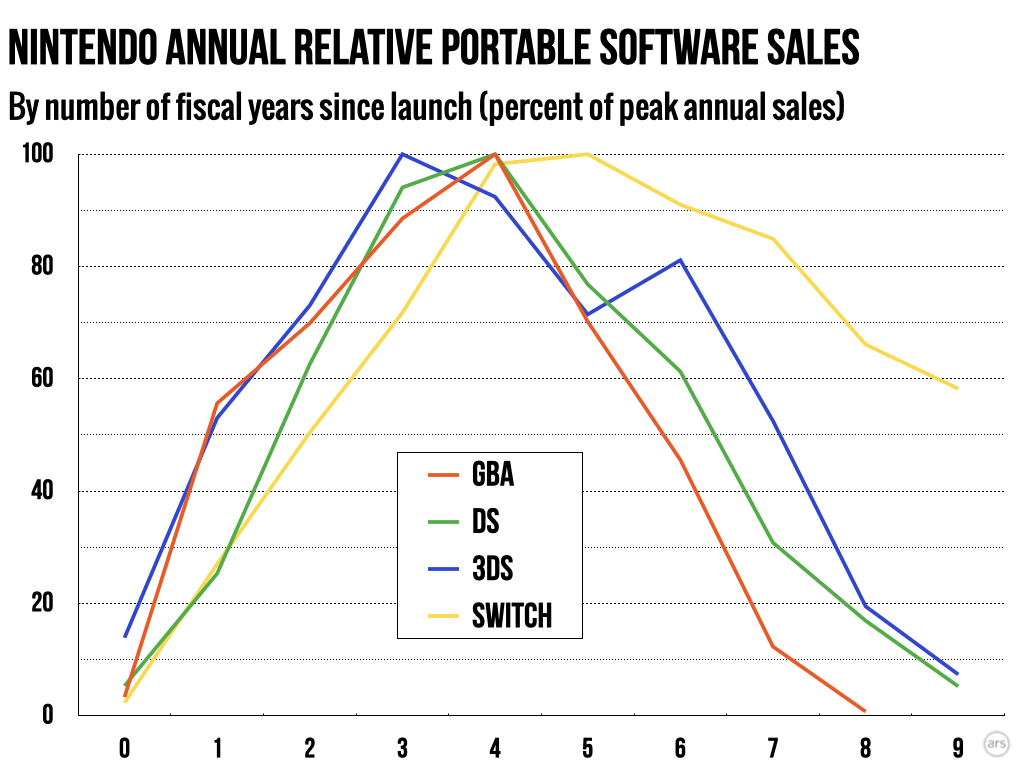
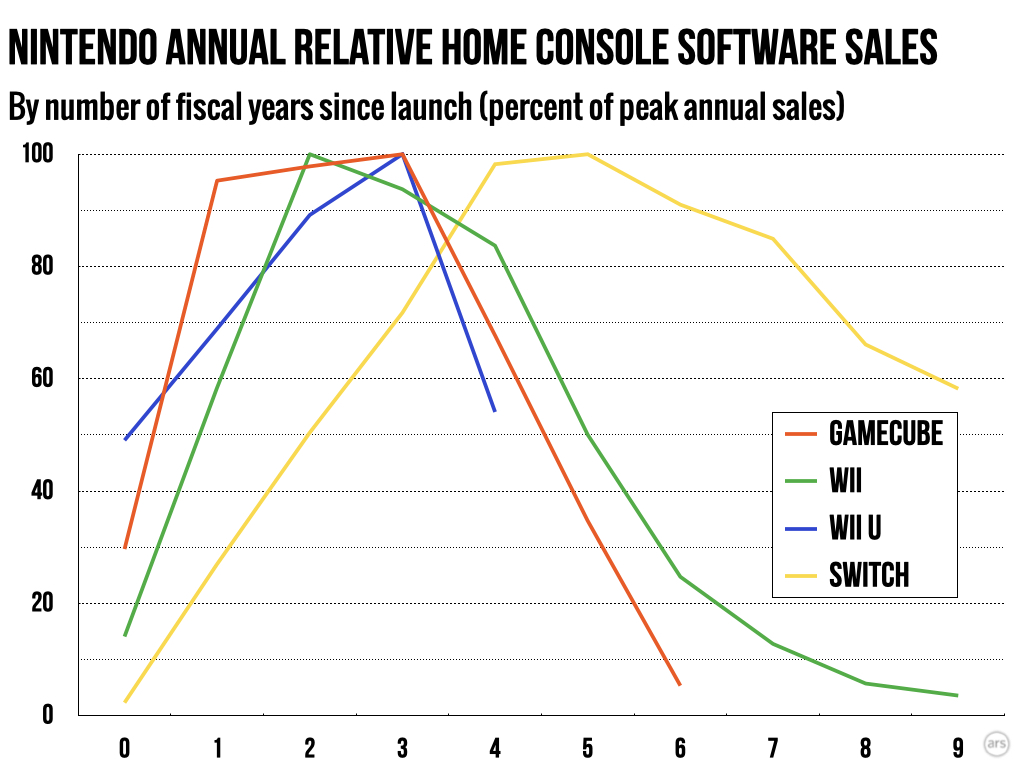
More than any other Nintendo platform in the 21st century, customers have shown a willingness to keep investing in the Switch well into its old age.
Who needs new hardware?
It’s not surprising that older Nintendo hardware tends to quickly fade away once a replacement is on the market. Ars’ analysis finds that Nintendo consoles usually stay on the market for just one to four more fiscal years after their successors are sharing retail shelf space.
Where the Switch’s future in the market will fall within this historic range is a bit hard to project. On the one hand, the Switch 2 sold nearly 20 million units in its first (partial) fiscal year, heavily outpacing the nearly 4 million full-year sales for the Switch in the 2026 fiscal year. This suggests a lot of pent-up demand for an option more powerful than the original Switch, and a large portion of the market that’s ready to upgrade right away.
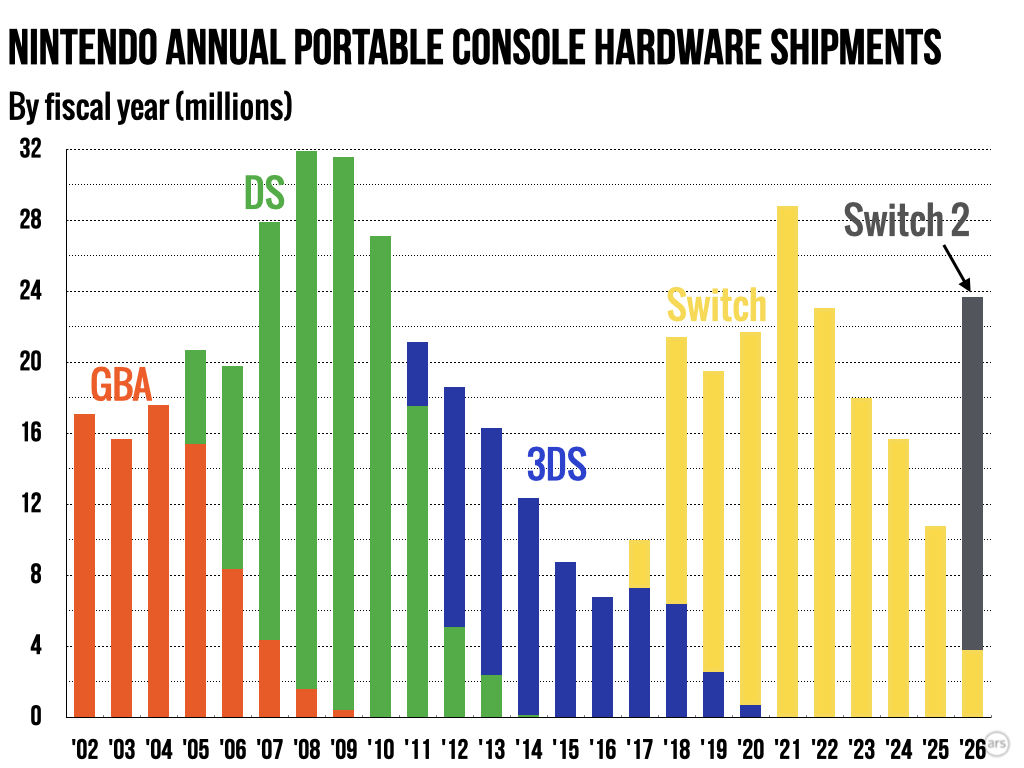
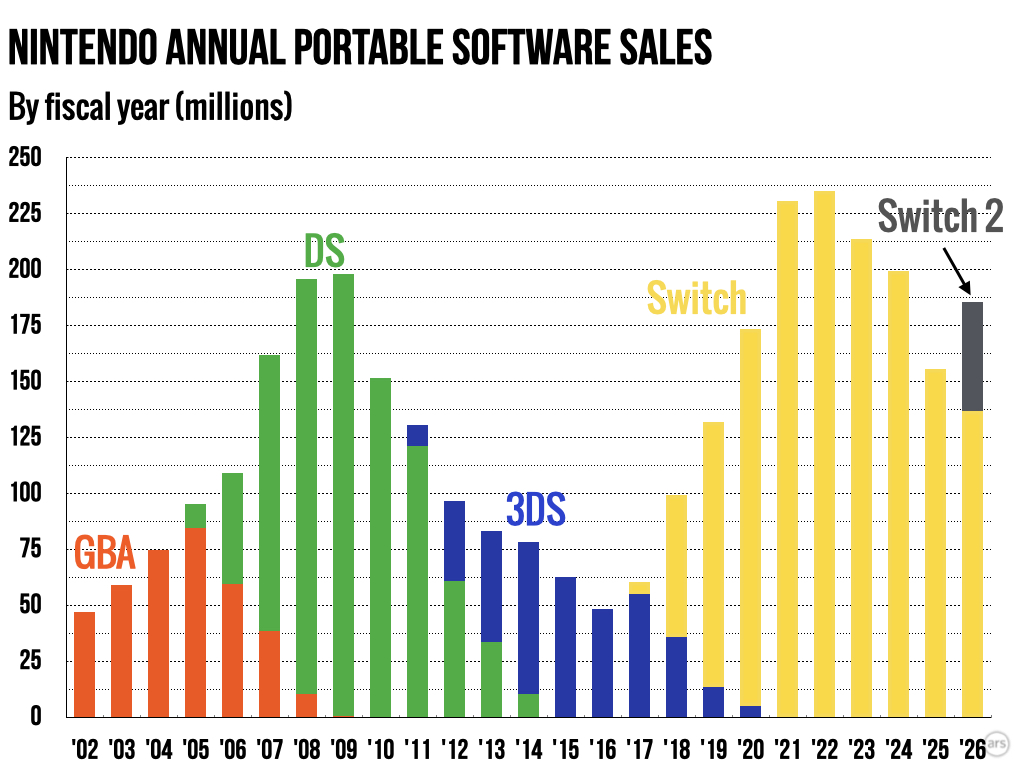
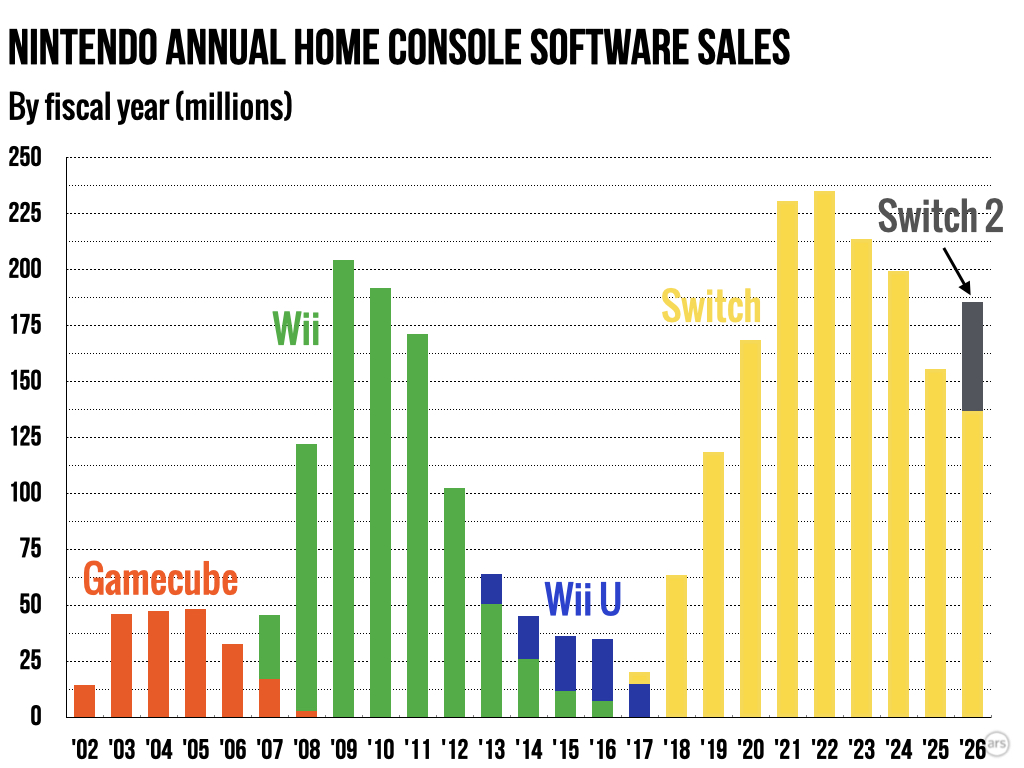
On the other hand, Switch software sales still far outpace those of its successor, at nearly 3 to 1. That number highlights just how much the Switch 2 is relying on backward compatibility to drive a lot of its early appeal and how much that compatibility might be a boon for the original Switch as well. After all, any game developed for the original Switch can also be purchased by new Switch 2 owners. The reverse is not true.
Thus, for games that don’t require cutting-edge power, many developers are choosing to stick with the aging Switch as their platform of choice (see Nintendo’s own recent release of Rhythm Heaven Groove, for instance). And if developers keep making games that are compatible with the original Switch, consumers may continue considering the older hardware a viable option for years to come. That’s especially true since the $500 Switch 2 will soon cost about 63 percent more than the $340 original base console.
All in all, while the Switch’s best days on the market are clearly behind it, the 9-year-old hardware probably still has a few more years of significant sales before Nintendo decides to give up on it completely. Don’t be surprised if many stragglers are still picking up new Switch consoles into 2029 or 2030, even as the Switch 2 approaches its fifth birthday.