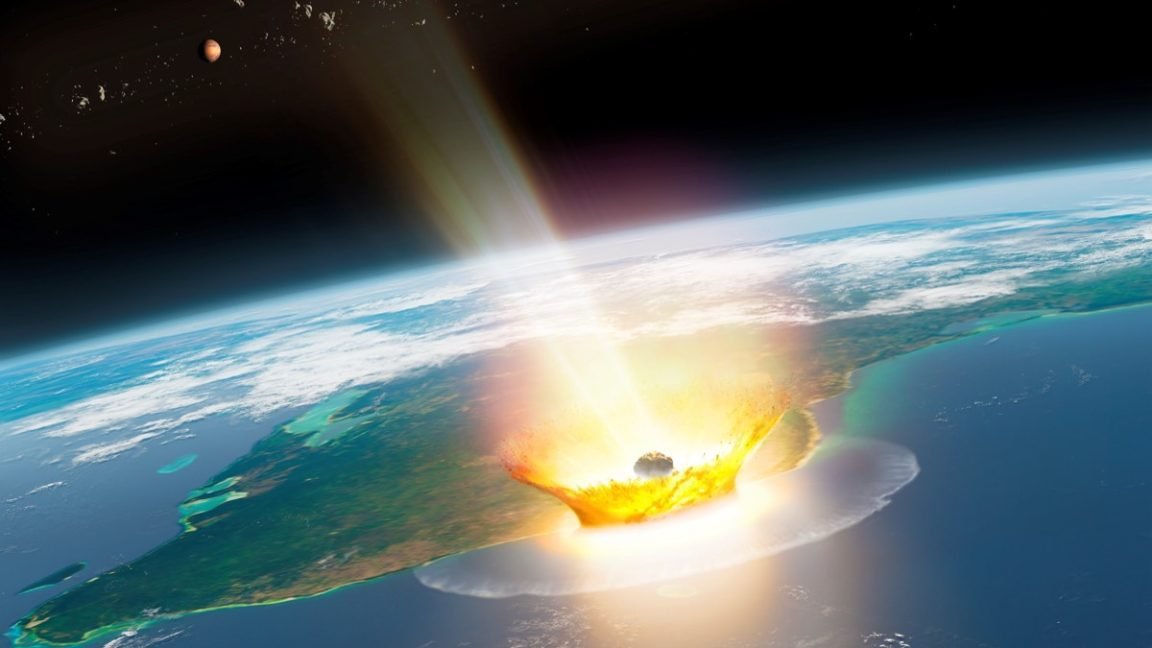
Some 66 million years ago, an asteroid impact wiped out three-quarters of all plant and animal species on Earth, most notably taking down the dinosaurs. But exactly how that impact caused those extinctions has been the subject of fierce debate. According to a new paper published in the Journal of Geophysical Research: Biogeosciences, the impact would have produced an immense cloud of dust that superheated the upper atmosphere, charbroiling living organisms unable to take shelter and igniting widespread wildfires.
As previously reported, the most widely accepted explanation for what triggered that catastrophic mass extinction is known as the “Alvarez hypothesis,” after the late physicist Luis Alvarez and his geologist son, Walter. In 1980, they proposed that the extinction event may have been caused by a massive asteroid or comet hitting the Earth. They based this conclusion on their analysis of sedimentary layers at the Cretaceous-Paleogene boundary(the K-Pg boundary, formerly known as the K-T boundary) found all over the world, which included unusually high concentrations of iridium—a metal more commonly found in asteroids than on Earth. (That same year, Dutch geophysicist Jan Smit independently arrived at a similar conclusion.)
Since then, scientists have identified a likely impact site: a large crater in Chicxulub, Mexico, in the Yucatan Peninsula, first discovered by geophysicists in the late 1970s. The impactor that created it was sufficiently large (between 11 and 81 kilometers, or 7 to 50 miles) to melt, shock, and eject granite from deep inside the Earth, probably causing a megatsunami and ejecting vaporized rock and sulfates into the atmosphere. It has been estimated that the impact would have released energy over a billion times higher than the atomic bombs dropped on Hiroshima and Nagasaki in 1945.
This, in turn, had a devastating effect on the global climate, leading to mass extinction. In 2022, scientists suggested that one reason so many species perished while others survived may have been because the impact occurred in the spring (at least in the Northern Hemisphere), thereby interrupting the annual reproductive cycles of many species.
This latest paper combines previous simulations of the impact with geologic observations. After the initial impact, tiny droplets of rock called spherules formed when some of the rocky vapor cooled and condensed. These spherules would have generated an intense pulse of heat as they fell through Earth’s atmosphere to the surface—equivalent to an oven broiler. But scientists have long assumed that the pulse would not have been hot enough to cause wildfires or roast the Cretaceous creatures to death.
Dust to dust
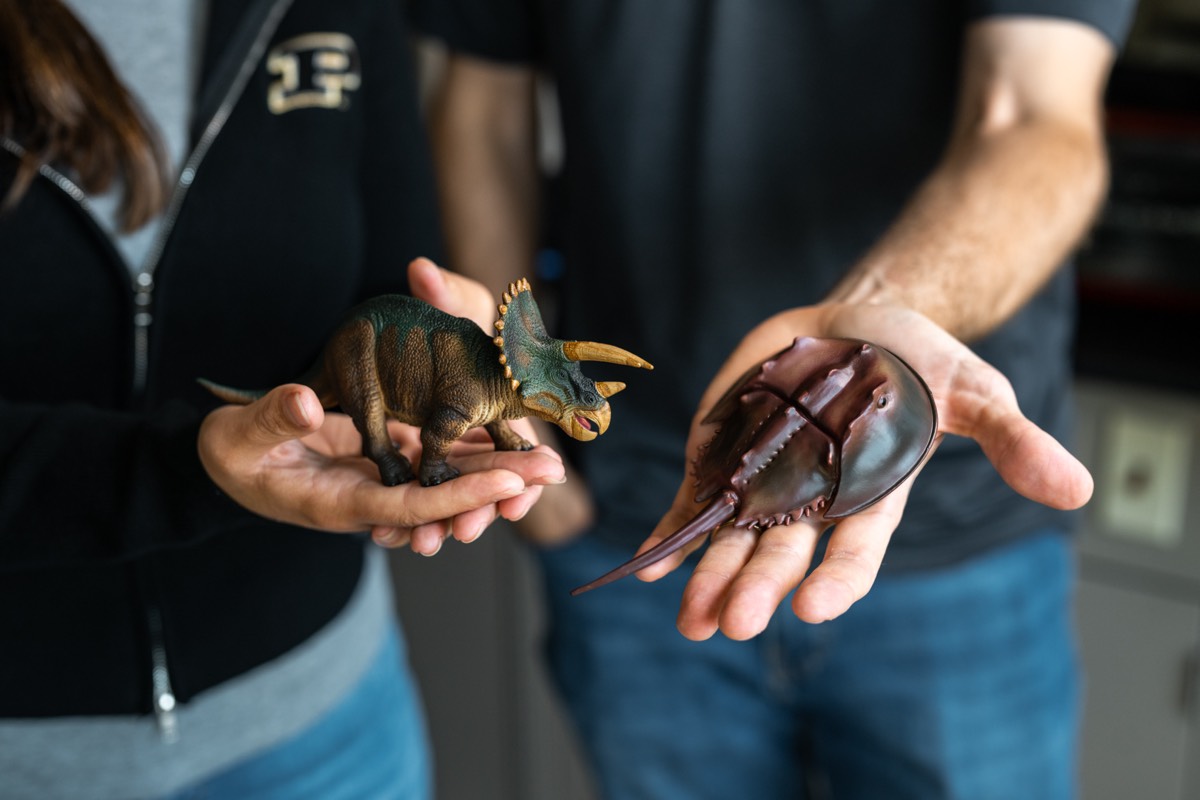
However, co-author Brandon Johnson, a planetary scientist at Purdue University, was intrigued when new evidence emerged in 2023: a layer of extremely fine post-impact dust. He thought it was possible that this dust could have formed from leftover rock vapor that didn’t condense into spherules. Add in the effects of that dust in the atmosphere, and “we’re in the realm where we might be essentially killing off everything within that first hour to two,” said Johnson.
Once the authors accounted for the fine dust in their models, they found that the dinosaurs and other organisms would have been blasted with 17 times the lethal dose of radiation for humans, which most likely would have been fatal, burning the skin of even thick-skinned dinosaurs and causing heat stroke. While the radiation heat might not have been quite sufficient to directly ignite wood, the authors concluded that it would have more than enough to set fire to grass, lichen, and pine needles, indirectly setting off wildfires.
“That much kinetic energy has to go somewhere, and eventually it is converted to heat,” said Johnson. “With the dust cloud trapping thermal radiation, it was like the surface and everything on it was being charbroiled. And that’s what killed the dinosaurs and all the other animals. It’s not the blast wave from the impact or the fireball—those don’t go very far. It’s the global ejection of this vapor plume material that makes this a global extinction event. Without the dust cloud, it would have been bad. It would have killed a lot of creatures. But it wouldn’t have been a planetary catastrophe.”
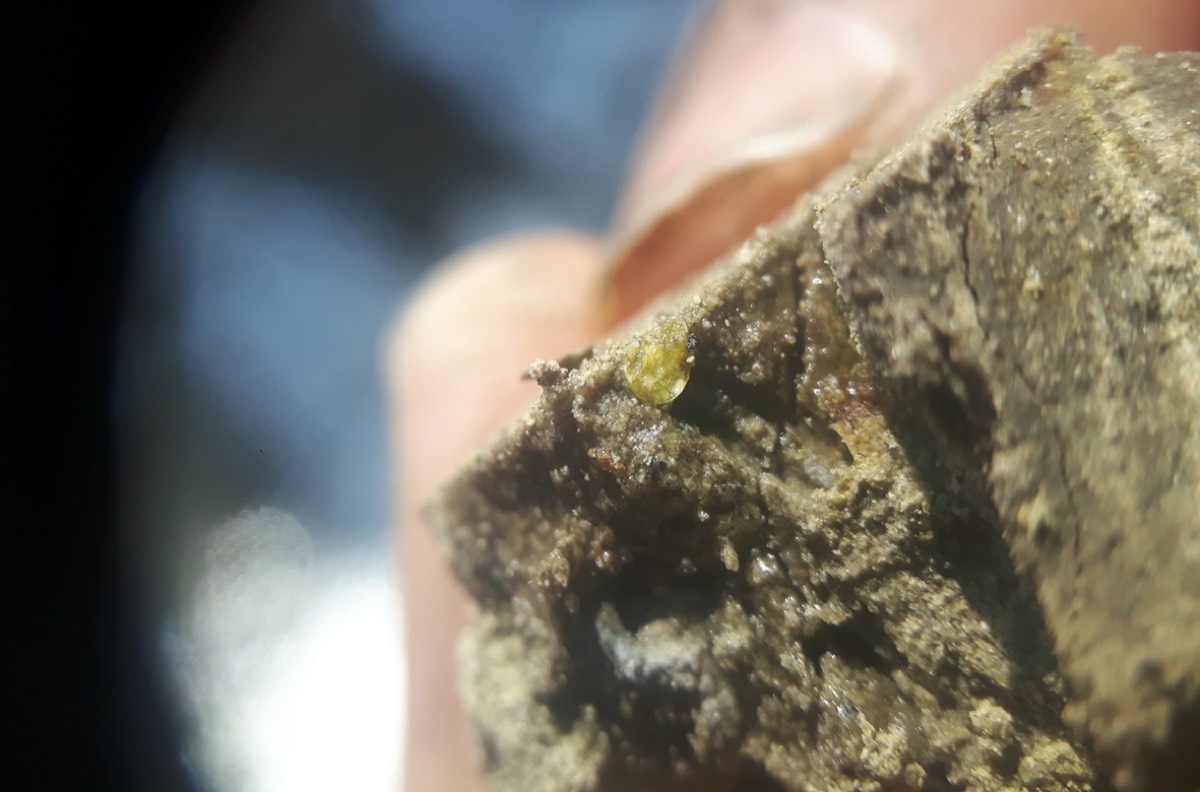
The authors believe their findings rule out an alternate theory that the mass extinctions were triggered by volcanic activity, with the Chicxulub impact serving as the final blow. But their results are consistent with yet another hypothesis that surviving dinosaurs may have starved to death. The massive dust clouds could have blocked out the sun for years, possibly even decades, bringing on a global winter. Even the dust itself would have been an ongoing risk to living organisms.
“The 2.5-micrometer dust we studied here is the same size as the smoke particles we worry about with wildfires,” said co-author Alexandria Johnson, also of Purdue. “It gets in people’s lungs and even in our bloodstreams, which is why it’s such concern for public human health. So even if critters were to survive the charbroiling, they would likely have had lasting health effects from these particulates as well. But when you look at the time scales of the cooking versus the inhalation risks, the cooking is much faster.”
DOI: Journal of Geophysical Research Biogeosciences, 2026. 10.1029/2026JG009837 (About DOIs).