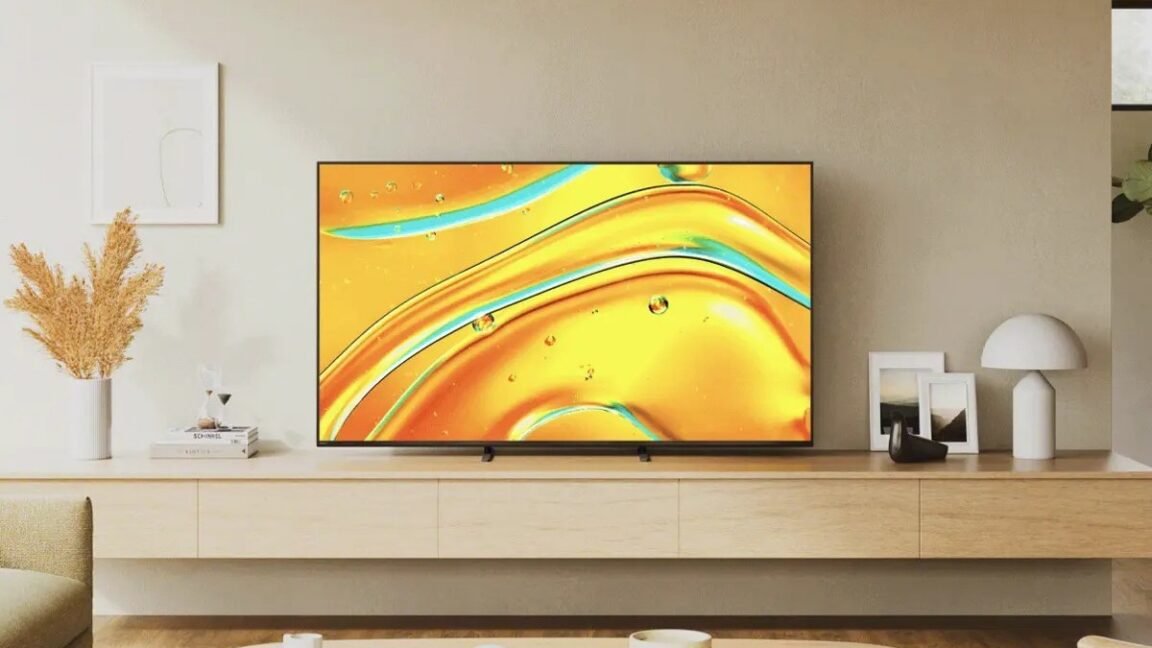
Sony is removing some features from its recent Bravia smart TVs next month, a move that will affect people who use an antenna or a set-top box.
As of “late May 2026,” people who use an antenna with the affected TV models will see a reduced TV guide, according to a support page spotted by Cord Cutters News. Per the support page, “program information may not appear depending on the channel,” and “only programs from recently watched channels may be shown” for channels delivered through an antenna.
Users will also no longer see channel logos or thumbnail images in program descriptions for TV channels delivered through an antenna.
Sony is also removing the dedicated menu for set-top box users and replacing it with a “control menu.” That should mean a less dense menu, but it is also expected to lead to fewer functionalities for set-top box users.
Finally, the TV menu on affected models will no longer show thumbnail images for programs. That means that the TV guide integrated into the Google TV operating system (OS) that shows aggregated content for content accessible via antennas, free ad-supported streaming television (FAST) channels, and some other live streaming services will no longer include preview images, which can be helpful for identifying shows and movies.
Sony said these changes will affect the following TVs:
- 2025 models: Bravia 8 II (XR80M2), Bravia 5 (XR50)
- 2024 models: Bravia 9 (XR90), Bravia 8 (XR80), Bravia 7 (XR70)
- 2023 models: Bravia A95L series
Sony’s support page says: “We appreciate your understanding and apologize for any inconvenience this may cause.”
Reduced functionality
Sony didn’t explain why it’s removing these features. Ars Technica reached out but didn’t hear back before publication. We’ll update the story if we receive a response.
It’s possible that Sony is looking to reallocate resources to more commonly used features. The use of antennas and set-top boxes has largely declined in favor of on-demand streaming. Both types of hardware still have dedicated users, though. Nineteen percent of respondents in a 2025 survey of 2,200 US adults conducted by Horowitz Research said they use an antenna. And in a 2024 survey of 1,600 US TV viewers who have broadband access and were 16 to 74-years old that Hub Entertainment Research ran, 26 percent of respondents said a set-top box is their “default device for watching TV.”
Still, it’s plausible that Sony Bravia owners use antennas, set-top boxes, and even integrated TV guides minimally. Sony’s plan to remove some TV guide and menu features may be aimed at reducing costs and burden associated with features that typically depend on backend data services. Things like channel logos and enhanced metadata often require licensing agreements and the use of third-party electronic program guide data providers and metadata aggregators. Sony may have decided that it’s simpler and more cost-effective to just rely on Google TV’s standardized TV guide. Similarly, set-top box controls can be handled by the box’s UI or by Google TV’s input management.
Still, it will be frustrating for affected users to see features that make TV viewing easier and more enjoyable removed from a device that they already own. Further, some of the affected models are less than a year old and pricey. The Bravia 5 (XR50) series, for instance, ranges from $1,000 to $4,500 as of this writing and came out in the spring of 2025.
For people who have grown weary of smart TVs’ reliance on user tracking and ads, the degradation of antenna functionality, even if considered minor, is discouraging. Bravia TV owners who keep their TVs offline (and thus reduce the amount of tracking and ads experienced) and rely on an antenna connection can still access a TV guide through the TV’s OS. As of late May, that guide will become more basic.
As noted by Cord Cutters News, affected users can turn to streaming hardware or external over-the-air tuners that have integrated TV guides (such as a Tablo) or mobile apps to access broadcast TV schedules.