When the story of an alleged Iranian plot to assassinate President Trump during the NATO summit in Turkey emerged in the second week of August, the debate it generated was predominantly centered around the credibility of the intelligence.
Intelligence suggested that Iran was planning to fire a surface-to-air missile at the President’s aircraft. The CIA reportedly had low confidence in the information shared by Israel.
The questions around intelligence were important ones, but what drew far less attention was the critical question of a sovereign state plotting to assassinate the head of another sovereign state.
For most of the modern state system, there was a normative prohibition on the assassination of the leader of another state as a normal extension of war. This norm was more or less adhered to till decapitation strikes against the dictators of the Middle East began to be debated around the beginning of the 1990s.
The killing of Iranian leadership on the first day of the US- Iran war and the discussions around an alleged plot to assassinate Trump have demonstrated the extent of normative erosion around leadership decapitation and its acceptance as a plausible instrument of statecraft between states.
Killing the norm
The norm against leadership assassination developed alongside the Westphalian order because states wanted violence between them to be regulated in ways that preserved both sovereign equality and systemic stability.
Sovereign rulers shared an obvious interest in protecting one another from personal violence, and the customary norms that emerged from this mutual vulnerability were eventually codified in the Hague Conventions of 1899 and reinforced in Additional Protocol I of the Geneva Conventions, which prohibited “treacherous” killing and acts of “perfidy” against enemy personnel. Though the legal clauses were never unambiguous, their political force was amply clear.
These origins were, of course, practical rather than idealistic. By channeling interstate conflict toward the battlefield, it ensured that wars would be decided by the organized capacity of states, their armies, economies, and logistical depth, rather than by the targeted elimination of decision-makers.
This norm suited great powers particularly well. Assassination, by contrast, was historically understood as the instrument of the weak, the tool available to actors who could not meet their adversaries in open battle.
The post-World War II period formalized this understanding, though the vocabular ambiguity continued. President Gerald Ford, in 1976, passed an Executive Order, following the Church Committee’s exposure of CIA assassination plots against foreign leaders, that made the prohibition explicit in American domestic law.
This, however, did not prevent covert operations against foreign leaders during the Cold War. As covert operations required plausible deniability, this itself was a form of normative compliance.
The humanitarian exception
The first sustained attempt to breach the taboo on interstate leadership decapitation came through a humanitarian argument.
The proposition, advanced through the 1990s and into the 2000s, was that the targeted removal of a brutal leader could spare entire populations the costs of conventional war. Saddam Hussein and Muammar Gaddafi became the test cases.
There were assassination attempts against Saddam during the Gulf War and multiple reported plots against Gaddafi. When conventional operations eventually removed them, the humanitarian framing was part of the justificatory architecture.
The empirical consequences, however, repudiated the argument comprehensively. Both Iraq and Libya, after the removal of their respective rulers, produced state collapse, civil conflict, and humanitarian catastrophes that dwarfed the costs of the authoritarian order it replaced. Even defenders of coercive humanitarianism conceded that these cases quickly reopened the boundary between civilian protection and regime change.
The humanitarian decapitation argument was empirically weak from the outset. Its political function was presented as normative through the logic of tyrannicide. This made the targeting of foreign leaders appear legitimate, and eventually actionable.
The shifting of the moral vocabulary through which the practice was evaluated created room for reinterpretation, and gradually the phrases like “targeted killing” began to be distinguished from illegal “political assassination.” This distinction enabled states, particularly the US, to make extraterritorial killings appear reviewable and therefore legitimate.
Falsified self-defense
The killing of Major General Qasem Soleimani by an American drone strike in Baghdad on January 3, 2020 extended targeted killing into interstate relations. The operation was framed, at least in part, as a counterterrorism action against a designated terrorist commander.
Though Soleimani was not a head of state, he still was a senior uniformed official of a recognized sovereign state, killed in the territory of a third sovereign state in the absence of a declared war. The legal and normative architecture available to justify the strike was thin from the beginning.
What distinguished Soleimani’s killing from others was the act of public acknowledgment. The US not only announced it but also publicly defended it, offering the legal theory of anticipatory self-defense as justification.
It was the moment when the norm-setting great power openly demonstrated that a senior official of a sovereign state could be targeted in the absence of a declared war without triggering any international backlash.
With such a precedent, the reputational cost of similar actions by other states was thus substantially reduced. An already stretched norm was now beginning to crumble.
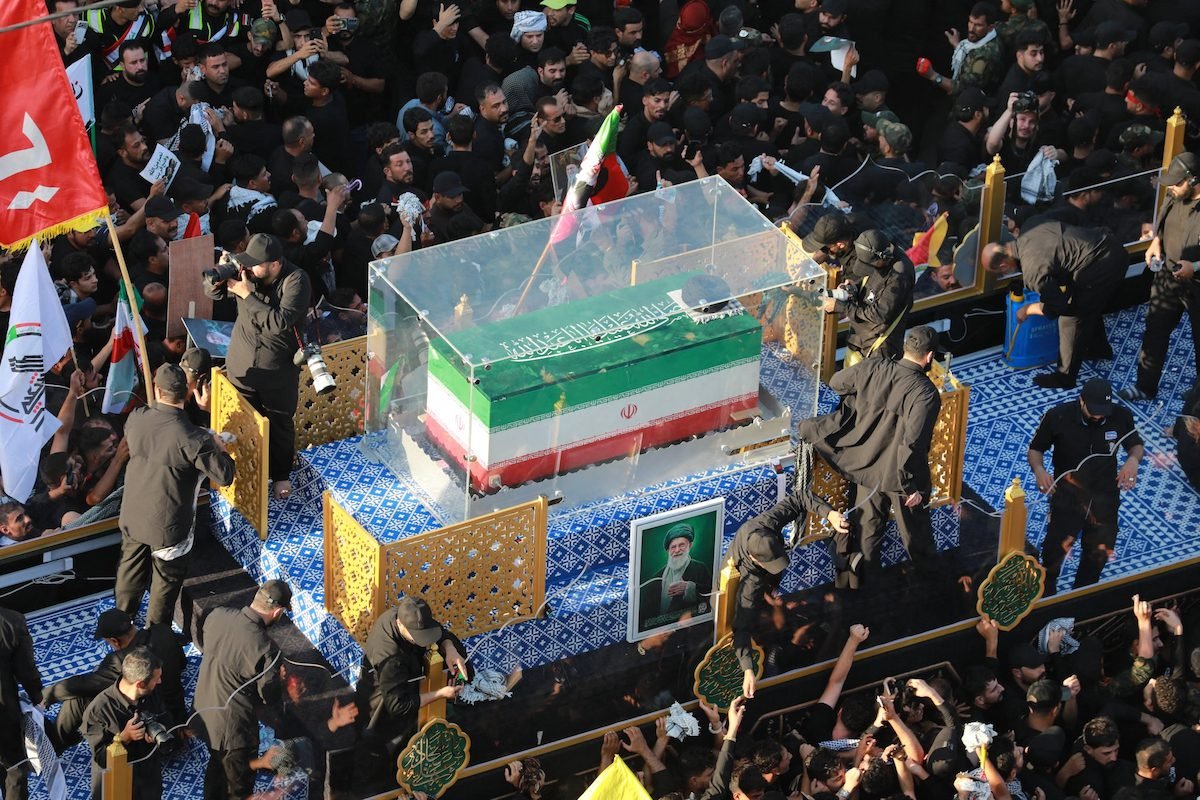
The killing of the senior Iranian leaders, including the supreme leader, in the opening phase of the US- Iran war institutionalized leadership decapitation as an operational logic of an interstate war.
While earlier killings were presented either as discrete counterterrorism or self-defense actions, the February 28 action was framed as a component of a broader military strategy. This moved the practice of leadership assassination from an exception to a normalized instrument of war.
Automated assassinations
The consequences of this normative erosion extend well beyond any individual killing. The advent of autonomous and precise strike technologies may make targeted killing of leadership increasingly lucrative, leading to both behavioral escalation and institutional corrosion.
With leadership decapitation now an acceptable instrument, states that have historically faced stronger adversaries now have a publicly validated template for how conflict might be opened.
The long-term risk is to the state system and the idea that states and their heads are durable legal entities. Once powerful states normalize the selective killing of foreign leaders and senior officials, they weaken sovereign equality and invite reciprocal targeting.
The result would be an international system in which crises escalate faster, and diplomacy becomes harder because adversaries suspect that negotiation itself may be a prelude to elimination. This doesn’t augur well for the international order.
Sajid Farid Shapoo is a highly decorated senior Indian security official (three-star general) and holds a PhD in security studies from Princeton University. The views expressed here are personal.