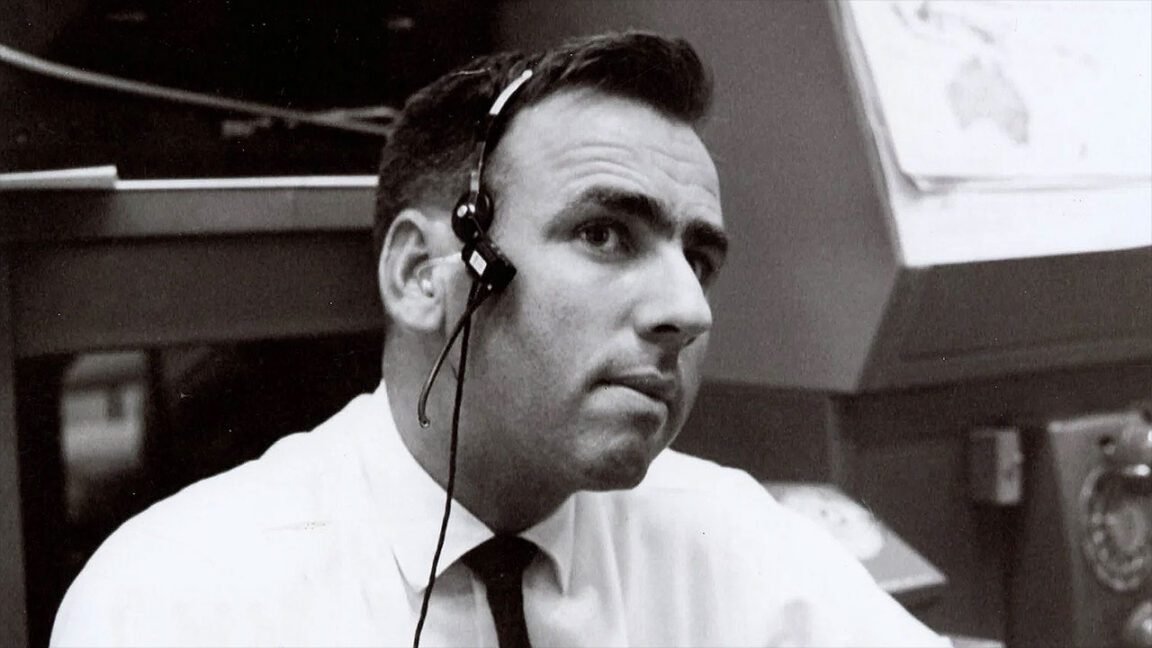
Milt Windler, one of the four leaders of Mission Control who in 1970 directed the round-the-clock efforts to bring the Apollo 13 astronauts back to Earth safely, has died at the age of 94.
Windler died on Thursday, surrounded by his loving family, according to a brief notice posted online.
Named a NASA flight director in 1968 after working on recovery operations during the Mercury and Gemini programs, Windler also led a shift of flight controllers for the Apollo 8 first circumlunar flight and Apollo 10 lunar landing dress rehearsal, as well as the second, third and fourth moon landings — Apollo 12, Apollo 14 and Apollo 15. He then served as a flight director for all three crewed missions to the United States’ first space station, Skylab.
“Apollo was such a rapid pace that I don’t think people had the chance to think about it very much. It has only become more clear to me later on that we were making history,” said Windler in a 2006 oral history interview for the University of North Texas. “You’d do a mission and then you’d immediately turn around and get ready for another mission.”
“It was not [a] time for reflection,” Windler said.
Maroon Flight
Each flight director chose a team name (at first colors). As the seventh person to be appointed to the position — and one of the first two to be selected from outside of the flight operations team — Windler became “Maroon Flight.”
On his first mission at the flight director’s console, Windler was assigned to the third shift, putting him at the head of the operations control room when it was time to send the first humans beyond Earth orbit. The trans-lunar injection, or TLI, burn placed Apollo 8 crew members Frank Borman, Bill Anders and Jim Lovell on a trajectory to advance the United States ahead of the Soviet Union by becoming the first nation to orbit people around the moon.
Realizing this, Windler, working with his wife, Betty, and other flight controllers’ spouses, secretly prepared a batch of small red and blue flannel banners, each with the numeral “1” in white at their center. He planned to distribute the flags to the members of his Maroon team to wave at TLI as a not-so-subtle message to their space race adversaries.
“However, it was decided that this display was inappropriate, especially since the mission was only half over,” wrote Windler in a 2020 letter accompanying one of the flags that had since been acquired by a collector. “Consequently, the flags were never displayed during the mission and American flags were used at the time of a successful landing on Earth.”
Later, Windler and all of his colleagues in Mission Control were provided with a dramatic reminder about why you do not celebrate until the crew has stepped onto their recovery ship. For Apollo 13, Windler was named lead flight director.
“What that meant was you did the ascent — the liftoff from Earth, I should say, the launch — and you did the lunar surface activity,” he told the UNT interviewer. “But then, of course, after we lifted off from the Earth, when we got more toward the moon, why, the whole mission changed.”
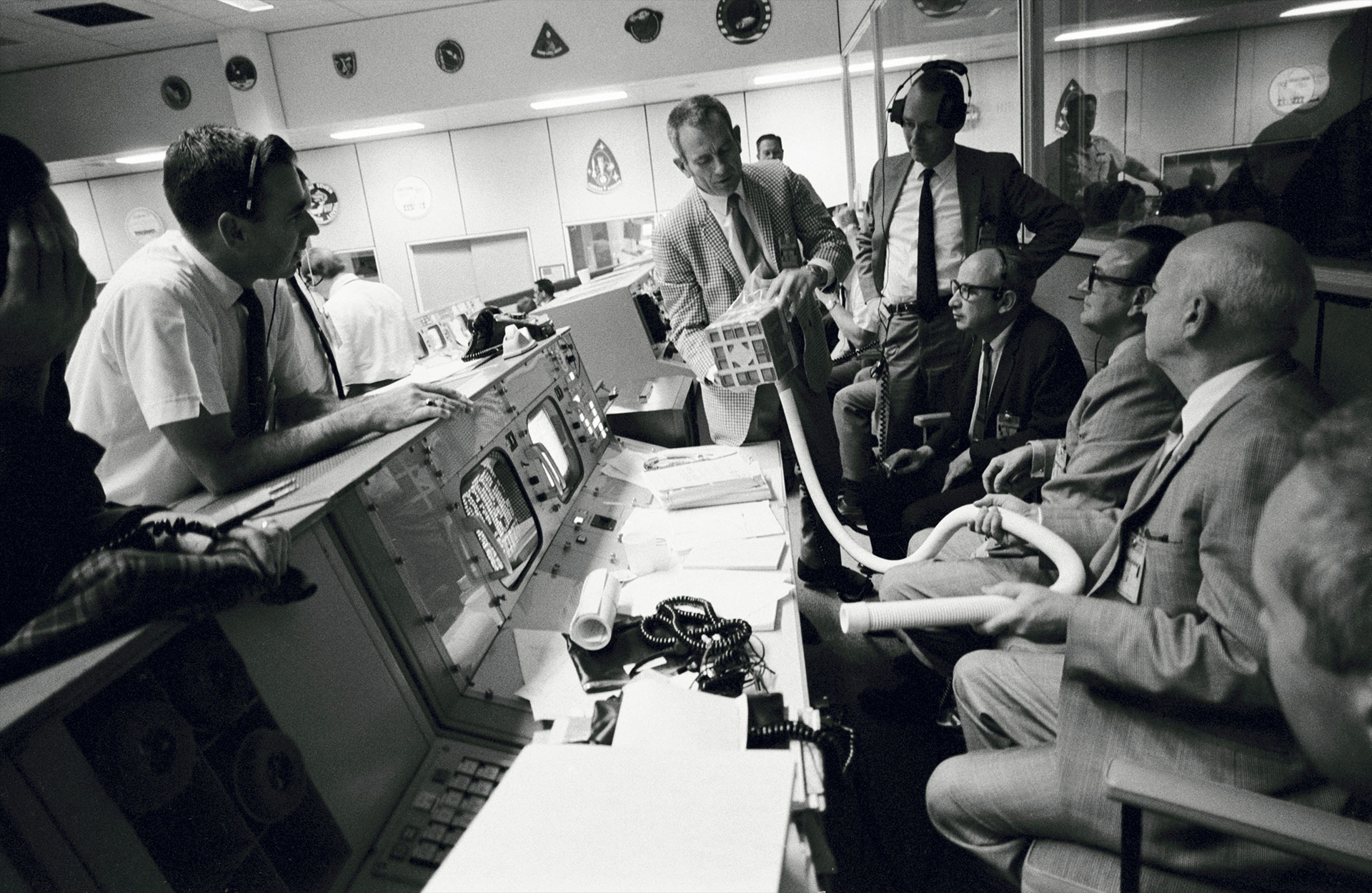
An explosion tore through the Apollo 13 service module, crippling the spacecraft and venting the crew’s oxygen supply into space.
Instead of overseeing the third time humans had walked on the moon, Windler — together with Gold Flight, Gerry Griffin — polled the flight controllers in the room to develop three options for when, where and how long to fire the lunar module’s engine to put the Apollo 13 spacecraft on a path back to Earth.
It would not be the last time Windler was involved in re-planning a mission already underway, but not because something had gone awry. As flight director during the Skylab missions, the challenge was working with emerging scientific events.
“We had to come up with a system that would allow us to plan in real time and accommodate the science people. If something interesting happened on the sun, which it did several times, then we needed to be able to schedule the ATM [Apollo Telescope Mount] work,” he said in 2006.
“We invented a way of flight planning in real time, or cycles,” said Windler, where one day the science people talked about what they wanted to do, and the ‘Science Czar’ got with them and said, ‘All right, then, we need these particular objectives for tomorrow.’”
After the Skylab missions ended, Windler went to work on the space shuttle and the development of the remote manipulator system or “Canadarm,” the winged orbiters’ robotic arm contributed to the program by Canada. He then retired from NASA and joined private industry to work on what would become the International Space Station, consulting on the operations aspect of the orbiting laboratory, and later, as modules were produced, on some of the verification procedures.
‘Pay more attention’
Born on Jan. 10, 1932 in Hampton, Virginia, Milton Windler graduated from Virginia Tech (Virginia Polytechnic Institute and State University) in 1954 with a degree in aeronautical engineering. He joined the U.S. Air Force’s Reserve Officers’ Training Corps (ROTC) while still in school and then worked for the National Advisory Committee for Aeronautics (NACA), NASA’s predecessor, before serving in the Air Force for four years.
Windler rejoined NACA at Langley Research Center in Virginia and was there for its transition to becoming a NASA facility. He relocated to Houston, Texas, just as the Manned Spacecraft Center (today, Johnson Space Center) was being established.
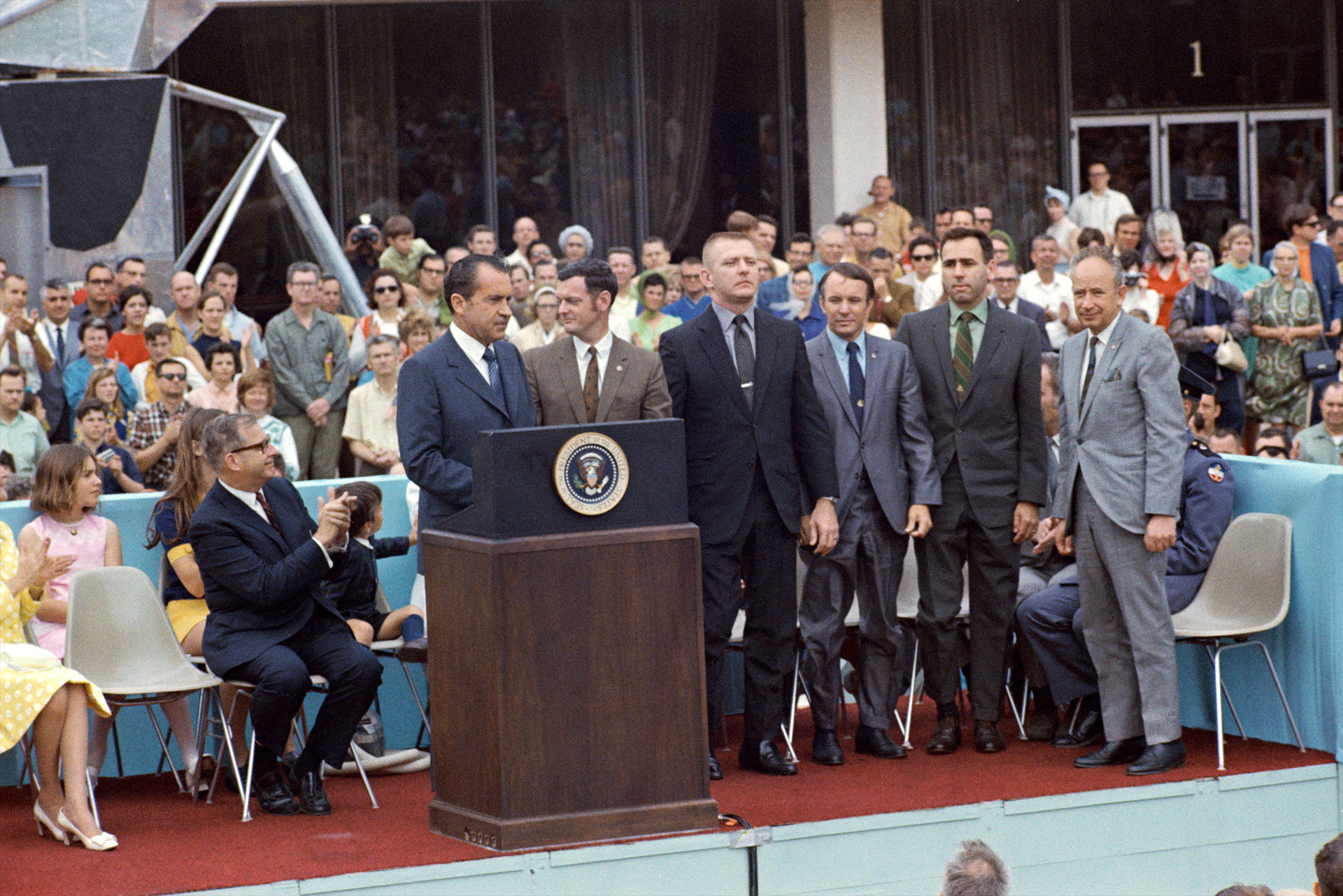
As a member of Mission Control during the Apollo 13 mission, Windler and his fellow flight directors and controllers were awarded the Presidential Medal of Freedom by then-President Richard Nixon in 1970. Windler was also honored with NASA’s Exceptional Service Medal.
Milton and Betty (née Selby) Windler had three children and eight grandchildren. A memorial service will take place in the coming weeks at the family’s former church in Friendswood, Texas.
“If I did it again, I’d probably try to do something more about trying to pay more attention,” said Windler. “Apollo was — well, all of [the missions] were … bang-bang-bang. You couldn’t enjoy, really, in a way you couldn’t savor it, like maybe it would have been better to have done.”