The Centers for Disease Control and Prevention on Monday released data on the vaccination rates of US kindergarteners in the 2025–2026 school year, revealing that rates have once again decreased from the previous school year.
Vaccination rates have been slipping since the 2019–2020 school year, when the US had obtained rates of around 95 percent, the threshold needed to keep outbreaks of vaccine-preventable diseases from spreading in communities. The latest data shows the US is moving further away from that target.
Nationally, only 92.4 percent of kindergartners were vaccinated with the measles, mumps, and rubella (MMR) vaccine in the 2025–2026 school year, down from 92.5 percent last year. Coverage with the DTaP vaccine, which covers diphtheria, tetanus, and acellular pertussis (whooping cough), similarly fell from 92.1 percent to 92.0 percent.
More than half of states saw decreases in coverage for MMR, DTaP, polio vaccine, and varicella/chickenpox vaccine. Only 10 states have MMR vaccination rates at or above the 95 percent threshold: West Virginia, Connecticut, Maine, New York, Mississippi, Rhode Island, Maryland, Massachusetts, California, and New Mexico.
While vaccination rates slipped further, the number of children with exemptions from school vaccine requirements jumped more dramatically. In the 2025–2026 school year, 4 percent of kindergartners had a nonmedical exemption—meaning it was an exemption based on personal or religious beliefs. That’s up from 3.2 percent nonmedical exemption rate in 2024–2025. Medical exemptions have held steady over recent years at 0.2 percent.
Real threats
Rising exemption rates are concerning because it lowers what the CDC calls the “potentially achievable” vaccine coverage. Some children may be unvaccinated or undervaccinated based on barriers to care, which could potentially be remedied by public health efforts, such as targeted vaccination clinics or campaigns. Children with non-medical exemptions, on the other hand, are those whose parents have purposefully opted them out of getting recommended vaccines.
If the overall number of exemptions exceeds 5 percent in any given location, it means that the location will not be able to achieve the 95 percent coverage target. Currently, 24 states have exemption rates at or above 5 percent. That’s up from 14 states in the 2023–2024 school year.
In past years, the CDC has provided its analysis of national vaccination data in a full, detailed report, published in the agency’s Morbidity and Mortality Weekly Report. But under anti-vaccine Health Secretary Robert F. Kennedy Jr., the CDC has, like last year, only released the data online, without full analysis or vetted publication.
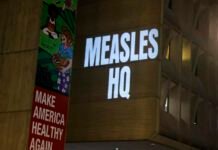
The data lands as vaccine-preventable diseases continue to rise and spread in the US. The country is on the verge of losing its measles elimination status as cases have reached a 34-year high and are still ticking upward. Last week, President Trump and Kennedy continued their efforts to undermine childhood vaccines, announcing an executive order to reduce the number of recommended vaccinations. The order has no scientific basis, and at a White House signing event, Trump and Kennedy spread vaccine falsehoods, misinformation, and disinformation.
In a media statement Monday, the CDC under Kennedy said that the agency “continues to encourage parents to discuss vaccination options with their doctors.”