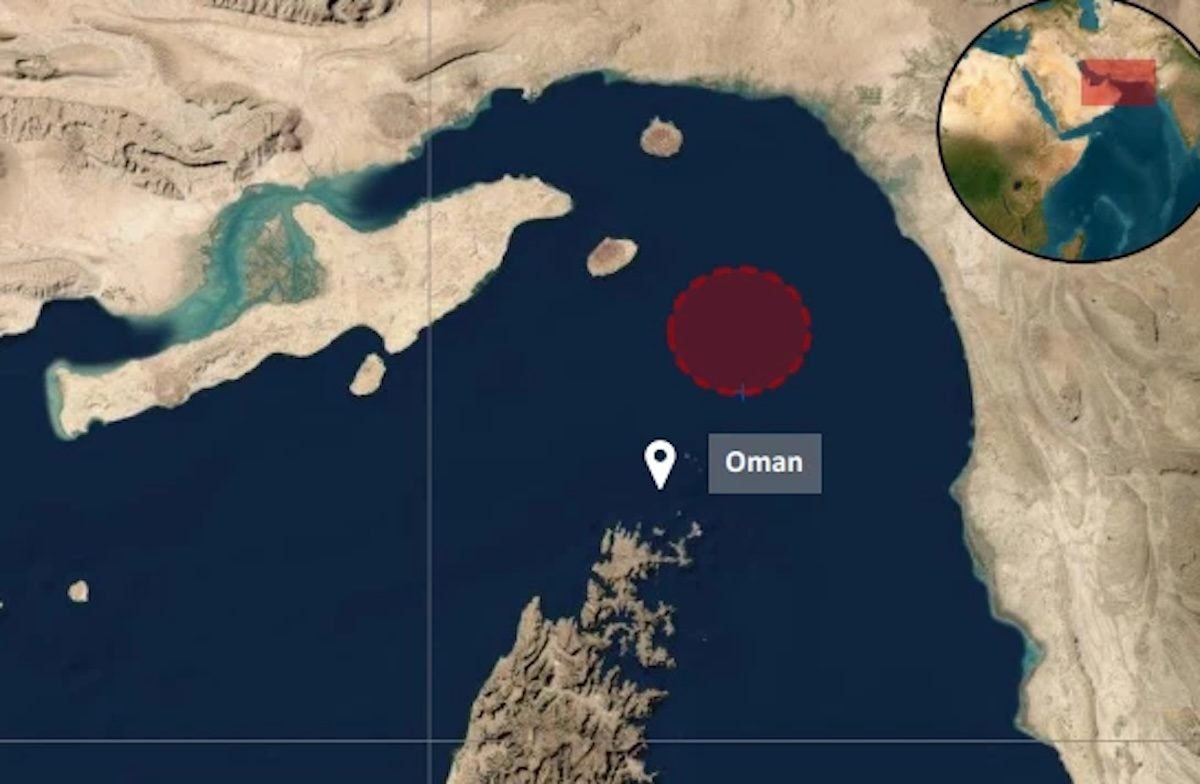
The ceasefire between the US and Iran is in grave peril after Iran announced on Saturday that, in response to the continued US blockade, it would once again impose travel restrictions on the Strait of Hormuz after briefly reopening it on Friday.
Iran has used the strait – through which about 20% of the world’s oil passes – as a chokepoint on Western commerce in response to the war the US and Israel launched in February. It has been the linchpin of the two-week ceasefire between the two sides, which is scheduled to end Wednesday.
Tehran had announced Friday that the strait was “completely open,” in response to a ceasefire between Israel and Lebanon that had taken effect. That agreement is also already falling apart following a slew of apparent violations by Israel, which has continued shelling southern Lebanon and demolishing homes even as displaced civilians return.
Iranian officials said they opted to reimpose their blockade of the strait because they believe that by continuing its own naval blockade of Iranian ports and vessels, which began over the past weekend, the US is not upholding its end of the deal.
According to a social media post from US Central Command on Saturday, the US military had already turned around at least 23 ships near the strait since its blockade began on April 13.
US President Donald Trump claimed Friday that Iran had agreed to reopen the strait without conditions, but that the US blockade would “remain in full force” until a broader deal was reached surrounding Iran’s nuclear program.
But Iranian Deputy Foreign Minister Saeed Khatibzadeh said during a panel Saturday that “That is not the term we agreed on.”
Iran’s military headquarters later issued a formal statement declaring that it would begin limiting travel through the strait.
“The Islamic Republic of Iran, following previous agreements met in the negotiations conducted in good faith, agreed to manage the passage of a limited number of oil and commercial ships through the Strait of Hormuz,” the statement said. “Unfortunately, the Americans, with their repeated breaches of trust that are part of their history, continue their acts of piracy and maritime theft under the pretext of a so-called blockade.”
“This strategic waterway is under strict management and control by the armed forces,” it continued. “As long as the United States does not end the complete freedom of movement for vessels from Iran to their destinations and back, the situation in the Strait of Hormuz will remain under strict control and will remain as it was before.”
Islamic Revolutionary Guard Corps (IRGC) gunboats later on Saturday opened fire on an oil tanker traveling through the strait. No injuries were reported.
As Al Jazeera reporter Ali Hashem described the situation, talks between the US and Iran have been brought “back to square one.”
The gap appears increasingly unlikely to be bridged by Wednesday, as Trump continues to demand that Iran allow the US to remove all its enriched uranium, which Iran has said is a nonstarter.
US and Israeli strikes in Iran have already killed more than 1,700 civilians, according to the US-based Human Rights Activist News Agency, and more than 3 million Iranians have been displaced since the war began, according to the United Nations Refugee Agency.
Trump said Friday that perhaps he “won’t extend” the ceasefire and that “the blockade is going to remain. If an agreement is not reached by Wednesday, he said, ”unfortunately, we’ll have to start dropping bombs again.“
The president said that Iran “got a little cute” on Saturday by closing the strait again, but said Iran “can’t blackmail us.”
Shutting the waterway has, however, proven to be one of Iran’s most effective points of leverage against the US. It has caused gas prices to soar above $4 and inflation to ripple through the entire Western economy, further tanking Trump’s already grim approval ratings as the US midterm elections approach.
Jennifer Parker, an adjunct fellow in naval studies at the University of New South Wales, told Al Jazeera that the US blockade of the strait does not have the ability to cripple Iran in the same way Iran can cripple the US.
“It is not the US blockade on Iranian ports that is impacting the majority of shipping going through that strait. It is the attacks the Iranian navy and IRGC have undertaken on civilian ships,” she said. “To solve the problem in the Strait of Hormuz, there either needs to be an agreement for Iran to stop attacking vessels, or a forcible military intervention that stops them from attacking vessels, and then general reassurance across the strait that it is clear of mines and that if the IRGC start trying to attack merchant ships, they will be defended…. We are a long way from all of that.”
Iranian professor Mostafa Khoshcheshm said that Trump’s contradictory statements surrounding the ceasefire have convinced Tehran that the United States is not “a trustworthy partner for any kind of deal,” and that, as Trump continues to behave erratically, “Iran will continue the war.”
He told Al Jazeera: “Iran believes it has the upper hand and that this must be established in any future confrontation.”