Itsik Moshe believes Israel’s next diplomatic breakthrough will not come from another embassy or government initiative. Instead, he wants to build a worldwide network of 100 public diplomacy offices modeled on a relationship he has spent more than three decades cultivating between Israel and Georgia.
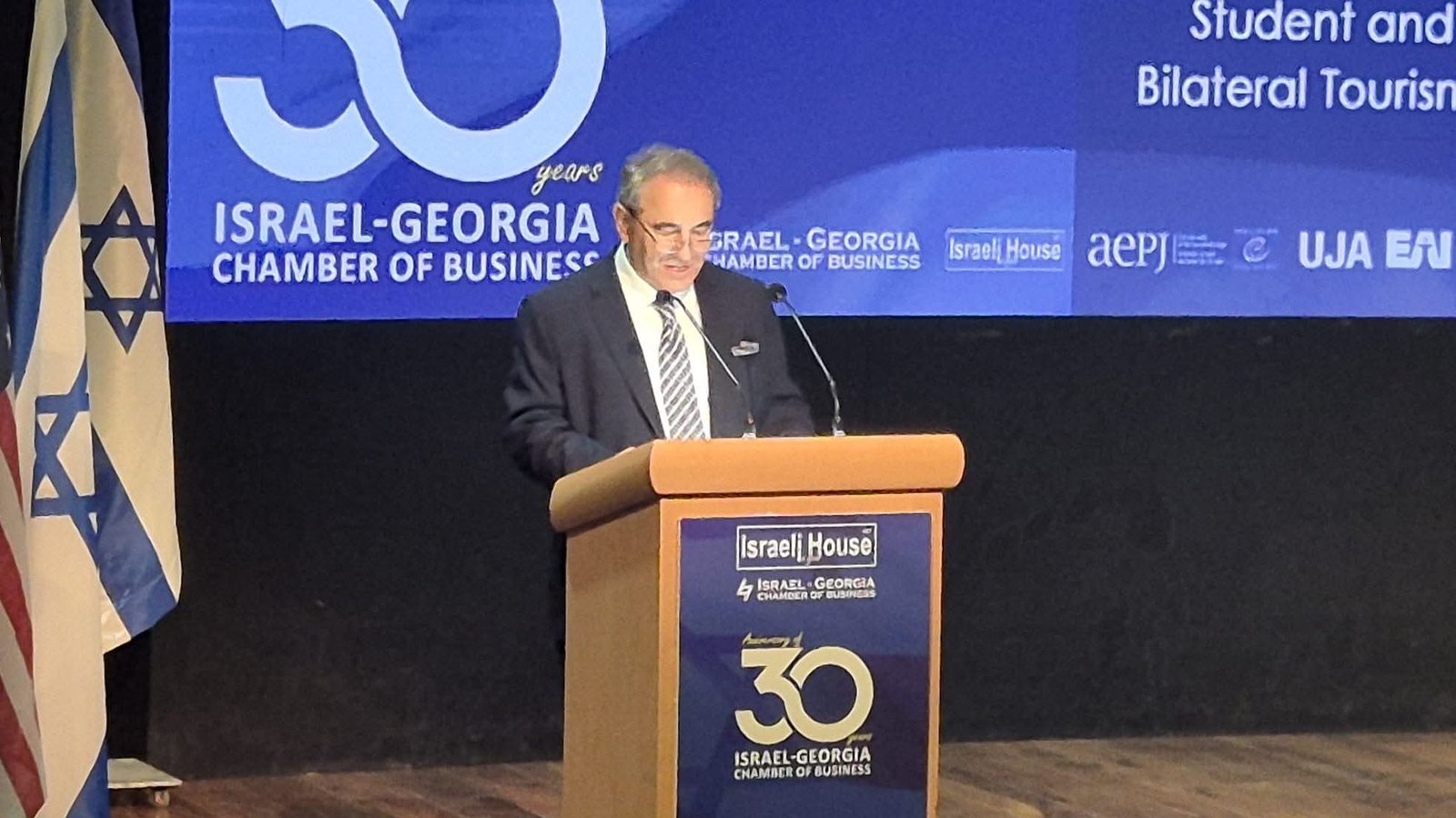
In the article, 100 Chambers of Public Diplomacy Within Reach, Says Head of Israel House, The Media Line’s Felice Friedson and Gabriel Colodro describe how that vision took center stage at Jerusalem’s Begin Center, where Israeli and Georgian officials, business leaders and civic figures gathered to celebrate 30 years of the Israel-Georgia Business Chamber and 15 years of Israel House. For Moshe, the anniversary was less about looking back than demonstrating what he sees as a proven formula: use business, tourism, education and personal relationships to create the trust that makes public diplomacy possible. Rather than relying on government representatives, he said the effort succeeds by working with local partners who already understand their own societies.
The proposal is grounded in an organization that already operates in 30 countries. Moshe said the expansion accelerated after what he described as two assassination attempts by Iran’s Revolutionary Guards because of his Zionist activity and public diplomacy work. His next objective is far more ambitious—replicating the Israel-Georgia model around the world while pairing it with educational initiatives and parliamentary action against antisemitism.
Commerce remains central to that strategy. Moshe highlighted reported hotel investments, agricultural agreements, high-tech cooperation and plans to reproduce Israel’s Airport City concept in Georgia. In his view, entrepreneurs often become countries’ first ambassadors by building relationships before governments do, while tourism strengthens both economies and public perceptions.
Other speakers broadened the discussion into what they described as Israel’s struggle over international opinion. Former Mossad agent Sagiv Asulin argued that the battle for global perceptions has become an “8th front” requiring a dedicated national strategy rather than scattered initiatives. He contended that the campaign should appeal to shared democratic values instead of focusing exclusively on Israel or antisemitism.
That theme resurfaced in the experience of Lourd Atia, an 18-year-old Israeli Arab Muslim activist who has spoken before students abroad about Israel despite criticism from both Jewish and Arab communities. Her message, like Moshe’s, was that lasting understanding grows through direct human connections rather than slogans.