
Sony’s recent decision to stop producing physical PlayStation games in the near future has naturally led to a renewed focus and appreciation for physical games that can be played just by sticking a cartridge or disc in a console. But an increasing number of those “physical” games these days still require additional downloads from a centralized server to function as intended.
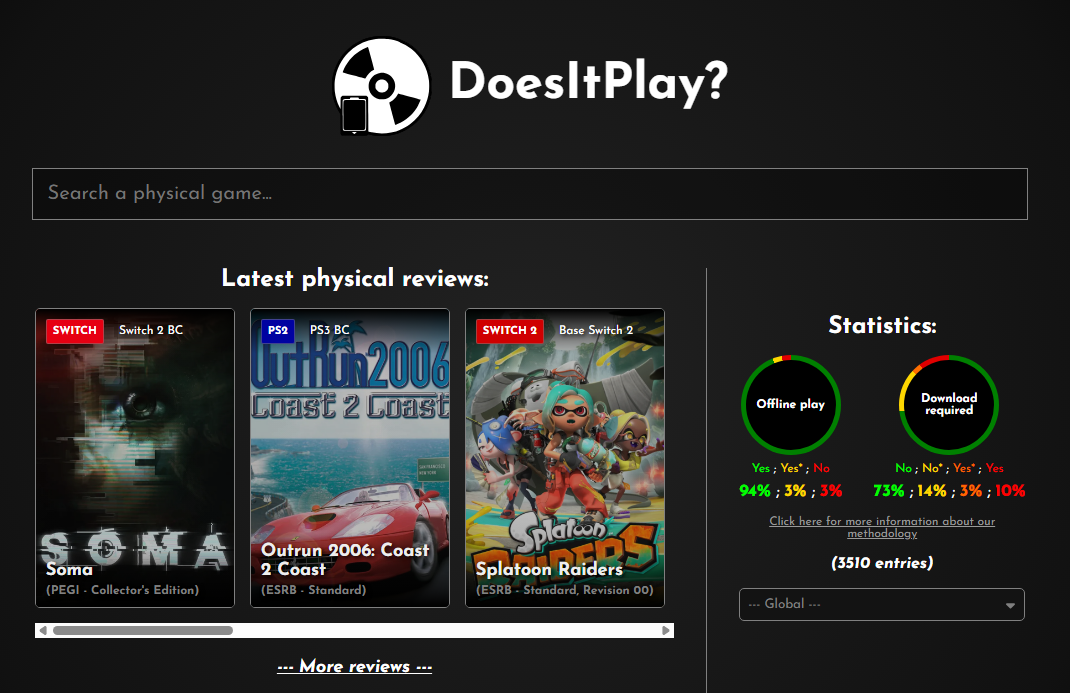
For years now, the testers at DoesItPlay have been documenting this trend, testing thousands of physical game releases to see which ones live up to the promise of full “plug and play” functionality without an Internet connection. Thus far, a full 27 percent of the physical releases they’ve tested require some sort of download to fix game-breaking bugs or obtain core game content that is not stored on the physical release itself. That ratio balloons to 34 percent for tested PS5 games and 50 percent for those on the Xbox Series X.
“There is a clear trend that physical releases are increasingly treated with ignorance from larger companies,” DoesItPlay owner and head admin Clemens Itsel told Ars recently. “There is no reason physical games would ever die unless someone like Sony deliberately kills them.”
What’s missing
DoesItPlay got its start in 2019 as a passion project Twitter account maintained by Jon Doyle—who went on to found boutique physical game publisher Lost in Cult—and quickly developed into a small community of devoted physical game testers. In 2021, the group helped bring wider attention to the so-called “CBOMB” kill-switch, which threatened to make offline PS3 and PS4 consoles practically useless once their internal CMOS clock batteries failed.
When Sony eventually fixed this issue on the PS4 months later (though the PS3 remains unpatched), Itsel said he used that “breakthrough success” as an excuse to “professionalize and grow the project to what it is today.” From an initial spreadsheet tracking the group’s physical game tests, DoesItPlay has grown into a publicly searchable database of thousands of titles, each tested using a methodology designed to determine just how much the core game experience is impacted by playing exclusively on physical media.
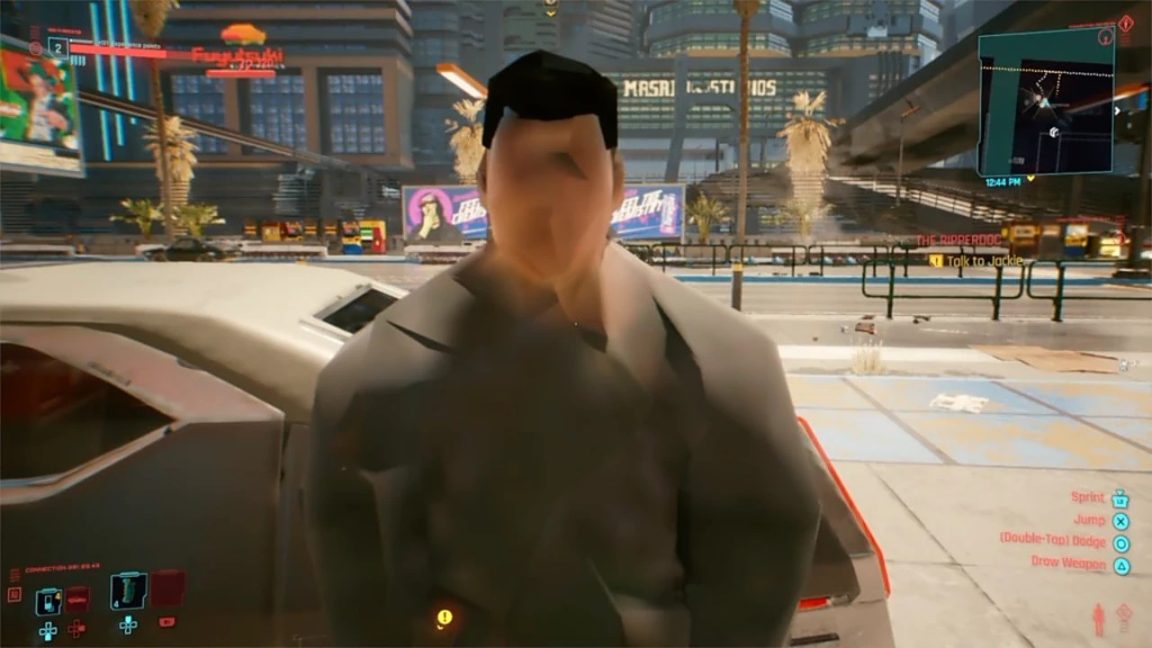
Often, the games that fail these tests are ones that were released on disc in an incomplete, bug-filled state that require downloadable patches to fix. Itsel cites the infamously bad initial console releases of Cyberpunk 2077 as a prototypical example of a game where the unpatched physical disc will one day be virtually unplayable, even if “one of our testers beat the game regardless of its abysmal state at the time.”
For some games, though, the game-breaking failures of the disc version can be much more subtle. Itsel recalls how, when testing the physical release of survival-action game Atomfall, “upon returning to the main hub village everyone suddenly went hostile, which broke numerous side quests and wouldn’t let me continue my peaceful playthrough. You can still beat the game, but you have to shoot your way out of it, which is near-impossible given the nature of the combat.”
Bugs aside, DoesItPlay also documents numerous physical releases where the disc only contains a pitifully small portion of the full game, requiring a massive download to play the rest. Recent releases like Doom: The Dark Ages, Indiana Jones and the Great Circle, and The Outer Worlds 2 are just a few prominent examples where the disc version is just a small stub that barely represents the full downloadable game.

And even when a game disc does contain a full, playable game (or a significant portion thereof), Itsel said he has also noticed a new “blood boiling” trend of publishers inserting early mandatory download prompts that halt all progress if you don’t have an Internet connection. Games like Hogwarts Legacy, Jedi Survivor, The Elder Scroll IV Oblivion Remaster, 007 First Light, Crimson Desert, Gothic Remake, and almost every modern AAA Ubisoft game hamper their physical releases in this manner, Itsel said, a move that he considers “a spit in the face of game preservation.”
Looking across the major console platform makers, Itsel said that Microsoft is the worst offender when it comes to releasing complete games on disc. “Xbox has long given up on producing fully functioning physical releases,” he told Ars Technica. “They far too often require downloads or force players to create a Microsoft account. It’s deliberately undermining the value of physical releases by making them incomplete or online-dependent in other ways.”
While Sony’s physical releases tend to be more playable as is, Itsel said that “we can observe a decline over the recent years” in the number of PlayStation discs that don’t require any downloads. Physical game cartridges on the Switch and Switch 2 often fare better without an Internet connection, but even there Itsel said he sees more publishers opting for Game Key Cards that don’t contain any offline data. While DoesItPlay doesn’t test these Game Key Cards alongside more legitimately “physical” releases, Itsel said he considers selling a physical product that amounts to a fancy download key to be “a form of deception” on the part of Switch 2 publishers.
Fighting for the future
In the here and now, having to download additional patches to play a “physical” game is more often a minor annoyance than a massive headache. Eventually, though, the centralized platform servers containing those crucial patches will shut down, turning countless game discs into essentially unplayable coasters. Even as companies like Nintendo promise in FAQs that previous purchases and game updates on older platforms will remain downloadable “for the foreseeable future,” Itsel said that “it is just an eventuality that these servers will shut down.”
“[Current] stability of servers is… irrelevant if their upkeep is only decided by the financials and licensing agreements,” Itsel notes. “They can do whatever they want with your games, because we let them relabel a purchase into ‘licensing.’ Many always claim that they can still download their old rentals from generations ago… until they can’t anymore.”
Getting today’s players to care about this problem can be an uphill battle, Itsel acknowledges. “We constantly meet dismissive arguments online,” he said. “‘Nobody cares,’ ‘Go with the times,’ ‘Every game needs a download anyway.’ Many of these people don’t even know what advantages a physical release brings. The independence. The longevity.”
“If they cared about how these companies treated the art and the customers there would be daily riots in front of every AAA gaming HQ across the planet,” he added.
While companies like Sony are showing an increasing disregard for the physical side of the game market, Itsel said he’s still heartened by “a rise in boutique labels and smaller publishers that understand the demands of the passionate physical media audience.” And on the supply side, these publishers reflect “the demand from developers to see their work immortalized, respected, and put in a position to leverage an additional revenue stream on top of digital distribution,” Itsel said.
Though the fight to maintain offline access to physical games is happening in the present, the preservation effort is really focused on the future. “When we fight for physical media or DRM-free digital options, we do this because we don’t want these cultural artifacts to vanish,” Itsel said. “Games are the most influential and commercially most successful medium of our time. These games are art. They are human history. It is about way more than the egotistical individual keeping their dopamine kicks.”