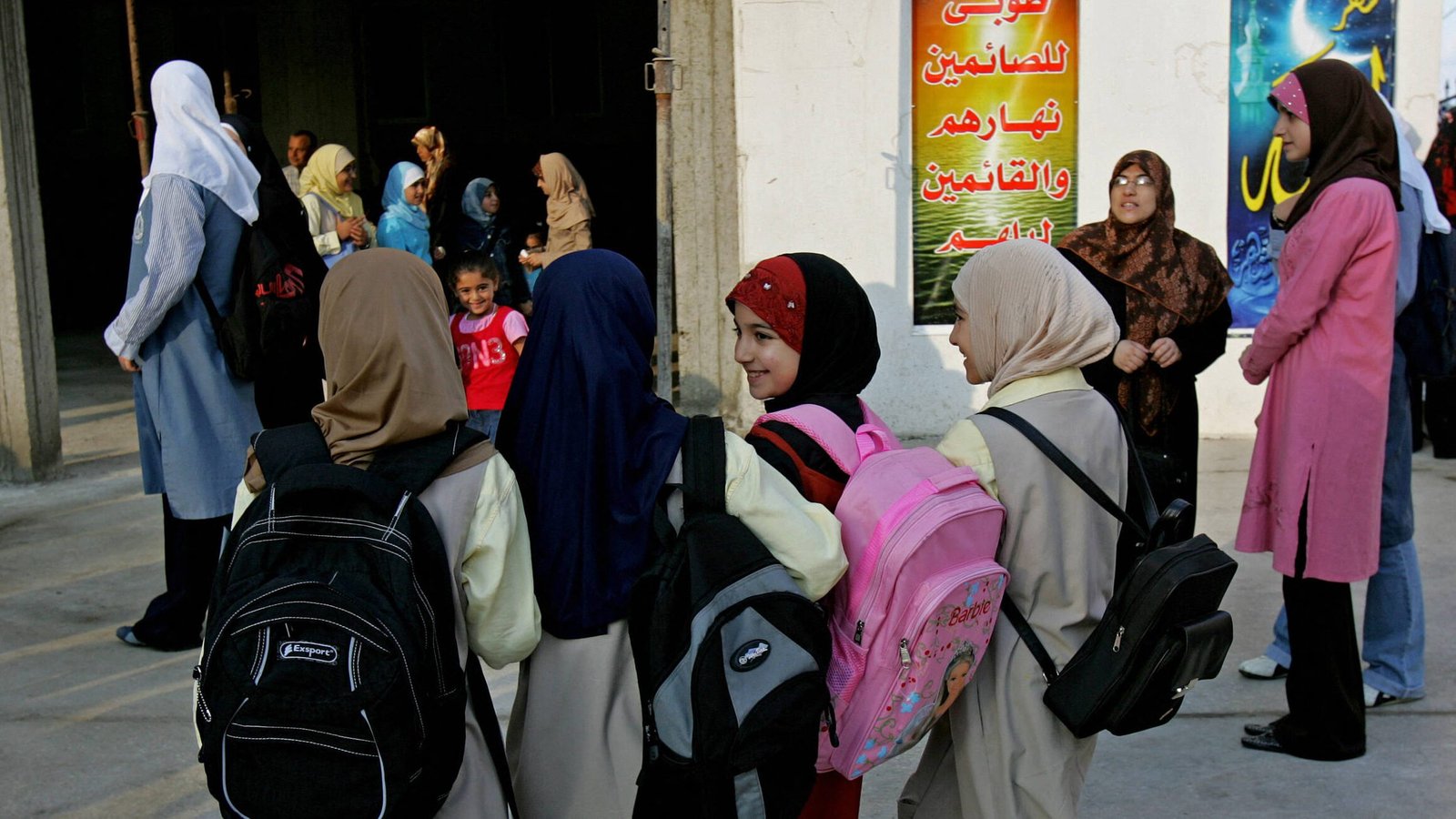
Lebanon’s children have endured economic collapse, a pandemic, the Beirut port explosion and repeated wars. Now, as September approaches, at least 100,000 could begin another school year without classrooms.
In 100,000 Students in Lebanon May Not Start the School Year in September, The Media Line’s Taylor Thomas examines the damage inflicted on an education system already weakened by years of successive crises. A nationwide assessment by the Education Ministry found 340 public, private, and vocational schools damaged in the latest conflict, including 17 completely destroyed.
The disruption extends beyond damaged buildings. Hundreds of schools have been converted into shelters for displaced families, while UNICEF estimated that approximately 165,000 children were learning remotely by late May because their schools were being used as shelters or were located in conflict zones.
For children such as those of Mariam, a displaced mother living in a makeshift camp on Beirut’s waterfront, the question is whether there will be a school to return to at all. Her family has been displaced for weeks, and her children can hear bombing from the camp.
Thomas places the current disruption within a much longer educational crisis. Lebanon’s economic collapse began in 2019, followed by the coronavirus pandemic, the August 2020 Beirut port explosion, cross-border fighting after October 7, 2023, and the war that began March 2, 2026, after Hezbollah fired on Israel in response to US-Israeli strikes in Iran. Even before the October 2023 fighting, more than 700,000 children in Lebanon were already missing out on education.
Thomas’ report shows that rebuilding Lebanon’s schools is about more than replacing walls and classrooms. After years of interrupted education, UNICEF warns that another prolonged absence from school threatens children’s learning, psychological well-being and future opportunities.